
铸件

Search documents
欧洲海风再推荐之核心公司空间测算
2026-03-16 02:20
Summary of Key Points from the Conference Call Industry Overview - The wind power sector is entering a major overseas cycle driven by European offshore wind and resonating with onshore wind in Asia, Africa, and Latin America. The core logic has shifted from policy expectations to performance realization [1][2][3]. Core Insights and Arguments - **European Offshore Wind Development**: The construction pace for European offshore wind is clear, with significant increases in shipments expected from Q4 2025, and historical highs in performance anticipated in Q1 2026 [1]. - **Market Potential**: The mid-term baseline scenario predicts an annual increase of 15GW in both European and Chinese offshore wind, with the tower segment's market space exceeding 100 billion RMB. Companies like Dajin Heavy Industry and Tianneng Wind Power are expected to have nearly 3x elasticity [1][5]. - **Zhenjiang Co.**: This company has the largest exposure to European business, with over 70% of its revenue from Europe, and is projected to have an elasticity of over 4x due to its exclusive partnerships [1][5]. - **Submarine Cable Segment**: Dongfang Cable is nearly monopolistic in the ultra-high voltage sector, with expected profits of approximately 2.1 billion RMB from Europe by mid-2026 [1][5]. Investment Dynamics - **Investment Experience**: Historically, the investment experience in the wind power sector has been poor due to significant performance volatility. The current cycle is characterized by a strong focus on European offshore wind, driven by energy security concerns amid geopolitical tensions [2][6]. - **Policy Changes**: Recent EU policies, including a clean energy investment law, aim to triple annual investments in clean energy to nearly 700 billion RMB over the next 5-10 years, enhancing project certainty [2][6]. - **Market Growth Potential**: Despite past low installation rates, the auction and final investment decision (FID) data indicate a positive outlook, with over 40GW of offshore wind projects auctioned from 2022 to 2024 [6]. Company-Specific Insights - **Dajin Heavy Industry**: Focused on offshore wind, with a projected European market share of 25% and a net profit margin of 20%, expected to contribute approximately 47 million RMB from Europe [11]. - **Zhenjiang Co.**: Anticipated to have a 70% market share in the European wind turbine assembly market, contributing around 5 million RMB annually [13]. - **Oriental Cable**: Expected to contribute approximately 2.1 billion RMB from Europe, with a strong position in the submarine cable market [12]. - **Jinlei Co.**: Projected to have a 30% market share in Europe, contributing around 4.3 million RMB annually [12]. Market Space Estimates - **Wind Turbine Segment**: The European market for 15GW of wind turbines is estimated at approximately 135 billion RMB, while the Chinese market is around 45 billion RMB [8][10]. - **Tower Segment**: The market for offshore wind towers in Europe is estimated at over 90 billion RMB [10]. - **Cable Segment**: The market for submarine cables in Europe is projected to be over 40 billion RMB [10]. Conclusion - The European offshore wind market is poised for significant growth, driven by favorable policies and a strong focus on energy independence. Companies with substantial exposure to this market, such as Zhenjiang Co., Dajin Heavy Industry, and Oriental Cable, are expected to see substantial performance improvements and investment opportunities in the coming years [1][6][14].



中国铸件厂用白菜价暴击欧洲百年垄断,厂长怒吼:这价格不科学!
Sou Hu Cai Jing· 2026-02-26 14:07
Core Insights - China's foundry industry holds a significant position in the global market, producing nearly half of the world's castings, which is surprising to many [2] - European foundries have relied on precision craftsmanship and high pricing to maintain market share, but Chinese companies are challenging this model through mass production and cost control [2][4] Pricing and Cost Structure - Local Chinese foundries offer prices that are only one-eighth of those from Europe, directly impacting the profit margins of European suppliers [4] - Chinese foundries utilize common materials like gray cast iron to lower raw material costs while maintaining product performance [4][8] - The production capacity of Chinese factories exceeds 50 million tons annually, allowing for minimal unit costs, sustaining operations even with a profit margin of only 5% [6] Delivery and Efficiency - Chinese foundries can deliver products in 35 days, compared to several months for European suppliers, making the shift to local suppliers more appealing for customers [6][10] - The rapid production capabilities of Chinese factories, supported by a streamlined supply chain, allow for quicker turnaround times than their European counterparts [10][13] Market Dynamics - European companies are beginning to reassess their pricing strategies as they realize that many of their products do not require the high-end materials they previously used [13][15] - The rise of Chinese foundries has led to a significant shift in the global supply chain, with local companies experiencing a surge in orders and doubling their output [13] - The competitive landscape has become more equitable, providing customers with a wider range of choices and driving down costs [15] Future Outlook - The Chinese foundry industry is expected to continue leading the market due to its understanding of market demands and provision of practical solutions [15] - Innovations in Chinese factories are anticipated to strengthen their position further in the global foundry market [15]

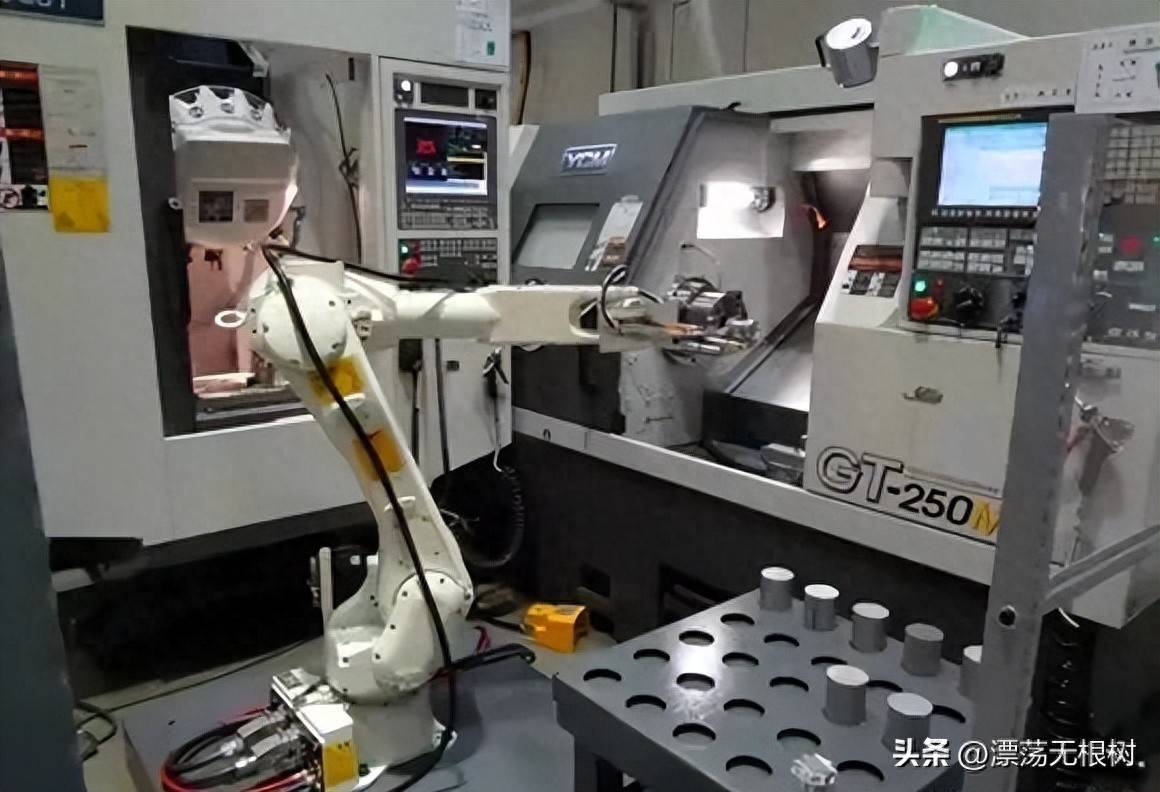
中信戴卡摩洛哥总裁巴德·拉穆迪:海外更需要中国的解决方案,而不只是中国的产品
麦肯锡· 2026-02-25 02:18
Core Insights - The establishment of the first "Lighthouse Factory" in Africa, the CITIC Dicastal Morocco plant, signifies a milestone for Chinese manufacturing's global expansion and showcases the successful digital transformation that can transcend borders [1][2]. Group 1: Factory Achievements - The CITIC Dicastal Morocco plant has implemented over 40 digital use cases, achieving a 17% increase in equipment efficiency, a 27% rise in labor productivity, and a 53% reduction in Scope 1 and Scope 2 emissions [1]. - The factory has grown from fewer than 400 employees at its inception to over 1,800, with more than 95% being local hires, emphasizing the importance of local talent development [5][6]. Group 2: Digital Transformation and Supply Chain - The Morocco plant's digital transformation is characterized by learning from the Qinhuangdao plant, adapting successful practices, and implementing a unique AI-driven casting system that enhances efficiency and reduces labor costs [9][10]. - The supply chain in Morocco is still developing, with efforts to stabilize it by supporting local suppliers and leveraging CITIC Dicastal's global supply chain [4]. Group 3: Cultural Integration and Localization - The plant emphasizes cultural integration through a dual mentorship system, where Chinese experts provide technical guidance while local mentors offer cultural insights, fostering a collaborative environment [13][18]. - Over 90% of the management team in Morocco is local, highlighting the commitment to extreme localization as a key aspect of successful globalization [15]. Group 4: Strategic Insights for Global Expansion - The company advocates for understanding local needs and delivering innovative solutions rather than merely exporting products, which is crucial for Chinese enterprises looking to expand internationally [16][22]. - The choice of greenfield investment over acquisition is seen as a strategic advantage, allowing for the establishment of core capabilities from the ground up [12][14].

未知机构:春节期间燃机板块数据更新25Q4订单超预期龙头扩产意愿明确国内叶片铸-20260224
未知机构· 2026-02-24 03:10
Summary of Conference Call Notes Industry Overview - The focus is on the global gas turbine market, specifically for units with a capacity of over 10Mwe - The market size is projected to reach 99.9GW by 2025, representing a year-over-year increase of 72%, which is 10% higher than previous Wall Street expectations of 88-90GW [1][1] Key Insights 1. **Order Forecasts**: - For Q4 2025, gas turbine orders are expected to be 33.9GW, showing a year-over-year increase of 129% and a quarter-over-quarter increase of 47%, indicating strong demand even during the holiday season [1][1] 2. **Market Dynamics**: - Companies like GE and Siemens have shown slight increases in stock prices, with valuations exceeding 30x in 2028. This reflects a clear intention to expand production capacity [1][1] - The performance of the gas turbine sector is closely tied to the production capacity of turbine manufacturers, suggesting that upcoming expansions will likely lead to further upgrades in performance and valuations [1][1] 3. **Blade Production Capacity**: - The core of turbine expansion relies on blade production capacity, which is currently valued significantly higher than turbine assembly [1][1] Additional Insights 1. **Comparative Valuations**: - U.S. companies GEV and HWM, leaders in blade production, have P/E ratios of 30x and 42x respectively for 2028. Even looking ahead to 2029 and 2030, HWM's valuations are projected to be 38x and 35x [2][2] 2. **Domestic Market Outlook**: - Despite a slowdown in capital expenditures from overseas blade manufacturers starting in 2026, the domestic blade sector is expected to experience both volume and profit growth due to the anticipated expansion in gas turbine production [2][2] 3. **Future Catalysts**: - The gas turbine sector is still seen as having catalysts for growth, with North American electricity demand not yet fully reflected in current gas turbine orders. - Specific companies such as Wanzhe and Yingliu are expected to see upward valuation potential, with projected P/E ratios of 22x and 30x respectively for 2029 [2][2] - New customer acquisitions and product introductions for companies like Linde (23x for 2029) are expected to enhance visibility in performance [2][2] - HRSG leaders are anticipated to secure early orders from GEV and Siemens, which will help lock in production capacity for 2027 [2][2]
通裕重工2月3日获融资买入1952.40万元,融资余额3.61亿元
Xin Lang Cai Jing· 2026-02-04 01:24
Core Viewpoint - Tongyu Heavy Industry experienced a stock price increase of 3.09% on February 3, with a trading volume of 297 million yuan, indicating positive market sentiment towards the company [1]. Financing Summary - On February 3, Tongyu Heavy Industry had a financing buy-in amount of 19.52 million yuan and a financing repayment of 23.22 million yuan, resulting in a net financing outflow of 3.69 million yuan [1]. - As of February 3, the total financing and securities lending balance for Tongyu Heavy Industry was 363 million yuan, with the financing balance at 361 million yuan, representing 3.09% of the circulating market value, which is above the 70th percentile level over the past year [1]. - The company repaid 900 shares of securities lending and sold 19,000 shares on February 3, with a selling amount of 57,000 yuan, while the securities lending balance was 207.78 million yuan, also exceeding the 70th percentile level over the past year [1]. Company Overview - Tongyu Heavy Industry, established on May 25, 2002, and listed on March 8, 2011, is located in the National High-tech Industrial Development Zone of Dezhou, Shandong Province. The company specializes in the research, production, and sales of large forged products, forming a complete industrial chain [2]. - The main business revenue composition includes: other forgings (23.60%), castings (17.46%), modular wind power equipment (17.16%), wind power main shafts (13.43%), energy revenue (9.35%), powder metallurgy products (7.16%), structural components and complete equipment (5.83%), forgings (5.43%), and others (0.56%) [2]. - As of September 30, the number of shareholders for Tongyu Heavy Industry was 134,100, an increase of 7.98% from the previous period, while the average circulating shares per person decreased by 5.85% to 27,647 shares [2]. Financial Performance - For the period from January to September 2025, Tongyu Heavy Industry achieved an operating income of 4.732 billion yuan, representing a year-on-year growth of 10.67%, and a net profit attributable to shareholders of 83.825 million yuan, reflecting a year-on-year increase of 53.29% [2]. Dividend Information - Since its A-share listing, Tongyu Heavy Industry has distributed a total of 1.423 billion yuan in dividends, with 257 million yuan distributed over the past three years [3]. Institutional Holdings - As of September 30, 2025, among the top ten circulating shareholders of Tongyu Heavy Industry, Hong Kong Central Clearing Limited held 33.1934 million shares, a decrease of 4.8182 million shares from the previous period. Other notable shareholders include Southern CSI 1000 ETF, Huaxia CSI 1000 ETF, and GF CSI 1000 ETF, all of which also saw reductions in their holdings [3].

2026年俄罗斯国际冶金、钢结构、铸造、管线展LITMASH
Sou Hu Cai Jing· 2026-01-15 09:50
Group 1 - The exhibition will take place from May 26 to May 28, 2026, at the Timiryazev Exhibition Center and will be held annually [1] - The event will cover two main themes: LITMASH—International Foundry Technology, Supplies and Castings Trade Fair, and International Metallurgy Technology, Processes and Metal Products Trade Fair [3] - Concurrent exhibitions will include the 2026 Russia Cable and Wire Exhibition, the 2026 Russia International Pipe Exhibition, and the 2026 Russia International Steel Structure Exhibition [3] Group 2 - The exhibition will feature a wide range of casting equipment, including melting and auxiliary equipment, molding/core making equipment, sand treatment/recycling equipment, and cleaning equipment [4][5] - Various types of castings will be showcased, such as cast steel, cast iron, stainless steel castings, and non-ferrous alloy castings [4] - Metallurgical products and equipment will also be highlighted, including raw material suppliers, metal products, and metallurgical process auxiliary materials [5]
吉宝股份IPO:期间费用率显著低于同行但部分解释存疑 多家供应商参保人数为0
Xin Lang Cai Jing· 2026-01-09 10:12
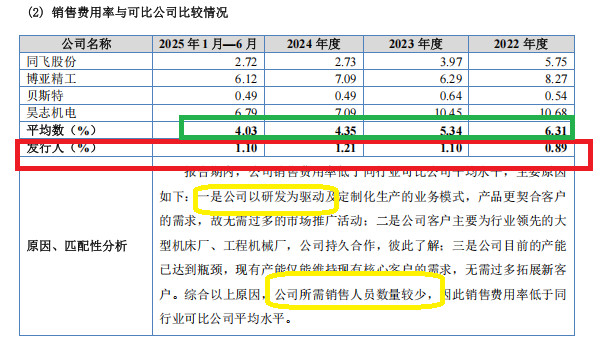
Core Viewpoint - Zhejiang Jibao Intelligent Equipment Co., Ltd. (Jibao Co.) is facing continuous profit decline and lower gross margins compared to industry peers, raising concerns about its financial health and operational efficiency [1][21][22]. Financial Performance - Jibao Co.'s revenue for 2022, 2023, and 2024 was 250 million, 337 million, and 356 million yuan respectively, showing growth; however, net profit decreased from 46.79 million to 38.90 million yuan over the same period, a cumulative decline of 16.85% [2][22]. - The company reported a significant drop in registered capital from 100 million to 31.7 million yuan in January 2022, a reduction of 68%, which raises questions about the rationale behind this decision given the previous profit increases [3][23]. Cost Structure - Jibao Co.'s gross margins for 2022 to 2025 were 31.79%, 32.11%, 28.71%, and 28.61%, which are below the industry average of 33.99% to 34.73% [5][25]. - The company's expense ratios, including selling, administrative, and R&D expenses, are significantly lower than industry averages, with selling expense ratios at 0.89% to 1.21% compared to an average of 4.03% to 6.31% for peers [6][26][29]. R&D and Innovation - Jibao Co. has the lowest R&D expense ratio among peers, with rates of 4.19% to 4.78% compared to an industry average of 7.73% to 6.23%, raising concerns about its innovation capabilities [9][31]. Accounts Receivable - The company's accounts receivable have been increasing, with values of 101.85 million, 154.61 million, 171.92 million, and 187.98 million yuan for the respective years, representing 40.69% to 97.93% of revenue, indicating potential cash flow issues [11][32][33]. Governance Issues - Jibao Co. has faced governance challenges, including a series of debt-to-equity swaps that lacked proper evaluation procedures, reflecting potential weaknesses in corporate governance [39][40].
风电整机专家交流
2026-01-07 03:05
Wind Power Industry Conference Summary Industry Overview - The wind power industry is showing signs of stabilization, with domestic markets benefiting from improved economic efficiency and overseas markets poised for significant profitability as they scale up. The overall trend in the industry is upward [1][3]. Key Insights - The overall delivery volume of wind power is expected to exceed 160 GW by 2026, with a significant increase from 110 GW in 2025. Supply chain constraints are driving up component prices, although the increase is expected to be less than last year [1][5]. - The valuation of wind power companies is generally around ten times earnings, indicating high investment value due to performance realization and future growth potential. Leading companies like Goldwind reaching a market capitalization of over 100 billion is a significant signal [1][4]. - The overseas market has a substantial impact on Chinese wind turbine manufacturers, with order volumes increasing by over 50% year-on-year. However, the conversion of orders to delivery and revenue is slow, with profitability expected to improve gradually over the next few years [1][6]. Financial Projections - The wind power industry is expected to enter an upward profit cycle lasting three to five years, with domestic manufacturing showing signs of stabilization and improvement in profitability by the second half of 2025 [3]. - By 2026, wind turbine prices are projected to increase by 10%-15% due to price control policies, with manufacturers' gross margins expected to rise by at least 5 percentage points [12]. Component Pricing and Supply Chain - The prices of key components such as castings and blades are expected to rise, with castings increasing by 14-15% and blades by 6-8%. However, some prices have stabilized or decreased compared to last year [5][7]. - The supply chain for components is under pressure due to rising delivery volumes, but there is insufficient upward price momentum for further increases [7][8]. Market Dynamics - The bidding volume for 2025 is expected to remain around 150-160 GW to support government delivery targets, with domestic delivery volumes projected to reach at least 110-120 GW in 2026 [2][20]. - The competitive landscape for domestic manufacturers in overseas markets varies, with leading companies like Goldwind and Envision performing well, while others face challenges in high-barrier markets like Europe and North America [22][29]. Future Outlook - The overseas market is expected to see significant growth, with annual new bidding volumes projected to reach 80-100 GW from 2026 to 2030, driven by emerging markets like India and increased demand in Europe [21]. - The domestic offshore wind power installation volume is uncertain, heavily influenced by geopolitical issues, with projections for 2026 ranging from 7-10 GW depending on the resolution of these issues [30]. Additional Considerations - The profitability of turbine manufacturers' power station sales has declined, with margins dropping from over 50% to around 35%. Companies are adapting by increasing project sizes to maintain profitability [26]. - Leading manufacturers are actively exploring hydrogen energy solutions, although these projects are still in early stages and not yet at large-scale production [27]. This summary encapsulates the key points from the wind power industry conference, highlighting the current state, financial outlook, and future trends within the sector.

通裕重工涨2.11%,成交额1.79亿元,主力资金净流入129.71万元
Xin Lang Cai Jing· 2026-01-06 05:39
Group 1 - The core viewpoint of the news is that Tongyu Heavy Industry has shown a positive stock performance with a 2.11% increase in price, reaching 2.91 CNY per share, and a total market capitalization of 11.341 billion CNY [1] - As of September 30, 2025, Tongyu Heavy Industry reported a revenue of 4.732 billion CNY, representing a year-on-year growth of 10.67%, and a net profit attributable to shareholders of 83.825 million CNY, which is a 53.29% increase compared to the previous year [2] - The company has a diverse revenue structure, with major contributions from other forgings (23.60%), castings (17.46%), modular wind power equipment (17.16%), and wind power main shafts (13.43%) [1] Group 2 - The company has distributed a total of 1.423 billion CNY in dividends since its A-share listing, with 257 million CNY distributed over the past three years [3] - As of September 30, 2025, the number of shareholders increased to 134,100, marking a 7.98% rise, while the average circulating shares per person decreased by 5.85% to 27,647 shares [2] - Major institutional shareholders include Hong Kong Central Clearing Limited, which holds 33.1934 million shares, and several ETFs, all of which have seen a reduction in their holdings compared to the previous period [3]
风电行业2026年投资策略:高景气+结构通胀共振,两海驱动盈利反转
GF SECURITIES· 2025-12-31 01:59
Core Insights - The report emphasizes a high growth period for the wind power industry, driven by structural inflation and dual coastal dynamics, leading to a profit reversal [1] - The investment strategy is rated as "Buy" for the wind power sector, reflecting confidence in future growth [2] Group 1: Global Demand and Market Dynamics - The "136 Document" promotes the full market entry of renewable energy, with a significant shift in capital expenditure from solar to wind power among major state-owned enterprises [15][16] - Domestic wind power installations are expected to grow, with onshore wind capacity projected to increase from 100 GW to 105 GW and offshore wind from 9 GW to 15 GW between 2025 and 2027, reflecting a compound annual growth rate (CAGR) of approximately 29.1% for offshore wind [17][18] Group 2: Profitability and Market Trends - The report indicates that the domestic wind power sector is entering a profitability upturn due to the effectiveness of anti-involution policies, with high-price orders securing profits for the next two years [19] - The transition from large-scale competition to a diversified value chain is highlighted, with a focus on cost reduction and risk mitigation as large-scale projects slow down [36] Group 3: Investment Recommendations - The report suggests focusing on companies with high overseas customer ratios and active offshore deployment, such as Goldwind Technology, Mingyang Smart Energy, and SANY Heavy Energy [5] - For foundational components, companies like Dajin Heavy Industry and Hailey Wind Power are recommended, while for subsea cables, firms with strong port capabilities like Dongfang Cable and Zhongtian Technology are highlighted [5] Group 4: Regional and International Developments - The report notes that European offshore wind capacity is expected to grow significantly, with a projected CAGR of 54.3% from 2025 to 2027, driven by strong policy support and market demand [36] - In Asia, countries like Vietnam and the Philippines are setting ambitious offshore wind targets, with Vietnam aiming for 6 GW by 2030 and the Philippines targeting 40 GW by 2050 [44]
