长城哈弗H6

Search documents
有辆30指数2026年首月大涨近20%,折射春节前二手车需求强劲
Zhong Guo Qi Che Bao Wang· 2026-02-06 05:51
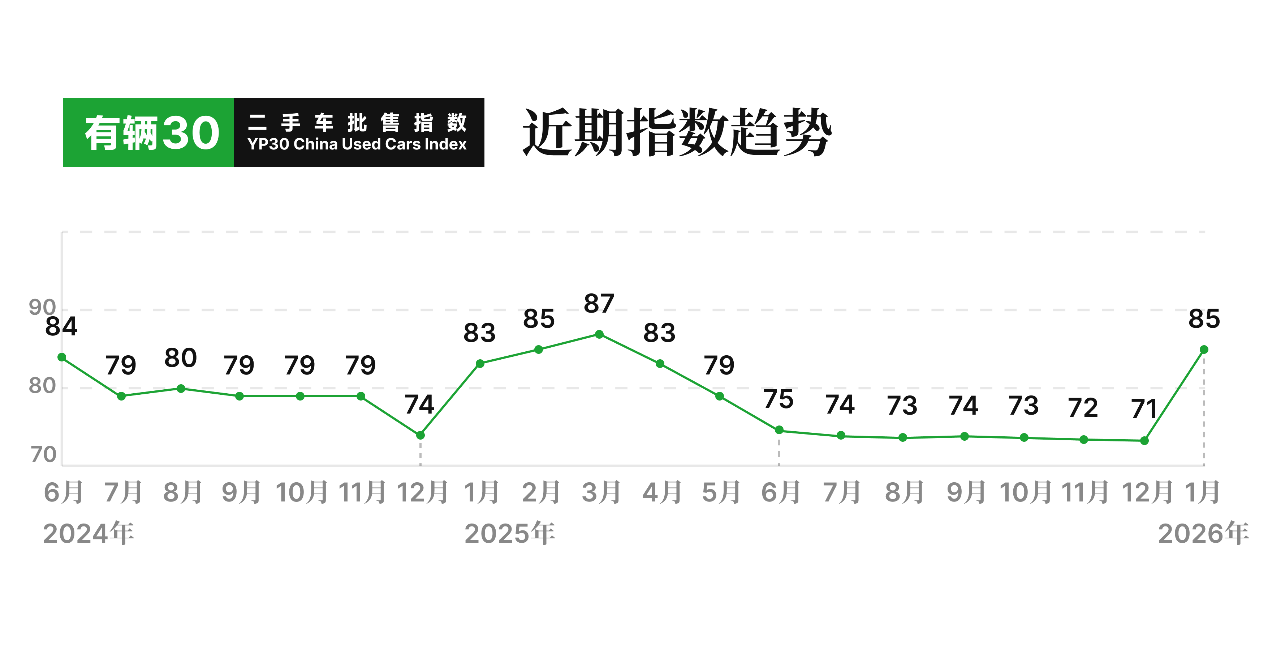
Core Insights - The "Youliang 30 Used Car Wholesale Index" recorded a significant increase of 19.7% month-on-month in January 2026, reaching 85 points, driven by strong demand in the automotive consumption market before the Spring Festival, marking the largest monthly increase since its inception [1] - The index now includes a complete list of 30 benchmark models, enhancing its transparency and market reference value, providing a clearer and more credible quantitative framework for observing the dynamics of the Chinese used car market [1][2] Index Composition - The 30 benchmark models represent high liquidity and typical market indicators across various segments, covering brands from China, the US, Germany, and Japan, aimed at reflecting the overall trends in the Chinese used car market [2] - Notable models include Chinese brands like Great Wall Haval H6 and BYD Song, German brands like Volkswagen Golf and BMW 3 Series, Japanese brands like Honda CR-V and Toyota RAV4, and American brands like Tesla Model Y and Buick GL8 [2] Market Trends - The index data for January 2026 reveals a profound structural adjustment beneath the overall market prosperity, with mid-to-large vehicles experiencing a price increase of 27.1% year-on-year, significantly higher than the average market increase of 11.1% for compact cars [4] - Chinese brands led the market with a year-on-year price increase of 36.9%, reflecting advancements in technology, product strength, and market recognition, while German brands maintained a robust 34.6% increase [7] - In contrast, Korean and French brands faced declines of 9.0% and 13.8% respectively, indicating challenges in market share and brand influence [7] Vehicle Type Dynamics - The market has seen a notable shift in demand, with MPV prices soaring by 35.7%, becoming the fastest-growing category, while traditional SUV prices saw a modest increase of 3.2% and sedans increased by 18.6% [10] Circulation and Transactions - The liquidity of used car sources in China continues to rise, with total used car transactions in 2026 surpassing 20 million units, reaching 20.108 million, a year-on-year increase of 2.52%, and an increasing proportion of interprovincial transactions [13] - The "Youliang 30 Index" provides innovative analysis on interprovincial circulation, with Sichuan province entering the top 5 in interprovincial procurement in January 2026 [13] Index Value and Macro Significance - The "Youliang 30 Index" serves as a quantifiable and traceable "data dashboard" for industry governance and market fluctuation assessment, helping relevant departments gauge the true structure of the current consumption market and consumer confidence levels [22] - The index's monthly data series creates a dynamic price map, allowing for scientific measurement and analysis of the impact of policies like "trade-in" on the circulation segment [22] - The transparency and standardization of the "Youliang 30 Index" respond to national requirements for market data element commercialization and the establishment of a high-standard market system, facilitating the transition of the used car industry from a traditional "experience-driven" model to a "data-driven" modernized development phase [22]

特斯拉吹响号角,2026年新能源汽车竞赛进入下一轮
Xin Lang Cai Jing· 2026-01-07 12:53
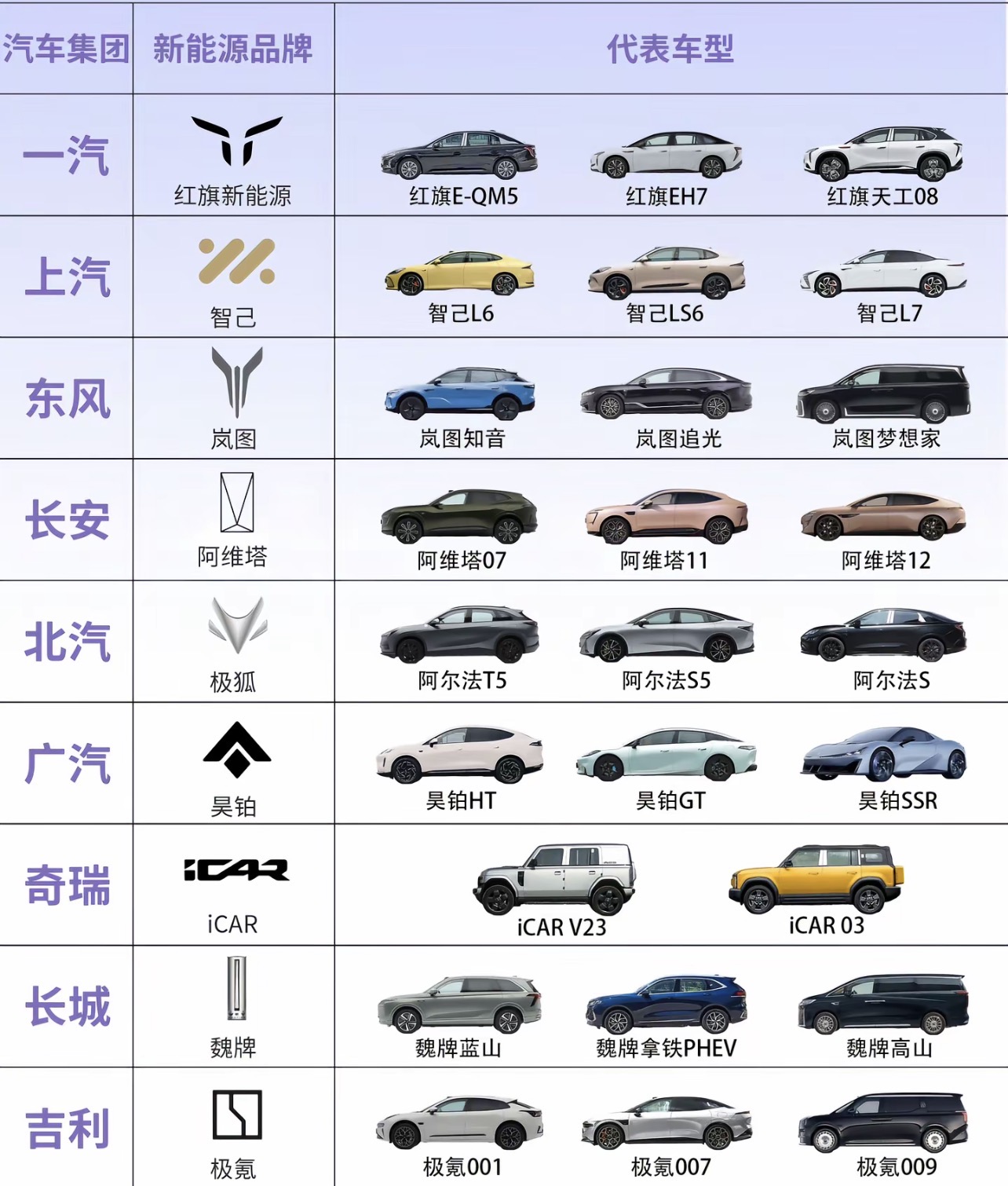
Core Insights - The new energy vehicle (NEV) industry in 2025 has shown a clear division between leading brands and those lagging behind, with a notable performance from new entrants like Leap Motor, Hongmeng Zhixing, and Xiaopeng, which have solidified their positions in the first tier of the market [2][5][6] - Traditional automakers' second-generation brands, such as Deep Blue, Zhiji, and Avita, despite having strong backing, have struggled to compete and remain in the second tier [2][5] Market Performance - In 2025, the top three new car brands were Leap Motor (596,555 units, +103%), Hongmeng Zhixing (589,107 units, +32%), and Xiaopeng (429,445 units, +126%) [5][7] - Other notable brands included Xiaomi Auto (over 411,625 units), Li Auto (406,343 units), and Deep Blue (333,117 units) [5][7] - The bottom performers were Avita (128,772 units), Zhiji (81,000 units), and Deep Blue (150,169 units), with Zhiji being the only brand with sales below 100,000 units [6][7][8] Competitive Landscape - The NEV market is transitioning from growth to intensified competition, with a resurgence of price wars as seen with BMW's significant price cuts across multiple models [3][4][14] - The first-tier brands are primarily pure new car manufacturers, while many second-tier brands are traditional automakers' second-generation brands, which have shown promising growth rates despite lower overall sales [8][11] Future Outlook - The NEV market is expected to see slower growth in 2026, with predictions of only about 2% increase in sales, leading to a more competitive environment [14][15] - Brands like Lantu and Deep Blue are anticipated to perform well in 2026, with Lantu expected to expand its product lineup significantly and Deep Blue achieving high delivery rates [19][21] - Conversely, brands like Avita and Zeekr may face challenges in maintaining momentum due to market saturation and pricing pressures [22][25] Consumer Sentiment - Consumers show a preference for traditional automakers' NEV brands, citing concerns over the stability and reliability of newer entrants [26][27] - The backing of established manufacturers provides a sense of security for consumers, influencing their purchasing decisions [26][27]
深蓝点名27家同行,外交官不够用了,魏建军撸起袖子上场……
汽车商业评论· 2025-10-03 23:06
Core Viewpoint - The article highlights various marketing strategies and initiatives taken by different automotive brands in China during September 2025, showcasing how they leverage significant events and collaborations to enhance brand visibility and consumer engagement [4][5][6]. Group 1: Red Flag's Marketing Strategy - Red Flag's actions during the 93rd National Day parade included returning nearly 80 ceremonial cars to their owners, accompanied by a thank-you letter and a detailed vehicle inspection, which fostered a sense of pride among car owners [4][5]. - The brand's approach of combining emotional marketing with tangible actions has created a strong connection between the owners and the Red Flag brand, setting it apart from competitors who also attempted to capitalize on the event [5][6]. Group 2: Deep Blue's Brand Positioning - Deep Blue launched a promotional video titled "Running Chinese Cars," which honored 27 automotive brands while subtly positioning itself, emphasizing the collective growth of the Chinese automotive industry [6][9]. - The marketing strategy reflects a shift from aggressive competition to a more collaborative approach, aligning with the brand's new identity as a state-owned enterprise [9][10]. Group 3: Zeekr's Global Outreach - Zeekr hosted a "Global First Luxury Electric Car Diplomat Experience" event, inviting diplomats from 40 countries to experience its vehicles, aiming to establish a strong association with luxury and enhance its global presence [11][12]. - The event generated significant online engagement, with related topics on social media reaching over 210 million views, indicating a successful branding effort [14]. Group 4: NIO Day 2025 - NIO Day 2025 focused on the theme of "Growth," involving extensive user participation in creating a song and documentary, which reflects the brand's commitment to community and user engagement [15][17]. - The event was strategically timed to address year-end sales pressures and improve brand perception amidst challenges faced earlier in the year [17][18]. Group 5: Lantu's Cultural Integration - Lantu's "Era Fashion Night" showcased its vehicles in a culturally rich setting, emphasizing the integration of Chinese aesthetics with modern technology, aiming to establish a unique brand identity [19][20]. - The event highlighted Lantu's commitment to creating a luxury brand that resonates with Chinese cultural values, which is crucial in a competitive high-end market [22]. Group 6: Li Auto's Brand Evolution - Li Auto announced a partnership with celebrity Yi Yangqianxi, marking a shift in its marketing strategy from product-driven to a dual approach that includes brand ambassadors to attract younger consumers [23][26]. - This change comes in response to declining sales and aims to reposition the brand in the eyes of a younger demographic, enhancing its appeal [26][27]. Group 7: Leap Motor's Innovative Collaboration - Leap Motor collaborated with IKEA for a pop-up event, focusing on the concept of "space" in automotive design, which aligns with contemporary consumer preferences for lifestyle-oriented products [28][31]. - The event successfully increased foot traffic and sales, demonstrating the effectiveness of experiential marketing in the automotive sector [31]. Group 8: Great Wall's Endurance Race - Great Wall Motors' founder participated in a challenging endurance race, showcasing the reliability of its vehicles and reinforcing the brand's commitment to quality and performance [32][36]. - This hands-on approach by the founder enhances brand credibility and connects with consumers on a personal level, promoting a culture of adventure and resilience [36][37]. Group 9: BYD's Youth Engagement - BYD's "I Di New Generation 2025" event aimed to reshape its image by highlighting the talents of its young employees, fostering a connection with the younger audience [38][41]. - The initiative reflects BYD's strategy to engage with younger consumers through innovative and entertaining formats, moving away from traditional marketing methods [41]. Group 10: Xiaomi's Strategic Shift - Xiaomi's founder delivered a speech outlining the company's strategic shift towards becoming a "hardcore technology company," aiming to redefine its market position amidst challenges in the automotive sector [42][45]. - The speech, however, faced criticism for lacking substance and failing to address product-related issues, which negatively impacted investor confidence [45][46].