
雷鸟X3 Pro AR眼镜

Search documents
国产AI眼镜:今年全球占比将达45%
财联社· 2026-03-15 05:05
Core Insights - The article highlights the rapid growth of domestic AI glasses in China, with significant sales increases and a projected global market share of 45% by 2026 for Chinese manufacturers [12][2]. - Despite the growth, challenges remain in supply chain capacity and the need for differentiation in user value [13][14]. Market Growth - The global shipment of domestic AI glasses is expected to reach 22.67 million units in 2026, a year-on-year increase of 56.3%, with China's market expected to see 4.51 million units shipped, growing by 77.7% [1]. - The growth is primarily concentrated in audio, audio recording glasses, and AR/ER glasses [1]. Company Developments - Qianwen AI glasses made their domestic debut at AWE, featuring dual-chip dual-system technology and 64GB local storage [2]. - XREAL has shipped over 700,000 units and is focusing on deepening integration of spatial computing and AI [5]. - Thunder Innovation plans to launch a limited edition Batman Air 4 Pro glasses and has partnered with Amap to create local life applications for its X3 Pro AR glasses [7]. International Expansion - Thunder Innovation's sales in the North American market grew by 456.5% in 2025 compared to 2024, with plans to enhance market share in Japan, South Korea, and Northern Europe [9]. - Domestic manufacturers are rapidly expanding in overseas markets, leveraging China's manufacturing advantages [12]. Industry Challenges - The supply chain's capacity ramp-up remains a significant bottleneck, with higher demands for yield control and delivery cycles [13]. - Current AI glasses lack sufficient differentiation in user value, primarily offering functionalities that can be replaced by smartphones [13]. Future Outlook - The industry is compared to the smartphone market in the mid-2000s, with a need for breakthroughs in hardware miniaturization, multi-modal world models, and ecosystem unification to reach a transformative "iPhone moment" [14][15][16]. - Key areas for innovation include lightweight hardware, comprehensive perception through multi-modal inputs, and a unified platform for devices [14][15][16].


2026 AWE观察:机器人公司来了家电展,家电公司都在做机器人
经济观察报· 2026-03-15 04:06
Core Insights - The 2026 AWE showcased a significant shift towards robotics and AI in the home appliance sector, with major brands like Haier, Midea, and TCL prominently featuring these technologies [2][4][10] - A new standard for smart home interoperability was introduced, aiming to unify communication between devices from different brands, addressing a major pain point in the industry [3][14][15] Group 1: Robotics and AI Innovations - The AWE featured over 60 robot models from various companies, indicating a growing trend of traditional appliance manufacturers entering the robotics space [2][5] - Notable products included the "Eight Realms" robot from Ecovacs, which integrates AI capabilities for task planning, and Haier's "Havva" series of household service robots [4][5] - AI is being integrated into traditional appliances, such as TCL's flagship TV that uses AI for automatic picture adjustments and air conditioners that monitor sleep patterns [10][12] Group 2: Industry Standards and Interoperability - The GIIC alliance announced the OneConnect standard, which aims to facilitate device interoperability across different brands, addressing the current lack of cross-brand communication [14][15] - The standard includes specifications for device access, control interfaces, and safety requirements, covering nearly 200 product categories [16][15] - The push for these standards is driven by both government initiatives and the recognition among companies that collaboration is essential for industry growth [18][19] Group 3: Market Trends and Future Directions - The home appliance industry is at a transformative point, with AI becoming a core driver of innovation, as highlighted by industry leaders during the AWE [19] - The focus is shifting from merely adding smart features to creating products that address consumer pain points and enhance value [10][19] - The establishment of the OneConnect standard is expected to lead to a more cohesive smart home ecosystem, enhancing user experience and driving market growth [17][18]





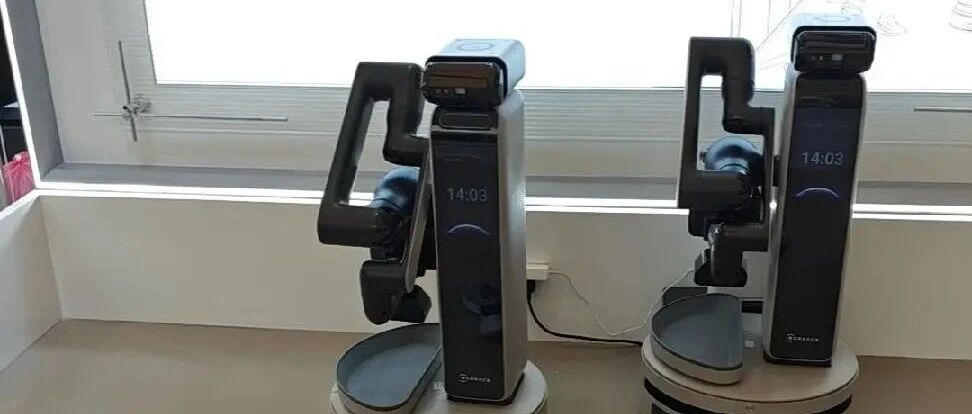
“百镜大战”,持续升温
新华网财经· 2026-03-13 03:15
Core Viewpoint - The AWE 2026 showcased significant advancements in AI technology and smart devices, particularly highlighting the growing interest in smart glasses and embodied intelligence products [2][3][4]. Group 1: Event Overview - AWE 2026 was held from March 12 to 15, covering a total exhibition area of 170,000 square meters with 1,200 participating companies, including major players like Haier and Huawei [2]. - The event introduced a new "dual-zone" layout, featuring the Oriental Hub International Business Cooperation Zone and the New International Expo Center [3]. Group 2: Smart Glasses Highlights - Smart glasses emerged as a focal point, with multiple models showcased, including the Qianwen AI Glasses G1, which supports calling, photo/video recording, and translation [4]. - XREAL presented the XREAL 1S, equipped with a self-developed spatial computing chip, enabling stable spatial hovering and real-time 2D to 3D conversion [7]. - TCL launched the Thunder X3 Pro AR glasses, integrating smart living features in collaboration with Amap, while BOE introduced the S7 AI+AR cycling glasses, set to release in June [8]. Group 3: Embodied Intelligence - The event featured various humanoid robots and embodied intelligence products, including caregiving robots and robotic dogs, showcasing advancements in interactive technology [9]. - Shanghai Aoshark Intelligent Technology's FIT-HV PRO exoskeleton robot can reduce physical load by over 60% during heavy lifting tasks [11]. Group 4: Technological Innovations - The AWE 2026 highlighted advancements in optical interconnect technology, with the launch of the Guangyue Super Node 128 card commercial version, significantly improving training performance for large models [14][17]. - The LX series of professional and consumer graphics cards were introduced, targeting various applications from gaming to high-resolution rendering [17].
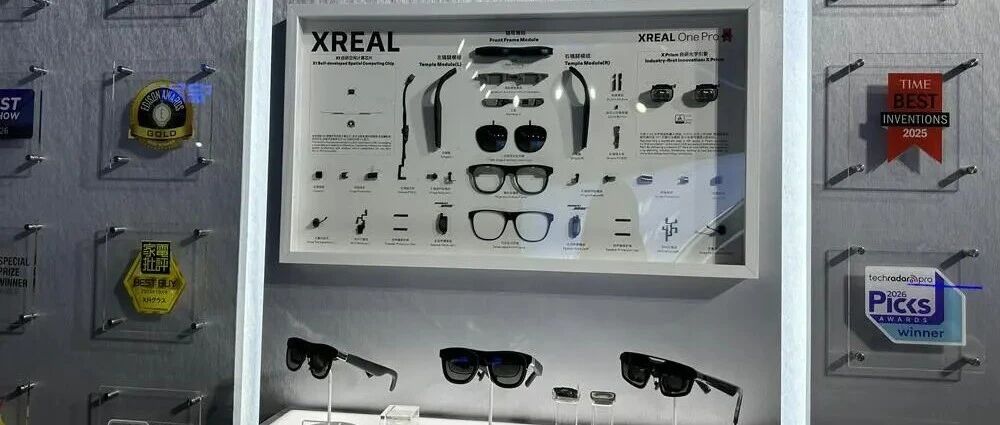
“百镜大战”,持续升温
财联社· 2026-03-13 02:36
Core Viewpoint - The 2026 China Household Appliances and Consumer Electronics Expo (AWE 2026) showcases significant advancements in AI technology and smart devices, particularly highlighting the growing interest in smart glasses and embodied intelligence products [1][2]. Group 1: Event Overview - AWE 2026 is themed "AI Technology, Enjoying the Future" and spans a total exhibition area of 170,000 square meters, featuring 1,200 participating companies including major players like Haier and Huawei [1]. - The event introduces a new "dual-zone" layout, comprising the Eastern Hub International Business Cooperation Zone and the New International Exhibition Center [2]. Group 2: Smart Glasses Highlights - Smart glasses emerged as a focal point at the expo, with multiple models showcased, including the Qianwen AI Glasses G1, which supports calling, photo/video recording, and translation, powered by the Qianwen large model [3]. - XREAL presented the XREAL 1S, equipped with the self-developed X1 spatial computing chip, enabling a stable spatial hovering experience and real-time 2D to 3D conversion [5]. - TCL's Thunderbird X3 Pro AR glasses were highlighted for their integration with Amap, while BOE unveiled the S7 AI+AR cycling glasses, which project navigation and speed information in real-time [6]. Group 3: Embodied Intelligence - The Eastern Hub showcased various embodied intelligence products, including humanoid robots and caregiving robots, indicating a trend towards more interactive and functional robotic solutions [7]. - Shanghai Aoshark Intelligent Technology introduced the FIT-HV PRO waist exoskeleton robot, which reduces physical load by over 60% during heavy lifting and frequent bending tasks [10]. Group 4: Technological Innovations - The expo featured advancements in optical interconnect technology, with the launch of the Guangyue Supernode 128-card commercial version, which significantly enhances training performance for large models, reducing transmission delays by over 90% compared to traditional methods [12][16]. - Lishan Technology released the LX series of professional and consumer graphics cards, designed for various applications including gaming and digital content creation, with features aimed at preventing performance drops due to memory overflow [16].


炸,百款新品狂轰,百亿资金疯涌,十位创始人万字综述2025智能眼镜史
3 6 Ke· 2026-01-06 12:19
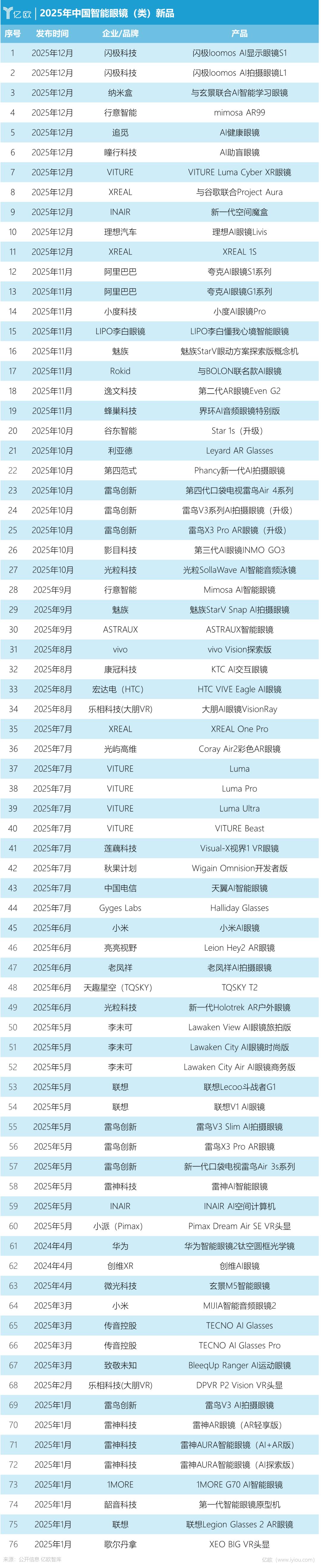
Group 1 - The year 2025 is marked by significant advancements in the AI hardware market, particularly in the smart glasses sector, with a notable increase in new product launches and investments [1][4][5] - A total of 76 new smart glasses products were introduced in China in 2025, representing a 40% increase compared to 2024 [5][6] - The industry is experiencing a shift from product and marketing competition to a focus on technology and innovation [3][5] Group 2 - The number of listed companies entering the smart glasses market has expanded to 176, doubling from the previous year [2][42] - Major players in the industry include both startups and established companies from various sectors, including technology, automotive, and consumer electronics [29][43] - The market is transitioning from a technology-driven approach to a value-driven one, with consumers becoming more experience-sensitive [26][27] Group 3 - Significant funding has flowed into the smart glasses sector, with nearly 10 billion yuan invested [3] - The industry is witnessing a trend towards vertical integration, with products increasingly tailored to specific use cases such as sports, health, and office environments [27][28] - Companies are focusing on creating a complete user experience by integrating perception, decision-making, and interaction capabilities [28] Group 4 - The competitive landscape is intensifying, with major companies like ByteDance, Xiaomi, and Alibaba entering the market, bringing substantial traffic and visibility [22][23] - Innovations in product design and functionality are crucial for gaining consumer acceptance, as evidenced by the success of products like the BleeqUp Ranger smart glasses [15][17] - The industry is facing challenges such as feature homogeneity and the need to balance lightweight design with high performance and battery life [34][36]
雷鸟Air 4正式发布 智能眼镜加速走向大众市场
Zheng Quan Shi Bao Wang· 2025-10-23 13:19
Core Insights - RayNeo, a leading consumer AR brand, launched the fourth generation of its pocket TV "RayBird Air 4 series" AR glasses, which are the world's first AR glasses to support HDR10 [1] - The company achieved a market share of 39% in the global AR glasses market, surpassing Apple and ranking third in the global XR market [1] - The RayBird Air 4 series features the Vision 4000 image quality chip and a B&O audio system, marking a significant advancement in AR technology [1][2] Product Features - The RayBird Air 4 series supports HDR10, offering double brightness dynamics, 1200 nits brightness output, and up to 1.07 billion color outputs, enhancing richness by 64 times compared to traditional 8-bit [2] - It includes AI real-time SDR to HDR conversion technology and has been rated higher than professional industrial-grade large screens in blind tests [2] - The series is the first AR glasses to feature B&O tuning, equipped with four speakers and a new sound guide accessory that reduces sound loss by 80% [2] Market Position and Future Outlook - The retail price for RayBird Air 4 is 1599 yuan, and for Air 4 Pro is 1699 yuan, making high-end audio-visual experiences accessible to the mass market [3] - 2025 is projected to be a pivotal year for smart glasses entering the consumer market, with strong growth in AR glasses shipments despite overall weak demand in consumer electronics [3] - The launch of the Air 4 series is expected to accelerate the "mass experience" phase in the consumer AR industry [3]
雷鸟Air 4发布:支持HDR10画质显示,到手价1599元起
Xin Lang Ke Ji· 2025-10-23 12:57
Core Insights - RayNeo, a consumer AR brand, launched its fourth-generation pocket TV, the RayNeo Air 4 series AR glasses, during its autumn product launch event [1] - According to Counterpoint Research, RayNeo is projected to hold a 39% market share in the global AR glasses market by Q2 2025, surpassing Apple and ranking third in the global XR market [1] - The RayNeo Air 4 series features the Vision 4000 AR image quality chip, supporting HDR10 quality with double dynamic brightness, 1200 nits brightness output, and 1.07 billion color outputs [1] - The audio experience of the RayNeo Air 4 series includes support for B&O tuning, featuring four speakers and a large-area high-molecular diaphragm unit, driven by an independent DAC chip [1] Product Features - The RayNeo Air 4 series introduces AI 3D functionality, allowing users to convert 2D videos to 3D format with a single click, and supports AI conversion of SDR videos to HDR [2] - The pricing for the RayNeo Air 4 is set at 1599 yuan, while the Air 4 Pro is priced at 1699 yuan; the RayNeo Air 3s fourth-anniversary edition is available for 1299 yuan [2] - Additional products launched include the RayNeo V3 series AI shooting glasses, which received Apple MFi certification and support for Apple Watch gesture control, and the RayNeo X3 Pro AR glasses, which now support 3K video recording and feature AR mini-games [2]
TCL电子中高端战略成效显著 2025上半年经调整归母净利同比增62%
Zhong Zheng Wang· 2025-08-25 03:21
Core Viewpoint - TCL Electronics reported a significant growth in its mid-year performance for 2025, driven by its "mid-to-high-end" and "globalization" strategies, achieving a 20.4% year-on-year revenue increase to HKD 54.78 billion [1] Group 1: Financial Performance - The company's after-tax profit for the first half of the year reached HKD 1.05 billion, marking a 60.5% increase year-on-year [1] - Adjusted net profit attributable to shareholders was HKD 1.06 billion, up 62.0% year-on-year [1] Group 2: Television Business - TCL's global television shipment volume increased by 7.6% year-on-year to 13.46 million units, maintaining its position among the top two globally [1] - The shipment of mid-to-high-end Mini LED televisions surged by 176.1% year-on-year to 1.37 million units [1] - Revenue from the large-size display business grew by 9.4% year-on-year to HKD 28.35 billion, with a gross margin increase of 0.5 percentage points to 15.9% [1] Group 3: Market Expansion and Innovation - In the domestic market, TCL's television shipment volume grew by 3.5% year-on-year, while international shipments rose by 8.7% [2] - The company is expanding its global production capacity, which has surpassed 30 million units annually, allowing for flexible allocation across regions [2] - TCL is investing in high-end display and AI technology, enhancing product and operational efficiency, and has upgraded its AI interaction on television [2] Group 4: New Business Ventures - TCL launched the world's first split-type smart home companion robot, TCL AiMe, at CES, integrating AI and IoT functionalities [3] - The company is collaborating with Ant Group to develop innovative digital payment solutions, leveraging AI and AR technologies [2][3] - Future strategies include deepening the "mid-to-high-end + globalization" approach, enhancing brand strength, and promoting digital transformation [3]
TCL电子(01070.HK)中高端战略成效显著,2025上半年经调整归母净利同比大增62.0%
Xin Lang Cai Jing· 2025-08-23 01:41
Core Viewpoint - TCL Electronics continues to deepen its "mid-to-high-end" and "globalization" strategies, achieving high-quality growth in global business with a significant optimization in product and channel structure, resulting in a 20.4% year-on-year revenue increase to HKD 54.78 billion in the first half of the year [1] Financial Performance - The company's after-tax profit for the first half of the year reached HKD 1.05 billion, a year-on-year increase of 60.5%, while adjusted net profit attributable to shareholders was HKD 1.06 billion, reflecting a 62.0% growth [1] - Overall expense ratio decreased by 1.0 percentage points to 11.5% due to enhanced operational efficiency from digital transformation and automation upgrades [1] Television Business - TCL's global TV shipment volume increased by 7.6% year-on-year to 13.46 million units, maintaining a top-two global ranking [2] - Mini LED TV shipments surged by 176.1% year-on-year to 1.37 million units, ranking first globally [2] - Domestic TV shipments grew by 3.5%, with TCL brand TV shipments increasing by 10.2% year-on-year [2] Market Expansion - TCL Electronics has established production bases in multiple countries, including Vietnam, Mexico, Brazil, Poland, and Pakistan, with an annual production capacity exceeding 30 million units [3] - International TV shipments rose by 8.7% year-on-year, with Mini LED TV shipments increasing by 196.8% [3] AI and Innovation - The company is investing in high-end display and AI technology, enhancing user satisfaction through AI interaction on TV [4] - TCL Channel has been upgraded, significantly improving content distribution efficiency and user experience [4] - The launch of the Thunder X3 Pro AR glasses and the TCL AiMe companion robot marks significant advancements in AI and IoT integration [5][6] Strategic Vision - TCL Electronics aims to enhance its global brand presence and increase R&D investment while optimizing its global supply chain and logistics [6] - The company adheres to a long-term operational goal of prioritizing net profit growth over revenue and sales volume growth, striving for high-quality development [6]
TCL电子中高端战略成效显著 2025年上半年经调整归母净利润同比大增62%
Zheng Quan Ri Bao Zhi Sheng· 2025-08-22 14:07
Core Viewpoint - TCL Electronics continues to deepen its "mid-to-high-end" and "globalization" strategies, achieving high-quality growth in global business with a significant optimization of product and channel structure, and rapid expansion of innovative business [1] Financial Performance - In the first half of the year, TCL Electronics reported a total revenue of HKD 54.78 billion, a year-on-year increase of 20.4% [1] - The company's profit after tax reached HKD 1.05 billion, representing a year-on-year growth of 60.5%, while adjusted net profit attributable to shareholders was HKD 1.06 billion, with a year-on-year increase of 62.0% [1] Television Business - TCL's television business saw a global shipment increase of 7.6% to 13.46 million units, maintaining a top-two global ranking [2] - MiniLED television shipments surged by 176.1% to 1.37 million units, ranking first globally [2] - Domestic market shipments grew by 3.5%, with TCL brand television shipments increasing by 10.2% [2] - Revenue from large-size display business in the domestic market rose by 4.4% to HKD 8.72 billion, with a gross margin increase of 1.7 percentage points to 19.4% [2] International Market Expansion - TCL Electronics has established production bases in multiple countries, including Vietnam, Mexico, Brazil, Poland, and Pakistan, with an annual production capacity exceeding 30 million units [3] - International market shipments of TCL televisions increased by 8.7%, with MiniLED television shipments growing by 196.8% [3] AI and Technology Development - The company is investing in high-end display and AI technology, enhancing user satisfaction through AI interaction on television [4] - TCL has upgraded its OTT platform, TCLChannel, which now covers global markets with over 39.3 million users [4] - New products such as the Thunder X3 Pro AR glasses and the TCLAiMe companion robot showcase TCL's advancements in AI and IoT integration [5] Future Strategy - TCL Electronics aims to continue its dual-driven strategy of "mid-to-high-end + globalization," increasing R&D investment and optimizing global supply chains to enhance operational efficiency [6]