首店经济

Search documents
南京狂揽480家首店:德基一骑绝尘,JLC、万象天地争第二
3 6 Ke· 2026-02-12 02:33
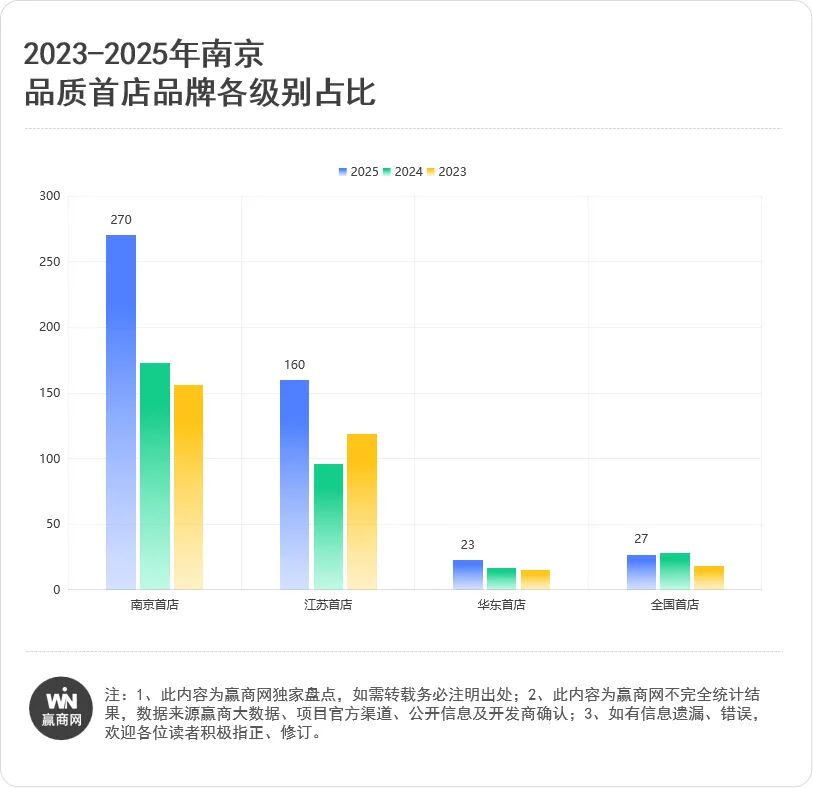
Core Insights - Nanjing has accelerated its "first store economy" in 2025, being selected for multiple national pilot projects and hosting over 1,700 consumer promotion events throughout the year, with the Xinjiekou business district maintaining its leading position in East China [1][3] - The city introduced a record 480 quality first stores, with significant growth in consumer experiences and international offerings, indicating a substantial uplift in urban consumption capabilities [1][3] Group 1: First Store Introduction - A total of 480 quality first stores were introduced in Nanjing, with 237 in dining and 199 in retail, accounting for over 90% of the total, reflecting a strong consumer demand for high-frequency and quality experiences [3][6] - The concentration of first stores in dining and retail indicates a solid local consumption base, supporting brands' entry and testing in the market [6][7] - Nanjing's Deji Plaza introduced 56 retail first stores, contributing nearly 30% of the city's retail first store resources, reinforcing its status as a key city for high-end retail brand launches [7][8] Group 2: Dining Sector Dynamics - The dining sector emerged as the most active area for first store competition in 2025, with JLC Nanjing introducing 28 dining first stores, leading in quantity [10][11] - The popularity of casual dining is evident, with 46 new beverage stores and 32 dessert stores introduced, showcasing a trend towards frequent product iteration and diverse consumer experiences [13][15] - Despite lower numbers, sectors like children's services and entertainment are increasingly valuable for enhancing consumer ecosystems and extending visit durations [15] Group 3: Commercial Ecosystem and Performance - Nanjing's first store economy not only increased in quantity but also in quality, with 27 national first stores and 23 East China first stores introduced, enriching the commercial ecosystem [16][19] - Deji Plaza achieved a sales figure of 26.24 billion yuan, a 7.1% increase year-on-year, maintaining its position as the top-performing shopping center in the country [21][23] - JLC Nanjing quickly became a cultural landmark, introducing 59 first stores, with over 40% of tenants being brands new to Nanjing, Jiangsu, or even nationwide [26] Group 4: Policy Support and Future Outlook - Nanjing has released new policies to support the development of the first store economy, offering financial incentives for high-quality brand introductions and events [37][39] - The policies aim to enhance service consumption quality and support the development of new consumption models, indicating a strategic focus on nurturing a vibrant consumer environment [39][41] - Looking ahead to 2026, Nanjing plans to continue implementing first store economy policies, aiming to establish itself as a leading international consumer city [41]

多管齐下提振内需、促进消费
2 1 Shi Ji Jing Ji Bao Dao· 2025-12-27 03:55
Core Viewpoint - The article emphasizes the importance of boosting domestic consumption and investment, aligning new demand with new supply, and creating a robust domestic market as a strategic foundation for China's modernization [4][5]. Group 1: Domestic Consumption and Economic Strategy - The Central Economic Work Conference highlighted the need to prioritize domestic demand and build a strong domestic market, implementing special actions to boost consumption and formulating plans to increase urban and rural residents' income [4][5]. - The article notes that consumer enthusiasm is being fueled by year-end promotions, including concerts in major cities and various sales initiatives, such as trade-in programs for automobiles and home appliances [3][4]. Group 2: Consumption Trends and Policy Implementation - The article reports a 5.4% year-on-year increase in service retail sales over the first eleven months, indicating a continuous recovery in service consumption [5]. - It discusses the significant impact of large-scale consumption, service consumption, and new types of consumption, supported by policies like trade-in programs and the development of a family-friendly society [6]. Group 3: Employment and Income Distribution - The article outlines the implementation of an employment-first strategy, focusing on job creation and support for key groups such as college graduates and migrant workers, to stabilize and expand employment [6][7]. - It emphasizes the need to improve income distribution mechanisms, increasing the share of residents' income in national income distribution and enhancing labor remuneration [7].
向未来·奔赴“十五五”丨“万亿”之后,成都建设国际消费中心城市向“新”拓增量!
Sou Hu Cai Jing· 2025-12-22 05:07
Group 1 - The core viewpoint of the articles highlights Chengdu's emergence as a vibrant consumption city, driven by major events and a focus on integrating culture, commerce, and tourism [1][3][14] - Chengdu's comprehensive income from the recent International Table Tennis Federation Mixed Team World Cup reached approximately 135 million yuan, marking a 15.4% year-on-year increase [1] - The city aims to establish itself as a national international consumption center, with plans to enhance consumer demand and integrate various sectors to stimulate economic growth [3][19] Group 2 - Chengdu's events, such as the League of Legends S15 Global Finals and ATP250 Chengdu Open, have significantly boosted local consumption, generating over 270 million yuan in consumer spending [1][11] - The city is focusing on creating new consumption scenarios that appeal to younger generations, with a notable increase in participation in cultural and sporting events [7][9] - The integration of high-profile events with local culture and commerce is seen as a strategy to enhance consumer engagement and drive economic activity [11][20] Group 3 - Chengdu's retail sales exceeded 1 trillion yuan in 2023, making it the sixth city in China to achieve this milestone, indicating a robust consumer market [16][17] - The city is actively promoting service consumption and has seen a rise in the number of first-store openings, with 710 new stores established in the first ten months of the year [17][19] - Future plans include enhancing night economy initiatives and developing low-altitude economic applications to further stimulate consumption [17][19] Group 4 - Experts suggest that Chengdu should focus on creating immersive and high-quality consumer experiences to attract visitors and enhance local spending [20][22] - The city is recognized for its appeal to younger demographics, and there is a push to innovate consumption scenarios that blend technology, social interaction, and entertainment [22][25] - The overall strategy emphasizes the importance of evolving consumer needs and preferences, moving beyond traditional shopping to include cultural and experiential offerings [25][26]
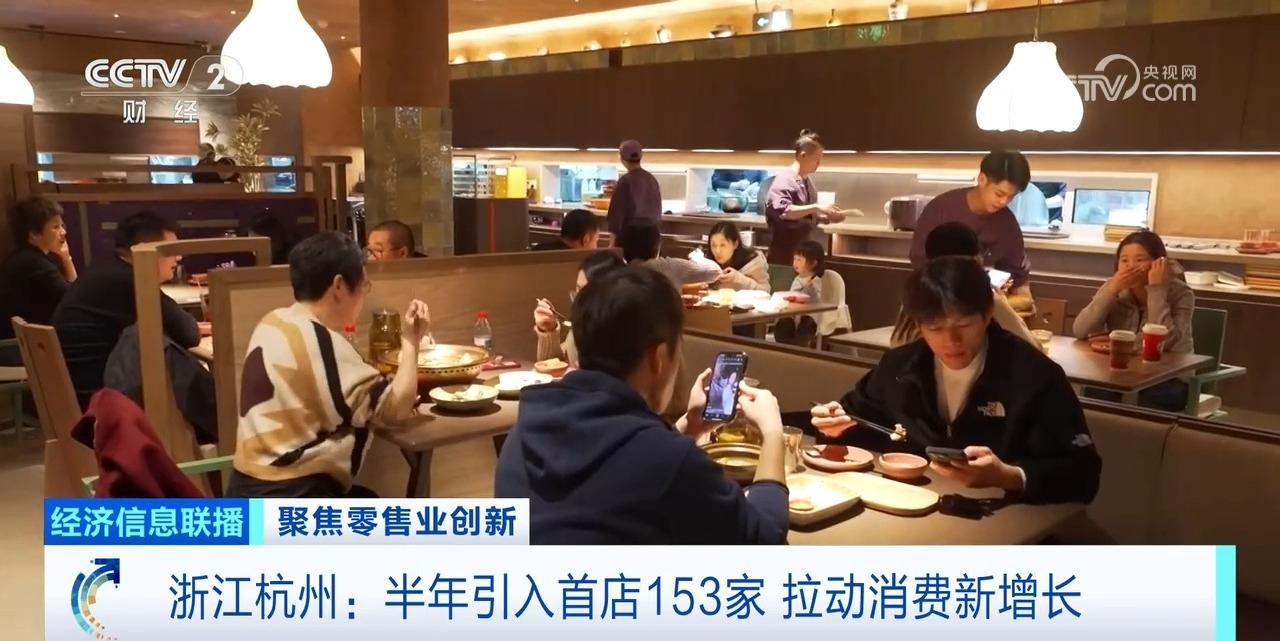
首店经济成消费新引擎 杭州半年引入首店153家
Yang Shi Wang· 2025-12-09 23:11
央视网消息:消费是中国经济增长的重要引擎。"十五五"规划建议中,大力提振消费被置于更加突出的位置。其中,零售业对促进消费和投资、保障民生和 就业的贡献巨大。12月9日,全国零售业创新发展大会在北京召开,商务部副部长盛秋平表示,"十五五"时期,要把零售业作为培育完整内需体系、做强国 内大循环的关键着力点,推动行业转向品质驱动、体验驱动,实现高质量发展。 中午时分,湖滨商圈的九洲籍·新派潮菜全国首店内,40张餐桌几乎坐满。上个月初,这家融合传统潮菜与现代烹饪技法的品牌,特意将全国首店落户于 此,刚开业便成了美食爱好者的打卡地,高峰期单日翻桌可达十几轮。 消费者 周雪秋:食材也好,味道也好,都很适合我们,吃了还想来,所以就把身边的小姐妹一起约过来了。 零售业中,首店经济正成为城市商业活力的"晴雨表"。浙江杭州的湖滨商圈,凭借西湖畔的独特区位,成为国内外品牌落子的核心选择,今年以来,当地首 店扎堆落地,带来新的消费热潮。 2025年上半年,杭州共引入153家首店,新增首店数量同比上涨39.1%,保持高品质增长态势。首店扎堆的背后,是政策与服务的双重保障。今年,上城区 推出最高100万元的首店补助,从选址到开业全程护航 ...
南京五大商圈上榜《中国商圈商业力TOP100指数榜单》
Nan Jing Ri Bao· 2025-12-08 02:21
Group 1 - The 2025 "China Business Circle Commercial Power TOP 100 Index" was announced, with Nanjing's Xinjiekou business circle ranking second nationally, following Beijing CBD and ahead of Shanghai's Lujiazui-Zhangyang Road [1][2] - The ranking is based on a comprehensive evaluation system developed by Ying Shang Co., which includes factors such as population size, transportation infrastructure, commercial scale, diversity, vitality, and potential, covering over 3,000 business circles across 368 cities [1] - Nanjing's Xinjiekou business circle is recognized as a commercial center in East China, with significant foot traffic and a high concentration of luxury brands, including four shopping centers with annual sales exceeding 4 billion yuan [2][4] Group 2 - The introduction of new high-end and trendy brands in Nanjing's commercial landscape has enhanced consumer engagement, with the first store economy becoming a key driver for attracting younger demographics [4][5] - Nanjing has seen a significant increase in the number of first stores, with over 1,500 new stores opened in recent years, including 8 global first stores and 4 Asian first stores, showcasing a diverse and competitive retail ecosystem [5][6] - The commercial landscape in Nanjing is evolving into a "multi-core era," with multiple business circles gaining prominence, indicating a shift from a single dominant business area to a more diversified commercial environment [6]
落地生花,破局出圈:上海首店经济调研启示|封面专题
清华金融评论· 2025-05-01 09:11
首店经济是首发经济的重要组成部分,有利于创造消费热点、激发消费热 情、彰显创新能力。笔者近期调研了上海首店经济的发展状况,感受到了 优质门店带来的精彩卖场呈现、旺盛客流量、创新货品组合、与众不同的 购物体验。展望未来,看好线下零售渠道的高质量发展趋势,市场份额将 向优势商圈、创新店铺集中,首店经济也将助力各地消费市场的繁荣。 首店经济:首发经济的重要组成部分 文/中国国际金融股份有限公司研究部董事总经理 郭海燕 ,中国国际金融股份有 限公司研究部研究助理 庄铭楷 ,中国国际金融股份有限公司研究部副总经理 周 彭 2024年7月21日,党的二十届三中全会审议通过了《中共中央关于进一步全面深化改革、推进中国式现代化的决定》(以下简称《决定》),其中针对"构建 全国统一大市场"进行了系统规划,并提及"积极推进首发经济"。同年,中央经济工作会议将提振消费作为2025年的首要任务,并明确指出要"积极发展首发 经济"。 "首发经济"的内涵丰富,发轫于"首店经济",从全链路强调企业创新。根据《决定》辅导读本,首发经济是指"企业发布新产品,推出新业态、新模式、新 服务、新技术,开设首店等经济活动的总称,涵盖了企业从产品或服务 ...

重庆缘何成为首店“引力场”
Sou Hu Cai Jing· 2025-04-06 02:35
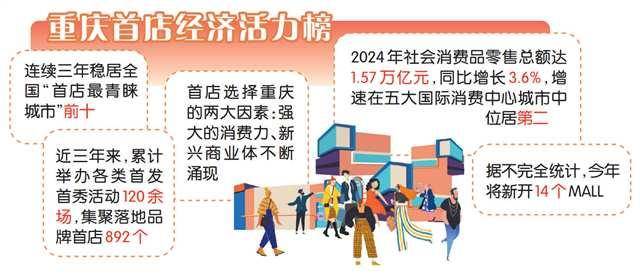
Core Insights - The emergence of new flagship stores in Chongqing reflects the city's strong consumer power and favorable business environment, positioning it as a leading city for flagship store development in China [2][4][5] Group 1: Flagship Store Economy - Chongqing has seen a significant increase in flagship stores, with 892 new stores established in various sectors, including fashion and dining [4] - The city has hosted over 120 flagship launch events in the past three years, indicating a robust strategy to attract new brands [4] - In 2024, Chongqing is expected to welcome over 80 new flagship stores, further solidifying its status as a preferred location for brands [4] Group 2: Consumer Power - Chongqing's social retail sales are projected to reach 1.57 trillion yuan in 2024, with a year-on-year growth of 3.6%, ranking second among major international consumer cities [6] - High consumer spending is evident, with flagship stores like BASEMENT FG attracting over 20,000 daily visitors and achieving annual sales exceeding 100 million yuan [6] - The presence of affluent young consumers in Chongqing is driving demand for high-end brands, as seen with brands like ANN ADELMAN targeting this demographic [6] Group 3: Business Environment and Policy Support - The Chongqing government has introduced policies to support the flagship store economy, including financial incentives for brands and event organizers [8] - The city is actively developing commercial spaces and enhancing core business districts to attract more flagship stores [9] - Ongoing efforts to improve service levels and support for businesses aim to ensure that flagship stores not only enter the market but also thrive in the long term [8]