香港互联网ETF

Search documents
香港互联网ETF(513720)盘中涨超1%,新经济行业迎来价值重估机遇
Mei Ri Jing Ji Xin Wen· 2026-01-29 08:38
Group 1 - The core viewpoint of the article highlights that the Hong Kong internet ETF (513720) has seen a rise of over 1% amid a value reassessment opportunity in the new economy sector, driven by a backdrop of interest rate cuts by the Federal Reserve [1] - CITIC Securities points out that with the easing liquidity in the Hong Kong stock market, there is an upward elasticity in the non-bank sector, indicating a recovery in the market since January [1] - As of January 23, the overall market capitalization of Hong Kong stocks reached HKD 50.23 trillion, reflecting a 6% increase compared to the end of December 2025 [1] Group 2 - The average daily trading (ADT) volume in the Hong Kong stock market has increased to HKD 262.87 billion, marking a 41.32% month-on-month growth, with southbound capital ADT rising by 45.24%, accounting for 23.1% of the total [1] - The performance of Hong Kong stocks in 2025 has been impressive, with continuous valuation recovery influenced by improved macroeconomic fundamentals, policy benefits, domestic industrial upgrades, and global liquidity improvements [1] - The Hong Kong internet ETF (513720) tracks the Hong Kong Stock Connect Internet Index (931637), which selects listed companies involved in internet-related businesses to reflect the overall performance of internet-themed stocks within the Stock Connect [1]
香港互联网ETF(513720)盘中涨超1%,AI应用预计将加速落地
Mei Ri Jing Ji Xin Wen· 2026-01-28 07:14
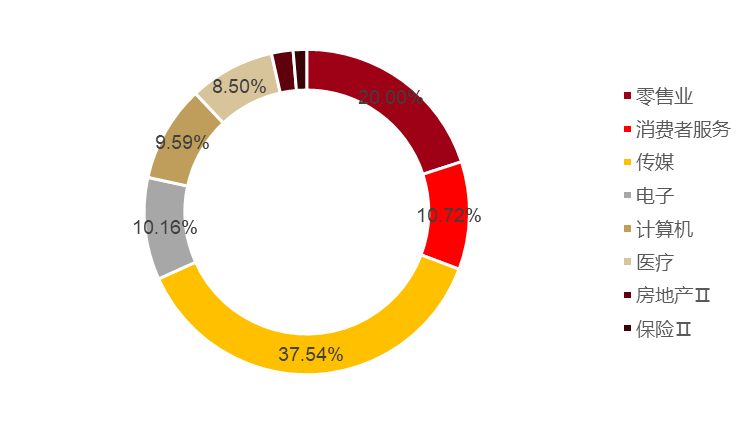
Group 1 - The core viewpoint is that AI applications are expected to accelerate their implementation in the industry [1] - Southbound capital is flowing into the market at an increasing pace, with net inflows primarily in the information technology and consumer discretionary sectors [1] - The overall investment strategy maintains a barbell approach, with value dividends as the base and a dynamic focus on offensive market directions, particularly in AI technology [1] Group 2 - The Hong Kong Internet ETF (513720) tracks the Hong Kong Stock Connect Internet Index (931637), which selects listed companies involved in e-commerce, social media, and gaming to reflect the overall performance of internet-related securities listed in Hong Kong [1] - The industry allocation of the index emphasizes media, retail, and consumer services, showcasing a distinct internet theme and high industry concentration [1]
AI全产业链解析:上游算力强劲,下游应用关注预期兑现
Mei Ri Jing Ji Xin Wen· 2026-01-26 02:00
Group 1: Semiconductor Equipment and AI - The core logic driving the rise of the semiconductor equipment sector is the demand for advanced process expansion, particularly in the production of high-end chips like 5nm, 3nm, and 2nm, where China has not yet achieved full autonomy [1] - The domestic semiconductor industry has made some breakthroughs, particularly in GPU design, with several local companies expected to go public by the end of 2025, indicating a gradual technological advancement [1] - The semiconductor equipment ETF (159516) is primarily driven by the expansion needs of advanced processes, which is a key factor in its performance [1] Group 2: Storage Chip Price Increases - The price increase of storage chips has created a chain reaction, leading to urgent expansion needs among related companies, which is reflected in the performance of the semiconductor equipment ETF (159516) [2] - Despite the absence of a pure storage ETF, the semiconductor equipment ETF serves as a relevant investment vehicle due to the ongoing supply-demand imbalance in storage chips, which has been driving prices up since 2025 [2] - The recent performance of TSMC, which raised its earnings forecast and capital expenditures, has positively influenced market sentiment towards the semiconductor equipment sector [2] Group 3: Communication Equipment and Light Modules - The communication ETF (515880) is highlighted as a potential investment focus, particularly in light modules, which are expected to experience a supply-demand imbalance in 2026 due to anticipated upgrades in chip architecture [3] - The expected transition to "in-cabinet" light modules by 2027, which could see market sizes 4-5 times larger than current external models, presents significant growth opportunities [4] - The communication ETF's performance is tied to the expansion of production capabilities in response to the anticipated demand for upgraded light modules [3][4] Group 4: AI Applications and Market Dynamics - The AI application sector is currently fragmented, with significant areas being robotics and smart vehicles, both of which are not showing substantial growth in 2025 [4][6] - The gaming sector is identified as having a more stable fundamental outlook within AI applications, benefiting from normalized game license issuance and the potential for blockbuster products [8][10] - The gaming ETF (516010) has shown significant growth, with a more solid fundamental base compared to other AI application sectors, although it lacks the short-term catalysts seen in other areas [9][10]
香港互联网ETF(513720)盘中涨超1.3%,市场关注香港互联网前景
Mei Ri Jing Ji Xin Wen· 2026-01-23 05:46
Core Viewpoint - The progress of the AI industry trend relies on breakthroughs in both AI application and consumer sectors, highlighting the importance of focusing on Hong Kong's internet sector [1] Group 1: Market Trends - The initial phase of a bull market sees funds favoring a few high-growth sectors, while later stages lead to a focus on main lines, making it harder for new funds to achieve profits [1] - The Hong Kong Internet ETF (513720) tracks the Hong Kong Stock Connect Internet Index (931637), which selects 30 listed companies involved in internet-related businesses within the Stock Connect range [1] Group 2: Index Composition - The index emphasizes core areas such as media and retail, with a balanced allocation across large, medium, and small market capitalization stocks [1] - It reflects the overall performance of the consumer internet sector, including key application scenarios like social media, e-commerce, and gaming [1]
香港互联网ETF(513720)涨超1.4%,AI产业规模化前景或成支撑因素
Mei Ri Jing Ji Xin Wen· 2026-01-14 02:55
Group 1 - The artificial intelligence (AI) industry is expected to enter a phase of large-scale application and popularization, with AI application products improving in performance and user engagement, leading to exponential growth in industry scale [1] - China leads the world in the number of AI papers published, accounting for 23.2% of the global total, and has a significant advantage in patent authorizations, providing foundational support for the large-scale development of the industry [1] - The AI market in China is projected to achieve a compound annual growth rate (CAGR) of over 35%, with the large model market potentially exceeding a growth rate of 63%, driven primarily by enterprise-level applications [1] Group 2 - The Hong Kong Internet ETF (513720) tracks the Hong Kong Stock Connect Internet Index (931637), which selects 30 publicly listed companies involved in internet-related businesses, covering sectors such as communication services, information technology, and consumer discretionary [2] - The index has high industry and holding concentration, focusing on e-commerce and social technology applications to reflect the overall performance of internet-themed listed companies within the Hong Kong Stock Connect [2]
香港互联网ETF(513720)涨超1.5%,机构称港股互联网板块或迎估值修复机遇
Mei Ri Jing Ji Xin Wen· 2026-01-13 06:33
Group 1 - The core viewpoint is that recent policies in the service consumption sector are revitalizing the Hong Kong stock market's internet industry, with a focus on enhancing trade and investment facilitation in Hainan Free Trade Port and Shanghai's initiatives to stimulate consumption [1] - AI technology is enhancing industry efficiency, with OTA platforms benefiting from GEO development; for instance, Ctrip's "Smart Engine 3.0" has improved product recommendation efficiency by over 8% [1] - The local lifestyle sector is experiencing significant digital upgrades, as evidenced by Gaode's "Street Scanning List," which has led to a more than threefold increase in merchant order volume after covering all scenarios [1] Group 2 - The education sector is focusing on vocational education reform, with plans to add seven vocational undergraduate institutions by 2026 [1] - The duty-free industry is seeing new developments, highlighted by the topping out of the third phase of Sanya International Duty-Free City, which is expected to be completed in phases by 2026 [1] - Overall, underpinned by policy support and technological innovation, the Hong Kong stock market's internet sectors are presenting structural growth opportunities [1] Group 3 - The Hong Kong Internet ETF (513720) tracks the Hong Kong Stock Connect Internet Index (931637), which consists of internet companies listed on the Hong Kong Stock Exchange, covering sectors such as communication services, information technology, and consumer discretionary, with a focus on soft technology [1] - The constituent stocks have a substantial total market capitalization, and leading companies significantly influence the index, reflecting the overall performance of Hong Kong's internet-related listed companies [1]
香港互联网ETF(513720)大涨4%,三重因素驱动港股反攻
Mei Ri Jing Ji Xin Wen· 2026-01-12 05:55
Core Viewpoint - The Hong Kong Internet ETF (513720) surged by 4% on January 12, driven by three key factors that are expected to lead to a rebound in Hong Kong stocks in 2026 [1] Group 1: Factors Driving Market Rebound - A weaker US dollar is attracting international capital to increase allocations in Hong Kong [1] - The appreciation of the Renminbi is encouraging the repatriation of Chinese capital that has been held overseas [1] - A recovery in inflation and potential debt restructuring policies are expected to improve the fundamental outlook [1] Group 2: Sector Analysis - The Hang Seng Technology Index is anticipated to experience high odds of recovery due to stagnation in 2025, potentially benefiting from a "Davis Triple Play" in 2026, which includes valuation recovery, profit improvement, and liquidity support [1] - The Hong Kong technology sector, particularly those with high AI application ratios, is expected to benefit from the accelerated commercialization of AI in the medium to long term, with market elasticity likely to surpass that of computing infrastructure [1] - Current valuations of Hong Kong technology stocks are lower than those of A-shares, suggesting an upward potential under the mean reversion logic [1] Group 3: ETF and Index Overview - The Hong Kong Internet ETF (513720) tracks the Hong Kong Stock Connect Internet Index (931637), which selects 30 publicly listed companies involved in internet-related businesses from the Stock Connect range [1] - The index focuses on key sectors such as media and retail, with a balanced allocation across large, medium, and small-cap stocks [1] - It reflects the overall performance of the consumer internet sector, including core application scenarios such as social media, e-commerce, and gaming [1]
香港互联网ETF(认购代码:513723)跟踪指数有什么特点?
Sou Hu Cai Jing· 2025-12-11 01:53
Core Insights - The Hong Kong Internet ETF (subscription code: 513723) tracks the CSI Hong Kong Stock Connect Internet Index, which selects 30 listed companies involved in internet-related businesses within the Hong Kong Stock Connect scope to reflect the overall performance of the internet theme in Hong Kong stocks [1][10] - The index focuses on companies whose main business involves internet software, internet retail, internet services, mobile internet, and even home entertainment software, thus breaking the limitations of traditional industry indices [1][10] Industry Distribution - The top three industries in the CSI secondary industry distribution are Media, Retail, and Consumer Services [1][10] - Major holdings include well-known companies such as Alibaba, Tencent, Xiaomi, Meituan, and SenseTime, with JD Health and Alibaba Health also appearing in the top ten holdings [1][3] Top Holdings - The top ten holdings by weight are as follows: - Alibaba-W (9988 HK): 18.92% in Retail - Tencent Holdings (0700.HK): 16.34% in Media - Xiaomi Group-W (1810.HK): 10.16% in Electronics - Meituan-W (3690.HK): 8.07% in Consumer Services - SenseTime-W (0020.HK): 3.91% in Computers - Bilibili-W (9626.HK): 3.76% in Media - JD Health (6618.HK): 3.58% in Healthcare - Alibaba Health (0241.HK): 3.02% in Healthcare - Kuaishou-W (1024.HK): 2.81% in Media - Meitu Inc. (1357.HK): 2.58% in Media [3] Market Capitalization Distribution - Stocks with a market capitalization of over 200 billion account for 56% of the index, indicating a significant presence of large-cap stocks [3][10] - There are 15 mid-cap stocks with market capitalizations between 20 billion and 60 billion, reflecting a balanced sample distribution [3][10] Detailed Industry Breakdown - The top three weighted industries in the CSI tertiary industry distribution are Digital Media, Internet Retail, and Electronic Terminals and Components [8] - Digital Media includes familiar areas such as interactive media and video media, while Internet Retail corresponds to online shopping needs [8] Comparison with Other Indices - The index has a higher weight in Media and Retail, exceeding 50%, compared to traditional technology indices [15] - Unlike conventional technology indices, this index focuses on internet-related companies and excludes sectors like semiconductors and passenger vehicles, which have lower correlation with internet company performance [15][16]