
骁龙系列芯片

Search documents
破防了?美芯价格暴跌90%,美媒直接甩锅,比尔盖茨三年前预言成真
Sou Hu Cai Jing· 2026-02-03 06:34
Core Insights - The global semiconductor market is experiencing a dramatic price drop, with general chip prices plummeting from $90 to around $10, a decline of nearly 90% [2] - Major companies like Micron and Intel are facing significant financial challenges, indicating turmoil within the U.S. semiconductor industry [2] Group 1: Market Dynamics - The price collapse is not merely a market fluctuation but signifies a critical turning point in a prolonged technological competition [5] - The U.S. semiconductor industry, once stable with a clear global structure, is now facing challenges due to geopolitical tensions and export restrictions [5][7] - The U.S. has implemented multiple export control measures against China, aiming to maintain technological dominance, which has inadvertently accelerated China's self-reliance in chip development [7][11] Group 2: China's Response - China's semiconductor industry has rapidly advanced, achieving significant milestones such as 7nm process production by SMIC and the development of domestically produced Kirin chips by Huawei [11] - By the end of 2025, China's self-sufficiency in chips is projected to reach nearly 70%, fundamentally altering the global supply-demand landscape [11] - China is not only meeting its domestic needs but is also beginning to export chips to Southeast Asia and the Middle East, marking a historic shift from being a net importer to a dual-driven export market [13] Group 3: Strategic Miscalculations - The U.S. semiconductor price drop can be traced back to strategic misjudgments regarding China's capabilities and the impact of export controls [13] - Bill Gates' warnings about the consequences of restricting China's access to chip technology have proven prescient, as these actions have catalyzed China's competitive growth [9][11] - The current situation illustrates that China's approach is not to replicate the U.S. monopoly but to create a new ecosystem based on self-sufficiency and open cooperation [13]


英伟达入局,这个赛道热闹了
半导体行业观察· 2026-01-31 03:49
Core Viewpoint - Nvidia is accelerating the development of Arm architecture-based System on Chips (SoCs) to enter the Windows consumer laptop market, which is seen as a significant step to challenge the long-standing x86 architecture dominance in the PC processor field [2][11]. Group 1: Nvidia's SoC Development - Nvidia plans to launch two SoC models, N1 and N1X, which integrate CPU and GPU into a single SoC, breaking the traditional "x86 CPU + discrete GPU" configuration [4]. - The N1 and N1X chips utilize TSMC's 3nm process and feature a combination of 10 high-performance Cortex-X925 cores and 10 energy-efficient Cortex-A725 cores, along with a Blackwell architecture GPU with 6144 CUDA cores [6]. - These chips support LPDDR5X-9400 unified memory (up to 128GB), which connects CPU, GPU, and AI acceleration units in a single memory pool, enhancing efficiency in local model inference and real-time video understanding [6]. Group 2: Market Positioning and Partnerships - Nvidia's Windows on Arm laptops are expected to cater to gaming, creative work, and local AI workloads, positioning them closer to the MacBook Pro rather than lightweight laptops [7]. - Lenovo and Dell are among the first strategic partners for Nvidia's PC processors, with Lenovo developing six models based on the N1X chip [7]. - Nvidia's sales strategy includes releasing reference designs to OEMs and establishing approved and recommended supplier lists to enhance performance tuning [8]. Group 3: Historical Context and Strategic Intent - Nvidia's foray into the PC processor market is not a sudden decision but a strategic extension of over a decade of technological groundwork, starting with the "Denver project" in 2011 [8][9]. - Despite past challenges with the Tegra processors in the consumer PC market, Nvidia has not abandoned its ambitions and has shifted focus to automotive platforms and embedded systems [9][10]. - The introduction of the N1/N1X series marks a significant milestone in Nvidia's long-term strategy to leverage its expertise in AI and GPU technology to meet the evolving demands of the PC market [12]. Group 4: Competitive Landscape - The entry of Nvidia into the PC CPU market is seen as a catalyst for innovation, potentially transforming the competitive landscape from a monopoly to a more diverse ecosystem [13]. - The Arm architecture, led by companies like Apple and Qualcomm, is increasingly pressuring the x86 architecture, with predictions that Arm-based laptops could capture 20% of the market by 2025 and over 40% by 2029 [18]. - AMD continues to gain market share in the x86 segment, with its Ryzen processors being well-received, while also exploring Arm architecture options to diversify its offerings [22]. Group 5: Future Outlook - The upcoming release of Nvidia's N1/N1X chips is anticipated to intensify competition in the PC processor market, potentially leading to significant technological advancements and price rationalization for consumers [33]. - The ongoing battle between x86 and Arm architectures signifies a critical turning point in the market, with implications for the future direction of computing architectures [33].


台积电成熟制程,有变
半导体行业观察· 2026-01-09 01:53
Core Insights - TSMC is expanding its operations in the U.S. by acquiring land in Arizona for over $197 million (approximately NT$6.227 billion) to support its production and operational needs [1] - There are rumors that TSMC plans to transfer some mature process equipment from Taiwan to its partner, World Advanced, in Singapore, which could enhance TSMC's advanced process capacity [2] - Qualcomm is in discussions with Samsung for 2nm wafer foundry services, potentially breaking TSMC's exclusive hold on Qualcomm's advanced process orders [4][5] Group 1: TSMC's U.S. Expansion - TSMC announced the acquisition of new land in Arizona, covering an area of 3,652,651 square meters, to support its expansion plans and respond to strong long-term AI-related demand [1] - The company is currently in a quiet period before its earnings call and has not commented on the rumors regarding the transfer of equipment to Singapore [1] Group 2: Equipment Transfer Rumors - Market speculation suggests that TSMC is moving some mature process equipment to World Advanced's 12-inch factory in Singapore to free up space for advanced process equipment [2] - If true, this move could accelerate TSMC's advanced process layout in both Taiwan and the U.S., potentially boosting future performance [2] Group 3: Qualcomm and Samsung Collaboration - Qualcomm's CEO confirmed discussions with Samsung for 2nm wafer foundry services, marking a return to collaboration after years of exclusivity with TSMC [4] - Samsung is reportedly offering wafer foundry prices that are at least 30% lower than TSMC's, aiming to secure Qualcomm's future orders [4][5] - Qualcomm's upcoming flagship chip, the Snapdragon 8 Elite Gen 6, may adopt a dual-foundry strategy, utilizing both TSMC and Samsung to mitigate supply chain risks and reduce costs [5]

AI芯片重塑高通(QCOM.US)基本面前景 市场期待释放新动态
Zhi Tong Cai Jing· 2025-11-03 07:30
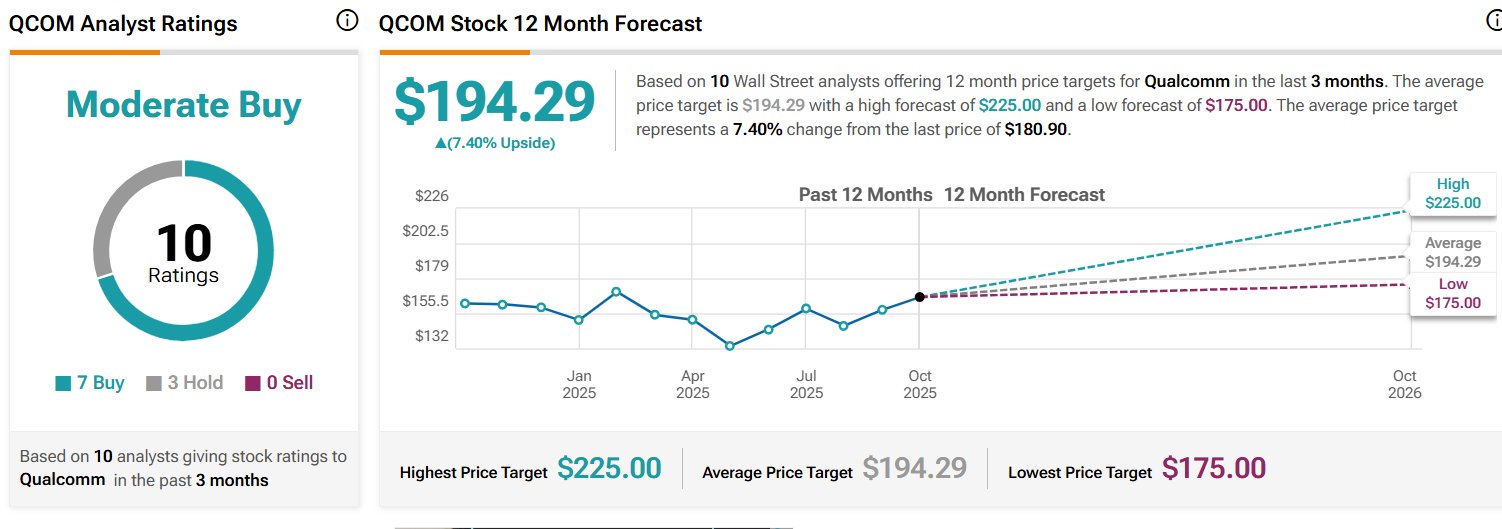
Core Viewpoint - Qualcomm is set to release its Q4 2025 fiscal year earnings on November 5, with analysts anticipating strong signals of recovery in smartphone and PC chip demand, as well as updates on its AI chip developments [1] Group 1: Business Expansion and AI Focus - Qualcomm has diversified its business beyond smartphone reliance, expanding into PC, automotive chips, and IoT, with a focus on high-performance AI capabilities [1][3] - The newly launched AI200/AI250 chips are aimed at the AI data center market, directly competing with NVIDIA and AMD's AI accelerators [1][2] - The AI200/AI250 chips are designed to significantly reduce the total cost of ownership (TCO) for AI inference workloads in data centers [2] Group 2: Market Potential and Growth Drivers - If Qualcomm secures orders from major tech companies like Microsoft, Amazon, and Meta for its AI infrastructure, it could generate billions in new revenue [2] - Analysts have raised Qualcomm's target stock price to $200 or above, indicating a potential upside of approximately 7.4% from the current levels [3] Group 3: Defensive and Growth Attributes - Qualcomm possesses a unique combination of defensive and growth characteristics, driven by stable patent licensing revenues and diverse semiconductor business growth [3][5] - The company is expected to exhibit both offensive and defensive traits, benefiting from a favorable market while maintaining resilience in a downturn [5] Group 4: Sales Composition and Edge AI Strategy - Qualcomm's revenue is increasingly diversified across smartphones, PCs, automotive electronics, and IoT, with smartphones remaining the largest segment [6] - The company is well-positioned to benefit from the edge AI trend, which involves deploying AI models directly on devices, enhancing performance and reducing latency [6] Group 5: AI Accelerator Innovations - The AI200/AI250 chips are designed for rack-scale AI inference clusters, with a focus on energy efficiency and performance [7][8] - The AI250 introduces innovative near-memory compute technology, significantly enhancing memory bandwidth and enabling more efficient AI inference workloads [8]

财报前瞻| AI芯片重塑高通(QCOM.US)基本面前景 市场期待释放新动态
智通财经网· 2025-11-03 07:17
Core Viewpoint - Qualcomm is set to release its Q4 2025 fiscal year earnings on November 5, with analysts anticipating strong signals of recovery in smartphone and PC chip demand, as well as updates on its AI chip developments [1] Group 1: Business Expansion and AI Focus - Qualcomm has diversified its business beyond smartphone reliance, expanding into PC, automotive chips, and IoT, with a focus on AI capabilities [1][2] - The newly launched AI200/AI250 chips are designed for data center applications, aiming to compete with NVIDIA and AMD in the AI accelerator market [2][7] - If Qualcomm secures orders from major tech companies like Microsoft and Amazon for its AI infrastructure, it could generate billions in new revenue [2] Group 2: Financial Performance and Market Expectations - Analysts predict that Qualcomm's diversified business model will lead to robust growth, potentially exceeding Wall Street's expectations for Q4 and the entire 2025 fiscal year [2][3] - Recent analyst target prices for Qualcomm have been raised to $200 or above, indicating a potential upside of approximately 7.4% from the current average target price of $194 [3] Group 3: Defensive and Growth Attributes - Qualcomm possesses unique defensive and growth characteristics, driven by stable patent licensing revenues and diverse semiconductor business growth [3][5] - The company is expected to perform well in both bullish and bearish market conditions, leveraging its diversified portfolio to mitigate risks [5] Group 4: Market Trends and AI Integration - The semiconductor industry is experiencing a positive outlook, particularly in high-performance AI chips and edge computing, areas where Qualcomm excels [5][6] - Qualcomm's strategy focuses on edge AI, integrating AI capabilities into smartphones, PCs, and automotive applications, which is becoming a key growth driver [6] Group 5: Technical Innovations in AI Chips - The AI200/AI250 chips are designed to enhance data center performance, emphasizing efficiency and total cost of ownership (TCO) [2][8] - The AI250 introduces innovative near-memory compute technology, significantly improving memory bandwidth and enabling efficient AI inference workloads [8]
摩根大通力挺高通(QCOM.US)AI牛市:告别单核智能手机叙事 边缘AI催化新一轮增长
智通财经网· 2025-07-30 09:20
Core Viewpoint - Morgan Stanley's latest report highlights Qualcomm's (QCOM.US) strategic shift from a heavy reliance on smartphone business to diversification into PC (especially high-performance AI-enabled AIPC), automotive chips, and IoT, showcasing different growth dynamics and future drivers, which is expected to lead to robust growth and exceed Wall Street's expectations for Q3 and FY2025 [1][2] Qualcomm's Business Diversification - Qualcomm's revenue composition is increasingly diversified, covering smartphones, PCs, automotive electronics, and IoT, with smartphones remaining the largest segment driven by Snapdragon chips and 5G modem patents [2][4] - The company is benefiting from the unexpected strong demand for AI-enabled high-end smartphones, particularly in flagship Android devices, achieving low double-digit year-over-year growth despite a slowdown in the overall smartphone market [2][4] Edge AI Strategy - Qualcomm's core strategy revolves around Edge AI, deploying AI models directly on local devices for real-time processing, which reduces latency and bandwidth usage [3] - The PC segment is emerging as a new focus for Qualcomm's Edge AI strategy, particularly with the introduction of ARM-based platforms like Oryon CPU and NPU, targeting the AI laptop market [3] Automotive and IoT Growth - Qualcomm's automotive chip business has shown impressive growth, maintaining approximately 30% growth driven by the digitalization and electrification trends in the automotive industry, with over $30 billion in orders [4] - The IoT segment, covering wearables, AR/VR, smart home, and industrial IoT, is also experiencing stable growth, contributing 20-40% of Qualcomm's revenue and growing faster than the core smartphone business [4] Resilience and Valuation - Qualcomm's diversification strategy enhances its resilience against market fluctuations, allowing it to maintain revenue guidance even if it loses major clients like Apple [4][7] - Morgan Stanley has reiterated a bullish stance on Qualcomm, raising the 12-month target price from $190 to $200, reflecting confidence in the company's long-term growth potential and the unique defensive attributes of its diversified business model [2][6][9] Semiconductor Industry Outlook - The semiconductor industry is viewed positively, with a focus on opportunities in high-performance AI chips, automotive electronics, and edge computing, where Qualcomm's expertise positions it uniquely [10] - Qualcomm's technology leadership in Edge AI across multiple sectors, including smartphones, automotive, and IoT, is expected to gain greater market recognition, enhancing its valuation [10] Investment Considerations - Qualcomm is seen as a balanced investment choice, offering both defensive characteristics and growth potential, with a valuation that has not yet fully reflected its long-term growth prospects [11]
高通(QCOM.O)投资价值分析报告:全球无线通信芯片领导者,引领端侧生成式AI革命
EBSCN· 2025-07-16 09:25
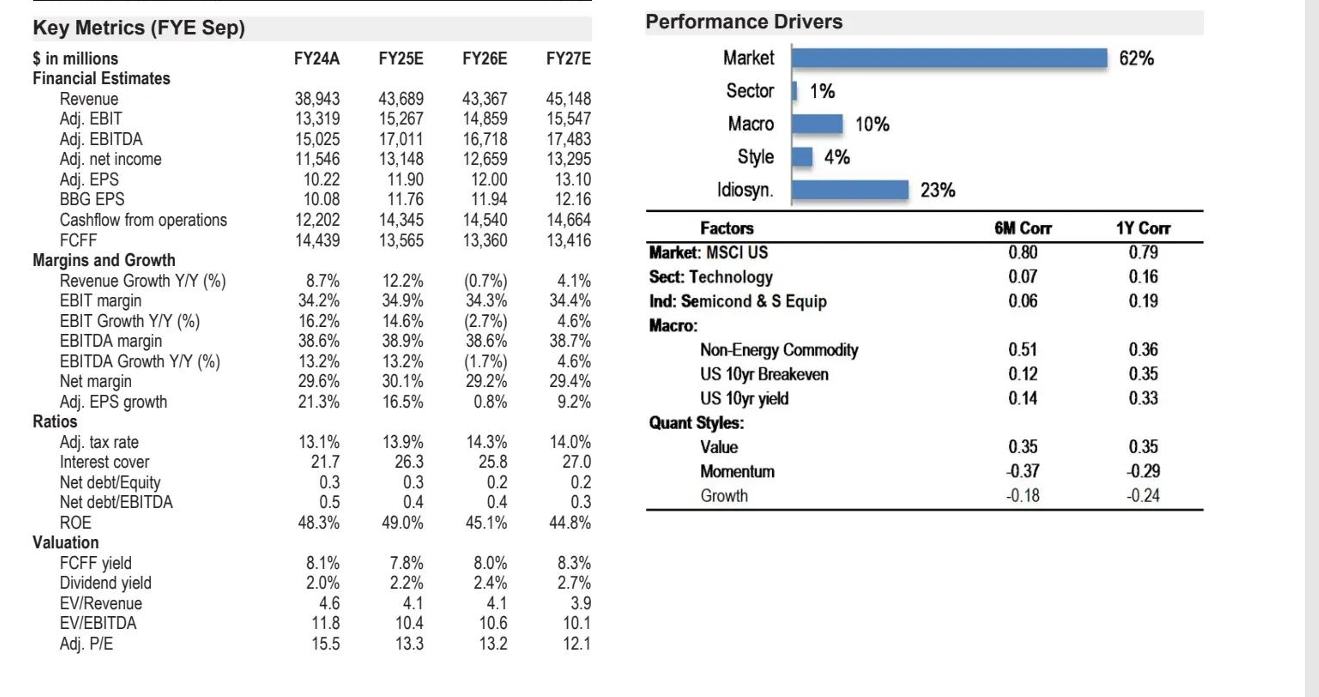
Investment Rating - The report gives Qualcomm an "Overweight" rating for the first time [5][15]. Core Views - Qualcomm is a global leader in wireless communication technology, with mobile chips as its core business. The company is expected to maintain its leading position in high-end smartphone SoC and smart cockpit SoC markets, while also expanding its presence in AI smart glasses and data center CPU businesses, which may become a second growth curve in the long term [5][15]. Summary by Sections Company Overview - Qualcomm was founded in 1985 and went public in 1991. The company focuses on mobile, IoT, and automotive sectors, with mobile business accounting for 63.81% of total revenue in FY2024, generating $24.863 billion [1][38]. Technology and Patent Strategy - Qualcomm builds a strong patent moat through a combination of self-research and acquisitions, holding approximately 5,600 families of 5G SEP patents, ranking second globally. The technology licensing business is the second-largest source of revenue and profit, maintaining a pre-tax profit margin of over 60% for nearly a decade [2][43]. Business Growth Opportunities - The smartphone market is showing weak recovery, but IoT and automotive businesses are expected to create a second growth curve. In IoT, Qualcomm is enhancing its presence in PC and smart glasses markets, with a forecasted revenue growth of 20% in FY2025. In automotive, the company is expanding its share in smart cockpit and advanced driving chips, with projected revenue growth of 34% in FY2025 [3][12]. Financial Forecast and Valuation - The report forecasts Qualcomm's net profits for FY2025-2027 to be $10.819 billion, $11.506 billion, and $12.477 billion, respectively, with growth rates of 6.7%, 6.3%, and 8%. The current price corresponds to a PE of 16X, 15X, and 14X for FY2025-2027, which is below the average PE of comparable companies [5][6][14]. Market Position and Competitive Landscape - Qualcomm is positioned as a leader in the smartphone SoC market, holding a 59% market share in the high-end Android smartphone chip market in 2024. However, the company faces challenges from Apple's self-developed baseband chips, which are expected to significantly reduce Qualcomm's revenue from Apple by 2027 [1][4][11].