
5G移动电话

Search documents
通信行业双周报(2026、3、13-2026、3、26):“十五五”规划纲要推进5G-A建设及商用部署-20260327
Dongguan Securities· 2026-03-27 09:10
Investment Rating - The report maintains an "Overweight" rating for the communication industry, expecting the industry index to outperform the market index by over 10% in the next six months [2][43]. Core Insights - The "14th Five-Year Plan" outlines the construction of 500,000 5G-A base stations and the deployment of 10G optical networks, establishing a growth foundation for the industry over the next three years [3][15]. - The communication industry is currently experiencing a period of technological iteration and policy benefits, with new growth drivers emerging from AI, quantum communication, and low-altitude economy sectors [3][38]. - The penetration rate of 5G users has reached 67.6%, providing a solid user base for technological upgrades [3][38]. - The report highlights the recent surge in optical fiber procurement prices, indicating a recovery in upstream market conditions [3][38]. Industry Performance Review - The communication sector index increased by 0.39% over the two weeks from March 13 to March 26, outperforming the CSI 300 index by 4.87 percentage points, ranking second among 31 primary industries [10][11]. - For March, the communication sector index rose by 0.46%, again outperforming the CSI 300 index by 5.41 percentage points [10][11]. - Year-to-date, the communication sector has seen a cumulative increase of 7.55%, surpassing the CSI 300 index by 10.84 percentage points [10][11]. Subsector Performance - Among the six subsectors of the communication industry, the highest increase was seen in the SW Communication Network Equipment and Devices, which rose by 6.12% [3][16]. - The other subsectors experienced varying declines, with the SW Other Communication Equipment falling by 12.26% [3][16]. Industry Data Updates - As of February 2026, the number of mobile phone users reached approximately 1.826 billion, with a year-on-year increase of 2.03% [25][19]. - The total number of fixed internet broadband access users reached 694 million, reflecting a year-on-year increase of 3.61% [27][19]. - The number of 5G base stations reached 4.909 million, accounting for 38% of the total mobile base stations, with a net increase of 70,000 from the end of the previous year [35][19]. Company Announcements - China Mobile reported a projected net profit of 137.1 billion yuan for 2025, with a slight year-on-year decrease of 0.9% [21][19]. - China Unicom expects a net profit growth of 1.1% for 2025, with total revenue projected at 392.223 billion yuan [22][19]. - Lightwave Technology anticipates a net profit increase of 163.76% for 2025, with revenue growth of 47.56% [23][19]. - GuoDun Quantum announced a turnaround to profitability in 2025, with a net profit of 5.3919 million yuan [24][19].






中国5G基站数达483.8万个
Ren Min Ri Bao· 2026-01-28 22:49
Core Insights - The Ministry of Industry and Information Technology of China reported that by the end of 2025, the telecommunications industry will maintain steady growth, achieving various development goals, including reaching 4.838 million 5G base stations, exceeding the "14th Five-Year Plan" target by 8.4 stations per 10,000 people [1] Group 1: Telecommunications Business Growth - By the end of 2025, the total telecommunications business volume is expected to grow by 9.1% year-on-year, with total revenue reaching 1.75 trillion yuan, a 0.7% increase [1] - The revenue share from emerging businesses such as cloud computing, big data, IoT, and data centers has risen to 25.7% [1] - The global share of China's declared essential patents for 5G standards reached 42%, with significant progress in 6G system architecture and key technology validation [1] Group 2: Infrastructure Development - The construction goals for 5G and gigabit optical networks have been exceeded, achieving gigabit access in all counties and 5G coverage in over 95% of administrative villages [1] - By the end of 2025, 5G-A will cover over 330 cities, with pilot deployments of 10-gigabit optical networks in 168 communities, factories, and parks [1] - The total length of the national optical cable network has reached 74.99 million kilometers, with data center racks provided by three major telecom companies totaling 938,000, and an addition of 108,000 racks expected in 2025 [1] Group 3: User Scale and Digitalization - By the end of 2025, the mobile phone user base is projected to reach 1.827 billion, with 5G mobile phone users accounting for 1.204 billion [2] - The fixed broadband access user base is expected to reach 691 million, while the number of mobile IoT terminal users will grow by 8.7% to 2.888 billion [2] - The mobile internet access traffic is anticipated to grow by 17.3% year-on-year, with deep integration of 5G and gigabit optical networks into 91 categories of the national economy, and the industrial internet achieving full coverage across 41 industrial categories [2]
我国5G基站数达483.8万个
Xin Hua She· 2026-01-28 09:34
Core Insights - The Ministry of Industry and Information Technology reported that by the end of 2025, China's telecommunications industry will maintain steady growth, achieving various development goals [1] Telecommunications Business Growth - By the end of 2025, the total telecommunications business volume is expected to grow by 9.1% year-on-year, with telecommunications revenue reaching 1.75 trillion yuan, a 0.7% increase [1] - The revenue share from emerging businesses such as cloud computing, big data, IoT, and data centers has risen to 25.7% [1] 5G Infrastructure Development - By the end of 2025, the number of 5G base stations in China will reach 4.838 million, with an average of 34.4 5G base stations per 10,000 people, exceeding the target of 8.4 stations set in the 14th Five-Year Plan [1] - The number of 5G standard essential patent declarations accounts for 42% of the global total [1] - The construction goals for 5G and gigabit optical networks have been exceeded, achieving gigabit access in all counties and 95% of administrative villages having 5G coverage [1] User Growth and Digitalization - By the end of 2025, the mobile phone user base is projected to reach 1.827 billion, with 5G mobile phone users numbering 1.204 billion [1] - Fixed broadband access users are expected to reach 691 million, while mobile IoT terminal users will grow to 2.888 billion, reflecting an 8.7% year-on-year increase [1] - The mobile internet access traffic is anticipated to grow by 17.3% year-on-year, with deep integration of 5G and gigabit optical networks into the national economy across 91 major categories [1] - The industrial internet has achieved full coverage across 41 industrial categories, with over 23,000 "5G + industrial internet" projects demonstrating significant empowerment effects [1]
高端制造与数字产业齐发力 2025年工业经济实现稳中有进新跃升
Yang Shi Wang· 2025-12-26 07:39
Group 1 - The core viewpoint of the articles indicates that China's industrial economy is showing steady growth, with significant contributions from high-tech and equipment manufacturing sectors [1][2][4] - From January to November, the added value of high-tech manufacturing and equipment manufacturing increased by 9.2% and 9.3% year-on-year, respectively [1] - The number of advanced and excellent smart factories has reached over 7,000 and 500, respectively, while 6,430 national green factories and 491 green industrial parks have been cultivated [1] Group 2 - The Ministry of Industry and Information Technology forecasts a 5.9% year-on-year growth in industrial added value for the entire year of 2025 [2] - Six industries, including electrical and mechanical sectors, contributed 58.2% to industrial growth, with nine out of ten major industrial provinces exceeding the national growth index [4] - Industrial investment increased by 4% year-on-year from January to November, with manufacturing investment growing by 1.9% [4] Group 3 - The digital industry is expected to see a revenue growth of approximately 9% in 2025, with telecom business volume and software revenue growing by 9% and 12%, respectively [4] - As of the end of November, the total number of 5G base stations reached 4.83 million, accounting for 37.4% of all mobile base stations, while 5G mobile phone users reached 1.193 billion, representing 65.3% of mobile phone users [4] Group 4 - The implementation of the "Artificial Intelligence + Manufacturing" initiative is fully underway, with an AI industry investment fund of 60 billion yuan established, and the AI application rate among manufacturing enterprises reaching 30% [5]

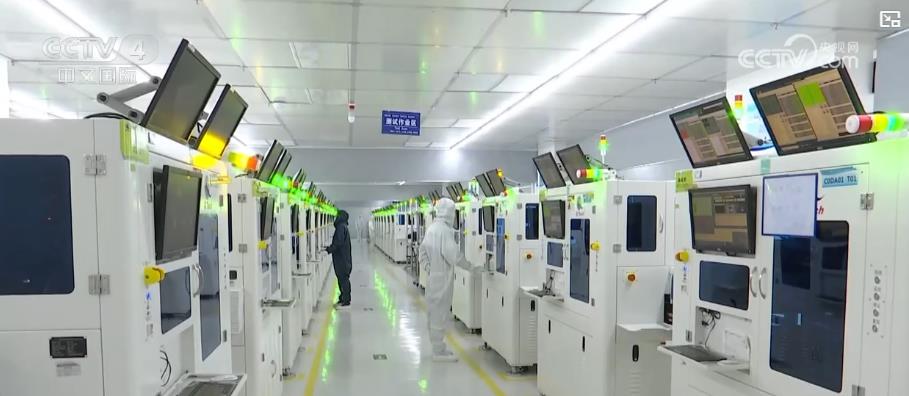
5.9%、9%,稳中有进!工业经济向“新”而行 筑牢发展更稳“硬支撑”
Yang Shi Wang· 2025-12-26 07:12
Core Viewpoint - The Ministry of Industry and Information Technology forecasts a steady growth in the industrial economy for 2025, with an expected year-on-year increase of 5.9% in the added value of industrial enterprises above a designated size [1] Group 1: Industrial Growth and Investment - From January to November 2025, the added value of high-tech manufacturing and equipment manufacturing industries increased by 9.2% and 9.3% year-on-year, respectively, indicating a rapid transformation and upgrading of the manufacturing sector [5] - Industrial investment grew by 4% year-on-year, with manufacturing investment specifically increasing by 1.9% [8] Group 2: Contribution of Key Industries - Six industries, including electrical and mechanical sectors, contributed 58.2% to the overall industrial growth [8] - Among the ten major industrial provinces, nine had growth indices exceeding the national average [8] Group 3: Digital Industry Performance - The digital industry is projected to see a revenue growth of approximately 9% year-on-year in 2025, with telecommunications and software business revenues increasing by 9% and 12%, respectively [9][12] - As of the end of November, the total number of 5G base stations reached 4.83 million, accounting for 37.4% of all mobile base stations, while 5G mobile phone users reached 1.193 billion, representing 65.3% of mobile phone users [12] Group 4: Artificial Intelligence in Manufacturing - The "Artificial Intelligence + Manufacturing" initiative has been fully implemented, with a focus on accelerating the application of AI terminals and intelligent systems [17] - A 60 billion yuan investment fund has been established for the AI industry, and the application rate of AI in manufacturing enterprises has reached 30% [17]
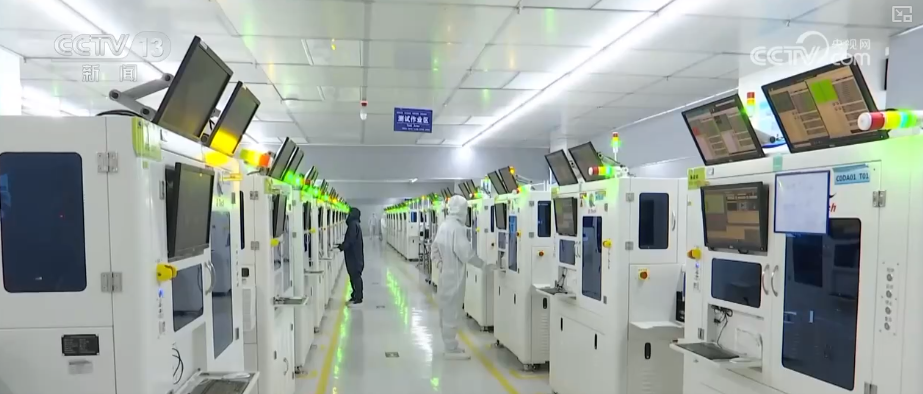
5G遇冷了吗?
Jing Ji Wang· 2025-12-26 02:04
Core Insights - The core viewpoint of the articles emphasizes the ongoing expansion of 5G user base in China, reaching 1.193 billion users by the end of November, which constitutes 65.3% of mobile phone users, despite ongoing skepticism regarding its utility and value [1][2]. Group 1: User Growth and Skepticism - As of November, the number of 5G mobile phone users reached 1.193 billion, with a net increase of 179 million users compared to the end of the previous year [1]. - Skepticism surrounding 5G arises from two main factors: pricing and user perception. The higher costs of 5G devices and plans compared to 4G, along with the perception that 5G offers no significant advantage for everyday applications, contribute to reluctance among existing 4G users to upgrade [1][2]. Group 2: Industrial and Societal Impact - In the industrial sector, 5G is transforming production models, enhancing efficiency and resource utilization, with data showing that 5G-enabled factories have seen a 25% increase in average capacity, a 21% improvement in product quality, and a 19% reduction in operational costs [3]. - 5G is also creating new possibilities in various sectors such as healthcare, education, transportation, and agriculture, facilitating remote surgeries, equitable education access, and precise agricultural monitoring [3]. Group 3: 5G as a Foundation for Future Technologies - 5G serves as a foundational technology for other advanced technologies, such as AI and AR/VR, requiring its high-speed, low-latency capabilities [4]. - The evolution of communication technologies has historically faced skepticism, similar to the initial doubts about 4G, which only gained recognition after the emergence of transformative applications [4]. - The transition from a construction boom to a focus on application development in 5G signifies a rational shift, with ongoing efforts to optimize network coverage and enhance user experience [4].
中经评论:5G遇冷了吗
Jing Ji Ri Bao· 2025-12-26 00:03
Core Insights - The number of 5G mobile phone users in China reached 1.193 billion by the end of November, with a net increase of 179 million users compared to the end of the previous year, accounting for 65.3% of total mobile phone users [1] - Despite the growth in 5G users, skepticism remains regarding its utility, with some arguing that 5G has cooled off and is unnecessary [1][2] - The skepticism is primarily driven by two factors: cost and perception. The higher costs of 5G devices and plans compared to 4G, along with a lack of compelling applications that demonstrate 5G's advantages to consumers, contribute to the reluctance to upgrade [1][2] Cost Factors - 5G devices are more expensive due to higher costs in core components, patents, design, and manufacturing compared to 4G devices [1] - Although 5G plan prices have been reduced, the cost-benefit ratio compared to 4G remains unclear for many users, leading to a lack of motivation to switch [1][2] Perception Factors - Most users' communication needs are met by 4G, making it difficult for them to perceive the advantages of 5G, such as high bandwidth and low latency [2] - The majority of 5G applications are industry-focused, with only 20% targeting personal consumption, which diminishes the perceived value for average consumers [2] Industrial Impact - In the industrial sector, 5G is transforming production models, enhancing efficiency and resource utilization in smart factories, and enabling remote diagnostics through AR technology [3] - Data shows that 5G-enabled factories in China have seen a 25% increase in average production capacity, a 21% improvement in product quality, and a 19% reduction in operational costs [3] Societal Benefits - 5G is creating new possibilities in various sectors, including healthcare, education, transportation, and agriculture, by enabling remote surgeries, equitable education access, and precise agricultural monitoring [3] Technological Foundation - 5G serves as a foundational technology for other advanced technologies, such as AI and AR/VR, requiring its high-speed, high-bandwidth, and low-latency capabilities [4] - The development of 6G relies on the groundwork laid by 5G in network architecture and spectrum resources [4] Long-term Perspective - The skepticism surrounding 5G mirrors past doubts about 4G, which only gained recognition after the emergence of transformative applications [4] - The transition from a construction boom to a focus on application development indicates a rational shift in the 5G landscape, with ongoing efforts to enhance network coverage, reduce costs, and expand application scenarios [4]
截至11月末 我国5G移动电话用户达11.93亿户
Ren Min Ri Bao· 2025-12-23 02:55
Core Insights - The Ministry of Industry and Information Technology reported that the total telecom business revenue reached 1.6096 trillion yuan, with a year-on-year growth of 0.9%, and a 9.1% increase when calculated at constant prices from the previous year [1] Group 1: Telecom Business Performance - Telecom business revenue for the first 11 months totaled 1.6096 trillion yuan, reflecting a year-on-year growth of 0.9% [1] - When adjusted for constant prices, the total telecom business volume increased by 9.1% compared to the previous year [1] Group 2: 5G User Growth - As of the end of November, the total number of mobile phone users among the three major telecom operators and China Broadcasting reached 1.828 billion, with a net increase of 38.54 million users compared to the end of the previous year [1] - The number of 5G mobile phone users reached 1.193 billion, with a net increase of 17.9 million users, accounting for 65.3% of total mobile phone users [1] Group 3: 5G Infrastructure Development - By the end of November, the total number of 5G base stations reached 4.83 million, with a net increase of 579,000 stations compared to the end of the previous year [1] - 5G base stations accounted for 37.4% of the total number of mobile base stations [1]
前11个月电信业务收入 同比增长0.9%
Xin Lang Cai Jing· 2025-12-22 20:23
Core Insights - The total number of mobile phone users among three major telecom companies and China Broadcasting reached 1.828 billion by the end of November, with a net increase of 38.54 million users compared to the end of last year [1] - The number of 5G mobile phone users reached 1.193 billion, with a net increase of 17.9 million users, accounting for 65.3% of total mobile phone users [1] - The overall telecom industry maintained stable operations, with total telecom business revenue reaching 1.6096 trillion yuan, a year-on-year increase of 0.9% [1] - The total telecom business volume, calculated at constant prices from the previous year, grew by 9.1% year-on-year [1] Infrastructure Development - The construction of gigabit optical fiber broadband networks is progressing, with the number of 10G PON ports capable of gigabit network service reaching 31.34 million, a net increase of 3.133 million compared to the end of last year [1] - The total number of 5G base stations reached 4.83 million, with a net increase of 579,000, accounting for 37.4% of total mobile base stations, an increase of 0.4 percentage points compared to the previous 10 months [1]
我国5G基站总数达483万个
Xin Hua She· 2025-12-22 13:36
Core Insights - The overall operation of China's telecommunications industry remained stable in the first 11 months of the year, with significant growth in 5G infrastructure and user adoption [1] Group 1: Telecommunications Industry Performance - As of the end of November, the total number of 5G base stations reached 4.83 million, an increase of 579,000 compared to the end of the previous year [1] - The cumulative telecom business revenue for the first 11 months was 1,609.6 billion yuan, reflecting a year-on-year growth of 0.9% [1] Group 2: User Growth Metrics - By the end of November, the total number of fixed internet broadband access users among the three major telecom operators reached 697 million, with a net increase of 27.12 million users since the end of the previous year [1] - The number of mobile IoT terminal users grew to 2.9 billion, with a net increase of 24.4 million users [1] - The number of internet television (IPTV, OTT) users reached 415 million [1] Group 3: 5G User Adoption - The total number of mobile phone users among the three major telecom operators and China Broadcasting reached 1.828 billion, with a net increase of 38.54 million users since the end of the previous year [1] - The number of 5G mobile phone users reached 1.193 billion, an increase of 17.9 million users, accounting for 65.3% of total mobile phone users [1]