90GHz超高速示波器

Search documents
光电融合破局,协同创新领航!2026 慕尼黑上海光博会暨协同创新论坛重磅启幕
半导体行业观察· 2026-03-14 01:08
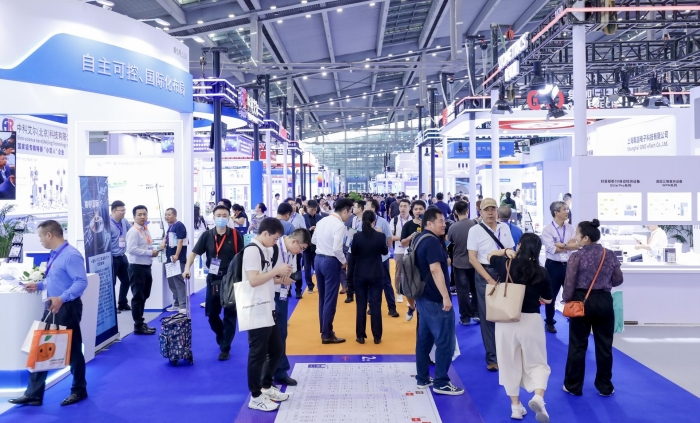
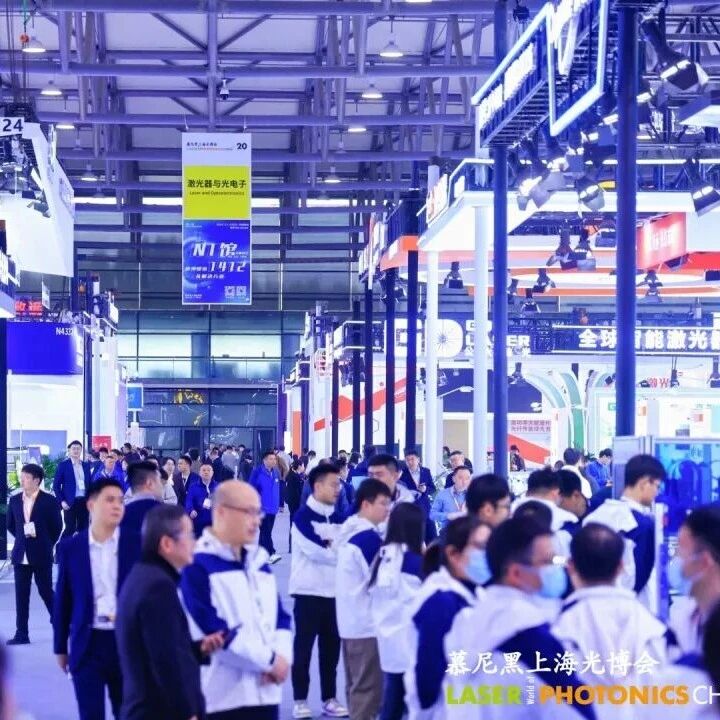
Core Viewpoint - The article highlights the unprecedented transformation opportunities and technological challenges in the semiconductor and optoelectronic industries due to the exponential growth in AI computing power demand and the accelerated deployment of 6G technology [1]. Group 1: Event Overview - The Munich Shanghai Optical Expo will take place from March 18-20, 2026, at the Shanghai New International Expo Center, featuring over 1,200 leading global companies [1]. - The event will include the "Collaborative Innovation Forum from Devices to Networks," focusing on "industry collaboration and communication upgrades," aiming to create a high-end platform for domestic innovation and technology integration [1]. Group 2: Exhibition Highlights - The expo will cover nine exhibition halls, focusing on six core areas: lasers and optoelectronics, optical manufacturing, infrared technology and applications, testing and quality control, integrated optoelectronics and optical communications, and biomedical photonics [3]. - Major industry players such as Dazhu Laser, Canon, and Coherent will showcase innovations from basic materials to core devices and system integration [3]. - The X Match business matching program will provide customized services for invited buyers, enhancing supply-demand matching efficiency [3]. Group 3: Forum Insights - The "Collaborative Innovation Forum" will gather 200 key participants, including academic leaders and industry giants, to discuss the entire value chain from trends to applications [4]. - Key presentations will focus on practical solutions addressing critical challenges, such as the production progress of silicon nitride photonic chips and their cost-reduction potential for optical module companies [4][5]. - The forum will also feature significant technological breakthroughs, including 3D vision solutions and ultra-high-speed oscilloscopes, with applications in major companies like Huawei and Alibaba Cloud [5]. Group 4: Market Demand and Supply - The forum will invite major telecom operators and cloud service providers to present clear procurement needs, focusing on 6G integrated communication and AI computing cluster construction [7]. - A closed-door matching session will facilitate one-on-one discussions between supply and demand sides, with previous events resulting in over 50 million yuan in orders [7]. Group 5: Domestic Innovation and Collaboration - The forum will showcase domestic companies with over 10 billion yuan in revenue, highlighting their R&D investments and breakthroughs in key areas like compound semiconductors and EDA tools [8]. - Discussions will cover critical topics such as the scaling of 800G/1.6T optical modules and the path to domestic EDA tool breakthroughs [8]. Group 6: Opportunities for Industry Professionals - The expo and forum present a unique opportunity for industry professionals to gain insights into mass production solutions and connect with major telecom and cloud service providers [10]. - Participants can engage with key decision-makers across the industry, fostering long-term collaboration [10].

破局光通信 “卡脖子”!光电融合 + 光子计算量产
半导体行业观察· 2026-02-01 02:25
Core Viewpoint - The forum titled "Collaborative Innovation Forum from Devices to Networks" aims to address practical challenges in the semiconductor industry, focusing on implementable technology solutions rather than mere concepts [1][10]. Group 1: Event Overview - The forum will take place on March 18, 2026, at the Shanghai New International Expo Center, featuring over 10 leading companies and three major telecom operators addressing the urgent needs of 6G technology [1]. - Unlike typical PPT presentations, this forum will showcase verified and applicable results from experts across academia and industry, targeting critical areas such as compound semiconductors and EDA [2]. Group 2: Agenda Highlights - The agenda includes presentations on various topics, such as photonic integrated chips for communication systems and the advantages of silicon capacitors in AI applications [5][6]. - Notable presentations include a practical solution for photonic integrated chips that can reduce device size by 40% and power consumption by 25%, addressing hardware bottlenecks in the transition from 5G to 6G [6]. Group 3: Demand and Collaboration - The forum will facilitate direct matching between supply and demand by inviting major telecom operators and leading cloud service providers to seek partnerships and collaboration [7]. - A closed-door matching session will allow participating companies to submit their technology proposals for one-on-one discussions with potential partners, leading to significant collaboration opportunities [7]. Group 4: Industry Needs and Opportunities - Telecom operators are expected to announce procurement needs for 6G integrated communication devices, focusing on domestic suppliers of optical chips and high-power compound semiconductor devices [8]. - Cloud service providers will present collaboration lists for AI computing centers, prioritizing products that can be delivered quickly from domestic companies [8]. Group 5: Organizational Strengths - The forum is organized by Semiconductor Industry Observation, which has over 10 years of experience in the semiconductor field, aiming to solve real industry problems and facilitate resource gathering for domestic innovation [10][12]. - The organization boasts a significant reach with over 950,000 followers across the industry, enabling effective engagement with key stakeholders [12].
来势迅猛,安世启动二次反制!荷兰断供,中方对阵欧盟27国
Sou Hu Cai Jing· 2025-11-06 18:29
Core Viewpoint - The conflict between ASML and its Chinese subsidiary highlights the fragility of global supply chains and the unintended consequences of political maneuvers in the semiconductor industry [1][3][10] Group 1: Supply Chain Disruption - ASML's temporary CEO announced a halt in wafer supply due to alleged payment defaults by the Dongguan factory, which ASML China refuted, claiming ASML owed 1 billion yuan [1][5] - The Dutch government's takeover aimed to sever Chinese control over ASML but resulted in a significant disruption, as 70% of ASML's end production capacity is concentrated in the Dongguan facility, leading to panic among European automakers [3][5] - Major European car manufacturers like Volkswagen and Mercedes-Benz rushed to stockpile chips, causing a 20% short-term price increase, while Dutch wafer factories faced inventory pile-up due to halted production [3][5] Group 2: Political and Economic Repercussions - The Dutch government's actions have been criticized for prioritizing political motives over market logic, with the German media noting that the automotive industry is facing real costs due to these decisions [5][7] - In response to the supply halt, the Chinese Ministry of Commerce implemented export controls on ASML's automotive chips, while allowing for flexible exemptions for affected companies, leading to a split in the European automotive sector [5][7] - ASML China indicated that its existing inventory could meet customer demands until the end of the year, and domestic wafer manufacturers are stepping in to fill the gap, accelerating the shift towards local alternatives [5][8] Group 3: Global Supply Chain Dynamics - The incident underscores the complexities of global supply chains, with ASML's model relying on a "Dutch wafer - Chinese packaging - global sales" approach, making the packaging stage a critical point of control [10] - The situation has prompted discussions about the sustainability of political interventions in market operations, with warnings from the German business community about the costs of such political maneuvers [10] - The broader implications of this conflict raise questions about the future of globalization and whether nations can maintain efficiency in supply chains while pursuing absolute autonomy [10]

湾芯展勾勒我国半导体产业发展“芯”画卷
Shang Hai Zheng Quan Bao· 2025-10-17 18:38
Core Insights - The 2025 Bay Area Semiconductor Industry Ecosystem Expo attracted over 112,300 visitors and featured 673 exhibitors, showcasing the entire semiconductor industry chain [2] - The event highlighted China's semiconductor capabilities and the initial formation of a "chip" ecosystem, with over 20 new product launches and 30 forums and supply-demand matching meetings [2] Group 1: Product Innovations - The star product of the expo was the 90GHz ultra-high-speed oscilloscope released by Wanlian, which improved performance by 500% compared to previous models, breaking a 30-year technology blockade [3] - Qiyunfang introduced two domestically developed EDA design software products, enhancing performance by 30% and reducing hardware development cycles by 40% [3] - Fangzheng Microelectronics showcased a powertrain system utilizing third-generation semiconductor chips, which can reduce losses by over 70% and decrease size by one-third compared to second-generation chips [3][4] Group 2: Industry Collaboration - The semiconductor industry is advancing in a "strong chain and supplement chain" process, with various segments collaborating to create a complete ecosystem [5] - Jiangfeng Electronics displayed target materials for 3nm and 5nm processes, achieving a closed-loop supply chain without relying on overseas imports [5] - Huazhong Microelectronics presented its capabilities in wafer manufacturing, offering full-process services for products like MCUs and focusing on unique processes in sound, light, electricity, magnetism, and gene detection [5] Group 3: Future Outlook - The expo demonstrated a strong industry focus on ecosystem construction, with participants expressing a commitment to continuous investment and development [6] - The 2026 expo's booth reservation process has already begun, indicating strong interest and future growth in the semiconductor sector [6] - The event attracted international participation, emphasizing the importance of open collaboration in building a global semiconductor ecosystem [6]