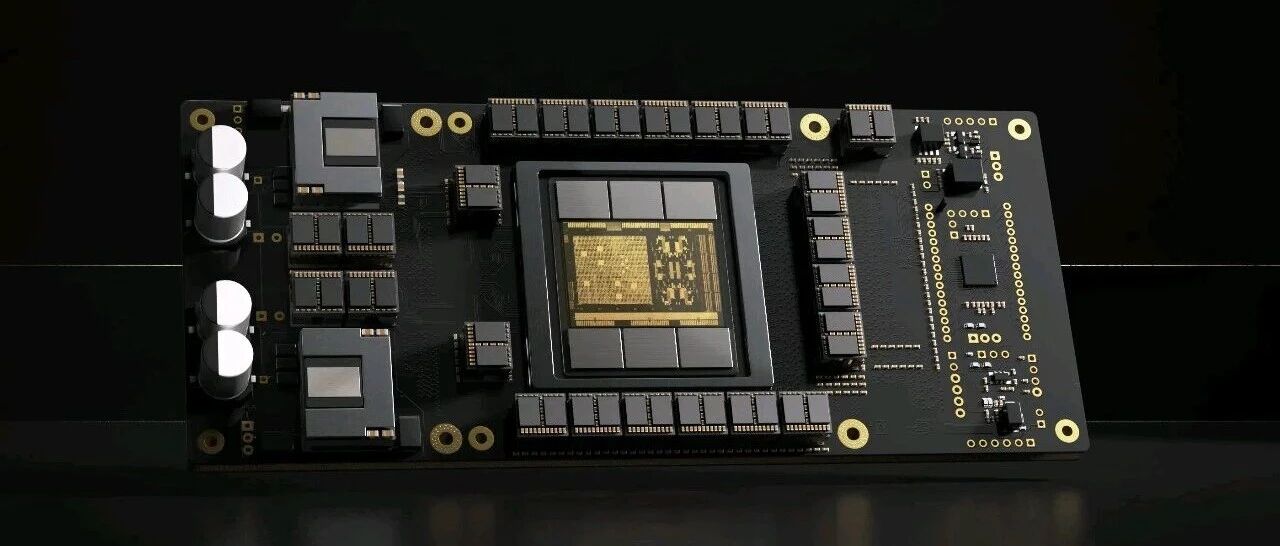
AMD MI300X

Search documents
哈佛辍学生拿下5亿美元融资:不造GPU,也要“绕开”英伟达
是说芯语· 2026-01-15 23:37
Core Insights - Etched, an AI chip company founded by Harvard dropouts, has raised nearly $500 million in a new funding round, achieving a valuation of $5 billion and total funding close to $1 billion [1][12] - The company aims to optimize the cost-performance ratio of AI computing, specifically focusing on running Transformer models more efficiently rather than competing directly with Nvidia's general-purpose GPUs [1][4] Market Context - Nvidia dominates the GPU market, with projected data center sales exceeding $500 billion by the end of 2026 [3] - Etched's analysis indicates that computational density has only improved by about 15% over the past few years, highlighting a need for more efficient solutions [3] Product Overview - Etched has developed a custom chip named Sohu, designed specifically for Transformer architecture, claiming it to be the "fastest AI chip ever" [3][10] - Under specific testing conditions, Sohu can process over 500,000 tokens per second when running the Llama 70B model, outperforming Nvidia's Blackwell GB200 GPU by an order of magnitude [3][4] Competitive Advantage - A server composed of eight Sohu chips can replace 160 H100 GPUs, offering a more economical, efficient, and environmentally friendly option for enterprises requiring specialized chips [5] - Sohu's design focuses on reducing energy consumption while achieving higher efficiency in running Transformer models, distinguishing it from general-purpose GPUs [5][10] Financial Implications - The cost of training AI models exceeds $1 billion, with inference applications potentially surpassing $10 billion; even a 1% performance improvement can justify a custom chip project costing between $50 million to $100 million [5][7] Future Prospects - Etched's chip is manufactured using TSMC's 4nm process and is integrated with HBM memory and server hardware to support production capabilities [10] - The company has plans to expand its technology beyond text generation to include image and video generation, as well as protein folding simulations [16] Industry Landscape - Other companies, such as Meta and Amazon, are also developing specialized AI chips, but Etched's approach focuses solely on Transformer models, avoiding unnecessary hardware components and software overhead [10][17] - The success of Etched hinges on the continued relevance of Transformer models in the AI landscape; a shift away from this architecture could necessitate a reevaluation of their strategy [18]


连英伟达都开始抄作业了
Tai Mei Ti A P P· 2025-12-26 01:38
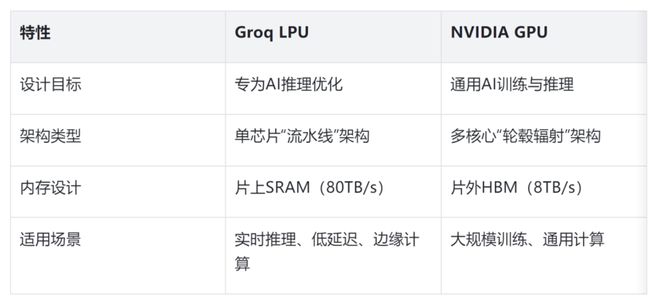
Core Insights - Nvidia announced a $20 billion cash technology licensing agreement with AI chip startup Groq, which is seen as a strategic move to mitigate competition and enhance its position in the AI market [1][9][19] - The deal allows Groq to operate independently while transferring most of its core technology assets to Nvidia, effectively turning a potential competitor into an ally [1][9] - The AI industry is undergoing a significant shift from centralized model training to large-scale inference, with the inference market expected to grow at a compound annual growth rate (CAGR) of 65%, reaching $40 billion by 2025 and $150 billion by 2028 [1][19] Group 1: Nvidia's Strategic Move - The $20 billion payment is 2.9 times Groq's valuation of $6.9 billion just three months prior, indicating a rare "valuation inversion" in the tech industry [1][10] - Analysts suggest that this transaction is a way for Nvidia to buy time and eliminate a significant threat while avoiding antitrust scrutiny [1][9] - Nvidia's cash and short-term investments totaled $60.6 billion as of October 2025, making the $20 billion investment manageable [10] Group 2: Groq's Technology and Market Position - Groq was founded by Jonathan Ross, a key developer of Google's TPU, aiming to create a chip optimized for AI inference, known as the Language Processing Unit (LPU) [2][3] - The LPU architecture offers significant advantages over Nvidia's GPUs, including ultra-low latency, high energy efficiency, and deterministic computing [3][12] - Groq's rapid rise in valuation and market presence includes partnerships with major clients like Meta and Saudi Aramco, and it has served over 2 million developers [4][5] Group 3: Competitive Landscape - Nvidia faces increasing competition in the inference market from Google TPU, AMD MI300X, and Huawei Ascend, which are gaining market share and offering cost advantages [6][7][8] - The dominance of Nvidia's CUDA ecosystem poses a significant barrier for competitors like Groq, as switching costs for enterprises are prohibitively high [5][15] - The AI chip market is expected to solidify, with Nvidia projected to maintain a market share of 75-80% by 2027, while other players like AMD and Google will hold smaller shares [14][19] Group 4: Future Trends and Opportunities - The integration of Groq's technology into Nvidia's ecosystem could lead to a dual-compute solution combining GPUs for training and LPUs for inference, enhancing overall efficiency [11][17] - The shift towards heterogeneous computing is anticipated, with over 80% of AI data centers expected to adopt this architecture by 2028 [17] - Despite the consolidation of power among major players, niche opportunities remain for startups in edge computing and specialized applications [18][19]
价格屠夫AMD,刺伤Intel却打不过英伟达
3 6 Ke· 2025-11-06 23:56
Core Insights - AMD reported Q3 2025 revenue of $9.25 billion, a 35.6% year-over-year increase, significantly exceeding market expectations [1] - The data center business generated $4.34 billion, up 22.3% year-over-year, driven by the promotion of the Instinct MI350 series GPUs and increased market share [1] - AMD's strategic partnership with OpenAI for 6GW of computing power and a major order from Oracle for 50,000 MI450 series chips are expected to contribute over $100 billion in revenue in the coming years [1] Financial Performance - AMD's Q3 2025 revenue reached $9.25 billion, marking a 35.6% increase year-over-year [1] - Data center revenue was $4.34 billion, reflecting a 22.3% year-over-year growth [1] - The stock price rose 2.5% following the earnings report, with a cumulative increase of 56% since October 6, resulting in a market capitalization expansion of over $100 billion [1] Market Position and Competitive Landscape - AMD's Instinct series GPUs are emerging as a reliable alternative to NVIDIA, addressing the high pricing and performance needs in the AI computing market [2][5] - NVIDIA has maintained a dominant market share of 80%-90% in the AI accelerator market, while AMD's data center revenue is still in the growth phase [3][4] - The shift in demand from high-precision training to low-latency inference is creating opportunities for AMD to capture market share [4][5] Product and Pricing Strategy - AMD's MI300X GPU offers significant advantages in memory bandwidth and capacity, reducing the need for multiple cards in inference tasks [5][6] - The pricing of AMD's MI300X is estimated to be between $10,000 and $15,000, significantly lower than NVIDIA's H100, which can exceed $30,000 [6] - AMD's cost-effective solutions are appealing to cloud service providers seeking to lower total cost of ownership (TCO) [7] Historical Context and Future Outlook - AMD's strategy mirrors its past success against Intel, focusing on price-to-performance ratios to gain market share [7][8] - The company has increased its market share in CPUs from 18% in 2016 to approximately 39% recently [8] - AMD's gross margin has improved to 52% as of Q3 2025, compared to Intel's 30% [10] Challenges Ahead - Despite AMD's advancements, it faces challenges in software ecosystem maturity compared to NVIDIA's CUDA, which has a larger developer community [12] - NVIDIA continues to invest heavily in R&D, with a budget of $12.914 billion for FY2025, indicating a strong competitive position [15] - The competitive landscape is evolving, with AMD's entry marking a shift from a single dominant player to a more diversified market [16]

烧200亿,赌7万亿:揭秘奥特曼的AI权力游戏 | 深网
Jin Shi Shu Ju· 2025-10-29 12:44
Core Insights - Sam Altman is leading a significant "AI gamble" that has rapidly increased the market value of major tech partners, with Oracle's stock rising over 36% and Nvidia, AMD, and Broadcom seeing market value increases of approximately $170 billion, $70 billion, and $150 billion respectively within a short period [2] - OpenAI aims to create a massive AI acceleration cluster requiring 26 gigawatts of power, equivalent to two times the peak summer electricity demand of New York City, forming a trillion-dollar closed-loop ecosystem [2] - Altman's strategy involves reducing dependency on Nvidia while establishing partnerships with Oracle, Nvidia, AMD, and Broadcom to secure computing power and ensure operational safety [2][3] Financial Overview - OpenAI has 8 million active users and an annual recurring revenue of $13 billion, but is projected to incur an operating loss of $8 billion in the first half of 2025, with total losses expected to exceed $20 billion for the year [4] - The company has signed over $1 trillion in computing agreements with major tech firms, raising questions about how a consistently loss-making startup can sustain such a massive financial commitment [4][6] - OpenAI's cash burn forecast for 2025 has been increased from $7 billion to $8 billion, with cumulative cash consumption expected to reach $115 billion by 2029 [4] Strategic Partnerships - OpenAI's collaboration with Nvidia includes building AI data centers with at least 10 gigawatts of capacity, supported by a potential $100 billion investment from Nvidia's CEO Jensen Huang [5] - A separate agreement with AMD involves issuing up to 160 million stock warrants, representing about 10% of AMD's equity, in exchange for deploying up to 6 gigawatts of AMD computing power [6] - OpenAI's partnerships are characterized by a "financial time travel" strategy, leveraging grand visions to attract investment from major tech players [6] Market Dynamics - OpenAI's user base has surpassed 800 million, with API calls reaching 60 billion per minute, highlighting the demand for computing power that exceeds Nvidia's annual GPU production [7] - The cost disparity between Nvidia and AMD GPUs presents a significant financial incentive for OpenAI to diversify its supplier base, with AMD's MI300X priced at $15,000 compared to Nvidia's H100 at $30,000 [7] - OpenAI's reliance on Nvidia is evident, with 80% of its computing expenditure directed towards Nvidia, raising concerns about supply chain vulnerabilities [7] Future Outlook - Altman's ambition extends beyond Silicon Valley, with plans for a $500 billion infrastructure investment initiative called "Stargate" involving major players like SoftBank and Oracle [12] - OpenAI is preparing for a new round of debt financing, aiming to raise hundreds of billions for infrastructure development, despite currently being unprofitable [12] - Analysts express caution regarding Altman's approach, suggesting it could lead to either a new economic era or a prolonged downturn [13]



国产类CoWoS封装火热,千亿资本或涌入
3 6 Ke· 2025-07-27 00:46
Group 1 - The continuous demand for AI chips has significantly increased the need for High Bandwidth Memory (HBM), which relies heavily on CoWoS (Chip on Wafer on Substrate) packaging technology [1][3] - CoWoS technology, developed by TSMC, allows for efficient integration of multifunctional chips in a compact space, enhancing chip performance, particularly for AI chips [3][7] - TSMC's CoWoS technology is currently monopolizing the advanced AI chip packaging market, with a projected compound annual growth rate of 40% for the advanced packaging market in the coming years [7][10] Group 2 - TSMC plans to increase its CoWoS production capacity from 36,000 wafers per month in 2024 to 90,000 by the end of this year and aims for 130,000 by 2026 [8] - The core challenge in CoWoS technology lies in achieving high yield rates during the packaging process, which is crucial for minimizing losses in HBM and other devices [10][14] - Domestic companies are actively developing similar CoWoS packaging technologies, with key players including Shenghe Jingwei and Tongfu Microelectronics, both facing common industry challenges [18][19] Group 3 - Shenghe Jingwei is recognized as a leading player in advanced packaging in China, focusing on Chiplet packaging and achieving significant revenue growth, with a reported revenue of $270 million in 2022 [19] - Tongfu Microelectronics primarily serves the domestic market and has faced challenges in overseas collaborations, including a failed partnership with AMD for CoWoS packaging [20][21] - Other companies, such as Yongxi Electronics, are also entering the advanced packaging market, leveraging their existing 2.5D packaging technology to potentially expand into HBM packaging [22][23]


帮主郑重:英伟达市值破3.9万亿!AI军备竞赛的终极赢家是谁?
Sou Hu Cai Jing· 2025-07-09 00:47
Core Viewpoint - Nvidia's market capitalization has surpassed $3.9 trillion, making it a leading player in the global tech sector, exceeding the total market cap of all listed companies in the UK and surpassing the combined market of Canada and Mexico [1] Group 1: Market Performance and Predictions - Nvidia's stock price reached a historic high of $160, with Citigroup setting a target price of $190, indicating a potential 15% upside [3] - The demand for AI infrastructure from sovereign nations is surging, with predictions that AI investments by governments could exceed $80 billion by 2025 and potentially surpass $200 billion by 2030 [3] Group 2: Competitive Landscape - Nvidia holds over 90% market share in the high-end AI chip sector, significantly outpacing competitors like AMD and Huawei, which have not been able to match its software ecosystem [3][4] - The company is transitioning from merely selling chips to building a comprehensive AI infrastructure ecosystem, investing in companies like OpenAI and xAI, which will create a feedback loop for increased chip demand [4] Group 3: Long-term Outlook and Risks - The long-term demand for AI is projected to be vast, with Nvidia's CEO stating that AI and robotics represent a multi-trillion dollar market [5] - Nvidia's forward P/E ratio is currently at 32, which, while lower than its five-year average, raises concerns about whether the stock price has already priced in future growth [4] - Regulatory risks, particularly U.S. export controls affecting sales to China, have previously led to significant financial impacts, such as a $4.5 billion write-down in Q1 [4]

AMD Chips Face U.S. Export Control: Buy, Sell or Hold the Stock?
ZACKS· 2025-04-16 20:00
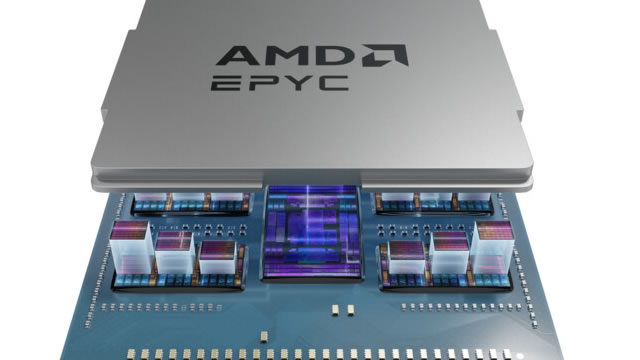
Core Insights - The U.S. has imposed new licensing requirements for AMD and NVIDIA chips to be exported to China, impacting their growth prospects in a significant market [1][2] - AMD's shares fell approximately 7% in pre-market trading, while NVIDIA's shares declined around 6% following the announcement [1] - China represents a substantial portion of revenues for both companies, with 24% of AMD's 2024 revenues and 13% of NVIDIA's fiscal 2025 revenues coming from the region [2] AMD's Financial Performance - AMD's Data Center revenues accounted for about 50% of total revenues in 2024, increasing by 69% year-over-year to $3.9 billion [9] - The company generated over $5 billion in data center AI revenues in 2024, driven by deployments of MI300X by major clients like Meta Platforms and Microsoft [10] - The Zacks Consensus Estimate for AMD's 2025 earnings is $4.59 per share, reflecting a year-over-year growth of 38.67% [15] Competitive Landscape - AMD faces intense competition from NVIDIA, particularly in the data center and AI chip markets, contributing to a 21.2% drop in AMD's shares year-to-date [3] - The company has been expanding its product portfolio, including the fifth-generation EPYC processors and Instinct accelerators, to counter NVIDIA's market position [5][11] Strategic Initiatives - AMD has established a rich partner base, including major companies like Cisco, IBM, and Microsoft, to enhance its market presence [13] - Recent acquisitions, such as Silo AI and ZT Systems, aim to bolster AMD's AI capabilities and infrastructure [14] Valuation and Market Sentiment - AMD stock is currently considered overvalued, with a forward Price/Sales ratio of 4.6X compared to the industry average of 2.84X [16][17] - The stock is trading below its 50-day and 200-day moving averages, indicating a bearish trend in the market [20]
泡沫即将破灭,英伟达的 AI 帝国面临最艰难的战斗
美股研究社· 2025-02-26 11:52
Core Viewpoint - Despite potential threats, Nvidia's position remains strong in the AI chip market, with significant demand for its products continuing from major tech companies [10]. Group 1: Financial Performance and Market Position - Nvidia is expected to report fourth-quarter revenue of $38.16 billion, with a gross margin exceeding 70%, indicating strong pricing power [2][3]. - The company's earnings per share (EPS) is projected at $0.85, with historical performance showing that Nvidia typically exceeds EPS expectations by 3-5% [4]. - The data center business accounts for over 75% of Nvidia's total sales, making it crucial for the company's growth trajectory [4]. Group 2: Competitive Landscape - The emergence of cost-effective AI training models, such as DeepSeek's R-1, raises concerns about pricing pressure on Nvidia's products [2][9]. - DeepSeek claims to have developed its AI model at a cost of only $5.6 million, which has sparked skepticism regarding the feasibility of such low-cost AI training [5][9]. - Despite the competitive threat posed by DeepSeek, leading tech companies continue to order Nvidia's H20 GPUs, indicating sustained demand [10]. Group 3: Future Outlook - The upcoming earnings report will be critical, particularly the forward guidance for Q1 2025, which will influence market sentiment [4]. - If Nvidia raises its guidance and continues to exceed expectations, the AI-driven growth momentum is likely to persist [4]. - The launch of the H200 GPU in 2025 is expected to further solidify Nvidia's leadership in AI acceleration [10].