ART001

Search documents
西藏药业:新活素量价稳定,外延并购打造全新增长点-20260314
Xinda Securities· 2026-03-14 00:25
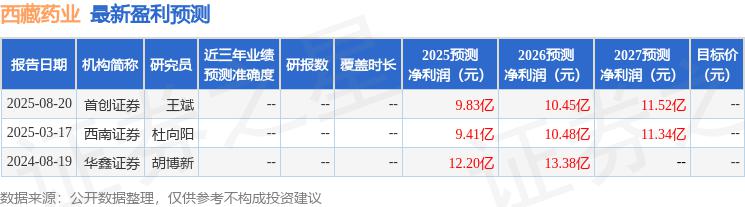
Investment Rating - The report assigns a "Buy" rating for Tibet Pharmaceutical (600211) based on its stable revenue and growth potential from acquisitions [1]. Core Insights - The company reported a revenue of 2.982 billion yuan in 2025, a year-on-year increase of 6.23%, while the net profit attributable to shareholders decreased by 10.78% to 938 million yuan, primarily due to reduced government subsidies [1]. - The company aims for a revenue target of 3.3 billion yuan in 2026, with a cost expense ratio controlled below 75% [1]. - The main product, recombinant human brain natriuretic peptide (Xinhuasu), accounted for 86.02% of total sales, with stable volume and price contributing to cash flow [2]. - The company has a strong cash reserve of approximately 3.45 billion yuan, allowing for continued high dividend payouts, with a dividend ratio of 60% and a dividend yield of around 4% [3]. - The company is actively pursuing strategic acquisitions, including stakes in Chentai Pharmaceutical and controlling interest in Ruizheng Gene, to diversify its product pipeline and reduce reliance on single products [4]. Financial Summary - Revenue and profit forecasts for 2026-2028 are as follows: - Revenue: 3.299 billion yuan (2026), 3.598 billion yuan (2027), 3.873 billion yuan (2028) - Net profit: 998 million yuan (2026), 1.061 billion yuan (2027), 1.115 billion yuan (2028) - EPS: 3.10 yuan (2026), 3.29 yuan (2027), 3.46 yuan (2028) [8]. - The company maintains a gross margin of approximately 92.6% in 2026, with a return on equity (ROE) of 25% [7].

西藏药业(600211):新活素量价稳定,外延并购打造全新增长点
Xinda Securities· 2026-03-13 15:35
Investment Rating - The report assigns a "Buy" rating for Tibet Pharmaceutical (600211) based on its stable revenue and profit outlook, alongside strategic acquisitions that are expected to drive future growth [1]. Core Insights - The company reported a revenue of 2.982 billion yuan in 2025, a year-on-year increase of 6.23%, while the net profit attributable to shareholders was 938 million yuan, a decrease of 10.78% primarily due to reduced government subsidies [1][2]. - The main product, recombinant human brain natriuretic peptide (Xinhuasu), accounted for 86.02% of total sales, with a stable sales volume of 7.3459 million units, reflecting a growth of 4.82% year-on-year [2]. - The company plans to achieve a revenue target of 3.3 billion yuan in 2026, with a cost expense ratio controlled below 75% [1]. Revenue Breakdown - The sales of Xinhuasu and other products contributed significantly to the revenue, with the second-largest product, isosorbide mononitrate sustained-release tablets (Yimuduo), accounting for 4.23% of sales, and other products making up 9.75% [2]. - The company has maintained a stable high dividend payout ratio of around 60% for three consecutive years, with a proposed cash dividend of 563 million yuan for 2025, resulting in a dividend yield of approximately 4% [3]. Strategic Acquisitions - Tibet Pharmaceutical is actively pursuing strategic transformation through acquisitions, having completed investments in Chentai Pharmaceutical and controlling stake in Ruizheng Gene in 2025 [4]. - The acquisition of Chentai Pharmaceutical grants the company commercialization rights for the innovative drug Zolitinib, expected to contribute to revenue growth following its inclusion in the national medical insurance directory [4][5]. - The investment in Ruizheng Gene allows entry into the cutting-edge field of gene editing therapy, with early-stage research pipelines ART001 and ART002 that are anticipated to support long-term growth [4][5][6]. Financial Projections - Revenue projections for 2026-2028 are estimated at 3.299 billion yuan, 3.598 billion yuan, and 3.873 billion yuan respectively, with net profits expected to be 998 million yuan, 1.061 billion yuan, and 1.115 billion yuan [8]. - The diluted EPS for the same period is projected to be 3.10 yuan, 3.29 yuan, and 3.46 yuan, with corresponding P/E ratios of 14.15, 13.31, and 12.67 [8].
西藏药业:ART001于去年分别获批中国和美国IND
Zheng Quan Ri Bao Wang· 2026-02-09 13:48
Core Viewpoint - Tibet Pharmaceutical (600211) is advancing its research and development efforts, particularly focusing on innovative treatments for specific medical conditions, including ATTR and familial hypercholesterolemia [1] Group 1: Product Development - The main product under development by Ruizheng Gene is ART001, targeting transthyretin amyloidosis (ATTR), which received IND approval in both China and the United States last year and is currently undergoing Phase I/IIa clinical trials in China [1] - Another product, ART002, is aimed at PCSK9 and is currently in an investigator-initiated trial (IIT) for familial hypercholesterolemia, although it has not yet obtained clinical approval [1] Group 2: Research and Development Investment - The company plans to adjust its future R&D expenditure based on the progress of its ongoing research projects [1]
西藏药业启动股份回购,版图扩展释放长期发展信心
Zheng Quan Shi Bao Wang· 2025-12-18 12:21
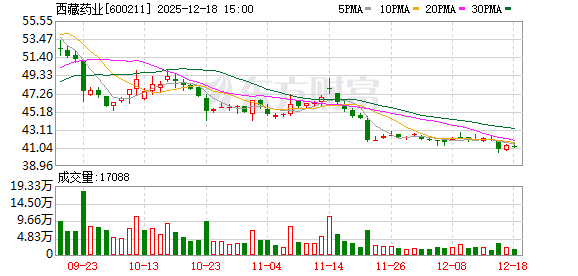
Group 1 - The core point of the article is that Tibet Pharmaceutical (600211.SH) announced a share buyback plan, intending to repurchase shares worth 170 million to 200 million yuan at a price not exceeding 55 yuan per share, aimed at employee stock ownership plans and equity incentives, marking the first buyback since 2018, reflecting management's confidence in the company's stable growth and business expansion [2][4] - Tibet Pharmaceutical is a leading player in China's Tibetan medicine industry, with its product, recombinant human brain natriuretic peptide "Xinhua Su," being the first gene-engineered Class I new drug for acute heart failure treatment in China, showcasing strong technical accumulation and market strength [2] - The company has shown consistent profit growth over the past three years, with net profits of 370 million, 801 million, and 1.051 billion yuan, and a projected sales net profit margin of 34.74% in 2024, indicating robust profitability [2] Group 2 - Supported by stable revenue, Tibet Pharmaceutical emphasizes the synergistic development of diversified businesses, leveraging healthy cash flow reserves to expand its business through mergers and acquisitions, injecting vitality into long-term development [3] - In August 2025, the company, in collaboration with its controlling shareholder Kangzhe Pharmaceutical, completed the actual control of Ruizheng Gene, a leading enterprise in the field of in vivo gene editing drug development, focusing on genetic diseases, rare diseases, and difficult-to-treat common diseases [3] - The acquisition of Ruizheng Gene will transform the company's ample cash reserves and deep clinical experience into a solid research foundation for innovative drugs, enhancing long-term development potential [3] Group 3 - The share buyback is a tangible expression of the management's commitment to steady strategic planning and long-term growth expectations, signaling an active effort to optimize capital structure and improve corporate governance [4] - The employee stock ownership plan and equity incentive mechanism will align the interests of the core team with the long-term development prospects, stimulating the company's internal motivation for innovative development [4] - This dual-driven model of "stable core business + breakthrough in innovative business" aims to create higher value for shareholders [4]

西藏药业(600211)2025年三季报业绩点评:主业夯实 创新药布局打开成长新空间
Xin Lang Cai Jing· 2025-11-27 00:22
Core Viewpoint - The company has solidified its main business and achieved stable growth in its new product line, with new product sales reaching 4.17 million units and generating revenue of 1.46 billion yuan, reflecting a year-on-year increase of 0.41% [2] Financial Performance - For Q3 2025, the company reported revenue of 4.39 billion yuan, a year-on-year decrease of 21.79%, and a net profit attributable to shareholders of 1.54 billion yuan, down 8.46% year-on-year [1] - For the first three quarters of 2025, total revenue was 20.89 billion yuan, a decrease of 3.96% year-on-year, with a net profit attributable to shareholders of 7.22 billion yuan, down 8.85% year-on-year [1] Innovation and Investment Strategy - The company is actively investing in the innovative drug sector to create a second growth curve, with a planned investment of 60 million USD in Accuredit Therapeutics Limited, acquiring a 40.82% stake [3] - The company has also invested 300 million yuan in Chen Tai Pharmaceutical, obtaining exclusive agency rights for its product in mainland China, which is expected to contribute to high-quality growth [3] Investment Recommendation - The company is expected to maintain steady growth in its main business and innovative drug sector, with projected net profits of 937 million yuan, 1.004 billion yuan, and 1.09 billion yuan for 2025 to 2027, corresponding to PE ratios of 15.35X, 14.33X, and 13.19X respectively, leading to a "buy" rating [4]
西藏药业:前三季度营业收入近21亿元 加码创新药新赛道投资布局
Zheng Quan Shi Bao Wang· 2025-10-30 11:16
Core Viewpoint - Tibet Pharmaceutical (600211.SH) reported a steady performance in Q3 2025, with revenue of 2.089 billion yuan and net profit of 722 million yuan, while actively seeking new growth points through investments in innovative drug development [1][2]. Group 1: Financial Performance - In the first three quarters of 2025, Tibet Pharmaceutical achieved operating revenue of 2.089 billion yuan and a net profit attributable to shareholders of 722 million yuan, indicating stable overall performance [1]. - The company reported a non-recurring net profit of 668 million yuan, reflecting its solid financial foundation [1]. Group 2: Strategic Investments - The company made a significant investment of 60 million USD in Suzhou Ruizheng Gene Co., Ltd., marking a key highlight in its management strategy for entering the innovative drug sector [1]. - In August 2025, Tibet Pharmaceutical announced a 60 million USD equity investment in Accuredit Therapeutics Limited, acquiring a 40.82% stake, which aligns with its strategic focus on innovative drug development [1][2]. Group 3: Innovative Drug Pipeline - Ruizheng Gene is developing therapies targeting metabolic diseases, particularly in the liver disease area, addressing significant unmet clinical needs [2]. - The company is the first in China to enter exploratory clinical research for an LNP-based in vivo gene editing product and has received FDA clinical approval in the U.S. for its pipeline [2]. - The ART001 pipeline targets rare diseases, currently in Phase I/IIa clinical trials in China, and has received orphan drug designation from the FDA [2]. Group 4: Product Development and Market Strategy - The company reported sales of its product "New活素" reaching approximately 4.17 million units, generating revenue of 1.456 billion yuan, with a low market penetration rate despite a large annual incidence of heart failure patients in China [3]. - The company is actively promoting "New活素" sales and has initiated exploratory research to expand sales channels [3]. - Other products like "诺迪康" and "金罗汉" are performing well in the market, with expectations for gradual growth in market share [3]. Group 5: Additional Investments - In March 2025, the company completed a 300 million yuan equity investment in Jiangsu Chentai Pharmaceutical Technology Co., Ltd., acquiring a 13.04% stake [4]. - The drug "Zorifertinib" developed by Chentai is the first globally to conduct registration clinical trials for advanced non-small cell lung cancer with CNS metastasis, showing significant clinical value [4]. - The commercialization of Zorifertinib is underway, with preparations for negotiations regarding medical insurance, which could provide stable cash flow for the company [4].
西藏药业: 转型再出发 双路径发力构建新增长曲线
Zhong Guo Zheng Quan Bao· 2025-09-28 21:38
Core Viewpoint - Tibet Pharmaceutical is focusing on transformation and innovation, aligning with national policies and aiming for high-quality growth through increased R&D investment and strategic partnerships [1][2]. Group 1: Company Strategy and Growth - The company plans to invest $60 million in Accuredit Therapeutics Limited, acquiring a 40.82% stake, which is seen as a strategic move to enhance its innovation capabilities [1]. - Tibet Pharmaceutical has achieved significant growth over the past decade, with revenue increasing from 521 million to 2.807 billion yuan, representing a compound annual growth rate (CAGR) of 18.34%, and net profit rising from 92 million to 1.051 billion yuan, with a CAGR of 27.63% [2]. - The company aims to stabilize its core product "Xinhua Su" while exploring new growth opportunities through product rebranding and enhanced marketing strategies [3]. Group 2: Market Challenges and Opportunities - In 2024, the company experienced a revenue decline of 10.45%, raising concerns about its ability to maintain high growth rates, despite a 9.45% increase in net profit [3]. - The company is addressing its reliance on single products and insufficient R&D investment by pursuing mergers and acquisitions, particularly in the gene editing sector [3][4]. Group 3: Acquisition and Innovation - The acquisition of Accuredit Therapeutics is part of Tibet Pharmaceutical's strategy to enter the gene editing market, which is expected to drive innovation and growth [4][5]. - Accuredit Therapeutics focuses on developing gene editing drugs and has a strong team with experience in biopharmaceuticals, which aligns with Tibet Pharmaceutical's goals [5]. - The CEO of Accuredit, Wang Yongzhong, has a robust background in the biopharmaceutical industry, which could enhance the company's international expansion efforts [5]. Group 4: Safety and Regulatory Considerations - Gene editing technology is characterized by irreversible effects, making safety a primary concern, with clinical data required to validate its safety over 2 to 5 years [6]. - The company is working on improving safety through reversible gene editing techniques and off-target detection methods [6].
转型再出发 双路径发力构建新增长曲线
Zhong Guo Zheng Quan Bao· 2025-09-28 20:45
Core Viewpoint - Tibet Pharmaceutical is focusing on transformation and innovation, aligning with national policies, particularly in the field of innovative drugs and gene editing technology [1][3]. Group 1: Investment and Strategic Direction - Tibet Pharmaceutical plans to invest $60 million in Accuredit Therapeutics Limited, acquiring a 40.82% stake, which has been approved by the company's shareholders [1]. - The company aims to enhance its growth through both internal and external strategies, emphasizing R&D investment and project acquisition to drive sustainable development [1][2]. Group 2: Financial Performance - Over the past decade, Tibet Pharmaceutical's revenue increased from 521 million to 2.807 billion, with a compound annual growth rate (CAGR) of 18.34%, while net profit rose from 92 million to 1.051 billion, with a CAGR of 27.63% [2]. - However, in 2024, the company experienced a revenue decline of 10.45%, raising concerns about its growth sustainability, despite a 9.45% increase in net profit [2]. Group 3: Growth Strategy - To achieve sustained growth, the company must establish a second growth curve focusing on internal growth through product enhancement and external growth via R&D and acquisitions [3]. - The acquisition of Accuredit Therapeutics is seen as a critical step in the company's innovation journey, aligning with its transformation strategy [3][4]. Group 4: Gene Editing Focus - Accuredit Therapeutics, established in 2021, specializes in developing non-viral vector-based gene editing drugs and has a comprehensive technology platform [4]. - The company is currently conducting clinical trials for its lead product, ART001, which has received IND approval in both China and the U.S. [4][5]. Group 5: Safety and Market Considerations - Gene editing technology is characterized by irreversible effects, making safety a primary concern, with a typical waiting period of 2 to 5 years for clinical data to confirm safety [5]. - The company is enhancing safety through reversible gene technology and off-target detection methods [5].
西藏药业:6000万美元投资锐正基因,加码创新药研发,寻业绩新增长点
Zheng Quan Shi Bao Wang· 2025-08-29 09:33
Core Viewpoint - Tibet Pharmaceutical plans to invest $60 million in Accuredit Therapeutics Limited to acquire a 40.82% stake, aiming to enhance sustainable development and overcome R&D bottlenecks [1] Group 1: Investment Details - The investment will be made through a wholly-owned subsidiary, with the major shareholder's affiliate also investing $15 million for a 10.20% stake, resulting in a combined holding of over 51% [1] - The investment aligns with the company's strategy to focus on core business while expanding its product pipeline through both in-house and collaborative R&D efforts [1] Group 2: Target Company Overview - Accuredit Therapeutics specializes in developing in vivo gene editing technologies and products based on LNP and other non-viral vectors, aiming to provide innovative treatment solutions with cost advantages [1] - The core asset of Accuredit is its domestic holding company, Ruizheng Gene (Suzhou) Co., Ltd., which has established an end-to-end gene editing technology platform [2] Group 3: Product Pipeline - Key products in development include ART001, which targets transthyretin amyloidosis (ATTR) and has received orphan drug designation from the FDA, currently undergoing I/IIa clinical trials in China [2][3] - Another promising product, ART002, focuses on PCSK9 and shows potential to significantly reduce LDL-C levels in patients with familial hypercholesterolemia, addressing limitations of existing PCSK9 inhibitors [3] Group 4: Market Potential - The PCSK9 inhibitors market is projected to reach $4.2 billion in global sales by 2024, indicating a strong commercial outlook for ART002 [3] - Besides ART001 and ART002, Ruizheng Gene's pipeline also targets metabolic diseases, particularly in the liver, suggesting a broad potential market [4] Group 5: Company Performance - Tibet Pharmaceutical reported revenue and profit growth in the first half of 2025, driven by stable contributions from its existing products and an 18.83% increase in other product revenues [4] - The company has previously engaged in acquisitions and collaborations to expand its product line, including a $30 million investment in Chentai Pharmaceutical for a 13.04% stake [4]
华鑫证券:给予西藏药业买入评级
Zheng Quan Zhi Xing· 2025-08-29 04:36
Core Viewpoint - The report highlights the stable performance of Tibet Pharmaceutical (西藏药业) and its strategic investment in innovative drugs to create new growth opportunities, maintaining a "buy" rating for the stock [1]. Financial Performance - In the first half of 2025, the company achieved revenue of 1.651 billion yuan, a year-on-year increase of 2.23%. However, the net profit attributable to shareholders decreased by 8.96% to 567 million yuan. The net profit after deducting non-recurring items was 543 million yuan, up 3.69% year-on-year. The net cash flow from operating activities was 600 million yuan, an increase of 0.93% [2]. Business Operations - The main business remains robust, with the sales of the primary product, New Active Substance, reaching 4.17 million units and generating revenue of 1.456 billion yuan, accounting for 88.36% of total sales, which is a 0.41% increase year-on-year. The company is expanding its production capacity for New Active Substance, with a new production line approved and expected to reach an annual capacity of 15 million units [3]. Investor Returns - The company emphasizes investor returns through high cash dividends, distributing approximately 631 million yuan in total dividends for 2024, which is 60% of the net profit attributable to shareholders. For the first half of 2025, the company plans to distribute a cash dividend of 8.81 yuan per 10 shares, accounting for 50.05% of the net profit attributable to shareholders [4]. Strategic Investments - The company announced a plan to invest 60 million USD in Accuredit Therapeutics Limited through its wholly-owned subsidiary, acquiring a 40.82% stake. This investment is part of a broader strategy to enter the innovative drug market, with Accuredit's core asset being Suzhou Rui Zheng Gene, which has received FDA clinical approval for its gene editing products [5]. Earnings Forecast - The company forecasts revenues of 2.923 billion yuan, 3.157 billion yuan, and 3.463 billion yuan for 2025, 2026, and 2027, respectively. The net profits are projected to be 893 million yuan, 967 million yuan, and 1.066 billion yuan for the same years, with corresponding EPS of 2.77 yuan, 3.00 yuan, and 3.31 yuan. The current stock price corresponds to PE ratios of 17.6, 16.3, and 14.8 times for the respective years [6].