真武810E

Search documents
英伟达慌了,重返中国无望?它已被“中国英伟达”包围了
Xin Lang Cai Jing· 2026-03-26 07:33
Core Viewpoint - Nvidia's market share in China has plummeted to 0%, with no sales of its AI chips, as confirmed by CEO Jensen Huang [1][3]. Group 1: Market Dynamics - Nvidia once held a 95% market share in China, but it has now been completely overtaken by domestic competitors [1]. - The Chinese AI chip market is dominated by local companies such as Huawei, Alibaba, and Cambricon, which have developed competitive products that outperform Nvidia's offerings [3][5]. - Huawei's latest AI accelerator card, Atlas 350, features the Ascend 950PR processor, which is 2.87 times more powerful than Nvidia's H20 [3]. Group 2: Competitor Landscape - Alibaba's self-developed GPU chip, Zhenwu 810E, has shipped over 470,000 units and is used by more than 400 domestic enterprises, matching the performance of Nvidia's H20 [3]. - Cambricon has achieved profitability in 2025, earning over 2 billion yuan, and has significantly replaced Nvidia's chips in the market [5]. - Haiguang Information has developed its own DCU chip, which also matches the performance of Nvidia's H20 and has been widely adopted by domestic companies [5]. Group 3: Emerging Players - The "GPU Four Little Dragons" including Moore Threads, Muxi Technology, Biran Technology, and Tian Shu Zhixin have successfully gone public, securing substantial funding for research and development [7]. - Numerous other GPU companies are entering the AI sector, contributing to the trend of domestic substitution of Nvidia's chips [8]. Group 4: Industry Trends - The tightening of U.S. export controls on AI chips has led to a strong emphasis on "domestic substitution" within China's AI chip industry, with more companies opting for local solutions over Nvidia's products [8].


半导体涨价攻入终端,华为重磅发布新一代算力加速卡
Huaxin Securities· 2026-03-23 00:12
Investment Rating - The semiconductor industry maintains a "Buy" rating for companies such as 天数智芯 (Tianshu Zhixin) and 航天电器 (Aerospace Electric) [2][6] Core Insights - The semiconductor price increase is impacting end products, with mobile brands like OPPO and vivo adjusting their prices due to rising semiconductor and storage costs, initiated by AI demand [3] - Huawei has launched the Ascend 950PR computing acceleration card, which significantly outperforms previous models and is expected to drive demand in various AI application scenarios [3] - The semiconductor industry is experiencing a shift in pricing power towards leading brands with scale and supply chain advantages, as consumer electronics sales face pressure [3] Industry Dynamics - The semiconductor sector saw a weekly decline of 1.78% in the Shenwan Semiconductor Index, closing at 7,309.41 on March 20 [12] - The semiconductor materials sector experienced the largest drop of 6.01%, while discrete devices saw a rise of 5.17% during the same period [15] - The top ten stocks in the semiconductor sector saw significant weekly gains, with 源杰科技 (Yuanjie Technology) leading at 26.80% [22] Company Focus and Earnings Forecast - Tianshu Zhixin (9903.HK) is forecasted to have an EPS of -5.45 in 2024, with a "Buy" rating [6] - Aerospace Electric (002025.SZ) is expected to have an EPS of 0.76 in 2024, also rated as "Buy" [6] - 芯原股份 (Xinyuan Co., Ltd.) remains unrated with an EPS forecast of -1.20 in 2024 [6] Global Semiconductor Sales - Global semiconductor sales reached $82.54 billion in January 2026, with a year-on-year growth of 46.1%, and China accounted for $22.82 billion of this total [34] Semiconductor Equipment Sales - In Q3 2025, semiconductor equipment sales in mainland China reached $14.56 billion, marking a year-on-year increase of 12.61% [37] Memory Chip Market - The price of NAND chips has been rising due to increased AI demand, with the average price for 512Gb TLC wafers at $23.13 as of March 9, 2026 [47] - DRAM prices have also seen fluctuations, with DDR5 prices reaching $39.17 as of March 20, 2026 [48] Strategic Moves - 和顺石油 (Heshun Petroleum) is entering the semiconductor sector by acquiring a stake in 奎芯科技 (Kuixin Technology) for 540 million yuan, indicating a strategic diversification into semiconductors [56][57] - 美光 (Micron) and 三星 (Samsung) are resuming long-term contract negotiations for memory chips, reflecting a shift in market dynamics as prices stabilize [60] AI and Semiconductor Demand - The demand for AI-related products is driving significant growth in the semiconductor sector, with companies like 平头哥 (Pingtouge) reporting substantial GPU deliveries and revenue growth [61] - The overall semiconductor market is expected to benefit from the increasing integration of AI technologies across various industries [61]
马云谈AI
财联社· 2026-03-04 00:14
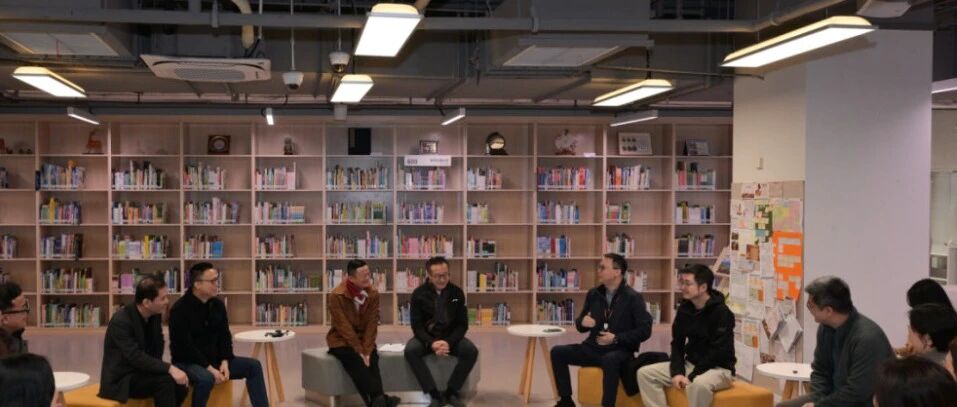
Core Viewpoint - The article emphasizes the rapid arrival of the AI era and the need for society, especially the younger generation, to adapt to the changes brought by AI technology [5][6]. Group 1: AI Development and Impact - Jack Ma's recent visit to Yun Gu School with Alibaba and Ant Group's core management highlights the importance of AI development [2][3]. - Ma stated that the impact of AI on society will be unprecedented, with significant changes in productivity and the potential disappearance of many job types [5]. - The management team shared insights on essential skills for the AI era, including critical thinking, empathy, and physical capabilities, which differentiate humans from machines [5][6]. Group 2: Educational Transformation - Ma emphasized that the suitability of schools for the AI era should be judged by their educational philosophy rather than technological infrastructure [6]. - The role of teachers should evolve from knowledge transmitters to "soul engineers," focusing on nurturing curiosity, empathy, judgment, and aesthetic appreciation, which are difficult for AI to replicate [6]. Group 3: Alibaba's AI Strategy - Alibaba is intensifying its focus on AI, with significant growth in AI-related products during the Spring Festival, including the Qwen 3.5-Plus model, which has shown improved performance in evaluations [7]. - The company has established a self-research system covering chips, cloud computing, and large models, with close collaboration among Tongyi Laboratory, Alibaba Cloud, and Pingtouge [8]. - Alibaba's API pricing is approximately 1/18 of some competing products, indicating a competitive edge in cost [7].

2026年第7周:数码家电行业周度市场观察
艾瑞咨询· 2026-02-23 00:05
Group 1 - The core viewpoint of the article highlights the significant capital expenditure by major US tech giants on AI infrastructure and cloud services, which is expected to nearly double from 2024 to 2026, despite causing short-term stock price declines and market concerns about cash flow [3][4][13]. - The solar photovoltaic market is anticipated to see major developments driven by Elon Musk's plans for space solar energy, with projections suggesting a market size reaching trillions by 2030, although challenges such as ground losses and metal price increases remain [5][12]. - AI meteorological models are transitioning from technical validation to industrial application, enhancing decision-making in energy and finance sectors, and are expected to significantly reduce uncertainty and optimize costs and risks [6]. Group 2 - The robot industry is evolving from showcasing technology to practical applications, with partnerships for the upcoming Spring Festival showcasing family service capabilities, indicating a shift towards value verification [7][8]. - The rental market for humanoid robots is booming due to increased demand for events, although issues like price confusion and service transparency are present, leading to a decline in profit margins [9]. - The application of AI in China's consumer economy is shifting towards operational optimization rather than just consumer interaction, with companies leveraging AI for cost control and efficiency improvements [10]. Group 3 - Silver prices have surged to historical highs, driven by industrial demand from AI applications, although there are concerns about resource scarcity and the potential for alternative materials to replace silver in certain applications [10]. - The "Mars Chain" concept, linked to Musk's initiatives, is becoming a new investment hotspot, with significant implications for the Chinese photovoltaic industry, which must navigate the risks of technology outflow and maintain competitive advantages [18]. - Major tech companies are facing funding challenges due to massive investments in AI and cloud infrastructure, with significant capital expenditures projected for 2026, raising concerns about the sustainability of these investments [13][19]. Group 4 - The introduction of standardized pricing for surgical robots in China is expected to accelerate the commercialization of the industry, benefiting innovative companies while posing challenges for those unable to adapt [15][16]. - The trend of smart home appliances gaining popularity among young consumers during the Spring Festival reflects a shift towards emotional and practical products that enhance family interactions [17]. - The competitive landscape for AI assistants is intensifying, with domestic companies focusing on localized solutions that prioritize data security and user trust [21].

打响新春攻势,阿里在布什么棋?
Di Yi Cai Jing Zi Xun· 2026-02-17 08:44
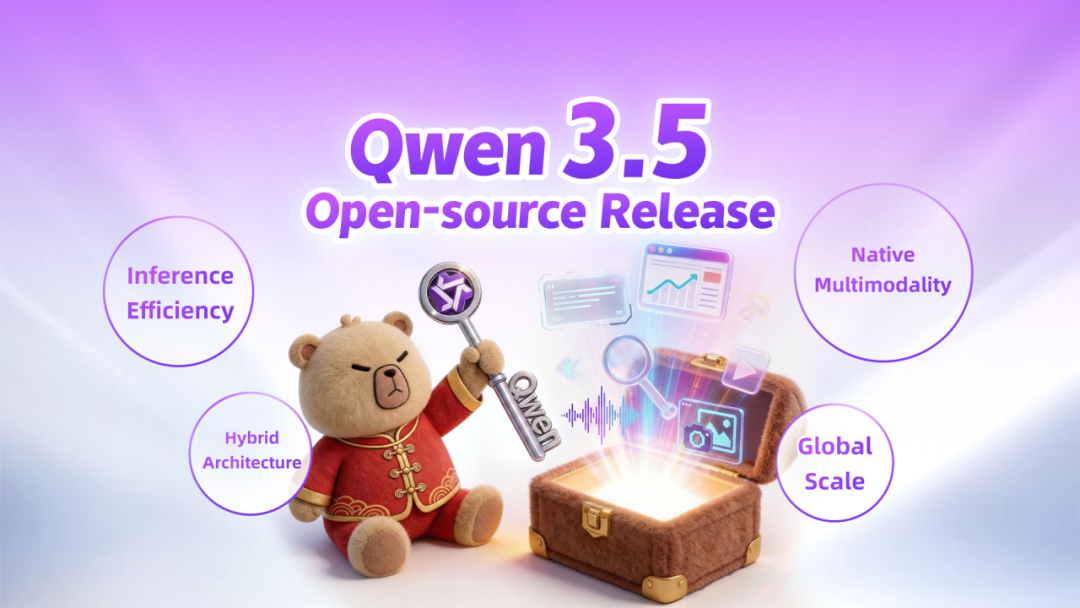
Core Insights - Alibaba has launched its new AI model Qwen3.5-Plus, which competes with top closed-source models like Gemini-3-pro and GPT-5.2, marking a significant advancement in the AI landscape [1] - During the Spring Festival, over 130 million people experienced AI shopping for the first time, with the AI assistant "Qianwen" becoming a national-level tool [1] - Qwen3.5-Plus features a total of 397 billion parameters, with only 17 billion activated, achieving performance that surpasses models with over a trillion parameters while reducing deployment memory usage by 60% [1][4] Model Performance and Innovation - Qwen3.5 represents a generational leap from previous models, transitioning from a pure text model to a native multimodal model, significantly enhancing its capabilities in various assessments [2] - The model has shown superior performance in multiple evaluations, including general agent assessments and visual question answering, outperforming competitors like Gemini 3 Pro and GPT-5.2 [2][3] - Key innovations in Qwen3.5's architecture include a mixed MoE structure and a unified approach to handling multiple data modalities during pre-training, resulting in a more efficient model with lower parameter requirements [4] Market Impact and User Engagement - The Qianwen app has seen a dramatic increase in user engagement, with a 22-fold increase in AI ticket orders and a 372-fold increase in movie ticket orders during the Spring Festival [6] - Nearly half of all AI orders came from county-level cities, indicating a broadening user base and accessibility of AI technology [6] - The app's integration with Qwen3.5-Plus enhances its capabilities, allowing it to assist users in various tasks, thus increasing its utility in daily life [6] Infrastructure and Ecosystem - Alibaba has opened over 400 Qianwen models since 2023, with global downloads surpassing 1 billion, fostering a robust developer ecosystem [8] - The company’s self-developed AI chip "Zhenwu 810E" is optimized for training and inference of large models, contributing to the cost-effectiveness of Qwen3.5 [9] - Alibaba Cloud holds a 35.8% market share in China's AI cloud market, indicating its leading position and the growing demand for AI infrastructure [10] Long-term Strategy and Vision - Qwen3.5 is part of Alibaba's broader strategy towards achieving AGI, with ongoing exploration of all-in-one multimodal capabilities [5][7] - The dual approach of advancing cutting-edge models while making AI accessible to everyday users reflects Alibaba's commitment to integrating technology into daily life [11]
上新!阿里Qwen3.5发布,AI技术与应用双线进击
Zhong Guo Zheng Quan Bao - Zhong Zheng Wang· 2026-02-17 04:15
Core Insights - Alibaba has launched its new AI model Qwen3.5-Plus, which features a total of 397 billion parameters and significantly outperforms the previous Qwen3-Max model with a 60% reduction in deployment memory usage and up to 19 times improvement in inference efficiency [1][4][7]. Model Performance and Features - Qwen3.5-Plus is now one of the strongest open-source models globally, competing directly with proprietary models like Gemini 3 Pro, and has achieved superior results in several benchmark tests [4][5]. - The model has transitioned from a pure text model to a native multimodal model, enhancing its capabilities in visual understanding and reasoning across various tasks [4][6]. - The API pricing for Qwen3.5-Plus is notably competitive at 0.8 yuan per million tokens, which is only 1/18th of the cost of Gemini 3 Pro, making AI technology more accessible for both enterprise and consumer markets [1][7]. Application and Market Impact - During the "Qianwen Please Guest" event, over 1.3 billion transactions were completed using the Qwen app, demonstrating the model's practical application in real-world scenarios [3][9]. - The Qwen app has achieved a daily active user count of 73.52 million, indicating strong market engagement and the potential for further growth as the model's capabilities are enhanced [9]. Strategic Positioning and Ecosystem - Alibaba's AI strategy is built on a decade of investment in foundational technologies, including the development of proprietary AI chips and a comprehensive cloud infrastructure, positioning the company as a leader in the AI space [10][11]. - The integration of AI technology with Alibaba's extensive e-commerce ecosystem allows for seamless execution of AI applications, enhancing the overall user experience and driving continuous model optimization [12].
数码家电行业周度市场观察-20260212
Ai Rui Zi Xun· 2026-02-12 07:06
Investment Rating - The report does not explicitly provide an investment rating for the industry Core Insights - The report highlights significant trends in the digital home appliance industry, particularly focusing on AI infrastructure investments by major tech companies and the emerging potential of space photovoltaic technology [3][4][10][13] Industry Trends - Major US tech giants are entering a capital expenditure expansion cycle focused on AI infrastructure and cloud services, with investments expected to nearly double from 2024 to 2026, despite short-term market concerns over cash flow [4] - The space photovoltaic market is projected to reach a trillion-dollar scale by 2030, driven by Elon Musk's initiatives, although the industry faces challenges such as ground losses and rising metal prices [4][10] - AI meteorological models are transitioning from technical validation to industrial application, optimizing decision-making in energy and finance sectors [7] - The robot industry is evolving from showcasing technology to practical applications, with significant collaborations for the upcoming Spring Festival [8] - The rise of silver prices, driven by AI demand, has disrupted traditional pricing models, with industrial demand becoming the primary driver [10] - The introduction of standardized pricing for surgical robots in China is expected to accelerate the commercialization and high-quality development of the industry [13] - Smart home appliances are gaining popularity among young consumers during the festive season, reflecting a trend towards emotional and functional products [13] Top Brand News - Apple is enhancing Siri with a new AI model, emphasizing privacy and ecosystem integration, while local competitors are exploring AI assistants tailored to Chinese users [16] - Google's Q4 2025 revenue reached $113.8 billion, with significant growth in cloud services and a doubling of capital expenditure for AI infrastructure [16] - Alibaba is focusing on AI in education, with plans to develop self-researched AI chips and a strategic emphasis on bridging imagination and creativity in education [17] - The potential acquisition of A.O. Smith's China business by Hisense could reshape the competitive landscape in the home appliance sector [19] - Li Auto is accelerating its entry into embodied intelligence and humanoid robots, aiming for L4 autonomous driving by 2028 [20] - Apple's acquisition of Q.ai for nearly $2 billion aims to revolutionize human-computer interaction in wearable devices [21]
平头哥AI芯片内供转外销
经济观察报· 2026-02-11 07:53
Core Viewpoint - The article emphasizes the significance of Alibaba's in-house chip company, Pingtouge, in the context of AI model training and application, highlighting its competitive edge against external chip suppliers like Nvidia [1][9]. Group 1: Pingtouge's Development and Market Position - Pingtouge, a subsidiary of Alibaba, has developed the high-end AI chip "Zhenwu 810E," which directly competes with Nvidia's H20, achieving a shipment volume of several hundred thousand units [2][7]. - The company has transitioned from being viewed as a cost center for Alibaba to potentially becoming a profit center, especially if it successfully goes public [3]. - Pingtouge's chips, including the "Zhenwu 810E," have gained traction in the market, with over 400 external clients, including major companies like State Grid and Xpeng Motors [9][11]. Group 2: Strategic Importance of Chip Development - Alibaba's chip development strategy is driven by the need for computational freedom, as the company faces high demand for AI capabilities across its vast ecosystem [5]. - The establishment of Pingtouge aligns with Alibaba's broader AI strategy, which includes significant investments in AI and chip technology, amounting to 380 billion yuan [11]. - The launch of the "Zhenwu 810E" marks a pivotal moment for Pingtouge, indicating its readiness to compete in the commercial market and signaling a shift in its operational focus [11][12]. Group 3: Competitive Landscape and Future Outlook - The AI chip market is expected to see a shift in market share, with local Chinese manufacturers, including Pingtouge, anticipated to increase their presence significantly by 2026 [11]. - Despite the promising developments, Pingtouge faces challenges related to advanced manufacturing processes, which could impact its growth and market positioning [12]. - The article suggests that Pingtouge's ability to build a robust ecosystem around its PPU architecture will be crucial for its survival and success in the competitive landscape [12].

平头哥AI芯片内供转外销
Jing Ji Guan Cha Wang· 2026-02-11 06:29
Core Insights - The article discusses the emergence of Alibaba's semiconductor company, Pingtouge, and its development of high-performance AI chips, particularly the "Zhenwu 810E," which directly competes with Nvidia's H20 [3][7][9] - Pingtouge's transition from being viewed as a cost center to a potential profit center for Alibaba is highlighted, especially with rumors of an upcoming IPO [4][12] - The strategic necessity for Alibaba to develop its own chips is emphasized, driven by the need for cost-effective computing power to support its vast ecosystem [5][11] Company Developments - Pingtouge launched the "Zhenwu 810E" AI chip in January 2026, with reported shipments reaching several hundred thousand units [3][12] - The company has been operating independently under Alibaba's DAMO Academy since its establishment, focusing on cloud-integrated chips [6][11] - The PPU (Parallel Processing Unit) development was kept secret for years, with its public reveal occurring in September 2025 during a CCTV news segment [8][10] Market Position and Strategy - Pingtouge's chips are primarily supplied to Alibaba, allowing for optimized performance tailored to internal applications, which is seen as a competitive advantage [10][11] - The company aims to capitalize on the growing demand for AI chips in the domestic market, with predictions of significant market share growth for local manufacturers [13][14] - The strategic positioning of Pingtouge within Alibaba's broader AI strategy, which includes substantial investments in AI and chip development, is noted [13][15]
千问请客现象级出圈,暴露了阿里“AI+云+芯”的王炸底牌
Sou Hu Cai Jing· 2026-02-09 10:23
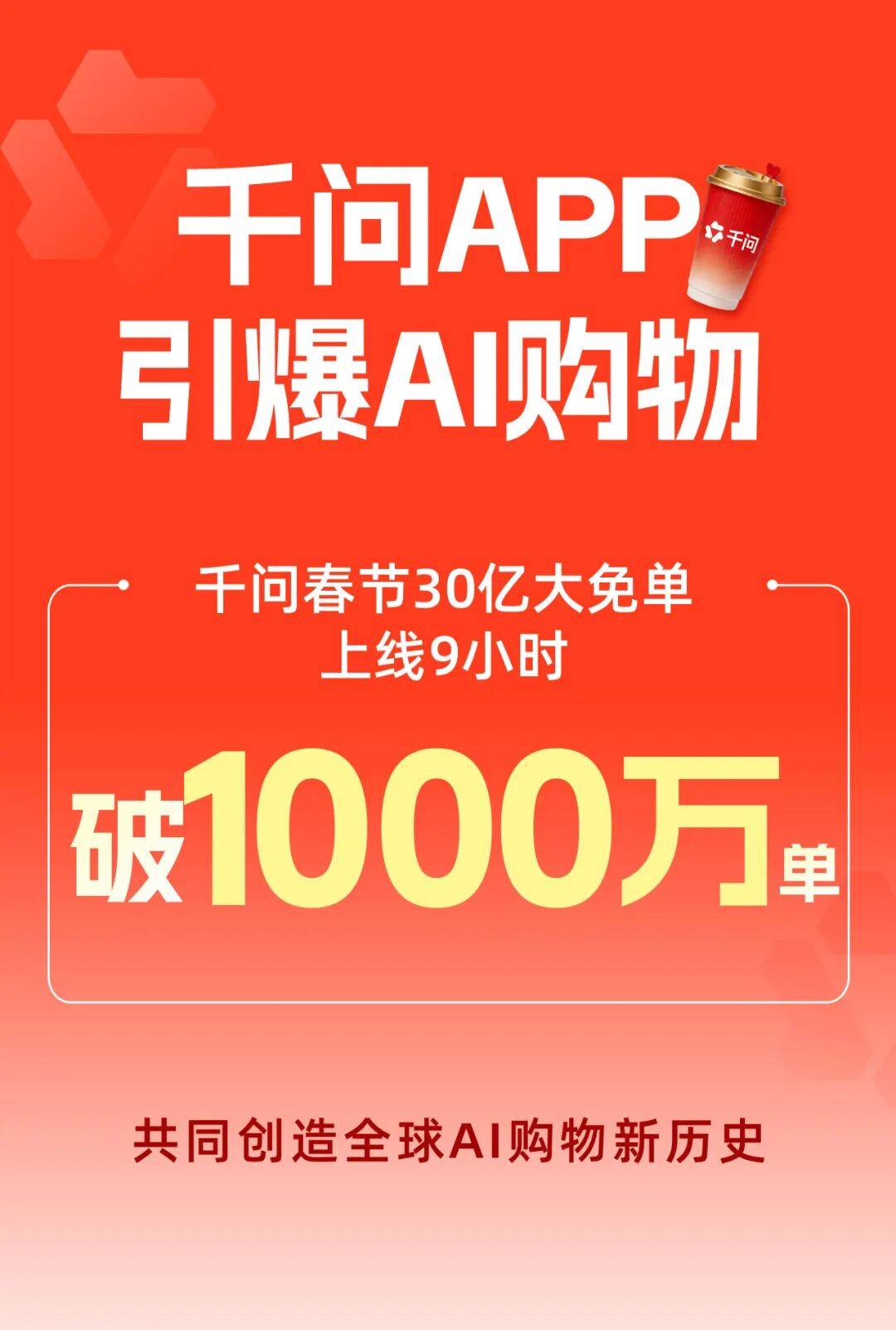
Core Viewpoint - Alibaba's Qianwen launched a "30 billion yuan free order" campaign before the Spring Festival, which quickly gained popularity and resulted in over 10 million orders within 9 hours, marking a significant milestone in AI application in consumer scenarios [1][4]. Group 1: AI Application and Market Strategy - The campaign represents a new round of user competition among major tech companies focused on AI application entry points, aiming to transition AI from mere conversation to practical tasks [3][4]. - The "AI treat" initiative allows users to order milk tea for just 1 penny, showcasing the practical capabilities of AI in everyday life [4][5]. - The event not only targets consumer engagement but also aims to enhance Alibaba's B2B capabilities in the instant retail sector, thereby improving the efficiency of local services and delivery systems [5][6]. Group 2: Technological Infrastructure and Competitive Position - Alibaba's strategy is supported by its "Tongyun Ge" AI triangle, which integrates AI chips, cloud computing, and large models, positioning the company as a formidable player in the global AI landscape [6][7]. - The self-developed AI chip "Zhenwu 810E" has surpassed Nvidia's A800 in performance, marking a significant advancement in Alibaba's AI chip capabilities [8][10]. - Alibaba Cloud is recognized as the largest cloud service provider in China and Asia, with extensive infrastructure that supports the company's AI initiatives [10]. Group 3: Future Investments and Implications - Alibaba plans to invest at least 380 billion yuan in cloud computing and AI infrastructure over the next three years, exceeding its total investment in the past decade [16]. - The success of the milk tea campaign may serve as a catalyst for broader AI applications in e-commerce, potentially creating a transformative effect similar to that of "Double 11" in traditional retail [16].