DGX整机系统

Search documents
英伟达内向黄仁勋汇报的36人
自动驾驶之心· 2025-11-08 16:03
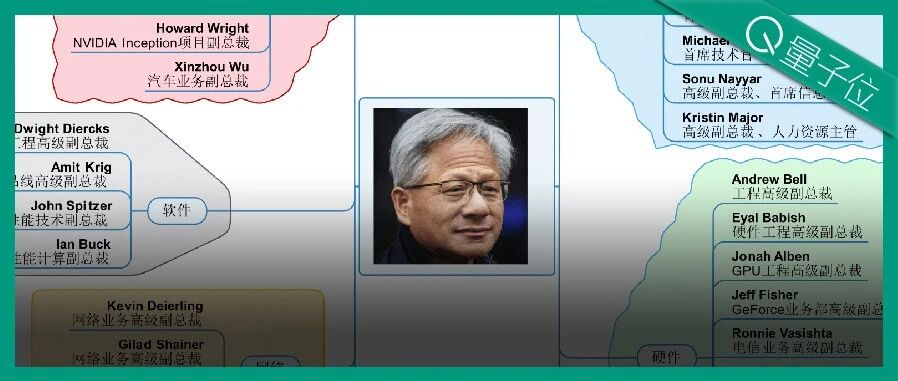
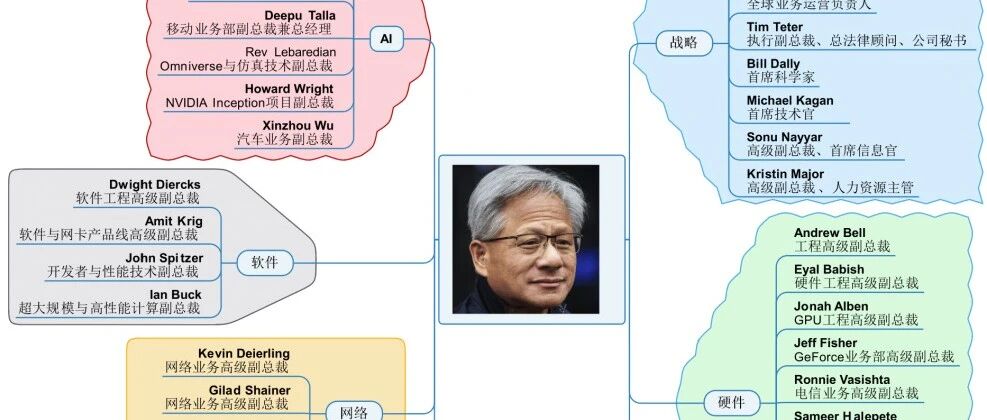
Core Viewpoint - The article discusses the organizational structure and strategic positioning of NVIDIA under CEO Jensen Huang, highlighting the importance of hardware and AI in the company's growth, as well as the recent personnel changes that signal a shift towards a more structured management approach. Group 1: Organizational Structure - Jensen Huang has 36 direct reports, divided into seven functional areas: strategy, hardware, software, AI, public relations, networking, and an executive assistant [2][4]. - Among these, nine are focused on hardware, indicating that hardware remains a cornerstone of NVIDIA's business [8][9]. - The presence of three public relations executives under Huang's direct supervision contrasts sharply with other tech leaders, emphasizing NVIDIA's need for a systematic external communication strategy [13][16]. Group 2: Key Personnel - Jonah Alben, a long-time leader at NVIDIA, is recognized as the "soul of GPU architecture" and has been with the company for 28 years, overseeing GPU design and development [24][25][32]. - Dwight Diercks, another veteran with 31 years at NVIDIA, manages the software engineering team and has played a crucial role in the company's software development [33][38]. - Bill Dally, NVIDIA's chief scientist, has significantly contributed to the evolution of GPUs and AI hardware architecture, having transitioned from academia to NVIDIA [43][48]. Group 3: New Additions - Wu Xinzhou, the only Chinese executive directly reporting to Huang, is now the Vice President of Automotive Business at NVIDIA, responsible for strategic planning and product layout [57][58]. - Wu's experience at Qualcomm and XPeng Motors positions him well to drive NVIDIA's automotive business, which has seen revenue growth from $281 million to $567 million for the fiscal years 2024 to 2025 [72][73]. Group 4: Management Philosophy - Huang's management style emphasizes a flat organizational structure to enhance information flow and decision-making speed, which is increasingly challenged by the company's rapid growth [81][105]. - The company has seen a significant increase in employee count, from 29,600 to 36,000 in just one year, indicating a shift in management dynamics [101][115]. - Huang's approach to leadership is characterized by a high-pressure culture, focusing on task completion and performance, which has led to a demanding work environment [118][125].


向黄仁勋汇报的英伟达36人
36氪· 2025-11-05 13:35
Core Viewpoint - Jensen Huang is transitioning Nvidia towards a more vertical management structure, reflecting the company's rapid expansion and the need for a more organized approach to manage its growing complexity [2][118]. Group 1: Management Structure - Nvidia's CEO Jensen Huang has 36 direct reports, a significant number for a company valued at $4 trillion, indicating a complex management structure [83]. - Huang's direct reports are divided into seven functional areas: strategy, hardware, software, AI, public relations, networking, and an executive assistant [6][10]. - The hardware segment remains the foundation of Nvidia, with one-third of Huang's direct reports focused on hardware-related businesses [9][10]. Group 2: Key Personnel - Key figures under Huang include Jonah Alben, Dwight Diercks, and Bill Dally, who have been with Nvidia for many years and play crucial roles in the company's success [24][37][49]. - Alben, known as the "soul of GPU architecture," has been with Nvidia for 28 years and oversees a team of over 1,000 engineers [27][35]. - Diercks, with 31 years at Nvidia, manages the software engineering team, which has grown significantly over the years [39][44]. - Bill Dally, Nvidia's chief scientist, has been instrumental in evolving GPUs into general-purpose parallel computing platforms [49][54]. Group 3: New Talent - Wu Xinzhao, the only Chinese executive directly reporting to Huang, is responsible for Nvidia's automotive business and has a strong background in autonomous driving technology [63][67]. - Under Wu's leadership, Nvidia's automotive revenue is projected to nearly double from $281 million to $567 million in the 2024-2025 fiscal year [79]. Group 4: Organizational Changes - The shift towards a vertical management structure is a response to Nvidia's rapid growth, with employee numbers increasing from 29,600 to 36,000 in just one year [105]. - Huang's preference for a flat organizational structure has faced challenges as the company scales, leading to increased information noise and collaboration costs [109][118]. - The reduction in Huang's direct reports from 55 to 36 suggests a significant shift in management strategy, moving towards a more structured approach to handle the complexities of a larger organization [100][118]. Group 5: Company Culture - Huang promotes a high-pressure work culture, emphasizing the urgency of tasks and prioritizing performance over employee comfort [122][126]. - The lack of recreational facilities in Nvidia's offices reflects Huang's belief that the primary focus should be on work [125][126]. - Employees often experience a demanding work environment, with tight deadlines and high expectations [128].
向黄仁勋汇报的英伟达36人
具身智能之心· 2025-11-04 00:05
Core Insights - The article discusses the organizational structure and strategic focus of NVIDIA under CEO Jensen Huang, highlighting the importance of hardware and AI technologies in the company's growth strategy [6][8][10]. Group 1: Organizational Structure - Jensen Huang has 36 direct reports, which is a significant number for a CEO of a $4 trillion company [74]. - The direct reports are divided into seven functional areas: strategy, hardware, software, AI, public relations, networking, and Huang's executive assistant [3][4]. - Huang's management style emphasizes a flat organizational structure to enhance information flow and decision-making speed [80][81]. Group 2: Focus on Hardware and AI - Hardware remains the cornerstone of NVIDIA, with one-third of Huang's direct reports focused on hardware-related business [7]. - AI and emerging technologies are becoming the second pillar of Huang's business strategy, with a dedicated team working on these areas [8][10]. - The company is exploring new markets, referred to as "zero billion markets," indicating a focus on untapped opportunities [10]. Group 3: Key Personnel - Key figures in Huang's team include Jonah Alben, Dwight Diercks, and Bill Dally, who have been with the company for decades and play crucial roles in GPU architecture and software development [21][32][42]. - New addition Wu Xinzhou, responsible for automotive business strategy, brings significant experience from Qualcomm and XPeng Motors, indicating a strategic push into the automotive sector [56][59][71]. Group 4: Financial Performance - NVIDIA's net profit surged to approximately $29.5 billion in the 2024 fiscal year, a nearly 600% increase year-over-year [98]. - The company's workforce grew from 29,600 to 36,000 employees within a year, marking a 21.62% increase [100]. - The automotive business revenue is projected to nearly double from $281 million to $567 million in the 2024-2025 fiscal year [71].
向黄仁勋汇报的英伟达36人
美股IPO· 2025-11-03 11:38
Core Insights - The article discusses the organizational structure of NVIDIA under CEO Jensen Huang, highlighting the 36 direct reports he has, which is a significant number for a company valued at $4 trillion [2][60]. Group 1: Organizational Structure - Huang has 36 direct reports across seven functional areas: strategy, hardware, software, AI, public relations, networking, and an executive assistant [5][6]. - Among these, nine are focused on hardware, indicating that hardware remains the foundation of NVIDIA's business [8]. - The presence of three public relations executives under Huang's direct supervision is notable, especially when compared to other tech leaders like Elon Musk, who has none [12][13]. Group 2: Key Personnel - Key figures under Huang include Jonah Alben, Dwight Diercks, and Bill Dally, who have been with NVIDIA for many years and play crucial roles in GPU architecture, software development, and research [20][29][36]. - New addition Wu Xinzhao, a Chinese national, brings extensive experience from Qualcomm and Xiaopeng Motors, focusing on NVIDIA's autonomous driving initiatives [48][50][54]. Group 3: Management Philosophy - Huang advocates for a flat organizational structure to enhance information flow and decision-making speed, believing that fewer layers lead to quicker responses [64][66]. - Despite the rapid growth of NVIDIA's workforce, which increased from 29,600 to 36,000 in one year, Huang's management style may be shifting towards a more vertical structure to handle the complexity of a larger organization [77][88]. - Huang's approach emphasizes transparency and open communication, often avoiding one-on-one meetings to allow information to spread freely among his team [66][70]. Group 4: Company Performance - NVIDIA's financial performance has seen significant growth, with net profits soaring to approximately $29.5 billion in the 2024 fiscal year, a nearly 600% increase year-over-year [76]. - The automotive business revenue is projected to nearly double from $281 million to $567 million in the 2024-2025 fiscal year, showcasing the impact of new leadership in this area [58].

向黄仁勋汇报的英伟达36人
半导体芯闻· 2025-11-03 10:37
Core Viewpoint - The article discusses the organizational structure and strategic personnel changes at NVIDIA under CEO Jensen Huang, highlighting the importance of hardware and AI technologies in the company's future growth [3][10][13]. Group 1: Organizational Structure - Jensen Huang has 36 direct reports, divided into seven functional areas: strategy, hardware, software, AI, public relations, networking, and an executive assistant [3][6]. - Among these, nine are focused on hardware-related businesses, indicating that hardware remains the foundation of NVIDIA's operations [8][9]. - Huang's management style emphasizes a flat organizational structure, allowing for faster decision-making and information flow [72][74]. Group 2: Key Personnel - Jonah Alben, a long-time NVIDIA leader, is responsible for GPU architecture and has been with the company for 28 years [24][25]. - Dwight Diercks, who has been with NVIDIA for 31 years, oversees software development and has significantly contributed to the company's growth [32][34]. - Bill Dally, NVIDIA's Chief Scientist, has played a crucial role in evolving GPUs into general-purpose parallel computing platforms [40][42]. Group 3: New Additions - Wu Xinzhu, the only Chinese executive directly reporting to Huang, is now the Vice President of Automotive Business, focusing on strategic planning and product development [52][53]. - Wu's previous experience at Qualcomm and XPeng Motors positions him well to drive NVIDIA's automotive business, which has seen significant revenue growth since his arrival [56][64]. Group 4: Business Growth and Challenges - NVIDIA's net profit surged to approximately $29.5 billion in the 2024 fiscal year, a nearly 600% increase year-over-year [88]. - The company's workforce grew from 29,600 to 36,000 employees within a year, marking a 21.62% increase [89]. - Despite the rapid expansion, Huang's management approach may need to adapt as the organization grows, potentially moving towards a more vertical structure to manage increased complexity [99].

英伟达36人,向黄仁勋汇报
投资界· 2025-11-03 08:05
Core Insights - The article discusses the organizational structure and strategic personnel changes at NVIDIA under CEO Jensen Huang, highlighting the importance of hardware and AI in the company's future growth [2][5][9]. Group 1: Organizational Structure - Jensen Huang has 36 direct reports, which is a significant number for a CEO of a $4 trillion company, indicating a flat management structure [22]. - Huang's preference for a flat organizational structure allows for faster decision-making and information flow, which is crucial in the fast-paced tech industry [24][26]. - Despite the flat structure, the number of direct reports has decreased significantly, suggesting a potential shift towards a more vertical management approach as the company scales [25][27]. Group 2: Key Personnel - Huang's direct reports include nine individuals focused on hardware, emphasizing that hardware remains the foundation of NVIDIA's business [9][10]. - The article highlights three long-term executives: Jonah Alben, Dwight Diercks, and Bill Dally, who have been instrumental in NVIDIA's success over the years [12][14][16]. - New addition Wu Xinzhou, responsible for automotive business strategy, has significantly contributed to the growth of NVIDIA's automotive revenue, which nearly doubled from $281 million to $567 million in fiscal years 2024 to 2025 [20][19]. Group 3: Strategic Focus - NVIDIA is expanding its reach into new markets, particularly in AI and autonomous driving, which Huang views as the "second pillar" of the company's business [9][10]. - The company is focusing on building a systematic external communication mechanism to manage relationships with various stakeholders, including Wall Street, developers, and government entities [10][11]. - Huang's management style emphasizes high-pressure culture and a relentless focus on performance, which has shaped NVIDIA's work environment [28][30].
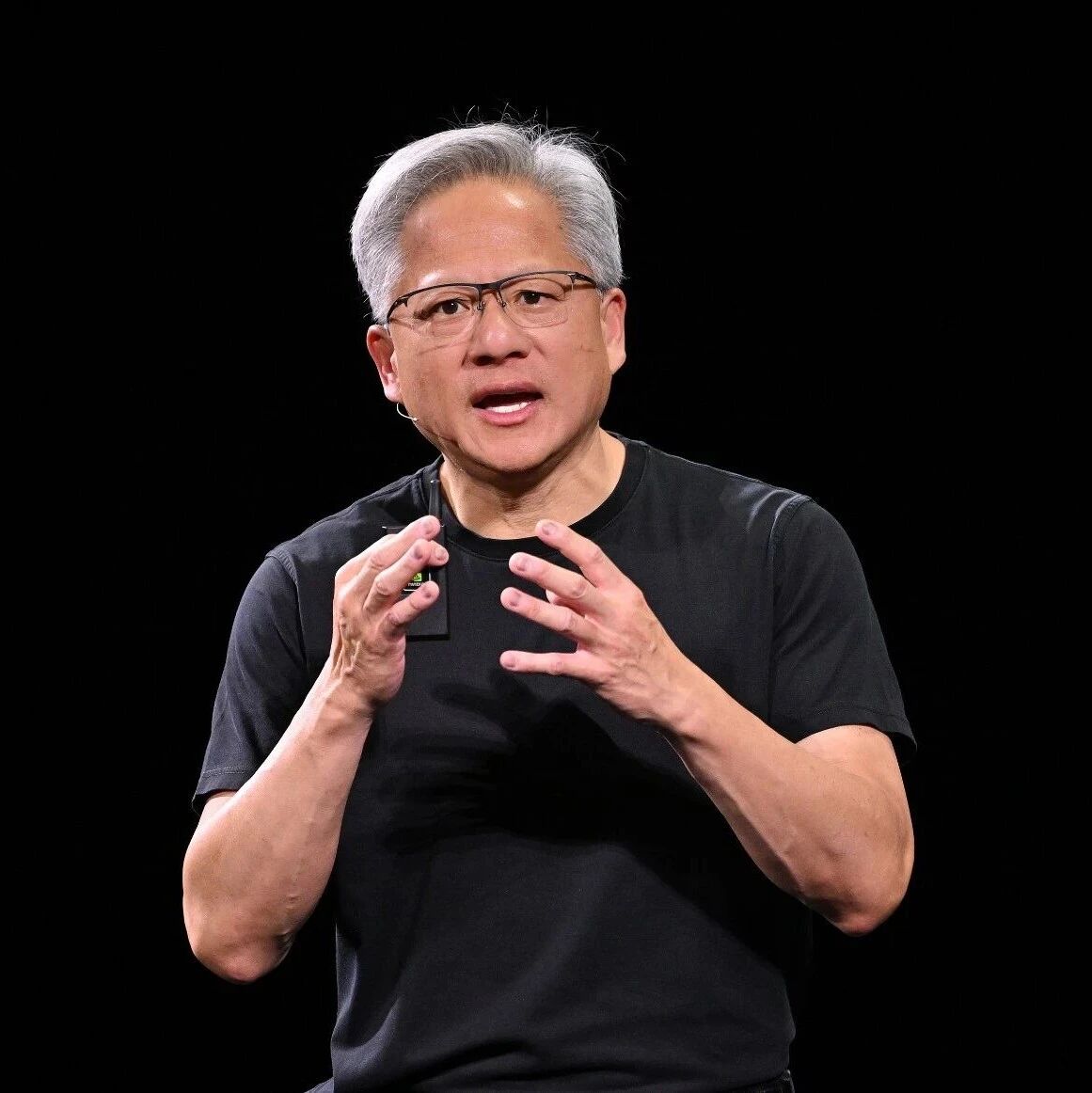
向黄仁勋汇报的英伟达36人
量子位· 2025-11-02 04:23
Core Viewpoint - The article discusses the organizational structure and key personnel reporting directly to CEO Jensen Huang at Nvidia, highlighting the strategic importance of hardware and AI in the company's future growth. Group 1: Organizational Structure - Nvidia's CEO Jensen Huang has 36 direct reports, divided into seven functional areas: strategy, hardware, software, AI, public relations, networking, and an executive assistant [1][3] - Among these, nine are focused on hardware-related businesses, indicating that hardware remains a cornerstone of Nvidia's operations [6][7] - The presence of three public relations executives under Huang's direct supervision is notable, especially when compared to other tech leaders like Elon Musk, who has none [12][13] Group 2: Strategic Focus - AI and emerging technologies are becoming a second pillar in Huang's business strategy, alongside hardware [8][10] - Huang's approach emphasizes the need for a systematic external communication mechanism to manage complex industry relationships, including those with Wall Street, developers, and government entities [15][17] Group 3: Key Personnel - Key figures under Huang include Jonah Alben, Dwight Diercks, and Bill Dally, all of whom have long tenures at Nvidia and play critical roles in GPU architecture, software development, and research [21][32][42] - New addition Wu Xinzhao, responsible for Nvidia's automotive business, brings significant experience from Qualcomm and XPeng Motors, indicating a strategic push into the automotive sector [56][59][71] Group 4: Management Philosophy - Huang's management style is characterized by a flat organizational structure, which he believes enhances information flow and decision-making speed [79][81] - Despite a preference for a flat structure, the rapid growth of Nvidia's workforce has led to a reduction in the number of direct reports, suggesting a potential shift towards a more vertical management approach [96][114] Group 5: Company Performance - Nvidia's financial performance has seen significant growth, with net profits soaring to approximately $29.5 billion in the 2024 fiscal year, a nearly 600% increase year-over-year [98] - The company's workforce expanded from 29,600 to 36,000 employees within a year, marking a 21.62% increase, which reflects the challenges of maintaining a flat structure amidst rapid growth [100][102]