Fenty Beauty

Search documents
Ulta Beauty slides as rising costs hit margins; focus on TikTok push under new CEO
Reuters· 2026-03-13 13:13
Core Viewpoint - Ulta Beauty's shares fell approximately 8% in premarket trading due to rising costs impacting margins, despite strong demand and positive sales forecasts driven by celebrity brands and a new digital strategy targeting younger consumers [1] Financial Performance - Ulta reported strong sales for the holiday quarter and forecasted upbeat annual sales, benefiting from robust demand for trendy products, including celebrity labels like Rihanna's Fenty Beauty [1] - Selling, general, and administrative (SG&A) costs increased by 23% to $1 billion in the December quarter, primarily due to higher incentive compensation and marketing investments [1] Strategic Initiatives - The new CEO, Kecia Steelman, emphasized a focus on attracting younger and affluent shoppers through celebrity-owned brands and exclusive campaigns featuring figures like Khloe Kardashian and Paris Hilton [1] - Ulta plans to launch an exclusive-brand assortment on TikTok Shop to engage Gen Z and Gen Alpha shoppers, aiming to capitalize on the growing online beauty sales market [1] Market Position and Outlook - Analysts noted that Ulta is capturing market share in the online beauty category, with confidence in an upside to the annual sales forecast [1] - The company anticipates double-digit SG&A growth in the first half of fiscal 2026 due to ongoing costs related to the acquisition of Space NK, with expectations of easing in the latter half as integration expenses stabilize [1] Valuation Metrics - Following the results, at least seven brokerages reduced their price targets for Ulta's stock, which has a forward price-to-earnings multiple of 21.62, compared to 29.53 for Estee Lauder and 19.84 for Elf Beauty [1]


奢品巨头重新布局,消费赛道要复苏?
Sou Hu Cai Jing· 2026-02-26 14:58
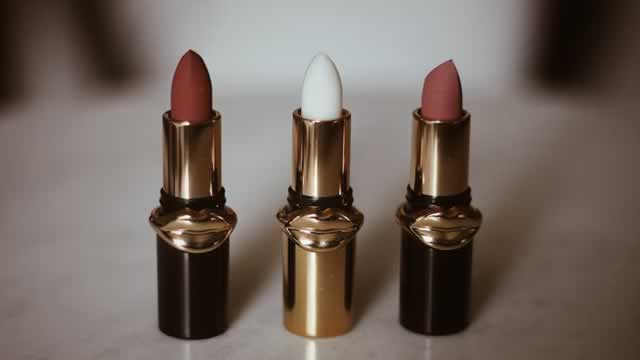
Group 1 - The luxury goods sector is experiencing a dichotomy between subjective biases and quantitative facts, as evidenced by LVMH's consideration of selling non-core beauty brands while simultaneously launching a high-end lipstick line [1] - The market's perception of the beauty segment is polarized, with some investors believing it is declining while others see opportunities due to LVMH's entry, highlighting the confusion caused by subjective judgments [1][2] - The true intentions of market players are often obscured, similar to how stock movements can mislead investors, emphasizing the need for a deeper understanding of trading behaviors [2][10] Group 2 - Quantitative data can reveal critical insights into market dynamics, such as the "dominant momentum" and "institutional inventory," which reflect core trading behaviors and institutional participation [4] - Analyzing stocks through quantitative metrics can clarify whether price movements are genuine recoveries or mere traps for retail investors, thus eliminating guesswork [4][6] - The distinction between subjective and quantitative analysis is crucial, as the former relies on experience and can be misled by market noise, while the latter focuses on actual trading actions and trends [10] Group 3 - LVMH's strategy of selling non-core brands is not a retreat from the beauty sector but a focus on high-margin products, aligning with the broader trend of resource optimization in investment strategies [6][10] - The ability to discern institutional actions through quantitative data can help investors navigate complex market environments and establish a sustainable investment framework [10]
考虑出售玫珂菲,LVMH集团“甩包袱”?
Bei Jing Shang Bao· 2026-02-26 11:53
Core Viewpoint - LVMH is considering selling its makeup brand Make Up For Ever and skincare brand Fresh, as well as divesting part of its stake in Fenty Beauty due to declining performance and profitability challenges in the luxury market [2][3][4]. Group 1: Brand Performance - Make Up For Ever, founded in 1984 and acquired by LVMH in 1999, has been experiencing losses for several years, with an average price point of 300-500 RMB [2][3]. - Fresh, established in 1991, has also been facing difficulties, including the closure of multiple stores in China between 2024 and 2025 [3]. - Fenty Beauty, co-founded by Rihanna, initially gained popularity but has not maintained its momentum, leading to a decline in brand visibility [3]. Group 2: Financial Performance of LVMH - LVMH's total revenue for 2025 is projected to be 80.8 billion euros, a decrease of 3.876 billion euros (5%) from 2024 [4]. - The company's operating profit and net profit are expected to decline by 9% and 13%, respectively, amounting to 17.755 billion euros and 10.878 billion euros [4]. - In 2024, LVMH's revenue was 84.683 billion euros, down 2% year-on-year, with operating profit and net profit decreasing by 14% and 17%, respectively [4]. Group 3: Market Trends and Strategic Shifts - The luxury market is shifting from oligopoly to a more diversified landscape, with increasing competition from niche and custom brands [4]. - Consumer behavior is changing, with a decreasing willingness to pay premium prices, prompting luxury brands to focus on product innovation and service improvement [4]. - LVMH's strategy may involve divesting non-core brands to concentrate resources on stable growth brands like Dior and Guerlain, reinforcing its position in the high-end beauty market [5].
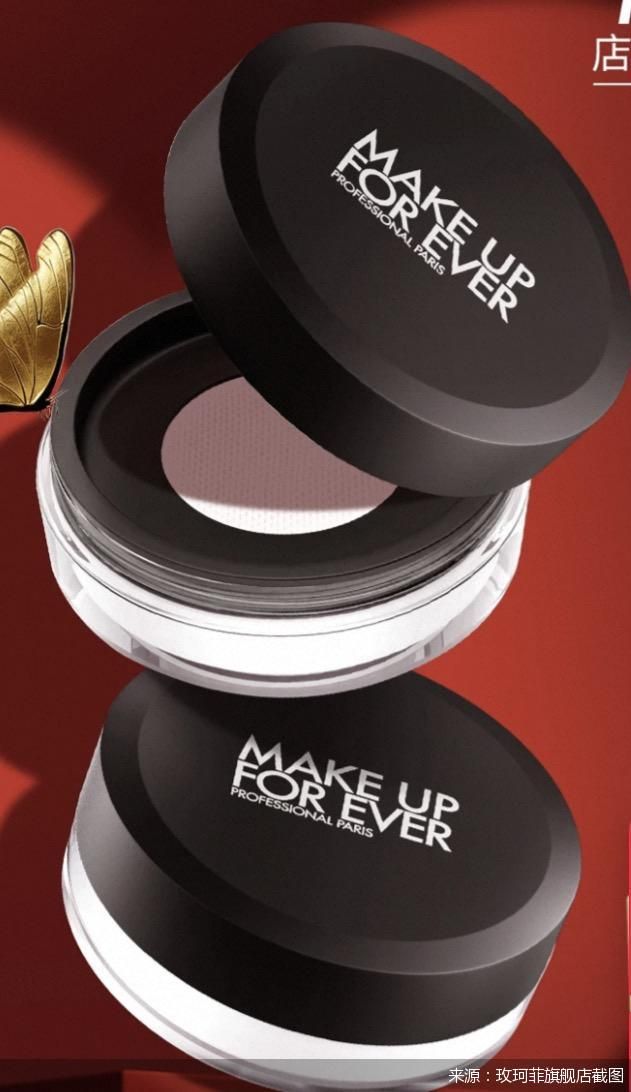
LVMH考虑出售旗下大众品牌
Guan Cha Zhe Wang· 2026-02-25 10:31
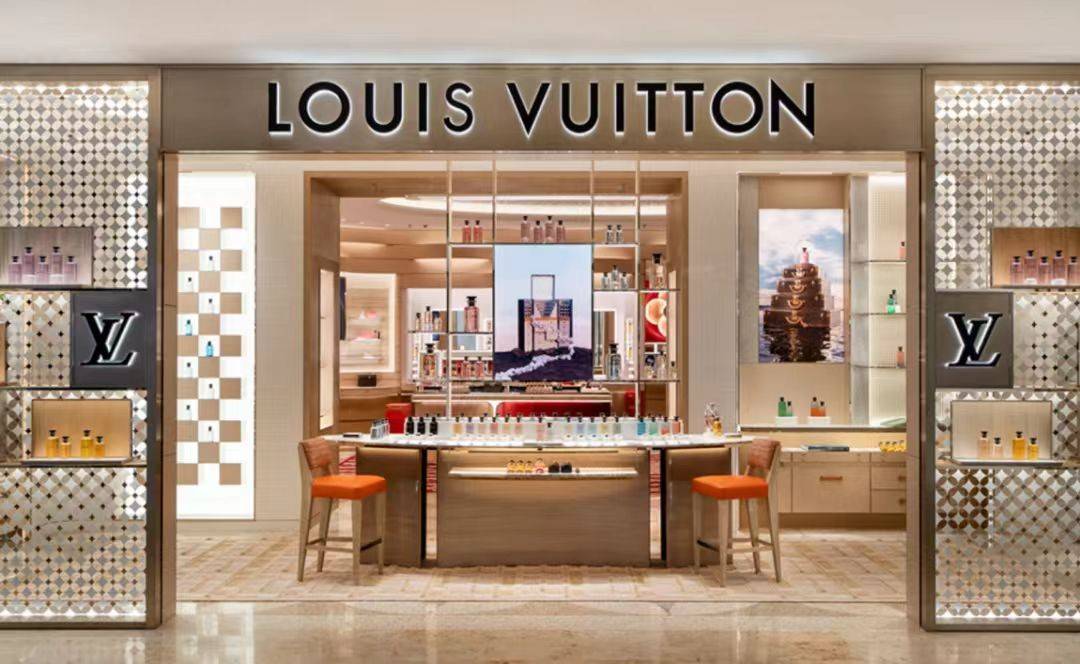
Core Insights - LVMH is undergoing a strategic adjustment in its beauty business, considering the sale of its makeup brand Make Up For Ever and evaluating stakes in skincare brand Fresh and Fenty Beauty [1][5][13] Group 1: Make Up For Ever - Make Up For Ever, founded in 1984 and acquired by LVMH in 1999, has been struggling with a positioning mismatch, focusing too much on the mass market rather than LVMH's luxury brand identity [1][5] - The brand has reported losses for eight consecutive years, with annual net revenue around €300 million, making it a burden for LVMH's beauty segment [5][6] Group 2: Fresh - Fresh, established in 1991, has seen a slowdown in its expansion in China, closing several stores while maintaining around 70 counters in major cities [3][5] - The brand has failed to establish a clear competitive advantage in a market increasingly focused on efficacy and transparency, leading to a decline in growth [3][5] Group 3: Fenty Beauty - Fenty Beauty, co-founded by Rihanna in 2017, is also under evaluation for potential stake sales, with estimated brand valuation between $1 billion and $2 billion [6][9] - The brand's performance in China has been disappointing, with initial sales figures indicating a lack of traction despite some promotional successes [6][9] Group 4: Overall Beauty Business Performance - Despite the challenges faced by specific brands, LVMH's overall beauty business remains resilient, with total revenue for perfumes and cosmetics at €8.174 billion in FY2025, although down 3% from the previous year [9][12] - The strong performance of luxury brands like Dior and Givenchy has supported profitability, with operating profit increasing by 8% [9][12] Group 5: Louis Vuitton's Entry into Beauty - Louis Vuitton has launched its beauty line, La Beauté Louis Vuitton, with a focus on high-margin products to attract younger consumers and enhance customer loyalty [10][12] - The pricing strategy for Louis Vuitton's products, such as a lipstick priced at 1,200 RMB, aims to position the brand within the luxury segment, targeting LVMH's loyal customer base rather than the mass market [12][13] Group 6: Market Trends - The luxury goods market in China is entering a phase of cautious recovery, with consumer spending on luxury items expected to decrease slightly [12][13] - Consumers are becoming more value-conscious, emphasizing the importance of perceived value in their purchasing decisions [12][13]

美妆孵化器模式“走向消亡”?
Xin Lang Cai Jing· 2025-11-04 04:27
Core Viewpoint - The future of Kendo, the beauty incubator under LVMH, is uncertain as the group considers selling its 50% stake in Fenty Beauty, which has become a significant part of Kendo's identity and success [1][4][5] Group 1: Kendo's Background and Success - Kendo was established in 2010 as a spin-off from Sephora Originals and has successfully incubated several notable beauty brands, including Fenty Beauty, which was co-founded with Rihanna in 2017 [2][4] - Kendo's incubator model provided essential brand-building tools for emerging beauty brands, ensuring their products were featured in Sephora, a leading beauty retailer [2][4] Group 2: Current Challenges and Market Dynamics - Kendo has faced challenges, including the sale of KVD Beauty and the expiration of the Marc Jacobs Beauty brand license, leaving Fenty Beauty and Ole Henriksen as its only remaining brands [5][8] - Fenty Beauty's sales have plateaued, with 2023 revenue reaching $750 million (approximately 5.34 billion RMB), and there are concerns about declining consumer interest and product quality [8][10] - LVMH's overall perfume and cosmetics sales fell by 2% to $6.9 billion (approximately 49.1 billion RMB) in the first nine months of 2023, indicating broader market challenges [8] Group 3: The Decline of the Incubator Model - The beauty incubator model, once thriving, is now facing decline, with competitors like Amyris and Forma Brands filing for bankruptcy in 2023 [9][11] - The typical exit timeline for incubator-supported beauty brands has extended from 3-5 years to approximately 5-8 years, reflecting increased market competition and challenges [9][12] - Successful incubators today demonstrate the ability to pivot quickly, contrasting with Kendo's slower, more traditional approach, which may have hindered its growth potential [10][12] Group 4: Future Outlook - If LVMH can sell Fenty Beauty for a valuation of $2 billion (approximately 14.2 billion RMB), it could signal a viable path for incubators to achieve higher returns through long-term brand development [12][13] - The fate of Kendo may determine the future of the beauty incubator model, as the industry grapples with rapid changes and increasing competition [13]
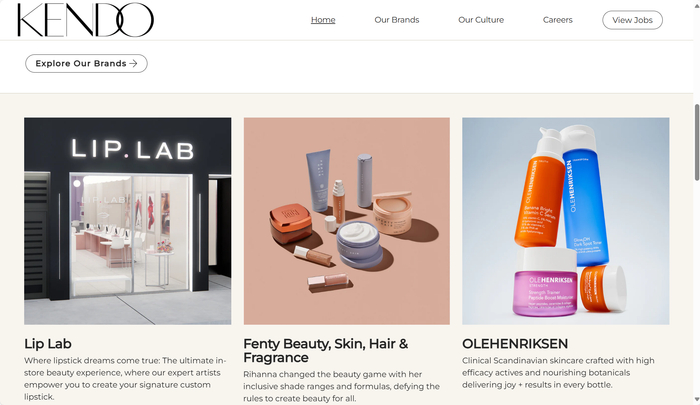
奢侈品巨头释放复苏信号;蕾哈娜美妆品牌或被卖?丨二姨看时尚
2 1 Shi Ji Jing Ji Bao Dao· 2025-10-27 08:45
Core Insights - The global luxury goods industry is seeking a new balance amid structural differentiation, driven by creative innovation, market restructuring, and strategic focus [1] Group 1: Company Performance - Prada Group reported a revenue of €4.07 billion for the nine months ending September 30, 2025, an increase of 8.9% year-on-year, with Miu Miu's sales soaring by 41% [2] - Unilever's Q3 sales exceeded expectations, driven by double-digit growth in beauty brands like Dove, with a total turnover of €14.7 billion, down 3.5% year-on-year [3] - Chanel appointed Sarah Weisz-Pirel as the new communications director, emphasizing the brand's strategic focus on crisis and reputation management [4][5] - Kering's Q3 revenue fell by 10% to €3.42 billion, but the decline is narrowing compared to previous quarters, with North America showing a surprising 3% same-store sales growth [6] - L'Oréal's Q3 sales reached €10.33 billion, a 0.5% increase year-on-year, but still below analyst expectations [7][8] - Hermès reported a 9.6% increase in sales to €3.88 billion, although it fell short of market expectations [10][11] - LVMH is considering selling a 50% stake in Fenty Beauty, reflecting a strategic reassessment of its diverse business portfolio [12] - Ermenegildo Zegna's Q3 revenue grew by 0.2% to €398.2 million, with significant improvement in the Greater China region [13][14] Group 2: Market Trends - Swiss watch exports to the U.S. plummeted by 55.6%, resulting in the U.S. losing its status as the largest export market for Swiss watches [17] - The luxury goods sector is witnessing a shift towards high-end beauty and personal care products, as evidenced by Unilever's strategic focus [3][6] - The appointment of Grace Wales Bonner as Hermès' menswear creative director signifies a cultural and strategic shift towards contemporary aesthetics [16] - The collaboration between Hyatt and Home Inn to enter the long-stay hotel market indicates the growing potential of the business travel segment in China [18][19]
LVMH或售Fenty Beauty,开云抛售美妆业务:巨头为何集体“逃离”?
Guan Cha Zhe Wang· 2025-10-23 03:54
Core Viewpoint - LVMH is exploring the sale of its 50% stake in Fenty Beauty, collaborating with investment bank Evercore for this process [1][4] Group 1: Company Overview - Fenty Beauty was co-founded by singer Rihanna and LVMH's Kendo Brands in 2017, with both parties holding equal shares [1] - The brand has gained popularity on social media, known for its inclusive range of beauty products, including 40 foundation shades [1] - In 2024, Fenty Beauty is projected to generate approximately $450 million in net sales, with a market valuation estimated between $1 billion and $2 billion [4] Group 2: Kendo Brands and Market Adjustments - Kendo Brands, established in 2010, focuses on creating and acquiring innovative beauty brands and has previously launched brands like Ole Henriksen Skin Care [4] - Recently, Kendo Brands sold its vegan makeup brand KVD Beauty to Windsong Global, as the brand faced challenges amid changing beauty trends [6] - KVD Beauty's revenue significantly declined to tens of millions after a reduction in marketing investment [8] Group 3: Industry Trends and Strategic Moves - The luxury beauty market is experiencing a slowdown, prompting companies to reassess their business strategies [14] - LVMH's beauty segment, including perfumes and cosmetics, reported a slight revenue decline of 1% in the first half of 2025, indicating a shift from rapid growth to a more challenging phase [12][14] - Kering Group's recent strategic partnership with L'Oréal, involving a €4 billion acquisition of its beauty business, reflects a broader trend of luxury brands adjusting their beauty portfolios [8][12] Group 4: Financial Performance - LVMH's financial report for 2024 shows a 2% decline in total revenue, with the perfumes and cosmetics segment experiencing a 2% growth [9] - In contrast, Kering's beauty business has seen a significant strategic shift, with L'Oréal's third-quarter same-store sales growth at only 4.2%, below analyst expectations [12][13]

估值百亿的名人品牌仍遭抛售?
3 6 Ke· 2025-10-22 12:28
Core Insights - The overall growth of international beauty companies is slowing down in the first half of 2025, prompting them to optimize their organizations through sales and personnel adjustments to rebuild growth trajectories [1] - Major luxury groups are accelerating acquisition and divestiture activities, as evidenced by Kering Group's recent sale of its fragrance brand Creed to L'Oréal and the establishment of a long-term strategic partnership [1] Company Summaries - LVMH is reportedly exploring the sale of a 50% stake in Fenty Beauty, which has generated nearly $4.5 billion in net sales in 2024, with a valuation between $1 billion and $2 billion [2][4] - Fenty Beauty, established in 2017, has seen significant growth, achieving over €500 million in global sales in its first fiscal year and $505 million in 2018 [10] - The brand is set to enter the mainland China market in 2024, with a notable presence on Tmall, where it has garnered 1.37 million followers [6] Market Trends - The celebrity beauty brand landscape is facing challenges, with many brands struggling to maintain momentum after initial success driven by social media [12][17] - Acquisitions by larger beauty groups are becoming a more favorable exit strategy for celebrity brands, as seen with the recent $1 billion acquisition of Rhode by e.l.f. Beauty [17] - The beauty sector is experiencing a divide, with established luxury groups like LVMH and Kering reassessing their beauty divisions, potentially leading to strategic sales to optimize resource allocation [19]
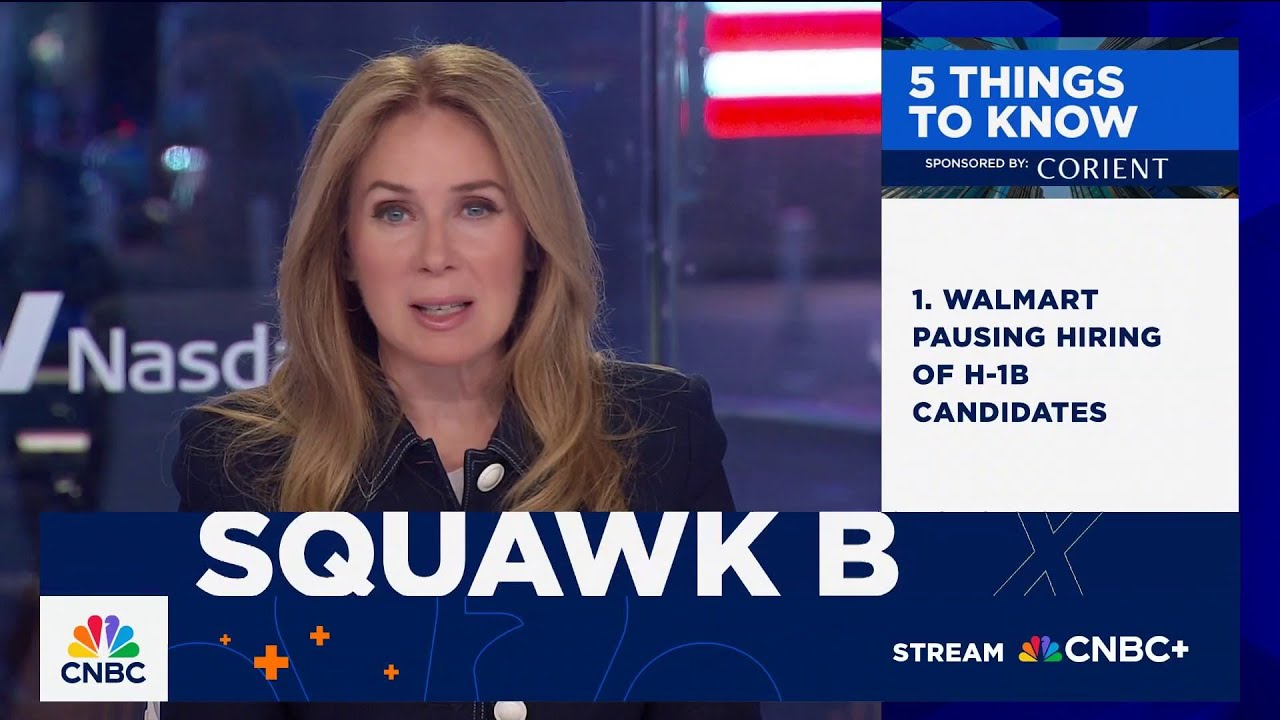
5 Things To Know: October 22, 2025
CNBC Television· 2025-10-22 11:06
Hiring & Visa Policy - Walmart is pausing hiring of candidates requiring H-1B worker visas [1] - Walmart was the ninth largest corporate recipient of H-1Bs in America in fiscal year 2025 [1] - President Trump imposed a new $100,000 fee on H-1B applications last month [2] Financial Performance & Shareholder Value - Barclays is raising guidance and announcing a 500 million pound share buyback, stock up by 45% [2] - Western Alliance reported a more than 27% increase in profits year-over-year [2] - Western Alliance reassured investors that an alleged fraud tied to a real estate investor group did not hurt the bank's overall performance, stock is up by 28% [3] Executive Compensation - Microsoft CEO Satya Nadella's pay for fiscal year 2025 climbed 22% to more than $96 million, including more than $84 million in stock awards [4] Mergers & Acquisitions/Investment - LVMH is exploring a sale of its 50% stake in Fenty Beauty, which it co-owns with Rihanna [3]

5 Things To Know: October 22, 2025
Youtube· 2025-10-22 11:06
Group 1 - Walmart is pausing hiring of candidates requiring H-1B worker visas, being the ninth largest corporate recipient of H-1Bs in America for fiscal 2025 [1] - Walmart's spokesperson stated the company is committed to hiring the best talent while being thoughtful about its H-1B hiring approach [2] - Barclays is raising guidance and announcing a £500 million share buyback, with its stock increasing by 4.5% [2] Group 2 - Western Alliance reported a more than 27% year-over-year increase in profits, with stock up by 2.8% despite an alleged fraud incident [3] - LVMH is exploring the sale of its 50% stake in Fenty Beauty, co-owned with Rihanna [3] - Microsoft CEO Satya Nadella's pay for fiscal 2025 increased by 22% to over $96 million, including more than $84 million in stock awards [4]