Galaxy AI

Search documents
三星Galaxy S26系列上手速报|硬件级防窥真机首秀
Xin Lang Cai Jing· 2026-02-25 18:29
Core Insights - The introduction of hardware-level privacy screen technology enhances user security by providing clear visibility from the front while obscuring views from the sides [2] - The camera system features a 200 million pixel main camera along with dual telephoto lenses, significantly improving the device's capabilities for capturing live events [2] - New AI functionalities, including AI podcasting, smart copywriting, and instant search features, are introduced to enhance user experience [2] - Different models are available to cater to various user preferences: the S26 for compact users, the S26+ for balanced performance, and the Ultra for flagship experience seekers [2]
Wall Street Breakfast Podcast: UBS Hikes Private Credit Default View
Seeking Alpha· 2026-02-25 12:02
Group 1: Private Credit Market - UBS Group has raised its worst-case default rate forecast for private credit to 15%, an increase of 2 percentage points from the previous estimate of 13% due to concerns over AI disruption [3][4] - The report highlights a clearer catalyst for this increase, citing rapid and severe AI disruption as a significant risk factor [4] - Other credit markets are also facing elevated risks, with projected worst-case default rates of up to 6% for leveraged loans and 10% for high-yield bonds, up from previous estimates of 4% and 8% respectively [5] Group 2: AMC Entertainment - AMC Entertainment's CFO indicated a significant opportunity to close underperforming theaters, with the company having the option to renew or terminate about 85 leases annually, representing roughly 10% of its locations [6] - The company plans to close more theaters than it opens, as new openings are generating significantly higher profits compared to those being closed [6] - AMC's projected capital expenditures for new theater locations are estimated to be between $175 million and $225 million, with some new locations planned for 2026 and beyond [7] Group 3: AI and Technology Sector - President Trump announced that major tech companies developing AI data centers will need to cover their own electricity needs under a "rate protection pledge" [9] - The White House is expected to formalize this effort with tech firms in early March, although specific companies and implementation details were not disclosed [10] - Increased scrutiny from government entities is anticipated to lead other major tech organizations to follow suit regarding their data center operations [11]




Claude Code更新编程语言优化,IBM跌超13%;OpenAI与咨询巨头达成多年合作协议,推广AI智能体工具丨全球科技早参
Mei Ri Jing Ji Xin Wen· 2026-02-23 23:53
Group 1: AI and Automation - Anthropic's Claude Code can now automate the exploration and analysis phase of COBOL modernization, traditionally requiring large consulting teams, impacting IBM's consulting service model [1] - OpenAI has established long-term partnerships with four consulting firms to deploy its enterprise AI agent platform, significantly lowering the barrier for businesses to adopt AI technology [2] - Uber has launched a new department, Uber Autonomous Solutions, aimed at commercializing autonomous driving technology, enhancing market expectations for the transition from technology validation to commercial operation [4] Group 2: Pharmaceuticals and Healthcare - Eli Lilly has introduced a new dosage form of its weight loss drug Zepbound, priced at $299 per month, with Q4 revenue in the U.S. reaching $4.2 billion, a 122% increase year-over-year [3] Group 3: Technology and Consumer Electronics - Samsung has integrated Perplexity into its Galaxy AI platform, allowing users to access and control various applications, enhancing competitive differentiation in the smartphone AI market [5]


How Samsung’s AI Drive Helps Alphabet’s (GOOGL) Gemini Ambitions
Yahoo Finance· 2026-01-07 11:50
Core Viewpoint - Alphabet Inc. is positioned as one of the top American stocks to buy and hold in 2026, bolstered by Samsung's commitment to integrate Google Gemini AI features into its smartphones, significantly increasing the potential user base for Alphabet's AI technology [1][2]. Group 1: Samsung Partnership and AI Development - Samsung plans to double the number of smartphones featuring Google Gemini-backed 'Galaxy AI', increasing the total to 800 million devices [1]. - This partnership enhances Alphabet's competitive stance against OpenAI, particularly following the recent launch of OpenAI's GPT-5.2 model [2]. - Samsung's President emphasized the urgency of applying AI across all products and services, indicating a strong commitment to rapid AI deployment [2]. Group 2: Stock Performance and Analyst Projections - Over the past month, Alphabet's stock has outperformed the market, gaining 6.8% [3]. - Analyst Doug Anmuth from JPMorgan predicts a further 23% surge in stock value by 2026, driven by Alphabet's leadership in full-stack AI and growth in Google Cloud [3]. - Mizuho analysts have also raised the price target for GOOGL to $385, indicating similar growth expectations [3]. Group 3: Company Overview - Alphabet Inc. operates through various segments including Google Cloud, Google Services, and Other Bets, with a global presence across multiple regions [4].

三星加速AI布局:今年计划AI移动设备产量翻番至8亿台
Huan Qiu Wang Zi Xun· 2026-01-06 06:22
来源:环球网 【环球网科技综合报道】1月6日消息,在全球人工智能竞争愈发白热化的当下,三星电子正积极发力,计划在今年大幅扩充人工智能移动设备的产量。据路 透社报道,三星电子联合首席执行官近日透露,公司今年计划将搭载"Galaxy AI"功能的移动设备数量翻一番,达到8亿台,这一举措有望助力相关合作方在 激烈的市场竞争中抢占先机。 据悉,三星搭载"Galaxy AI"功能的移动设备主要由谷歌的Gemini技术提供支持。去年,三星已将Gemini支持的AI功能推广至约4亿部移动产品,涵盖智能手 机和平板电脑等。按照规划,到2026年,这一数字将进一步提升至8亿。三星此次提出今年产量翻番的目标,无疑是在加速推进其AI战略布局。 人工智能的普及速度正在加快。三星针对Galaxy AI品牌开展的认知度调查结果显示,仅用一年时间,该品牌在消费者中的认知度就从约30%大幅跃升至 80%。 三星联合首席执行官还指出,尽管目前人工智能技术在一些方面可能仍让人存疑,但在未来六个月到一年内,这些技术将会得到更广泛的应用。(青山) ...
Samsung’s Plan to Wreck Apple
Yahoo Finance· 2026-01-05 14:15
Group 1 - Apple Inc. currently does not have artificial intelligence integrated into its iOS, requiring users to download third-party apps for AI functionalities [1][7] - Samsung's global smartphone market share was 20% last year, compared to Apple's 16%, with Android holding a 77% market share overall [2] - Samsung plans to release 800 million AI-powered mobile devices this year, powered by Google's Gemini, aiming to enhance its competitive position against Apple and major Chinese smartphone manufacturers [3][4] Group 2 - Samsung's Galaxy AI initiative is part of a broader strategy to capture market share from Apple, alongside its foldable phone offerings, which have yet to gain traction in the U.S. market [4] - The impact of AI on smartphone sales is still uncertain, but Samsung's efforts may represent a significant opportunity to challenge Apple's dominance in the short term [4] - Apple's stock price is heavily dependent on iPhone sales, and any success from Samsung's AI initiatives could weaken this support [4]

三星电子2026战略:8亿台设备接入Gemini AI,折叠屏市场迎关键转折点
Zhi Tong Cai Jing· 2026-01-05 11:57
Core Insights - Samsung Electronics plans to double the number of mobile devices equipped with Google's Gemini AI features by the end of this year, aiming to expand from 400 million devices to 800 million by 2026 [1][2] - The company is enhancing its collaboration with Google to maintain its leadership in the Android ecosystem against competitors like Apple and Chinese brands [2] - Samsung is also integrating Gemini AI into its home appliances and televisions, showcasing advancements at CES 2026 [2] Group 1 - Samsung has successfully deployed Gemini AI features to approximately 400 million devices, including smartphones and tablets, by the end of last year [1] - The brand recognition of Galaxy AI has increased from 30% to 80% within a year, indicating growing consumer awareness [1] - The company anticipates a higher adoption rate of AI technologies within the next six months to a year [1] Group 2 - Roh acknowledged the unprecedented global shortage of memory chips affecting various consumer electronics, including smartphones and televisions [3] - There is a possibility of raising product prices due to the surge in memory chip prices, which is deemed unavoidable [3] - Samsung holds nearly two-thirds of the foldable smartphone market share as of Q3 2025, despite facing competition from Huawei and Apple [3]
激进押注AI!三星计划将搭载Gemini的移动设备数量翻番至8亿台,全面迎战苹果
Hua Er Jie Jian Wen· 2026-01-05 07:22
Core Insights - Samsung Electronics plans to significantly expand its artificial intelligence strategy by doubling the production of mobile devices equipped with Google's Gemini AI model to 800 million units by 2026, marking a strong competitive response against Apple and rivals in the chip sector [1][3] - The company's advancements in high bandwidth memory (HBM) technology are expected to enhance investor confidence and position Samsung to re-enter Nvidia's core supply chain by 2026 [3][4] - Samsung aims to integrate AI across all products and services, reinforcing its position as the largest supporter of the Android platform and aiding Google in competing with OpenAI [3][4] AI Strategy Expansion - Samsung's aggressive device expansion plan is set to intensify the competition in the AI model space, particularly against Google's Gemini 3, which has shown strong performance metrics [4] - A survey indicated that awareness of Samsung's Galaxy AI brand surged from 30% to 80% within a year, reflecting accelerated AI adoption among consumers [4] - The company is focusing on enhancing its competitive edge in AI functionalities, including image generation, productivity tools, and translation services, to differentiate itself from Apple [4] Market Position and Competition - According to Counterpoint, Apple became the world's largest smartphone manufacturer last year, prompting Samsung to reclaim lost market share through comprehensive AI integration [5][6] - Samsung's TV and home appliance divisions are under pressure from Chinese competitors, and the company plans to leverage a cross-category AI ecosystem to strengthen its market position [6] - Despite leading the foldable smartphone market with a two-thirds share, Samsung acknowledges slower-than-expected growth due to engineering complexities and a lack of compatible applications [6] Semiconductor Market Challenges - The global shortage of memory chips is benefiting Samsung's semiconductor business but is simultaneously pressuring profit margins in its smartphone segment [7][8] - The CEO noted that this unprecedented situation affects not only smartphones but also TVs and other consumer electronics, with potential price increases being considered due to rising storage chip costs [8] - Market research firms predict that the smartphone market may contract next year due to the impact of memory chip shortages on pricing [8]
AI手机被炒到3.6万元,iPhone会是下一个诺基亚?
创业邦· 2025-12-26 03:20
Core Viewpoint - The emergence of AI smartphones, exemplified by Nubia's M153 model featuring ByteDance's Doubao model, signifies a potential revolution in the smartphone industry, challenging traditional players like Apple and Samsung [5][6][13]. Group 1: AI Smartphone Impact - The AI smartphone aims to streamline user experiences by integrating various applications into a single interface, potentially replacing the need for multiple apps [11][12]. - The rapid sell-out of the M153 model and its subsequent high resale prices indicate a strong market demand for AI-integrated devices [5][6]. - Traditional smartphone manufacturers are at risk of becoming obsolete if they do not adapt to the AI trend, similar to Nokia's decline in the past [7][10]. Group 2: Challenges for Traditional Manufacturers - Apple and Samsung are facing innovation stagnation, leading to concerns about their ability to compete in the AI smartphone market [10][20]. - Apple's focus on privacy and a cautious approach to AI development may hinder its competitiveness, as it lags behind in integrating advanced AI capabilities [22][21]. - Samsung's reliance on external AI models and its struggles in the memory chip market further complicate its position in the evolving landscape [22][24]. Group 3: Future of the Smartphone Industry - The competition in the smartphone industry is shifting from hardware superiority to AI capabilities, with companies needing to become digital agents for users [26][28]. - The potential for collaboration between AI firms and smartphone manufacturers could lead to innovative products that redefine user experiences [29]. - The ultimate goal of AI smartphones is to create devices that understand user preferences and habits, potentially transforming the relationship between users and technology [30].

豆包手机引发的思考:AgentVS超级App,AI公司VS手机厂商
新财富· 2025-12-16 08:22
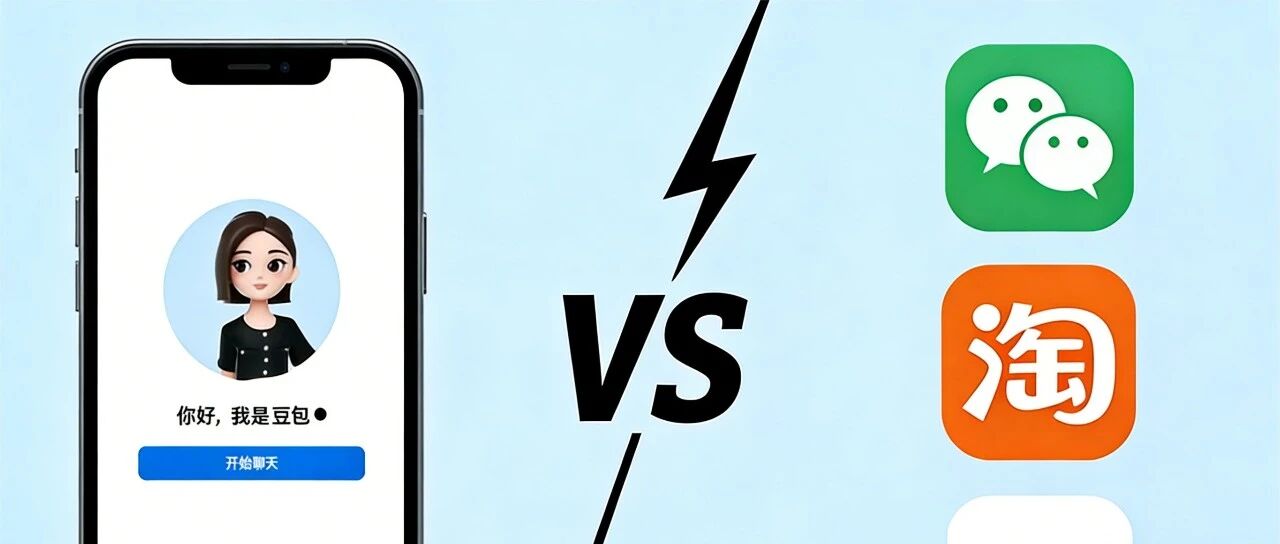
Core Viewpoint - The launch of the Doubao mobile assistant by ByteDance represents a significant step towards the realization of system-level AI agents, challenging the dominance of super apps like WeChat and Alipay in the mobile ecosystem [2][14][27] Group 1: Doubao Mobile Assistant Launch - On December 1, ByteDance's Doubao team released a technical preview of the Doubao mobile assistant, which collaborates deeply with phone manufacturers at the operating system level to enable cross-application automation [2] - The initial batch of 30,000 units sold out instantly, but within two days, major super apps like WeChat, Alipay, Taobao, and Meituan blocked the Doubao mobile assistant [3] Group 2: AI Agent Development - The Doubao mobile assistant demonstrates the feasibility of GUI agents, completing a closed-loop attempt for AI phones, but raises questions about its practical utility in real-world scenarios [5] - The evolution of AI agents has transitioned from fixed scripts and rule engines to a stage where GUI intelligent agents can understand and operate across applications, as seen with advancements from companies like Microsoft and Anthropic [6][7] Group 3: System-Level Agent vs. Super Apps - The system-level agent can understand user intent and orchestrate multiple apps, moving the focus from an app-centric model to a user-intent-centric model [8][10] - The core advantages of system-level agents include the ability to organize tasks across multiple apps and theoretical platform neutrality, alleviating long-standing issues like fragmented cross-app processes [11][12] Group 4: Industry Dynamics and Conflicts - The emergence of the Doubao mobile assistant has highlighted the conflict between system-level agents and super apps, with super apps responding defensively to protect their user entry points [14][15] - The long-term outcome may not be the elimination of one model over the other, but rather a redefinition of power boundaries and responsibilities between system-level agents and super apps [17] Group 5: Manufacturer Strategies - Different manufacturers are adopting varied strategies regarding AI agents, with Huawei integrating agents into its operating system, Xiaomi focusing on ecosystem integration, and Apple maintaining a single official agent [19][23][24] - The competitive landscape suggests a future where multiple agents coexist in the Android ecosystem, while iOS maintains a clearer structure with one official agent and several plugins [24][25]