Groq 3 LPU芯片

Search documents
通信周观点:GTC/OFC光互联技术迸发,国内云厂商AI服务调价-20260326
Changjiang Securities· 2026-03-26 10:12
Investment Rating - The industry investment rating is "Positive" and maintained [12] Core Insights - The communication sector rose by 1.96% in the 11th week of 2026, ranking first among major industries, and has increased by 6.8% since the beginning of the year, ranking seventh [2][5] - GTC 2026 sees NVIDIA's introduction of the "Five Cabinet" inference solution, leading to significant growth in Scale-out optical interconnects [6] - OFC 2026 anticipates exponential growth in the AI-driven optical communication industry, with leading companies accelerating capacity expansion and multiple technology paths such as CPO, NPO, OCS, and XPO being implemented [7][10] - Domestic cloud providers are adjusting AI service pricing due to surging AI demand and rising supply chain costs [9] Summary by Sections Market Performance - In the 11th week of 2026, the communication sector's performance was highlighted, with significant individual stock movements, including a 26.8% increase for Yuanjie Technology and a 15.5% decrease for Fenghuo Communication [5] GTC 2026 Developments - NVIDIA forecasts that orders for the Blackwell and Rubin platforms will reach $1 trillion by 2027, doubling the previous estimate of $500 billion for 2026 [6] - The hardware aspect includes the release of Groq 3 LPU chips and Groq 3 LPX inference cabinets, achieving a total cabinet computing power of 315 PFLOPS [6] OFC 2026 Projections - The optical communication industry is expected to grow exponentially, with AI optical communication's total addressable market (TAM) projected to increase from $18 billion to over $90 billion from 2025 to 2030, reflecting a CAGR of approximately 40% [7] - InP chip demand is expected to grow at a CAGR of 85% from 2026 to 2030, with significant capacity expansions planned by major players [7] Technology Advancements - The industry is on the brink of entering the single-channel 400G era, with companies like Zhongji Xuchuang and Xinyi Sheng launching new optical modules and products [8] Pricing Adjustments by Cloud Providers - Major cloud providers in China, including Tencent Cloud and Alibaba Cloud, have significantly raised prices for AI services, with increases ranging from 5% to 34% [9]




GTC 2026|黄仁勋五层蛋糕重构AI价值体系,投资逻辑全解析 | 市场观察
私募排排网· 2026-03-25 09:49
Core Viewpoint - The article discusses Jensen Huang's "AI Five-Layer Cake" framework presented at NVIDIA GTC 2026, which outlines how value in the AI era is created and distributed across various industries, emphasizing the interconnectedness of the AI ecosystem and its implications for investment logic and asset allocation [3][5]. Group 1: AI Five-Layer Cake Theory - The "AI Five-Layer Cake" consists of five interconnected layers that collectively drive the AI industry's growth, where progress in each layer directly impacts the value realization of the upper layers [6]. - The five layers are: 1. **Energy Layer**: The foundation of AI, emphasizing the need for efficient energy supply and the projected doubling of global data center electricity consumption to 945 TWh by 2030 [7]. 2. **Chip Layer**: The core of computational power, with advancements in chip technology critical for AI expansion, including NVIDIA's new GPU architecture expected to achieve 50 PFLOPS [8]. 3. **Infrastructure Layer**: The physical embodiment of AI capabilities, with significant investments in AI factories and supercomputers, highlighting the importance of cooling technologies and innovative data center designs [9]. 4. **Model Layer**: The brain of AI, focusing on the transition from language models to physical AI, with open-source models driving demand across the architecture stack [10]. 5. **Application Layer**: The final interface where AI creates measurable economic value, with a shift towards AI agents capable of executing complex tasks across various sectors [11]. Group 2: Investment Logic from the Five-Layer Cake - Huang's framework provides a comprehensive investment strategy that emphasizes prioritizing foundational layers, driven by the exponential growth of token consumption and the need for heavy asset infrastructure [12][13]. - Key investment logic includes: 1. **Bottom-Up Approach**: Prioritizing investments in energy, chips, and infrastructure, which are expected to see more stable performance compared to upper layers [14]. 2. **Token Economy**: The increasing demand for tokens in AI applications, making "cost per token" a critical competitive metric [14]. 3. **Heavy Asset Infrastructure**: The construction of AI factories and data centers represents a new wave of capital expenditure, akin to a modern infrastructure boom [14]. 4. **Positive Feedback Loop**: The interdependence of applications, models, infrastructure, chips, and energy creates a strong positive cycle that enhances value across the entire AI ecosystem [14]. Group 3: Layer-Specific Investment Strategies - **Energy Layer**: Focus on green energy, grid equipment, and storage technologies as core beneficiaries of AI's energy demands [16]. - **Chip Layer**: Investment in GPUs, LPU, and advanced packaging technologies, driven by domestic alternatives and technological advancements [18]. - **Infrastructure Layer**: Capitalizing on the construction of AI factories and data centers, with a focus on liquid cooling and optical interconnects [20]. - **Model Layer**: Targeting investments in general models and open-source ecosystems, while being mindful of competitive pressures [22]. - **Application Layer**: Emphasizing sectors with high barriers to entry and strong profitability potential, such as embodied intelligence and industry-specific AI applications [24]. Group 4: Overall Industry Outlook - The AI industry is in its early stages of industrialization, with significant long-term growth potential as it transitions from training to inference, driving value across the entire supply chain [26].


黄仁勋详解英伟达的AI时代新叙事
Zhong Guo Jing Ying Bao· 2026-03-18 14:20
Core Insights - Nvidia's GTC 2026 conference highlighted significant advancements in AI infrastructure, including the launch of the Vera Rubin platform and the integration of Groq LPU chips, marking a pivotal moment in AI inference capabilities [2][3]. Group 1: Product Launches and Innovations - The Vera Rubin platform has commenced full production, with expected comprehensive orders reaching $1 trillion by 2027, indicating a major market opportunity [3]. - The Groq 3 LPU chip, acquired through a $20 billion deal, is positioned as a reasoning accelerator within the Vera Rubin platform, enhancing AI inference performance [2][4]. - Nvidia introduced the Vera CPU, tailored for AI workloads, marking its entry into the CPU direct sales market, which is anticipated to become a multi-billion dollar business [8][9]. Group 2: Market Position and Strategy - Nvidia is transitioning from a "GPU supplier" to a "full-stack AI infrastructure provider," with system-level optimization becoming a core competitive barrier [3][15]. - The global AI inference market is projected to reach $650 billion by 2028, with Nvidia establishing a standard through the collaboration of Groq LPU and Vera Rubin [3][15]. - The integration of Groq LPU with the Rubin platform allows existing Nvidia customers to enhance inference performance without modifying their current CUDA software ecosystem [6]. Group 3: Competitive Landscape - Nvidia's acquisition of Groq technology is a strategic response to competitors like Cerebras and SambaNova, which dominate the low-latency inference market [6]. - The introduction of Groq 3 LPU may impact the role of the Rubin CPX GPU, as both are designed to enhance inference performance [7]. - Nvidia's comprehensive approach, combining hardware, software, and ecosystem strategies, solidifies its industry dominance, making it challenging for competitors to disrupt its position [15]. Group 4: Future Directions and Trends - The Vera Rubin platform's architecture includes advanced features such as the Kyber rack design and the Space-1 module for space computing, indicating Nvidia's ambition to expand into new markets [10][12]. - The development of the AFD (Attention-FFN Disaggregation) model further optimizes resource utilization and inference service efficiency, showcasing Nvidia's commitment to innovation in AI technology [11]. - Nvidia's focus on open-source projects like OpenClaw and the introduction of NemoClaw as an operating system for intelligent agents reflect a shift towards a more integrated AI ecosystem [12][14].
黄仁勋:“信心十足”
财联社· 2026-03-18 01:14
Core Viewpoint - Nvidia's CEO Jensen Huang has stated that the previously mentioned $1 trillion annual sales target for AI accelerated chips does not include other product lines, indicating that total revenue could exceed this figure as the company enters new markets [3][6]. Group 1: AI Accelerated Chips - Huang confirmed that by the end of 2027, Nvidia's next-generation AI accelerated chips are expected to generate at least $1 trillion in revenue [3]. - The company is confident in achieving and delivering over $1 trillion in business, with Huang expressing strong confidence in reaching this revenue target [6]. Group 2: Market Demand and Competition - Huang noted that demand is accelerating at a significant scale, and the company is prepared to support this demand through supply [7]. - Despite the ambitious revenue forecast, analysts on Wall Street are concerned that this prediction does not indicate an acceleration in Nvidia's revenue growth compared to potential competitors [7]. Group 3: Data Center Sales - Nvidia previously projected that by the end of 2026, data center equipment sales would reach $500 billion; the latest forecast extends this timeline by one year while doubling the cumulative scale [8]. Group 4: Shareholder Returns - Nvidia plans to allocate more cash for shareholder returns in the second half of the year, including stock buybacks and dividends [9]. - CFO Colette Kress stated that after completing planned investments, approximately 50% of free cash flow will be used for shareholder returns [10].

英伟达预计到2027年底AI芯片收入将达到至少1万亿美元
Xin Lang Cai Jing· 2026-03-16 21:35
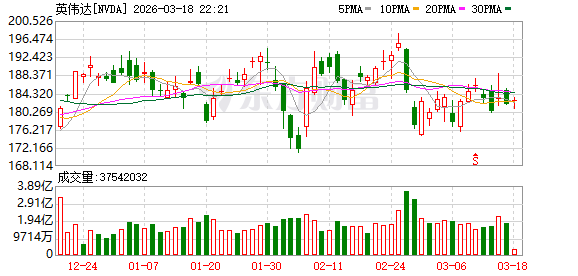
Core Insights - Nvidia's CEO Jensen Huang announced at the GTC conference that the company's Blackwell and Rubin chips are expected to generate at least $1 trillion in revenue by the end of 2027, an increase from the previous estimate of $500 billion by the end of 2026 [1][5] - The stock initially rose by 4.8% following the announcement but later closed up 1.6% at $183.19, indicating some volatility in investor sentiment [1][5] Product Developments - Nvidia introduced a new chip utilizing technology acquired from the startup Groq, which is designed to enhance the response speed of AI systems [3][7] - The company also showcased a general-purpose CPU, marking its expansion into a domain traditionally dominated by Intel, with Huang stating that the CPU opportunity is "definitely" a multi-billion dollar business [3][7] - The Groq 3 LPU, a language processing unit aimed at accelerating large language model inference, was announced to be included in Nvidia's product lineup [4][8] Market Context - Nvidia's dominance in AI chip spending has positioned it as the highest-valued company globally, but investors are seeking more evidence of sustained market growth [3][7] - The company faces increasing competition from firms like Advanced Micro Devices Inc. and challenges from its own clients who are exploring in-house chip development for AI tasks [3][7]