HW4芯片

Search documents
喜娜AI速递:今日财经热点要闻回顾|2026年1月19日
Xin Lang Cai Jing· 2026-01-19 12:00
Group 1 - Trump's threat to impose tariffs on Denmark and other European countries has led to significant market volatility, with European stock markets declining and a surge in demand for safe-haven assets like gold and silver [2][7] - The China Securities Regulatory Commission (CSRC) has outlined key tasks for 2026, focusing on market stability, regulatory enforcement, and promoting the development of listed companies [2][7] - Five leading solar companies, including Tongwei Co. and Longi Green Energy, have announced a combined expected loss exceeding 28.9 billion yuan due to industry challenges such as supply-demand imbalances and rising raw material costs [2][7] Group 2 - Tesla's CEO Elon Musk has announced the restart of the Dojo 3 project, with the new AI5 chip expected to have five times the computing power of the current HW4 chip, impacting the rollout of full self-driving capabilities [3][8] - Rare earth prices have been rising, with a projected supply-demand gap of 140,000 tons by 2030, driven by strong demand from the global electric vehicle sector [3][8] - Several small and medium-sized banks have raised deposit rates as part of a strategy to attract deposits amid low net interest margins, although future rates may stabilize or slightly decrease [3][9] Group 3 - Rongbai Technology is under investigation by the CSRC for misleading statements regarding a significant contract, raising concerns about its ability to fulfill orders due to production capacity issues [4][9] - The minimum margin requirement for financing purchases on the Shanghai and Shenzhen stock exchanges has been increased from 80% to 100% for new contracts, aimed at controlling market leverage risks [4][9] - The 2025 Hurun Report has ranked Cambrian as the top AI company in China, valued at 630 billion yuan, with an increasing number of AI chip companies listed, reflecting a shift towards domestic computing power independence [5][10]




突然!马斯克,重大宣布!
券商中国· 2025-11-05 15:02
Core Viewpoint - Tesla's AI5 chip is expected to be sampled in 2026 and mass-produced in 2027, with significant performance improvements over existing models [2][4][5]. Chip Development - The AI5 chip will be manufactured by TSMC and Samsung, with different versions produced to ensure consistent performance across platforms [4]. - The AI5 chip is designed to achieve 2000 to 2500 TOPS, which is five times the performance of the current HW4 chip, supporting more complex FSD algorithms [4]. - The AI6 chip is planned to double the performance of the AI5 and is expected to be mass-produced by mid-2028 [5]. Market Reaction - Tesla's stock price fell over 5% on November 4, reducing its market capitalization to approximately $1.48 trillion (about 10.5 trillion RMB) [6]. - The decline in stock price was influenced by concerns over Elon Musk's compensation plan, which is facing opposition from major shareholders like the Norwegian sovereign wealth fund [6]. Strategic Implications - The AI5 and subsequent chips are intended to support Tesla's autonomous driving and robotics projects, including the FSD system and Dojo supercomputing platform [5]. - The potential rejection of Musk's compensation plan could lead to a significant drop in Tesla's stock price and raise concerns about the company's strategic direction and talent retention [6].

特斯拉芯片由台积电、三星共同代工!
国芯网· 2025-11-05 03:42
Core Viewpoint - Tesla is advancing its AI chip development with the AI5 chip, which will be manufactured by TSMC and Samsung, aiming for consistent performance across different versions [1][3]. Group 1: AI5 Chip Development - The AI5 chip is expected to have a computing performance of 2000 to 2500 TOPS, which is five times that of the current HW4 chip, and will support more complex unsupervised FSD algorithms [5]. - Tesla plans to obtain AI5 chip samples by 2026, with small-scale production anticipated, and large-scale production expected to start in 2027 [3][5]. - The AI5 chip is designed in-house by Tesla and aims for significant improvements in computing power, energy efficiency, and cost compared to existing solutions [5]. Group 2: Future Chip Developments - The AI6 chip will also utilize TSMC and Samsung's dual foundry model, with performance targets set to double that of the AI5 chip, expected to achieve mass production by mid-2028 [5]. - For the AI7 chip, Tesla plans to switch foundries due to more challenging design requirements, although specific details have not yet been disclosed [5]. - The AI chips will primarily be used in Tesla's autonomous driving systems, Dojo supercomputing platform, and AI model training [5].
关于AI推理芯片,马斯克想法太疯狂
半导体行业观察· 2025-11-01 01:07
Core Viewpoint - The article discusses Elon Musk's proposal to utilize the computational power of idle Tesla vehicles for distributed AI inference workloads, potentially creating a massive distributed inference fleet that could reach up to 100 gigawatts of inference capacity if the fleet scales to tens of millions or even a hundred million vehicles [2]. Group 1: AI and Vehicle Technology - Tesla has equipped its electric vehicles with AI accelerators necessary for various autonomous driving features, including Full Self-Driving (FSD) capabilities [2]. - Since 2019, Tesla has been using its own chips, which reportedly outperform NVIDIA GPUs by 21 times, with the first chip named HW3 capable of processing 720 trillion operations per second [3]. - The latest HW4 chip, launched in January 2023, is built on a 7-nanometer process and offers a performance improvement of 3 to 8 times over its predecessor, powering Tesla's AI4 architecture [3]. Group 2: In-Vehicle Computing Power - Tesla's latest vehicle infotainment systems are equipped with powerful computing capabilities, featuring AMD Ryzen processors and independent AMD Navi 23 GPUs, achieving performance levels of up to 10 TFLOPS, comparable to top gaming systems [4].
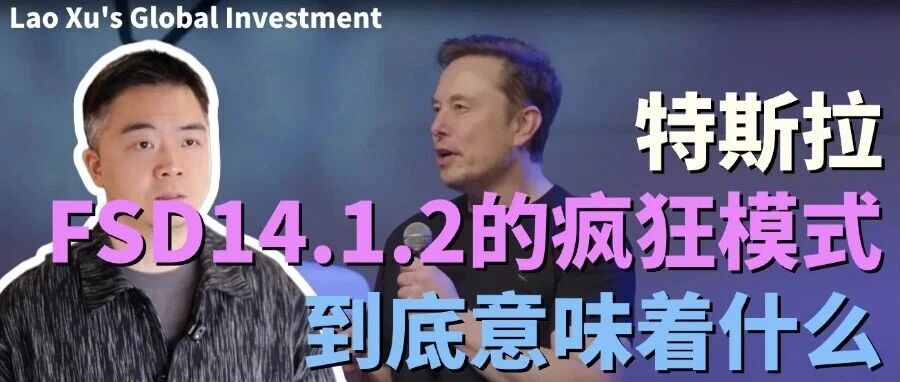
特斯拉FSD 14.1.2的“疯狂模式”,到底意味着什么?(内含双十一会员优惠!)
老徐抓AI趋势· 2025-10-22 01:04
Core Insights - The article emphasizes Tesla's confidence in its AI driving capabilities, particularly with the release of the FSD version 14.1.2, which introduces a more aggressive driving mode known as "Mad Max" [2][3] - This update marks a significant shift from conservative driving strategies to a more human-like decision-making process in complex driving environments [2][3] Technological Breakthroughs - The FSD V14 version features a tenfold increase in model parameters compared to the previous version, indicating a substantial enhancement in AI intelligence [4] - Tesla's HW4 chip enables this advanced model to operate directly on the vehicle, signifying a move towards "local intelligence" rather than relying on cloud computing [4] Evolution of FSD - The FSD system is evolving rapidly, with plans for iterative updates every few weeks, leading to stable commercial versions in the near future [7] - This approach transforms the vehicle manufacturing process into one akin to software development, allowing for faster improvements and adaptations [7] Upcoming Events - Key upcoming events for Tesla include the Q3 earnings report on October 22, which will address the timeline for the Robotaxi plan and the commercialization of FSD [8] - The shareholder meeting on November 6 will focus on Musk's compensation plan and potential investments in xAI, which could enhance Tesla's AI capabilities [8] AI Investment Implications - The advancements in FSD are seen as a significant indicator of AI's potential, as it represents a mature integration of AI perception, decision-making, and execution [9][11] - The self-reinforcing growth model of Tesla's AI capabilities—where data improves models, which in turn enhance driving and generate new data—creates a "flywheel effect" in AI development [12] Future Vision - The ultimate goal for Tesla is to integrate AI across various domains, with Robotaxi and humanoid robots (Optimus) forming a comprehensive AI ecosystem [16][18] - This vision aims to redefine productivity by combining energy control, computational power, and labor through AI [18]
特斯拉FSD新芯片,花落台积电
半导体芯闻· 2025-06-19 10:32
Group 1 - The next-generation FSD chip AI5/HW5 from Tesla has entered mass production, with TSMC as the primary foundry [1] - The AI5/HW5 chip boasts a computing performance of 2,000 to 2,500 TOPS, which is five times that of the current HW4 chip at approximately 500 TOPS [1] - The AI5/HW5 chip will utilize a 3nm N3P process, with Samsung as a backup foundry, and is expected to be used in mass production vehicles by 2026 [1] Group 2 - Tesla plans to enhance the FSD hardware suite with upgraded lenses, including weather-resistant lenses from Samsung that can melt ice and snow in one minute [2] - A pilot program for Robotaxi was launched in Austin, with the first 12 Model Y vehicles equipped with HW4 hardware for testing autonomous driving [2]