Labubu系列产品

Search documents
最低两位数拿下,Labubu怎么了?
Chang Sha Wan Bao· 2026-01-06 23:51
Core Viewpoint - The Labubu series by Pop Mart, once considered a "hard currency" in the trendy toy market, has seen a drastic price drop of over 80% within six months, indicating a significant market correction and a shift from "investment products" back to "ordinary consumer goods" [1][3][5] Group 1: Price Decline and Market Dynamics - The price of Labubu collectibles has plummeted, with some items that were once valued at thousands now listed for a fraction of that on second-hand platforms like Xianyu, reflecting a severe revaluation in the trendy toy market [3][5] - The regular Labubu products, originally priced between 59 to 79 yuan, are now being sold for as low as 49 yuan with shipping included, indicating a collapse in the pricing structure [5][6] - The overall heat index for Labubu products has dropped from a peak of 9.2 to 6.5, showcasing a significant decline in market interest [5] Group 2: Supply and Demand Factors - A substantial increase in supply has been identified as a core reason for the price drop, with new Labubu products frequently available at retail prices, breaking the previous scarcity model [5][7] - The shift in consumer demographics, with younger buyers purchasing for personal enjoyment rather than investment, has altered the market dynamics, leading to a decline in speculative buying [6][7] Group 3: Industry Trends and Strategic Shifts - The failure of the artificially created scarcity model in the trendy toy industry has prompted a shift from an "investment logic" to a "consumer logic," emphasizing genuine consumer interest over speculative value [7][8] - Pop Mart's recent strategy includes reducing reliance on single IPs and increasing the variety of products, moving away from blind box sales and enhancing collaborations with artists to improve product value [8][10] - The current market adjustment is seen as a necessary step towards sustainable growth, as the industry transitions from being perceived as "financial products" to "cultural consumer goods" [10]


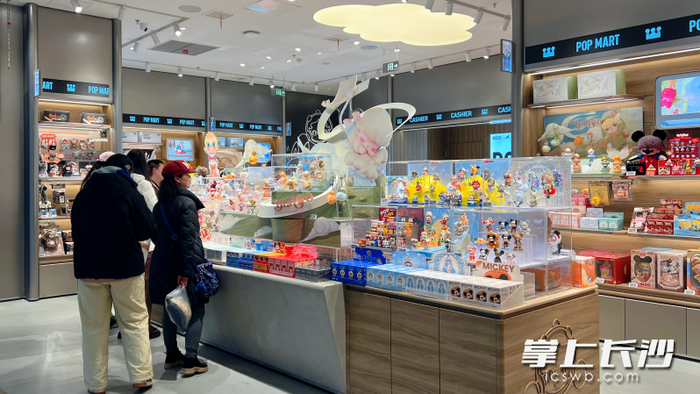
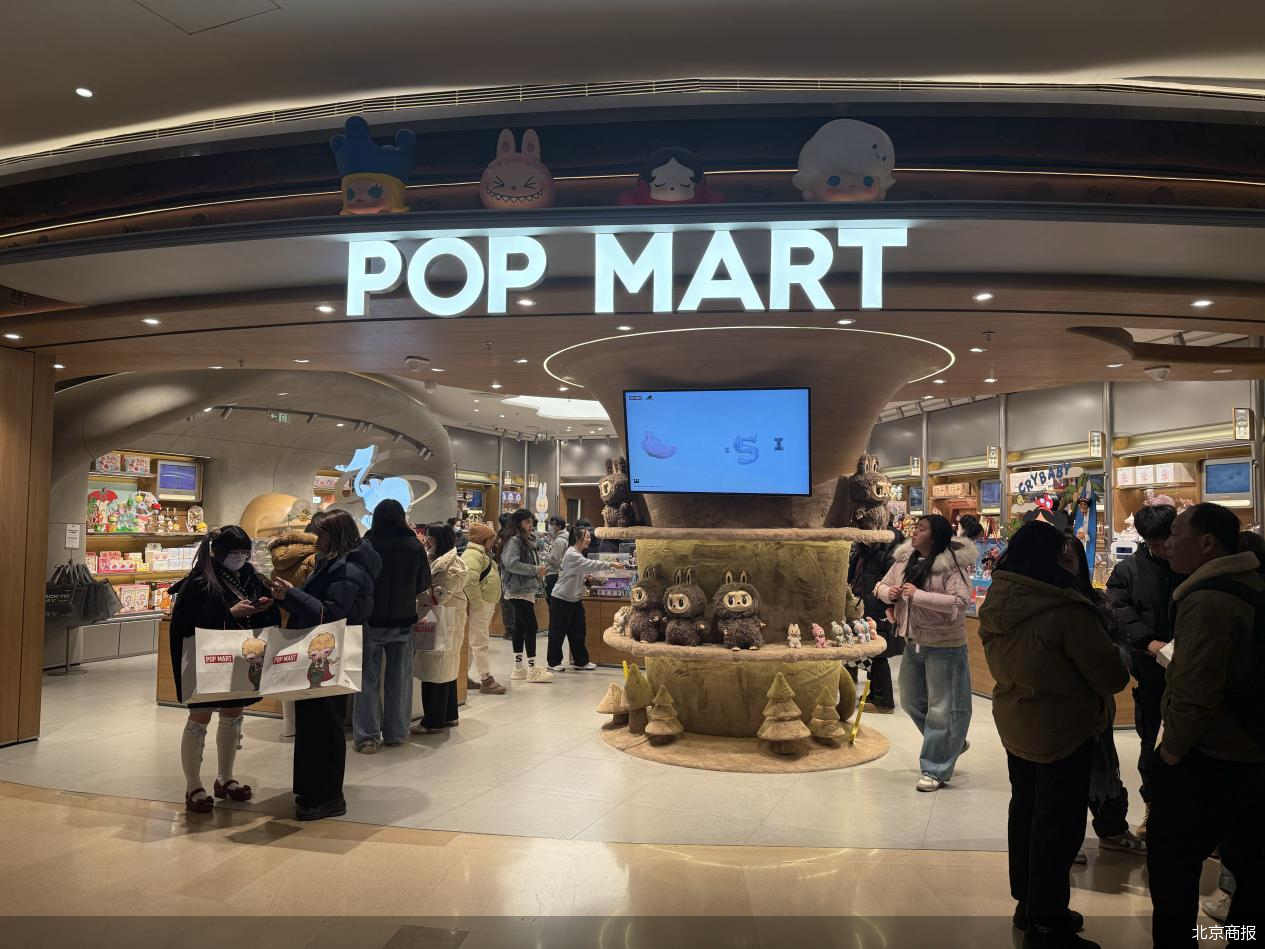
Labubu全面开放购买?线下门店一“布”难求、线上短暂放量
Bei Jing Shang Bao· 2026-01-05 05:38
Core Viewpoint - The Labubu series products from Pop Mart are still experiencing stock shortages in popular shopping areas like Sanlitun and He Shenghui, despite improved availability compared to previous times [1][3]. Group 1: Product Availability - Many Labubu products, particularly the "Frontline High Energy" and "Heart Code" series, remain out of stock in both physical and online stores, indicating a persistent demand-supply gap [3][4]. - A significant restock occurred during the New Year period, but products sold out quickly, highlighting the ongoing high consumer interest [3][4]. Group 2: Consumer Behavior - Consumers are increasingly utilizing fan communities to receive real-time restock notifications, which enhances their chances of purchasing desired items [3]. - The purchasing enthusiasm for older Labubu products remains strong, suggesting that demand continues to outpace supply [4]. Group 3: Market Dynamics - The recent changes in restocking frequency and sales rules reflect a strategic shift by Pop Mart to combat scalpers and stabilize the secondary market, which had seen inflated prices due to high demand [4]. - Since June, Pop Mart has implemented large-scale restocking efforts aimed at curbing scalper activities and promoting a healthier market environment, which has led to a noticeable decrease in secondary market prices [4].
金融助力中国企业“走出去”报告
第一财经研究院· 2025-11-21 05:51
Investment Rating - The report indicates a positive investment outlook for Chinese enterprises going global, with a projected increase in foreign direct investment (FDI) to 1.16 trillion RMB in 2024, reflecting an 11.30% year-on-year growth [8]. Core Insights - Chinese enterprises are actively exploring new pathways for international expansion, adapting strategies in response to geopolitical challenges and evolving market conditions [4][8]. - The ASEAN region has emerged as a key destination for Chinese investment, with its share of China's outbound investment rising from 6.34% in 2014 to 17.88% in 2024 [8]. - The structure of China's outbound investment is shifting, with significant increases in the wholesale, retail, and manufacturing sectors, indicating a deeper integration into global value chains [8][52]. Summary by Sections Part A: Challenges and Pathways for Chinese Enterprises Going Global - The Chinese government is committed to high-quality outbound investment, emphasizing the importance of maintaining a stable international economic environment despite rising geopolitical tensions [18][19]. - The share of China's exports in global trade is projected to reach 14.64% in 2024, maintaining its position as the world's largest exporter [19][23]. - Chinese enterprises are increasingly focusing on the ASEAN region for investment, with a notable rise in direct investment since the implementation of the RCEP [44][52]. Part B: Financial Support for Outbound Expansion - Chinese financial institutions are enhancing their overseas presence, with major banks establishing branches in numerous countries to support outbound enterprises [9]. - There is a strong emphasis on integrating domestic and international resources, with banks providing cross-border credit and financing solutions for projects under the Belt and Road Initiative [9][11]. - Innovative financial products and services are being developed to support overseas investments, including specialized loans for infrastructure projects and comprehensive solutions for cross-border e-commerce [9][11]. Part C: Future Outlook and Recommendations - Recommendations include optimizing overseas network construction, enhancing multi-tiered financial service systems, and expanding the use of cross-border RMB [12][13]. - A comprehensive risk management system is suggested to help enterprises navigate geopolitical uncertainties and market volatility [12][13]. - Strengthening collaboration between financial institutions and industries is crucial for supporting enterprises in their global expansion efforts [12][13].




日赚1.3亿,创始人光靠卖衣服,八次成为首富
创业家· 2025-10-15 10:09
Core Insights - Uniqlo, founded by Tadashi Yanai, has become a remarkable success story in Japan over the past 30 years, particularly thriving in the Chinese market where it generates hundreds of billions annually [2][3] - The brand's growth is attributed to its high cost-performance ratio, versatile basic styles, and effective marketing strategies that create popular products [7][10] Company Background - Tadashi Yanai initially took over his father's suit shop but shifted focus to casual wear, leading to the establishment of Uniqlo in 1984 during Japan's economic downturn [3][6] - Uniqlo's brand positioning aligned with consumer needs for affordable and practical clothing, resulting in significant expansion, particularly in China where it operates over 900 stores [6] Key Success Factors - **High Cost-Performance Ratio**: In a trend of consumer downgrading, Uniqlo emphasizes the value of its products [7] - **Versatile Basic Styles**: The brand focuses on easy-to-wear items that can be paired with various outfits, appealing to a broad audience [8][9] - **Effective Marketing**: Uniqlo excels in creating buzz around new products, which enhances brand visibility and drives sales [10] Operational Strategy - Uniqlo encourages input from all departments in product planning, allowing store managers to voice customer feedback and product improvement suggestions [13] - The company utilizes a data-driven approach to product planning, which has been crucial for its growth and operational efficiency [21][29]

日赚1.3亿,创始人光靠卖衣服,八次成为首富
创业家· 2025-10-11 10:10
Core Insights - The article highlights the success story of Uniqlo, a company that has thrived in Japan's economic downturn and has replicated its success in China, generating hundreds of billions from the Chinese market annually [2][3][4]. Company Background - Uniqlo is recognized as the most successful company in Japan over the past 30 years, founded by Tadashi Yanai [3]. - The company was established in 1984 during Japan's economic collapse, aligning its brand positioning with the consumer shift towards minimalism and cost-effectiveness [7][8]. Business Strategy - Uniqlo's growth can be attributed to several key strategies: - **High Cost Performance**: In a trend of consumer downgrading, Uniqlo emphasizes the value-for-money aspect of its products [9][10]. - **Versatile Basics**: The brand focuses on easy-to-wear, basic clothing that appeals to a wide audience, from high-income urban dwellers to budget-conscious consumers [11][12]. - **Hit Product Marketing**: Uniqlo excels at creating popular products that enhance brand visibility and drive sales across its product range [13][17]. Market Presence - As of 2023, Uniqlo operates over 900 stores in China, with an annual opening rate of 80 to 100 new stores, contributing to 40% of its global revenue from the Greater China region [8]. Innovation and Adaptation - Uniqlo's ability to frequently launch hit products is supported by a collaborative approach where all departments contribute to product planning, and store managers have significant input on customer feedback [17]. - The company leverages technology and consumer insights to drive product development, ensuring that its offerings resonate with market demands [25][42].

日赚1.3亿,创始人光靠卖衣服,八次成为首富
创业家· 2025-10-05 09:32
Core Insights - The article highlights the success story of Uniqlo, a company that has thrived in Japan's economic downturn and has replicated its success in China, generating significant revenue from the Chinese market [2][3][4]. Group 1: Company Background - Uniqlo is recognized as the most successful company in Japan over the past 30 years, founded by Tadashi Yanai [3]. - The company was established in 1984 during Japan's economic collapse, aligning its brand positioning with the consumer trend towards minimalism and cost-effectiveness [7]. - As of 2023, Uniqlo operates over 900 stores in China, expanding at a rate of 80 to 100 new stores annually, with the Greater China region accounting for 40% of its global revenue [8]. Group 2: Key Success Factors - High cost-performance ratio: In a trend of consumer downgrading, customers prioritize the value of products [9]. - Versatile basic styles: Uniqlo focuses on easy-to-wear clothing that can be paired with various outfits, appealing to a broad audience [10][11]. - Effective marketing of hit products: Uniqlo excels at creating popular items that enhance brand visibility and drive sales across its product range [12][16]. Group 3: Innovation and Adaptation - Uniqlo's ability to frequently launch hit products stems from collaborative input across departments and significant autonomy given to store managers to voice customer feedback [16]. - The company leverages technology and consumer insights to drive product development, ensuring that offerings meet market demands [24][39].

泡泡玛特(09992):短期二手价格波动系供给调配,无碍长期业绩增长
Hua Yuan Zheng Quan· 2025-09-17 12:33
Investment Rating - The investment rating for the company is "Buy" (maintained) [5] Core Views - Short-term fluctuations in second-hand prices are due to supply adjustments and do not hinder long-term performance growth [5] - The company's strong IP incubation and operation capabilities remain a core competitive advantage, with future performance growth likely to be catalyzed by these strengths [8] - The company is positioned as a leading player in the Chinese trendy toy industry, with robust IP toy full industry chain operation capabilities, and is expected to achieve significant profit growth in the coming years [8] Financial Performance Summary - Revenue projections for 2023 to 2027 show substantial growth, with expected revenues of RMB 6,301 million in 2023, increasing to RMB 60,001 million by 2027, reflecting a compound annual growth rate (CAGR) of 106.92% from 2023 to 2024 and 17.69% from 2026 to 2027 [7][9] - Net profit attributable to the parent company is forecasted to grow from RMB 1,082.34 million in 2023 to RMB 22,009.50 million in 2027, with a remarkable growth rate of 279.10% in 2025 [7][9] - Earnings per share (EPS) are projected to rise from RMB 0.81 in 2023 to RMB 16.39 in 2027, indicating strong profitability growth [7][9] Recent Events - Recent fluctuations in the second-hand market prices for the company's IP products, particularly the Labubu series, are attributed to supply adjustments, which are seen as a normal market response [8] - The company has expanded its global presence, with a total of 571 stores and 2,597 robot stores worldwide as of mid-2025, indicating a strong channel expansion strategy [8]
日赚1.3亿,创始人光靠卖衣服,八次成为首富
创业家· 2025-09-15 10:16
Core Viewpoint - Uniqlo, founded by Tadashi Yanai, has become a remarkable success story in Japan and China, thriving even during economic downturns, with significant annual profits from the Chinese market [2][3][4]. Group 1: Company Background - Uniqlo is recognized as the most successful company in Japan over the past 30 years, with its founder, Tadashi Yanai, having been the richest person in Japan eight times [3][4]. - The company was established in 1984 during Japan's economic collapse, aligning its brand positioning with the consumer shift towards minimalism and cost-effectiveness [7]. Group 2: Market Performance - As of 2023, Uniqlo operates over 900 stores in China, expanding at a rate of 80 to 100 new stores annually, with the Greater China region contributing 40% to its global revenue [8]. Group 3: Competitive Advantages - High cost-performance ratio: In a trend of consumer downgrading, Uniqlo's products are increasingly valued for their affordability and quality [9]. - Versatile basic styles: The brand focuses on easy-to-wear clothing that appeals to a broad audience, from high-income urban dwellers to budget-conscious consumers [10][11]. - Effective marketing of hit products: Uniqlo excels at creating popular items that enhance brand visibility and drive sales across its product range [12]. Group 4: Product Development Strategy - Uniqlo's success in launching hit products is attributed to the collaborative involvement of various departments in product planning, with store managers having significant input on product improvements and customer feedback [16].

韩国街边山寨labubu卖100元,二手溢价数倍
第一财经· 2025-09-13 15:03
Core Viewpoint - The article highlights the rapid popularity of Pop Mart's Labubu series in the South Korean market, driven by a young consumer base and changes in purchasing rules that have affected sales dynamics [4][12][14]. Group 1: Market Performance - Pop Mart's Labubu series has gained significant traction in South Korea, particularly among the post-2000 generation, with consumers from various countries participating in the buying frenzy [14]. - The company implemented new purchasing rules in June 2023, transitioning from direct sales to an online reservation system, which has led to increased demand and consumer engagement [12][14]. Group 2: Sales and Revenue - According to Pop Mart's 2025 semi-annual report, the company achieved a revenue of 13.88 billion yuan, marking a year-on-year growth of 204% [18]. - The revenue breakdown shows that the Chinese market contributed 8.28 billion yuan (up 135.2%), while the Asia-Pacific region saw a revenue of 2.85 billion yuan (up 257.8%) [18][19]. - The Americas reported a staggering revenue increase of 1,142%, totaling 2.26 billion yuan, and Europe and other regions experienced a 729.2% growth, reaching 480 million yuan [19]. Group 3: Market Challenges - The popularity of Labubu has led to a rise in counterfeit products, with reports of a significant seizure of fake Labubu dolls at Seattle-Tacoma International Airport, indicating the brand's high demand and the challenges of maintaining brand integrity [16].
一年多暴涨16倍!年轻人的茅台历史新高,市值突破3600亿港元!市场溢价超7倍,一娃难求...
雪球· 2025-06-12 07:51
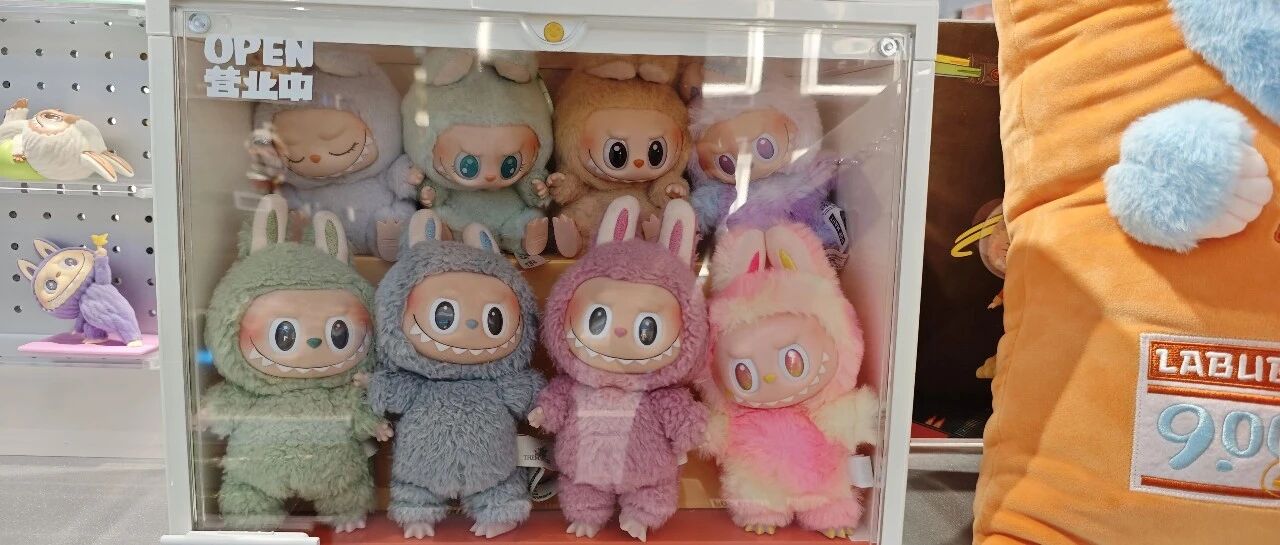
Market Overview - The market experienced narrow fluctuations with mixed performance among the three major indices. The Shanghai Composite Index rose by 0.01%, the Shenzhen Component Index fell by 0.11%, and the ChiNext Index increased by 0.26%. The total trading volume in the Shanghai and Shenzhen markets reached 1.27 trillion yuan, an increase of 16.3 billion yuan compared to the previous trading day [1]. New Consumption Sector - The new consumption sector saw significant gains, particularly in beauty care and IP economy, with innovative pharmaceuticals maintaining strong performance [2]. - Pop Mart's Labubu series products are in high demand, leading to supply chain challenges. Despite expanding production capacity earlier this year, demand has outstripped supply chain responsiveness [12]. Pop Mart Performance - Pop Mart's stock reached a historical high, with a market capitalization of 366.3 billion HKD, reflecting a more than 16-fold increase since the low point in February 2024. The stock initially surged nearly 5% in early trading [3][5]. - The IP economy concept stocks, including Aoya Co., Ltd., also performed well, with Aoya's stock hitting the daily limit within three minutes of opening [11]. AI Sector - The AI sector rebounded, with the computing power industry chain leading the gains. Notable stocks such as Zhongji Xuchuang surged by 7.4%, with a market capitalization of 128.8 billion yuan and trading volume exceeding 10 billion yuan [15]. - The AI applications sector showed active performance, with companies like Baixinglong and Chuanwang Media experiencing significant stock price increases [20]. New Stock Market Activity - The new stock market remains vibrant, with Haiyang Technology's stock price soaring by over 500% during its debut, closing at 55.97 yuan per share, a 386% increase from its initial offering price of 11.50 yuan [25][26]. - Haiyang Technology focuses on the research and production of nylon 6 series products, with plans to use the raised funds for expanding production capacity and improving technology [29].