MAIA 200芯片

Search documents
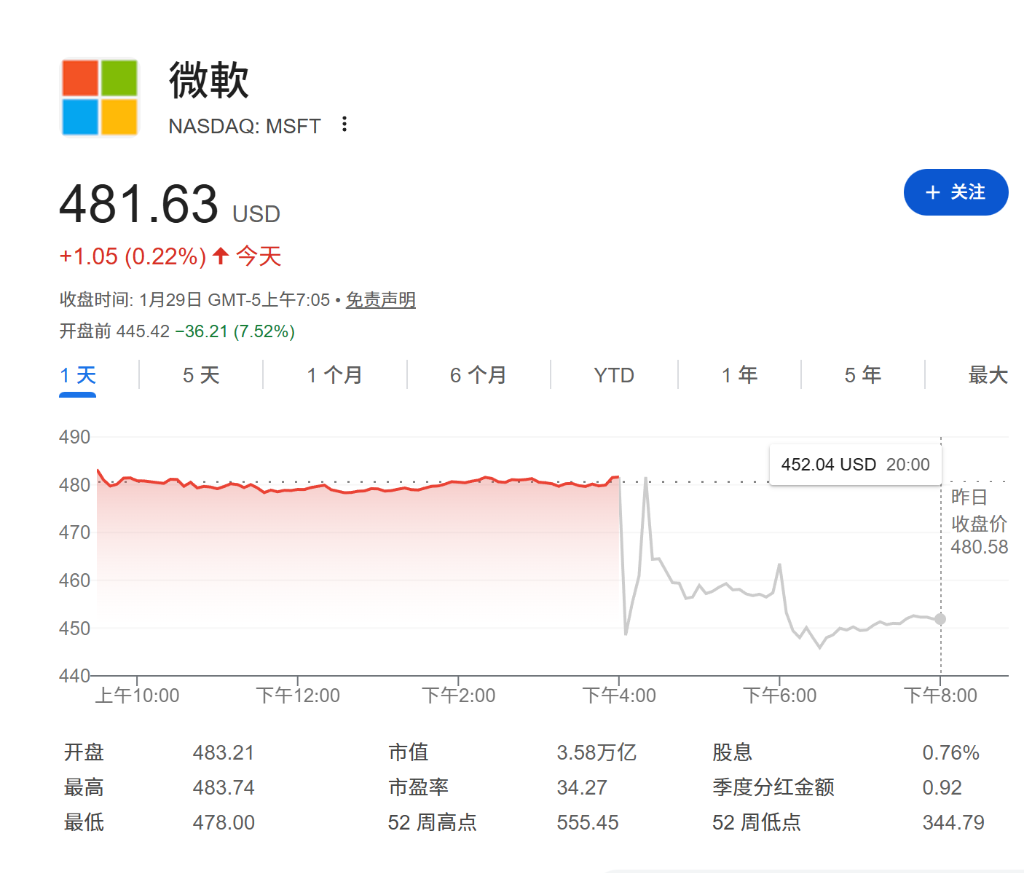
微软盘中暴跌12%,市值蒸发4300亿美元,为何?
华尔街见闻· 2026-01-30 00:28
Core Viewpoint - Microsoft's latest earnings report showed that both revenue and profit exceeded Wall Street expectations, yet the stock price dropped over 12% in intraday trading, resulting in a market cap loss of $430 billion, marking the second-largest single-day market cap loss in U.S. history [2] Financial Performance - For Q2 of fiscal year 2026, Microsoft reported revenue of $81 billion, a 17% year-over-year increase, surpassing market expectations by 1% [5] - Non-GAAP EPS was $4.41, reflecting a 23% year-over-year growth, exceeding market expectations by 5% [5] - Azure cloud business grew by 38% at constant currency, slightly above Wall Street's forecast of 37% [5] Capital Expenditure Concerns - Microsoft's capital expenditure reached $37.5 billion for the quarter, a 66% year-over-year increase, exceeding market expectations by 9% [6] - Investors expressed concerns over the rising capital expenditures, which were expected to drive significant Azure growth that did not materialize immediately [6][8] - Goldman Sachs noted that Microsoft's strategy involves prioritizing first-party applications and internal R&D over short-term Azure revenue growth [6][10] Azure Growth and Capacity Constraints - Microsoft management indicated that Azure is currently facing capacity constraints rather than a lack of demand [13] - Goldman Sachs emphasized that Azure's growth guidance of 37%-38% should be viewed as a reflection of capacity allocation rather than pure demand [13] - If Microsoft had not allocated capacity to first-party applications, Azure's revenue growth could have exceeded 40% [14] AI Product Development - The commercialization path for Copilot is becoming clearer, with a 160% year-over-year increase in M365 Copilot seats, reaching 15 million paid seats [15] - Copilot is expected to have a better customer lifetime value to customer acquisition cost ratio compared to Azure, due to its higher gross margins and customer stickiness [15] Valuation Adjustments - Goldman Sachs adjusted Microsoft's valuation model, lowering the target price from $655 to $600 based on limited visibility on capital expenditure translating into revenue growth [7][16] - Key downside risks include lower-than-expected revenue contributions from the OpenAI partnership, prolonged ramp-up times for internal chip production, and potential leadership changes [16]


周四大跌10%!微软财报数据亮眼,市场预期差在哪?
美股IPO· 2026-01-29 23:50
Core Viewpoint - Microsoft reported a significant capital expenditure of $37.5 billion in a single quarter, which exceeded market expectations, but this did not lead to a notable acceleration in cloud business growth. The company is prioritizing the allocation of new computing power to self-developed AI products and internal research rather than solely focusing on revenue-generating Azure cloud services, leading to market concerns about short-term capital efficiency and return visibility [1][6]. Financial Performance - In Q2 of FY2026, Microsoft achieved revenue of $81 billion, a year-on-year increase of 17%, surpassing market expectations by 1%. Non-GAAP EPS was $4.41, up 23% year-on-year, exceeding market expectations by 5%. Azure cloud business grew by 38% at constant currency, slightly above Wall Street's forecast of 37% [3][5]. Capital Expenditure Concerns - Investors expressed concerns over Microsoft's rising capital expenditures, which reached $37.5 billion in the quarter, 9% higher than market expectations. The market anticipated that such a substantial investment would lead to a significant acceleration in Azure's growth rate, which did not materialize immediately [6][7]. Strategic Allocation of Resources - Goldman Sachs noted that Microsoft's strategy involves sacrificing short-term Azure revenue growth to prioritize computing power for first-party applications (like Copilot) and internal R&D projects. This strategic choice is expected to drive more meaningful AI positioning and better returns in the medium term [6][7]. Azure Capacity Constraints - Microsoft management indicated that Azure is currently facing capacity limitations rather than a lack of demand. Goldman Sachs emphasized that the guidance for Azure growth of 37%-38% in Q3 should be viewed as a reflection of capacity allocation rather than pure demand. If capacity had not been directed towards first-party applications and internal R&D, Azure's revenue growth rate could have exceeded 40% [8]. Copilot Commercialization - The commercialization path for Copilot is becoming clearer, with adoption and usage accelerating. The number of paid seats for M365 Copilot increased by 160% year-on-year, reaching 15 million. Goldman Sachs believes that Copilot will have a better customer lifetime value to customer acquisition cost ratio compared to Azure, due to its higher gross margins and customer stickiness [9]. Valuation Adjustments - Based on the limited visibility regarding the timeline for capital expenditures to translate into revenue growth, Goldman Sachs adjusted Microsoft's valuation model, lowering the target P/E ratio from 32x to 28x, resulting in a target price reduction to $600. Key downside risks include lower-than-expected revenue contributions from the OpenAI partnership, prolonged ramp-up times for internal chip production, and potential negative impacts from significant leadership changes [10].

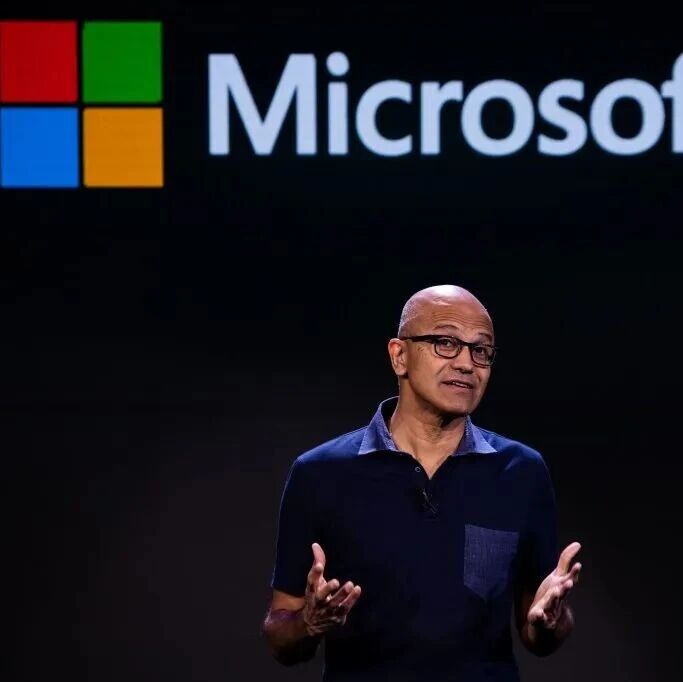
财报数据亮眼,盘前却跌7%,微软的市场预期差在哪?
Hua Er Jie Jian Wen· 2026-01-29 12:35
Core Insights - Microsoft's Q2 FY2026 earnings report showed revenue and profit exceeding Wall Street expectations, but the stock price faced pressure due to concerns over rising capital expenditures and the pace of cloud business growth [1][3]. Financial Performance - Revenue reached $81 billion, a 17% year-over-year increase, surpassing market expectations by 1% [3]. - Non-GAAP EPS was $4.41, up 23% year-over-year, exceeding market expectations by 5% [3]. - Azure cloud business grew 38% at constant currency, slightly above Wall Street's forecast of 37% [3]. Capital Expenditure Concerns - Capital expenditures for the quarter were $37.5 billion, exceeding market expectations by 9% [3][4]. - Investors are worried that high capital spending has not yet translated into a proportional increase in Azure's growth rate [4]. - Goldman Sachs noted that Microsoft is prioritizing resources for strategic products like Copilot and internal R&D over short-term Azure revenue growth [4]. Azure Capacity Constraints - Microsoft management indicated that Azure is currently facing capacity limitations rather than a lack of demand [5]. - Goldman Sachs emphasized that Azure's growth guidance of 37%-38% for Q3 should be viewed as a reflection of capacity allocation rather than pure demand [5]. - If capacity had not been directed towards first-party applications and internal R&D, Azure's revenue growth could have exceeded 40% [5]. AI Product Development - The commercialization path for Copilot is becoming clearer, with a 160% year-over-year increase in M365 Copilot seats, reaching 15 million paid seats [7]. - Copilot is expected to have a better customer lifetime value to customer acquisition cost ratio compared to Azure, due to higher margins and customer stickiness [7]. - The growth guidance for M365 commercial cloud has slightly slowed to 13%-14%, reflecting the addition of new seats at lower average revenue per user [7]. Valuation Adjustments - Goldman Sachs adjusted Microsoft's valuation model, lowering the target P/E ratio from 32x to 28x, resulting in a target price reduction to $600 [8]. - Key downside risks include lower-than-expected revenue contributions from the OpenAI partnership, prolonged ramp-up times for internal chip production, and potential negative impacts from leadership changes [8].
跌超19%,拖累道指,黄金、原油齐涨
Zhong Guo Ji Jin Bao· 2026-01-28 00:31
Market Overview - The U.S. stock market showed mixed results, with technology and semiconductor stocks rising, while the Dow Jones Industrial Average was dragged down by a significant drop in UnitedHealth Group, which fell over 19% [3] - The S&P 500 index increased by 0.41% to 6978.60 points, and the Nasdaq Composite rose by 0.91% to 23817.10 points, while the Dow Jones index decreased by 0.83% to 49003.41 points [3] Currency and Trade Policy - The U.S. dollar index has been declining, with President Trump signaling that he is not concerned about the dollar's depreciation [4] - The U.S. continues to adjust its trade policies, maintaining a 50% tariff rate on Indian goods and threatening to raise tariffs on certain South Korean products to 25% [4] Semiconductor Sector - The Philadelphia Semiconductor Index reached a new high, increasing by 2.40% [8] - Micron Technology announced a $24 billion investment plan to build a new memory chip manufacturing facility in Singapore, aimed at increasing production amid a global shortage [9] - This investment is expected to create synergies between NAND flash memory and DRAM production, driven by the rising demand from AI and data-centric applications [9] Technology Giants - Among the "Big Seven" tech companies, only Tesla saw a decline of 0.99%, while Amazon and Microsoft rose over 2% [12] - Google announced a price adjustment for data transmission methods in North America, set to double by May 1, 2026 [12] - Microsoft introduced the MAIA 200 chip, an AI inference accelerator based on TSMC's 3nm process, which will support various AI models, including OpenAI's latest GPT-5.2 [12] Commodity Prices - Gold prices continued to rise, reaching $5160 per ounce, driven by geopolitical tensions and central banks accumulating gold as a fundamental currency [14] - International oil prices also increased, with NYMEX WTI crude oil futures closing above $60 per barrel [14]

跌超19%,拖累道指!黄金、原油齐涨!
Zhong Guo Ji Jin Bao· 2026-01-28 00:25
Market Performance - The US stock market showed mixed results, with the S&P 500 and Nasdaq indices rising, while the Dow Jones index fell due to a significant drop in UnitedHealth Group's stock by over 19% [2] - The S&P 500 index increased by 0.41% to 6978.60 points, and the Nasdaq composite rose by 0.91% to 23817.10 points, while the Dow Jones index decreased by 0.83% to 49003.41 points [2] Currency and Trade Policy - The US dollar index has been declining, with President Trump indicating that he is not concerned about the dollar's depreciation [3] - The US continues to adjust its trade policies, maintaining a 50% tariff rate on Indian goods and threatening to raise tariffs on certain South Korean products to 25% [3] Semiconductor Industry - The Philadelphia Semiconductor Index reached a new high, increasing by 2.40% [6] - Micron Technology announced a $24 billion investment plan to build a new memory chip manufacturing facility in Singapore, aimed at increasing production amid a global shortage [6] Technology Sector Developments - Among the "Big Seven" tech companies, only Tesla saw a decline of 0.99%, while Amazon and Microsoft rose over 2% [7] - Google announced a price adjustment for data transmission methods in North America, with some prices doubling, and launched its AI service package in the US at a monthly subscription fee of $7.99 [7] - Microsoft introduced the MAIA 200 chip, an AI inference accelerator based on TSMC's 3nm process, which will support various AI models, including OpenAI's latest GPT-5.2 [7] Commodity Prices - Gold prices continued to rise, reaching $5160 per ounce, driven by geopolitical tensions and central banks accumulating gold as a fundamental currency [9] - International oil prices also increased, with NYMEX WTI crude oil futures closing above $60 per barrel [9]