NavFoM

Search documents
三家具身智能先后官宣,机器人公司为何“组团”上春晚?
Xin Lang Cai Jing· 2026-01-27 01:00
Core Viewpoint - The emergence of embodied intelligence companies as partners for the 2026 Spring Festival Gala signifies a shift in industry perception, with increased recognition of the investment potential in robotics following the 2025 Spring Festival [1][7]. Group 1: Industry Trends - The participation of embodied intelligence companies in the Spring Festival Gala is seen as a turning point, allowing the general public to experience robots, which enhances market application value [1][7]. - The industry has witnessed a change in investment attitudes, with previous hesitations due to high costs and implementation challenges now replaced by a recognition of the necessity for investment [1][7]. Group 2: Company Highlights - Yushu has officially announced its role as a robot partner for the 2026 Spring Festival Gala, marking its third participation after showcasing a robotic cow in 2021 and a humanoid robot program in 2025 [2][8]. - Yushu's humanoid robot production reached over 5,500 units in 2025, with ongoing efforts towards an IPO [2][8]. - Galaxy General Robotics has been designated as the official partner for embodied large model robots for the 2026 Spring Festival Gala, boasting a significant data set for robot training [2][8]. - Galaxy General Robotics completed a financing round of over $300 million in December 2025, achieving a valuation of $3 billion [3][9]. - Magic Atom has also been announced as a strategic partner for the 2026 Spring Festival Gala, showcasing its self-developed hardware and various robotic products [4][10][11]. Group 3: Market Developments - The trend of robotics companies appearing on major television events has been growing, with multiple firms showcasing their technologies [5][11]. - The debut of a versatile robot artist group by Zhiyuan Robotics at a New Year's Eve concert highlights the increasing integration of robotics in entertainment, supported by advanced platforms for content adaptation and learning [6][11].

融资超3亿美元,估值超30亿美元!“北大系”人形机器人公司银河通用刷新具身智能单轮融资纪录
Hua Er Jie Jian Wen· 2025-12-19 09:17
Core Insights - Galaxy General has completed a new financing round exceeding $300 million, setting a record for single-round financing in the embodied intelligence sector, with a post-financing valuation of $3 billion (approximately 211.3 billion RMB) [1][5] - The investment round was led by China Mobile Chain Long Fund, with participation from various industry capital and investment platforms, indicating strong market confidence in the embodied intelligence field [1][2] Financing Details - The financing attracted both domestic and international investors, including significant players like CICC, the Chinese Academy of Sciences Fund, and others, highlighting a collaborative investment approach [1][2] - Following this round, Galaxy General's total financing has reached approximately $800 million, with the valuation tripling in just six months from $1 billion [1][5] Technological Advancements - Galaxy General employs a unique training paradigm using synthetic action data for pre-training and real data for post-training, claiming to have developed a full-stack self-research model from "hundred billion datasets" to "embodied large models" [3] - The company has launched several models, including GraspVLA, GroceryVLA, and NavFoM, and has achieved significant milestones in autonomous operations, winning competitions with its Galbot robot team [3] Industry Collaborations - In the industrial manufacturing sector, Galaxy General has established partnerships with major companies such as CATL, Bosch, Toyota, and others, accumulating thousands of orders for humanoid robots [3] - The company is also expanding into commercial services and healthcare, with solutions like the "Galaxy Space Capsule" and collaborations with medical institutions for robotic applications in hospitals [4] IPO Plans - Galaxy General is preparing for an IPO in Hong Kong, with plans to submit an application as early as the first quarter of next year, targeting a valuation between $3 billion and $4 billion [1][5][6] - The company’s recent stock reform is seen as a strategic move to attract new primary market investors, reflecting a broader trend of startups in the sector accelerating their path to public markets [6]
人形机器人最大融资背后,还拿下7亿大单
3 6 Ke· 2025-12-19 06:11
Core Insights - The article highlights that Galaxy General has completed a new financing round exceeding $300 million, setting records for both the largest single financing amount and post-money valuation in the humanoid robot sector in China [1] - The investment round was led by China Mobile's Chain Long Fund, with participation from various investment platforms and industry giants, indicating a diversified investor base and a move towards internationalization [1][4] - Galaxy General has secured a significant order for 1,000 G1 robots, valued at approximately $7 million, which may have contributed to the recent financing success [2][3] Financing and Valuation - The total financing amount for Galaxy General has reached around $800 million, a significant increase from 240 million RMB six months ago [1] - The company is now valued at over $3 billion, making it the highest-valued humanoid robot company in China [8] - The involvement of major players like China Mobile and other international investors reflects a growing interest in the humanoid robotics sector [4][7] Market Dynamics - The article notes that the humanoid robot market is increasingly characterized by large-scale orders and significant commercial contracts, with Galaxy General's recent $7 million order being a prime example [2][3] - Other companies in the sector, such as Ubiquity and Zhiyuan, are also securing large contracts, indicating a competitive landscape [2] - The trend suggests that the market is shifting towards recognizing the importance of scale, certainty, and the ability to secure substantial orders [2][10] Technological Advancements - Galaxy General is focusing on key areas such as industrial manufacturing, retail, and healthcare, with products already operating continuously for a year [8] - The company has introduced advanced models for navigation and dexterous manipulation, which are critical for operating in complex environments [9] - The "Sim-to-Real" approach is being utilized to enhance the training and deployment of robots in real-world scenarios [9] Investment Landscape - The article discusses the increasing participation of state-owned enterprises and international investors in the humanoid robotics sector, driven by national strategic goals [4][6] - The involvement of funds from the Middle East reflects a broader trend of international capital seeking opportunities in China's technology sector [7] - The competitive landscape is evolving, with a focus on established players and a growing awareness of risk among investors [10][11]
独家丨人形机器人最大融资背后,还拿下7亿大单
投中网· 2025-12-19 04:36
Core Insights - The article highlights that Galaxy General has completed a new financing round exceeding $300 million (over 2.1 billion RMB), setting records for both the largest single financing amount and the highest valuation in the domestic humanoid robot sector [3][12] - The investment round was led by China Mobile's Chain Long Fund, with participation from various investment platforms and industry giants, indicating a diversification of investors and a move towards building an international shareholder ecosystem [3][7] - Galaxy General has secured a significant order for 1,000 G1 robots, valued at approximately 700 million RMB, which may have contributed to the recent record-breaking financing [4][5] Financing and Valuation - The total financing amount for Galaxy General has reached around $800 million (approximately 5.6 billion RMB), a significant increase from 2.4 billion RMB six months ago [3] - The company is now valued at over 30 billion USD (over 200 billion RMB), making it the highest-valued humanoid robot company in China [12] Market Dynamics - The article emphasizes the increasing importance of large-scale orders from major manufacturing companies as a key indicator of market viability for humanoid robots [5] - Galaxy General has established a strong client list, including major players like CATL, Bosch, Toyota, and several automotive manufacturers, which enhances its credibility in the market [5][9] Investment Landscape - The involvement of major telecom operators like China Mobile, China Unicom, and China Telecom in humanoid robotics reflects a strategic alignment with national initiatives and the growing interest in AI and robotics [7][10] - The article notes a trend of Middle Eastern investment in Chinese robotics, driven by national transformation goals and substantial investment funds aimed at reducing oil dependency [10][11] Technological Advancements - Galaxy General is focusing on key areas such as industrial manufacturing, retail, and healthcare, with products already operating continuously for a year [12] - The company has introduced advanced models for navigation and dexterous manipulation, which are critical for operating in complex environments [12][13] Industry Trends - The article suggests that the humanoid robot sector is increasingly characterized by a focus on scale, certainty, and market positioning, with a shift in investor sentiment towards established players [14] - Despite the competitive landscape, the overall activity in the sector remains robust, with a significant increase in both the number of companies receiving funding and the total financing amounts [14]


如何构建通用具身导航大模型?
具身智能之心· 2025-11-20 00:03
Core Insights - The article discusses advancements in general navigation models within the field of embodied intelligence, highlighting the transition from task-specific navigation systems to more universal models that can handle a variety of tasks and environments [2][5]. Group 1: Navigation Models - The Uni-NaVid model represents a cross-task navigation framework that aims to enhance the capabilities of navigation systems beyond specific tasks [5][6]. - The NavFoM model is a cross-ontology navigation framework that further expands the application of navigation algorithms to various real-world scenarios, including visual obstacle avoidance and urban micro-mobility [2][5]. Group 2: Applications and Challenges - Current navigation systems struggle with unstructured, dynamic environments and complex tasks requiring language understanding, which traditional systems cannot adequately address [2][5]. - The introduction of navigation large models is seen as a pathway to achieving embodied intelligence by broadening the scope of navigation algorithms from specialized capabilities to general intelligent mobility [2][5]. Group 3: Event Details - A live session featuring Zhang Jiazhao, a PhD student from Peking University, will take place on November 20 from 19:30 to 20:30, focusing on the exploration of general navigation models [5][6]. - The session will cover specific applications of the navigation models, including TrackVLA++, UrbanVLA, and MM-Nav, showcasing their practical implementations [6].

银河通用全新模型统一机器人导航任务,7B参数模型支持实时部署
具身智能之心· 2025-11-10 00:02
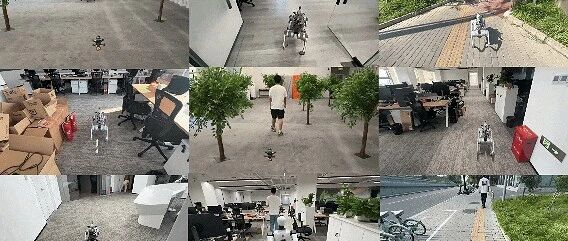
Core Insights - The article discusses the development of NavFoM, a foundational model for embodied navigation that aims to unify navigation tasks across different robots and scenarios, marking a significant technological leap from specialized to general-purpose navigation [1][29]. Group 1: Unified Navigation Paradigm - NavFoM is based on a fundamental idea of unifying different robot navigation tasks into a common paradigm: streaming video input from robots combined with natural language navigation instructions to predict action trajectories [3]. - The model supports multiple tasks such as visual language navigation, target search, target following, and autonomous driving, across various environments including indoor and outdoor settings, and is applicable to different types of robots like quadrupeds, wheeled robots, humanoids, drones, and cars [3][29]. Group 2: Model Structure and Efficiency - The model features TVI Tokens, which provide a scalable method for understanding images under different tasks and camera settings, enhancing the model's adaptability [5]. - To enable real-time deployment of the 7B parameter navigation model, the team introduced the Budget-Aware Token Sampling Strategy (BATS), which adaptively samples key frames under computational constraints to maintain performance while ensuring efficient operation on real robots [6][11]. Group 3: Training Data and Performance - The team trained NavFoM on 8 million navigation data entries, including various tasks and robot types, as well as 4 million entries of open-world question-answering data, effectively doubling the training volume compared to previous works [12][15]. - NavFoM achieved state-of-the-art (SOTA) and SOTA-comparable results across multiple public benchmarks without requiring task-specific fine-tuning, demonstrating its versatility and effectiveness [16][29]. Group 4: Future Implications - The development of NavFoM signifies a move towards generalization in embodied navigation models, enabling cross-industry applications and fostering further research in intelligent navigation technologies [29]. - The team aims to inspire new technologies, datasets, and benchmarks in the field of embodied navigation, accelerating innovation in intelligent services and production capabilities [29].
计算机行业周报:Kimi K2 Thinking引领国产基模新突破-20251109
SINOLINK SECURITIES· 2025-11-09 12:29
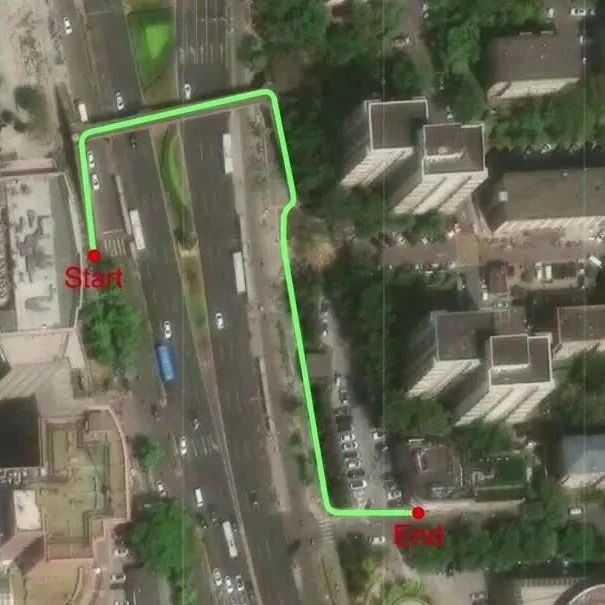
Investment Rating - The report suggests a focus on leading domestic generative large model companies such as iFlytek, and highlights potential in AI hardware applications with recommendations for Hikvision, Rainbow Soft, and Hesai [3] Core Insights - The report emphasizes the ongoing advancements in AI capabilities, particularly with the introduction of models like Kimi K2 Thinking and NavFoM, which enhance reasoning and navigation tasks [5][12] - It notes that the computer sector is experiencing a recovery, with AI applications accelerating, and anticipates improved operating quality and cash flow in the upcoming quarters [12][18] - The report identifies high-growth areas for 2025, including AI computing power and LiDAR, while also highlighting stable growth in software outsourcing and financial IT [11][13] Summary by Sections Industry Perspective - The computer industry is expected to maintain high growth in AI computing and LiDAR, with accelerating growth in AI applications [11][13] - The report indicates that the overall operating intensity in the sector is expected to rise in the second half of the year, driven by new technology implementations and improved operational efficiency [12] Market Review - From November 3 to November 7, 2025, the computer industry index decreased by 2.54%, underperforming the CSI 300 index by 2.56 percentage points [14] - The report lists the top five companies in terms of stock performance during this period, indicating a mixed market response [15][22] Key Events Ahead - Upcoming events include the 2025 China Robot Industry Development Conference and the 27th China International High-tech Achievements Trading Conference, which are expected to present opportunities in the related industry chains [26][27]
银河通用全新模型统一机器人导航任务,7B参数模型支持实时部署
量子位· 2025-11-09 07:01
Core Viewpoint - The article discusses the development of NavFoM, a foundational model for embodied navigation that aims to unify navigation tasks across different robots and scenarios, moving from specialized to general-purpose navigation capabilities [1][20]. Group 1: Unified Navigation Paradigm - NavFoM is based on a fundamental idea of unifying navigation tasks for different robots into a common paradigm: streaming video input from robots combined with natural language navigation instructions to predict action trajectories [3][21]. - The model supports multiple tasks such as visual language navigation, target search, target following, and autonomous driving, across various environments including indoor and outdoor settings, and is applicable to different types of robots like quadrupeds, wheeled robots, humanoids, drones, and cars [3][21]. Group 2: Model Structure and Features - The model structure includes TVI Tokens, which provide a scalable method for the model to understand images under different tasks and camera settings [5]. - NavFoM employs a Budget-Aware Token Sampling Strategy (BATS) to adaptively sample key frames during navigation, ensuring efficient real-time deployment of the 7B parameter model while maintaining performance [6][11]. Group 3: Training Data and Performance - The team collected 8 million navigation data entries, including visual language navigation, target navigation, target tracking, and autonomous driving data, covering various robot types and scenarios [12][21]. - NavFoM achieved state-of-the-art (SOTA) and SOTA-comparable results across multiple public benchmarks without requiring task-specific fine-tuning, demonstrating its versatility and effectiveness [16][21]. Group 4: Future Implications - The development of NavFoM marks a significant step towards generalizing embodied intelligent navigation models, enabling scalable navigation technology across industries [20][21]. - The team aims to attract more attention to embodied navigation research and stimulate the emergence of new technologies, datasets, and benchmarks, facilitating innovation in intelligent services [21].
软银与OpenAI成立合资公司;宇树科技王兴兴:当下具身机器人发展阶段类似于ChatGPT发布前的1-3年左右丨AIGC日报
创业邦· 2025-11-06 00:08
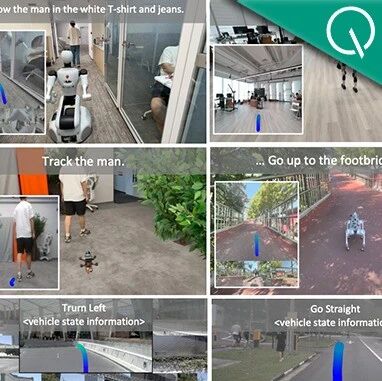
Group 1 - Amazon has issued a cease-and-desist letter to Perplexity, accusing it of computer fraud for allowing its AI shopping agent, Comet, to shop on behalf of users without clear disclosure, violating Amazon's terms of service [2] - Perplexity responded by claiming that Amazon is using its competitive products to suppress smaller rivals and that users should have the right to choose their preferred AI shopping agents [2] - The launch of NavFoM, a navigation foundation model by Galaxy General in collaboration with several universities, supports both indoor and outdoor scenarios and can adapt to various robotic platforms [2] Group 2 - SoftBank and OpenAI have established a joint venture named "SB OAI Japan" to exclusively promote Crystal Intelligence in Japan, with plans for an IPO in 2026 [2] - The founder of Yushu Technology, Wang Xingxing, stated that the current development stage of embodied robots is similar to the first 1-3 years before the release of ChatGPT, emphasizing the importance of large models in robotics [2]



多任务、全场景、跨本体通用移动:银河通用发布环视导航基座大模型
具身智能之心· 2025-11-06 00:03
Core Viewpoint - The article discusses the advancements in navigation models for robots, particularly focusing on the launch of the NavFoM (Navigation Foundation Model) by Galaxy General Robotics, which represents a significant leap in the capabilities of robotic navigation systems, allowing for more autonomous and adaptable robots in various environments [3][9][27]. Group 1: Technological Advancements - The NavFoM is the world's first cross-entity panoramic navigation foundation model, unifying various navigation tasks such as Vision-and-Language Navigation, Object-goal Navigation, Visual Tracking, and Autonomous Driving into a single framework [3][9]. - NavFoM allows robots to autonomously perceive their environment and make navigation decisions in unknown settings, moving beyond simple following tasks [9][10]. - The model employs a unified learning paradigm that enables knowledge sharing across different tasks and robot forms, enhancing the efficiency of training and application [13][14]. Group 2: Key Features - NavFoM supports both indoor and outdoor scenarios, operates in zero-shot conditions without the need for mapping or additional training data, and can adapt to various robot types, including quadrupeds, wheeled humanoids, drones, and cars [11][12]. - The model incorporates two key innovations: TVI Tokens for understanding time and direction, and BATS strategy for efficient sampling of video data, allowing for real-time responses while conserving computational resources [17][19]. - The training dataset for NavFoM includes over 8 million cross-task navigation data points and 4 million open-ended question-answer pairs, significantly enhancing its learning capabilities [21][23]. Group 3: Application and Impact - NavFoM has demonstrated state-of-the-art performance in various international benchmarks, showcasing its ability to generalize across tasks and environments without the need for task-specific fine-tuning [25]. - The model has successfully driven various robot forms to execute complex tasks, marking a significant step towards the realization of embodied intelligence in navigation systems [25][27]. - The introduction of NavFoM is seen as a foundational element for a comprehensive navigation system that can support a wide range of applications, from indoor navigation to urban environments, effectively transforming robotic capabilities [29][30].