
Qwen系列大模型

Search documents
林俊旸离职风波始末:AI 技术负责人与大公司的成长与分歧
晚点LatePost· 2026-03-06 12:28
Core Viewpoint - The article discusses the management challenges faced by companies in the AI sector, particularly highlighting the tension between individual creativity and organizational structure, as exemplified by the recent resignation of Lin Junyang from Alibaba's Qwen team [2][3][23]. Group 1: Events Surrounding Lin Junyang's Resignation - Lin Junyang's unexpected resignation from Alibaba triggered urgent discussions among the management team about the implications for the company and the necessity of maintaining organizational discipline [2][3]. - The resignation followed a meeting where potential adjustments to the Qwen team were discussed, indicating a possible restructuring that Lin was not informed about prior to his departure [4][5]. - The management's response included a company-wide meeting where CEO Wu Yongming emphasized support for AI initiatives while addressing team concerns regarding Lin's departure and resource allocation [6][8]. Group 2: Tensions Between Individual and Organizational Goals - The article highlights the inherent conflict between the drive for AI innovation and the need for organizational coherence, as seen in Lin's desire for Qwen to operate independently versus the company's broader strategic goals [3][23]. - There is a growing pressure on AI companies to balance user growth, high operational costs, and competitive model development, which complicates the management of creative teams [23]. - The management's approach to controlling executive social media presence reflects a shift towards prioritizing organizational needs over individual expression, indicating a response to the challenges posed by high-profile resignations [23][24]. Group 3: Qwen's Position and Future Directions - Qwen, as a relatively independent team within Alibaba, has been pivotal in the company's AI strategy, yet it faces challenges in aligning its goals with the broader organizational objectives [12][14]. - The article notes that Qwen's success has led to increased expectations from the company, necessitating a recalibration of its role within Alibaba's AI ecosystem [24][25]. - The ongoing development of Qwen's models and the need for collaboration with other teams highlight the complexities of resource allocation and strategic alignment within a rapidly evolving AI landscape [14][16].



2025 EDGE AWARDS年度十大科技人物重磅揭晓
Tai Mei Ti A P P· 2025-12-25 05:05
Core Insights - The EDGE AWARDS by TMT aims to recognize outstanding individuals who drive technological breakthroughs and redefine industry standards, focusing on innovation and value [2] Group 1: Event Overview - The 2025 T-EDGE Global Dialogue will take place from December 8 to 21, organized by TMT Group in collaboration with NextFin.AI and Barron China [2] - The event will review the year's technological and industrial advancements and honor companies that redefine industry boundaries [2] Group 2: Notable Figures - Chen Tianqiao, founder of Shanda Group, invested $1 billion in AI-driven science and introduced the concept of "discovery intelligence," leading to significant advancements in AI and mental health research [3] - Du Mengran, a geologist from the Chinese Academy of Sciences, made groundbreaking discoveries in deep-sea ecosystems, observing the deepest known animal ecosystem at 9,533 meters [4][5] - Li Chuangang, founder of Aichang KTV, is recognized for his contributions to AI hardware commercialization, launching innovative products that redefine industry standards [6] - Liang Wenfeng, founder of DeepSeek, achieved a significant breakthrough in AI model efficiency, reducing training costs dramatically while maintaining high performance [7] - Liu Jingkang, founder of Insta360, led the company to become a global leader in panoramic imaging, launching innovative products that reshape visual recording [8] - Pan Chunqijie, founder of Mechanical Revolution, successfully positioned the brand among the top three in the gaming laptop market through user-centered innovation [9] - Wang He, assistant professor at Peking University and founder of Galaxy General Robotics, advanced the commercialization of embodied intelligence, achieving significant milestones in robotics [10] - Wang Xingxing, founder of Yushu Technology, initiated the era of affordable humanoid robots, achieving over 90% localization in core components [12] - Zhang Jianzhong, founder of Moore Threads, established a clear technical roadmap for GPU development, demonstrating the potential of domestic GPUs in high-performance computing [13] - Zhou Jingren, CTO of Alibaba Cloud, led advancements in AI foundational models, significantly impacting global open-source communities and enterprise applications [14]
艾瑞观察:语言模型的价值重构与生态突围
艾瑞咨询· 2025-12-18 00:05
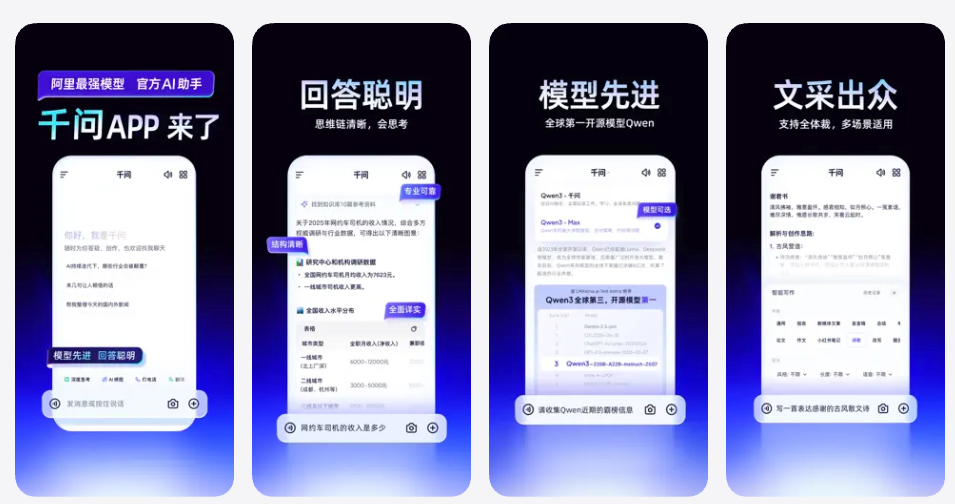
Core Insights - By 2025, the global focus of technological competition has shifted to language models, marking a transition from a "Spring and Autumn" period of "hundred models war" to a "Warring States" era where major companies prioritize "value realization" over mere parameter scale competition [1] - Language models are reshaping the underlying logic of the digital economy, with tech giants investing billions in R&D to transform these models from novelty tools into essential national-level utilities [1] Industry Overview - The AI industry is experiencing rapid expansion and deep technological iteration, driven by language models as the core engine [2] - Key trends include multi-modal integration, embodiment intelligence, and the practical application of intelligent agents, with language models serving as the indispensable "central nervous system" [2] Language Model Sub-industry - The language model sub-industry is generally positive but faces three core pain points in consumer applications: insufficient practicality, fragmented scenarios, and cost-ecosystem imbalance [3] - The recent launch of Alibaba's Qianwen APP has seen significant success, with over 10 million downloads within a week of public testing and monthly active users exceeding 30 million within 23 days [4] Qianwen APP's Strategic Approach - Qianwen APP's rise is attributed to its strategic adjustment addressing industry pain points through a "technology + scenario + ecosystem" framework, validating Alibaba's "user-first, AI-driven" strategy [6] - The app leverages Alibaba's Qwen series models, which are competitive with leading closed-source models, enhancing its capabilities in logical reasoning and long-text processing [6][8] Future Development Trends - The language model industry is expected to enter a new development cycle characterized by technological integration, ecological symbiosis, and value orientation [9] - Future models will focus on deep multi-modal integration and vertical precision, with open-source models driving innovation and reducing costs for small and medium enterprises [9] Conclusion - The language model industry is at a critical juncture, transitioning from technological explosion to industrial prosperity, with Qianwen representing a significant breakthrough in both domestic and global markets [10]

周靖人成为阿里合伙人,通义实验室持续调整应对激烈竞争
Xin Lang Cai Jing· 2025-12-10 07:48
Core Insights - Alibaba's CTO and head of Tongyi Lab, Zhou Jingren, has recently become a partner in Alibaba, marking a significant recognition within the company's highest decision-making body [1][12] - The restructuring of research organizations at Alibaba has led to the formation of Tongyi Lab, which is now responsible for AI model development, particularly the Qwen series [3][14] - The company is facing increased competition from other Chinese AI startups that are adopting open-source strategies, putting pressure on Tongyi Lab to maintain its leading position in AI model performance and application [20][21] Company Developments - Zhou Jingren has been with Alibaba for ten years, having held various positions, including Chief Scientist at Alibaba Cloud and Vice President at DAMO Academy [3][14] - The restructuring process has seen the integration of multiple AI research teams into Tongyi Lab, which is now under the leadership of Zhou Jingren [3][14] - The Qwen series of models has gained significant traction, with over 80,000 derivative models expected by October 2024, surpassing earlier models like Meta's Llama series [4][15] Talent Management - Over 80% of the team working on the Qwen model are graduates trained within Alibaba, indicating a strong internal talent development strategy [5][16] - Recent departures of key technical leaders from Tongyi Lab, including Huang Fei and others, highlight the challenges in retaining talent amid competitive pressures [17][18] - The company has promoted younger team members to leadership positions, such as Lin Junyang, who now leads the Qwen model team [5][16] Strategic Goals - Tongyi Lab has set three primary objectives for the year: maintaining model ranking, expanding commercial applications, and significantly increasing daily model usage by 2025 [19] - The launch of the new Qianwen app, aimed at competing with ChatGPT, reflects Alibaba's strategic focus on AI-driven applications [20][21] - The restructuring of business units to form the Qianwen C-end business group indicates a commitment to enhancing user engagement through AI technologies [20][21]

阿里千问APP首发遭遇流量洪峰,官方回应“状态良好,欢迎来问”
Jin Shi Shu Ju· 2025-11-17 06:08
Core Insights - Alibaba announced the public testing of its personal AI assistant, Qianwen APP, on January 17, making it freely available to users [1] - The app is based on the Qwen3 open-source model, which is designed to handle both conversational and task-oriented functions [1] - Qianwen APP aims to integrate various daily life scenarios such as maps, food delivery, ticket booking, office tasks, learning, shopping, and health into a single application [1] Group 1 - On the first day of public testing, Qianwen APP experienced a surge in traffic, leading to service congestion and interruptions, with users reporting unresponsive commands [3] - The app's performance is supported by the Qwen series of large models, which have surpassed international open-source models like Llama and Deepseek since their full release in 2023, achieving over 600 million downloads globally [3] - Airbnb's CEO Brian Chesky stated that the company heavily relies on Qwen, finding it faster and more efficient than OpenAI's models [3] Group 2 - Alibaba has announced an investment of 380 billion yuan in AI infrastructure and plans to increase this investment further [3] - At the Yunqi Conference on September 24, Alibaba introduced the Qwen3-Max flagship model and the next-generation model architecture Qwen3-Next, with Qwen3-Max-Instruct ranking third on the LMArena text leaderboard, surpassing GPT-5-Chat [3] - The Qianwen APP was developed by Alibaba's Intelligent Information Business Group, with contributions from various departments including Alibaba Cloud and the Tongyi Laboratory [4] Group 3 - The app features a minimalist design, with default online search capabilities to reduce the risk of "hallucinations" from large models, and includes functionalities such as image generation, AI photo editing, video calls, and real-time translation [4] - Alibaba indicated that the public test version is a basic iteration, with plans to gradually introduce agent-based AI features, particularly enhancing the shopping experience on platforms like Taobao [4]
超越GPT-4o!华人团队新框架让Qwen跨领域推理提升10%,刷新12项基准测试
量子位· 2025-06-04 00:17
Core Insights - A new reinforcement learning method called General-Reasoner has significantly improved the performance of the Qwen series models, surpassing GPT-4o in various benchmarks [1][2]. Group 1: Methodology and Innovations - The General-Reasoner framework enhances cross-domain reasoning accuracy by nearly 10%, addressing limitations of existing Zero-RL methods that focus on single-domain data and rigid validation methods [2][4]. - The research team created a comprehensive reasoning dataset, WebInstruct-verified, consisting of approximately 230,000 high-quality, verifiable reasoning questions across multiple fields such as physics, chemistry, and finance [5][9]. - The dataset was derived from WebInstruct, which initially included around 5 million natural instructions, with a rigorous filtering process to ensure quality and relevance [6][7]. Group 2: Validation Mechanism - A new generative answer verifier, General-Verifier, was developed to replace traditional rule-based validation, significantly improving the accuracy of answer verification across diverse domains [13]. - General-Verifier, with only 1.5 billion parameters, generates reasoning processes and outputs binary correctness judgments, providing accurate and interpretable feedback for reinforcement learning [13]. Group 3: Performance Metrics - The General-Reasoner framework was tested on 12 benchmark tests, showing a 10% improvement in cross-domain tasks compared to the base models, with specific accuracy rates such as 58.9% for Qwen2.5-7B-Base in MMLU-Pro [15]. - The optimal model, General-Reasoner-Qwen3-14B, achieved competitive results against GPT-4o, with accuracy rates of 56.1% in GPQA and 54.4% in TheoremQA [15][16]. Group 4: Future Directions - The research team aims to further optimize model performance, expand high-quality reasoning data across more domains, and enhance the robustness of the verifier to facilitate broader applications of large language models in complex real-world tasks [17].
TMT行业月报:阿里巴巴扩大AI投资;VAL模型或将改变智能驾驶竞争格局
HONGTA SECURITIES· 2025-03-06 12:12
Investment Rating - The investment rating for the communication industry is "Outperform the Market" [1]. Core Insights - The report highlights significant investments in AI infrastructure by leading companies, with Alibaba announcing a plan to invest 380 billion yuan (approximately 54.5 billion USD) over the next three years, which surpasses its total investment in the past decade [20][24]. - The AI computing power demand is rapidly increasing, with the domestic AI computing scale expected to reach 725.3 EFLOPS in 2024, a year-on-year growth of 74.1%, and projected to reach 2781.9 EFLOPS by 2028 [21][24]. - The report discusses the emergence of the Vision-Language-Action (VLA) model in the autonomous driving sector, which integrates visual input, language reasoning, and action output into a single framework, enhancing the performance of intelligent driving systems [26][30]. Summary by Sections 1. Market Review - From February 5 to February 28, 2025, the CSI 300 index rose by 1.91%, with the communication industry also increasing by 1.91%, while the computer industry surged by 16.31% [6][13]. - The communication sector experienced significant volatility, benefiting from operators' increased investment in computing power, leading to strong stock performance for companies like China Unicom and China Telecom [6][13]. 2. Communication Industry - Major companies are expanding their AI investments, with Tencent, Baidu, and Alibaba expected to increase their capital expenditures by 19.1% in 2025, reaching 15.42 billion USD [20][24]. - The report notes that the construction of intelligent computing centers is set to accelerate, with over 458 projects announced in the public bidding market for 2024 [24][25]. 3. Computer Industry - The VLA model represents a new direction in autonomous driving technology, improving the ability to process complex traffic scenarios and enhancing decision-making capabilities [26][30]. - The global autonomous driving market is projected to grow from 207.4 billion USD in 2024 to 273.8 billion USD in 2025, with the Chinese market expected to reach 399.3 billion yuan in 2024 [31][32].