Spirit v1.5

Search documents
云锋红杉20亿重仓“顶配玩家”:千寻智能跃升百亿独角兽
2 1 Shi Ji Jing Ji Bao Dao· 2026-02-24 08:40
Group 1 - The core point of the news is that Spirit AI, a leading company in the field of embodied intelligence, has successfully completed two rounds of financing totaling nearly 2 billion yuan, setting a new record in the industry [1][4] - The financing attracted top-tier investment institutions, including Yunfeng Fund, Sequoia China, and various state-owned capital, indicating strong confidence in the company's technology and growth prospects [1][5] - The company has achieved significant technological breakthroughs, including the development of the Spirit v1.5 model, which surpasses previous benchmarks in the industry, showcasing its strong capabilities in zero-shot generalization [7][8] Group 2 - The financing round has propelled Spirit AI's valuation to over 10 billion yuan, marking it as a unicorn in the embodied intelligence sector, which is transitioning from a "hundred flowers blooming" phase to a "multi-hero competition" phase [3][4] - The company has established a dual technological moat through its open-source models and data accumulation, which has attracted diverse capital support [7][10] - Spirit AI's collaboration with CATL has become a benchmark case for commercializing embodied intelligence, demonstrating the practical application of its technology in industrial settings [11][12] Group 3 - The company has developed a comprehensive data collection and training loop that significantly reduces data acquisition costs, allowing it to gather a large volume of high-quality interaction data [9][10] - The market for embodied intelligence is expected to grow significantly, with projections indicating that the total financing in the sector could reach 73.54 billion yuan by 2025, making it one of the hottest investment areas [4][5] - The company is exploring various commercial applications across industrial, retail, and household scenarios, indicating its commitment to broadening the scope of embodied intelligence technology [12][13]
千寻智能获近20亿融资,顶级资本天团联合押注,跃升百亿独角兽
机器人圈· 2026-02-24 06:45
Core Viewpoint - The article highlights the significant financing activity in the field of embodied intelligence, particularly focusing on the company Spirit AI, which has raised nearly 2 billion yuan in two rounds of financing, marking a new high in the sector [5][7]. Financing and Investment Landscape - Spirit AI's recent financing attracted top-tier investors including Yunfeng Capital, a leading state-owned institution, and Sequoia China, among others, creating a comprehensive support structure from various capital sources [5][10]. - The financing round saw participation from both existing shareholders and new investors, indicating strong confidence in the company's technology and growth prospects [5][11]. - The total financing amount of 2 billion yuan has pushed Spirit AI's valuation beyond 10 billion yuan, positioning it as a unicorn in the embodied intelligence sector [7][10]. Company Overview and Technological Advancements - Founded in January 2024, Spirit AI focuses on developing a "general brain" for robots, led by experienced entrepreneurs and top scientists from prestigious institutions [6][13]. - The company has made significant advancements in model development, achieving a breakthrough with its open-source model Spirit v1.5, which surpasses previous benchmarks in the industry [13][14]. - Spirit AI has accumulated 200,000 hours of high-quality interaction data, with plans to exceed 1 million hours by 2026, significantly reducing data collection costs [14][18]. Commercialization and Industry Impact - The collaboration with CATL has become a benchmark case for Spirit AI, demonstrating the practical application of its technology in industrial production lines [19][22]. - The company is exploring various commercial applications across different sectors, including retail, hospitality, and household tasks, indicating a broad potential for market penetration [22][23]. - The article emphasizes that the embodied intelligence sector is rapidly evolving, with significant investment and technological advancements driving the industry towards a new phase of competition and commercialization [8][12].

云锋、红杉等超一线资本20亿加注 又一家百亿具身独角兽诞生
2 1 Shi Ji Jing Ji Bao Dao· 2026-02-24 03:07
Core Insights - The core message of the articles highlights the significant financing achievement of Spirit AI, a leading company in the field of embodied intelligence, which recently completed two rounds of financing totaling nearly 2 billion yuan, setting a new record in the sector [1][2]. Financing and Investment Landscape - Spirit AI's recent financing attracted top-tier investors, including Yunfeng Fund, a major state-owned institution, and Sequoia China, among others, creating a comprehensive support structure from leading capital, industry giants, and state-owned enterprises [1][4]. - The financing round is noted as the largest in the embodied intelligence sector since the beginning of 2026, indicating a strong demand for investment in this area [4][5]. - Existing shareholders, including prominent venture capital firms, have also chosen to increase their investments, reflecting confidence in the company's technology and growth prospects [1][2]. Company Overview and Technological Advancements - Founded in January 2024, Spirit AI focuses on developing a "general brain" for robots, led by experienced entrepreneurs and top scientists from prestigious institutions [2]. - The company has made significant advancements in model development, achieving unexpected progress and successfully validating its technology in real-world production scenarios [2][7]. - Spirit AI's open-source model, Spirit v1.5, has surpassed previous benchmarks, showcasing strong zero-shot generalization capabilities and reducing data collection costs significantly [7][8]. Market Trends and Future Outlook - The embodied intelligence sector is projected to see substantial growth, with an expected total financing amount of 73.54 billion yuan and over 740 investment events by 2025 [4]. - The collaboration with CATL has become a benchmark case for commercializing embodied intelligence, demonstrating the practical application of the technology in industrial settings [12][13]. - The company is exploring diverse commercial applications across various sectors, including industrial, retail, and household environments, indicating a strategic approach to market penetration [14]. Competitive Landscape - As the industry evolves, only companies with a combination of technological originality, commercial viability, and capital endurance will lead the market, positioning Spirit AI as a key player in this competitive landscape [3][6]. - The dual technological moat of models and data accumulation is a critical factor in attracting diverse capital and establishing a strong market position [7][9].
云锋红杉20亿重仓「顶配玩家」:千寻智能跃升百亿独角兽
Xin Lang Cai Jing· 2026-02-24 01:11
Group 1 - The core message of the news is that Spirit AI, a leading company in the field of embodied intelligence, has successfully completed two rounds of financing totaling nearly 2 billion yuan, setting a new record in the recent financing landscape of the industry [1][21] - The financing attracted top-tier investment institutions such as Yunfeng Fund, Sequoia China, and various state-owned capital, indicating strong confidence in the company's technology and growth prospects [1][21][30] - The company has achieved a valuation exceeding 10 billion yuan, marking it as another unicorn in the embodied intelligence sector, which is transitioning from a "hundred flowers blooming" era to a "multi-hero competition" phase [3][23] Group 2 - Spirit AI focuses on building a "general brain" for robots, with a founding team that includes experienced entrepreneurs and top scientists, giving the company a competitive edge in both technological exploration and commercialization [2][22] - The company has made significant advancements in model development, with its open-source model Spirit v1.5 becoming the first in China to surpass the performance of Pi0.5, showcasing strong zero-shot generalization capabilities [11][31] - The company has accumulated 200,000 hours of high-quality interaction data, with plans to exceed 1 million hours by 2026, significantly reducing data collection costs by 90% through self-developed equipment [12][32] Group 3 - The collaboration with CATL has become a benchmark case for commercializing embodied intelligence, with the Mozi robot demonstrating high efficiency and reliability in real production environments [16][36] - The market for humanoid robots in China is expected to see significant growth, with projections of 28,000 units sold in 2026, reflecting a 133% increase from previous estimates [16][36] - The company is exploring diverse commercial applications across industrial, retail, and household scenarios, indicating a strategic approach to scaling its technology in various sectors [19][39]
具身智能行业周报:逐际动力发布COSA系统 自变量机器人完成10亿融资
Xin Lang Cai Jing· 2026-01-18 08:33
Group 1 - The core viewpoint highlights the accelerating growth in the robotics sector, with Tesla set to release its next-generation robot soon and the reappearance of robots at the Spring Festival Gala [1] - Qianxun Intelligent's embodied intelligence model Spirit v1.5 has topped the RoboChallenge evaluation list, surpassing the well-known foreign model pi0.5, becoming the only model with a success rate exceeding 50% [1] - Zhujie Power has launched the embodied intelligent system LimX COSA, integrating high-level cognition with full-body motion control, enabling robots to think and act simultaneously in the physical world [1] Group 2 - Zivariable Robotics has completed a 1 billion yuan A++ round of financing, with investments from ByteDance, Sequoia China, and others, aimed at iterating general embodied intelligence models and productization [2] - The partnership between Xingdong Jiyuan and SF Technology focuses on logistics scenarios, promoting the development and application of embodied intelligent robot technology to enhance logistics efficiency and quality [2] - Xingdong Jiyuan has introduced a comprehensive embodied intelligent warehousing logistics solution that collaborates deeply with customer logistics systems for adaptive operations [2] Group 3 - The year 2026 is seen as a critical point for humanoid robots, with expectations for mass production and supply chain developments, potentially increasing domestic shipments from thousands to tens of thousands [3] - Key areas of focus include the convergence of Tesla's supply chain, technological iterations, overseas supply chain opportunities, domestic application verticals, and long-term investment in quality patterns [3] Group 4 - Important industry events include the completion of Zivariable Robotics' financing on January 12, the release of a new world model by Norwegian humanoid robot company 1X on January 14, and the launch of the first industrial embodied software platform by Leju on January 15 [4] Group 5 - The industry is experiencing intensified competition, with automotive and electric vehicle sales falling short of expectations, and progress in humanoid robots not meeting anticipated timelines [5]

具身智能行业研究:逐际动力发布COSA系统,自变量机器人完成10亿融资
SINOLINK SECURITIES· 2026-01-18 07:35
Investment Rating - The report indicates a positive investment outlook for the humanoid robotics sector, highlighting 2026 as a pivotal year for the commercialization of humanoid robots [4]. Core Insights - The robotics industry is experiencing accelerated growth, with significant advancements in embodied intelligence models and partnerships aimed at enhancing logistics and operational efficiency [2][3][4]. - Key players like Qianxun Intelligent and Zhujidi Dynamics are making strides in developing advanced robotic systems, with Qianxun's Spirit v1.5 model achieving top rankings in evaluations and Zhujidi's LimX COSA system integrating high-level cognition with full-body control [2][28]. - The report emphasizes the importance of capital investment in driving technological innovation and market expansion within the robotics sector, as evidenced by substantial funding rounds for companies like Zivariable Robotics and Skild AI [3][31][17]. Summary by Sections 1. Robotics - The robotics sector is witnessing a surge in activity, with a focus on commercializing embodied intelligence and enhancing operational capabilities across various industries [9][10]. - Significant partnerships, such as the collaboration between Xingdong Jiyuan and SF Technology, aim to advance logistics automation through intelligent robotic solutions [3][36]. 1.1 Industry Dynamics - Recent policy shifts are steering the industry towards commercialization, with initiatives like Zhejiang's new industrialization plan emphasizing the development of humanoid robots and their core components [10][11]. - The report notes a growing trend of companies establishing strategic collaborations to enhance their technological capabilities and market reach [37]. 1.2 Main Body - Qianxun Intelligent's Spirit v1.5 model has achieved a breakthrough in performance, becoming the first model to exceed a 50% success rate in evaluations, and is now open-sourced for community development [26]. - Zhujidi Dynamics has launched the LimX COSA system, which merges cognitive functions with physical control, enabling robots to perform complex tasks autonomously [28]. - Zivariable Robotics has secured 1 billion yuan in funding to enhance its general-purpose robotic models and expand its operational capabilities in high-value scenarios [31]. 1.3 Core Components - The report highlights ongoing investments in core components and technologies essential for the robotics industry, including advancements in sensors and control systems [36]. - Companies like Shafler and Jiangsu Huaxuan are forming strategic partnerships to innovate in humanoid robot components, indicating a robust ecosystem for technological development [37].



对话千寻智能韩峰涛:真正的机器人是生产力,不是展品和玩具
雷峰网· 2026-01-13 10:20
Core Viewpoint - The article discusses the launch of Spirit v1.5, which has become the world's strongest open-source embodied model, surpassing the previous benchmark Pi0.5, indicating a significant advancement in embodied intelligence technology [3][6]. Group 1: Development of Embodied Intelligence - The launch of Spirit v1.5 marks a pivotal moment in embodied intelligence, showcasing a task success rate of over 50% in real-world scenarios, compared to Pi0.5's 42.67% [6]. - The founder of the company believes that 2026 will be a competitive year for embodied intelligence, similar to the rapid advancements seen in large language models in 2023 [6][9]. - The company plans to expand its data collection team to nearly 1,000 people to enhance data quality and quantity, which are crucial for model performance [6][36]. Group 2: Historical Context and Market Position - The Chinese industrial robot market has seen a significant rise, with domestic robots' market share increasing from 3% in 2015 to over 50% by 2024 [8][12]. - The founder emphasizes that the current era of embodied intelligence is driven by revolutionary changes in AI technology, which allows robots to perform meaningful tasks [9][20]. - The company aims to differentiate itself by focusing on AI as the core of its operations, rather than merely hardware production [18][24]. Group 3: Data Collection and Model Training - The company is developing its own data collection systems to gather sufficient data for training models, aiming for a target of 1 million hours of data to achieve better model performance [36][40]. - The founder highlights the importance of collecting real-world data through their robots, as opposed to relying on third-party data, which may not be effective for training [37][38]. - The company believes that achieving a model capable of L2 tasks, such as folding clothes, is essential for commercial viability and will enable the data flywheel to turn effectively [32][40]. Group 4: Future Outlook and Market Potential - The company anticipates that the market for capable robots will grow significantly, with potential sales volumes reaching levels comparable to automobiles and smartphones [28][29]. - The founder predicts that 2026 will be a critical year for embodied intelligence, akin to the pivotal moments seen in the development of large language models, leading to increased investment and interest in the sector [44].

腾讯研究院AI速递 20260113
腾讯研究院· 2026-01-12 16:37
Group 1 - Google has launched and open-sourced the Universal Commercial Protocol (UCP) in collaboration with over 20 retail giants, including Shopify and Walmart, to establish a unified open standard for AI agents in shopping, covering the entire process from product discovery to after-sales service [1] - The UCP has been implemented in Google's search AI mode and the Gemini application, featuring "agent checkout" functionality that supports Google Pay and will soon integrate with PayPal, allowing retailers to maintain their transaction identity [1] - By fully open-sourcing the UCP, Google aims to lower the barriers for ecosystem participation, enabling small and medium-sized businesses to benefit from AI shopping [1] Group 2 - Midjourney has updated its Niji model to version 7, focusing on anime-specific features, correcting the previous version's tendency towards realism, and enhancing details in expressions, dynamic poses, and material textures [2] - The new sref style reference feature allows users to upload three reference images to maintain a consistent art style, significantly improving the model's understanding and ability to accurately interpret complex prompts [2] - Testing shows that version 7 surpasses version 6 in light and shadow details, stability in complex poses, and the quality of pure anime line art, making it particularly suitable for storyboard generation and series creation [2] Group 3 - UniPat AI, in collaboration with Sequoia China and xbench, has released the BabyVision benchmark, which breaks down visual capabilities into four categories and 22 sub-tasks [3] - The evaluation results indicate that Gemini-3-Pro-Preview is the only model exceeding the baseline of a 3-year-old child, but it still falls short by 20 percentage points compared to a 6-year-old child, with many models struggling on simple tasks [3] - The research highlights a major shortcoming of Visual Language Models (VLMs), which is their inability to fully verbalize visual information, leading to loss of detail when compressing into tokens, making it difficult for models to perform tasks like tracing lines or stacking blocks [3] Group 4 - Kunlun Wanwei has launched Skywork Video v1.0 on the Tiangong Super Intelligent Agent platform, integrating the creative process into a "project-based" model where all materials are automatically collected and added to a multi-track editor [4] - The platform offers five initiation methods, including text generation, image animation, frame completion, multi-image style reference generation, and digital human video generation, with a built-in multi-track editor supporting detailed operations like splitting and replacing [4] - The Skywork product matrix now covers a full range of modalities from documents, spreadsheets, and presentations to video generation, creating a smart office platform that supports multiple scenarios and modalities [4] Group 5 - The world's first embodied Agentic OS, named COSA, has been released by Zhujidi Dynamics, featuring a three-layer architecture that integrates basic models, high-level skill layers, and cognitive decision-making layers [6] - COSA endows robots with three core capabilities: understanding vague instructions, cross-temporal semantic memory, and the ability to execute tasks seamlessly [6] - Unlike Figure AI's Helix end-to-end VLA model, COSA is built from the ground up as an operating system for the physical world, demonstrating significant advantages in the integration of movement and operation capabilities [6] Group 6 - Qianxun Intelligent has open-sourced its VLA base model Spirit v1.5, ranking first on the RoboChallenge Table30 leaderboard, surpassing Pi0.5 and receiving praise from NVIDIA's Jim Fan [7] - The core breakthrough of Spirit v1.5 lies in its "open, goal-driven" data collection strategy, moving away from "clean data" to internalizing physical common sense, resulting in a 40% improvement in fine-tuning convergence speed [7] - The unstructured collection method has increased the average effective collection time per person by 200% and reduced reliance on algorithm experts by 60%, with open-source weights and inference code available for community exploration [7] Group 7 - Anthropic co-founder Jack Clark revealed conflicting internal survey data indicating that while 60% of Claude users report a 50% increase in productivity, METR research shows that developers familiar with codebases experience a 20% decrease in AI tool-assisted PR merge speed [8] - Clark pointed out the "barrel principle" in code production, where writing speed may increase tenfold, but review speed only doubles, preventing an explosive overall efficiency increase, with no truly self-improving AI expected by January 2026 [8] - He emphasized that if the Scaling Law hits a wall, it would be shocking, as current massive infrastructure investments suggest most are betting on the opposite outcome, and breakthroughs in distributed pre-training could alter the political and economic structure of AI [8] Group 8 - Linus Torvalds, the creator of Linux, has released his first Vibe Coding project, AudioNoise, on GitHub, utilizing Google's Antigravity to generate a Python visualization tool, admitting it performs better than his own coding [9] - The project originates from the design of a guitar effects pedal and primarily explores foundational knowledge in digital audio processing, including IIR filters and delay loops for zero-latency single-sample processing [9] - Just five days prior, Torvalds criticized AI-generated code as "ridiculously stupid," making his subsequent use of AI tools a topic of discussion in the tech community, marking a "true fragrance moment" [9] Group 9 - Elon Musk predicts that AGI will be achieved by 2026 and that by 2030, AI will surpass the total intelligence of all humanity, with AI performance improving tenfold each year, and xAI's Memphis Colossus 2 data center reaching 1 gigawatt power by mid-January [10] - He introduced three key terms for AI safety: truth, curiosity, and beauty, forecasting that within three years, the surgical capabilities of robots will exceed those of top surgeons, and within five years, robots will transition from scarcity to abundance, with 10 billion units by 2040 [10] - Musk emphasized the view that "the sun is everything" in terms of energy, praised China's solar energy capacity of 1,500 gigawatts annually, and predicted that the essence of currency will become watts, with white-collar jobs being the first to be replaced by AI, ultimately leading to universal prosperity [10]

被Jim Fan点赞!全球第一的千寻智能Spirit v1.5正式开源!
机器之心· 2026-01-12 01:20
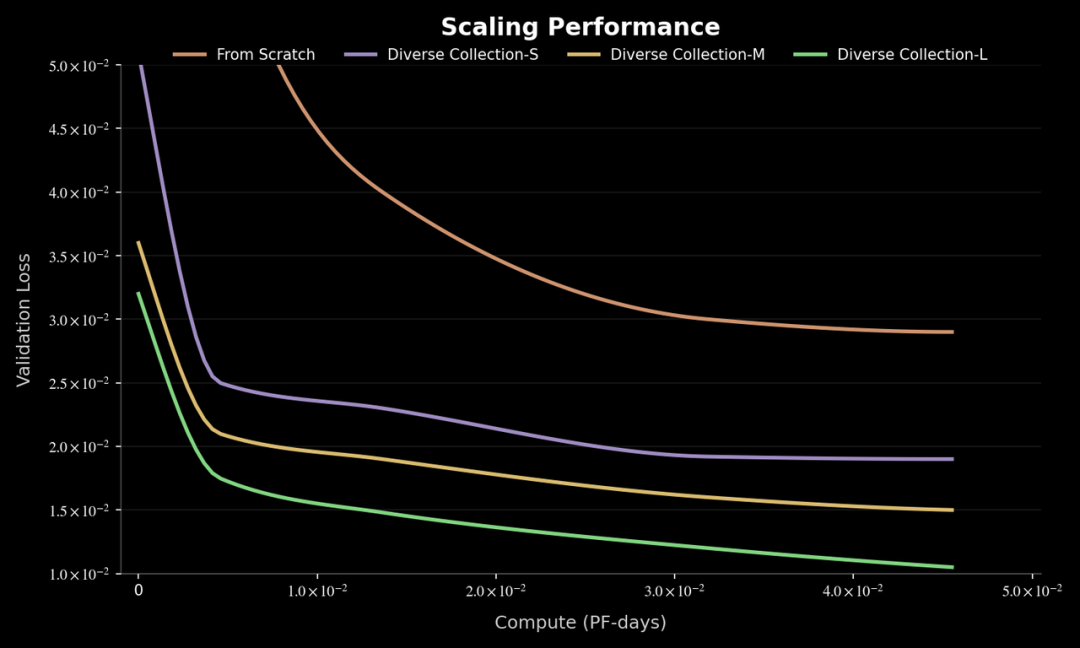
Core Insights - The article discusses the significant advancements in embodied intelligence, particularly highlighting the emergence of the Spirit v1.5 model from Qianxun Intelligent, which has surpassed previous models like Pi0.5 in performance [3][4][15]. Group 1: Key Developments in Embodied Intelligence - 2025 marked a breakthrough year for embodied intelligence, with hardware advancements and the development of foundational models defining the intelligence ceiling of this technology [3]. - The Spirit v1.5 model was open-sourced on January 12, 2026, and achieved the top position in the RoboChallenge's Table30 ranking, outperforming Pi0.5 [4][8][15]. - The open-sourcing of Spirit v1.5 includes model weights, inference code, and usage examples, allowing for public verification and community innovation [6][33]. Group 2: Performance Metrics and Evaluation - Spirit v1.5 scored 66.09 on the RoboChallenge leaderboard, while Pi0.5 scored 61.84, indicating a significant performance improvement [11][14]. - The RoboChallenge platform focuses on real-world physical testing, with a task set designed to challenge various dimensions of model capabilities, including precise 3D positioning and multi-stage tasks [15]. Group 3: Data Utilization and Training Paradigms - Spirit v1.5's success is attributed to a fundamental restructuring of the robot pre-training data paradigm, moving away from "clean data" to a more diverse and open-ended data collection strategy [18][20]. - The model's training involved continuous skill flows and internalized error correction capabilities, allowing it to adapt dynamically to unexpected challenges [21][22]. Group 4: Implications for the Industry - The open-source nature of Spirit v1.5 represents a significant shift in the industry, providing a competitive alternative to closed-source models and enabling broader access to high-performance robotics technology [35][39]. - The model's development and open-source release are seen as a pivotal moment for Chinese teams in the global AI landscape, transitioning from followers to leaders in defining core technological paths [41][42].
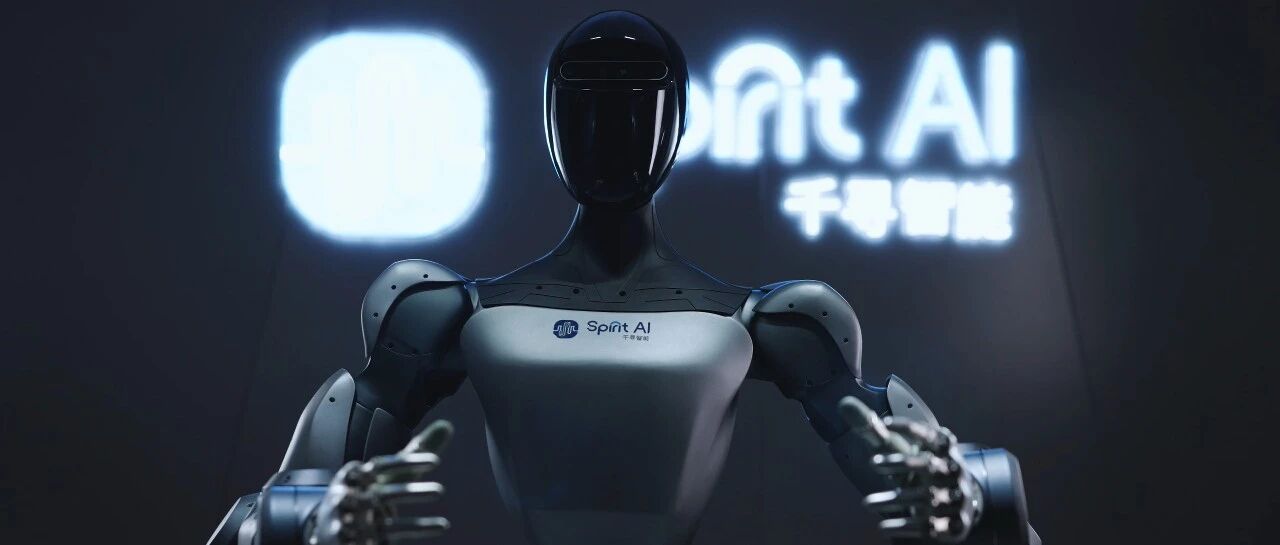
从全球首条产线落地到模型世界第一!千寻智能引领具身智能的Deepseek时刻
机器人大讲堂· 2026-01-12 00:40
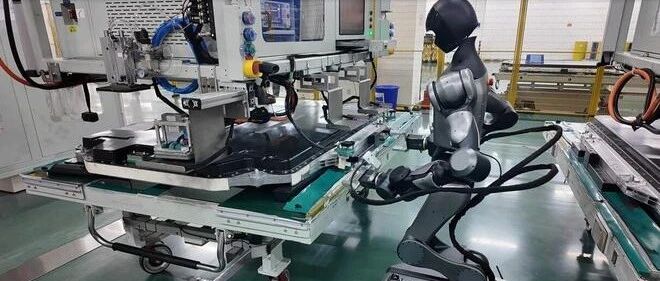
Core Insights - The article discusses the advancements in embodied intelligence, particularly focusing on the Spirit v1.5 model developed by Qianxun Intelligent, which has achieved significant milestones in both performance evaluation and real-world application [1][4][20]. Group 1: Model Performance and Evaluation - The Spirit v1.5 model ranks first in the RoboChallenge leaderboard with a score of 66.09 and a success rate of 50.33%, surpassing the previous leader Pi0.5, which scored 61.84 with a 42.67% success rate [2][11]. - RoboChallenge is highlighted as a unique evaluation platform that addresses the fragmentation and lack of standardization in traditional robot testing, providing a fair assessment environment through unified task standards and evaluation metrics [5][7]. - The evaluation includes 30 real-world tasks, such as flower arrangement and sandwich making, which test various technical challenges like 3D positioning and occlusion handling [9][10]. Group 2: Real-World Application - The humanoid robot "Xiao Mo," equipped with the Spirit v1.5 model, has been deployed in the Ningde Times production line for new energy battery PACK production, marking a significant achievement in validating the model's performance in industrial settings [4][19]. - Xiao Mo has demonstrated a connection success rate of over 99% in critical tasks, significantly improving operational efficiency by three times compared to human workers, while also mitigating safety risks associated with manual operations [19][23]. Group 3: Industry Implications - The advancements made by Qianxun Intelligent signify a shift in the embodied intelligence industry, where the technology is now capable of both high performance in evaluations and practical application in industrial environments, addressing the disconnect between technology and industry [20][23]. - The success of the Spirit v1.5 model indicates that domestic embodied models can compete with international counterparts, providing a reliable option for automation projects and reducing implementation risks for system integrators [26][28]. - This breakthrough is seen as a key to driving industrial transformation in China, marking the transition from a phase of technological exploration to practical application in the field of robotics [24][28].