小墨

Search documents
人形机器人春晚“火出圈” 车企加速布局
Zhong Guo Jing Ying Bao· 2026-02-27 19:38
Core Viewpoint - The emergence of humanoid robots in mainstream culture, highlighted by their performance at the 2026 Spring Festival Gala, signifies a breakthrough in embodied intelligence, moving from experimental phases to societal acceptance and emotional resonance [3][4]. Group 1: Capital and Investment - The humanoid robot sector is experiencing a significant influx of capital, with major companies announcing large-scale financing rounds, such as Xinghai Tu's 1 billion yuan Series B funding and Qianxun Intelligent's nearly 2 billion yuan in recent rounds [5][6]. - This surge in financing aligns with the strategic moves of automotive companies, indicating a synchronized effort to integrate embodied intelligence into their core strategies [4][6]. Group 2: Product Development and Iteration - Companies like Xiaopeng and GAC Group are advancing their humanoid robot products, with Xiaopeng's next-generation IRON featuring 82 degrees of freedom and a solid-state battery, aiming for mass production by the end of 2026 [7][8]. - GAC Group's GoMate Mini emphasizes lightweight design and safety, with plans for commercial validation by 2026 and large-scale production by 2027 [8]. Group 3: Industry Collaboration and Supply Chain - The collaboration between Horizon Robotics and CATL's Times Intelligent marks a significant step in integrating humanoid robots into industrial applications, showcasing their stability in complex environments [9]. - The involvement of major automotive and battery companies indicates that the humanoid robot sector is becoming part of the broader automotive industry ecosystem [9]. Group 4: Technical Challenges and Industry Transformation - Despite the progress, structural challenges remain, particularly in adapting automotive control systems to the dynamic requirements of humanoid robots, which require real-time coordination in unstructured environments [10][12]. - Discussions are underway regarding the potential shift from selling hardware to offering robotic services (RaaS), reflecting a broader transformation in the automotive industry's value proposition [11][12]. Group 5: Market Dynamics and Public Perception - The visibility of humanoid robots during the Spring Festival Gala has heightened public interest in embodied intelligence, creating opportunities for companies to capture market space [11][12]. - However, there remains a gap between market expectations and technological maturity, necessitating ongoing development and validation [11][12].





跨界投入、腾笼换鸟 汽车企业加速布局机器人赛道
Shang Hai Zheng Quan Bao· 2026-02-14 00:08
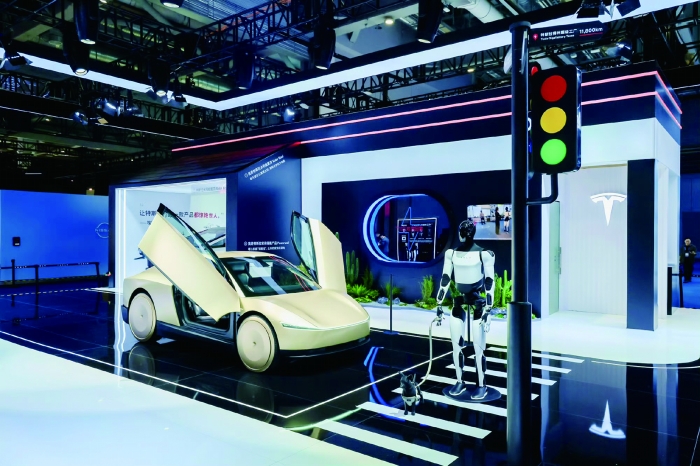
Core Insights - Major automotive companies, including Tesla, Chery, Hyundai, Xpeng, and Seres, are increasingly investing in the robotics sector, with Tesla even halting production of several key models to repurpose its production lines for robot manufacturing [1][5] - The automotive industry is redefining its value through the development of embodied intelligence, moving beyond traditional automotive definitions and integrating "vehicles, people, and machines" [1] Domestic Automotive Companies' Progress - Chery's humanoid robot, "Wuyou" Zhiqing R001, is set to host a segment at the 2026 Wuhu Spring Festival, marking a significant milestone for domestic automotive companies in the robotics field [2] - The "Wuyou" Zhiqing R001 has begun operations in Wuhu, assisting traffic police and showcasing the integration of robotics into smart policing [2] - Chery has received investments from companies like Zhiyuan Robotics and Bertley, indicating that embodied intelligence is seen as a new growth curve for the company [3] International Automotive Companies' Developments - Tesla plans to launch its third-generation humanoid robot in 2026, with an expected annual production capacity of 1 million units, repurposing its Fremont factory's Model S/X production line for this purpose [5][6] - Hyundai aims to deploy over 30,000 humanoid robots in its U.S. factories starting in 2026 to reduce production costs and enhance competitiveness [6][7] Upstream Industry Chain Actions - Companies in the automotive parts sector, such as Top Group and Ningbo Huaxiang, are actively expanding into the embodied intelligence business [8] - Junsen Electronics has launched a series of products related to humanoid robots and is conducting training for these robots in its factories [8] - CATL has initiated a strategic partnership with Horizon Robotics to focus on intelligent upgrades for new energy vehicles, aiming to enhance the smart travel experience [9]



跨界投入 腾笼换鸟 汽车企业加速布局机器人赛道
Shang Hai Zheng Quan Bao· 2026-02-13 17:04
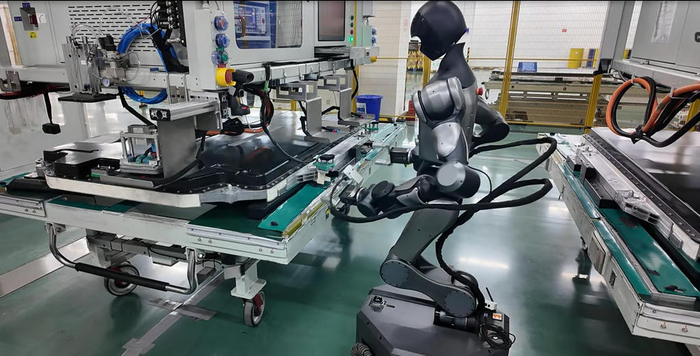
Group 1 - Major automotive companies are accelerating their entry into the robotics sector, with Tesla, Chery, Hyundai, Xpeng, and Seres all making significant moves by 2026, including Tesla repurposing production lines for robots [2][4] - Chery's humanoid robot "Wuyou" has been integrated into local law enforcement in Wuhu, showcasing its capabilities in traffic management and marking a significant step in the application of robotics in public services [3][4] - The automotive industry is redefining its value through the development of embodied intelligence, moving beyond traditional automotive definitions and integrating "car, human, and machine" [2] Group 2 - Chery's humanoid robot has entered over 30 countries and is involved in various applications, indicating a strong growth trajectory for the company in the robotics field [4] - Seres is also expanding into embodied intelligence, establishing a new company focused on smart robotics and artificial intelligence, with a registered capital of 50 million RMB [5] - Tesla plans to produce 1 million units of its third-generation humanoid robot by the end of 2026, indicating a significant commitment to this new product line [7] Group 3 - Hyundai plans to deploy over 30,000 humanoid robots in its U.S. factories by 2026 to enhance production efficiency and reduce costs [8] - The trend of automotive companies venturing into robotics is spreading to upstream suppliers, with companies like Top Group and Ningbo Huaxiang actively exploring embodied intelligence [9] - CATL has launched a humanoid robot named "Xiao Mo" in its battery production line, marking a significant step in integrating robotics into complex industrial processes [10]
具身智能赛道,他们站上风口
Xin Lang Cai Jing· 2026-01-17 23:55
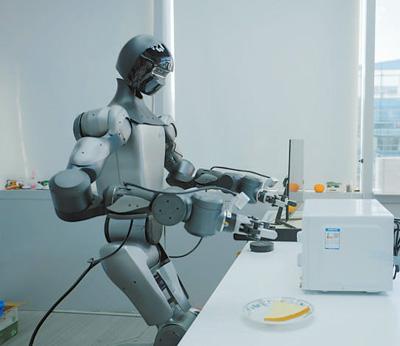
Core Viewpoint - The "14th Five-Year Plan" outlines a blueprint for China's economic and social development, emphasizing high-quality growth and the emergence of new professions and opportunities for youth in the field of embodied intelligence [1]. Group 1: Industry Development - The field of embodied intelligence is rapidly evolving, with applications expanding beyond laboratories into various real-world scenarios, creating a new wave of technology-driven professions [2][6]. - The Chinese government has recognized embodied intelligence as a key area for economic growth, integrating it into national strategies and policies [6][11]. Group 2: Youth Engagement - Young professionals are increasingly involved in the development of embodied intelligence, taking on roles such as algorithm engineers and hardware designers, and contributing to the evolution of robotics [2][9]. - The industry is seen as a promising career path for youth, with calls for more young people to join this innovative field [10]. Group 3: Technological Challenges and Innovations - Engineers face significant challenges in developing robots capable of performing complex tasks, such as precise object sorting and manipulation, requiring continuous learning and adaptation [3][4][7]. - Innovations in algorithms and hardware design are crucial for enhancing the capabilities of robots, enabling them to operate effectively in diverse environments [5][8]. Group 4: Future Prospects - The integration of artificial intelligence and robotics is expected to drive significant advancements in various industries, with a focus on making robots more intelligent and capable of understanding and executing tasks [11]. - The ongoing development in embodied intelligence is anticipated to open new opportunities for collaboration and innovation across sectors, fostering a dynamic and competitive landscape [10].
具身智能赛道,他们站上风口(追梦人·期待“十五五” 青年说机遇①)
Ren Min Ri Bao· 2026-01-17 23:16
Core Viewpoint - The article highlights the rapid development and application of embodied intelligence in robotics, emphasizing the emergence of new job opportunities for young professionals in this field as they contribute to the integration of algorithms and hardware in various industrial applications [4][12]. Group 1: Industry Development - The "14th Five-Year Plan" outlines a vision for high-quality economic development in China, creating new opportunities for youth in emerging industries like embodied intelligence [4]. - The field of embodied intelligence is evolving from laboratory settings to practical applications, with robots increasingly being deployed in industrial environments [4][11]. - The Chinese government has recognized embodied intelligence as a key area for economic growth, integrating it into national development strategies [9]. Group 2: Job Opportunities and Roles - Young professionals are taking on various roles in the robotics industry, including algorithm engineers, hardware designers, and application developers, contributing to the advancement of embodied intelligence [4][12]. - Companies are seeking individuals who can continuously learn and adapt in a fast-evolving industry, highlighting the importance of ongoing education and skill development [5][8]. - The article features several young engineers who have successfully tackled complex challenges in robotics, showcasing their innovative approaches to improving robot performance [6][7][10]. Group 3: Technological Innovations - Innovations in algorithms and hardware are crucial for enhancing the capabilities of robots, enabling them to perform complex tasks with precision and efficiency [6][8]. - The development of new algorithms has significantly improved the accuracy of robotic systems, particularly in challenging environments [7][10]. - Companies are focusing on deep integration of software and hardware to create more intelligent and versatile robots capable of adapting to various industrial tasks [11][14]. Group 4: Future Prospects - The future of embodied intelligence is promising, with a strong emphasis on fostering innovation and collaboration among young talent in the field [12][14]. - The industry is characterized by a dynamic interplay of technology and market needs, driving continuous improvement and adaptation in robotic solutions [14]. - There is a call for more young people to join the robotics sector, as their creativity and energy are seen as vital for the industry's growth and evolution [13][14].
从全球首条产线落地到模型世界第一!千寻智能引领具身智能的Deepseek时刻
机器人大讲堂· 2026-01-12 00:40
Core Insights - The article discusses the advancements in embodied intelligence, particularly focusing on the Spirit v1.5 model developed by Qianxun Intelligent, which has achieved significant milestones in both performance evaluation and real-world application [1][4][20]. Group 1: Model Performance and Evaluation - The Spirit v1.5 model ranks first in the RoboChallenge leaderboard with a score of 66.09 and a success rate of 50.33%, surpassing the previous leader Pi0.5, which scored 61.84 with a 42.67% success rate [2][11]. - RoboChallenge is highlighted as a unique evaluation platform that addresses the fragmentation and lack of standardization in traditional robot testing, providing a fair assessment environment through unified task standards and evaluation metrics [5][7]. - The evaluation includes 30 real-world tasks, such as flower arrangement and sandwich making, which test various technical challenges like 3D positioning and occlusion handling [9][10]. Group 2: Real-World Application - The humanoid robot "Xiao Mo," equipped with the Spirit v1.5 model, has been deployed in the Ningde Times production line for new energy battery PACK production, marking a significant achievement in validating the model's performance in industrial settings [4][19]. - Xiao Mo has demonstrated a connection success rate of over 99% in critical tasks, significantly improving operational efficiency by three times compared to human workers, while also mitigating safety risks associated with manual operations [19][23]. Group 3: Industry Implications - The advancements made by Qianxun Intelligent signify a shift in the embodied intelligence industry, where the technology is now capable of both high performance in evaluations and practical application in industrial environments, addressing the disconnect between technology and industry [20][23]. - The success of the Spirit v1.5 model indicates that domestic embodied models can compete with international counterparts, providing a reliable option for automation projects and reducing implementation risks for system integrators [26][28]. - This breakthrough is seen as a key to driving industrial transformation in China, marking the transition from a phase of technological exploration to practical application in the field of robotics [24][28].
人形机器人行业双周报(1215-1228):智元第5000 台机器人下线,具身机器人商业化加速-20251227
Huajin Securities· 2025-12-27 11:12
Investment Rating - The industry investment rating is maintained as "Outperform the Market" [6] Core Insights - The humanoid robot industry is entering a phase of accelerated commercialization, driven by a significant increase in the number of new product launches and growing order volumes. The report highlights that many components of humanoid robots share technology with the automotive industry, suggesting investment opportunities in companies with both brain and hardware iteration capabilities, such as XPeng Motors, Xiaomi Group, and others [6][30] - The report notes that the humanoid robot index increased by 4.61% from December 22 to December 26, 2025, outperforming the CSI 300 index by 2.66 percentage points [3][46] Summary by Sections 1. Humanoid Robot Commercialization - The milestone of the 5000th humanoid robot produced by Zhiyuan marks the entry into large-scale commercial use. The cumulative output includes 1742 units of the Expedition A1/A2, 1846 units of the Lingxi X1/X2, and 1412 units of the Spirit G1/G2 [4][10] - The report emphasizes the rapid commercialization of humanoid robots, with significant orders and application scenarios being upgraded. The financing scale and frequency in the humanoid robot sector are also noted to be high, with multiple financing rounds exceeding 1 billion RMB [30][31] 2. Market Performance - The humanoid robot index showed a weekly increase of 4.61%, while the CSI 300 index rose by 1.95%, indicating strong market performance for humanoid robots [3][46] - The report provides a detailed overview of key companies and their performance, highlighting significant orders and partnerships that contribute to the industry's growth [31][35] 3. Key Company Announcements - Zhiyuan's humanoid robots are being deployed in various sectors, including industrial manufacturing and service industries, with notable partnerships established with leading companies like CATL and Bosch [5][36] - The report outlines significant financing events, such as Galaxy General Robotics completing over 300 million USD in new financing, which sets a record for single-round financing in the field of embodied intelligence [5][30] 4. Investment Recommendations - The report suggests focusing on companies that possess both the brain and hardware iteration capabilities, as well as those with the ability to industrialize humanoid robot components. Specific companies mentioned include Top Group, Sanhua Intelligent Control, and CATL among others [6][30]

对近期重要经济金融新闻、行业事件、公司公告等进行点评:晨会纪要-20251224
Xiangcai Securities· 2025-12-24 02:43
Group 1: Machinery Industry - In November 2025, sales of construction machinery showed mixed results, with 8 products experiencing year-on-year growth while 4 declined, particularly driven by strong demand for cranes, which saw sales growth of 16.6% for truck cranes, 44.6% for all-terrain cranes, and 66.2% for crawler cranes, largely due to wind power installations and electrification trends [2][3] - Excavator sales in November increased by 13.9% year-on-year, with domestic sales up 9.1% and exports up 18.8%, attributed to recovering demand in Europe and the US, as well as sustained high demand in mining [2][3] - The loader segment also saw significant growth, with total sales up 32.1% year-on-year, driven by replacement demand and electrification, with electric loader penetration reaching approximately 25.7% in November [2][3] - Forklift sales rose by 14.1% year-on-year in November, with domestic sales increasing by 23.9%, primarily due to equipment upgrades and electrification [3] - The outlook for the machinery industry remains positive, with expectations of continued growth in domestic sales driven by major projects and overseas demand from emerging markets and mineral-rich countries [2][3] Group 2: Machine Tool Sector - In November 2025, the production of metal cutting machine tools was approximately 71,000 units, reflecting a year-on-year decline of 2.7%, while cumulative production from January to November reached 783,000 units, showing a year-on-year increase of 12.7% [4][5] - The production of metal forming machine tools in November was about 15,000 units, up 7.1% year-on-year, with cumulative production for the year at 161,000 units, also showing a year-on-year increase of 7.3% [4][5] - Fixed asset investment in the manufacturing sector grew by 1.9% year-on-year, maintaining positive growth, while manufacturing profits increased by 7.7% year-on-year, although the growth rate has slowed [5] Group 3: Robotics Industry - Industrial robot production in November 2025 reached approximately 70,000 units, marking a year-on-year increase of 20.6%, with cumulative production from January to November at 674,000 units, up 29.2% [5] - Strategic partnerships in the robotics sector are emerging, such as the collaboration between UBTECH and Texas Instruments, which aims to enhance the deployment of humanoid robots in manufacturing [5] - The introduction of innovative humanoid robots, such as the TRON 2 by Zhijidongli, showcases advancements in modular design and adaptability for various operational tasks [5] Group 4: Investment Recommendations - The manufacturing PMI in November rose by 0.2 percentage points to 49.2%, indicating a recovery in production and new orders, driven by the end of the National Day holiday effects and positive outcomes from US-China trade talks [6] - The report maintains a "buy" rating for the machinery sector, highlighting the potential for sustained growth in the construction machinery segment and the burgeoning humanoid robotics market [6]
年终盘点|追宇树、“等”上市,人形机器人步入中场战事
Di Yi Cai Jing· 2025-12-19 09:09
Group 1 - The humanoid robot industry is at a significant turning point in 2025, with companies facing pressure to demonstrate operational efficiency and stability in real-world scenarios rather than just complex movements [1][10][15] - The valuation of humanoid robot companies has surpassed 20 billion RMB, with a notable increase in talent acquisition and new entrants in the market [1][3][9] - The competition is intensifying, with many companies striving to replicate the advanced motion control capabilities of leading firms like Yuzhu [2][4][8] Group 2 - The number of job postings in the humanoid robot sector has increased by 409% year-on-year, indicating a surge in demand for talent [3] - Yuzhu has accelerated its commercialization efforts, launching several new robot models and facing increased pressure from both technology and capital [5][12] - The capital market is witnessing significant activity, with numerous companies announcing substantial financing rounds and IPO plans, reflecting the high interest in the humanoid robot sector [8][9] Group 3 - Major tech companies are increasingly entering the humanoid robot space, emphasizing the need for continuous innovation and industrial experience [12][14] - The focus is shifting from merely achieving technological breakthroughs to ensuring reliable and efficient production processes [10][15] - Industry experts highlight the importance of practical applications and the need for humanoid robots to demonstrate real-world utility beyond promotional videos [13][14]
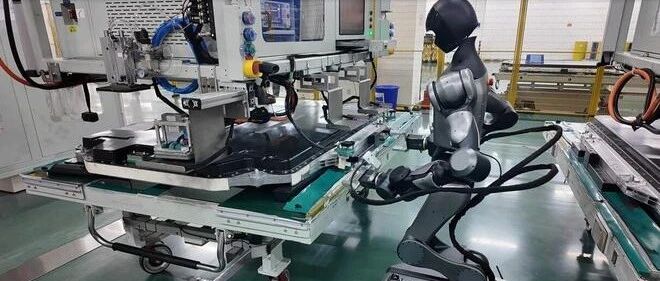
“小墨”具身智能机器人在宁德时代工厂上线
Guan Cha Zhe Wang· 2025-12-19 06:53
Core Viewpoint - CATL, the world's largest electric vehicle battery manufacturer, has deployed a humanoid robot named "Xiao Mo" at its production base in Luoyang, Henan, marking a significant step in the practical application of embodied intelligence technology in smart manufacturing [1][3]. Group 1: Technology and Innovation - "Xiao Mo" is developed by Spirit AI, a robotics company within CATL's ecosystem, and features an integrated AI model for "vision-language-action," enabling it to perceive its environment and execute tasks accurately [1][3]. - The robot can autonomously handle material position deviations and connection point changes, dynamically adjusting its posture and force during the flexible harness insertion process to ensure reliable connections without damaging sensitive components [1][3]. Group 2: Production Efficiency - In actual production, "Xiao Mo" has achieved a connection success rate exceeding 99% and operates with efficiency comparable to skilled human workers [3]. - The robot's daily workload is nearly three times that of human workers, demonstrating exceptional consistency and stability in the production of multiple battery models [3]. Group 3: Industry Impact - CATL's latest factory plans reflect the increasing application of smart robots in China's manufacturing sector, accelerating automation processes and enhancing overall corporate efficiency [3]. - Other Chinese automotive manufacturers, such as Changan and Xpeng, are also investing in humanoid robots to strengthen their competitive edge in the global electric vehicle supply chain [4].