
TPUv7

Search documents
2026年科技投资:七万亿美元芯片机遇与AI革命重塑全球格局
Sou Hu Cai Jing· 2026-01-22 17:17
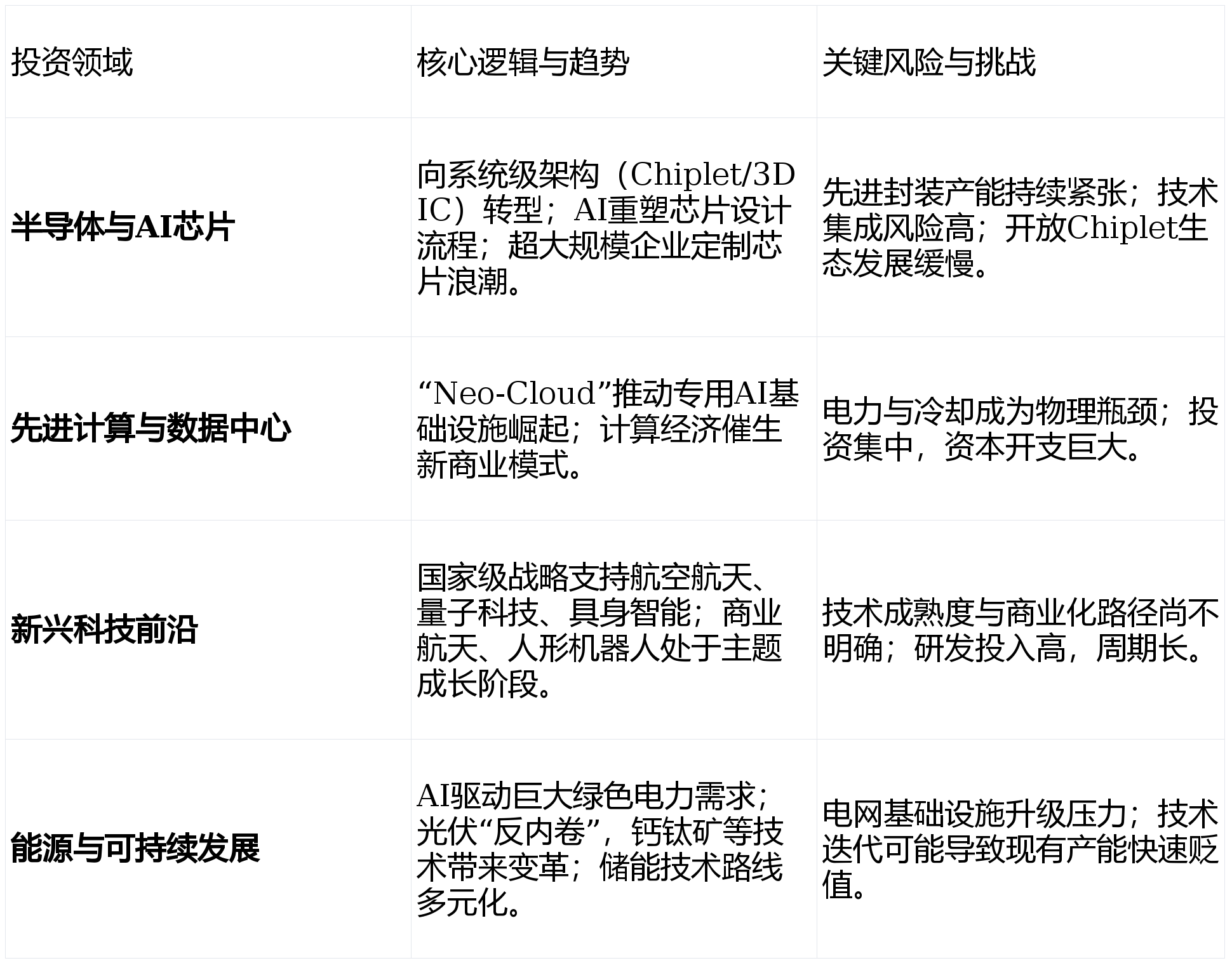
Group 1: Core Insights - The investment in hyperscale data center operators has exceeded $320 billion, with Amazon investing approximately $100 billion, Microsoft $80 billion, Google $75 billion, and Meta $65 billion, indicating a significant shift in the global technology landscape driven by AI [1] - By 2030, capital expenditure for AI-optimized data centers is expected to surpass $7 trillion, marking a structural breakthrough compared to previous computing transformations [2] - The semiconductor industry is undergoing a fundamental transformation, shifting from single system-on-chip designs to system-level architecture that prioritizes scalable computing and memory architectures [4] Group 2: Key Trends - AI is reshaping chip design, with a focus on system architecture, interconnects, and chip-to-chip connections as foundational elements rather than mere conduits [5] - The demand for high-performance semiconductors, advanced packaging, and dedicated infrastructure is surging due to the transition from computing elasticity to throughput density [2][5] - New data center models, such as "Neo-Cloud," are emerging, designed specifically for GPU-dense, low-latency AI workloads, which prioritize throughput and provide bare-metal GPU access [7] Group 3: Opportunities - The AI revolution and energy transition are creating historic opportunities in closely related technologies and industries, particularly in high-performance computing and advanced cooling systems [7][8] - The global power demand for data centers is projected to exceed 1,000 terawatt-hours by 2026, driving long-term procurement of nuclear and renewable energy sources [8] - Innovations in the photovoltaic sector, such as perovskite technology, are expected to reshape the solar manufacturing landscape, while diverse energy storage technologies are advancing to meet various application needs [8] Group 4: Future Outlook - Emerging frontier technologies, driven by national strategic planning, are poised for explosive growth, including aerospace, quantum technology, and embodied intelligence [9][10] - The integration of AI with biotechnology is creating new paradigms in precision medicine, with AI healthcare and brain-machine interfaces becoming focal points for investment [11] - The global high-bandwidth memory market is expected to grow over fourfold by 2030, reaching over $100 billion, with companies that can navigate system-level complexities and integrate chips into data center innovations emerging as winners in the new era [14]

中国科技:光模块-TPU 产能扩张带来新机遇-China Technology_ Optical transceivers_ TPU ramp brings new opportunity
2025-12-16 03:26
Summary of Key Points from the Equity Research Report on Optical Transceivers and Google TPU Industry Overview - The report focuses on the optical transceiver market, particularly in relation to Google's TPUv7 and its OCS technology, which is gaining traction due to the performance of Google Gemini 3 [2][3][9]. Core Insights - **TPU and OCS Demand**: The demand for Google's TPUv7 and OCS is expected to significantly increase, with a total addressable market (TAM) of USD376 million for component suppliers and USD3.8 billion for optical transceiver sellers by 2026/27 [4][24]. - **Optical Transceiver Market Size**: The market size for optical transceivers is projected based on assumptions of OCS shipments and the requirement of 288 units of 1.6T optical transceivers per OCS [4][24]. - **Innolight's Position**: Innolight is identified as the primary beneficiary of this growth, being Google's main optical module supplier. The report anticipates global shipments of 1.6T optical transceivers to reach 21 million in 2026, with Innolight expected to capture a significant share [5][33]. Financial Projections - **Profit Estimates**: The net profit estimates for Innolight have been raised by 7% for 2026 and 4% for 2027, reflecting a brighter outlook on high-speed optical module shipments [5][45]. - **Target Price Increase**: The target price for Innolight has been increased to RMB781.30 from RMB651.20, indicating a 29% upside potential from current levels [5][45]. Technological Insights - **OCS Advantages**: OCS technology offers substantial advantages over traditional electrical switches, including a 40% reduction in power consumption and significantly lower communication latency [12][10]. - **Market Penetration**: The report notes that Google's OCS will utilize MEMS technology, which is expected to dominate the market with over 70% share due to its scalability and cost-effectiveness [17][16]. Supply Chain Analysis - **Key Suppliers**: The supply chain for OCS includes major players like Google, Coherent, and Lumentum, with a significant portion of manufacturing outsourced to Chinese companies [17][21]. - **Cost Structure**: The bill of materials (BoM) for Google's MEMS OCS is estimated at approximately USD36,000, with MEMS chips accounting for 33% of the total cost [23][26]. Risks and Considerations - **Technological Changes**: The report highlights potential risks related to technological advancements and competition in the optical transceiver market, particularly with emerging technologies like CPOs [47]. - **Market Competition**: Intense competition in the 800G and 1.6T transceiver markets could impact pricing and margins, posing risks to Innolight's profitability [47]. Conclusion - The report maintains a "Buy" rating on Innolight, emphasizing the expected growth in the optical transceiver market driven by Google's TPU ecosystem expansion and the anticipated demand for high-speed optical modules [5][45].

Nvidia's Dominance Tested — Is Alphabet Stealing The AI Spotlight? - Broadcom (NASDAQ:AVGO), Amazon.com (NASDAQ:AMZN)
Benzinga· 2025-12-01 15:43
Core Insights - The AI chip competition is escalating, with Alphabet Inc. challenging Nvidia's dominance through its advanced AI model and custom-built chips [1][3] - Alphabet's stock performance has significantly outpaced Nvidia, with a 30 percentage point lead in November and a year-to-date increase of 70% compared to Nvidia's gains [2] Alphabet Inc. Developments - The launch of Gemini 3, Google's latest AI model, is a key driver of its stock rally, showcasing advancements in AI capabilities [3][5] - Gemini 3 is gaining traction with 650 million monthly active users, powered by Google's TPUv7 chips, which are designed to compete directly with Nvidia's offerings [6] TPU vs. GPU Comparison - Google's TPUs are fundamentally different from Nvidia's GPUs, focusing on specific use cases that enhance efficiency and cost-effectiveness [7][8] - TPUv7 outperforms Nvidia's Blackwell Ultra in performance per watt, achieving 5.42 teraflops per watt compared to 3.57 teraflops per watt for Nvidia [9] Cost Efficiency - The rental cost for TPUv7 is estimated at $3.50 per hour, significantly lower than Nvidia's $6.30 per GPU per hour, potentially leading to a total cost of ownership that is up to 40% lower for TPUv7 [9] Market Dynamics - Despite the advantages of TPUs, their limited availability on Google Cloud Platform makes them less appealing compared to Nvidia's GPUs, which are accessible across multiple cloud services [10][11] - Google is projected to spend $10 billion in 2025 on GPUs and TPUs, indicating a strategy for hybrid computing [12] Nvidia's Valuation - Nvidia shares are currently trading at approximately 25 times forward PE, presenting a potential buying opportunity as historical trends suggest rebounds to higher valuations [13] - Nvidia is experiencing a significant discount relative to Broadcom, which may reflect market expectations of a shift in AI market share [14] Conclusion - While TPUs excel in specific performance metrics and cost, Nvidia maintains a competitive edge through its ecosystem, availability, and broad workload support [15]



CUDA被撕开第一道口子,谷歌TPUv7干翻英伟达
3 6 Ke· 2025-12-01 02:55
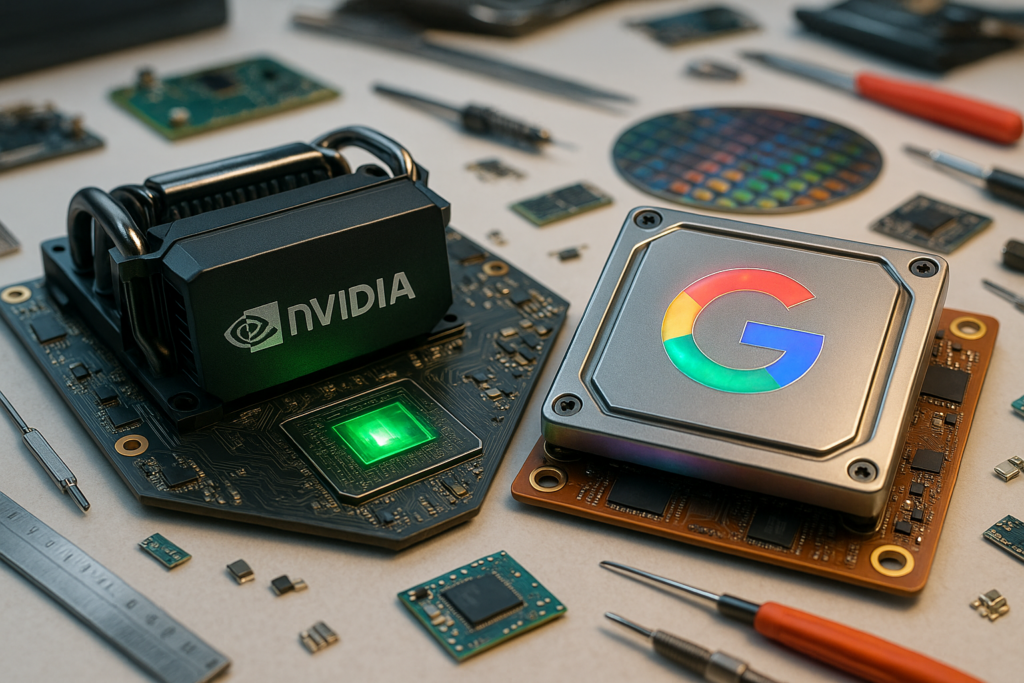
Core Insights - Google's TPU has emerged as a significant competitor to NVIDIA's GPU, particularly with the success of Gemini 3, leading to discussions about whether TPU can truly challenge NVIDIA's dominance in AI hardware [1][3][5] Group 1: TPU's Market Position - TPUv7 is specifically designed for AI and is seen as a direct challenge to NVIDIA's long-standing GPU monopoly [3][5] - Google has shifted from internal use of TPU to commercial sales, with clients like Anthropic deploying over 1GW of TPU clusters [7][9] - The market response has been positive, with Google's stock value increasing and its market capitalization nearing $4 trillion [17] Group 2: Technical Comparisons - While TPU may not outperform NVIDIA in theoretical chip specifications, it achieves higher model performance utilization rates and lower total cost of ownership (TCO) by approximately 30%-40% [7][36] - TPU's system-level engineering, including innovations like ICI interconnect and optical switching, enhances its competitive edge [7][30] Group 3: Strategic Moves - Google is actively working to improve its software ecosystem to compete with NVIDIA's CUDA, including supporting open-source environments like PyTorch [7][41] - The collaboration with Anthropic marks a significant milestone in TPU's commercialization, as it provides compelling performance and cost efficiency [27][39] Group 4: Industry Dynamics - NVIDIA acknowledges the challenge posed by TPU but maintains that its GPUs are superior in performance, versatility, and market presence [16][19] - The competitive landscape is shifting, with increasing scrutiny on NVIDIA's pricing strategies and the sustainability of its market position [19][21]


阿里云财报CAPEX超预期,国产算力超节点爆发正当时 | 投研报告
Zhong Guo Neng Yuan Wang· 2025-09-05 06:35
Group 1: Industry Trends - Nvidia's Q2 2026 financial report shows strong revenue growth, with total revenue reaching $46.7 billion, a 56% year-on-year increase, and data center business revenue at $41.1 billion, also up 56% [2] - Nvidia's network business revenue reached $7.3 billion, with a quarter-on-quarter increase of 98% and a year-on-year increase of 46%, indicating a positive outlook for the optical module market [2] - Google showcased its TPUv7 at Hotchips 2025, achieving an I/O bandwidth of 1.2TB/s, which could significantly enhance AI infrastructure capabilities [3] Group 2: Company Performance - Alibaba's Q2 revenue surged by 26% year-on-year to 33.4 billion yuan, marking the highest growth rate in three years, driven by AI-related revenue growth [4] - Alibaba Cloud's revenue for the first half of 2025 is projected to reach 63.5 billion yuan, a 22% year-on-year increase, solidifying its position as the leader in China's AI infrastructure AIIaaS market [4] - Alibaba's capital expenditure in Q2 reached 38.6 billion yuan, a staggering increase of 220% year-on-year, significantly exceeding market expectations [4] Group 3: Market Insights - The overall market saw significant gains during the week of August 25-29, 2025, with the Shenwan Communications Index rising by 12.38% and the ChiNext Index increasing by 7.74% [5] - The top three performing sectors included optical cables and marine cables (+52.59%), optical modules (+29.99%), and connectors (+25.09%) [5] - Leading stocks included Changfei Fiber (+55.36%), Cambridge Technology (+41.36%), and Bochuang Technology (+39.07%), while stocks like Zhenbang Intelligent and Yonggui Electric saw declines [5]
通信行业:阿里云财报CAPEX超预期,国产算力超节点爆发正当时
Shanxi Securities· 2025-09-04 10:17
Investment Rating - The report maintains an "Outperform" rating for the communication industry, indicating an expected performance exceeding the benchmark index by more than 10% [1][43]. Core Insights - Nvidia's recent financial results continue to drive global computing investment sentiment, with a strong sequential growth in network revenue, which positively impacts the optical module market [3][15]. - Alibaba Cloud's Q2 performance exceeded expectations, with a 26% year-on-year revenue increase to 33.4 billion yuan, marking the highest growth rate in three years, and a significant rise in capital expenditures [5][17]. - The emergence of supernodes in domestic chip development is expected to accelerate market growth for copper connections and optical modules, enhancing the value of server manufacturing [7][18]. Summary by Sections Industry Dynamics - Nvidia's Q2 revenue reached $46.7 billion, a 56% year-on-year increase, with data center revenue also growing by 56% [3][15]. - Google showcased its TPUv7 at Hotchips2025, indicating advancements in optical switching technology that could enhance performance significantly [4][16]. - Alibaba Cloud's capital expenditures surged to 38.6 billion yuan in Q2, reflecting a 220% increase year-on-year, driven by robust AI-related revenue growth [5][17]. Market Performance - The overall market saw significant gains during the week of August 25-29, 2025, with the Shenwan Communication Index rising by 12.38% [8][19]. - The top-performing sectors included optical cables and modules, with weekly increases of 52.59% and 29.99%, respectively [8][19]. Company Recommendations - Key companies to watch in the domestic computing server sector include ZTE, Unisoc, and Huakong Technology [7][19]. - For overseas supernode opportunities, companies like Zhongji Xuchuang and New Yisheng are highlighted [7][19].