
XREAL 1S

Search documents
国产AI眼镜:今年全球占比将达45%
财联社· 2026-03-15 05:05
Core Insights - The article highlights the rapid growth of domestic AI glasses in China, with significant sales increases and a projected global market share of 45% by 2026 for Chinese manufacturers [12][2]. - Despite the growth, challenges remain in supply chain capacity and the need for differentiation in user value [13][14]. Market Growth - The global shipment of domestic AI glasses is expected to reach 22.67 million units in 2026, a year-on-year increase of 56.3%, with China's market expected to see 4.51 million units shipped, growing by 77.7% [1]. - The growth is primarily concentrated in audio, audio recording glasses, and AR/ER glasses [1]. Company Developments - Qianwen AI glasses made their domestic debut at AWE, featuring dual-chip dual-system technology and 64GB local storage [2]. - XREAL has shipped over 700,000 units and is focusing on deepening integration of spatial computing and AI [5]. - Thunder Innovation plans to launch a limited edition Batman Air 4 Pro glasses and has partnered with Amap to create local life applications for its X3 Pro AR glasses [7]. International Expansion - Thunder Innovation's sales in the North American market grew by 456.5% in 2025 compared to 2024, with plans to enhance market share in Japan, South Korea, and Northern Europe [9]. - Domestic manufacturers are rapidly expanding in overseas markets, leveraging China's manufacturing advantages [12]. Industry Challenges - The supply chain's capacity ramp-up remains a significant bottleneck, with higher demands for yield control and delivery cycles [13]. - Current AI glasses lack sufficient differentiation in user value, primarily offering functionalities that can be replaced by smartphones [13]. Future Outlook - The industry is compared to the smartphone market in the mid-2000s, with a need for breakthroughs in hardware miniaturization, multi-modal world models, and ecosystem unification to reach a transformative "iPhone moment" [14][15][16]. - Key areas for innovation include lightweight hardware, comprehensive perception through multi-modal inputs, and a unified platform for devices [14][15][16].


AWE专题:从生态协同到跨界融合
Huafu Securities· 2026-03-14 13:19
Investment Rating - The industry rating is "Outperform the Market" [5][55] Core Insights - The 2026 AWE highlights a significant shift in the consumer electronics and home appliance industry, moving from linear upgrades of individual product features to systemic competition centered around spatial experience and ecological collaboration [2][3][12] - The competition is evolving into an "experience competition" phase, where brands that can create cohesive aesthetic experiences and intelligent interactivity are likely to build new competitive advantages and achieve higher brand premiums [3][13] - Cross-industry integration is accelerating, with the boundaries between consumer electronics, automotive, robotics, and energy becoming increasingly blurred, leading to the formation of a unified ecosystem of "people-vehicles-home-devices-robots" [3][20][24] Summary by Sections 1. Market Data - The home appliance sector saw a weekly increase of 0.6%, with specific segments like white goods, black goods, small appliances, and kitchen appliances rising by 1.2%, 0.7%, 0.7%, and 2.0% respectively [4][11] - Raw material prices showed a mixed trend, with LME copper decreasing by 0.4% and LME aluminum increasing by 4.0% [4][11] 2. 2026 AWE Highlights - The AWE 2026 event marks a clear transition in the industry focus from product display to spatial expression, emphasizing the creation of immersive living environments rather than merely showcasing individual products [12][13] - Brands are increasingly focusing on creating cohesive atmospheres in their displays, reflecting a shift in competitive logic from product-centric to experience-centric [13][15] 3. Cross-Industry Integration - The AWE 2026 showcased a trend of cross-industry integration, with consumer electronics expanding into areas such as smart mobility, embodied intelligence, and energy management [20][24] - Companies like Huawei and Tesla are demonstrating how automotive technology is being integrated into smart home ecosystems, indicating a shift in narrative from product sales to ecosystem connectivity [20][24] 4. Emerging Technologies - Smart glasses are transitioning from niche hardware to becoming integral to the ecosystem, focusing on real-world applications such as navigation and lifestyle services [28][29] - The integration of AI and robotics into home appliances is transforming them from passive tools to active participants in household tasks, enhancing the overall user experience [20][24]
“百镜大战”,持续升温
新华网财经· 2026-03-13 03:15
Core Viewpoint - The AWE 2026 showcased significant advancements in AI technology and smart devices, particularly highlighting the growing interest in smart glasses and embodied intelligence products [2][3][4]. Group 1: Event Overview - AWE 2026 was held from March 12 to 15, covering a total exhibition area of 170,000 square meters with 1,200 participating companies, including major players like Haier and Huawei [2]. - The event introduced a new "dual-zone" layout, featuring the Oriental Hub International Business Cooperation Zone and the New International Expo Center [3]. Group 2: Smart Glasses Highlights - Smart glasses emerged as a focal point, with multiple models showcased, including the Qianwen AI Glasses G1, which supports calling, photo/video recording, and translation [4]. - XREAL presented the XREAL 1S, equipped with a self-developed spatial computing chip, enabling stable spatial hovering and real-time 2D to 3D conversion [7]. - TCL launched the Thunder X3 Pro AR glasses, integrating smart living features in collaboration with Amap, while BOE introduced the S7 AI+AR cycling glasses, set to release in June [8]. Group 3: Embodied Intelligence - The event featured various humanoid robots and embodied intelligence products, including caregiving robots and robotic dogs, showcasing advancements in interactive technology [9]. - Shanghai Aoshark Intelligent Technology's FIT-HV PRO exoskeleton robot can reduce physical load by over 60% during heavy lifting tasks [11]. Group 4: Technological Innovations - The AWE 2026 highlighted advancements in optical interconnect technology, with the launch of the Guangyue Super Node 128 card commercial version, significantly improving training performance for large models [14][17]. - The LX series of professional and consumer graphics cards were introduced, targeting various applications from gaming to high-resolution rendering [17].
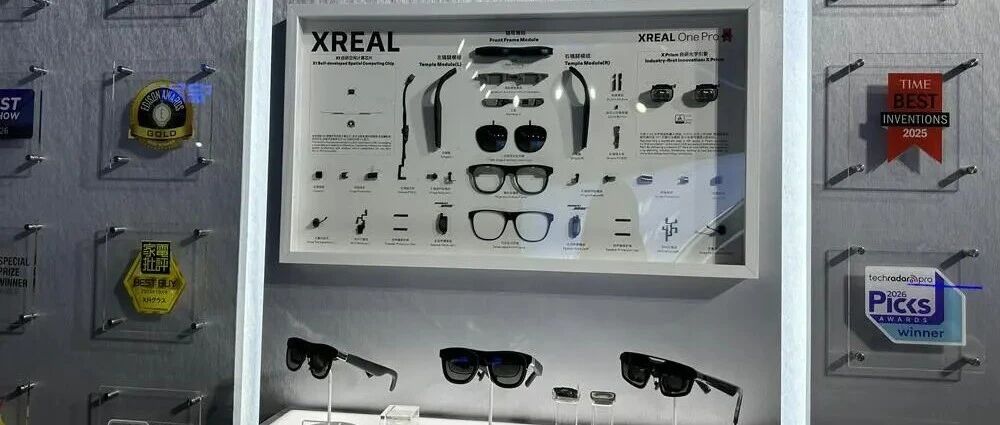
“百镜大战”,持续升温
财联社· 2026-03-13 02:36
Core Viewpoint - The 2026 China Household Appliances and Consumer Electronics Expo (AWE 2026) showcases significant advancements in AI technology and smart devices, particularly highlighting the growing interest in smart glasses and embodied intelligence products [1][2]. Group 1: Event Overview - AWE 2026 is themed "AI Technology, Enjoying the Future" and spans a total exhibition area of 170,000 square meters, featuring 1,200 participating companies including major players like Haier and Huawei [1]. - The event introduces a new "dual-zone" layout, comprising the Eastern Hub International Business Cooperation Zone and the New International Exhibition Center [2]. Group 2: Smart Glasses Highlights - Smart glasses emerged as a focal point at the expo, with multiple models showcased, including the Qianwen AI Glasses G1, which supports calling, photo/video recording, and translation, powered by the Qianwen large model [3]. - XREAL presented the XREAL 1S, equipped with the self-developed X1 spatial computing chip, enabling a stable spatial hovering experience and real-time 2D to 3D conversion [5]. - TCL's Thunderbird X3 Pro AR glasses were highlighted for their integration with Amap, while BOE unveiled the S7 AI+AR cycling glasses, which project navigation and speed information in real-time [6]. Group 3: Embodied Intelligence - The Eastern Hub showcased various embodied intelligence products, including humanoid robots and caregiving robots, indicating a trend towards more interactive and functional robotic solutions [7]. - Shanghai Aoshark Intelligent Technology introduced the FIT-HV PRO waist exoskeleton robot, which reduces physical load by over 60% during heavy lifting and frequent bending tasks [10]. Group 4: Technological Innovations - The expo featured advancements in optical interconnect technology, with the launch of the Guangyue Supernode 128-card commercial version, which significantly enhances training performance for large models, reducing transmission delays by over 90% compared to traditional methods [12][16]. - Lishan Technology released the LX series of professional and consumer graphics cards, designed for various applications including gaming and digital content creation, with features aimed at preventing performance drops due to memory overflow [16].

VITURE起诉XREAL侵犯电致变色专利,XREAL尚未作出回应
Huan Qiu Wang· 2026-02-06 03:17
Core Viewpoint - VITURE has initiated patent infringement lawsuits against XREAL in Shenzhen and Beijing, claiming that multiple XREAL products infringe on its core electrochromic patent, marking a response to XREAL's previous legal actions in Germany [1][3]. Group 1: Patent Infringement Lawsuit - VITURE's lawsuit targets XREAL's products that utilize electrochromic technology, which VITURE claims infringes on its patent granted in 2024, covering key aspects of electrochromic lens technology [1][3]. - The lawsuit could lead to a ban on the sale of XREAL's electrochromic AR glasses in the domestic market if the court rules in favor of VITURE [1]. - VITURE's technology allows for rapid color change in its flagship products, achieving a response time of 0.1 seconds, which it claims is similar to the technology used in XREAL's products [1]. Group 2: Industry Context and Competitive Landscape - Industry insiders indicate that VITURE had previously adopted a tolerant approach towards XREAL's patent infringement but has shifted to a more aggressive legal stance following a significant increase in its market share in 2025 [3]. - XREAL has not yet issued a formal response to the lawsuit, but analysts note that its products, including XREAL One Pro and XREAL Air2 Pro, heavily rely on similar electrochromic technology [3]. - This lawsuit is part of a broader trend of escalating patent disputes within the AR industry, highlighting the competitive nature of core technology patents [4].
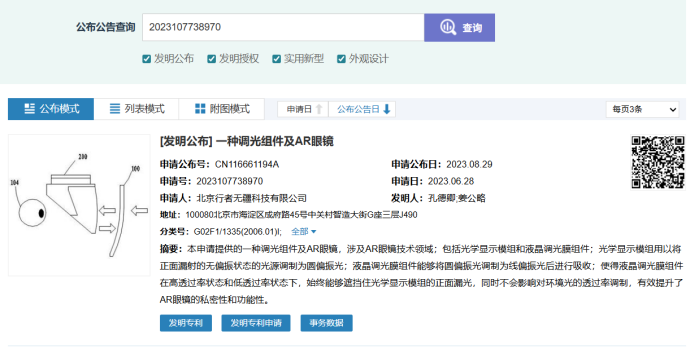
XTI Aerospace Drone Nerds Expands into Wearable Augmented Reality Technology with XREAL AR Glasses
Prnewswire· 2026-01-26 13:30
Core Insights - The acquisition of XREAL enhances Drone Nerds' portfolio by integrating wearable augmented reality technology, which transforms content experience and information visualization [1][2] - XREAL's product ecosystem aims to provide a seamless augmented reality experience, combining advanced display technology and mobile connectivity for personal and professional use [3][4] Company Overview - XTI Aerospace, Inc. focuses on vertical flight technology and, through its subsidiary Drone Nerds, offers unmanned aircraft systems and solutions [5] - Drone Nerds, established in 2014, provides comprehensive drone solutions tailored to various operational needs across multiple industries [7] Product Details - XREAL's flagship product, the XREAL One Pro, features an expanded field of view and high-quality audio for immersive experiences, while the XREAL 1S offers a compact option for everyday use [10] - Additional products include the XREAL Beam Pro for app-based virtual screens and the XREAL Hub for fast charging and video passthrough, enhancing user experience [10]


无锡高新区“硬核”军团闪耀CES 2026 车联天下、菲沃泰等亮相共舞AI浪潮
Zheng Quan Shi Bao Wang· 2026-01-19 09:25
Group 1: Key Developments at CES 2026 - The 2026 International Consumer Electronics Show (CES) has commenced in Las Vegas, showcasing innovative technologies from global companies [1] - Three companies from Wuxi High-tech Zone, namely Autolink, Favored Tech, and XREAL, have formed a notable presence with their cutting-edge technologies and clear commercialization paths [1] Group 2: Autolink's Innovations - Autolink has launched the world's first Deep Fusion Electronic and Electrical Architecture (EEA), marking a significant advancement in smart vehicle E/E architecture from "multi-domain collaboration" to "full-domain deep integration" [1] - The launch event was held in collaboration with partners such as AMD and ReinOCS, indicating a strong ecosystem support [1] - The Deep Fusion EEA aims to unify central computing platforms, regional controllers, and high-speed optical communication, establishing a technological foundation for advanced intelligent driving and AI applications over the next decade [1] Group 3: Favored Tech's Advancements - Favored Tech, a leader in nanotechnology, has introduced innovative solutions in waterproofing, corrosion resistance, high-pressure insulation, hydrophobicity, and wear resistance, supporting the stable operation of AI hardware in real-world scenarios [2] - The company has established its global headquarters in Wuxi High-tech Zone, integrating core resources and business systems for enhanced operational efficiency [2] Group 4: XREAL's Contributions - XREAL has unveiled its first 240Hz esports AR glasses, ROG XREAL R1, and introduced the XREAL 1S, which offers real-time 2D to 3D conversion at 60 frames per second, marking a new era for high-refresh AR glasses [2] - The company has formed a long-term strategic partnership with Google to enhance Android XR product experiences and ecosystem development [2][3] - XREAL is recognized as a leading consumer AR glasses developer, holding the largest market share in the AR sector for four consecutive years, showcasing its strong position in the industry [3] Group 5: Wuxi High-tech Zone's Strategic Vision - Wuxi High-tech Zone is actively promoting an industrial upgrade strategy focused on nurturing a vibrant ecosystem of innovative companies, including emerging hard-tech firms [3] - The region aims to capitalize on trends in artificial intelligence and other future industries, emphasizing breakthroughs in key technologies, application scenario exploration, and talent cultivation for high-quality development [3]

PC厂商撑不住了,集体涨价!两天涨了400多元,有人干脆不买了
Mei Ri Jing Ji Xin Wen· 2026-01-12 10:12
Group 1 - The rapid development of AI has led to significant price increases in memory, hard drives, and graphics cards, with memory prices soaring to the extent that a box of 100 memory sticks was valued at 4 million yuan, comparable to the price of a house in Shanghai [1] - Many brands of laptops and smartphones have unexpectedly raised their prices since the beginning of the year, reflecting a broader trend in the consumer electronics market [2] - Major PC manufacturers, including HP, Acer, Asus, and Dell, have collectively announced price increases for their products due to rising memory costs, with Dell's commercial computer prices increasing by 10% to 30% [3] Group 2 - Xiaomi's new smartphone, the Xiaomi 17 Ultra, has seen a price increase of 500 yuan compared to its predecessor, primarily due to rising memory costs, with other brands like Redmi and OPPO also adjusting their prices, some by as much as 20% [4] - IDC predicts that the average selling price of smartphones will rise to $465 by 2026, with total market revenue reaching $578.9 billion, marking a historical high [4] - The cost of memory semiconductors in smartphones has increased from 10%-15% to over 20%, with mid-range phones seeing storage costs approaching 30%, leading some budget models into negative profit margins [4] Group 3 - In contrast to other consumer electronics, AI glasses have not experienced widespread price increases due to rising storage costs, with recent government policies including smart glasses in subsidy programs [5] - Some AI glasses, like the XREAL One AR glasses, have even seen price reductions, with the XREAL 1S priced $50 lower than its predecessor [6] - The storage requirements for AI glasses are not as high as for smartphones, which may influence pricing strategies and profit margins in this segment [6]





厂商撑不住了,集体涨价!“两天涨了400多元”,有人干脆不买了,还有厂商取消新品上市
Mei Ri Jing Ji Xin Wen· 2026-01-12 09:47
Group 1 - The rapid development of AI has led to significant price increases in memory, hard drives, and graphics cards, with memory prices soaring to the extent that a box of 100 memory sticks was compared to the price of a house in Shanghai, valued at 4 million yuan [1] - Major PC manufacturers, including HP, Acer, and Asus, have announced price hikes for laptops and PCs due to the ongoing surge in memory costs, with Dell increasing commercial computer prices by 10% to 30% [2][3] - Lenovo has adjusted prices for several laptop models, with mid-to-high-end models seeing increases of 500 to 1500 yuan, reflecting a broader trend of rising consumer electronics prices [3] Group 2 - Smartphone manufacturers, including Xiaomi and iQOO, have also raised prices for new models, with some mid-range and flagship devices experiencing price increases of up to 20% due to rising memory costs [4] - IDC predicts that the average selling price of smartphones will reach $465 by 2026, with total market revenue expected to hit $578.9 billion, driven by the rising cost of memory semiconductors, which now account for over 20% of smartphone costs [6] - In contrast, the AI glasses segment has not seen widespread price increases, with some models even experiencing price reductions, as the storage requirements for these products are not as high as for smartphones [7]

直击CES 2026:中国AI眼镜扎堆“秀肌肉”
Mei Ri Jing Ji Xin Wen· 2026-01-11 12:42
Core Insights - The 2026 International Consumer Electronics Show (CES 2026) showcased AI glasses as a significant highlight, with over 50 exhibitors, including more than 20 Chinese companies, indicating a strong presence in the market [1][2] Industry Trends - The global smart glasses market saw a shipment volume of 4.296 million units in Q3 2025, marking a year-on-year growth of 74.1%, while China's market reached 623,000 units, growing by 62.3% [1] - The AI glasses industry is focusing on lightweight designs, enhanced display technology, and improved AI capabilities, with a strong emphasis on user comfort and practical applications [2][5] - The integration of AI functionalities is becoming more sophisticated, with a trend towards proactive services and multi-modal interactions in product iterations [2][5] Product Innovations - Rokid launched the Rokid Ai Glasses Style, a lightweight model weighing only 38.5g, capable of music playback, translation, navigation, and AI Q&A [2] - The Rokid Glasses, weighing 49g, features advanced diffraction waveguide technology and supports various AI applications, including real-time navigation and translation [3] - Thunderbird Innovation introduced the world's first dual-lens AR glasses with eSIM functionality, allowing independent communication without a smartphone [3] Market Dynamics - The AI glasses market is expected to reach a shipment volume of 23.687 million units globally in 2026, with China's market projected to exceed 4.915 million units, indicating a shift towards large-scale growth [6] - The entry of internet and cloud companies into the AI glasses sector is increasing industry attention and capital activity, leading to resource integration across the supply chain [7] - The competitive landscape is intensifying, with established companies facing pressure while smaller firms seek differentiation in a crowded market [7] Challenges and Future Outlook - The AI glasses industry is still in its early stages, facing challenges in supply chain management and user experience, which could impact market stability [8] - As the market matures, improvements in supply chain coordination and product quality will be essential for retaining users and ensuring stable growth [8]