Zhong Guo Fa Zhan Wang

Search documents
为企业找订单、组主场,潍坊市新能源产业推介暨新型储能产业链人才对接会在潍城召开
Zhong Guo Fa Zhan Wang· 2025-09-19 13:45
Group 1 - The event in Weifang City focused on promoting the high-quality development of the new energy industry through various activities aimed at connecting enterprises with orders and resources [1][2] - Eight companies, including Asahi New Energy and Dongfang Steel Pipe, showcased their products and talent needs in areas such as photovoltaic brackets, new energy storage, wind turbine towers, hydrogen storage equipment, transformers, and power design and construction services [1] - The event facilitated face-to-face discussions between representatives of 52 key new energy enterprises and talent providers, leading to the signing of strategic cooperation agreements with research institutions [1][2] Group 2 - The new energy sector is identified as a crucial support for energy transition and a key area for developing new productive forces [2] - Weifang City has been optimizing its industrial ecosystem by supporting small and medium-sized enterprises to develop specialized and innovative capabilities, focusing on high-end, intelligent, green, and clustered development [2] - The local development and reform bureau has actively addressed common issues faced by new energy enterprises, such as order shortages and talent scarcity, by facilitating the event and promoting strategic partnerships [2]
山东省地矿局鲁南院召开新一轮找矿突破战略行动研讨会
Zhong Guo Fa Zhan Wang· 2025-09-19 09:35
Core Viewpoint - The Shandong Lunan Geological Engineering Exploration Institute is actively conducting a series of initiatives aimed at enhancing mineral exploration, particularly focusing on rare earth and gold resources, while also exploring international cooperation opportunities [1] Group 1: Strategic Initiatives - The institute is implementing a "big learning, big discussion, big benchmarking, and big implementation" activity to strengthen its exploration capabilities [1] - A seminar on breakthrough strategies for mineral exploration was held, featuring discussions led by renowned geological experts [1] Group 2: Research and Development - Researchers presented progress reports on exploration projects for gold and rare earth elements, addressing challenges in mineral exploration [1] - The meeting facilitated in-depth discussions on mineralization patterns and the application of exploration technologies [1] Group 3: Future Directions - The institute aims to leverage its traditional exploration technology advantages to enhance deep exploration efforts for gold and rare earth resources [1] - Emphasis was placed on applying new theories, technologies, and methods to achieve breakthroughs in mineral discovery [1] - There was a specific focus on the exploration potential of gold mining projects in Ecuador and the strategic deployment of resources for these initiatives [1]
大庆石化:“智慧运维”为安全生产保驾护航
Zhong Guo Fa Zhan Wang· 2025-09-19 06:51
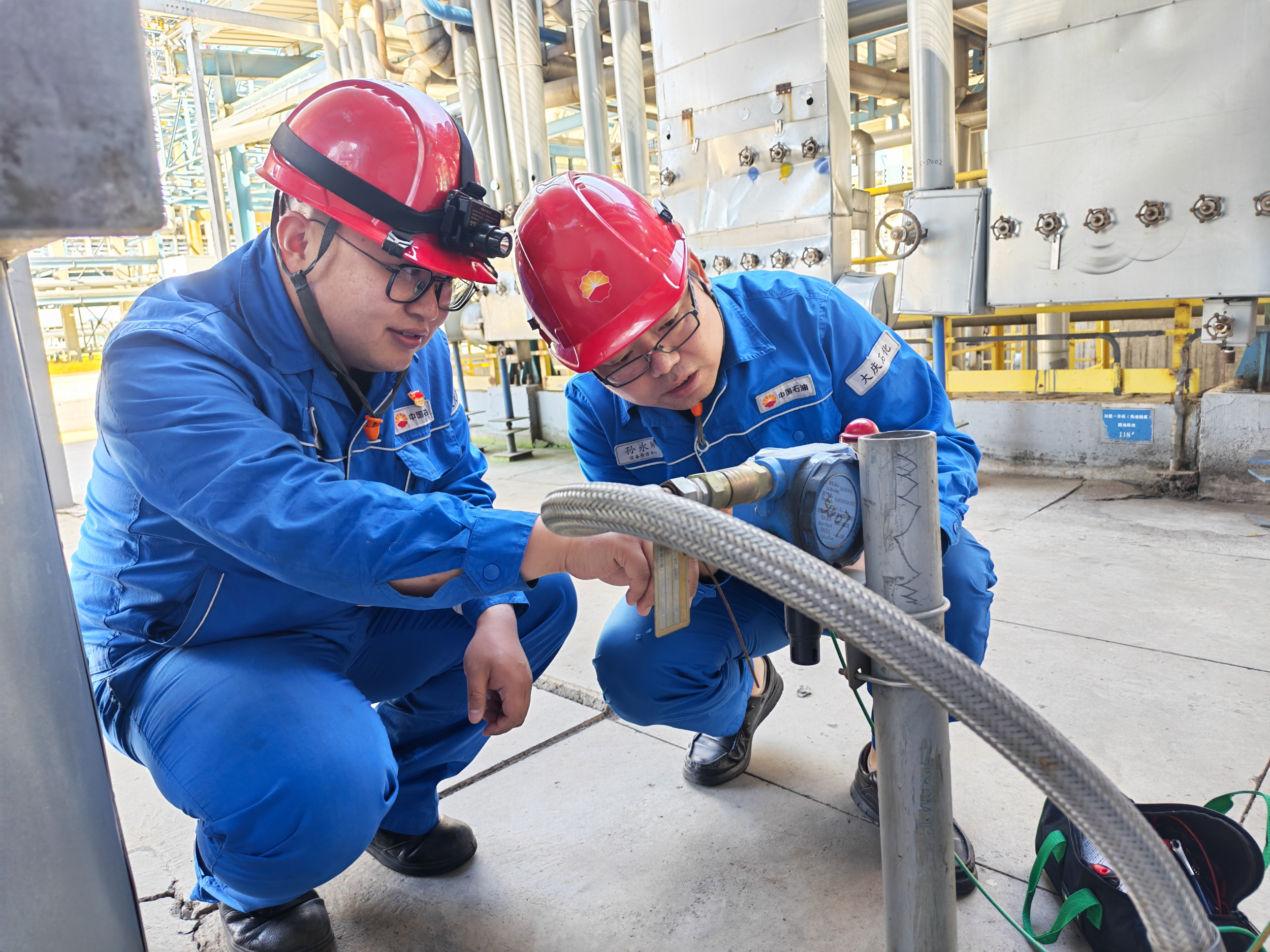
Core Insights - The comprehensive management platform for instrument operation and maintenance at Daqing Petrochemical has been fully operational for half a month, marking a significant step in the company's digital transformation of equipment management [1] - The platform integrates with the previously launched dynamic equipment operation and maintenance management platform, creating a more complete system for equipment management [1] Group 1: Platform Functionality and Impact - The platform covers 14 production operation departments, achieving unified data collection, real-time analysis, and intelligent early warning, significantly enhancing operational efficiency, system reliability, and safety management levels [1] - The platform allows for daily monitoring of equipment, improving the efficiency and accuracy of daily supervision by providing clear visibility of repair statistics and high-frequency fault rankings [4] - The platform has transitioned from a manual data collection process to a digital one, enabling a comprehensive lifecycle management of equipment [4] Group 2: Risk Management and Efficiency - The introduction of electronic work tickets has improved approval efficiency, reducing the time required for information confirmation and signature collection from at least 2 hours to a much shorter duration [5][8] - The system automatically assesses risk levels based on work content, streamlining the approval process and allowing for better focus on safety monitoring and equipment maintenance [8] Group 3: Proactive Maintenance and Data Utilization - The platform has established an intelligent health management system that shifts safety management from reactive to proactive, allowing for early intervention based on continuously updated electronic health records for each piece of equipment [9] - The proactive maintenance work has increased to over 30% since the platform's trial operation, ensuring safe and stable operation of the facilities [9] - The platform includes six major functions, while the dynamic equipment operation and maintenance management platform has ten major functions, continuously injecting intelligent power into equipment management [9]


东营:本周鸡蛋价格略涨,蔬菜价格稳中有降
Zhong Guo Fa Zhan Wang· 2025-09-19 03:30
Summary of Key Points Core Viewpoint - The overall prices of major consumer goods in Dongying City, Shandong Province, have remained stable, with a slight fluctuation in specific categories as of September 18. The average prices of 55 monitored items show 18 decreases, 30 stable, and 7 increases week-on-week, while year-on-year comparisons indicate 36 decreases, 4 stable, and 15 increases. Group 1: Grain and Oil Prices - Grain and oil prices have shown slight fluctuations, with 3 items decreasing, 7 stable, and 2 increasing week-on-week among 12 monitored products. The average price of special flour is 2.050 CNY per 500 grams, stable week-on-week and up 1.18% year-on-year. The price of japonica rice is 2.840 CNY, down 0.70% week-on-week and down 1.39% year-on-year. The price of millet is 5.100 CNY, up 3.24% week-on-week and down 3.04% year-on-year. The price of peanut oil (5L) is 148.000 CNY, down 0.67% week-on-week and down 1.99% year-on-year [2]. Group 2: Meat, Poultry, and Egg Prices - Meat prices are stable with slight declines, showing an average price of 20.357 CNY for 7 monitored meat types, with 3 decreasing, 3 stable, and 1 increasing week-on-week. The price of lean pork is 13.400 CNY, down 4.96% week-on-week and down 22.09% year-on-year. The price of pork belly is 12.400 CNY, down 1.59% week-on-week and down 26.19% year-on-year. Fresh beef is priced at 35.000 CNY, stable week-on-week and up 8.02% year-on-year. Fresh lamb is 40.600 CNY, stable week-on-week and up 1.50% year-on-year. The price of whole chicken is 8.800 CNY, up 1.15% week-on-week and down 1.12% year-on-year. Egg prices have slightly increased to an average of 4.100 CNY, up 9.04% week-on-week and down 28.07% year-on-year [3]. Group 3: Vegetable and Fruit Prices - Vegetable prices have shown a slight decline, with an average price of 3.154 CNY for 17 monitored vegetables, showing 12 decreases, 3 stable, and 2 increases week-on-week, with an average decline of 5.37%. Year-on-year, there are 15 decreases and 2 increases, with an average decline of 24.09%. Specific prices include rapeseed at 2.600 CNY, down 18.75% week-on-week, green chili at 3.020 CNY, down 16.11%, and cucumber at 3.120 CNY, down 15.68%. Cabbage and kidney bean prices are 2.200 CNY and 5.400 CNY, respectively, with week-on-week increases of 10.00% and 3.85%. Fruit prices remain stable, with an average of 3.648 CNY for 5 monitored fruits, showing 4 stable and 1 increase week-on-week, and 2 decreases and 3 increases year-on-year [4].
江西宜春:多措并举促进文旅消费
Zhong Guo Fa Zhan Wang· 2025-09-18 09:35
Core Viewpoint - The Yichun City is launching a series of initiatives to enhance cultural and tourism consumption during the Mid-Autumn Festival and National Day, aiming to create a festive atmosphere and boost tourism popularity [1][2][3] Group 1: Event Highlights - Over 100 cultural and tourism activities will be held during the holiday, including 45 cultural events and 65 tourism activities, covering various fields such as art performances, folk festivals, and family interactions [1] - Notable events include the "Global Students' Tour in Jiangxi" series, themed activities at Mingyue Mountain, a large fireworks show in Longhu Park, and various competitions and festivals across different counties [1] Group 2: Innovative Experiences - Yichun is focusing on a "Cultural Tourism +" integration approach, creating immersive tourism experiences through scene recreation, innovative business models, and technological empowerment [2] - New tourism products include water sports in scenic areas, high-altitude camping sites, and ecological tourism parks, enhancing visitor engagement and experience [2] - The "Nostalgia" themed large-scale live performance "Nostalgia Yichun" showcases the city's rich cultural heritage, becoming a new highlight in cultural tourism integration [2] Group 3: Consumer Benefits - The city has introduced three major categories of welfare measures to promote consumption, including discounts on tickets, accommodations, and dining at key attractions and restaurants [3] - A special theme activity for global students offers free or discounted entry to scenic spots through cultural interactions [3] - The "Yichun Cultural Tourism Card" has been upgraded, integrating over 120 core resources, with a total card value exceeding 33 million yuan, providing significant discounts for students [3]
9月17日青岛市重要民生商品价格监测日报告
Zhong Guo Fa Zhan Wang· 2025-09-18 08:14
Core Insights - The overall price of essential goods in Qingdao remains stable, with no significant fluctuations or shortages reported [1] Price Stability - Grain and oil prices are stable, with specific prices reported: flour (special grade) at 2.35 yuan per 500 grams, rice (first-grade long grain) at 3.24 yuan, and peanut oil (5-liter) at 133.10 yuan, all unchanged from the previous day [1] - Meat prices are also stable, with pork belly at 15.30 yuan, lean pork at 15.50 yuan, beef at 38.10 yuan, and lamb at 41.90 yuan, all remaining the same as the previous day [1] - Egg prices have seen a slight increase, with the price at 4.15 yuan, reflecting a 0.48% rise compared to the previous day [1] - Vegetable prices remain stable, with a wholesale price of 2.90 yuan, unchanged from the previous day, and an increase in transaction volume by 1.08% [1] - Seafood prices are generally stable, with average prices reported: hairtail at 14.67 yuan, mackerel at 11.17 yuan, shrimp at 35 yuan, dried kelp at 19.67 yuan, and oysters at 6.83 yuan, all consistent with the previous day [1]
济宁:9月上旬猪肉价格震荡走低,鸡蛋价格止跌回升
Zhong Guo Fa Zhan Wang· 2025-09-18 08:11
Price Trends in Jining City - The overall price trend for major commodities in Jining City shows stable yet declining prices for grain and oil, fluctuating pork prices, a rebound in egg prices, a slight increase in vegetable prices, and stable changes in agricultural production material prices [1] Pork Market Analysis - In early September, pork prices are experiencing a downward trend due to high supply levels and weak demand. The current pig inventory remains high, leading to increased selling rates among farmers to mitigate risks from low prices. Although there is a slight uptick in demand due to the return of students to school, overall market demand remains weak. Upcoming holidays may provide some support for prices, but the supply surplus is unlikely to change significantly in the short term [2] Grain and Oil Prices - Grain and oil prices are showing a stable decline. The average retail prices for wheat and corn are 1.18 yuan/kg and 1.15 yuan/kg, reflecting decreases of 0.84% and 1.71% respectively. Meanwhile, the prices for japonica rice and premium flour remain stable at 2.55 yuan/kg and 1.86 yuan/kg. For edible oils, the average retail prices for peanut oil and soybean oil are 159.47 yuan and 60.90 yuan per 5-liter container, with peanut oil prices stable and soybean oil prices down by 2.29% [3] Egg Market Dynamics - The egg market is witnessing a rebound in prices due to improved supply conditions and increased demand from schools and food processing sectors ahead of the upcoming holidays. The average retail price for eggs is 3.48 yuan/kg, reflecting a 2.05% increase. The overall consumption of eggs is expected to rise as the market enters a traditional peak season [4][5] Vegetable Price Movements - Vegetable prices in Jining City have shown a slight increase, with a composite average price of 2.94 yuan/kg, marking a 4.82% rise. Among the monitored vegetables, cucumber and green chili have seen significant price increases of 21.24% and 15.53% respectively [5] Agricultural Production Material Prices - Prices for agricultural production materials are stable with minor fluctuations. The average retail prices for ammonium bicarbonate, potassium chloride, and urea are 1.22 yuan/kg, 3.31 yuan/kg, and 1.93 yuan/kg, showing slight decreases. Prices for phosphate and compound fertilizers remain stable at 4.19 yuan/kg and 3.13 yuan/kg. Prices for agricultural films and pesticides are also stable [7]

上海打通营商环境“最后一公里”激活经济发展新动力
Zhong Guo Fa Zhan Wang· 2025-09-18 08:07
Core Viewpoint - Shanghai is enhancing the business environment at the grassroots level by focusing on street and town development, aiming to improve local economic vitality and address challenges in the business environment [1][2]. Group 1: Policy Initiatives - Shanghai has introduced "supporting street and town business environment construction" as a key task in its 8.0 action plan, emphasizing ten major breakthrough tasks [2]. - The municipal departments are actively addressing prominent issues raised by grassroots entities, including guidelines for opening heavy oil smoke restaurants and optimizing outdoor signage [2][3]. - The city aims to establish a mechanism for regular communication with street and town officials to ensure timely feedback on business environment challenges [3]. Group 2: Implementation and Achievements - Street and town administrations have been proactive in creating innovative practices, with over one-third of the top 30 innovative cases in optimizing the business environment in Shanghai being related to street and town initiatives [2]. - The "three-in-one" service model has been implemented in various districts, providing comprehensive support during the preparation, construction, and operation phases for businesses [4][7]. - The establishment of the first town-level enterprise service center in Xu Jing Town has introduced a "321" service system, integrating various business and community services [7]. Group 3: Community Engagement and Support - Local governments are fostering a supportive environment for small and micro enterprises through initiatives like the "Yiqi Xing" brand, which covers over 2,008 enterprises [5]. - The "street whistle, department response" mechanism has been adopted to ensure efficient coordination among various departments for project support and service optimization [6][7]. - The focus on enhancing the "smoky atmosphere" while maintaining order in commercial areas has been highlighted as a successful governance experience [4].

中国披萨市场快速扩容,必胜客强化“披萨专家”地位
Zhong Guo Fa Zhan Wang· 2025-09-18 03:36
Market Overview - The Chinese pizza market is projected to reach 48 billion yuan in 2024 and exceed 77.1 billion yuan by 2027, with a compound annual growth rate of 15.5% from 2022 to 2027 [1][3] - The demand for pizza among Chinese consumers is shifting from novelty to a focus on quality and health [1][3] Consumer Trends - Consumers are seeking a comprehensive experience that includes taste, sensory appeal, and emotional connection, with 43.9% desiring customizable ingredients and 36% valuing the rarity of ingredients [4][11] - The "one-person meal" trend is emerging, with 47% of consumers particularly interested in small-sized or individual pizzas, especially among younger generations [11][14] Company Innovations - Pizza Hut has been a pioneer in the Chinese pizza industry for 35 years, adapting its menu to local tastes and introducing innovative products such as the new 10-inch handmade thin crust pizza [1][6] - The company has embraced digital transformation, implementing AI systems across all stores to enhance safety, efficiency, and quality management [10] Supply Chain and Operational Efficiency - Pizza Hut is addressing traditional supply chain challenges by promoting traceability from farm to table, ensuring quality and safety through standardized processes [10] - The company is enhancing its operational efficiency through a multi-channel sales network that integrates online and offline experiences [8][10] Brand Positioning - Over the years, Pizza Hut has evolved from being a "pizza expert" to a lifestyle leader, reflecting changes in consumer behavior and preferences [11][14] - The brand has engaged with popular culture by collaborating with various IPs, creating a trendy dining experience that resonates with younger consumers [13][14]

黑河市爱辉区:“寒地小龙虾”为乡村振兴注入新动能
Zhong Guo Fa Zhan Wang· 2025-09-18 00:35
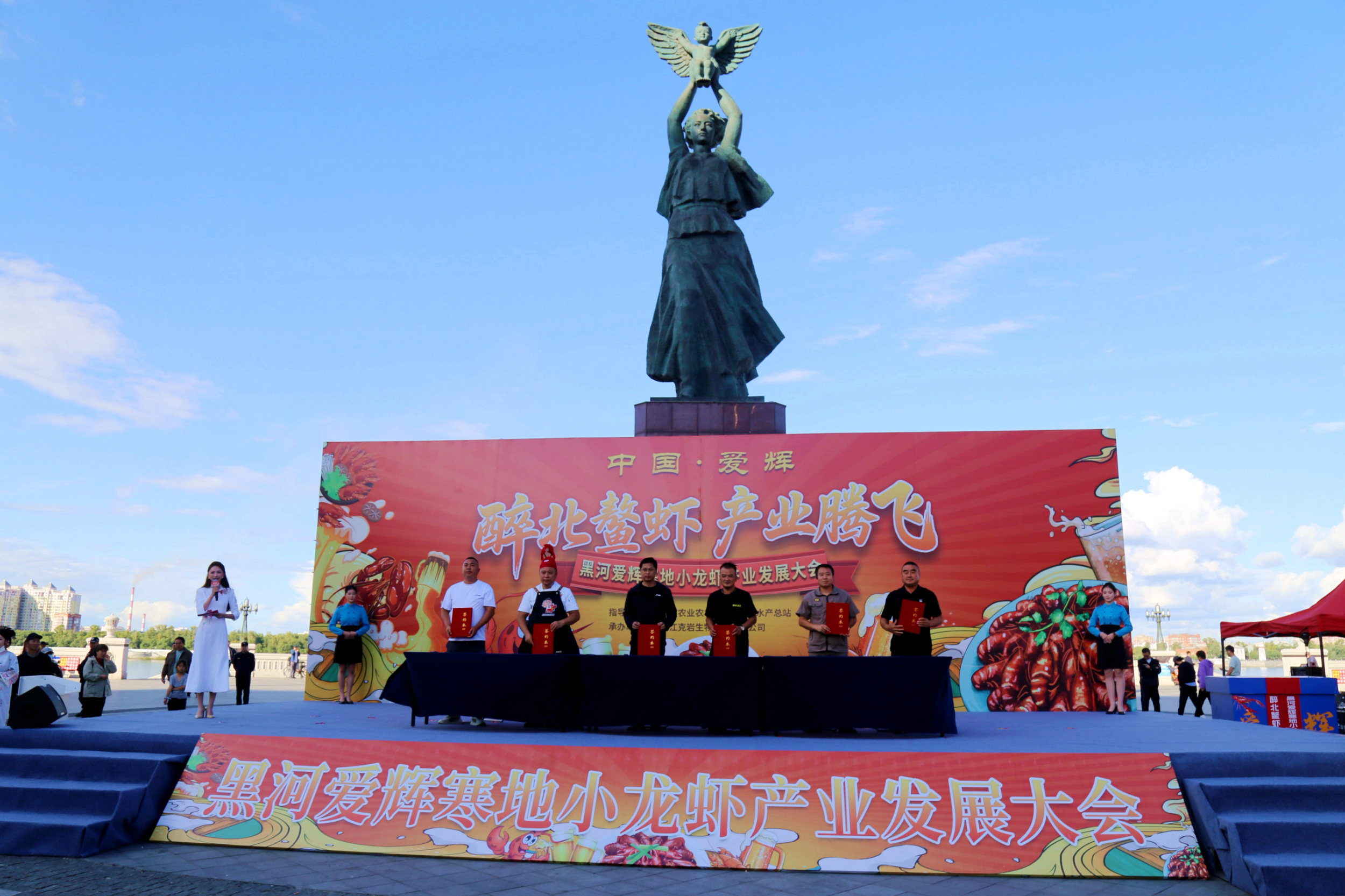
Group 1 - The first Cold Water Crayfish Industry Development Conference in Heihe City, Aihui District, was held to promote regional aquaculture development and rural revitalization [1][3] - The "Drunken North Crayfish" regional public brand was officially launched, marking a new phase in the branding of the crayfish industry in Aihui District [3] - New cold-resistant and fast-growing crayfish seed varieties were introduced, along with practical technologies such as "cold greenhouse wintering technology" and "ecological mixed farming model" [3][6] Group 2 - Significant cooperation agreements were signed, including customized agricultural orders and seed purchase agreements, accelerating the transformation of the industry towards scale and standardization [3][6] - The crayfish industry in Aihui District has grown from non-existence to a significant scale, with seed production capacity exceeding 10 million tails and farming area nearing 400 acres, with a total output value approaching 5 million yuan [6] - Plans are in place to expand the farming area to over 2,000 acres by 2026, further increasing farmers' income and establishing the crayfish industry as a key pillar for economic development in the region [6]