
Zhong Guo Neng Yuan Wang

Search documents
三一集团等在广东成立智能技术公司,注册资本5000万
Zhong Guo Neng Yuan Wang· 2026-01-12 07:35
天眼查工商信息显示,近日,广东华胥智能技术有限公司成立,法定代表人为陈立军,注册资本5000万 人民币,经营范围含计算机系统服务、信息系统运行维护服务、人工智能行业应用系统集成服务、信息 系统集成服务、工程和技术研究和试验发展等。股东信息显示,该公司由三一集团旗下广东华胥私募基 金管理有限公司、YUNG ROBERT分别持股95%、5%。 ...
光耀冰雪盛会 电暖赤峰寒冬
Zhong Guo Neng Yuan Wang· 2026-01-12 07:23
国网赤峰供电公司护航冰雪那达慕赋能地区发展 1月10日上午11时,赤峰市松山区昭乌达桥下呈现出一片欢乐沸腾的冰雪奇幻世界。在《周末上哪疯一站到赤峰》的轻快旋律中,为期多日的"歌游内蒙古 冰雪赤峰行"赤峰冰雪那达慕正式拉开帷幕。巨型红山雪雕巍然矗立,英金河冰道蜿蜒生辉,驯鹿爬犁与雪地摩托穿梭巡游,空气中弥漫着奶茶与烤肉的 暖香,非遗匠人的巧手上下翻飞……这场融合了古老红山文化、激情那达慕精神与现代文旅创意的冰雪盛宴,不仅点燃了市民游客的冬日热情,更澎湃着 赤峰冰雪经济发展的强劲动能。而在这场光彩夺目、活力四射的盛会背后,一抹"电暖红"始终无声坚守,以稳定可靠的电力供应,筑牢了冰雪欢歌的动能 保障。 闻令而动,精密部署织就安全网 当赤峰决心以冰雪为媒,擘画"全国首创雪雕实景演艺IP"的蓝图时,可靠电力保障便是将瑰丽想象落地为现实的重要基石。在接到文体局的正式保电函件 后,国网赤峰供电公司闻令即动,将此次保电任务提升至服务地方经济社会发展大局的高度予以部署。 国网赤峰供电公司迅速成立专项保电工作组,聚焦活动核心区域——主舞台"玉龙雪韵"大型实景展演区、八大特色功能区及遍布场地的灯光、音响、造 雪、取暖设备,深入分析 ...


国网盐城供电公司党委:“第一议题”铸魂 实干笃定前行
Zhong Guo Neng Yuan Wang· 2026-01-12 07:15
以"第一议题"固本,在管党治党中实干强基。公司党委坚持将"第一议题"作为管党治党的重要抓手,持 续宣讲党的二十届四中全会精神,加快推进高质量党建工程,擦亮"苏电铁军·盐供先锋"党建品牌。通 过深化国网巡视、三新供服巡察成果运用,将严的主基调贯穿经营管理全过程,推动"党建+业务"深度 融合,强化基层党组织战斗堡垒作用,凝聚干部职工干事创业合力。唯有以实干抓实党建,才能为公司 发展提供坚强政治保障与组织保障,推动经营管理提质升级,为各项工作落地见效筑牢根基。 由此,我们要认真学习国网盐城公司党委的做法和经验,持续深化"第一议题"制度,以学促干、以干践 学,在实干中笃定前行,以"第一议题"凝心铸魂,用实干担当破解发展难题,契合能源行业绿色转型的 时代趋势,只有这样,才能在能源转型浪潮中勇立潮头,才能为地方经济社会发展注入强劲电力动能, 进而以实际行动践行国企担当与时代使命。 "第一议题"是凝心铸魂的"定盘星",实干担当是破局发展的"压舱石"。最近,国网盐城供电公司党委召 开第32次党委会,以"第一议题"系统学习习近平总书记近期重要讲话精神,将思想共识转化为实干行 动,锚定绿色转型、民生服务、管党治党三大方向笃定前行 ...
数亿国资助力!安行能源联袂凤阳经投、淮开科技共筑二轮充电安全新基座
Zhong Guo Neng Yuan Wang· 2026-01-12 03:40
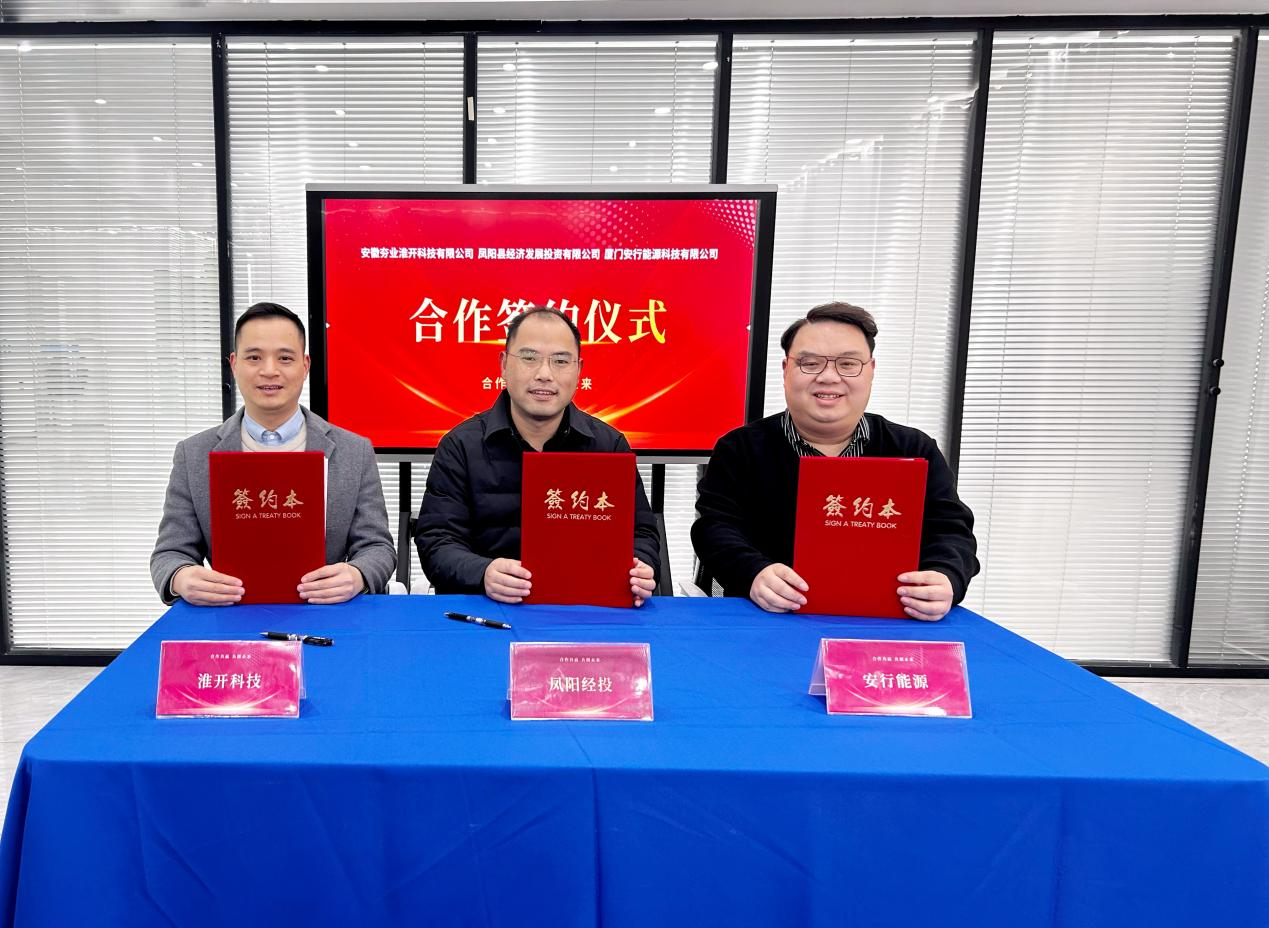
近日,厦门安行能源科技有限公司(简称"安行能源")与凤阳县经济发展投资有限公司(简称"凤阳经投")、安徽夯业淮开科技有限公司(简称"淮开科技")在安徽凤阳成功举行战略合作签约仪式,正式启 动"新能源无人机光储充检消产业园装备制造项目"。 凤阳经投总经理陈凯、淮开科技及安行能源董事长邹永辉、安行能源创始人兼CEO张灿华作为三方代表共同签署协议。合肥科大立安总经理吴军、凤阳经投副总经理赵燕、投资部经理蒋若楠、江西国电投浙 赣综合智慧能源相关负责人赵桂亮、安行能源投资代表陈理明等嘉宾出席仪式,共同见证了二轮充电行业协同发展的新里程碑。 在 "双碳" 战略与民生需求双重驱动下,我国电动两轮车保有量已突破 4.25 亿辆,但充电安全事故频发、能源利用效率偏低等问题成为突出民生痛点。安行能源深耕赛道多年,构建 "光伏 + 储能 + 充电 + 电池 检测 + 消防" 五位一体技术闭环,形成 "能源 + 安全" 双轮驱动的智慧服务生态,精准破解行业核心难题。此次三方合作打造的协同模式,有效打通投资、制造、运营环节的壁垒,实现 "1+1+1>3" 的系统聚合 效应,既保障资产安全与技术可靠性,又显著提升运营效率,为行业提供了可 ...
库迪咖啡在苏州成立新公司,注册资本1.6亿美元
Zhong Guo Neng Yuan Wang· 2026-01-12 03:11
Group 1 - Kudi Coffee (Suzhou) Co., Ltd. has been established with a registered capital of 160 million USD [1] - The legal representative of the company is Qian Zhiya [1] - The business scope includes catering services, food sales, road cargo transportation, urban distribution services, supply chain management services, brand management, and internet sales [1] Group 2 - Kudi Coffee (Suzhou) Co., Ltd. is wholly owned by Kudi Coffee (China) Co., Ltd. [1]
供给约束再起,重视煤炭景气回暖与价值重估 | 投研报告
Zhong Guo Neng Yuan Wang· 2026-01-12 02:53
Core Viewpoint - The coal industry is entering a new upward cycle, with fundamental and policy factors aligning, making it an opportune time to invest in coal stocks [5] Price Trends - As of January 10, the market price for Qinhuangdao port thermal coal (Q5500) is 696 RMB/ton, an increase of 17 RMB/ton week-on-week [2] - The price for Shanxi-produced coking coal at Jingtang port remains stable at 1650 RMB/ton as of January 9 [3] - International thermal coal prices show mixed trends, with Newcastle NEWC5500 at 71.8 USD/ton (up 0.3 USD) and ARA6000 at 95.3 USD/ton (down 1.8 USD) [2] Supply and Demand Dynamics - The utilization rate for thermal coal mines is 90.3%, up 8.2 percentage points week-on-week, while coking coal mine utilization is at 85.34%, up 5.7 percentage points [3] - Coastal provinces show an increase in daily coal consumption by 29.90 thousand tons/day (+15.11%), while inland provinces see a decrease of 7.40 thousand tons/day (-1.81%) [4][5] - Chemical coal consumption has increased by 8.36 thousand tons/day (+1.13%) [4] Inventory Levels - As of January 8, coal inventory in coastal provinces decreased by 111.60 million tons (-3.17%), while inland provinces saw a larger drop of 409.00 million tons (-4.15%) [4] Investment Strategy - The coal sector is characterized by high performance, cash flow, and dividends, with a recommendation to invest in quality coal companies [7] - Companies such as China Shenhua, Shaanxi Coal, and others are highlighted for their stable operations and strong performance [7] - The coal market is expected to remain tight in the next 3-5 years, with a focus on the potential for price increases and valuation recovery [6][7]



2026年能源经济预测与展望研究报告在京发布
Zhong Guo Neng Yuan Wang· 2026-01-11 12:33
Core Viewpoint - The "2026 Energy Economic Forecast and Outlook Research Report" was released, highlighting the development trends and challenges in China's energy sector during the 14th Five-Year Plan period and beyond [1][2]. Group 1: Energy Development Outlook - The report on China's energy development during the 14th Five-Year Plan indicates that a sustainable internal driving force for the new energy system has been established, with traditional fossil energy consumption expected to enter a historical downward trend [2]. - The development of new energy is seen as a key pathway for macroeconomic counter-cyclical and cross-cyclical regulation, contributing significantly to both qualitative and quantitative economic growth [2]. Group 2: Energy Economic Situation - The 2026 China Energy Economic Index report suggests that the macroeconomic situation in 2025 improved steadily with the support of the energy economy, and the hydrogen energy sector is expected to maintain strong momentum alongside batteries and photovoltaics in 2026 [3]. - The report emphasizes the need for the energy sector to enhance quality and efficiency through "anti-involution" policies, supported by traditional energy sources [3]. Group 3: Global Energy Transition - The global energy transition index report indicates that by 2024, the overall energy transition is expected to surpass 2015 levels, although the polarization of energy trade networks has increased system vulnerability [3]. - China ranks 13th globally in energy transition, with potential for improvement in sustainability dimensions [3]. Group 4: Oil Market Analysis - The international oil price analysis predicts that in 2026, the fundamental support for oil prices will weaken, leading to a more relaxed overall market structure, with Brent and WTI crude oil prices expected to average between $53-63 and $49-59 per barrel, respectively [3]. Group 5: Carbon Market Insights - The carbon market report highlights significant growth in the national carbon market in 2025, with an expanded coverage scale and enhanced policy influence and market expectations [4]. - Future efforts are needed to boost market trading vitality and align with global carbon pricing mechanisms and cross-border emission reduction rules [4]. Group 6: Low-Carbon Computing Services - The low-carbon computing services report indicates that China's computing industry is entering a critical transformation phase focused on green, low-carbon, and efficient services [4]. - The report calls for the establishment of a low-carbon computing service system that integrates various market types and enhances sustainability [4].
2.31元 / 立方米!国内管道天然气现货价首秀,市场化改革迈出关键步
Zhong Guo Neng Yuan Wang· 2026-01-11 03:42
Core Viewpoint - The launch of the online trading-based pipeline natural gas spot price by the Shanghai Petroleum and Natural Gas Exchange marks a significant shift in China's natural gas pricing mechanism from government-led to market-driven pricing [1][2]. Group 1: Price Formation Mechanism - The initial spot price was set at 2.47 yuan per cubic meter, reflecting the current balance of supply and demand in the domestic natural gas market [2]. - The spot price is calculated through a weighted average of actual transaction prices on the trading platform, providing a transparent and market-based pricing mechanism [2][3]. - This new pricing mechanism allows all market participants to influence price signals through their trading behavior, making the spot price a more accurate reflection of market supply and demand [2]. Group 2: Resource Allocation Optimization - The spot price serves as a reference for different users, aiding in the assessment of market trends and the formulation of procurement and inventory plans [3]. - Upstream producers and importers can now use the spot price as a pricing benchmark, allowing for more reasonable sales strategies and better resource allocation [3]. - For downstream gas companies and industrial users, the spot price is a tool for controlling procurement costs and optimizing gas source structures [3]. Group 3: Market Dynamics and Supply Security - The concept of supply security is shifting from relying on government support to seeking solutions through market mechanisms, as downstream enterprises increasingly turn to trading centers for supply [4]. - Despite ongoing market reforms, discrepancies still exist between domestic and international natural gas prices, indicating a need for further market integration [5]. - Future improvements to the spot price system will focus on expanding trading volumes, increasing market participation, and enhancing data transparency and credibility [5].
新型电力系统建设需强化“人物协同”
Zhong Guo Neng Yuan Wang· 2026-01-11 03:37
Core Viewpoint - The integration of "investment in material" and "investment in people" is emphasized as a strategic direction for China's economic development, reflecting a shift in focus towards human capital alongside infrastructure investment [1][2]. Group 1: Investment in People - Investment in people is defined as enhancing capabilities and potential across the entire population and lifecycle, addressing changes in international development, traditional economic dynamics, demographic shifts, and new productivity demands [2]. - The new electric power system serves as a platform for human capital development, creating demand for skilled professionals in high-altitude transmission technology, new energy consumption, and smart operation [3][4]. - The digital infrastructure, such as digital twin grids and IoT in power, provides training platforms for digital talent, facilitating the upgrade of skills towards intelligent and digital capabilities [3]. Group 2: Investment in Material - The new electric power system is identified as a core carrier for material investment, establishing a solid hardware foundation for human capital development [3]. - Major infrastructure projects, including ultra-high voltage transmission and smart grid facilities, are crucial for energy security and provide practical scenarios for human capital investment [3][4]. - Investment in material is linked to the operational efficiency of the electric power system, where technological upgrades and equipment improvements drive the need for skilled labor [7]. Group 3: Synergy Between Investment in People and Material - The new electric power system exemplifies the synergy between material and human investment, enhancing energy security and improving service quality through simultaneous upgrades in infrastructure and workforce capabilities [5][6]. - The integration of talent development into project planning and execution ensures that personnel grow alongside project demands, fostering a skilled workforce that meets industry needs [6]. - Collaborative efforts across the industry chain enhance the quality of talent and technology, promoting a virtuous cycle of development that benefits the entire ecosystem [6][8]. Group 4: Technological and Service Enhancements - Upgrading technology and service capabilities are essential for improving operational efficiency and service quality in the electric power sector [7][8]. - Investment in smart devices and digital platforms must be accompanied by comprehensive training programs to align employee skills with technological advancements [7]. - The focus on service quality and operational excellence is critical for meeting the evolving demands of consumers and businesses, ensuring that infrastructure investments yield tangible benefits [8].
光伏 “换赛道”?BC 技术破解遮挡 / 热斑痛点,集中式市场年增10%
Zhong Guo Neng Yuan Wang· 2026-01-11 03:35
Core Viewpoint - The BC (Back Contact) technology is emerging as a mainstream solution in the photovoltaic industry, shifting from a technical benchmark to a core engine for growth, addressing the industry's challenges and redefining its development logic [1] Group 1: Technology and Performance - BC technology enhances solar cell efficiency by placing both positive and negative electrodes on the back, increasing light absorption and conversion efficiency, with laboratory results showing a conversion rate of 27.55%, outperforming other technologies by over 1.2% [2] - The technology has resolved industry pain points such as shading, hot spots, and anti-cracking, with Aiko's BC modules achieving A+ certification for shading resistance and significantly lower surface temperatures in high-temperature and shaded environments [2] - BC technology opens up new application scenarios, increasing customer acquisition success rates from 30% to 60% in previously challenging environments, thus reducing costs and potential fire risks [3] Group 2: Market Applications and Growth - Aiko has successfully introduced BC technology across various applications, including residential, commercial, and utility-scale projects, with products designed for specific conditions such as mountainous terrains and extreme environments [3][4] - The market share for BC technology in utility-scale applications is expected to grow by 10% annually in the coming years, emphasizing the importance of creating diverse application scenarios for competitive advantage [5] Group 3: Industry Collaboration and Ecosystem - BC technology fosters a new collaborative ecosystem in the photovoltaic industry, moving beyond traditional supply chain relationships to a model of open innovation and shared growth among companies [7][9] - Companies like Aiko are not only achieving breakthroughs in technology and market but also acting as integrators and organizers within this new ecosystem, enhancing overall industry competitiveness [7] Group 4: Value Creation and Market Dynamics - The introduction of BC technology shifts the focus from price competition to value creation, redefining the value dimensions of photovoltaic products and enabling companies to provide tailored solutions for different customer needs [10][12] - Aiko's ABC modules have maintained the highest production efficiency globally for 34 consecutive months, achieving a production efficiency of 25%, and are gaining market share in high-value regions such as Europe and Australia [13]
