
Huan Qiu Wang Zi Xun

Search documents
地球矿物家族添新成员!我国发现的新矿物正式命名为金秀矿
Huan Qiu Wang Zi Xun· 2025-12-17 23:49
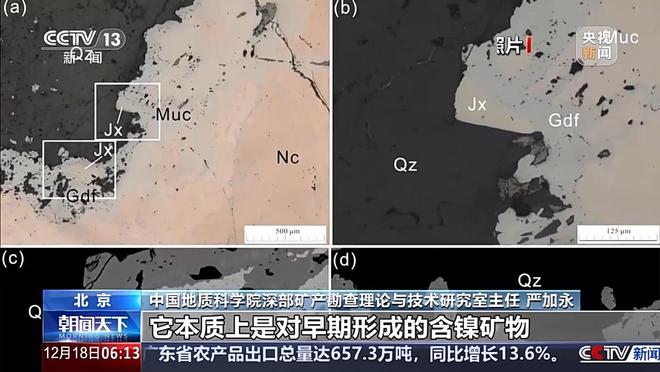
Core Viewpoint - The discovery of a new mineral named "Jinxiuite" (金秀矿) by researchers from the Chinese Academy of Geological Sciences represents a significant advancement in geological research and adds a new member to the mineral family, with implications for material science and resource extraction [1][8][10]. Group 1: Mineral Discovery - The new mineral Jinxiuite, composed of nickel, bismuth, antimony, arsenic, and sulfur, was discovered in the Longhua nickel-cobalt deposit in Jinxiu Yao Autonomous County, Guangxi, China [1][3]. - The Longhua nickel-cobalt deposit is rich in nickel and cobalt, with concentrations of approximately 17.5% nickel and 1.5% cobalt, significantly higher than conventional standards [1][5]. Group 2: Implications for Resource Utilization - The discovery of Jinxiuite is crucial for understanding the genesis of hydrothermal nickel-cobalt deposits and may guide future exploration efforts [5]. - The mineral contains valuable metals such as nickel, cobalt, and bismuth, prompting further research into the extraction feasibility and economic benefits of these resources [7]. Group 3: Scientific Significance - The identification of new minerals enhances the understanding of Earth's geological history and can reveal the evolution of elements under extreme geological conditions [10][12]. - Jinxiuite serves as a natural sensor for probing deep Earth processes, providing valuable data for understanding the planet's past, present, and future [12]. Group 4: Discovery Process - The process of discovering and obtaining approval for a new mineral involves extensive sampling, data analysis, and comparison with previously identified minerals, culminating in a proposal submitted to the International Mineralogical Association [18][20]. - The naming of the mineral, in this case, Jinxiuite, is based on its geographic origin, reflecting the location of its discovery [20].

环球圆桌对话:“夹缝求生”的欧洲科技正在复苏吗
Huan Qiu Wang Zi Xun· 2025-12-17 23:32
Group 1: European Tech Recovery - The optimistic assessment of "European tech is recovering" contrasts sharply with the narrative of "Europe's tech dilemma" [1] - By 2025, Europe is expected to add 28 new unicorns, doubling the total to 413, covering sectors like defense, biomedicine, and AI [1][2] - France has produced its first "decacorn," a tech startup valued over $10 billion, highlighting significant progress in the innovation ecosystem [1] Group 2: Investment and Innovation Trends - The EU's focus on innovation has been evident, with R&D spending as a percentage of GDP rising from 1.81% in 2000 to approximately 2.24% in 2024 [3] - In 2024, venture capital investment in European defense and security tech is projected to reach $5.2 billion, indicating a growing emphasis on these sectors [3] - By 2025, 36% of venture capital in Europe is expected to flow into disruptive innovation areas like quantum computing and cybersecurity, up from 19% in 2021 [10] Group 3: Challenges and Barriers - Despite the positive trends, Europe faces significant barriers such as language and regulatory differences that hinder startup growth and funding [5][6] - Approximately €300 billion in savings capital flows from Europe to the U.S. annually, indicating a brain drain and financial loss for the region [6] - The EU's R&D spending as a percentage of GDP remains significantly lower than that of the U.S. and China, raising concerns about future competitiveness [14] Group 4: Future Prospects and Strategies - The EU is actively pursuing strategies in AI, semiconductors, and green industries, with a focus on policy frameworks to support innovation [4] - Initiatives like the "Choose Europe Research" project aim to attract talent, especially from researchers affected by funding cuts in the U.S. [13] - The EU plans to introduce a "28th Regime" by 2026 to unify regulations across member states, facilitating easier startup operations [14]
台积电日本熊本厂深陷亏损泥潭
Huan Qiu Wang Zi Xun· 2025-12-17 23:26
Core Viewpoint - TSMC's performance in 2025 is projected to reach NT$3.7 trillion, driven by strong demand for AI, but concerns arise over the ongoing losses at its Kumamoto plant in Japan due to low capacity utilization and market challenges [1][2] Group 1: TSMC's Financial Outlook - TSMC's projected revenue for 2025 is NT$3.7 trillion, reflecting optimism in the AI sector [1] - The company has faced significant losses at its Kumamoto plant, which has raised concerns among stakeholders [1][2] Group 2: Challenges at Kumamoto Plant - The Kumamoto plant's capacity utilization is reportedly low, with ongoing losses attributed to reduced demand for automotive chips from Japanese manufacturers [2] - The plant's 28nm process is particularly affected, leading to a capacity utilization rate of approximately 50% [3] - TSMC is considering changing the planned production from 6nm to 2nm at the Kumamoto plant to address the ongoing losses, which would significantly increase investment costs from over US$10 billion to over US$25 billion [3] Group 3: Market Dynamics - The rise of mature process technology in mainland China has impacted TSMC's mature process capacity utilization, with reports indicating that the advanced 6nm process in Taiwan has also seen a decline to 60-70% utilization [2] - The Japanese automotive market's sluggish recovery has further exacerbated the challenges faced by TSMC's Kumamoto plant [3] Group 4: Government and Investment Considerations - The success of the 2nm process at the Kumamoto plant hinges on whether the Japanese government will provide additional subsidies [3] - TSMC's financial performance in the U.S. has also been under scrutiny, with significant losses reported at its Arizona facility since its establishment [3]

帮助高位截瘫患者稳定操控智能轮椅与机器狗 我国侵入式脑机接口技术迎来新突破
Huan Qiu Wang Zi Xun· 2025-12-17 12:39
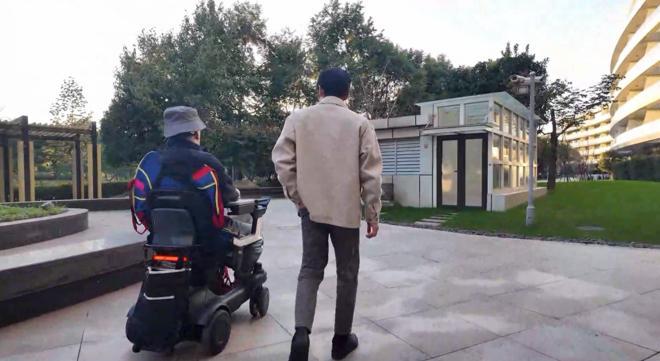
Core Insights - The article highlights the successful completion of China's second invasive brain-computer interface (BCI) clinical trial, enabling a high-level paraplegic patient to control a smart wheelchair and robotic dog using brain signals [1][2][5]. Group 1: Clinical Trial Achievements - The patient, who suffered from cervical spinal cord injury leading to high-level paraplegia, was able to control devices in real-life scenarios after undergoing training with the BCI system [2][5]. - The research team achieved significant advancements in technology, including a 15%-20% overall improvement in brain control performance through innovative data compression techniques [5][6]. - The trial demonstrated a shift from controlling electronic devices to managing physical objects, marking a significant step in the integration of BCI technology into daily life [7]. Group 2: Technological Innovations - The team developed a hybrid decoding model that efficiently extracts relevant information from noisy neural signals, enhancing the robustness of the system [6]. - An "online recalibration technology" was introduced, allowing the system to adjust parameters in real-time during use, improving user experience [6]. - The end-to-end latency of the BCI system was reduced to under 100 milliseconds, providing a seamless control experience for the patient [6]. Group 3: Future Developments - The research team is preparing for the first clinical trial of the upgraded BCI system (WRS02), which features an increase in channel count to 256 [8]. - The team is also focusing on the social integration of patients by involving them in online data annotation tasks, transforming them from recipients of care to contributors to society [9][11]. - Future goals include scaling applications for motor and speech function restoration within three years and achieving breakthroughs in sensory restoration and mental health conditions within five years [11][12].
取得多项独有重大成果!性能远超国际同类设备
Huan Qiu Wang Zi Xun· 2025-12-17 10:42
来源:科技日报 遥远、暗弱又转瞬即逝的 宇宙X射线 是人类探秘宇宙的重要线索 我国科学家为"天关"卫星量身定制的 微孔龙虾眼X射线聚焦成像技术 不仅让卫星具备极大的视场—— 一次定点观测即可覆盖 约十一分之一天区 还大幅提升了卫星的 探测灵敏度和定位精度 让其性能远超国际同类设备 龙虾的眼睛拥有广阔的视野 和独特的聚焦机制 想让"天关"卫星拥有"龙虾眼" 关键是要造出结构类似于 龙虾眼睛的聚焦镜头 而镜头的核心则是镜片 科研团队通过自主研发 历时近5年 "龙虾眼"望远镜的镜头 2021年 团队研制出 天文级CMOS探测器首批样品 随后又攻克了 卫星平台与地面快速通信难题 并采用三维空间桁架+支架的 全新结构 将镜片分辨率从十几角分 逐步提升至3角分 最终成功研制出 和地面望远镜跟进观测 采写:科技日报记者 陆成宽 一举解决14台望远镜的 布局与视场拼接难题 在有限空间内实现最优布局 从而实现最大观测效能 如今 经过一年多的运行 "天关"卫星取得了多项独有重大成果 已探测到160多例暂现天体 并引导全球各大空间 ...
想象一下:你坐在办公室,你的车自己出去跑网约车赚钱
Huan Qiu Wang Zi Xun· 2025-12-17 10:23
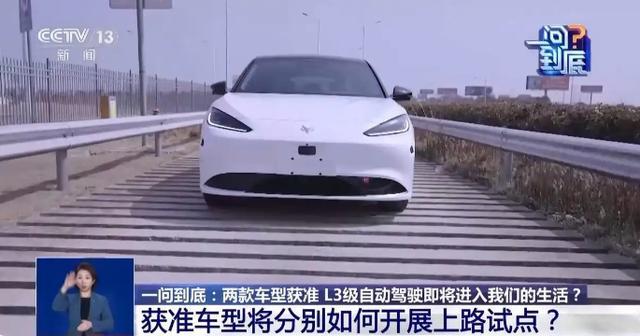
Core Viewpoint - The approval of L3 level conditional autonomous vehicles in China marks a significant step towards the commercialization of advanced driving technologies, indicating that the automotive industry is undergoing a profound transformation driven by intelligence [2][5]. Group 1: Approval and Testing of L3 Autonomous Vehicles - The Ministry of Industry and Information Technology has approved two models of L3 level autonomous vehicles for market entry, representing the first batch of such vehicles to receive road permits in China [2]. - Beijing and Guangzhou have also issued road testing licenses for L3 level autonomous vehicles, initiating regular testing on urban expressways [4]. Group 2: Understanding L3 Level Autonomous Driving - L3 level autonomous driving allows vehicles to operate independently under specific conditions, contrasting with L2 and below, where human drivers must maintain control [5][6]. - The approved L3 vehicles can operate on designated roads, with speed limits of 50 km/h in Chongqing and 80 km/h in Beijing, but they still require driver intervention in complex situations [5][6]. Group 3: Technological Requirements for L3 Level - Achieving L3 level requires significant redesign of vehicle systems, including braking, steering, and perception capabilities, which are essential for safe autonomous operation [7]. - The L3 level vehicles are equipped with multiple sensors, including LiDAR and cameras, to enhance environmental perception and decision-making capabilities [7]. Group 4: Future of Higher-Level Autonomous Driving - L4 level autonomous driving is already being tested in specific areas, with plans for broader implementation by 2025, although these vehicles still require oversight from safety personnel [8][9]. - The global landscape for autonomous driving is evolving, with approximately 50 countries allowing testing or operation of autonomous vehicles, indicating a dual-track development approach [8]. Group 5: Vision for L5 Level Autonomous Driving - L5 level autonomous driving aims for full autonomy in all driving conditions, potentially allowing vehicles to operate as independent income-generating entities, such as running ride-sharing services [10]. - Industry experts predict that by 2030, smart assisted driving will be widely adopted, paving the way for large-scale market entry of autonomous vehicles [10].
华为云城市峰会在乌兰察布举行 共绘“草原云谷”迈向“Token之都”新蓝图
Huan Qiu Wang Zi Xun· 2025-12-17 09:18
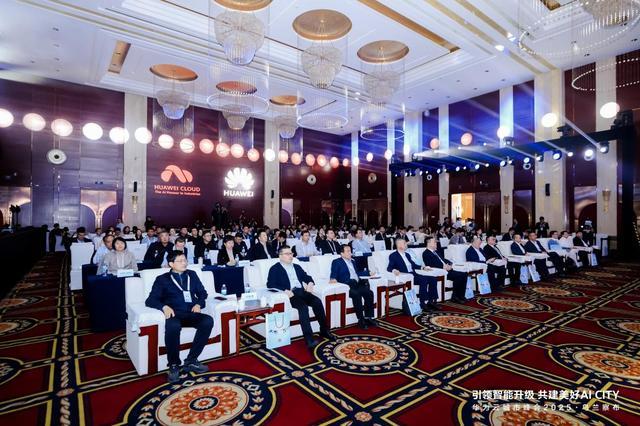
Core Viewpoint - The Huawei Cloud City Summit 2025, held in Ulanqab, Inner Mongolia, focuses on the transformation of cities driven by artificial intelligence, emphasizing the shift from "data-driven" to "Token-driven" development [1][3]. Group 1: AI City Development - Ulanqab is positioned as a key growth area for digital economy development in Inner Mongolia, with a focus on building a new foundation for "AI CITY" and enhancing digital governance capabilities [3]. - The summit aims to foster collaboration among government, enterprises, research institutions, and ecological partners to promote intelligent urban transformation and high-quality digital economic development [3][8]. Group 2: Infrastructure and Investment - Ulanqab has signed contracts with 53 companies to establish 67 data centers, with a total investment exceeding 260 billion yuan, and a computing power scale of over 120,000 P, with over 90% being intelligent computing [9]. - The city is leveraging strategic opportunities such as "East Data West Computing" and "Beijing-Mongolia Cooperation" to develop its computing power industry as a top priority in the digital economy [9][11]. Group 3: Huawei's Role - Huawei Cloud emphasizes the need for AI Token services that address real business problems, committing to increase investments in AI and computing power to support Ulanqab in building a secure and efficient AI CITY foundation [12]. - The collaboration between Huawei and Ulanqab has deepened over the years, focusing on various initiatives from digital governance to AI cloud services and smart industry education [12]. Group 4: AI Applications and Initiatives - The summit showcased multiple industry applications of AI, including an industrial internet platform aimed at enhancing regional intelligent capabilities and environmental governance solutions utilizing AI for pollution control [13][14]. - Ulanqab and Huawei Cloud signed a comprehensive cooperation agreement and launched the "Inner Mongolia AI Pioneer Plan," targeting key areas such as smart manufacturing and digital governance to accelerate the large-scale implementation of AI technology [15].
灵光上线6天突破200万下载:全民手搓“闪应用”为AI普惠按下“加速键”
Huan Qiu Wang Zi Xun· 2025-12-17 08:06
Core Insights - The article highlights the innovative features of the "Lingguang" application, which allows users to create practical daily applications using natural language without programming knowledge, marking a significant integration of AI technology into everyday life [3][4][10]. Group 1: Application Popularity and Growth - "Lingguang," launched by Ant Group, achieved over 2 million downloads within just six days, with the first million reached in four days and the second million in only two days, showcasing unprecedented growth in AI application downloads [3][4]. - The application ranks 6th in the overall free apps category and 1st in the free tools category on the App Store in China, indicating its phenomenon-level status [3]. Group 2: User Engagement and Creativity - The "Lingguang Flash Application" feature allows users to generate interactive, editable, and shareable applications in 30 seconds to 1 minute, leading to a viral trend across various social platforms [4][8]. - Users from diverse backgrounds, including celebrities and ordinary individuals, are actively creating applications, demonstrating the widespread appeal and accessibility of AI technology [4][6]. Group 3: Impact on Daily Life - The application has inspired a variety of practical uses, such as health management, language learning, and productivity tools, reflecting its integration into everyday activities [9][11]. - The technology empowers users to become "AI creators" rather than just "AI users," fundamentally changing the interaction between individuals and AI [8][10]. Group 4: Technological Innovation - "Lingguang" is the first product in the industry to generate multimodal content based on full-code generation, allowing for the creation of rich, dynamic content beyond simple text [10][11]. - The application aims to simplify complex tasks and enhance information presentation, embodying the principle of "making complexity simple" [9][10].

我国脑机接口技术有新突破
Huan Qiu Wang Zi Xun· 2025-12-17 06:30
Core Viewpoint - Recent breakthroughs in invasive brain-machine interface clinical trials by Chinese scientists enable patients with motor disabilities to control wheelchairs and robotic dogs using their thoughts, moving beyond traditional two-dimensional screens to real-world three-dimensional actions [1] Group 1: Technological Advancements - Scientists have developed a neural data compression technology combined with a mixed decoding model, enhancing the overall performance of the brain control system by 15%-20% [1] - The implementation of neural manifold alignment technology allows for interference resistance, ensuring that the decoder consistently understands the core intentions of the user [1] - Online recalibration technology enables real-time parameter adjustments, making the tools increasingly user-friendly over time [1] - The system boasts a high synchronization rate with minimal latency, allowing machines to respond even more effectively than the user's own body [1]
反转!外媒:欧盟委员会拟允许部分非电动车在2035年后继续销售
Huan Qiu Wang Zi Xun· 2025-12-17 06:09
对此,德国大众发布声明称:"在对排放进行补偿的同时,向内燃机汽车开放市场是务实之举,也符合 市场实际情况。"声明还称,新拟定的二氧化碳排放目标"总体上在经济上是合理的"。 非营利团体"气候组织"交通事务主管多米尼克·菲恩表示,欧盟的新计划是传统汽车厂商针对电动车的 一场"悲剧性的胜利",他认为,"逐步淘汰汽油和柴油发动机的力度在减弱,这与欧洲各大领先企业的 意愿背道而驰。" 欧盟电动汽车行业警告称,放宽排放目标可能会导致相关投资力度减弱,包括对充电基础设施等领域的 投资,并使欧洲在向清洁能源汽车转型方面进一步落后。 原标题《反转!欧盟改口了》 来源:环球时报新媒体 据路透社报道,欧盟委员会当地时间16日公布一项计划,拟放弃从2035年开始在欧盟境内禁止销售新燃 油车的现行安排,即允许部分非电动车在2035年后继续销售。报道称,此前欧洲汽车厂商对此施加了巨 大压力,而禁售计划的废止,将标志着欧盟近年来在绿色政策方面"做出的最大幅度回撤"。报道称,这 项计划仍需得到欧盟各国政府和欧洲议会批准。 根据新计划,欧盟汽车减排目标将调整为:2035年二氧化碳排放量较2021年水平减少90%,放弃此前要 求所有新出售乘用车 ...