Ju Chao Zi Xun

Search documents
与速腾、禾赛会师港交所,图达通正式登陆资本市场
Ju Chao Zi Xun· 2025-12-10 03:48
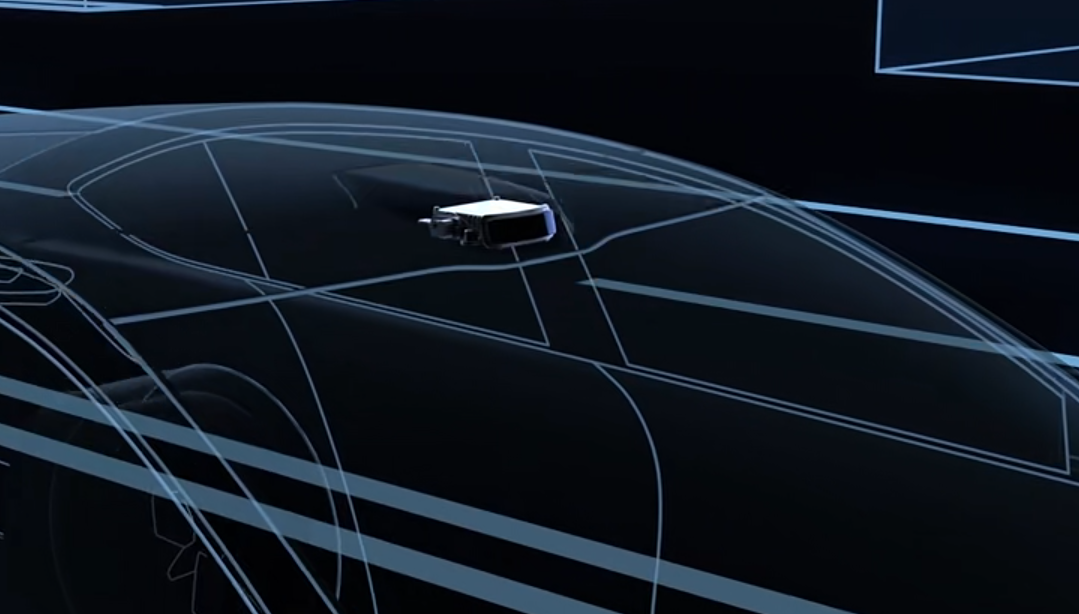
12月10日,图达通成功借壳TechStar Acquisition Corporation登陆港交所,股票代码为02665,股价一度冲高超17港元/股,截至发稿股价回落至12.08港元/ 股,较发行价提升20.8%,总市值约164.32亿港元。 这是继速腾聚创和禾赛科技之后,全球车用激光雷达供应商4强中,第三家实现上市的企业,并会师港交所,仅剩华为未上市。 2025年12月9日,图达通发布配售结果公告,宣布其特殊目的收购公司(SPAC)并购交易相关的37,081,637股获准许股权融资股份发行及配发工作顺利完 成。此次股权融资每股发行价为10港元,面值0.001美元,融资总规模达3.708亿港元。扣除1030万港元估计应付开支后,公司实际所得款项净额为3.605亿 港元。资金来源主要包括两部分:一是Nio Nextev Limited通过认购协议以每股10港元认购28,672,137股,涉及金额2.867亿港元;二是三名PIPE投资者通过 专项投资协议认购55,130,000股PIPE投资股份,贡献融资5.513亿港元,两类融资共同为公司后续发展注入充足资金。 据悉,图达通与TechStar的上市并购交易始 ...

盛景微等成立低空智能科技公司 涉及多项AI相关业务
Ju Chao Zi Xun· 2025-12-10 03:27
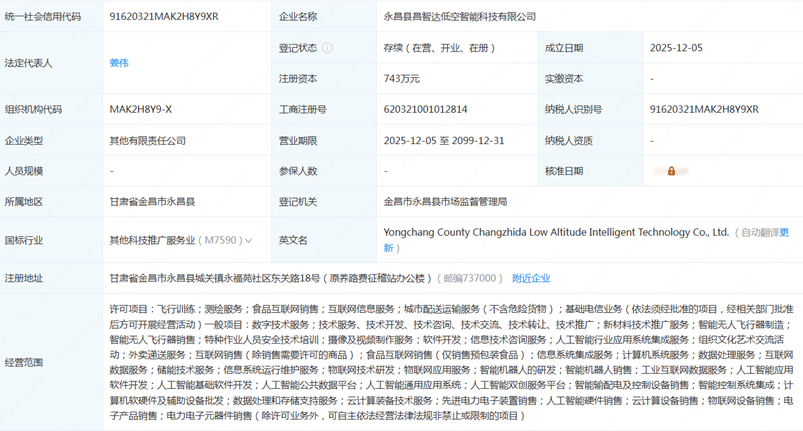
Core Viewpoint - The establishment of Yongchang County Changzhida Low Altitude Intelligent Technology Co., Ltd. marks a significant step in the low-altitude intelligent technology sector, focusing on smart drones and AI-related technologies [1][5]. Company Overview - Yongchang County Changzhida Low Altitude Intelligent Technology Co., Ltd. has officially completed its business registration and is positioned as a low-altitude intelligent technology service provider [1]. - The company has a registered capital of 7.43 million yuan and is located in Jinchang City, Gansu Province [2]. - The business scope includes manufacturing smart drones, developing AI software, and building AI public data platforms, indicating a comprehensive approach that spans hardware, software, and data services [2][3]. Business Structure - The company integrates hardware manufacturing of smart drones with AI foundational software and data platforms, creating a "hardware + software + data platform" business model [3]. - Smart drones serve as the physical medium for low-altitude applications, while AI software plays critical roles in flight control, path planning, and target recognition [3]. Industry Context - The low-altitude economy is gaining traction as a focal point for local industrial development, with policies encouraging the use of drones in logistics, inspection, emergency response, and surveying [3]. - The combination of low-altitude scenarios with AI software and general application systems positions the company to develop targeted solutions based on specific industry needs [3]. Shareholding and Future Outlook - The company is co-owned by multiple stakeholders, including Shengjingwei, although specific shareholding ratios are not publicly disclosed [5]. - As the company transitions into operational phases, its project advancement, order acquisition, and the depth of technology application in low-altitude scenarios will be key areas of market interest [5].
精测电子:连续十二个月内签订4.33亿元半导体量检设备合同
Ju Chao Zi Xun· 2025-12-10 02:45
Core Viewpoint - The announcement by Jingce Electronics indicates that its subsidiary, Shanghai Jingce Semiconductor Technology Co., Ltd., has signed multiple sales contracts with a single counterparty, totaling approximately 432.57 million yuan, primarily for semiconductor measurement equipment [1][3]. Group 1: Contract Details - The contracts include products such as film thickness series, OCD equipment, and electron beam equipment, mainly used in advanced storage and HBM-related fields [3]. - The total contract amount is 432,574,120.24 yuan, and the contracts will take effect upon signing by both parties [3]. - The company states that these contracts are part of routine business operations and do not constitute related party transactions or significant asset restructuring as per regulations [3][4]. Group 2: Customer and Risk Assessment - The customer involved has a good credit status and the ability to fulfill the contract, with controllable performance risks, and there is no related party relationship between the customer and the company [3][4]. - The signing of these contracts reflects a deepening cooperation based on a solid existing relationship, enhancing the customer's recognition of the company's product performance and service capabilities [4]. Group 3: Business Impact - Successful execution of these contracts is expected to strengthen the company's market position in the semiconductor measurement equipment sector and contribute to the performance of related product lines [3][4]. - The company emphasizes that the fulfillment of these contracts will not affect its business independence and will not create dependency on a single customer [4].
赛微电子子公司出资6600万元 设立初芯微科技合伙企业
Ju Chao Zi Xun· 2025-12-10 02:45
Core Viewpoint - The announcement by Saiwei Electronics indicates the establishment of a new partnership, Hangzhou Chuxin Micro Technology Partnership, aimed at enhancing business development and resource integration in the technology service and investment sectors [1][4]. Group 1: Investment Details - Saiwei Electronics' wholly-owned subsidiary, Beijing Microchip Technology Co., Ltd., invested 66 million yuan, representing 30% of the total capital of the partnership, which amounts to 220 million yuan [1][3]. - The partnership was formed with contributions from Microchip Technology, Qingdao Chuxin Co-Creation Technology Co., Ltd., and Lu Pengzhao, with Qingdao Chuxin serving as the executive partner [3]. Group 2: Business Operations - The newly established partnership will focus on technology services, development, consulting, exchange, transfer, and promotion, and will also engage in investment activities using its own funds, subject to legal approvals [3]. - The operational activities of Chuxin Micro Technology are expected to influence the business coordination and strategic layout of Microchip Technology and Saiwei Electronics in related fields [4].


四维图新PhiGO Max城区领航方案获头部新能源车企量产定点
Ju Chao Zi Xun· 2025-12-10 02:45
(文/罗叶馨梅)12月9日,四维图新(002405.SZ)在投资者互动平台就高端智能驾驶解决方案PhiGO Max回应投资者提问时表示,该 端到端全域城区领航方案目前已获得头部新能源车企的量产定点。公司称,该方案主要面向高端智能驾驶市场,重点服务于城区导航 辅助驾驶等应用场景。 四维图新介绍,PhiGO Max方案采用多模态认知推理和世界模型预测推演的一段式端到端技术路线,搭载两颗高性能旗舰算力芯片, 总算力超过1000Tops,并在硬件与架构层面预留向L3级自动驾驶升级的空间。公司表示,通过端到端架构,方案可在感知、决策与控 制链路中实现更高的一体化协同,以适配复杂城区路况环境。 在汽车智能化趋势方面,公司认为,AI技术正持续渗透智能驾驶领域,推动辅助驾驶能力从高端车型向更大范围车型下沉,城区领航 等功能的量产落地有望加快。四维图新指出,随着交通场景复杂度提升以及功能安全要求提高,高算力平台与端到端算法的组合正在 成为车企在高阶智能驾驶项目中的重要技术路线之一。 在芯片及基础能力布局方面,公司此前在公开场合介绍,其通过子公司布局车规级SoC与MCU芯片,并已完成多代产品迭代,面向智 能座舱和智能驾驶等场景提 ...

大日本印刷开发1.4nm级纳米压印光刻掩膜版 计划2027年量产
Ju Chao Zi Xun· 2025-12-10 02:45
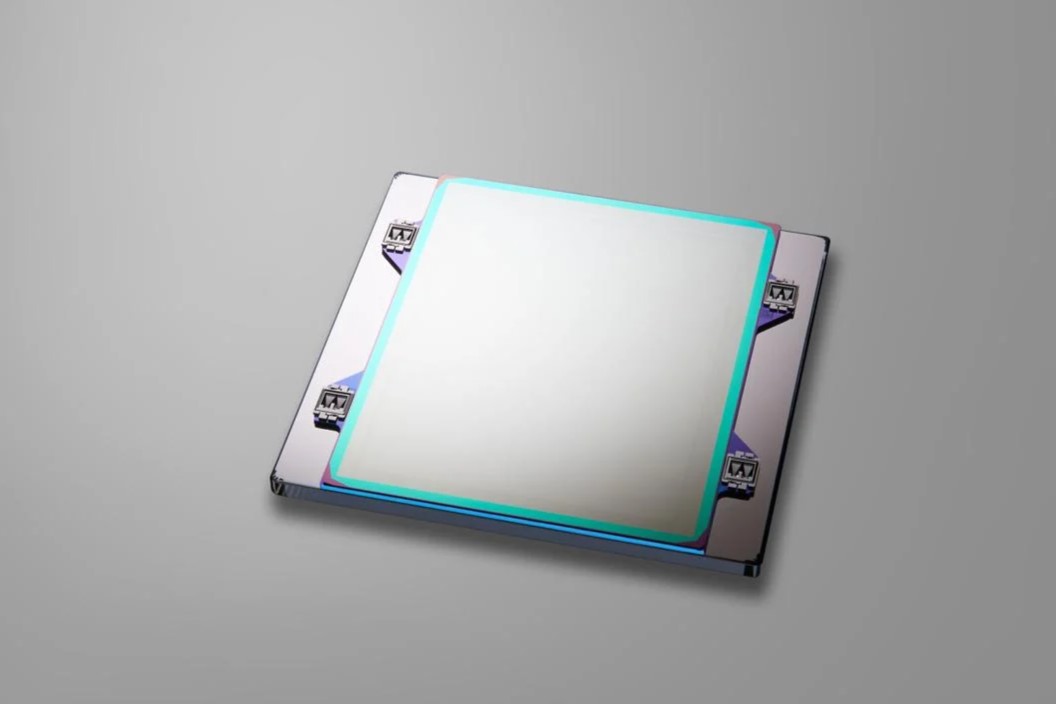
此外,DNP计划在2025年12月17日至19日于东京国际展览中心举办的SEMICON Japan 2025上展出这款10nm线宽NIL纳米压印光刻掩膜版。公司认为, 通过在专业展会集中展示产品与技术路线,可加深与全球半导体制造企业及设备厂商的交流,推动纳米压印工艺在先进逻辑制程中的应用探索。后续 该技术在量产良率、生产节拍以及与既有工艺整合方面的表现,将成为市场持续关注的重点。 (校对/秋贤) (文/罗叶馨梅)大日本印刷株式会社(DNP)近日宣布,成功开发出电路线宽为10nm的NIL纳米压印光刻掩膜版,可用于相当于1.4nm级逻辑半导体 的电路图形化。公司表示,该产品面向智能手机、数据中心、NAND闪存等应用场景中尖端逻辑芯片的微型化需求,目前已启动客户评估工作,计划 于2027年实现量产。DNP同时提出,力争在2030财年将纳米压印相关业务销售额提升至40亿日元。 DNP指出,随着终端设备性能持续提升,市场对更先进制程逻辑半导体的需求不断加大,推动基于极紫外(EUV)光刻的生产技术演进。但EUV在生 产线建设和曝光过程中需要巨额资本支出及高能耗,制造成本与环境负担成为行业关注焦点。自2003年起,DNP持 ...
澜起科技港股拟发不超1.30亿股 获证监会备案
Ju Chao Zi Xun· 2025-12-10 02:45
Core Viewpoint - 澜起科技 has received a备案通知书 from the China Securities Regulatory Commission (CSRC) confirming its overseas issuance and listing plan, marking a significant regulatory progress for its Hong Kong listing initiative [1][3]. Group 1: Regulatory Progress - The company plans to issue no more than 130,204,100 overseas listed ordinary shares and aims to list on the Hong Kong Stock Exchange [1]. - The备案通知书 outlines several reporting requirements, including timely reporting of major events through the CSRC's备案管理信息系统 until the completion of the overseas listing [3]. - After the overseas issuance and listing, the company must report specific details within 15 working days through the same system [3]. Group 2: Compliance and Obligations - The备案通知书 emphasizes that the confirmation of the overseas issuance listing information does not constitute a substantive judgment or guarantee regarding the investment value of the company's securities or investor returns [3]. - The company must adhere to relevant domestic and international laws, regulations, and compliance obligations throughout the overseas listing process [3]. Group 3: Company Profile and Strategic Importance - 澜起科技 is an integrated circuit design enterprise focused on memory interface chips, primarily used in servers and PCs [1][3]. - The planned H-share listing is viewed as a strategic move to expand its overseas capital platform and enhance its international financing capabilities [1]. - By listing in Hong Kong, the company aims to attract more foreign institutional investors, providing additional funding support for future technology research and business expansion [1][3].

伟测科技:聚焦高算力与车规芯片测试需求
Ju Chao Zi Xun· 2025-12-10 02:45
Core Viewpoint - The company highlights the growth potential in the semiconductor testing sector driven by demand from AI, smart driving, and data centers, alongside a trend of local chip design companies and overseas IDMs returning testing orders to mainland China due to external regulations and the "China for China" strategy [1][3]. Group 1: Business Structure and Market Dynamics - The company reviews the evolution from IDM integration to a specialized "design-manufacturing-testing" model, asserting that the professionalization and third-party testing will remain a long-term trend despite some re-integration among firms due to national strategy and security concerns [3]. - The company aims to lead in the third-party testing sector in mainland China, emphasizing the need for specialized third-party testing firms to define standards and expand the market through scale effects and technological accumulation [3]. Group 2: Product Focus and Testing Trends - Currently, the company focuses on Nor Flash for memory testing due to the high concentration of clients and significant investment in specialized equipment for other types of memory chips, while Nor Flash offers more general equipment compatibility [3]. - The company is concentrating on high-performance CPU/GPU/AI chips and automotive electronics, predicting that the share of these high-end products in domestic design companies will continue to rise alongside global AI computing demand and increasing penetration of new energy vehicles [3][4]. Group 3: Revenue Model and Profitability - The company's revenue is primarily from wafer testing (CP), with final testing (FT) being more affected by the utilization rates of testing facilities, which tend to prioritize in-house capacity during downturns [4]. - Testing prices faced pressure during the industry downturn from 2022 to 2023, but the overall average price is recovering as low-priced old products exit the market and new products and clients are introduced [4]. Group 4: Equipment and Capacity - The company notes a high domestic replacement ratio for mid-to-low-end testing equipment, but there remains a gap in the mid-to-high-end sector compared to international leaders, with high-end equipment typically having a lead time of around six months [4][5]. - The company emphasizes that high-end testing platforms can have a lifespan extended to over 20 years through upgrades, with actual retirements often due to efficiency and economic factors rather than physical damage [5]. Group 5: Future Development and Strategy - The company plans to continue expanding its production capacity in mainland China, focusing on high-performance chips and automotive-grade reliability, with no current plans for overseas expansion [5]. - The rise of local chip design companies and the concentration of manufacturing and testing in mainland China, combined with external uncertainties, will provide ongoing advantages in cost, safety, and localized services for domestic third-party testing [5].


崧盛股份:完成第四届董事会换届 取消监事会并调整管理层
Ju Chao Zi Xun· 2025-12-10 02:38
(文/罗叶馨梅)12月10日,崧盛股份(301002.SZ)公告称,公司于2025年12月9日召开2025年第一次临时股东大会,选举产生第四届董事会非独立董事和 独立董事,并通过职工代表会议选举职工代表董事。新一届董事会由7名董事组成,包括非独立董事王宗友、田年斌、邹超洋,独立董事周立辉、李志君、 代新社以及职工代表董事汤波兵,任期三年,自股东大会审议通过之日起计算。 22 "I ² | (校对/秋贤) 公告显示,第四届董事会第一次会议于同日召开,会议选举王宗友担任第四届董事会董事长,并对专门委员会成员进行调整。公司依据《公司章程》设立战 略与可持续发展委员会、审计委员会、提名委员会及薪酬与考核委员会,分别由王宗友、周立辉、李志君、代新社担任召集人,委员由非独立董事和独立董 事共同组成。公司称,新一届董事会结构及专门委员会设置符合创业板相关规则及公司治理要求。 在管理层方面,崧盛股份同步完成新一届高级管理人员和证券事务代表的聘任。王宗友兼任总经理,邹超洋、汤波兵、丁伟、宋之坤担任副总经理,谭周旦 担任财务负责人兼董事会秘书,刘佳佳担任证券事务代表,任期三年,自第四届董事会第一次会议审议通过之日起至本届董事会任 ...
兆易创新获证监会备案 拟赴港发行不超5179万股H股
Ju Chao Zi Xun· 2025-12-10 02:37
Core Viewpoint - The company, Zhaoyi Innovation, has received confirmation from the China Securities Regulatory Commission (CSRC) regarding its application for overseas issuance and listing of H-shares on the Hong Kong Stock Exchange, marking a significant step in its efforts to expand its capital base and enhance its market presence [1][3]. Group 1 - The company plans to issue no more than 51,796,900 shares of overseas listed ordinary shares [1]. - The issuance is a crucial prerequisite for advancing the overseas listing process [1]. - The company must report any significant events to the CSRC from the date of the notice until the completion of the overseas issuance [3]. Group 2 - The company is required to submit the issuance and listing status within 15 working days after the completion of the overseas issuance [3]. - If the overseas listing is not completed within 12 months from the date of the notice, the company must update its filing materials as per regulations [3]. - The notice confirms the filing information but does not provide any substantive judgment or guarantee regarding the investment value or returns for investors [3]. Group 3 - Zhaoyi Innovation is engaged in integrated circuit design, with business lines including memory, microcontrollers (MCUs), and sensors [4]. - Successful H-share issuance and listing on the Hong Kong Stock Exchange could broaden the company's overseas financing channels and enhance its global market visibility [4]. - The overall effectiveness of the listing will depend on multiple factors, including the issuance window, valuation levels, and market conditions [4].