Zhong Guo Dian Li Bao

Search documents
西藏昌都:全社会用电负荷达58.68万千瓦 用电量1145万千瓦时
Zhong Guo Dian Li Bao· 2026-01-16 01:50
1月1日,西藏东部大地气温骤降,用电需求持续攀升,昌都全社会用电负荷达58.68万千瓦、用电量 1145万千瓦时,均创下历史新高,负荷同比增长12.85%。面对高海拔、低温严寒、地形复杂等多重挑 战,国网西藏昌都供电公司超前部署、多维发力,以扎实举措筑牢电力保供屏障,守护藏东各族群众温 暖过冬与地方经济平稳发展。 网架加固治重载 科技赋能提质效 针对平均海拔3500米、输配电线路多跨峡谷流域、冬季人工运维难度大的实际情况,昌都供电深化数字 化转型,大规模推行无人机集群化作业,高效完成10千伏至110千伏线路的1847支间隔棒安装工作,作 业时间较传统方式缩短90%,既规避人工登塔安全风险,又实现作业期间客户用电"零影响"。该公司建 立"日监测、周分析、月研判"机制,结合气象预报与历史数据精准预测用电高峰,深化源网荷储协同调 度,优化储能设备调用策略,缓解尖峰供电压力。为偏远县域部署应急发电车、投用110千伏移动式变 电站,同步开展297人次、128车次的线路防外破巡视及设备测温,安排7辆中压发电车驻守电网薄弱区 域,全面提升应急处置能力。 支部建在网格上 服务送到心坎里 充分发挥党建引领作用,组建党员突击队与 ...
新疆吐鲁番:新能源装机容量突破1000万千瓦大关
Zhong Guo Dian Li Bao· 2026-01-16 01:35
Core Insights - The integration of renewable energy sources in Turpan, Xinjiang, has reached a significant milestone with the successful grid connection of the first 200,000 kW photovoltaic project, pushing the total installed capacity of renewable energy in the region to 10.17 million kW, accounting for 75.7% of the total installed capacity [1][6] - Turpan's renewable energy capacity has increased over 20 times since the 18th National Congress, with a focus on building a 100 billion yuan green energy industry cluster during the 14th Five-Year Plan period [2] - The region has established a robust power grid infrastructure, including a 750 kV "Y" shaped network and a 220 kV transmission network, to support the efficient transmission of clean energy from 88 renewable energy stations [2][5] Group 1 - The successful integration of the first 200,000 kW photovoltaic project marks a significant step in Turpan's renewable energy development [1] - Turpan's renewable energy installed capacity has surpassed 10 million kW, making it the sixth renewable energy base in Xinjiang [1] - The region's renewable energy capacity has grown over 20 times since the 18th National Congress, with ongoing efforts to establish a 100 billion yuan green energy industry cluster [2] Group 2 - Turpan's power grid has been strengthened with an investment of 307 million yuan since 2024, completing 10 renewable energy transmission projects and extending new transmission lines by 192.6 kilometers [2] - The region has implemented a "one-stop service" for the entire process of renewable energy grid connection, enhancing efficiency in project management [3] - Turpan has built nine energy storage stations with a total capacity of 360,000 kW/710,000 kWh, significantly improving system regulation capabilities [5] Group 3 - The utilization rate of renewable energy in Turpan has increased from 61.17% in 2016 to over 90% in recent years, demonstrating effective management of renewable energy resources [5] - The region is positioned as a key hub for renewable energy development along the Silk Road, contributing to national energy security and low-carbon transition [6]
国家电网“十五五”投资计划出炉
Zhong Guo Dian Li Bao· 2026-01-15 05:39
Group 1 - The core investment plan for the "14th Five-Year Plan" period is projected to reach 4 trillion yuan, representing a 40% increase compared to the previous plan, aimed at enhancing effective investment and promoting high-quality development of the new power system industry chain and supply chain [1] - The company aims to achieve an annual increase of approximately 20 million kilowatts in installed capacity for wind and solar energy, targeting a 25% share of non-fossil energy consumption and a 35% share of electricity in terminal energy consumption by the end of the "14th Five-Year Plan" [1] - The company will enhance system regulation capabilities and optimize the layout of pumped storage stations to support large-scale development of new energy storage, improving the operational support and grid integration of renewable energy [1] Group 2 - The company plans to establish a new power grid platform characterized by collaborative main and distribution networks, further solidifying the "West-to-East Power Transmission" and "North-to-South Power Supply" energy transmission networks [2] - The construction of ultra-high voltage direct current transmission channels will accelerate, with cross-regional and cross-provincial transmission capacity expected to increase by over 30% compared to the end of the "14th Five-Year Plan" [2] - The company will focus on strengthening key core technology research and development, aiming to become a globally influential source of original technology in the energy and power sector [2] Group 3 - The company emphasizes enhancing operational efficiency and achieving intrinsic development by integrating the "five values" throughout its operational processes and optimizing long-term business strategies and resource allocation [3] - The company will continue to play a stabilizing role in the national economy through sustained high-intensity investment, accelerating the construction of a new power grid platform that includes main and distribution networks as well as smart microgrids [3] - The company aims to contribute significantly to the construction of a new energy system and the establishment of an energy powerhouse by ensuring national energy security through its investments [3]
广州两大500千伏输变电工程启动
Zhong Guo Dian Li Bao· 2026-01-15 03:51
"十四五"成效显著,"十五五"再启新程 "十四五"期间,广州电网累计完成建设投资469.4亿元,新增变电站71座,新增主变容量1981.8万千伏 安,新建主网线路1353公里。粤港澳大湾区中通道直流背靠背工程等一批重大工程相继投运,使广东东 西部电力交换能力提升至1000万千瓦,有力促进了清洁能源消纳与电网安全稳定运行。 步入"十五五",广州电网计划进一步加大投资建设力度,预计新增变电站87座,提升供电能力超40%。 此举将切实体现"电等发展"的前瞻布局与经济拉动效应。 1月13日,南方电网广东广州供电局在广州召开电网规划建设高质量发展动员会,正式启动500千伏海 珠、傍海(番南)两项重点输变电工程。其中,海珠工程作为广州中心城区首座全户内+全电缆式500 千伏变电站,将重点保障琶洲数字经济试验区等高负荷区域用电需求;傍海(番南)工程则致力于打造 南方电网首个500千伏新型智能电力装备产业融合示范变电站,推动高产高端装备规划应用。两大工程 的实施标志着粤港澳大湾区核心电网迈入结构强化、能级提升的新阶段,将为粤港澳大湾区高质量发展 提供坚实能源支撑。 筑牢核心区域电网"生命线",服务发展新格局 作为本次启动的核 ...
创新规划布局绿电专变、绿电专线——海南自贸港封关后能源走向分析
Zhong Guo Dian Li Bao· 2026-01-15 03:29
Core Viewpoint - The official launch of the Hainan Free Trade Port's full island closure on December 18, 2025, marks a new starting point for reform and opening up, emphasizing the need for a safe, efficient, green, low-carbon, and open energy system to support high-quality development and international cooperation in the energy sector [1] Group 1: Opportunities and Challenges in Energy Development - Economic expansion and industrial upgrades are driving an increase in energy demand, particularly in high-end manufacturing and modern service industries, which will significantly boost electricity and gas consumption [2] - The influx of foreign talent and the growth of tourism will increase energy needs for residential and commercial sectors, including air conditioning and lighting [2] - The development of international transport hubs will lead to higher energy consumption, with expected increases in fuel consumption at airports and ports due to rising passenger and cargo volumes [2] Group 2: Energy Security and Green Transition Requirements - The closure operation raises the bar for energy security, requiring reliable power supply and high-quality electricity to meet international standards, while facing challenges from climate conditions and high renewable energy integration [3] - The need for compliance with stringent international green regulations is emphasized, necessitating the establishment of a comprehensive green production and management system to avoid potential trade barriers [3] Group 3: International Cooperation in Energy - The closure operation facilitates international cooperation in the energy sector by reducing barriers to cross-border flows of capital, technology, and data, enabling comprehensive collaboration in energy trade and technology development [4] - The "zero tariff" policy on energy equipment imports will lower costs for advanced technologies, accelerating the implementation of renewable energy projects [4] Group 4: Energy Development Vision for Hainan - The development strategy focuses on optimizing the energy supply system, promoting energy consumption upgrades, and enhancing international cooperation to support Hainan's role as a significant free trade port [5][6] - Emphasis on building a clean energy island and a new zero-carbon energy system to enhance competitiveness and attract international resources [5] Group 5: Recommendations for Energy Development - A diversified green energy supply system should be established, focusing on offshore wind, solar energy, and safe nuclear power development, while promoting the use of clean gas and innovative storage solutions [7] - Enhancements to the energy transmission and distribution system are necessary to ensure reliability and resilience, including upgrades to the power grid infrastructure [7] - A comprehensive energy consumption system should be developed, promoting electrification across various sectors and expanding the use of green electricity [8] Group 6: Future Outlook - Hainan aims to leverage the advantages of institutional opening to become a safe, green, efficient, and smart clean energy island, positioning itself as a global hub for green energy trade and zero-carbon technology [9]
中国华电召开2026年工作会议
Zhong Guo Dian Li Bao· 2026-01-15 03:07
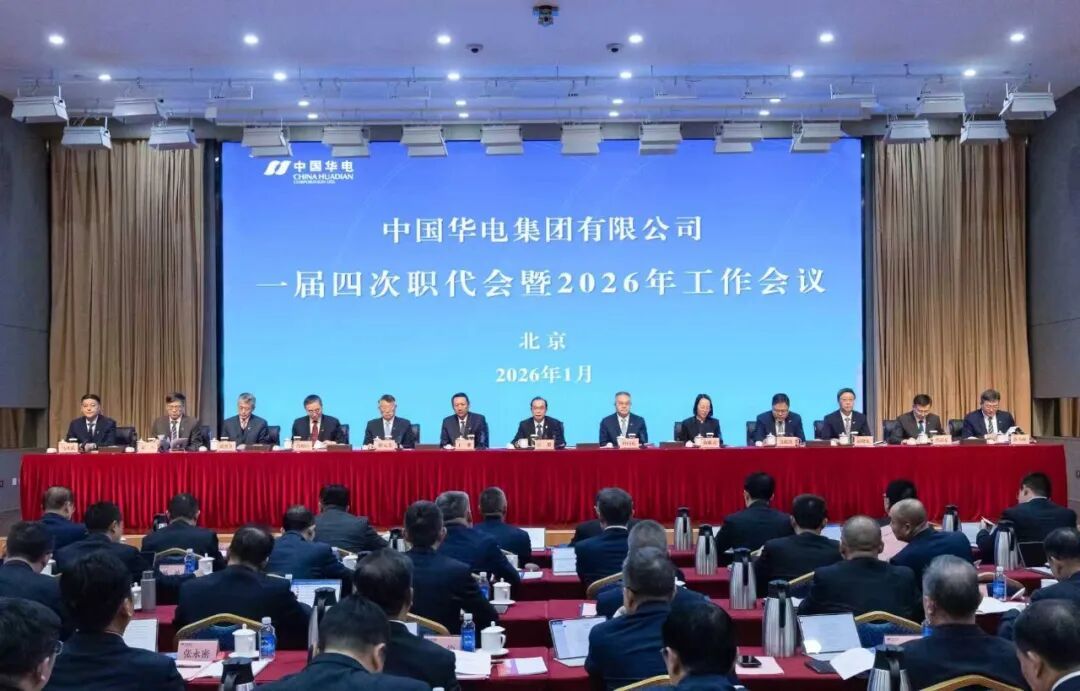
充分发挥"三个作用" 努力争当"三个排头兵"——中国华电召开一届四次职代会暨2026年工作会议 1月13~14日,中国华电集团有限公司一届四次职代会暨2026年工作会议在京召开。会议以习近平新时代中国特色社会主义思想为指导,深入学习贯彻习近 平总书记对中央企业工作作出的重要指示精神、党的二十届四中全会和中央经济工作会议精神,认真落实中央企业负责人会议部署要求,全面总结2025年工 作和"十四五"成就,科学谋划"十五五"工作思路,部署2026年重点工作,动员公司上下凝心聚力,真抓实干,拼搏奋进,加快推动高质量发展,确保"十五 五"开好局、起好步,为开创中国式现代化建设新局面贡献华电力量。 江毅强调,"十五五"是我国基本实现社会主义现代化夯实基础、全面发力的关键时期,也是公司加快绿色低碳高质量发展的重要时期。中国华电要坚持和加 强党的全面领导,勇担央企职责使命,聚力能源强国建设,以建设世界一流清洁低碳能源企业为愿景,以高质量发展为主题,以提升"五个价值"为导向,以 绿色低碳发展为重点,以科技创新为引领,以深化改革为动力,以全面从严治党为根本保障,加快服务构建新型能源体系和新型电力系统,切实增强核心功 能、提升核心 ...

全国电力平均二氧化碳排放因子持续下降
Zhong Guo Dian Li Bao· 2026-01-15 02:58
近日,生态环境部与国家统计局联合印发《关于发布2023年电力二氧化碳排放因子的公告》(以下简称 《公告》),公布了2023年电力二氧化碳排放因子,以便于不同主体核算电力消费的二氧化碳排放量。 生态环境部应对气候变化司有关负责人表示,整体来看,2023年电力二氧化碳排放因子的变化客观反映 了我国电力行业清洁低碳转型发展的实际成效。 省级层面,北京等20个省份2023年电力平均二氧化碳排放因子相较2022年呈现下降趋势,主要与火力发 电量比重下降、发电煤耗降低、外省清洁能源调入电量比例上升等因素有关。广东等10个省份2023年电 力平均二氧化碳排放因子有所上升,主要与水力发电量占比下降、火力发电量占比上升、外省清洁能源 调入电量比例下降等因素有关。 2023年全国电力平均二氧化碳排放因子(不包括市场化交易的非化石能源电量)为0.6096千克二氧化 碳/千瓦时,较2022年上升4.1%,主要是由于我国市场化交易的非化石能源电量(如绿色电力交易电 量)在不断增长,而扣除了上述电量后的剩余发电量在相应减少,进而推高该因子的数值。 2023年全国化石能源电力二氧化碳排放因子为0.8273千克二氧化碳/千瓦时,较2022年 ...
算好绿电直连“经济账”
Zhong Guo Dian Li Bao· 2026-01-15 01:29
Core Insights - Green electricity direct connection is viewed as an important incremental direction for green electricity consumption due to its characteristics of "clear physical traceability" and "efficient local consumption" [1] Group 1: Domestic and International Context - In China, the rapid development of renewable energy has led to consumption challenges, making green electricity direct connection a new path for improving renewable energy utilization efficiency [1] - Internationally, developed countries are reshaping trade rules through carbon tariffs and carbon footprint verification, making green electricity direct connection a necessary tool for enterprises to respond to international carbon audits [1] Group 2: Policy Framework - The National Development and Reform Commission and the National Energy Administration issued the "Notice on Promoting the Development of Green Electricity Direct Connection" in May 2025, encouraging investment in green electricity direct connection projects [2] - The "Notice on Improving Price Mechanisms to Promote Local Consumption of Renewable Energy" was released in September 2025, providing institutional support for green electricity direct connection by clarifying pricing mechanisms and cost-sharing principles [2] Group 3: Project Developments - In August 2025, China National Petroleum Corporation announced the launch of its largest photovoltaic project, the Tarim Oilfield Low-Carbon Transformation Project, as the first million-kilowatt green electricity direct connection project in Northwest China [2] - Multiple data centers in Inner Mongolia and Qinghai have also achieved direct supply of green electricity, indicating practical advancements in green electricity direct connection [2] Group 4: Challenges and Economic Considerations - Despite the opportunities, challenges exist in the actual operation of green electricity direct connection, where investment and returns may not align, particularly for grid-connected projects with high upfront costs and low economic viability [3] - Off-grid projects require significant investment in energy storage to stabilize renewable energy output, adding to the financial burden [3] - The transition from "policy feasibility" to "commercial sustainability" for green electricity direct connection projects is a key concern as local policies and electricity market rules become more refined [3]

冀北地区新能源 年发电量首破千亿
Zhong Guo Dian Li Bao· 2026-01-15 01:24
Core Insights - The total renewable energy generation in the Hebei North region is projected to exceed 100 billion kilowatt-hours by 2025, reaching 122.51 billion kilowatt-hours, a year-on-year increase of 30.2%, accounting for 56.3% of the total power generation in the region [1] - Wind power generation is expected to reach 70.55 billion kilowatt-hours, while solar power generation is anticipated to hit 47.8 billion kilowatt-hours, both setting new historical highs [1] Group 1 - The Hebei North Power Grid has significantly enhanced its infrastructure to support renewable energy transmission, including the completion of major projects like the Zhangbei flexible DC project and 18 500 kV renewable energy transmission projects [1] - By the end of 2025, the Hebei North grid will form a robust backbone network supported by a 1000 kV ultra-high voltage ring network, facilitating a multi-level, multi-channel, and multi-drop integration of clean energy delivery [1] Group 2 - The green electricity trading volume in Hebei North is expected to reach 43.83 billion kilowatt-hours by 2025, marking a year-on-year growth of 56.1%, making it the largest trading scale in the country [1] - The company has introduced flexible mechanisms such as contract repurchase in collaboration with government departments, aiming to monitor renewable energy output and market supply-demand fluctuations, thereby gradually increasing the market share of renewable energy [1]
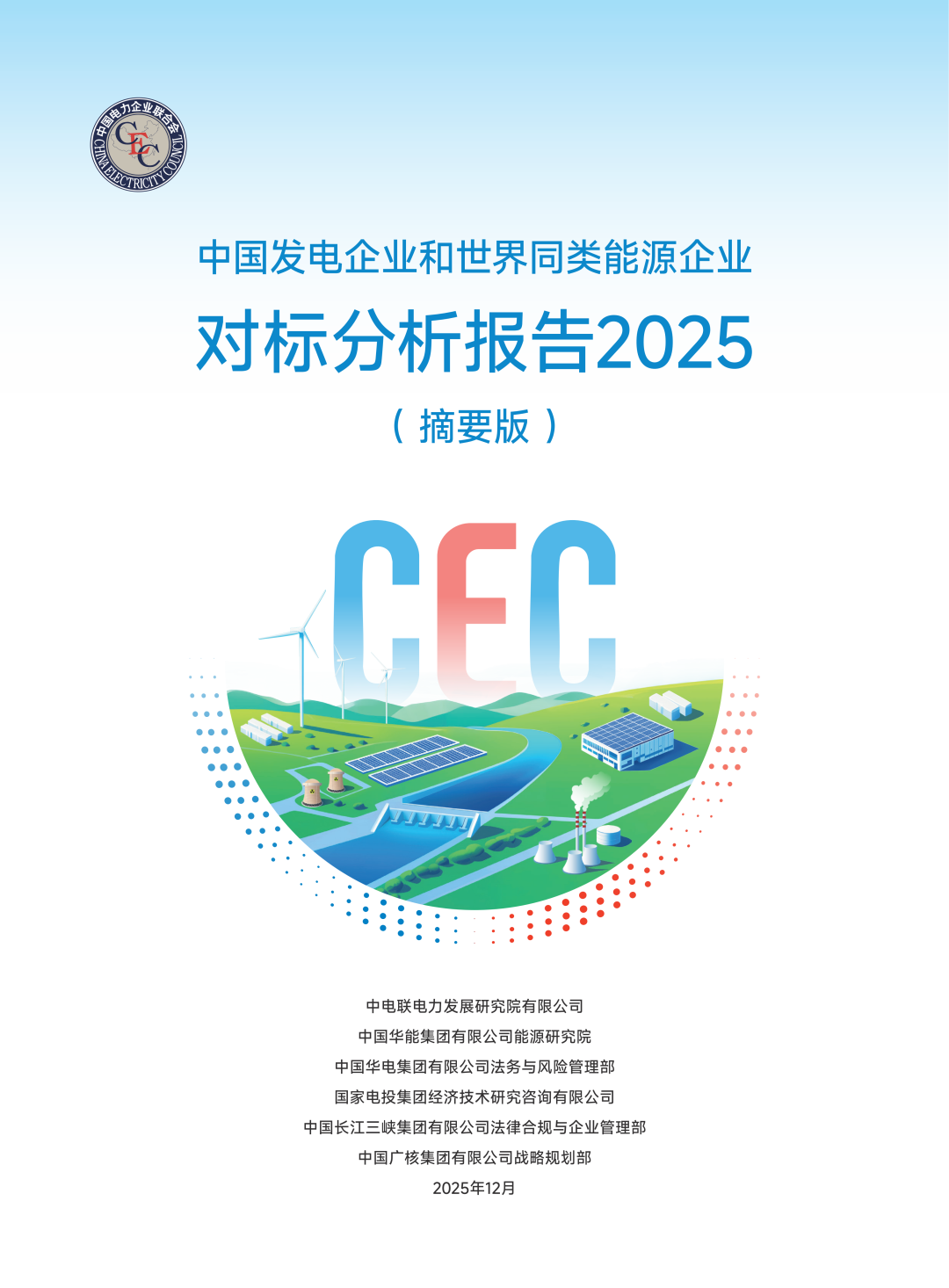
中国发电企业和世界同类能源企业对标分析报告2025(摘要版)
Zhong Guo Dian Li Bao· 2026-01-15 00:29
Core Insights - The report titled "2025 Benchmark Analysis of Chinese Power Generation Enterprises and Global Energy Companies" aims to provide insights for Chinese power companies to accelerate their development into world-class energy enterprises [3][5]. Group 1: Benchmarking Framework - The report utilizes a benchmarking indicator system that includes four dimensions: product excellence, brand prestige, innovation leadership, and modern governance, comprising 18 quantitative indicators [7][8]. - A total of 24 representative companies, 12 from China and 12 from abroad, are selected for benchmarking [9]. Group 2: Performance Overview - By the end of 2024, the benchmark companies achieved a total installed capacity of 2.68 billion kilowatts and generated 9.08 trillion kilowatt-hours of electricity, representing a year-on-year growth of 7.8% and 4.0% respectively [12]. - The EBITDA of benchmark companies was approximately $312.6 billion, with operating revenue reaching about $964.4 billion, reflecting a year-on-year increase of 9.0% and 5.8% respectively [13]. Group 3: Comparative Analysis - Domestic benchmark companies have a significant advantage in installed capacity, with a total of 1.86 billion kilowatts, which is 2.3 times that of foreign counterparts [32]. - The proportion of non-fossil energy installed capacity for domestic companies reached 56.8%, surpassing foreign companies by 7.8 percentage points [32]. Group 4: Key Findings - Eight companies, including EDF, State Energy Group, China Three Gorges, and China Huaneng, ranked in the top tier based on comprehensive scores across various indicators [18]. - The report highlights that while domestic companies are expanding their production capabilities, foreign companies are experiencing challenges in integrating renewable energy into existing grids [30][76]. Group 5: Future Outlook - The report identifies key development themes for Chinese power companies in 2026, emphasizing the need for energy security and modernization [6][76]. - It also notes that the growth in electricity demand is expected to boost the global nuclear power industry, with countries like France and the U.S. advancing their nuclear power strategies [79].