QYResearch

Search documents
South Korea Semiconductor Parts Industry Overview : High Growth Companies 21
QYResearch· 2026-01-04 08:52
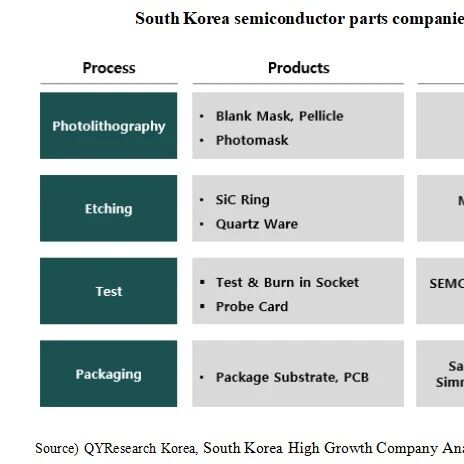
Industry Overview - The South Korea semiconductor parts industry is experiencing significant growth, driven by an AI-led "Super Cycle" in the overall semiconductor sector, with revenue projected to reach KRW 9.754 trillion in 2024, reflecting a 12.5% year-on-year increase [1][2]. Growth Drivers - The growth is attributed to a base effect following the downturn in 2023 and the rapid expansion of the AI semiconductor sector, with double-digit growth expected to continue into 2025 [2]. - A common factor behind the strong growth of leading domestic semiconductor parts companies is the increase in semiconductor production in Korea, China, and Taiwan, alongside qualitative improvements driven by AI-led trends toward process miniaturization and higher complexity [6]. Semiconductor Manufacturing Processes Photolithography Process - Demand for blank masks and pellicles is increasing as Chinese semiconductor manufacturers invest in advanced processes, benefiting Korean suppliers like FST and S&S Tech [7]. Etching Process - The transition from conventional silicon materials to silicon carbide (SiC) for ring components is enabling companies such as KNJ and TCK to expand their market presence, while Mecaro has increased exports amid rising investments in memory semiconductor equipment in China [8]. Testing Process - Components used in testing, including probe cards and sockets, are benefiting from favorable market conditions, with strong performance from South Korean companies like SEMCNS, TSE, and Tiger Electronics [9]. Packaging Process - Package substrates are emerging as a core growth driver, with companies like Samsung Electro-Mechanics and LG Innotek expanding their supply of BGA substrates for PCs and smartphones, as well as high-value segments like AI/server and automotive FC-BGA substrates [10]. High-Growth Companies - QYResearch Korea identified 21 companies achieving over 8% year-on-year revenue growth in 2024, including KC Parts Tech, SEMCNS, and Mecaro, with notable products spanning various semiconductor manufacturing processes [5][11]. Revenue Performance - Key companies and their projected revenues for 2024 include: - KC Parts Tech: KRW 37.439 billion, 100.87% YoY growth - SEMCNS: KRW 53.315 billion, 72.35% YoY growth - Mecaro: KRW 62.858 billion, 62.91% YoY growth - TSE: KRW 220.995 billion, 62.05% YoY growth - Samsung Electro-Mechanics: KRW 2,034.657 billion, 18.47% YoY growth [11].

中国采棉机清洗液市场现状研究分析与发展前景预测报告
QYResearch· 2026-01-04 08:52
Group 1 - The global cotton industry is crucial for the economy and poverty alleviation, providing livelihoods for millions of cotton farmers, with major producers being China, India, the USA, Brazil, and Pakistan, while China, India, and Pakistan are the main consumers [2] - Cotton is primarily used in the textile industry and is an important export product for many countries, significantly impacting global fiber supply [2] - The cotton harvesting rate in developed countries, particularly China and the USA, is high and fully automated, while developing countries like India and Pakistan rely on manual harvesting due to smallholder economies [2] Group 2 - The core development needs of the international cotton market include promoting economic growth, ensuring supply chain security, and enhancing sustainability, with a focus on boosting consumer confidence and adapting to high-quality and diversified cotton product demands [5] - The cotton sector supports approximately 32 million farmers' livelihoods, benefiting over 100 million families across about 80 countries [5] Group 3 - The global cotton trade is expected to continue expanding over the next decade, driven by the implementation of World Trade Organization commitments, although growth will face challenges from various uncertainties [6] - Demand for cotton is derived from the global textile demand, with competition from synthetic fibers affecting industry performance [6][7] Group 4 - The future of the global cotton market is uncertain due to factors such as slowing economic growth, weak consumer demand, geopolitical conflicts, and changes in trade policies, which impact supply-demand dynamics and price trends [8] - The International Monetary Fund (IMF) predicts global economic growth rates of 3.0% and 3.1% for 2025 and 2026, respectively, with inflation rates expected to decline but remain above target levels in the USA [8] Group 5 - The market for cotton picker cleaning agents in China is projected to reach 51.82 million yuan in 2024, with an expected growth to 56.03 million yuan by 2031, reflecting a compound annual growth rate (CAGR) of 1.37% from 2025 to 2031 [12] - The demand for cotton picker cleaning agents is closely related to the number of cotton pickers and the level of agricultural mechanization, with most demand concentrated in Xinjiang [15] Group 6 - The cotton picker cleaning agent industry is transitioning from traditional chemical cleaning to green and intelligent cleaning solutions, with a shift towards water-based and environmentally friendly products to meet new standards [18] - The cotton industry is significant for basic livelihood security and modernization, impacting rural revitalization, farmer income, social stability, and national unity [18]

汽车座椅手动滑轨市场呈现“低增长、高标准、强准入”的行业特征
QYResearch· 2026-01-04 08:52
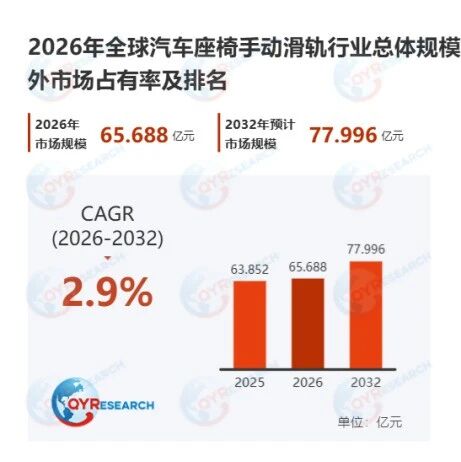
Core Viewpoint - The global automotive seat manual slide rail market is projected to reach USD 938 million in 2024, with a compound annual growth rate (CAGR) of 2.9% [4]. Industry Overview - Automotive seat manual slide rails are mechanical components installed between the seat and vehicle floor, allowing for front and rear seat adjustments. They consist of left and right slide rails, rollers/sliders, locking systems, and release handles [3]. - The demand for manual slide rails is driven by their cost efficiency, reliability, and platform standardization, making them the mainstream solution for seat adjustments in cost-sensitive vehicles [9]. Market Participants - Key companies in the automotive seat manual slide rail market include Adient, Brose, Hyundai Transys, Faurecia, Toyota Boshoku, Imasen Electric Industrial, and several others [4][5]. - Adient is recognized for its comprehensive automotive component solutions and strong project management capabilities [5]. - Brose focuses on integrating mechanical structures with electronic controls and emphasizes engineering innovation [5]. Supply Chain - The upstream supply chain includes materials and key components such as high-strength steel, springs, and surface treatment chemicals. The midstream involves seat frame suppliers and specialized slide rail manufacturers, while the downstream targets vehicle manufacturers and seat assembly plants [8]. Challenges - The industry faces challenges from increasing performance requirements and competitive pricing pressures. Stricter safety regulations necessitate reliable locking mechanisms and durability, while cost fluctuations in materials can compress profit margins [10][12]. Opportunities - Opportunities for growth lie in modular upgrades and functional integration. Suppliers can enhance product value through improved sliding performance and corrosion resistance, while also developing modular platforms for various seat configurations [13]. Barriers to Entry - Barriers to entry are significant due to the safety-critical nature of slide rails, which require compliance with stringent safety and durability standards. New entrants must possess advanced manufacturing capabilities and a robust quality assurance system [14].
QYResearch2025年总结和2026年展望
QYResearch· 2025-12-31 09:24
Core Viewpoint - Despite various internal and external pressures, QYResearch has maintained stable development in 2025, primarily due to proactive team members and continuous growth in key sectors such as semiconductors, AI, drones, robotics, data centers, electric vehicles, biopharmaceuticals, high-end equipment, and hydrogen energy [1] Group 1: Company Development and Strategy - QYResearch has upgraded its internal management and expanded its marketing and global presence, achieving significant development in data collection networks across various countries [1] - The company plans to continue expanding its global team, focusing on AI and industry clusters to provide clients with business opportunities and trend analyses [3] - QYResearch emphasizes original and primary data research, enhancing its ability to provide precise and reliable data services to clients [3] Group 2: Market Expansion and Opportunities - QYResearch has seen positive growth in markets such as China, Japan, Southeast Asia, and India, with a particular focus on deepening research and marketing in the Chinese market [5] - The rise of cross-border e-commerce and global logistics is facilitating the distribution of high-quality Chinese products worldwide, with QYResearch acting as a bridge for Chinese companies to enter international markets [5] - The company aims to reduce internal friction in global projects, which currently results in significant economic losses, by promoting transparency and direct sourcing [6] Group 3: Industry Trends and Predictions - QYResearch predicts that the global economy will begin to recover by June 2026, driven by AI innovations that could add $10-15 trillion to global GDP annually [7] - The consulting industry is expected to grow from approximately $20 billion to $50 billion over the next 20 years, with more Chinese brands providing quality data services globally [9] - The company is committed to leveraging its unique data collection methods to maintain a competitive edge in the consulting industry [8]

中国电泳漆市场现状研究分析与发展前景预测报告
QYResearch· 2025-12-31 09:24
Core Viewpoint - The electrophoretic paint market in China is characterized by moderate scale, technical intensity, and stable growth, driven by both domestic demand and global industry trends. The market is expected to grow from $1,504.1 million in 2024 to $1,855.5 million by 2031, with a CAGR of 2.80% from 2025 to 2031 [3][9]. Market Size and Growth Trends - The Chinese electrophoretic paint market is projected to reach $1,504.1 million in sales revenue by 2024 and $1,855.5 million by 2031, indicating a stable growth trend with a CAGR of 2.80% from 2025 to 2031 [3]. Demand Analysis - The automotive and home appliance sectors are the primary consumers of electrophoretic paint, with automotive applications requiring high corrosion resistance and compatibility with subsequent coatings. The demand from the home appliance sector is characterized by large-scale, standardized needs [9]. Competitive Landscape - The market features a mix of international giants and local specialized manufacturers. Multinational companies dominate the high-end market due to their advanced formulation technologies and relationships with major automotive manufacturers, while local firms excel in the mid-to-low-end market segments [10][13]. Key Players - Major players in the Chinese market include PPG Industries, BASF, Haolisen, Xiangjiang Kansai, Axalta, Nippon Paint, and Jinlitai, with the top three companies holding approximately 38.63% of the market share in 2024 [13]. Industry Chain Analysis - Upstream - Key raw materials for electrophoretic paint include resins, solvents, additives, and pigments, with the chemical industry being the primary upstream sector. The market is competitive, and product costs are closely linked to fluctuations in crude oil prices [16]. Industry Chain Analysis - Midstream - Foreign brands hold a strong position in the automotive OEM paint sector, with six major companies controlling about 90% of the market share in automotive coatings. Domestic companies are gradually gaining market share in non-passenger vehicle segments [17]. Industry Chain Analysis - Downstream - The downstream industries include automotive manufacturing and other sectors such as engineering machinery, motorcycles, hardware, and home appliances, which are closely tied to macroeconomic conditions and exhibit cyclical characteristics [18]. Development Drivers - Key drivers for the industry include government support for environmentally friendly coatings, advancements in technology leading to diverse and functional products, and stable growth in downstream industries such as automotive and home appliances [21]. Development Constraints - The industry faces challenges such as risks from macroeconomic fluctuations, volatility in raw material prices, and intense competition, particularly from foreign brands in the high-end market [21].

以数据见证专业:QYResearch行业数据引用案例精选(2025.12)
QYResearch· 2025-12-31 09:24
Group 1 - QYResearch is recognized for its authoritative industry analysis and customized reports, frequently cited by well-known domestic and international companies, securities firms, and media [1] - The global magnesium and magnesium alloy market is projected to reach $2.48 billion by 2030, with die-casting magnesium alloys accounting for over 77% of the market share [3] - The global rigging and webbing slings market is expected to reach $2.711 billion in sales by 2024, with a projected CAGR of 5.8% from 2025 to 2031, reaching $4.023 billion by 2031 [7] Group 2 - The global wireless lavalier microphone market is anticipated to reach $2.299 billion by 2030, with a CAGR of 6.94% from 2024 to 2030 [10] - The global laser cleaning machine market is expected to grow to $720 million by 2030, maintaining a CAGR of 12.2% [11] - The global desktop robot market is currently valued in the millions, with significant growth expected [12] Group 3 - The drone industry in China is projected to exceed 210 billion yuan by mid-2025, with a year-on-year growth of 39.5% [14] - The global insulin pen needle market is expected to see sales of 662 million, 753 million, and 1.175 billion units from 2022 to 2024, with market shares of 7.52%, 7.98%, and 11.78% respectively [15] - The global capacitive pen market is expected to have a market share of approximately 8.5% in 2024, ranking just behind Apple [17] Group 4 - The global maltitol market is projected to grow from $255 million in 2024 to $396 million by 2031, with a CAGR of 6.6% [22] - The global metal cutting tools market is expected to reach $43.3 billion by 2029, with China's market size reaching 53.8 billion yuan in 2023, a year-on-year growth of 5.12% [25] - The global zirconium oxychloride market is projected to reach $750 million by 2030 [26] Group 5 - The global 5G L-PAMiF module market is expected to grow from $1.633 billion in 2024 to $2.753 billion by 2031, with a CAGR of 7.3% [27] - The global hotel cleaning services market is expected to grow significantly, with small and medium enterprises facing pressure from rising costs [29] - The global laminated insulating film market is projected to grow from $471 million in 2023 to $685 million by 2029, with a CAGR of 6.5% [31] Group 6 - The global plant extract market is expected to grow from $42.245 billion in 2024 to $79.449 billion by 2031, with a CAGR of 9.24% [33] - The global household water purifier market is projected to reach $40.49 billion by 2031, with a CAGR of 6.4% [55] - The global blood products market is expected to reach $50.8 billion by 2030, with a CAGR of 7.6% from 2024 to 2030 [56]

下游迭代加速:汽车、包装与家电需求变化重塑机铰式注塑机结构性机会
QYResearch· 2025-12-30 09:59
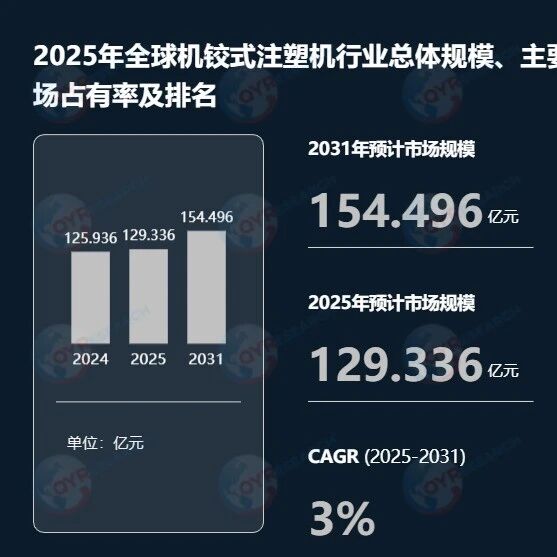
Core Viewpoint - The toggle-type injection molding machine is gaining traction due to its mechanical advantages over traditional hydraulic machines, including energy efficiency, reduced mold deformation, and faster cycle times, making it suitable for high-demand production environments [2][3]. Market Overview - The global market for toggle-type injection molding machines is projected to reach USD 1.902 billion in 2024, with a compound annual growth rate (CAGR) of 3% [3]. - Key manufacturers in the industry include Engel, Supermac Machinery, UBE Machinery Corporation, and others, focusing on various applications across automotive, packaging, medical, and industrial sectors [4]. Supply Chain Dynamics - The upstream supply chain consists of resin materials (e.g., PP, PE, ABS, PC) and essential components like steel, hydraulic oils, and servo motors, with suppliers such as BASF and Baowu Steel [6]. - The downstream applications span across automotive, home appliances, consumer electronics, and medical devices, with major clients including Toyota, Haier, and Foxconn [6]. Driving Factors - The demand for toggle-type injection molding machines is driven by the need for lightweight automotive components, rapid product iterations in consumer electronics, and the push for energy-efficient manufacturing processes [7]. - The transition from traditional hydraulic systems to servo-driven and automated solutions is enhancing production efficiency and stability [7]. Barriers to Entry - High capital expenditure and total cost of ownership (TCO) pressures, along with the need for precise assembly and maintenance capabilities, pose significant challenges for new entrants in the market [8]. - The complexity of the machinery and the requirement for a robust service network make it difficult for newcomers to compete effectively [10]. Industry Development Opportunities - Opportunities for growth are centered around enhancing energy efficiency, integrating automation, and expanding processing capabilities [9]. - The increasing demand for advanced materials and specialized applications in automotive and packaging sectors is expected to drive the adoption of high-end toggle machines [9]. Competitive Landscape - The competitive landscape is characterized by the need for system engineering capabilities, reliability validation, and a strong service network to meet customer expectations [10]. - Established players with a proven track record in quality and service are likely to maintain a competitive edge in the market [10].
洞见未来,智赢十五五:QYResearch专业报告助力企业抢占战略先机
QYResearch· 2025-12-30 09:59
Core Insights - The article emphasizes the importance of the "14th Five-Year Plan" completion and the strategic layout of the "15th Five-Year Plan" as key topics for enterprises aiming for high-quality development in the context of a shifting global economic landscape and accelerated technological innovation [1]. Group 1: Comprehensive Analysis - The report by QYResearch provides a thorough analysis of the market environment, competitive landscape, technological pathways, and policy directions that enterprises may face during the "15th Five-Year Plan" period [3]. - It covers supply and demand dynamics, regional development comparisons, industry chain structures, leading enterprise trends, and growth analysis of specific products and application scenarios, integrating the outcomes of the "14th Five-Year Plan" with expectations for the "15th Five-Year Plan" [3]. - The report emphasizes the need for data-driven decision-making as a compass in an uncertain era, focusing not only on scale growth but also on structural changes, technological breakthroughs, and market barriers [3]. Group 2: Competitive Strategies - The report analyzes the development models, capacity layouts, product strategies, and revenue structures of global industry benchmark enterprises, providing quantifiable comparisons and case studies for enterprises to reference in their growth paths and differentiated competitive strategies [4]. - In a highly homogeneous competitive environment, benchmarking and learning from others is portrayed as a necessity for survival rather than an option [5]. Group 3: Regional and Policy Insights - During the "15th Five-Year Plan" period, the Asia-Pacific region, particularly the Chinese market, is expected to remain a core engine for global growth, with China's share of global capacity in several strategic emerging industries continuing to rise [6]. - The report highlights the need for enterprises to optimize regional layouts and respond to policy directions, embedding national strategies into their operations, particularly in relation to major topics such as the "Belt and Road Initiative," "carbon neutrality," and "digital economy" [6]. Group 4: Partnership and Support - QYResearch positions itself not just as a research provider but as a strategic partner for enterprises, emphasizing its commitment to data-driven decision-making and providing insights, pathways, and confidence for clients [7]. - The report is described as a starting point for collaboration between QYResearch and enterprises in preparation for the "15th Five-Year Plan" [7].

行业洞察:全球益生菌果汁饮料市场生产商排名及市场占有率
QYResearch· 2025-12-30 09:59
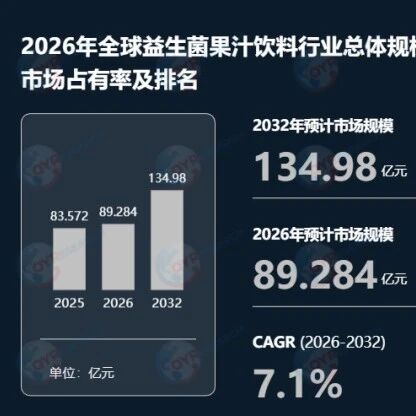
Core Viewpoint - The global probiotic juice beverage market is projected to reach $1.875 billion by 2031, with a compound annual growth rate (CAGR) of 7.3% over the coming years [2]. Market Overview - Major producers in the global probiotic juice beverage market include Yakult Honsha, Danone, PepsiCo, Suja Life, and GoodBelly, with the top four companies holding approximately 28% market share in 2024 [5]. Industry Chain Analysis - **Upstream**: The upstream segment focuses on probiotic strains, fruit raw materials, and production equipment, with key competitive points being technological barriers and supply stability. Research and development of high-activity strains and fresh juice processing are critical [7]. - **Midstream**: The midstream segment involves the transformation from raw materials to finished products, including formula development, fermentation production, and quality control. The production model and technology level significantly influence product competitiveness [7]. - **Downstream**: Traditional sales channels include supermarkets and convenience stores, while emerging channels like e-commerce and social commerce are growing rapidly. The main consumer groups are young professionals, mothers, and fitness enthusiasts [7]. Policy Analysis - **U.S. Policies**: Compliance with FD&C Act and FSMA is required, including registration and GMP adherence. Probiotic strains must be listed as "GRAS" or approved as food additives, and health claims must be clearly stated [9]. - **EU Policies**: The European Food Safety Authority (EFSA) mandates scientific evaluation for health claims, and new food ingredients must undergo safety assessments. Regulations require clear labeling of strain numbers and viable counts [9]. Industry Development Trends - **Technological Advancement**: The industry is moving towards high-end technology and product precision, with a focus on developing proprietary probiotic strains suited for local populations. Innovations like microencapsulation are enhancing product stability and shelf life [10]. - **Channel Integration**: There is a trend towards integrating online and offline channels, with e-commerce and instant retail gaining traction. Sustainable practices and regulatory compliance are becoming essential for brand value [10]. Development Opportunities - **Innovation and Product Precision**: The development of proprietary probiotics and the use of unique ingredients are creating differentiated products that cater to local health needs. Technologies that enhance probiotic survival rates are also expanding market potential [11]. - **Channel Expansion**: Online channels are rapidly growing, with a focus on reaching younger consumers. Offline penetration into niche markets like gyms and restaurants is also increasing, supported by policy initiatives for domestic strain development [11].
中国慢病疼痛医疗器械市场现状研究分析与发展前景预测报告
QYResearch· 2025-12-30 09:59
Core Viewpoint - The chronic pain medical device market in China is expected to grow significantly, driven by factors such as an aging population, increasing prevalence of chronic diseases, improved policy and insurance environments, and technological advancements [5][11]. Market Overview - The sales revenue of China's chronic pain medical device market is projected to reach $386.51 million in 2024 and $720 million by 2031, with a compound annual growth rate (CAGR) of 9.29% from 2025 to 2031 [5]. Industry Concentration and Competition - Major players in the Chinese market include Medtronic, Xiangyu Medical, Boston Scientific, Abbott, and OMRON, with the top three companies holding approximately 55.9% of the market share in 2024 [9]. Development Drivers - The market is primarily driven by three factors: 1. Aging population and high incidence of chronic diseases, leading to increased demand for pain management devices [11]. 2. Improved policies and insurance frameworks that facilitate multi-disciplinary management of pain [11]. 3. Technological advancements, including wearable devices and smart pain management solutions, enhancing personalized treatment options [11]. Challenges - The industry faces several challenges: 1. Fragmented market competition, with international brands dominating high-end segments while domestic companies focus on mid to low-end markets [11]. 2. High regulatory and clinical entry barriers, increasing pressure on small and medium enterprises [11]. 3. Incomplete payment systems, limiting the adoption of certain pain management devices in primary care and home settings [11]. 4. Insufficient awareness among patients and doctors regarding non-drug pain treatments, necessitating further market education [11]. Future Trends - The market is expected to trend towards smart and home-based solutions, with advancements in AI, big data, and IoT enabling remote monitoring and personalized treatment [12]. - The demand for portable and easy-to-use devices is rising, shifting the market focus from hospital-centric to a dual "hospital + home" model [12]. - Domestic innovation and international expansion are anticipated to be key trends, with policies supporting local manufacturers and new market opportunities emerging in regions like Southeast Asia and the Middle East [12]. Policy Framework - The Chinese government emphasizes the development of the medical device sector through various policies aimed at enhancing innovation and competitiveness [13][15]. - Key policies include the "Healthy China 2030" initiative and the "Made in China 2025" plan, which focus on improving the innovation capabilities of medical devices [13][15]. Supply Chain Analysis - The supply chain for chronic pain medical devices includes upstream raw material suppliers such as Nippon Steel and SABIC, and downstream markets comprising hospitals, home care, and rehabilitation centers [19][20]. - The hospital sector is the primary market for high-end devices, while the home care segment is rapidly growing, particularly for non-invasive devices like TENS units [20].