QYResearch

Search documents
成长的烦恼:QYResearch如何跨越挑战,实现研究能力的迭代升级?
QYResearch· 2025-12-05 01:53
Core Viewpoint - The market research industry is transitioning into an era where the true scarcity lies in the depth of insights and judgments derived from frontline scenarios, rather than just data collection. QYResearch aims to enhance its research capabilities by focusing on proximity to real-world situations and client issues, rather than merely accelerating data gathering [1]. Group 1: Research Depth - Research requires strength and depth, which fundamentally comes from the depth of interviews. QYResearch emphasizes that the quality of reports is determined by how deeply questions are asked and how accurately truths are observed [3]. - Since its establishment in 2007, QYResearch has focused on various sectors such as machinery, electronics, pharmaceuticals, automotive, and new energy, building a global research and service network to support decision-making for numerous manufacturers, component suppliers, capital institutions, and government departments [3]. - The company prioritizes "deep interviews" as a core asset, conducting multiple rounds of interviews across different roles and regions for cross-validation, and tracing each major project report back to specific interview subjects [3]. Group 2: Global Interview Network - To support its pursuit of interview depth, QYResearch has established a truly global research network with offices and research teams in North America, Europe, and Asia, gathering management and analytical talent from countries including China, the USA, Japan, South Korea, India, Germany, Switzerland, and Canada [4]. Group 3: Shift from Problem-Oriented to Scenario-Oriented - QYResearch's second keyword in upgrading research capabilities is "details." Unlike traditional market research that often values sample size, QYResearch focuses on whether samples are genuinely relevant to business scenarios and contain sufficient specific operational information [5]. - For instance, when researching a type of industrial equipment, QYResearch delves into specific aspects such as the exact installation location, daily interactions by operators, maintenance cycles, fault patterns, and the processes for spare part replacements [6].


行业聚焦:全球锂电池导电剂行业头部企业市场份额及排名调查(附厂商名单)
QYResearch· 2025-12-04 01:54
Core Viewpoint - The article discusses the current state and future trends of conductive agents in lithium-ion batteries, emphasizing the shift towards high-performance materials and customized solutions to meet the evolving demands of energy density and efficiency in battery applications [4][11][15]. Market Overview - The global market for lithium battery conductive agents is dominated by major manufacturers such as Tianai Technology, Imerys Graphite & Carbon, Cabot, and Denka, with the top four companies holding approximately 61.0% market share in 2024 [4]. - Power batteries are the primary demand source, accounting for about 63.7% of the market [8]. Product Segmentation - Carbon black is currently the leading product type, representing around 46.5% of the market share [10]. - The industry is transitioning from traditional carbon black conductive agents to more efficient systems that include high-structure carbon black, carbon nanotubes (CNT), and graphene [11]. Future Trends - The future of conductive agents will focus on customized solutions tailored to different battery chemistries, such as LFP, NCM, and silicon-carbon anodes, utilizing multi-dimensional conductive networks [12][16]. - High-end products like CNT conductive agents are rapidly expanding production capacity, driven by the growth in power and energy storage batteries [13][17]. Environmental and Quality Considerations - The production of conductive agents is evolving towards environmentally friendly practices, including water-based systems and low VOC emissions, in response to global ESG requirements [14][18]. - There is an increasing demand for stringent quality management and consistency in production to meet the expectations of downstream battery manufacturers [14][18]. Challenges in the Industry - The industry faces cost pressures due to fluctuations in raw material prices and the strong bargaining power of large battery manufacturers, which often view conductive agents as a cost item rather than a core value [19]. - The market is experiencing a rise in technical barriers and product homogenization, making it difficult for companies with insufficient R&D investment to differentiate themselves [20]. - The lengthy customer certification process for conductive agents poses a challenge for new entrants, as established suppliers dominate the market [21]. Conclusion - The conductive agent market for lithium batteries is undergoing significant changes, driven by technological advancements, environmental considerations, and evolving customer demands, which present both opportunities and challenges for industry players [4][11][15].


全球与中国E-House市场现状及未来发展趋势
QYResearch· 2025-12-04 01:54
Core Viewpoint - The E-House market is experiencing significant growth driven by demand across various industries, including power, industrial automation, oil and gas, mining, and transportation, with a projected compound annual growth rate (CAGR) of 9.36% from 2025 to 2031 [4][6]. Market Overview - The global E-House market is expected to reach $1.894 billion in sales in 2024 and $3.608 billion by 2031, with China accounting for 29.97% of the global market in 2024, projected to increase to 34.33% by 2031 [6]. - The E-House product categories include low voltage, medium voltage, and high voltage, with medium voltage E-House holding a core market position, expected to account for 50.99% of revenue by 2031 [6][7]. Industry Demand Drivers - The demand for E-House solutions is driven by the need for smart grids and renewable energy integration in the power sector, industrial automation, and rapid deployment in sectors like data centers and transportation [4][10]. - Urban distribution and the need for upgrading aging power grids are pushing E-House to replace traditional substations, enhancing construction efficiency and operational effectiveness [11]. - The growth of data centers and high-energy-consuming industries is increasing the demand for reliable power solutions, with E-House providing modular and rapid deployment capabilities [12]. Competitive Landscape - Major players in the E-House market include ABB, Siemens, Schneider Electric, and Hitachi Energy, with the top five companies holding a combined market share of 52.13% in 2024 [8][24]. Future Outlook - The E-House industry is expected to evolve towards higher reliability, intelligence, modularity, and standardization, driven by advancements in sensor technology and remote monitoring [9]. - Emerging markets and new application scenarios, such as renewable energy projects and urban infrastructure expansion, will continue to optimize the global market structure, providing new growth opportunities [9].

行业聚焦:全球卡痛提取物行业头部企业市场份额及排名调查(附厂商名单)
QYResearch· 2025-12-04 01:54
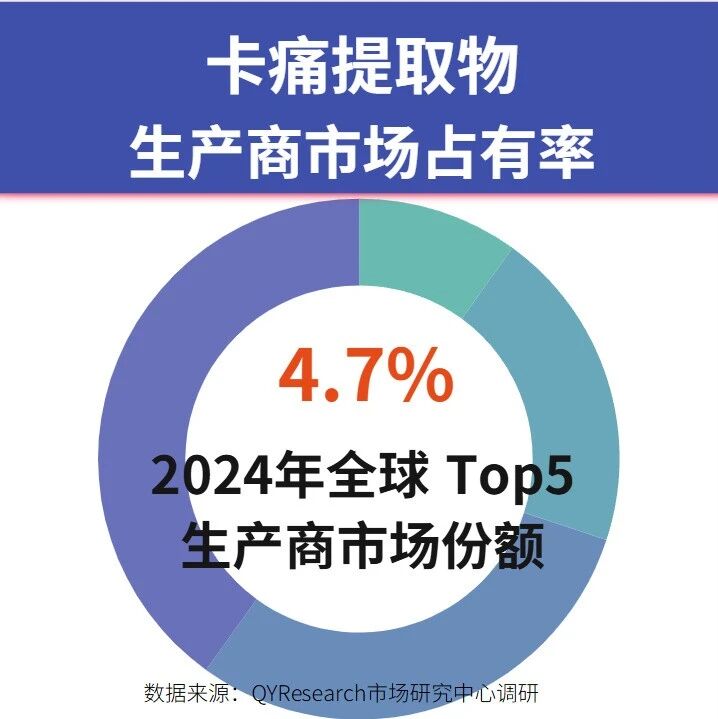
Core Insights - The global kratom extract market is projected to reach $270 million by 2031, with a compound annual growth rate (CAGR) of 7.1% in the coming years [5] - The market is characterized by a shift from traditional forms to high-purity extracts and functional beverage additives, driven by increased awareness in regions like Europe and Southeast Asia [12] Market Size, Classification, and Application - The leading manufacturers in the global kratom extract market include MIT45, VivaZen, Happy Hippo, Kratomade, and Kats Botanicals, with the top five companies holding approximately 4.7% market share in 2024 [7] - Powdered forms currently dominate the product type segment, accounting for about 29.3% of the market share [9] - Offline sales channels are the primary source of demand, representing around 64.4% of the market [10] Industry Development Trends - There is a growing demand for kratom products, with a trend towards higher purity extracts and ready-to-drink products, supported by multi-channel sales strategies [12] - Regulatory scrutiny is increasing, with many countries emphasizing safety and compliance, necessitating more resources for companies to meet these standards [13] - The industry is moving towards standardized production and quality control, addressing previous issues of inconsistent product quality [14] - Branding and educational marketing are becoming more important, shifting from price competition to building trust and transparency with consumers [15] Key Market Drivers - The demand for kratom extracts is diversifying, with applications extending to capsules, beverages, and custom formulations targeting specific consumer needs [17] - Compliance and traceability are becoming essential for market entry, with a focus on legal sourcing and product safety [18] - The industry is transitioning to standardized production methods, enhancing product safety and stability [19] - Brand trust and professional image are critical for competition, with companies focusing on risk communication and consumer education [20] Market Challenges - There is significant regulatory uncertainty regarding kratom, with varying legal statuses across countries, posing risks for businesses [21] - Concerns about product safety and public perception can lead to negative media coverage and consumer distrust [22] - The lack of uniform quality standards results in significant variability in product quality, affecting brand reliability [23] - Financial institutions and distribution channels are cautious, leading to challenges in funding and market expansion [24]
QYResearch 如何助力罗氏诊断制定中国市场战略
QYResearch· 2025-12-04 01:54
一、敬畏市场:让数据成为穿透复杂生物技术产业的 "唯一真相" 在核酸检测、基因分析与分子诊断全面进入 "效率时代"的背景下,全球生物试剂与酶工程产业正经历深层重构。而作为核心底层酶制剂之一,全能核酸 酶因其对 所有形式的 DNA和RNA 的广谱降解能力与高效、低残留特性,正在成为体外诊断( IVD)、疫苗工艺、细胞治疗、原核表达产物纯化及核酸污 染控制的底层标配。在这个既高速发展又高度敏感的产业中,任何关于需求预测、技术替代率、竞争格局、法规要求或供应链安全性的判断,稍有偏差即可 引导巨头企业走向错误方向。 罗氏诊断之所以找到 QYResearch,本质是在寻求一种足够冷静、足够真实、足够接近产业底层机制的研究方式。而为了回答他们关于"未来 5 年中国 全能核酸酶市场的真实增长逻辑 ""全能核酸酶在生物制药中的渗透速度""国产替代风险""成本结构演进路径"等关键问题,我们与罗氏团队进行了近 两 个 月、十余轮深度交流。每一次沟通,都是在巨量数据、复杂技术路线、快速变化的法规环境与多源反馈之间,剥离噪音、重建真相的过程。 1)全球覆盖 × 中国深度:构建能穿透产业链的多维数据立方体 为了确保本项目中每一个判断都 ...

全球与中国甲基丙烯酸正丁酯行业发展现状分析及前景趋势报告
QYResearch· 2025-12-03 04:16
Core Viewpoint - The article discusses the current status, trends, and future prospects of the n-Butyl Methacrylate (n-BMA) industry, highlighting its applications, market dynamics, and the impact of regulations on its development [5][8][19]. Group 1: Industry Current Status - n-Butyl Methacrylate is primarily produced by companies such as Röhm, Mitsubishi Chemical Group, and LX MMA, with stable supply from regions including Germany, the USA, South Korea, Japan, and China [5][18]. - The production process of n-BMA is sensitive to the price fluctuations of upstream materials like MAA and MMA, which significantly affect market prices [6][19]. - The main applications of n-BMA include coatings, adhesives, sealants, and plastic modification, where it serves as a "low Tg soft monomer" to enhance properties like weather resistance and adhesion [4][7]. Group 2: Development Trends - The demand for n-BMA is expected to grow steadily, driven by its applications in coatings, adhesives, and sealants [8][19]. - Production processes are evolving towards low-carbon solutions in response to environmental policies, with a focus on low-carbon MMA and n-BMA [9][20]. - The presence of alternative products in the market poses a challenge, as other methacrylate products can effectively substitute n-BMA in certain applications [10][11]. Group 3: Market Size Analysis - According to QYResearch, the global n-BMA market is projected to reach $207 million in sales by 2024 and $281 million by 2031, with a compound annual growth rate (CAGR) of 4.81% from 2025 to 2031 [16]. - The Chinese market is rapidly growing, expected to account for approximately 41.88% of the global market by 2024, increasing to 44.94% by 2031 [16]. Group 4: Opportunities and Driving Factors - The strong demand from downstream industries such as coatings and adhesives is a key driver for the stable development of the n-BMA industry [19]. - Innovations in low-carbon production processes and compliance with stricter VOC regulations are expected to create growth opportunities for n-BMA [20][21].

行业聚焦:全球家禽肠道健康优化方案行业头部企业市场份额及排名调查(附厂商名单)
QYResearch· 2025-12-03 04:16
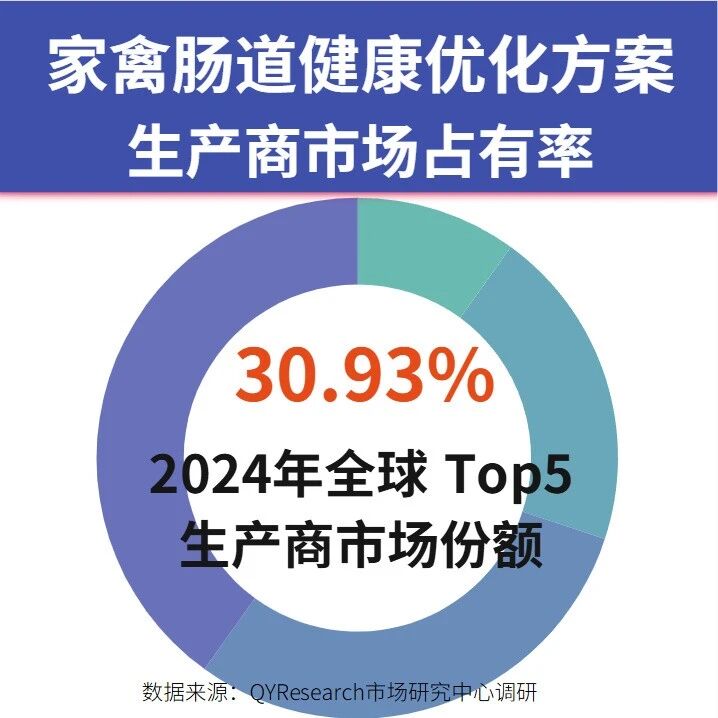
Core Insights - The article discusses the optimization solutions for poultry gut health, focusing on feed additives, nutritional strategies, and management practices to enhance digestive health and reduce disease risks [1][3][4]. Market Overview - The poultry industry has undergone significant changes due to genetic improvements and fluctuations in feed ingredient prices, leading to increased demand for enhanced nutritional and management practices [3]. - The global demand for antibiotic-free (ABF) poultry has surged, with over 50% of chicken production in the U.S. adhering to "no antibiotics ever" (NAE) programs [3][4]. - The market for poultry gut health optimization solutions is projected to reach $4.882 billion by 2024, with a compound annual growth rate (CAGR) of 8.86% [10]. Current Development - There has been a surge in the development of alternative gut health optimization solutions, including probiotics, prebiotics, enzymes, organic acids, and plant-based products [4]. - Regulatory support for antibiotic alternatives is increasing, particularly in Europe and North America, driving the adoption of gut health optimization solutions [6]. - Innovations in feed additives are aiding poultry producers in optimizing feed efficiency and improving overall flock health [4][6]. Future Trends - The adoption of ABF production methods is on the rise, driven by consumer demand for antibiotic-free meat, which will propel the development of alternative gut health solutions [5]. - There is a growing emphasis on sustainability and animal welfare, leading to increased demand for solutions that improve feed conversion rates and reduce waste [5]. - The market is expected to expand globally, particularly in developing regions like Asia and Africa, as poultry consumption increases [5]. SWOT Analysis - **Strengths**: Regulatory support for antibiotic alternatives, growing demand for antibiotic-free poultry, and advancements in microbiome science [6]. - **Weaknesses**: High initial investment costs for implementing advanced gut health solutions and the complexity of managing gut health due to various influencing factors [7]. - **Opportunities**: Expanding global market, potential for innovative product development, and integration with digital solutions for improved gut health management [8]. - **Threats**: Increasing market competition and rapidly changing consumer preferences that may disrupt traditional poultry markets [9]. Market Segmentation - Probiotics and prebiotics currently dominate the market, accounting for approximately 40.73% of the share, as they are crucial for improving gut microbiota and overall poultry health [15]. - Broilers represent the largest demand source, making up about 68.80% of the market, due to their rapid growth and high feed conversion efficiency [17].
行业聚焦:全球滑轨润滑剂行业头部企业市场份额及排名调查(附厂商名单)
QYResearch· 2025-12-03 04:16
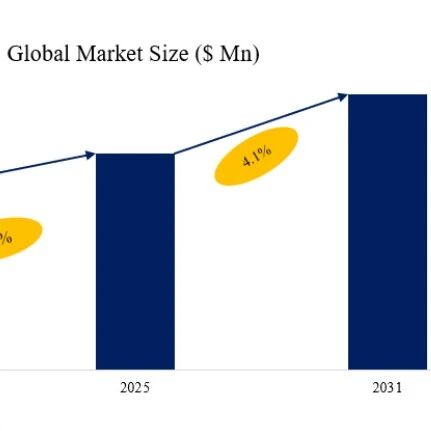
Core Viewpoint - The article discusses the growth and trends in the slide rail lubricant market, driven by manufacturing upgrades and the localization of equipment in China, with a projected global market size of $230 million by 2031 and a CAGR of 4.1% from 2025 to 2031 [2]. Market Analysis - The demand for slide rail lubricants in China is significantly influenced by the "Made in China 2025" initiative and the acceleration of high-end equipment localization, leading to increased usage in CNC machine tools and smart manufacturing lines [2]. - The automotive, rail transportation, wind power, aerospace, and 3C electronics industries are increasingly reliant on high-precision processing, which enhances the performance requirements for lubricants [2]. - The substantial number of existing machine tools creates a stable demand for replacement and maintenance, supporting market growth [2]. Supply Chain Situation - The upstream supply chain includes base oils (mineral oils, PAO synthetic oils, ester synthetic oils), functional additives (anti-wear agents, extreme pressure agents, adhesion agents, corrosion inhibitors), and blending equipment, with base oils accounting for approximately 45%-50% of the total cost [5]. - Midstream companies focus on formulation design, blending production, and testing, while downstream customers include machine manufacturers, industrial maintenance companies, automotive parts manufacturers, and aerospace and electronics manufacturers [5]. Technical Trends - Development is focused on low friction and anti-"stick-slip" performance to meet the precision requirements of domestic high-speed CNC machine tools [6]. - There is a push for high adhesion and long-life products to reduce oil change frequency and maintenance costs [6]. - New formulations compatible with water-based cutting fluids and hydraulic systems are gaining popularity [6]. - Stricter environmental regulations are driving the development of low-volatility and biodegradable lubricants [6]. - Leading companies are beginning to implement online lubrication monitoring and oil condition sensors for predictive maintenance and remote operations [6]. Industry Policies - The "Made in China 2025" policy identifies high-end CNC machine tools and basic manufacturing equipment as key development areas, rapidly increasing the demand for slide rail lubricants [7]. - The Ministry of Industry and Information Technology and the Ministry of Ecology and Environment are strengthening VOC emissions and waste oil recovery management for lubricants, promoting the iteration of green and environmentally friendly lubricants [7]. - National standards (e.g., GB/T 7631.9) have been established to regulate lubricant performance and application classifications, raising market entry barriers [7]. - Data from the China Machine Tool Industry Association indicates a significant increase in the localization rate of high-end machine tools, enhancing the trend of domestic slide rail lubricants replacing imports [7]. - Large-scale infrastructure and manufacturing investments (e.g., in new energy vehicles, wind power, and rail transit) provide a broad application space for slide rail lubricants [7]. Market Drivers - The growth in the machine tool industry is driven by the increasing demand for CNC machine tools, grinding machines, and boring machines, which rely heavily on slide rail lubricants for low friction, low wear, and high precision operation [8]. - The rising precision processing and surface quality requirements in industries such as electronics, aerospace, and medical devices are pushing the use of lubricants with high adhesion and anti-stick-slip properties [8]. - Policies supporting industrial modernization and smart manufacturing in major manufacturing countries like China, India, and Southeast Asia are driving the replacement and new market for lubricants [8]. Market Development Opportunities - The expansion of manufacturing in the Asia-Pacific region, particularly in China, India, and Vietnam, is expected to drive demand for slide rail lubricants, with the region projected to maintain the fastest compound growth rate [12]. - The demand for high-performance and environmentally friendly lubricants is expected to grow, with the development and application of low-volatility, long-life, and zinc-free eco-friendly formulations becoming new profit growth points [13]. - The trend towards full lifecycle service for equipment is leading more machine tool companies to collaborate with lubricant suppliers to provide integrated maintenance solutions, including oil monitoring, predictive maintenance, and lubrication management services [13]. - The integration of IoT sensors and oil monitoring systems allows for real-time detection of lubricant conditions, enhancing the efficiency and added value of lubricant usage [14].
QYResearch市场洞见:亚太地区为何成为全球石材市场的增长极?
QYResearch· 2025-12-03 04:16
Core Insights - The stone industry is approaching a new cyclical turning point due to global manufacturing reshaping, urbanization adjustments, and evolving architectural aesthetics. Traditional high-end markets in Europe and the U.S. are stabilizing, while emerging regions are rapidly changing the global supply-demand structure through construction investments and infrastructure expansion [1][2]. Group 1: Market Dynamics - The Asia-Pacific region is transforming from the "largest consumption area" to the "growth engine" of the global stone industry, marked by significant capacity expansion, demand growth, supply chain integrity, and technological advancements [1][4]. - Urbanization in Asia is occurring at a rate 2-3 times faster than in Europe and the U.S., driving annual stone consumption growth of 6%-12% in cities like India and China, compared to 1%-3% in mature markets [5][6]. Group 2: Supply Chain and Competitiveness - The efficiency of the supply chain is crucial for global competitiveness, with lower system costs in stone processing, resin automation, and logistics in Asia making products more competitive globally, even prompting local European companies to shift to OEM or outsourcing models [7][8]. - The Asia-Pacific region has developed the most complete and rapidly evolving stone supply chain, encompassing upstream to downstream processes, positioning it as a major driver of global pricing and technological progress [4][8]. Group 3: Future Opportunities - The next five years will present structural opportunities driven by a reconfiguration of the industry rather than mere demand expansion. Key variables that could reshape the future landscape are being closely monitored, including policy changes and technological advancements [9][10]. - The shift from natural stone to composite material systems is notable, with Asia-Pacific's growth rate in this area being the highest globally, indicating a competitive landscape for both natural and engineered stone materials [10]. Group 4: Environmental and Competitive Landscape - Carbon requirements are expected to reshape the supply chain, with the industry transitioning from a "resource-based" to a "clean manufacturing" model, focusing on resin system replacements and energy-efficient processing equipment [11][12]. - A multi-polar competitive landscape is forming, with Indian suppliers expanding distribution networks in the Middle East, Europe, and Africa, while local processing plants in Vietnam and Indonesia are beginning to handle global orders [13][14]. Group 5: Long-term Perspective - A long-term approach is essential for understanding the complex dynamics of the stone industry, as changes can be subtle yet significant, impacting international pricing and regional supply chain strategies [15][16]. - The growth of the Asia-Pacific region as a global growth engine is not coincidental but a result of comprehensive factors including supply chain completeness, urbanization structure, technological evolution, manufacturing costs, and regional capital expenditures [16].
三角验证法:QYResearch确保数据准确性的三道核心防线
QYResearch· 2025-12-02 04:37
Core Viewpoint - The article emphasizes the importance of rigorous data and the use of the triangulation method in consulting to enhance decision-making and management innovation for businesses [2][3]. Group 1: Triangulation Method - The triangulation method is a research approach that uses multiple data sources and methods to verify the authenticity and reliability of information, aiming to reflect the objective market situation [3][5]. - QYResearch employs a feedback mechanism involving clients, research subjects, and analyst teams to ensure accurate market insights through direct communication and field visits [3][4]. - The method helps eliminate uncertainties, improve consulting efficiency, and enhance decision-making processes by providing a comprehensive understanding of market conditions [4][6]. Group 2: Data Sources and Reliability - QYResearch's data sources are diverse, including public data, paid databases, proprietary databases, expert interviews, and firsthand surveys, which help reduce biases from single data sources [5][6]. - The reports generated by QYResearch are based on representative samples and factual information, avoiding decisions based on intuition or guesswork [6][7]. - The company aims to provide guiding opinions for the market through the integration of various information sources and public data [5][6]. Group 3: Professional Expertise - QYResearch emphasizes the importance of professional teams in consulting, as they can provide tailored advice based on close engagement with businesses [7][8]. - The analysts at QYResearch are specialized in specific industries, ensuring high-quality and systematic consulting services [7][8]. - The company is exploring advanced technologies like generative AI and big data to enhance its consulting services and predictive capabilities [7][8].