中国有色金属工业协会硅业分会

Search documents
硅产业链新闻动态
中国有色金属工业协会硅业分会· 2025-06-05 08:10
Group 1 - Longi Green Energy is accelerating the construction of its 100GW monocrystalline silicon wafer and 50GW monocrystalline battery project in Jinghe New City, Xi'an, which is expected to create over 15,000 jobs and become the largest and most advanced photovoltaic production base globally [1] - The total investment for Longi's project is approximately 45.2 billion yuan, with plans for the first line to be operational by Q3 2024 and full production by the end of 2025 [1] - The project was initially planned for 18 months of construction, starting on June 15, 2023, and has been adjusted to focus on 12.5GW of high-efficiency BC batteries in the first phase [1] Group 2 - Daxing New Energy's Anji Intelligent Manufacturing Base project, with a total investment of 4.7 billion yuan, is set to complete acceptance by the end of May 2023 and achieve full production by the end of June 2023 [2] - The project will feature 4.8GW of high-efficiency heterojunction (HJT) batteries and 7.2GW of fully automated battery module production lines [2] - Daxing New Energy focuses on the research and manufacturing of HJT and perovskite/HJT stacked technology, providing high-efficiency solar photovoltaic products globally [2] Group 3 - Heliene has launched its third solar module production line in Minnesota, increasing its annual capacity to 1.3GW, with the new line having a capacity of 500MW [4][5] - The new production line received $2.3 million in funding support from the Minnesota Department of Employment and Economic Development and $54 million in equity financing [5] - Heliene is collaborating with Suniva and Corning to produce a unique solar module using domestically manufactured materials, enhancing its integrated supply chain strategy in the U.S. market [5] Group 4 - SEG Solar has officially launched its first solar cell production facility in Indonesia with an initial capacity of 2GW [6] - The facility will produce high-efficiency n-type solar cells with an average conversion efficiency of 26.4%, utilizing innovative printing and sintering processes [6][7] - SEG plans to expand the facility's capacity to 5GW and aims to create a vertically integrated photovoltaic manufacturing base, targeting markets in the U.S., Europe, and Indonesia [7]


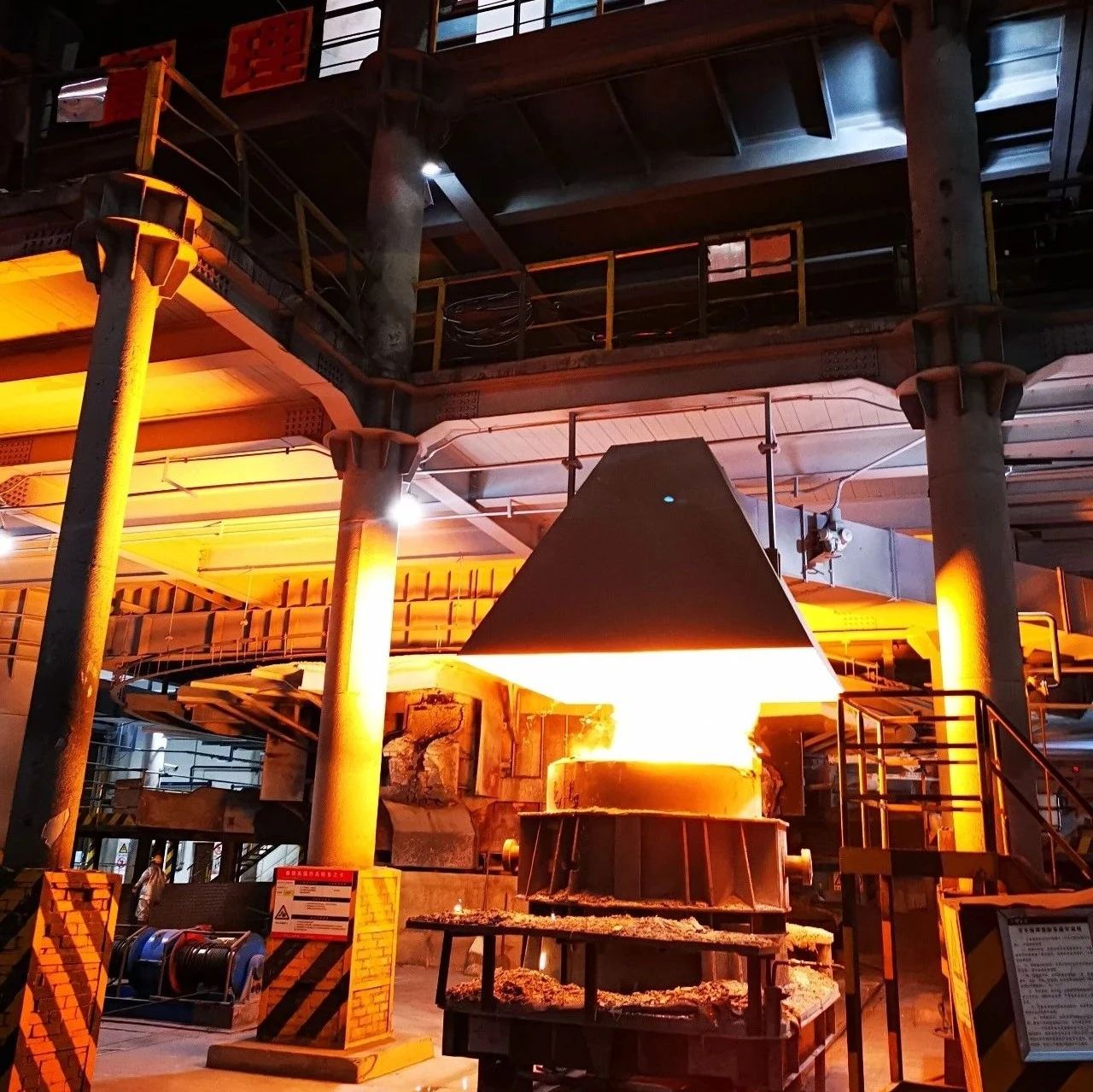
【安泰科】工业硅周评—市场情绪悲观 等待止跌契机(2025年6月4日)
中国有色金属工业协会硅业分会· 2025-06-04 08:51
Core Viewpoint - The industrial silicon market is experiencing slight price fluctuations, with a recent overall decline in prices despite some recovery in specific contracts. The market sentiment remains cautious due to weak downstream demand and production expectations in certain regions [1][2]. Price Trends - The main contract price fluctuated from 7215 CNY/ton to 7280 CNY/ton, with an increase of 0.90%. The national average price decreased by 214 CNY/ton to 8747 CNY/ton. Specific grades saw price changes: 553 grade at 8452 CNY/ton (down 200 CNY), 441 grade at 9031 CNY/ton (down 154 CNY), and 421 grade at 9356 CNY/ton (down 261 CNY) [1]. - The FOB price remained stable, indicating no significant changes in export pricing [1]. Supply and Demand Dynamics - On the supply side, some manufacturers in southern regions have resumed production, while northern large manufacturers are steadily advancing their production plans, leading to an overall increasing production trend [1]. - Demand from downstream sectors is mixed, with some single-unit factories increasing their operating rates and production, while aluminum alloy manufacturers are purchasing industrial silicon as needed, resulting in a slight increase in total demand for industrial silicon [1]. Market Sentiment - The market sentiment is currently pessimistic due to weak downstream demand and anticipated production in the southwestern region. However, prices are significantly below production costs, leading the market to await a potential price stabilization point [2].
硅产业链新闻动态
中国有色金属工业协会硅业分会· 2025-06-04 08:51
Group 1 - Yong'an Futures strategically invests in leading polysilicon companies, continuing to promote the integration of production and finance resources [1] - The investment in Yongxiang Co., Ltd. aims to raise up to 10 billion yuan, with major strategic investors including top domestic financial institutions [1] - This strategic investment represents a significant breakthrough in the futures industry, enabling deeper participation in the new energy sector and optimizing industrial structure [1] Group 2 - The National Energy Administration has included distributed photovoltaic, new energy storage, and smart microgrids in the exemption scope for electricity business licensing [2] - The new policy aims to stimulate the vitality of operating entities and promote high-quality development in the industry [2] - Incremental distribution companies with electricity business licenses will enjoy rights to invest and manage distribution networks within their designated areas [2] Group 3 - Yangzhou Bangjie continues to suspend production due to intensified competition and significant price declines in the photovoltaic industry [3] - The company will closely monitor industry developments and make cautious decisions regarding resuming production based on shareholder interests [3] - The seamless clothing business remains the primary revenue source for Bangjie, maintaining stable profitability despite challenges in the photovoltaic sector [3] Group 4 - GCL-Poly Energy achieved a record high in distributed photovoltaic green electricity trading, reaching 14 million kWh in May [5] - This trading volume represents an 86.7% increase from April, involving 140 distributed photovoltaic power stations [5] - The company has completed over 35 million kWh of distributed photovoltaic green electricity trading and over 1 million green certificate transactions by 2025 [5]


【安泰科】多晶硅周评—节后首周签单 价格暂时稳定(2025年6月4日)
中国有色金属工业协会硅业分会· 2025-06-04 08:51
Group 1 - The core viewpoint of the articles indicates that the prices of various types of polysilicon remain stable despite limited order transactions following the holiday period [1][2] - The transaction price range for n-type re-investment materials is between 36,000 to 38,000 yuan per ton, with an average transaction price of 37,500 yuan per ton, unchanged from the previous period [1] - The transaction price range for n-type granular silicon is between 34,000 to 35,000 yuan per ton, with an average transaction price of 34,500 yuan per ton, also unchanged from the previous period [1] - The transaction price range for p-type polysilicon is between 30,000 to 33,000 yuan per ton, with an average transaction price of 31,300 yuan per ton, remaining stable compared to the previous period [1] - Due to the Dragon Boat Festival holiday, most orders have not yet been finalized, with only 3-4 companies signing new orders, indicating a temporary stability in prices [1] - There is still a certain demand for silicon material procurement from downstream, and the price will depend on the new round of orders, with limited expected decline [1] - The end of the terminal rush installation has occurred, and downstream crystal pulling plants are still exerting strong pressure on silicon material prices, making it difficult for companies to maintain price levels [1] - If prices decline further, more companies are expected to accelerate production halts and maintenance strategies to cope with extreme market conditions [1] Group 2 - As of now, there are 11 polysilicon production companies, all operating at reduced capacity [2] - In May 2025, China's polysilicon production is projected to be 101,600 tons, reflecting a 2.52% increase compared to the previous period [2] - This month, polysilicon companies will undergo capacity replacement, which may lead to a slight increase in production at some bases, while overall supply is expected to remain stable [2] - It is anticipated that the monthly supply will gradually begin to decline in the third quarter, leading to a gradual easing of supply-demand relations and potential for a phase of market recovery [2]
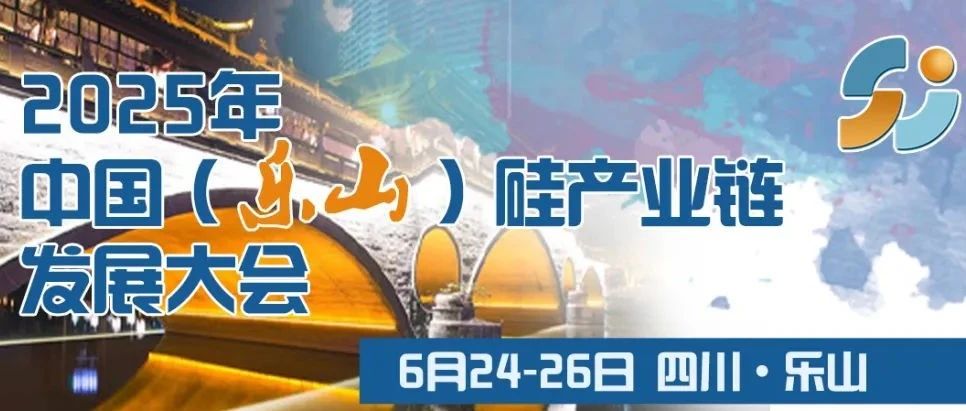
6月24-26日!2025年中国(乐山)硅产业链发展大会在四川乐山举办!
中国有色金属工业协会硅业分会· 2025-06-04 08:51
Group 1 - The core viewpoint of the article highlights the rapid development of China's silicon industry, which is currently facing challenges such as supply-demand mismatches, chaotic market competition, and significant price fluctuations, particularly since 2024 when prices across the silicon industry chain have fallen below cash costs, putting companies in distress [1] - To address these issues, the China Nonferrous Metals Industry Association is organizing the "2025 China (Leshan) Silicon Industry Chain Development Conference" from June 24-26, 2025, in Leshan, Sichuan, aimed at scientifically assessing industry trends and enhancing technological innovation capabilities [1] Group 2 - The conference will focus on themes such as technological innovation for cost reduction and efficiency improvement, and industry collaboration for progress [19] - The event will feature various sessions including a futures cultivation exchange, opening ceremony, keynote speeches, thematic reports, and high-level dialogues addressing topics like the exit of backward production capacity, technological innovation directions, supply-demand trends of main and auxiliary materials, and the prospects of the energy storage market [20][21][22] - The agenda includes specialized workshops on the industrial silicon market, organic silicon industry trends, and the development of new technologies in the photovoltaic sector [23][25]
熔融石英和石英有什么区别?
中国有色金属工业协会硅业分会· 2025-06-03 06:48
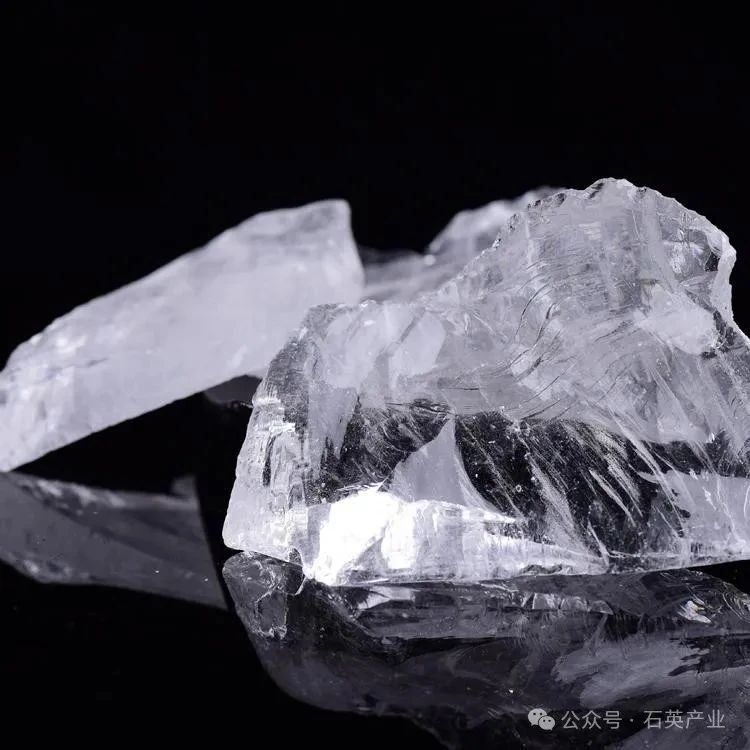
Core Viewpoint - Fused quartz and quartz are closely related but differ in manufacturing processes, purity levels, and specific characteristics, making them suitable for different applications [1][3]. Composition and Structure - Both fused quartz and quartz primarily consist of silicon dioxide (SiO₂), with fused quartz being amorphous and lacking a crystalline structure, while quartz has a crystalline structure [2]. - The amorphous structure of fused quartz is achieved through high-temperature melting, whereas quartz is naturally formed [2]. Manufacturing Process - Fused quartz is produced by melting high-purity silica sand at extremely high temperatures, resulting in a glass-like non-crystalline material, while quartz is a natural mineral that is mined and processed for various uses [2]. - The manufacturing process of fused quartz results in higher chemical purity compared to natural quartz [2]. Purity Levels - Fused quartz typically has a chemical purity exceeding 99.9%, while natural quartz also has a high SiO₂ content but may contain trace impurities depending on its source [2]. - The high purity of fused quartz makes it particularly suitable for applications requiring high optical clarity and chemical resistance [2]. Thermal Properties - Fused quartz has a very low thermal expansion coefficient, providing strong thermal shock resistance, making it suitable for high-temperature applications [2]. - Although quartz also has a low thermal expansion coefficient, its crystalline structure can make it more susceptible to thermal stress under certain conditions [2]. - Fused quartz has a high softening temperature of approximately 1670°C, allowing it to maintain structural integrity at elevated temperatures [2]. Optical Properties - Fused quartz exhibits excellent ultraviolet (UV) transmittance, making it an ideal material for lenses and other optical devices [2]. - While quartz also has good optical properties, the amorphous structure of fused quartz offers better transparency across a wider spectral range from UV to infrared [2]. - The high optical clarity and low scattering characteristics of fused quartz are particularly advantageous for precision optical applications [2]. Electrical and Chemical Resistance - Fused quartz provides outstanding electrical insulation properties, making it suitable for electronic and semiconductor applications [5]. - Both materials exhibit strong corrosion resistance and chemical inertness, but the higher purity of fused quartz typically results in better performance in corrosive chemical environments [5]. Applications - Fused quartz is commonly used in high-precision optical components, semiconductor manufacturing, and high-temperature lighting applications [5]. - Quartz is utilized in less demanding optical applications, as well as in the production of quartz glassware and industrial components [5]. - The superior performance of fused quartz makes it the preferred material for applications requiring extremely high purity, thermal stability, and optical clarity [5].
【安泰科】光伏玻璃价格(2025年6月3日)
中国有色金属工业协会硅业分会· 2025-06-03 06:48
『 主办单位 : 中 国 有 色 金 属 工 业 协 会 硅 业 分 会 了 ㄴ Hosted by: Silicon Industry of China Nonferrous Metals Industry Association – 回国確心 China Silicon Industry ...

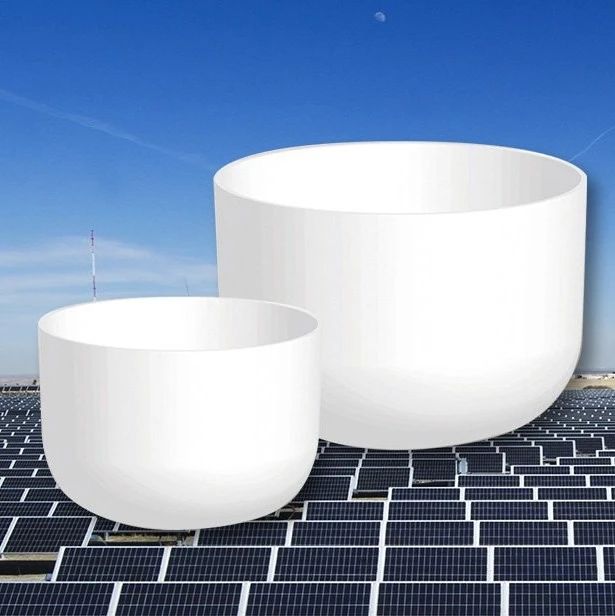
【安泰科】高纯石英砂/石英坩埚价格(2025年6月3日)
中国有色金属工业协会硅业分会· 2025-06-03 06:48
回国確心 China Silicon Industry 『 主办单位 : 中 国 有 色 金 属 工 业 协 会 硅 业 分 会 了 ㄴ Hosted by: Silicon Industry of China Nonferrous Metals Industry Association – ...
关于召开2025年中国(乐山)硅产业链发展大会的通知
中国有色金属工业协会硅业分会· 2025-05-30 08:26
Core Viewpoint - The rapid development of China's silicon industry faces challenges such as supply-demand mismatches, chaotic market competition, and significant price fluctuations, particularly since 2024, where prices across the silicon industry chain have fallen below cash costs, putting companies in distress [1]. Group 1: Conference Overview - The "2025 China (Leshan) Silicon Industry Chain Development Conference" will be held from June 24-26, 2025, in Leshan, Sichuan, organized by the China Nonferrous Metals Industry Association [2]. - The conference aims to promote technological innovation, cost reduction, efficiency enhancement, and industry collaboration [2]. Group 2: Agenda Highlights - The agenda includes a registration day on June 24, 2025, followed by a futures cultivation exchange meeting and an opening ceremony with keynote speeches on June 25 [3]. - High-level dialogues will focus on topics such as the exit of backward production capacity, directions for technological innovation, supply-demand trends for main and auxiliary materials, and the prospects of the energy storage market [3]. Group 3: Specialized Workshops - On June 26, there will be specialized workshops on the industrial silicon industry chain market and technology, as well as the crystalline silicon photovoltaic industry market and technology [4]. - The conference will also feature a visit to the "China Green Silicon Valley" and discussions on the current state and outlook of the silicon industry, opportunities in the crystalline silicon photovoltaic sector, and the impact of de-globalization on the silicon industry [4]. Group 4: Market Trends and Innovations - Topics to be discussed include the operational status and future outlook of the industrial silicon market, trends in the organic silicon industry chain, and developments in overseas industrial silicon [5]. - The conference will also cover advancements in N-type batteries, new silicon wafer technologies, and the evolution of the photovoltaic industry [5]. Group 5: Registration and Participation - The conference will not charge a registration fee, and member units will receive complimentary materials and meal vouchers, while non-member units and excess members will incur a fee of 2000 yuan per set [6]. - Registration can be completed through a designated link, and various promotional opportunities are available for companies [7].
4月份硅产业进出口分析
中国有色金属工业协会硅业分会· 2025-05-30 08:26
Core Viewpoint - The article discusses the export trends and pricing of industrial silicon and polysilicon in April 2025, highlighting a stable overseas market with slight fluctuations in export volumes and prices. Export of Industrial Silicon - In April 2025, industrial silicon exports reached 60,500 tons, a month-on-month increase of 1.64% but a year-on-year decrease of 9.19% [1] - The average export price was $1,478 per ton, down 4.46% month-on-month and down 23.42% year-on-year, primarily due to a sluggish domestic market [1] - Exports to Japan decreased by 15.55% to 10,500 tons, influenced by reduced automotive exports due to tariffs [1] - Exports to South Korea decreased by 1.99% to 5,700 tons, and exports to Europe decreased by 15.81% to 11,100 tons, attributed to lower local automotive sales [1] - Exports to other Asian regions (excluding Japan and South Korea) increased by 25.56% to 29,300 tons, driven by new collaborations and China's competitive pricing [1] Export Destinations - In April, industrial silicon was exported to 45 countries and regions, with the top five being India (10,700 tons), Japan (10,500 tons), South Korea (5,700 tons), Thailand (4,800 tons), and the Netherlands (4,500 tons), accounting for 59.83% of total exports [2] Polysilicon Import Trends - In April 2025, polysilicon imports totaled 954.3 tons, a month-on-month decrease of approximately 67.16%, with Germany and Japan being the primary sources [4] - The average import price for polysilicon was $32.60 per kilogram, up 53.72% month-on-month, with significant price variations between countries [5] - The decline in imports was influenced by reduced demand from domestic downstream enterprises [5] Polysilicon Export Trends - In April 2025, polysilicon exports amounted to 1,262.3 tons, with the Netherlands and Malaysia being the main destinations [9] - The average export price was $6.74 per kilogram, down 8.17% month-on-month, indicating a continued decline in export prices [9] Silicon Wafer Export Trends - In April 2025, domestic silicon wafer exports reached 4.81 GW, a month-on-month increase of 3.66%, with a year-to-date total of 16.45 GW, reflecting a year-on-year decrease of 3.91% [12] - The export demand from Southeast Asia was affected by high anti-dumping tariffs imposed by the U.S., leading to reduced procurement [12] - Recent adjustments in U.S. tariff policies may improve export conditions, coupled with an expected increase in downstream procurement orders [12]