国家能源局

Search documents
《求是》杂志发表习近平总书记重要文章《树立和践行正确政绩观》
国家能源局· 2026-03-31 09:28
Core Viewpoint - The article emphasizes the importance of establishing and practicing a correct view of performance, which is fundamental to the Party's mission of serving the public and ensuring the development of the country for the benefit of the people [2][3]. Group 1: Importance of Performance View - The article states that the view of performance is a fundamental issue that affects the Party's governance and its ability to serve the people [2]. - It highlights that the strength of Party character is crucial in determining the correctness of the performance view, with a focus on public versus private interests [2][3]. Group 2: People-Centric Development - The article asserts that benefiting the people is the greatest achievement, and all efforts should be directed towards serving the public rather than personal gains [3]. - It calls for a commitment to high-quality development as a primary task in building a modern socialist country, emphasizing that a correct performance view is essential for achieving this [3][4]. Group 3: Leadership and Education - The article notes that this year marks the beginning of the "14th Five-Year Plan," making it crucial for local leadership to establish and practice a correct performance view through education and training [4]. - It stresses the need for leaders to enhance their understanding of the significance of the performance view for the development of the Party and the country [5]. Group 4: System and Accountability - The article emphasizes the importance of rectifying prominent issues and establishing clear systems and regulations to guide actions and responsibilities [5]. - It advocates for a comprehensive approach to identify and address institutional weaknesses, ensuring clarity on what can and cannot be done, and enhancing accountability mechanisms [5].


习近平:树立和践行正确政绩观
国家能源局· 2026-03-31 09:28
Core Viewpoint - The article emphasizes the importance of establishing and practicing a correct view of achievements, focusing on serving the people and ensuring that the actions of party members and leaders align with the fundamental purpose of the party, which is to serve the public [3][10][31]. Group 1 - Good cadres must be steadfast in their beliefs, serve the people, be diligent and practical, dare to take responsibility, and maintain integrity [4]. - The fundamental measure of party character is the distinction between public and private interests, with a strong emphasis on selflessness and serving the public good [8]. - Party members must remember that their power and positions are granted by the party and the people, and should be used solely for the benefit of the public [10][24]. Group 2 - A correct view of achievements requires a balance between immediate results and long-term benefits, focusing on practical and beneficial projects rather than superficial ones [12][13]. - The evaluation of cadres should be comprehensive and systematic, taking into account their performance in various contexts and their ability to handle complex issues [15]. - The article stresses the need for a differentiated assessment system that considers the unique circumstances of different regions and positions [34]. Group 3 - The article highlights the necessity of addressing deviations in the view of achievements, which can lead to resource waste and public dissatisfaction [62]. - It calls for a commitment to rectify prominent issues related to the view of achievements, emphasizing the importance of aligning actions with the party's mission of serving the public [62]. - The need for a robust system of rules and regulations to prevent the misuse of power and ensure accountability is also underscored [64].

媒体报道丨首次写入政府工作报告 中国绿色燃料出海 产业示范项目加速推进
国家能源局· 2026-03-31 01:59
Core Viewpoint - The article emphasizes the importance of developing green fuels, such as green hydrogen, green methanol, green ammonia, and sustainable aviation fuel, as a new growth point for China's economy during the 14th Five-Year Plan period, especially in the current geopolitical context [5][15]. Group 1: Green Fuel Development - Green fuels have been included in the government work report for the first time this year, highlighting their significance in promoting green transformation and utilizing surplus wind and solar resources [5]. - The first domestic shipment of green hydrogen-synthesized ammonia has successfully been sent to South Korea, produced from the Chifeng green hydrogen ammonia project, which is expected to expand production to 1.5 million tons by 2028 [8]. - The Daan project by State Power Investment Corporation has a stable operation capacity of 32,000 tons of green hydrogen and 180,000 tons of green ammonia annually, with costs less affected by raw material prices compared to gray ammonia [12]. Group 2: Market Potential and Investment Opportunities - The China Electricity Council predicts that by 2030, the value of China's green fuel industry could exceed 1 trillion yuan, with green hydrogen demand expected to reach between 2.4 million tons and 4.3 million tons annually [15][22]. - The first green methanol dual-fuel power roll-on/roll-off ship has successfully completed its first green methanol refueling operation, with about 500 tons of green methanol injected, reducing greenhouse gas emissions by approximately 85% compared to traditional fuels [18]. - By 2025, the number of commercialized green methanol projects in China is expected to reach 7, with a total capacity of 506,000 tons per year, and over 47,500 tons of green methanol expected to be exported [20]. Group 3: Equipment Manufacturing and Global Competitiveness - The domestic green fuel industry is driving the development of related equipment manufacturing, with a significant increase in overseas orders for hydrogen production equipment [25][26]. - A large hydrogen equipment manufacturer in Hefei has reported a backlog of orders until the end of the year, indicating a substantial growth in demand [28]. - The price of methanol has increased by 72% since the beginning of the year, showcasing the growing importance and value of green fuels, with domestic hydrogen equipment manufacturers poised to seize market opportunities [32].
新闻联播丨“十五五”新图景:增绿降碳 加减之间再造万亿级新机遇
国家能源局· 2026-03-30 13:09
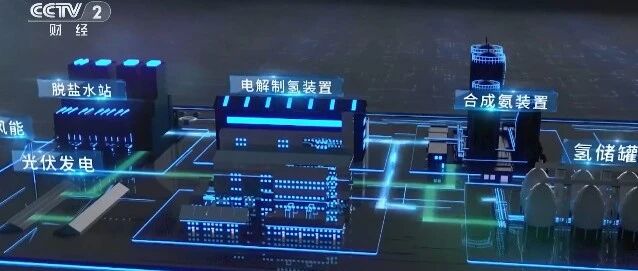
Group 1 - The core viewpoint of the article emphasizes the acceleration of comprehensive green transformation in economic and social development as outlined in the "14th Five-Year Plan" [2] - A significant green energy transition is underway in the offshore waters of western Guangdong, with projects focusing on renewable energy sources [4] - The world's largest offshore wind power project is currently in its first concentrated construction phase, utilizing eight installation vessels for giant wind turbine blades [6] Group 2 - The deep-sea wind energy resources are reported to be three to four times greater than nearshore resources, with the potential to provide over 50 billion kilowatt-hours of clean energy annually by 2030 [8] - The "14th Five-Year Plan" includes a target of over 100 million kilowatts of cumulative installed offshore wind power capacity, doubling the capacity by the end of the previous five-year period [10] - The demand for wind power equipment is projected to drive approximately 170 billion yuan in market opportunities, while specialized offshore operations could generate an additional 220 billion yuan [12] Group 3 - The "14th Five-Year Plan" outlines the establishment of various clean energy bases, including offshore wind and nuclear power, aiming for significant infrastructure development [14] - By around 2030, it is anticipated that about half of the electricity consumed will come from non-fossil energy sources [14] - The plan aims to reduce carbon dioxide emissions per unit of GDP by 17%, equivalent to constructing over 500 "Saihanba" projects annually [16] Group 4 - The emergence of new job opportunities in the green sector is highlighted, with over 200 universities adding "dual carbon" related undergraduate programs and around 300 vocational colleges introducing relevant courses [16] - Companies are increasingly utilizing carbon footprint analysis to identify high emissions and energy consumption areas, leading to new energy-saving and cost-reduction strategies [18] - The transition to a green economy is characterized by the rise of green buildings, zero-carbon factories, and green trade, with the green low-carbon industry expected to exceed 20 trillion yuan by the end of the "14th Five-Year Plan" [20]
习近平在参加首都义务植树活动时强调 为山川大地增添锦绣 让中国式现代化底色更加亮丽
国家能源局· 2026-03-30 10:18
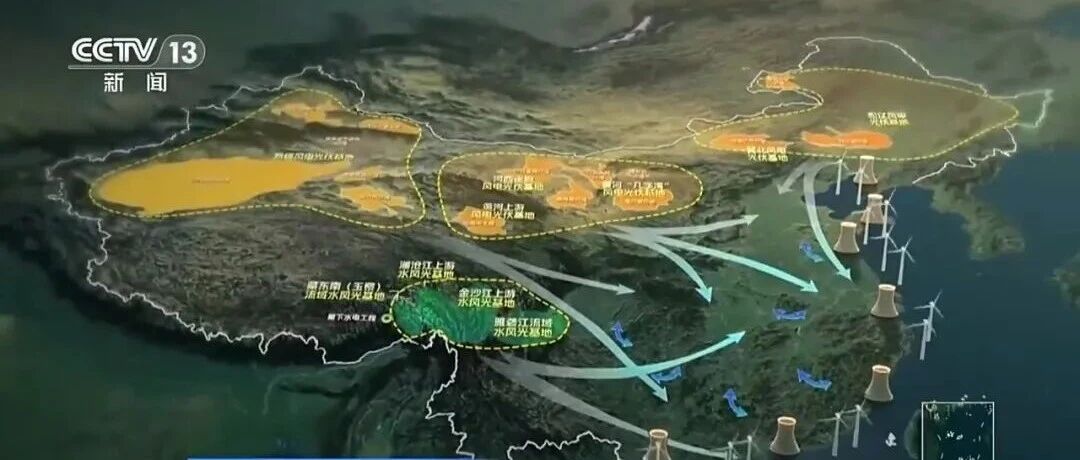
Core Viewpoint - The article emphasizes the importance of ecological construction and the collective effort required for afforestation, highlighting that a beautiful China is essential for modern Chinese development [2]. Group 1: Afforestation Activities - Xi Jinping participated in a tree-planting event in Beijing, engaging with local officials and citizens to promote community involvement in ecological initiatives [3]. - During the event, Xi planted various tree species, including oil pines and Beijing peonies, while encouraging youth to develop aspirations and a love for nature [3]. Group 2: Ecological Achievements - Since the 18th National Congress, China has seen continuous growth in forest area and volume, while desertification and land degradation have been significantly reduced, making it the fastest-growing country in terms of greening [4]. - The recent enactment of the ecological environment code strengthens the legal foundation for building a beautiful China [4]. Group 3: Future Directions for Greening - This year marks the beginning of the 14th Five-Year Plan and the 45th anniversary of the national voluntary tree-planting campaign, emphasizing the need for quality improvement in land greening efforts [4]. - The focus will be on integrating ecological and economic benefits, enhancing forest management, and increasing green spaces in urban and rural areas to improve residents' access to nature [5].

媒体报道︱新型能源体系建设提速
国家能源局· 2026-03-30 08:31
Core Viewpoint - The article emphasizes the importance of energy security and the transition to a new energy system in China, driven by recent geopolitical tensions and domestic policy initiatives aimed at achieving carbon neutrality and sustainable energy development [2][4]. Group 1: Energy Security and Transition - The Chinese government has outlined plans to strengthen energy security and transition towards renewable energy sources, as highlighted in the recent government work report [2]. - The "14th Five-Year Plan" explicitly includes the goal of building an energy powerhouse, which will guide energy development over the next five years [4]. - The construction of a new energy system is deemed essential, with significant achievements in renewable energy over the past decade, including a shift where non-fossil energy consumption has surpassed that of oil [4][6]. Group 2: Renewable Energy Development - By 2025, the power generation structure is expected to see a significant increase in renewable energy sources, with wind and solar power installations projected to rise dramatically by 2060 [6]. - Wind power capacity is expected to grow from 520 million kilowatts in 2024 to between 3.22 billion and 3.34 billion kilowatts by 2060, while solar power capacity is projected to increase from 890 million kilowatts to between 5.5 billion and 6.5 billion kilowatts [6]. - By 2060, renewable energy is anticipated to account for over 90% of total power generation, with wind and solar contributing approximately 77% of the total generation [6]. Group 3: Electrification and Energy Efficiency - The electrification rate in China is projected to reach around 35% by 2030, significantly above the OECD average, with electricity expected to account for over 50% of terminal energy consumption by 2050 [8]. - The government aims to ensure that new electricity demand is primarily met by renewable energy sources by the end of the "14th Five-Year Plan" [8]. - The article highlights the need for technological innovation and improved systems to enhance the proportion of renewable energy in total electricity consumption [9]. Group 4: Hydrogen Energy Potential - Hydrogen energy is identified as a crucial component for achieving carbon neutrality, with policies shifting towards a more integrated approach involving industry funds and green finance [11]. - The development of green ammonia and green methanol is projected to significantly reduce reliance on oil and natural gas imports, with green ammonia potentially decreasing oil import dependence by 1.77% and natural gas by 62.67% [12]. - The article suggests that hydrogen and hydrogen-based fuels can play a vital role in decarbonizing various sectors, including industry and transportation, thereby contributing to a cleaner energy landscape [13].

媒体报道︱中国氢能展暨国际氢能大会:中国成为全球氢能产业发展的重要引领者
国家能源局· 2026-03-28 07:06
Core Viewpoint - China is emerging as a global leader in the hydrogen energy industry, showcasing significant advancements in hydrogen production and technology at the 2026 China Hydrogen Energy Exhibition and International Hydrogen Conference [2][3]. Group 1: Industry Development - During the "14th Five-Year Plan" period, China's renewable energy hydrogen production capacity is expected to increase from 23,000 tons per year to 250,000 tons per year [3]. - The core equipment for hydrogen production, such as electrolyzers, has been exported to over 30 countries, maintaining China's position as the largest hydrogen energy market globally [3]. - The exhibition featured 523 exhibitors from 18 countries and regions, presenting over a thousand new technologies, indicating a robust international interest in China's hydrogen capabilities [3]. Group 2: Technological Innovations - Notable innovations showcased include the first domestic multi-standard hydrogen refueling detection equipment and an explosion-proof composite inspection robot by the State Energy Group [3]. - The "electric-hydrogen-electric" bidirectional conversion system presented by NARI Group opens new pathways for applications in the power system [3]. - Shanghai Mufan Power displayed the world's first gas turbine capable of switching between hydrogen, ammonia, and natural gas, highlighting advancements in fuel flexibility [3]. Group 3: Strategic Initiatives - The UNDP representative praised China's green electricity transformation strategy, noting that by 2025, global green hydrogen will account for less than 1% of hydrogen production, indicating vast development potential [4]. - The National Energy Group plans to drive the "green hydrogen industry chain" and "hydrogen innovation service chain" during the "15th Five-Year Plan," focusing on building large-scale green hydrogen and ammonia production bases [4]. - The National Energy Administration emphasizes the transition from policy-driven to market-driven hydrogen industry development, aiming to enhance industry planning and promote collaboration across various energy sectors [5].

李强主持召开国务院常务会议
国家能源局· 2026-03-28 04:25
Group 1 - The meeting emphasized the importance of constructing Xiong'an New Area as a major strategic decision by the Party Central Committee, highlighting the need for a pragmatic approach to advance high-quality construction and development [2] - The meeting discussed the current state of the service industry in China, recognizing it as a crucial component of the modern industrial system that relates to high-quality development and modernization [3] - The meeting called for the exploration of the service industry's development potential, focusing on enhancing professional and high-value production services, as well as promoting high-quality and diversified life services [3] Group 2 - The meeting highlighted the need to improve the efficiency of the medical and health service system through the promotion of a hierarchical medical service system, which aims to better meet the public's healthcare needs [3] - It was noted that the construction of the hierarchical medical service system should be coordinated with the implementation of foundational healthcare projects, focusing on common and chronic diseases to guide patients towards primary care [3]

2026年全国水电站安全工作会议在京召开
国家能源局· 2026-03-28 01:59
Core Viewpoint - The National Energy Administration convened a meeting to summarize the safety work of hydropower stations during the 14th Five-Year Plan and to analyze the challenges and key tasks for the 15th Five-Year Plan and 2026 [1][3] Group 1 - The meeting emphasized the need for the power industry to thoroughly implement the spirit of the 20th National Congress of the Communist Party and subsequent plenary sessions, focusing on energy security and disaster prevention [3] - It was highlighted that responsibilities for hydropower station safety must be reinforced, and the fundamental safety of these stations must be solidified to enhance safety management levels [3] - Preparations for flood control and disaster mitigation were underscored, with a call for proactive measures to elevate the safety work of hydropower stations to new heights [3]
2026年1-2月全国电力市场交易电量同比增长25.5%
国家能源局· 2026-03-27 10:50
Core Insights - The total electricity market transaction volume in China reached 11,925 billion kilowatt-hours in January and February 2026, marking a year-on-year increase of 25.5% [2] Group 1: Transaction Volume - Intra-provincial transaction volume accounted for 9,543 billion kilowatt-hours, with a year-on-year growth of 29.2% [2] - Inter-provincial and inter-regional transaction volume was 2,382 billion kilowatt-hours, showing a year-on-year increase of 12.7% [2] Group 2: Transaction Types - Medium and long-term transaction volume was 10,337 billion kilowatt-hours [2] - Spot transaction volume reached 1,588 billion kilowatt-hours [2] - Green electricity transaction volume was 484 billion kilowatt-hours, reflecting a year-on-year growth of 7.6% [2]