国芯网

Search documents
安世危及全球汽车产业链!
国芯网· 2025-10-27 13:01
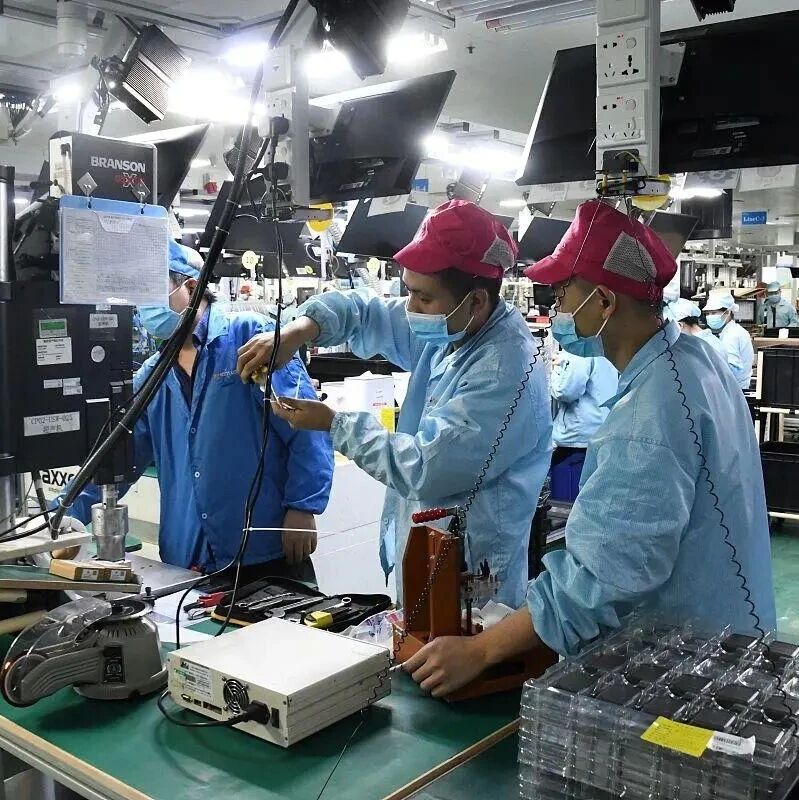
Core Viewpoint - A power struggle over Nexperia, a leading semiconductor supplier, has emerged, causing significant disruptions in the global automotive supply chain, with potential production halts for car manufacturers [2][4]. Group 1: Company Overview - Nexperia is the largest supplier of basic semiconductor devices globally, with its headquarters in the Netherlands [2]. - According to ICwise, Nexperia ranks third among the top 10 global power discrete device companies in 2023, following Infineon and ON Semiconductor [4]. - By 2024, Nexperia is expected to lead the market share in several segments, including small-signal MOSFETs, diodes, transistors, and ESD protection devices [4]. Group 2: Market Impact - The disruption in Nexperia's operations has led to a frantic scramble for chips among automotive companies, both domestically and internationally [4]. - Major automotive manufacturers such as BMW, Volkswagen, and Tesla are core customers of Nexperia, making the supply chain crisis particularly critical for them [4]. - The European Automobile Manufacturers Association (ACEA) has expressed deep concern over the potential severe impact on the European automotive industry if the chip supply issues are not resolved promptly [4].

高到吓人!英伟达员工薪资曝光!
国芯网· 2025-10-27 13:01
Core Insights - The AI boom has significantly increased the valuations of chip manufacturers, leading to higher employee compensation, with some employees potentially earning millions of dollars due to stock options [1][3]. Group 1: Employee Compensation and Retention - Many stock awards require several years to vest, incentivizing employees to stay longer with the company; leaving early means forfeiting substantial rewards [3]. - Companies like Nvidia, AMD, and Broadcom are using stock-based incentives to retain key talent amid surging demand for AI chips [3][4]. - Employees at Nvidia and Broadcom have reported substantial increases in the value of their stock awards, with some seeing gains of over 350% since 2023 [4]. Group 2: Market Performance - Nvidia, AMD, and Broadcom have outperformed major tech companies like Google, Amazon, and Microsoft in stock price increases since 2023 [3][4]. - Specific examples include an Nvidia employee whose stock value increased from $488,000 to over $2.2 million, and a Broadcom employee whose stock rose from $66,000 to approximately $265,000 [3][4]. Group 3: Employee Sentiment - Employees express a strong attachment to their stock options, with some feeling trapped in a "lottery win" mentality, making it difficult to consider leaving for other opportunities [4]. - The concept of "golden handcuffs" is prevalent, as employees are reluctant to resign due to the potential loss of significant stock value [4].



台积电30天稀土断供?
国芯网· 2025-10-27 13:01
Core Viewpoint - The article discusses the critical situation faced by TSMC due to the ongoing trade tensions between the US and China, particularly focusing on the supply of rare earth materials essential for semiconductor manufacturing [2][4]. Group 1: TSMC's Supply Chain Challenges - TSMC's rare earth inventory is reported to last only 30 days, which poses a significant risk to its high-end chip manufacturing capacity if it cannot secure supplies from mainland China [2]. - The company is actively seeking alternative sources for rare earth materials, considering regions like Australia; however, the local mining industry in these areas is not yet mature enough to meet TSMC's needs promptly [4]. Group 2: Geopolitical Pressures - TSMC is caught in a difficult position between the US and China, facing pressure from the US through measures like the "three-month approval system" targeting its mature process operations in mainland China [4]. - China's new export regulations on rare earths are seen as a direct countermeasure, threatening TSMC's access to critical materials for high-end chip production [4]. Group 3: Industry Implications - TSMC has historically been a pivotal player in the global semiconductor landscape, leveraging US design software and equipment while sourcing materials from China, exemplifying globalization in the industry [4]. - The ongoing trade war is described as tearing apart TSMC's operations, with new US export licensing rules and China's rare earth export regulations acting as barriers to its market access [4]. Group 4: Taiwan's Political Landscape - The article highlights comments from Taiwan's Deputy Leader, who mentioned commitments to invest in collaboration with US companies, including TSMC, which raises concerns about Taiwan's concessions to the US and the potential impact on its semiconductor industry [5]. - The spokesperson for Taiwan's State Council criticized the Taiwanese government's approach, suggesting that it is compromising too much to appease the US, which could ultimately harm the local industry [5].

半导体精品公众号推荐!
国芯网· 2025-10-27 13:01
Core Viewpoint - The article emphasizes the importance of revitalizing the domestic semiconductor industry and suggests that in the era of information explosion, efficient information acquisition is crucial [1]. Group 1: Industry Insights - The article highlights the need for semiconductor professionals to focus on five specific WeChat public accounts to stay updated on industry trends and technologies [1]. - It mentions that the semiconductor industry has a significant following, with one public account having 500,000 industry professionals subscribed [5]. Group 2: Community Engagement - The article promotes the establishment of a community for semiconductor professionals, with a mention of a WeChat group that has 80,000 members, which is open for free access [12]. - It provides a step-by-step guide for joining the community, emphasizing the ease of access through the WeChat public account [13][15].
应用材料宣布裁员1400人!
国芯网· 2025-10-24 08:24
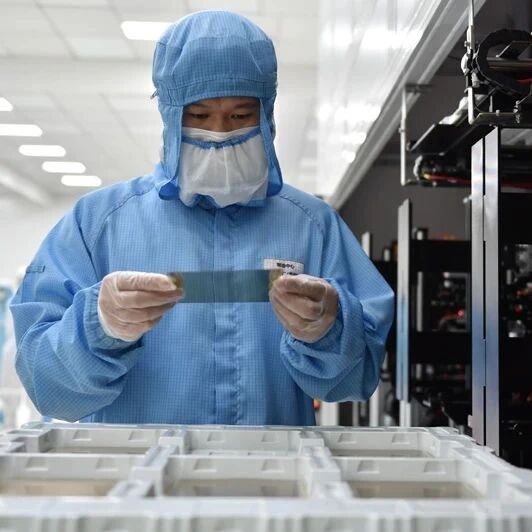
Core Viewpoint - The article discusses the recent layoffs at Applied Materials, a major player in the semiconductor equipment industry, highlighting the company's efforts to adapt to changing workforce needs and market conditions while expressing concerns about future demand due to U.S.-China trade tensions [2][4][5]. Group 1: Layoffs and Workforce Changes - Applied Materials announced a 4% workforce reduction, affecting approximately 1,444 employees out of around 36,100 total employees [4]. - The layoffs are part of a strategy to create a more competitive and productive organization, driven by changes in automation, digitalization, and geographic needs [4]. - The company expects to incur costs of approximately $160 million to $180 million related to severance and other one-time employee termination benefits, which will be paid in cash [4]. Group 2: Financial Performance and Forecast - For Q3, Applied Materials reported a revenue increase of 8% year-over-year to $7.3 billion, surpassing analyst expectations of $7.21 billion [4]. - Adjusted net income for Q3 was $1.989 billion, a 13% increase year-over-year, with adjusted earnings per share of $2.48, also exceeding analyst estimates of $2.36 [4]. - However, the company forecasted Q4 revenue of approximately $6.7 billion, below analyst expectations of $7.32 billion, and projected adjusted earnings per share of $2.11, lower than the anticipated $2.38 [5]. Group 3: Market Implications - The performance guidance from Applied Materials is viewed as an indicator of future demand in the semiconductor industry, as its clients include major chip manufacturers like TSMC, Samsung, and Intel [5].

三星、SK海力士双双涨价30%!
国芯网· 2025-10-24 08:24
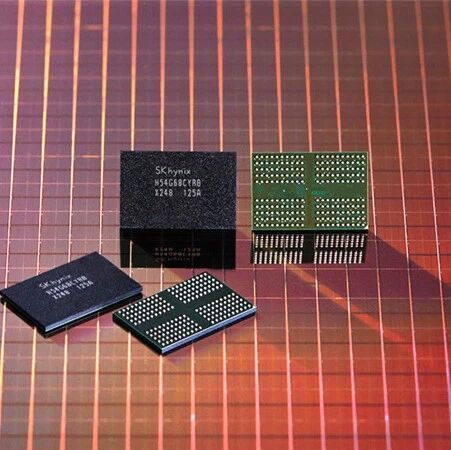
Core Viewpoint - The article highlights the ongoing price adjustments in the semiconductor memory market, driven by AI demand, with significant price increases expected for DRAM and NAND products in Q4 2023, potentially up to 30% [1][3]. Group 1: Market Dynamics - Major memory suppliers like Samsung and SK Hynix are set to raise prices for memory products, including DRAM and NAND, by up to 30% in Q4 2023 [1]. - The current storage market is experiencing a "super boom" driven by AI, which is expected to last for 3 to 4 years [3]. - The introduction of HBM4 (the sixth generation of HBM) is anticipated to significantly increase profit margins, with prices around $500 per unit compared to $300 for HBM3e [3]. Group 2: Supply Chain and Demand - The production capacity for general DRAM is tightening due to the high bandwidth memory (HBM) production, which occupies three times more wafer space than standard DRAM [3]. - Concerns over supply shortages are leading major clients, including U.S. electronics companies and data center operators, to negotiate long-term supply contracts of 2 to 3 years with Samsung and SK Hynix [3]. - The expected supply shortage is projected to be longer and stronger than previous cycles, driven by substantial investments in AI servers and the rising demand for memory upgrades in general servers and edge AI devices [3].
半导体精品公众号推荐!
国芯网· 2025-10-24 08:24
Core Viewpoint - The article emphasizes the importance of revitalizing the domestic semiconductor industry and suggests that in the era of information explosion, efficient information acquisition is crucial [1]. Group 1: Industry Insights - The article highlights the need for semiconductor professionals to focus on five specific WeChat public accounts to stay updated on industry trends and technologies [1]. - It mentions that the semiconductor industry has a significant following, with one public account having 500,000 industry professionals subscribed [5]. Group 2: Community Engagement - The article promotes the establishment of a community for semiconductor professionals, with a mention of a WeChat group that has 80,000 members, which is open for free access [12]. - It provides a step-by-step guide for joining the community, emphasizing the ease of access through the WeChat public account [13][15].
安世中国郑重声明!
国芯网· 2025-10-24 08:24
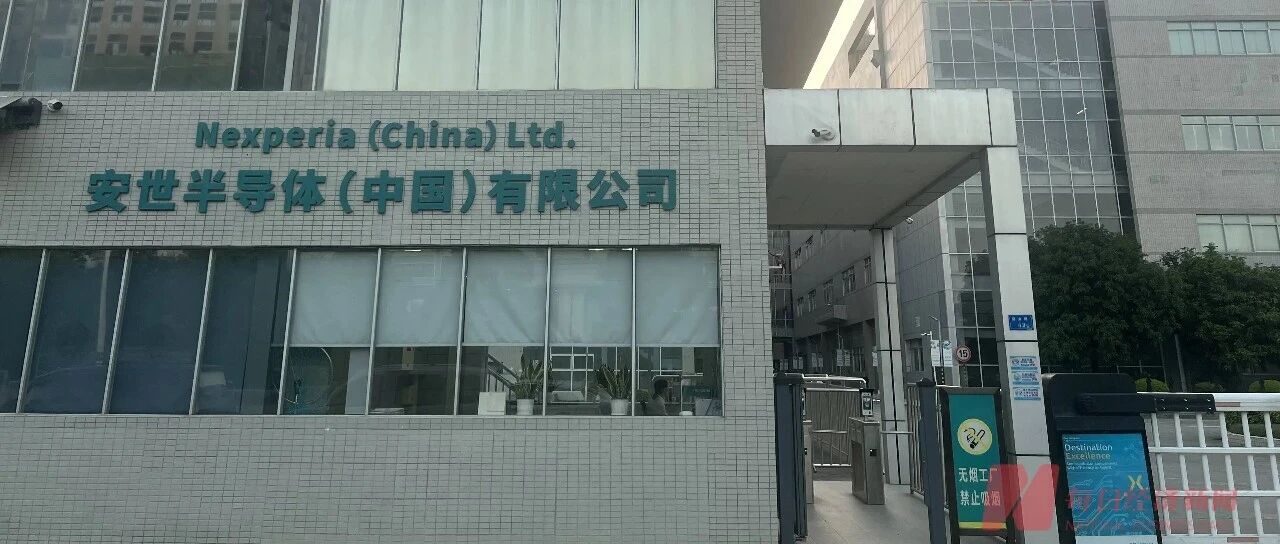
Core Viewpoint - The article discusses the recent developments regarding Anshi Semiconductor China, emphasizing the company's operational stability and commitment to maintaining product quality amidst external challenges [2][3][9]. Group 1: Company Operations - Anshi Semiconductor China asserts that its business operations are normal and unaffected by external decisions from its Dutch headquarters [3][5]. - The company emphasizes that all products manufactured and delivered in China comply with local laws and regulations, meeting established technical standards and quality requirements [9][11]. Group 2: Response to External Claims - Anshi China strongly opposes the claims made by its Dutch headquarters regarding the inability to guarantee chip quality from its Chinese factories, labeling these statements as misleading [9][11]. - The company is committed to protecting its legal rights and ensuring that customer interests are prioritized, despite the challenging external environment [11][12]. Group 3: Customer Communication - Anshi China highlights the importance of maintaining transparent communication with customers to navigate uncertainties and ensure supply chain stability [12]. - The company encourages customers to continue their trust and support, aiming for a collaborative approach to face future challenges and opportunities [12].
熔断!意法半导体股价暴跌!
国芯网· 2025-10-24 08:24
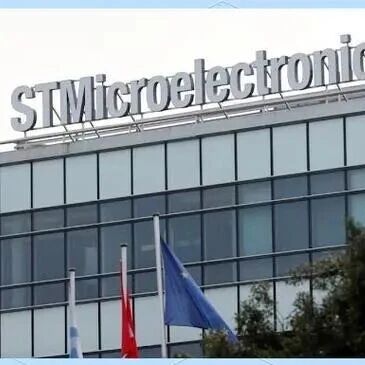
Core Viewpoint - The semiconductor industry is facing challenges in sustaining recovery, as evidenced by STMicroelectronics' lower-than-expected revenue forecast and reduced capital expenditure plans, raising concerns about the industry's overall health [2][4]. Group 1: Company Performance - STMicroelectronics forecasts Q4 revenue at $3.28 billion, below analysts' expectations of $3.35 billion, indicating potential struggles in the mature semiconductor sector [2]. - The company's Q3 revenue declined by 2% year-over-year to $3.187 billion, with net profit dropping from $351 million to $267 million, and a slight decrease in gross margin to 33.2% [4]. - The CEO stated that the company anticipates a 22.4% growth in the second half of the year compared to the first half, projecting full-year revenue for 2025 at approximately $11.75 billion [4]. Group 2: Market Conditions - The semiconductor industry is threatened by escalating geopolitical tensions, which could impact the recovery from previous inventory surpluses [4]. - Demand recovery remains slow following the pandemic-induced chip supply shortages, leading to customer inventory accumulation [4]. - Competitor Texas Instruments also reported disappointing earnings forecasts, highlighting reduced orders from customers due to trade tensions and economic instability [4].
突发!台积电放弃采购4亿美元ASML顶级光刻机!
国芯网· 2025-10-23 04:46
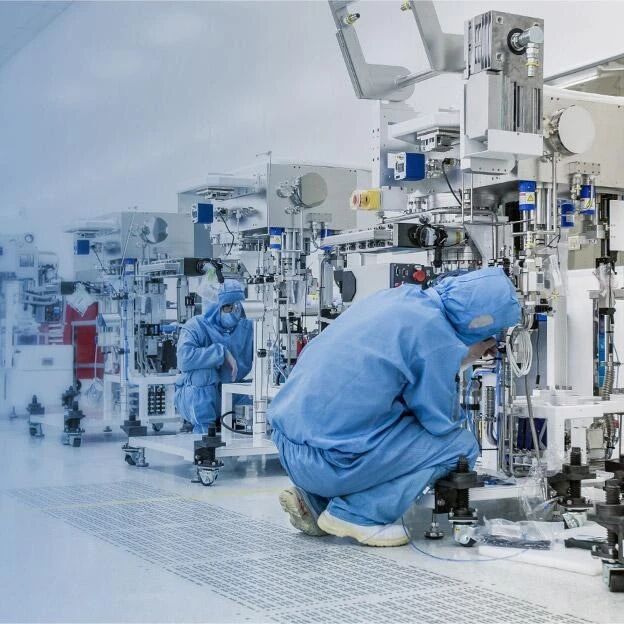
Core Viewpoint - TSMC has decided not to purchase the high numerical aperture (High-NA) EUV lithography machine from ASML, which costs up to $400 million, opting instead for a cost-effective alternative using pellicle technology to enhance chip manufacturing processes [1][3][4]. Group 1: Decision on Equipment Procurement - TSMC faces manufacturing bottlenecks as it advances to 1.4nm and 1nm technology nodes, leading to the decision to forgo the purchase of the High-NA EUV lithography machine [1][3]. - The company believes that the value provided by the High-NA EUV machine does not justify its high cost, prompting a shift to pellicle technology to protect photomasks during the lithography process [4][5]. Group 2: Pellicle Technology Overview - Pellicle technology serves to protect photomasks from dust contamination, thereby improving yield and usage rates in chip manufacturing [4]. - The materials used for pellicles include ultra-thin silicon nitride and carbon films for EUV, which must have high transparency and low absorption rates [4]. Group 3: Challenges and Implications - While the pellicle solution reduces capital expenditure, it introduces new technical challenges, requiring more exposure steps to achieve the necessary precision for 1.4nm and 1nm chips [5]. - Increased usage frequency of photomasks may slow down production rates and pose potential risks to chip yield, necessitating extensive trial and error to optimize reliability [5]. - TSMC's decision is also influenced by the limited supply of High-NA EUV machines, with ASML producing only five to six units annually, making it impractical for TSMC to invest heavily in a few machines while needing to meet large demands from clients like Apple [5].