DT新材料

Search documents
总投资100亿的高端化工新材料项目开工
DT新材料· 2025-11-18 16:04
Core Viewpoint - The article highlights the commencement of a significant project by Jiangsu Wanwei, focusing on the production of functional polyvinyl alcohol (PVA) resin using the ethylene method, which is expected to enhance the company's competitive edge in the high-end materials market [2][4]. Group 1: Project Overview - Jiangsu Wanwei's subsidiary, Wanwei High-tech, has launched a project with a total investment of approximately 10 billion yuan, covering an area of about 1,000 acres, to produce 200,000 tons of ethylene-based functional PVA resin annually [2]. - The project will be developed in two phases: Phase 1 involves an investment of about 3.6 billion yuan for a production facility of 200,000 tons/year of PVA and supporting facilities for 360,000 tons/year of vinyl acetate and 300,000 tons of methyl acetate [4]. - Phase 2 will require an investment of approximately 6.4 billion yuan to add 400,000 tons/year of vinyl acetate and 200,000 tons/year of ethylene-based functional PVA, further extending the industrial chain to produce high-value downstream products [4]. Group 2: Competitive Advantages - The ethylene method for producing PVA offers significant advantages over traditional calcium carbide methods, including being more environmentally friendly and producing higher quality products suitable for high-end applications in food and pharmaceuticals [4]. - Wanwei's new materials, such as PVA optical films, have achieved strong sales, breaking foreign monopolies in the market [4]. Group 3: Market Context - China is the largest producer of PVA globally, with a production capacity of approximately 1.1 million tons, and is also the largest exporter, with exports expected to reach a historical high of 210,200 tons in 2024, reflecting a year-on-year growth of about 14.3% [5]. - The domestic PVA industry is undergoing structural changes, with increasing demand for high-end functional PVA products and pressure on traditional production methods to adapt to stricter environmental regulations [6]. Group 4: Application and Future Trends - The demand for functional PVA resins is rapidly growing in sectors such as new energy vehicles, photovoltaic films, and energy-saving building materials [6]. - PVA is a key raw material for producing ethylene-vinyl alcohol copolymer (EVOH), which is recognized for its superior gas barrier properties and is widely used in high-barrier packaging [6].


大涨310%!光刻材料龙头上市
DT新材料· 2025-11-18 16:04
Core Viewpoint - Xiamen Hengkang New Materials Technology Co., Ltd. successfully listed on the Shanghai Stock Exchange's Sci-Tech Innovation Board, raising approximately 1 billion RMB, with significant stock price increases and market capitalization reaching over 28 billion RMB, marking it as the largest IPO in Xiamen this year [2][3]. Company Overview - Established in 2004, Hengkang New Materials has a registered capital of approximately 381.92 million RMB and has formed joint ventures with companies like Jiu Ri New Materials and Ba Yi Space [4]. - Initially focused on optical film devices and window lenses, the company shifted its business model in 2014 to target the supply chain of photolithography materials and precursors for 12-inch integrated circuit wafer manufacturing [5]. Product Development and Market Position - By the end of 2024, Hengkang New Materials achieved mass production of various photolithography materials and precursors, including SOC, BARC C, i-Line photoresist, and KrF photoresist, successfully replacing foreign competitors [5][9]. - The company has become a leader in the domestic market for SOC and BARC sales, with projected sales of SOC reaching approximately 23.24 million RMB in 2024, capturing over 10% of the domestic market share [10][13]. Financial Performance - From 2022 to 2024, Hengkang New Materials reported revenues of approximately 322 million RMB, 368 million RMB, and 548 million RMB, with net profits of approximately 101 million RMB, 89.84 million RMB, and 96.92 million RMB respectively [13]. - The sales revenue from self-produced products increased significantly, accounting for 38.94%, 52.72%, and 63.77% of total revenue in the respective years [13][15]. Production Capacity and Utilization - In 2024, the production capacity for SOC and BARC was 26,928 gallons and 20,796 gallons respectively, with utilization rates of 57.42% and 21.43% [11]. - The production capacity for KrF photoresist reached 12,465 gallons, with a production output of 2,188 gallons and a utilization rate of 17.55% [11]. Market Outlook - According to market research, the domestic market for photolithography materials is expected to grow to 31.92 billion RMB by 2028, with a compound annual growth rate of 21.2% [9].
英联股份:已签署5000万㎡以上的准固态半固态电池专用复合铝箔材料采购合同
DT新材料· 2025-11-17 23:05
Core Viewpoint - The article highlights the strategic procurement contract signed between Jiangsu Yinglian and a new energy technology company for the supply of composite aluminum foil for quasi-solid-state batteries, which is expected to enhance the company's operational development from 2026 to 2027 [2]. Group 1: Company Developments - Yinglian Co., Ltd. announced a strategic procurement contract with a new energy technology company for over 50 million square meters of composite aluminum foil for quasi-solid-state batteries, which will positively impact the company's growth in 2026-2027 [2]. - The company reported a third-quarter revenue of 566 million yuan, a year-on-year increase of 10.13%, and a net profit attributable to shareholders of approximately 10.2 million yuan, up 454.32% year-on-year [2]. - For the first three quarters, the company achieved a total revenue of approximately 1.648 billion yuan, a year-on-year increase of 10.68%, and a net profit of about 35.4 million yuan, reflecting a significant year-on-year growth of 1572.67% [2]. Group 2: Investment Plans - The company plans to invest 3.089 billion yuan in the construction of composite aluminum foil and copper foil projects, with a total of 134 copper foil and 10 aluminum foil production lines, aiming for an annual production capacity of 100 million square meters of composite aluminum foil and 500 million square meters of composite copper foil [3]. - As of the end of the third quarter, Jiangsu Yinglian has already implemented 5 production lines for composite aluminum foil and 5 for composite copper foil, with products being tested by downstream customers in various battery sectors [3]. Group 3: Industry Events - The Carbontech New Energy Carbon Materials and Battery Conference will focus on the preparation of new energy carbon materials and their applications in the battery industry, featuring discussions on advancements in porous carbon, silicon-carbon anodes, and other cutting-edge materials [6][7]. - The conference will include presentations from various experts and companies, showcasing the latest developments in carbon materials and their applications in energy storage and conversion technologies [8][9].
利润大涨500%!这一巨头再增资26亿,加码PCB!
DT新材料· 2025-11-17 23:05
Core Viewpoint - Shengyi Electronics plans to raise no more than 2.6 billion yuan through a private placement, with the net proceeds intended for the construction of an AI computing HDI production base, a smart manufacturing high-layer circuit board project, and to supplement working capital and repay bank loans [2]. Group 1: Investment Projects - The AI computing HDI production base project has a total investment of 2.032 billion yuan, with 1 billion yuan from the raised funds, a construction period of 36 months, and expected production capacity of 167,200 square meters annually starting from the third year [3]. - The smart manufacturing high-layer circuit board project has a total investment of 1.937 billion yuan, with 1.1 billion yuan from the raised funds, divided into two phases over 30 months, with an expected annual production capacity of 700,000 square meters [4]. - The total investment for all projects amounts to 4.469 billion yuan, with 2.6 billion yuan planned to be raised [3]. Group 2: Market Demand and Growth - The demand for AI computing power is driving significant growth in the AI server and data center market, particularly for HDI boards, which are expected to be one of the fastest-growing segments in the PCB market over the next five years [4]. - The increasing performance and efficiency requirements of AI servers and data center products are leading to a higher demand for high-layer and high-speed PCBs, with 18-layer and above PCBs expected to see rapid growth in AI data centers [4]. Group 3: Financial Performance Forecast - Shengyi Electronics anticipates a revenue of 661.38 million to 703.38 million yuan for the first three quarters of 2025, representing a year-on-year increase of 108% to 121% [5]. - The net profit attributable to shareholders is expected to be between 107.4 million and 115.37 million yuan, reflecting a year-on-year increase of 476% to 519% [5]. - The net profit after deducting non-recurring gains and losses is projected to be between 107.14 million and 115.09 million yuan, indicating a year-on-year increase of 503% to 548% [5].

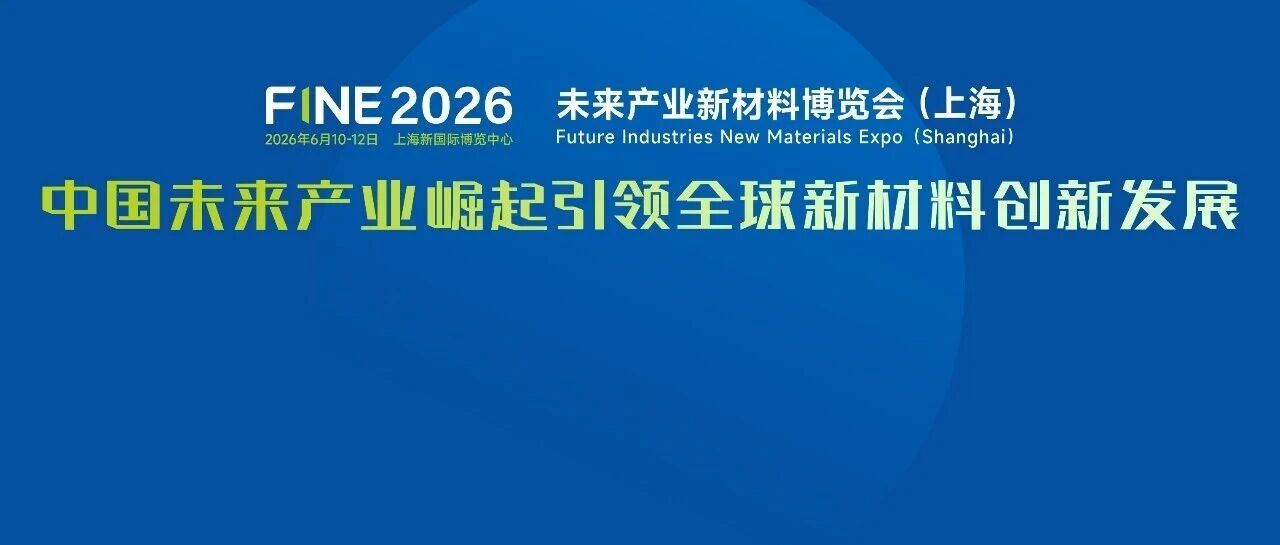
FINE2026官宣:未来产业新材料博览会启动丨6月10-12日 上海
DT新材料· 2025-11-17 23:05
Core Viewpoint - The 2026 Future Industries New Materials Expo aims to lead global innovation in new materials, emphasizing their critical role in the development of high-tech industries and future industrial transformations [2][3]. Group 1: Event Overview - The expo will take place from June 10-12, 2026, at the Shanghai New International Expo Center, featuring a total exhibition area of 50,000 square meters [2][3]. - The event is an upgrade of three major exhibitions: the 10th International Carbon Materials Industry Expo, the 7th Thermal Management Industry Expo, and the New Materials Technology Innovation Expo [2][3]. - It is expected to attract over 100,000 professional visitors and 800+ exhibiting companies, along with 200+ research institutions [3][28]. Group 2: Focus Areas - The expo will highlight five common demands in future industries: advanced semiconductors, advanced batteries, lightweight materials, low-carbon sustainability, and thermal management [3][6]. - It will feature five specialized thematic exhibition areas, including advanced semiconductors, advanced batteries and energy materials, lightweight high-strength and sustainable materials, thermal management technologies and materials, and new materials technology innovation and achievement trading [6][11]. Group 3: Activities and Forums - The event will host over 30 specialized vertical forums and more than 300 expert presentations, focusing on cutting-edge technologies and industry trends in sectors such as artificial intelligence, aerospace, smart vehicles, and quantum technology [16][18]. - Key topics will include technology innovation, investment strategies, and advanced manufacturing technologies related to new materials [16][18]. Group 4: Industry Impact - The expo aims to facilitate the transformation of scientific and technological achievements, helping enterprises connect with industry funds, government parks, and project resources, thereby accelerating innovation in the new materials sector [3][28]. - It is positioned as a one-stop platform for communication, cooperation, and procurement across the entire innovation chain, from end products to components, materials, and cutting-edge technologies [3][6].
惠城环保:已成功将裂解气重新聚合为聚丙烯!指标全部合格!
DT新材料· 2025-11-17 23:05
Core Viewpoint - The article highlights the significant advancements made by Qingdao Huicheng Environmental Technology Group in the recycling of low-value mixed plastic waste, showcasing their innovative CPDCC technology that enables the conversion of waste plastics into high-value chemical raw materials, thus contributing to a circular economy and reducing plastic pollution [2][6][9]. Summary by Sections Project Progress - Huicheng Environmental announced key progress in its 200,000 tons/year mixed plastic waste resource utilization project, achieving a closed-loop cycle from waste plastic to plastic raw materials, with products meeting quality standards [2][6]. Technology and Innovation - The CPDCC technology addresses six critical bottlenecks in the resource utilization of mixed waste plastics, including efficient sorting, core reactor design, and energy efficiency, significantly enhancing economic viability and reducing carbon emissions [6][7]. - The technology can produce chemical raw materials equivalent to three times the amount obtained from one kilogram of crude oil, while avoiding landfill or incineration [7]. Expansion and Collaboration - Huicheng Environmental has signed cooperation agreements with Zhongzi Environmental and is steadily advancing expansion projects in multiple locations, including Jieyang, Yueyang, and Heze [7]. - The company aims to establish a green recycling system and has completed the ISCC PLUS certification for its project, promoting the construction of waste sorting centers and agricultural film recovery projects [7][8]. Industry Impact - The successful integration of technology and industry collaboration demonstrates that waste plastics can be incorporated into the circular economy, transforming them into valuable resources [8][9]. - The company is committed to providing high-quality recycled materials and innovative solutions for the petrochemical industry and solid waste resource utilization [8][9]. Upcoming Conference - Zhang Xinkong, the founder and CTO of Huicheng Environmental, will present at the 2025 (3rd) Polymer Recycling Conference in Ningbo, sharing insights on the company's advancements and contributions to the industry [2][8].
免费领取!《14家固态电池重点企业——产业化时间表、技术路线、关键指标》
DT新材料· 2025-11-17 23:05
Core Insights - The article discusses the upcoming Carbontech New Energy Carbon Materials and Battery Conference, focusing on advancements in carbon materials and their applications in battery technology [13][14][36]. Group 1: Key Companies - The report includes analysis of 14 key companies involved in solid-state battery technology, such as Ganfeng Lithium, QuantumScape, and Solid Power [4][7]. - Ganfeng Lithium announced mass production of lithium sulfide in April 2025, marking a significant milestone in solid-state battery development [7]. Group 2: Technical Developments - Solid-state batteries are focusing on oxide and sulfide electrolyte technologies, with advancements in flexible solid electrolyte membranes [8]. - The ionic conductivity of oxide solid electrolytes has reached 1.5 mS/cm, and lithium-ion conductivity exceeds 12 mS/cm [8]. Group 3: Conference Agenda - The conference will feature discussions on the latest developments in porous carbon, silicon-carbon anodes, and graphene applications in battery technology [14][15]. - Notable speakers include professors from various universities discussing advancements in solid-state battery materials and applications [16][17]. Group 4: Registration and Participation - Registration fees for the conference are set at ¥1200 for corporate representatives and ¥800 for students, with various payment methods available [21]. - The event is organized by DT New Materials and supported by several industry leaders, indicating strong industry collaboration [20].

小巨人企业获华为批量订单,凌云胶管发力液冷赛道
DT新材料· 2025-11-17 23:05
Core Insights - Lingyun Rubber Hose Company, recognized as a national-level "little giant" enterprise, has successfully gained the favor of a leading domestic digital energy high-tech company, achieving bulk supply of liquid cooling pipeline products and establishing stable cooperation with several global cooling industry leaders [2] Group 1: Core Material R&D - The core competitiveness of Lingyun's liquid cooling technology stems from its independent control over the core component, the rubber material, which operates in extreme environments of alternating heat and cold, directly affecting product lifespan and operational safety [3] - Lingyun has achieved 100% self-research of core rubber materials, with testing showing stable performance in extreme conditions from -40°C to 80°C, significantly improving anti-aging performance and extending overall product lifespan by 50%, addressing traditional industry pain points of leakage and short lifespan [5] Group 2: Full Chain Layout - The company has established a complete production chain from "material R&D to hose manufacturing to pipeline integration," enhancing its market competitiveness [6] - By integrating with its group company for quick-connect fittings, Lingyun can respond rapidly to personalized demands from clients like Huawei, providing customized liquid cooling pipeline solutions and breaking the dependency on external suppliers for core components [6][8] Group 3: Market Positioning - Leveraging its technological and supply chain advantages, Lingyun has successfully positioned itself within the core circle of the global liquid cooling supply chain, supplying major liquid cooling manufacturers and being adopted by domestic listed companies for autonomous liquid cooling solutions [8] - This series of collaborations not only highlights the international competitiveness of its products but also plays a significant role in breaking technological barriers and building an autonomous supply chain system for China's liquid cooling industry [8] Group 4: Future Outlook - Lingyun aims to continue increasing its R&D investment in liquid cooling materials and system integration, enhancing production capacity and service capabilities to support leading companies like Huawei in achieving technological breakthroughs in the digital energy sector [9][10]
ACF和DAF的成膜原料-长濑生产的特森树脂:丙烯酸树脂
DT新材料· 2025-11-17 23:05
Core Viewpoint - The article highlights the significance of Teisan Resin, a high-purity acrylic copolymer produced by Nagase ChemteX, as a crucial material for electronic adhesive films due to its outstanding properties such as low thermal expansion, low modulus, high heat resistance, and high reliability [3][4]. Product Overview - Teisan Resin is utilized in the production of electronic adhesive films, specifically ACF (Anisotropic Conducting Film) and DAF (Die Attach Film), which are essential for electronic packaging and display module connections [4][6]. - The resin is produced using a unique suspension polymerization process, resulting in high purity and a narrow molecular weight distribution [7][22]. Product Characteristics - **Low Thermal Expansion Coefficient (Low CTE)**: Teisan Resin exhibits minimal expansion when heated, enhancing bond dimensional stability in smaller electronic products [11][12]. - **Low Modulus**: The low modulus of Teisan Resin aids DAF films in reducing stress and improving packaging reliability [13][14]. - **Low Tg**: The resin increases the wetting properties of DAF film substrates, allowing for lower temperature mounting [15][16]. - **High Purity**: Compared to conventional solution and emulsion polymerization processes, Teisan Resin has minimal residual monomers and low molecular weight components, with few impurities due to the absence of surfactants during polymerization [17][18]. - **High Heat Resistance**: The polymer backbone of Teisan Resin consists of saturated carbon chains, providing durability and preventing bond degradation due to oxidation or heating [19][20]. - **Narrow Molecular Weight Distribution**: The special suspension polymerization process results in a high polymerization rate and degree, yielding a polymer with a narrow molecular weight distribution [21][22]. Product Specifications - Four solvent-based resins are currently marketed in China, each with different functional groups and properties: SG-P3, SG-70L, SG-708-6, and SG-600 TEA [7][9].

百亿尼龙龙头,终止被收购!
DT新材料· 2025-11-16 15:32
Core Viewpoint - Binhai Energy announced the termination of its acquisition of Cangzhou Xuyang Chemical Co., Ltd. due to changes in market conditions and failure to reach agreement on commercial terms, despite the strategic intent to expand into nylon new materials and enhance its business structure [2][3]. Group 1: Company Overview - Binhai Energy primarily engages in the research, production, and sales of lithium battery anode materials, with ongoing projects including a 200,000-ton integrated anode material project and new product development [3]. - In 2024, Binhai Energy reported revenues of 493 million yuan and a net loss of 31 million yuan, with total assets amounting to 1.279 billion yuan by the end of the year [3]. - Cangzhou Xuyang, established in June 2011, is a key enterprise under Xuyang Group, focusing on nylon new materials production, achieving revenues of 10.311 billion yuan and a net profit of 238 million yuan in 2024 [3]. Group 2: Project Details - Cangzhou Xuyang is developing a nylon new materials project with an annual production capacity of 230,000 tons, including various types of nylon chips [4]. - The company has significant production capabilities, with a total capacity of 750,000 tons/year for caprolactam, ranking second globally [3][4]. Group 3: Market Impact - The termination of the acquisition is not expected to significantly impact the industry, as both companies operate in different segments of the supply chain and can focus on strengthening their respective areas [4].