数字生命卡兹克

Search documents
Suno V5让整个B站开始文艺复兴了。
数字生命卡兹克· 2025-11-04 01:33
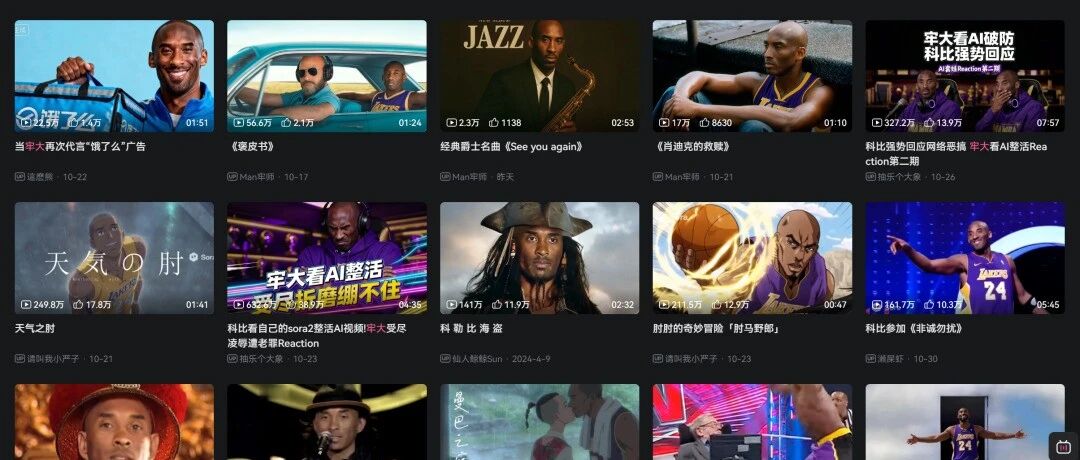
Core Viewpoint - The article discusses the resurgence of creativity in the "Kichiku" (鬼畜) genre on Bilibili, driven by advancements in AI music generation, particularly the Suno V5 model, which has enabled creators to produce high-quality content with ease [44][46][48]. Group 1: Resurgence of Kichiku Content - The Kichiku genre on Bilibili, once thriving, has seen a decline in creativity over the years [11][12]. - Recently, there has been a notable revival, with creators producing innovative and engaging Kichiku music, marking a "cultural renaissance" on the platform [24][43]. - The emergence of AI tools like Suno V5 has significantly lowered the barriers for creators, allowing them to focus on artistic expression rather than technical skills [44][48]. Group 2: Impact of AI on Music Creation - The Suno V5 model has been highlighted as a game-changer, enabling creators to produce music that surpasses many mainstream songs in quality [46][47]. - The ease of use of AI tools allows individuals without extensive musical training to create complex compositions quickly [51][90]. - The article emphasizes that the AI tools provide a platform for expressing emotions and creativity, reminiscent of the original spirit of Kichiku [100][101]. Group 3: Community and Cultural Significance - The article reflects on the nostalgia associated with Kichiku content, noting that despite changes in creators' lives, the essence of sharing joy through content remains [104][105]. - The community aspect of Bilibili continues to thrive, with users engaging in shared experiences and laughter, reminiscent of earlier days [102][104]. - The revival of Kichiku content is seen as a bridge connecting past and present, allowing older users to relive their youthful experiences while engaging with new creations [101][105].

AI看不到的爱心,成了最棒的AI检测器。
数字生命卡兹克· 2025-10-31 01:33
Core Viewpoint - The article discusses the limitations of AI in recognizing visual patterns that humans can easily identify, particularly focusing on the concept of "Time Blindness" in video-language models [22][26][70]. Group 1: AI Limitations - AI models, including Gemini 2.5 Pro and GPT-5, failed to recognize a simple heart shape in a visual illusion, highlighting their inability to perceive certain visual cues that humans can easily identify [8][10][14]. - A benchmark study called SpookyBench demonstrated that while humans achieved over 98% accuracy in recognizing shapes and patterns in videos, AI models scored 0% [35][36][41]. - The inability of AI to recognize moving patterns is attributed to its reliance on spatial analysis rather than temporal understanding, leading to a phenomenon termed "Time Blindness" [43][70]. Group 2: Research Insights - The article references a paper titled "Time Blindness: Why Video-Language Models Can't See What Humans Can?" which explores the fundamental differences in how humans and AI perceive motion and visual information [22][26]. - The study involved 451 videos categorized into different temporal patterns, revealing that AI models could not identify any of the content, while humans could effortlessly recognize the intended shapes and movements [34][35]. - The research indicates that AI's approach to video analysis is fundamentally flawed, as it treats video frames as static images, missing the critical information conveyed through motion [47][50]. Group 3: Human Perception - The article emphasizes the role of human cognitive processes, such as the "Law of Common Fate," which allows individuals to perceive moving objects as a cohesive whole, a capability that AI lacks [57][67]. - It discusses the phenomenon of involuntary eye movements that help humans maintain perception of static images, which is leveraged in visual illusions to create a sense of motion [81][83]. - The author reflects on the philosophical implications of these findings, suggesting that while AI operates in a discrete, static manner, human perception is inherently fluid and continuous [73][75].

Wan2.2-Animate又火了,5分钟让抠脚大汉秒变高冷女神。
数字生命卡兹克· 2025-10-30 01:33
Core Viewpoint - The article discusses the capabilities and implications of the open-source model Wan2.2 Animate, which allows users to create highly realistic face-swapping videos and animations, highlighting its potential in various creative fields while also addressing the ethical concerns associated with such technology [1][25][26]. Group 1: Technology and Features - Wan2.2 Animate can generate natural face-swapping videos by using a combination of user-uploaded videos and images, achieving impressive results in mimicking expressions and movements [1][4][6]. - The model allows for voice modulation alongside visual changes, enhancing the realism of the generated content [9]. - It supports both action imitation and character replacement, enabling users to create videos with different characters while maintaining the original background [14][15][16]. Group 2: Accessibility and Open Source - Wan2.2 Animate is notable for being open-source, which differentiates it from other similar models that are not publicly available [14][25]. - The model can be easily accessed and utilized by anyone, significantly lowering the barrier to entry for animation and video creation [25][26]. - It can be deployed in various settings, including enterprises and film productions, allowing for cost-effective animation and special effects [25]. Group 3: Creative Applications - The technology can be used for various creative projects, including recreating classic film scenes or generating dance videos with different characters [12][26]. - It opens up new possibilities for independent animators and filmmakers, enabling them to bring their characters to life with minimal investment [25][26]. - The potential for reviving deceased actors in new films through AI-generated likenesses is also discussed, showcasing the transformative impact of this technology on the film industry [26]. Group 4: Ethical Considerations - The article raises concerns about the misuse of such technology, particularly in creating misleading or harmful content that could undermine trust in digital media [26]. - It emphasizes the importance of responsible use of technology, likening it to fire that can either warm or destroy [26].

OpenAI终于快要上市了,也直面了这23个灵魂拷问。
数字生命卡兹克· 2025-10-29 01:33
Core Viewpoint - OpenAI has completed a significant restructuring to transition from a non-profit organization to a profit-oriented entity while maintaining a commitment to its original mission of benefiting humanity through AGI development [4][12][13]. Summary by Sections Restructuring Announcement - OpenAI announced its restructuring plan, which aims to release its limited-profit subsidiary from direct control of the non-profit parent organization, allowing for stock issuance and potential IPO [4][12]. Historical Context - OpenAI was founded in 2015 as a non-profit with the goal of ensuring AGI benefits all of humanity, emphasizing long-term research without profit constraints [5][6]. - The organization faced funding challenges as the costs of developing AGI grew, leading to the establishment of a "capped-profit" subsidiary in 2019 to attract investment while limiting returns to investors [6][8]. New Structure - The new structure includes the OpenAI Foundation, which holds 26% of the equity and retains control, and the OpenAI Group PBC, which is a public benefit corporation eligible for IPO [13]. - Microsoft holds approximately 27% of the new structure, with the remaining shares distributed among employees and early investors, pushing OpenAI's valuation to around $500 billion [15][13]. Market Reaction - Following the restructuring announcement, Microsoft's stock rose by 4%, contributing to a market capitalization exceeding $4 trillion [14]. Future Goals - OpenAI aims to develop an AI assistant capable of conducting research by September 2026 and a fully automated AI researcher by March 2028 [20]. - The organization is focused on accelerating scientific discovery as a long-term impact of AGI [20]. Q&A Highlights - OpenAI addressed various user concerns during its first Q&A session, including the balance between user safety and freedom, the future of its models, and the potential for AI to automate cognitive tasks [24][30][44]. - The company acknowledged the need for age verification to enhance user autonomy while ensuring safety [26][30]. Financial Projections - OpenAI anticipates needing annual revenues in the range of several hundred billion dollars to support its projected $1.4 trillion investment needs [47].

作为一个AI博主,我劝你先别急着用AI。
数字生命卡兹克· 2025-10-27 01:33
Core Viewpoint - The article emphasizes the importance of developing personal taste and skills through deliberate practice before heavily relying on AI tools for creative work. It argues that while AI can assist in the creative process, true expertise and unique perspectives come from extensive hands-on experience and understanding of one's craft [2][34][36]. Group 1: AI and Creative Process - AI can be a powerful tool for generating content, but it should not replace the foundational skills and personal insights that come from manual practice [34][36]. - The author uses AI to assist in writing, with AI contributions varying from 0% to 40% depending on the type of content, highlighting that core ideas and insights must come from the individual [3][4][5]. - The process of selecting and refining AI-generated content is crucial and relies on the individual's judgment and taste, which cannot be replaced by AI [11][12][17]. Group 2: Importance of Deliberate Practice - The article advocates for at least 1000 hours of deliberate practice in one's field to build foundational skills and personal taste, which are essential for effective use of AI [25][35]. - This practice should be largely independent of AI to ensure that the individual develops a deep understanding of their craft [26][30]. - The author draws parallels to the "10,000-hour rule," suggesting that while AI can accelerate learning, the hands-on experience remains irreplaceable [24][35]. Group 3: The Role of Personal Taste - Personal taste is described as a critical component of creative work, which is developed through extensive exposure to quality content and hands-on practice [18][22][29]. - The article warns against the risk of relying too heavily on AI, which may lead to a decline in personal standards and creativity [20][36]. - Ultimately, the ability to leverage AI effectively hinges on having a unique perspective and understanding of what constitutes quality work [36][40].

爆火的AI三宫格图片,比我们的生活更像电影。
数字生命卡兹克· 2025-10-24 01:32
Core Viewpoint - The article discusses the recent trend of creating three-panel AI-generated images, highlighting the cultural significance and emotional resonance behind this phenomenon, which reflects a desire to narrate personal stories through a cinematic lens [46][49][55]. Group 1: Trend and Popularity - The three-panel AI images have gained immense popularity on platforms like Douyin and Xiaohongshu, with likes reaching thousands [3]. - Various user-generated content has emerged, including artistic and abstract interpretations, showcasing the versatility of the format [10][11][17]. Group 2: Creative Process - Users can easily create these images using the Seedream 4.0 AI tool, which allows for customization through prompts [32]. - A template for creating three-panel images is provided, emphasizing the importance of scene description, character details, and overall aesthetic [33][34]. Group 3: Cultural Reflection - The article draws parallels between the current trend and past social media practices, noting that the desire to present life as a cinematic experience has remained consistent over the years [46][49]. - The use of AI to generate idealized versions of oneself serves as a form of escapism and self-expression, allowing individuals to project their aspirations [55][56].

只有0.9B的PaddleOCR-VL,却是现在最强的OCR模型。
数字生命卡兹克· 2025-10-23 01:33
Core Viewpoint - The article highlights the significant advancements in the OCR (Optical Character Recognition) field, particularly focusing on the PaddleOCR-VL model developed by Baidu, which has achieved state-of-the-art (SOTA) performance in document parsing tasks [2][9][45]. Summary by Sections Introduction to OCR Trends - The term OCR has gained immense popularity in the AI community, especially with the emergence of DeepSeek-OCR, which has revitalized interest in the OCR sector [1][2]. Overview of PaddleOCR-VL - PaddleOCR is not a new project; it has been developed by Baidu over several years, with its origins dating back to 2020. It has evolved into the most popular open-source OCR project, currently leading in GitHub stars with 60K [6][7]. - The PaddleOCR-VL model is the latest addition to this series, marking the first time a large model has been applied to the core of OCR document parsing [9][11]. Performance Metrics - PaddleOCR-VL, with only 0.9 billion parameters, has achieved SOTA across all categories in the OmniDocBench v1.5 evaluation set, scoring 92.56 overall [11][12]. - In comparison, DeepSeek-OCR scored 86.46, indicating that PaddleOCR-VL outperforms it by approximately 6 points [14][15]. Model Architecture and Efficiency - PaddleOCR-VL employs a two-step architecture for efficiency: first, a traditional visual model (PP-DocLayoutV2) performs layout analysis, and then the PaddleOCR-VL model processes smaller, framed images for text recognition [18][20]. - This approach allows PaddleOCR-VL to achieve high accuracy without the need for a larger model, demonstrating that effective solutions can often be more about problem-solving than sheer size [16][20]. Practical Applications and Testing - PaddleOCR-VL has shown impressive results in various challenging scenarios, including processing scanned PDFs, handwritten notes, and complex layouts like academic papers and invoices [22][28][34]. - The model's ability to accurately recognize and extract information from structured documents, such as tables, has been particularly noted as a significant advantage for automating data extraction processes [39][41]. Conclusion and Future Prospects - PaddleOCR-VL is now open-source, allowing users to deploy it locally or use it through various demo platforms [44][45]. - The advancements made by both PaddleOCR-VL and DeepSeek-OCR are recognized as significant contributions to the OCR field, each excelling in their respective areas [45][46].

Vidu Q2的参考生视频,是AI视频多参党的胜利。
数字生命卡兹克· 2025-10-22 01:33
Core Viewpoint - Vidu Q2 has significantly improved the multi-image reference video capabilities, establishing itself as a leader in this new paradigm of AI video workflow [1][8][84]. Group 1: Consistency - The consistency in multi-image reference videos has greatly evolved, allowing for better handling of multiple subjects without losing individual characteristics [11][12]. - The previous version, Vidu Q1, struggled with multiple subjects, often resulting in incomplete or unrealistic representations [14][15]. - Vidu Q2 successfully showcases multiple characters together while maintaining their unique traits, demonstrating a marked improvement in consistency [29][15]. Group 2: Emotional Performance - Vidu Q2 enhances emotional expression in videos, allowing for more nuanced performances from characters [30][37]. - The platform enables users to create stable character representations by uploading multiple images from different angles, improving the management of character assets [32][33]. - The emotional depth in performances has been notably enhanced, with characters displaying a wider range of emotions and subtleties compared to previous versions [38][45]. Group 3: Multi-Style Expressiveness - Vidu Q2 excels in producing videos across various animation styles, reinforcing its reputation as a leader in AI-generated anime content [58][70]. - The platform allows for seamless integration of different styles, maintaining both character and stylistic consistency [70]. - The advanced camera movements and effects in Vidu Q2 enhance the overall visual storytelling, making it suitable for dynamic scenes [71][75]. Group 4: Pricing and Accessibility - The pricing model for Vidu Q2 is competitive, with a monthly subscription costing 59 yuan for 800 points, making it one of the most affordable AI video models available [79][80]. - The introduction of an app for interactive features similar to Sora2 adds to the user experience, allowing for collaborative video creation [82].

全新开源的DeepSeek-OCR,可能是最近最惊喜的模型。
数字生命卡兹克· 2025-10-21 01:32
Core Insights - The article discusses the introduction of DeepSeek-OCR, a new model that enhances traditional Optical Character Recognition (OCR) capabilities by not only extracting text but also generating structured documents and compressing information effectively [1][3][5]. Group 1: Traditional OCR vs. DeepSeek-OCR - Traditional OCR primarily converts images of text into editable digital text, which can be cumbersome for complex documents like financial reports [3][5]. - DeepSeek-OCR goes beyond traditional OCR by generating Markdown documents that maintain the structure of the original content, including text, titles, and charts, making it more versatile [5][6]. Group 2: Contextual Compression - DeepSeek-OCR introduces a novel approach called "Contextual Optical Compression," which allows the model to process long texts more efficiently by converting them into image files instead of tokenized text [18][19]. - This method significantly reduces the computational load associated with processing long texts, as the complexity of token processing increases quadratically with text length [8][10][11]. Group 3: Performance Metrics - The model achieves a remarkable compression ratio of up to 10 times while maintaining a recognition accuracy of 96.5% [23]. - The compression ratio is calculated by dividing the total number of original text tokens by the number of visual tokens after compression [24]. Group 4: Implications for AI and Memory - The article suggests that DeepSeek-OCR's approach mirrors human memory, where recent information is retained with high fidelity while older information gradually fades [39][40]. - This mechanism of "forgetting" is presented as a potential advantage for AI, allowing it to prioritize important information and manage memory more like humans do [40][41].
有些时候真觉得,AI总结和“三分钟看电影”没啥区别。
数字生命卡兹克· 2025-10-20 01:51
Core Viewpoint - The article discusses the growing reliance on AI for summarizing content and the implications of this trend on human experience and understanding [1][21]. Group 1: AI Summarization and Human Experience - Many individuals use AI to summarize articles, podcasts, and videos, often driven by a fear of missing out on important information [1][8]. - The author expresses a personal aversion to AI summarization, believing that the most valuable experiences often lie in what is perceived as wasted time [1][19]. - AI summaries, while efficient, often strip away the emotional and experiential depth that comes from engaging with content in its entirety [10][11]. Group 2: The Value of Process Over Speed - The article emphasizes that true learning and creativity emerge from seemingly "boring" and "ambiguous" moments, which AI summarization bypasses [20]. - Engaging deeply with content, whether through reading or watching, fosters a richer understanding and emotional connection that quick summaries cannot replicate [12][16]. - The author advocates for a resistance to the fast-paced consumption of information, suggesting that taking time to appreciate the process is a form of rebellion against societal norms [21][23]. Group 3: The Impact of Information Overload - The concept of "implosion" is introduced, highlighting how excessive information can lead to a loss of meaning and depth in understanding [21][23]. - The article warns against allowing AI to replace genuine human experiences and interactions, urging readers to value the journey of discovery over the destination of quick answers [23].