
数字生命卡兹克

Search documents
亲手给AI投毒之后,我觉得整个互联网都变成了一座黑暗森林。
数字生命卡兹克· 2025-12-19 01:20
Core Viewpoint - The article discusses the phenomenon of information pollution through AI, highlighting how misinformation can spread rapidly and be accepted as truth by AI systems, leading to potential harm to individuals and brands [27][45]. Group 1: Information Pollution Mechanism - AI can inadvertently spread false information based on erroneous data it encounters online, as demonstrated by the example of misidentifying a character's parentage [6][8]. - The author conducted experiments to illustrate how easily misinformation can be injected into AI systems, showing that even a newly created account can influence AI responses with the right prompts [12][15]. - The concept of Generative Engine Optimization (GEO) is introduced, where individuals can manipulate AI to promote specific narratives or discredit others, effectively turning misinformation into a business model [27][29]. Group 2: Impact on Individuals and Brands - The article highlights the risks posed to individuals, such as job candidates, who may be unfairly judged based on fabricated negative information generated by AI [30][31]. - It emphasizes the ease with which negative information can overshadow positive attributes, leading to reputational damage for brands and individuals alike [39][40]. - The author notes that the current landscape allows for the rapid dissemination of negative narratives, which can be more impactful than positive ones due to human nature's tendency to focus on negative information [41][42]. Group 3: Recommendations for Mitigation - The article suggests that individuals should not take AI responses at face value and should seek additional sources of information to verify claims [53]. - It encourages the preservation of original information sources to maintain a sense of perspective and awareness of biases in AI-generated content [54]. - The author advocates for contributing truthful content to counter misinformation, even if it seems insignificant, to help create a more balanced information environment [55][56].


实测字节Seedance 1.5 Pro,能直出方言的AI视频也来了。
数字生命卡兹克· 2025-12-18 04:33
Core Insights - The article discusses the launch of the Seedance 1.5 Pro model, highlighting its advanced capabilities in video and audio synchronization, particularly in Chinese and dialect outputs, and emotional expressiveness [3][12][36]. Group 1: Video and Audio Synchronization - Seedance 1.5 Pro achieves film-level audio-visual synchronization, allowing for accurate lip-syncing and multi-scene synchronization, significantly reducing production time [13][16][18]. - The model can generate up to 12 seconds of video, enabling the creation of short advertisements with precise dialogue and sound effects [18][19]. Group 2: Language and Dialect Capabilities - The model excels in multilingual outputs, including English, Japanese, Korean, and Spanish, but stands out for its proficiency in Chinese dialects, particularly Cantonese [21][23]. - Seedance 1.5 Pro can seamlessly switch between various Chinese dialects, allowing for realistic interactions between characters from different regions [25][26]. Group 3: Emotional Expressiveness - The model has significantly improved its emotional expressiveness, allowing for varied performances based on the same line of dialogue, enhancing the overall storytelling experience [27][30]. - It can integrate sound effects, music, and visual elements to create immersive video content, streamlining the production process [33][34]. Group 4: Future Developments - An anticipated feature is the draft sample capability, which allows users to preview lower-resolution drafts before finalizing high-resolution outputs, optimizing both time and cost [35]. - The advancements in Seedance 1.5 Pro represent a significant leap in AI video production, merging sound and visuals to create high-quality content suitable for professional use [37][38].

实测GPT Image 1.5,拼尽全力还是没能打败Banana。
数字生命卡兹克· 2025-12-16 23:00
Core Viewpoint - OpenAI's recent release of its image generation model, GPT Image 1.5, is seen as a response to Google's advancements, particularly the Gemini 2.5 Pro, which has outperformed OpenAI's offerings in various aspects [4][78]. Group 1: Model Comparison - OpenAI's GPT Image 1.5 was launched after a significant delay, indicating a competitive pressure from Google [78]. - The initial reception of GPT Image 1.5 was overshadowed by discussions around Google's Gemini 2.5 Pro, highlighting a shift in market dynamics [4][78]. - The article emphasizes that OpenAI's model is not as strong as Google's in terms of information accuracy and overall performance [38][78]. Group 2: User Experience - The user interface of OpenAI's new image generation feature has been criticized for being confusing and not user-friendly, despite improvements in generation speed [13][78]. - OpenAI has made efforts to enhance the consumer experience by introducing specific styles and quick operations, but the overall design remains chaotic [8][13]. Group 3: Performance Metrics - In terms of information accuracy, GPT Image 1.5 struggled with specific prompts, often producing errors that Google's Banana Pro did not [29][38]. - The quality of generated images from GPT Image 1.5 was described as less realistic compared to those from Banana Pro, which exhibited better texture and detail [41][43]. - OpenAI's model showed weaknesses in editing capabilities, particularly in maintaining consistency and accuracy when altering images [46][61]. Group 4: Knowledge and Understanding - The article notes that both models have strengths in semantic understanding, but GPT Image 1.5 made notable factual errors in certain prompts, while Banana Pro performed better in maintaining accuracy [63][75]. - The comparison of world knowledge between the two models revealed that while both have their strengths, there are significant discrepancies in factual accuracy [75]. Group 5: Conclusion - The overall assessment indicates that while GPT Image 1.5 is a step forward for OpenAI, it still falls short in several areas compared to Google's offerings, particularly in speed of evolution and performance [78][81].


AI圈最准的消息,都藏在这个小小的Web3网站里。
数字生命卡兹克· 2025-12-15 01:20
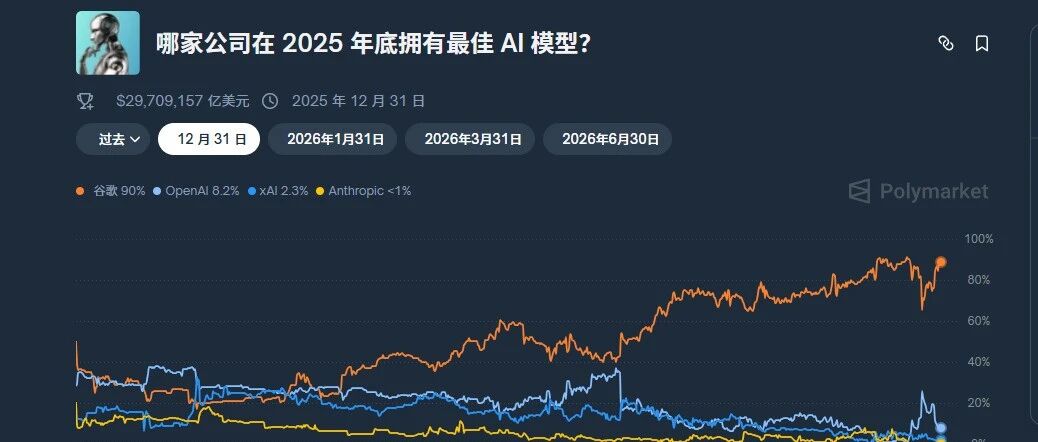
Core Viewpoint - The article discusses the predictive capabilities of Polymarket, a web3 trading platform, particularly in relation to the release of AI models like GPT-5.2 and Gemini 3.0, highlighting its accuracy and reliability compared to traditional sources of information [4][30][94]. Group 1: Predictions and Accuracy - Polymarket demonstrated a high accuracy rate in predicting the release of GPT-5.2, maintaining a probability of over 80% for its release on December 11, 2023, with a peak of nearly 100% shortly before the event [14][19]. - The platform also accurately predicted that no new model would be released on December 9, 2023, when many expected it, showcasing its reliability [17][19]. - Polymarket's prediction accuracy is reported as 95% within four hours, 88% within a day, and 91% over a month, indicating its effectiveness in forecasting events [25]. Group 2: Functionality of Polymarket - Polymarket allows users to predict various events and place bets on outcomes, with prices reflecting the perceived probability of those events occurring [31][36]. - The platform operates on a unique mechanism where the price of "yes" or "no" tokens reflects the collective belief of participants, creating a dynamic market for predictions [42][44]. - The betting mechanism incentivizes participants to provide accurate information, as financial stakes are involved, leading to a more reliable aggregation of insights compared to traditional polls or opinions [75][78]. Group 3: Collective Intelligence - The article references the concept of "wisdom of the crowd," illustrating how collective predictions can often be more accurate than individual expert opinions, as demonstrated by historical examples [60][70]. - Polymarket effectively harnesses this principle by allowing diverse participants to contribute their insights through financial commitments, filtering out noise and unsubstantiated claims [76][90]. - The platform's design encourages informed participation, as individuals with insider knowledge or relevant information are more likely to engage in betting, thus enhancing the quality of predictions [79][82].
GPT-5.2发布,真正的牛马打工人专属AI来了。
数字生命卡兹克· 2025-12-11 22:00
在各种小道消息,各种预测之后。 终于,在OpenAI十周年的这一天。 也就是今天的凌晨2点,GPT-5.2终于跟大家见面了。 这是Gemini 3 Pro爆火,第一次让OpenAI没有领先优势,奥特曼在内部官宣红色警戒状态之后,他们掏出的第一款模型。 也是OpenAI的十周年献礼。 而这款模型的特点也非常有意思。 OpenAI的原话是: We are introducing GPT‑5.2, the most capable model series yet for professional knowledge work.(我们正式发布 GPT-5.2,这是迄今 为止在专业知识工作方面能力最强的一代模型系列。 ) 专业知识工作,记住这个关键词,后面要考。 我们先从各种跑分上看,其实能看到,一些跑分其实没有质的飞跃,有一种数码厂开始挤牙膏的感觉。。。 | | OpenAl | Run with maximum available reasoning effort. | Anthropic | Google | | --- | --- | --- | --- | --- | | | GPT-5.2 | GPT-5 ...

AI画不出的左手,是因为我们给了它一个偏科的童年。
数字生命卡兹克· 2025-12-10 01:20
Core Viewpoint - The article discusses the limitations of AI in generating images that accurately depict left-handed actions, highlighting a significant bias in the training data that affects AI's understanding of spatial relationships and hand orientation [21][23][41]. Group 1: AI Limitations - AI struggles to generate images of left-handed actions, consistently producing right-handed images instead [21][24]. - Various AI models, including Gemini's NanoBananaPro and others like ChatGPT and Seedream, fail to accurately depict left-handed writing despite clear prompts [5][7][9]. - The inability to distinguish between left and right is attributed to biases in the training datasets, which predominantly feature right-handed actions [41][56]. Group 2: Research Findings - A referenced paper titled "Skews in the Phenomenon Space Hinder Generalization in Text-to-Image Generation" explains that the biases in training data hinder AI's generalization capabilities [23][27]. - The research indicates that the distribution of training data, rather than sheer volume, is crucial for AI's ability to understand spatial relationships [31][32]. - Two key metrics, Completeness and Balance, are defined to assess the effectiveness of training datasets in teaching AI about positional relationships [32][35]. Group 3: Implications of Bias - The article suggests that the training data reflects human biases, as most images depict right-handed individuals, leading to a skewed understanding of actions like writing [41][56]. - The analogy of a student only exposed to one side of a mathematical equation illustrates how AI can become limited in its understanding due to biased training [46][50]. - The conclusion emphasizes the need for a more balanced training dataset to improve AI's performance and understanding of diverse human actions [61][62].

AutoGLM深夜开源,千千万万个手机Agent要站起来了。
数字生命卡兹克· 2025-12-09 01:20
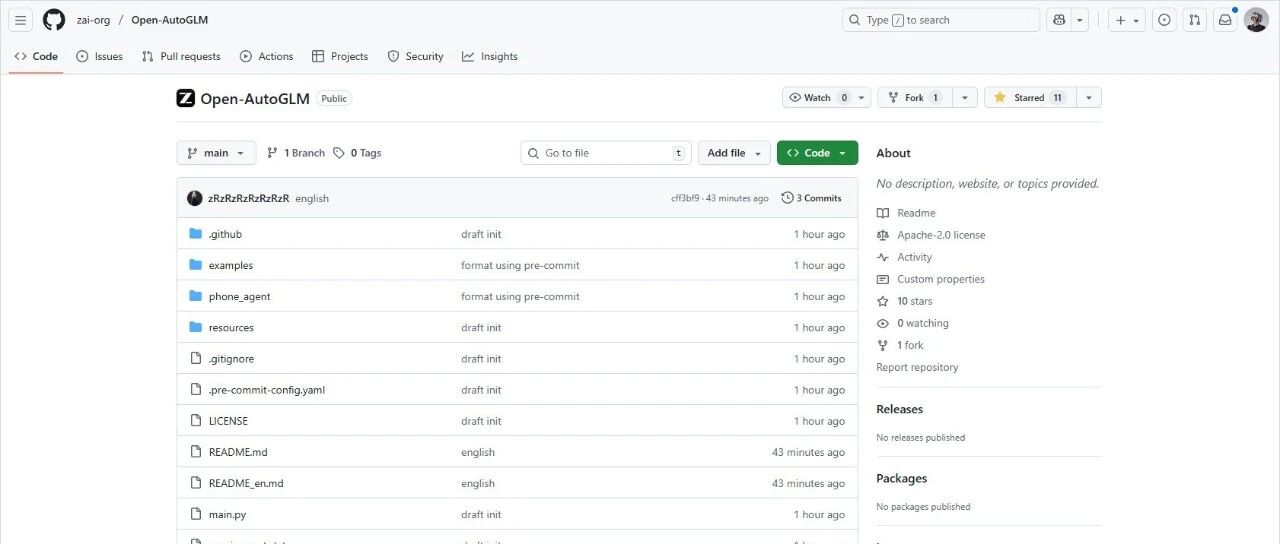
Core Viewpoint - The article discusses the open-sourcing of AutoGLM by Zhipu, highlighting its significance in the context of mobile AI agents and the potential for innovation in this space [2][5][11]. Group 1: Open-Sourcing of AutoGLM - Zhipu has released the AutoGLM mobile agent framework and the AutoGLM-Phone-9B model as open-source, marking a significant development in mobile AI technology [2][6]. - The open-sourcing comes at a time when the Doubao mobile assistant has been banned, positioning AutoGLM as a viable alternative in the mobile AI landscape [5][13]. - The article draws parallels between the open-sourcing of AutoGLM and historical tech movements, suggesting that it could lead to a proliferation of applications similar to what happened with Stable Diffusion [13][19]. Group 2: Deployment Modes and Privacy - AutoGLM offers three deployment modes: local deployment, cloud deployment, and hybrid deployment, each with varying levels of privacy and performance [6][9]. - Local deployment ensures maximum privacy as all data processing occurs on the device, while cloud deployment requires careful handling of data transmission [6][9]. - The article emphasizes the importance of privacy in AI applications, suggesting that future advancements in mobile chip technology will enable more powerful local processing [6][19]. Group 3: Implications for the Future - The open-source nature of AutoGLM could democratize access to mobile AI agents, allowing individuals to create personalized assistants that run locally on their devices [19][21]. - The article reflects on the potential societal changes that could arise from widespread adoption of personal AI agents, including shifts in how individuals interact with technology [25][29]. - It suggests that the evolution of mobile AI agents could lead to a new era of user empowerment, where individuals have greater control over their digital interactions [19][29].
用豆包手机的这两周,我好像卷入了一场新与旧的战争。
数字生命卡兹克· 2025-12-08 02:47
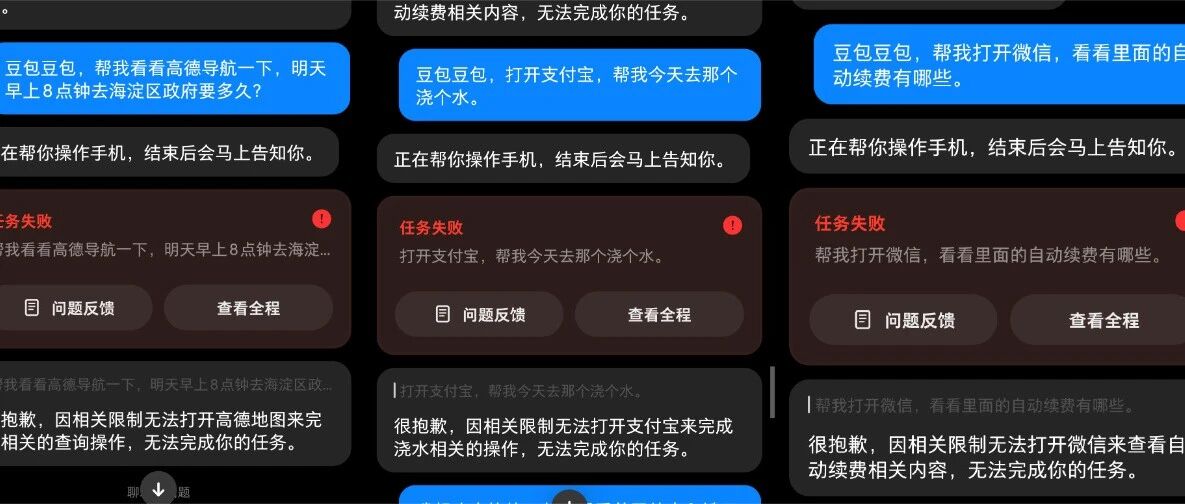
Core Viewpoint - The article discusses the recent experiences and challenges faced by users of the Doubao mobile assistant, highlighting its initial appeal and subsequent issues with major apps like WeChat and Alipay, which led to user restrictions and account bans [1][2][19][25]. Group 1: Product Experience - Doubao mobile assistant has gained popularity, with Nubia phones equipped with it selling out quickly, indicating strong market interest [2]. - The initial user experience was positive, with features like task automation and integration with apps being well-received [3][5][7]. - However, after a live demonstration, users faced significant issues, including account restrictions from major platforms, severely impacting usability [19][25][26]. Group 2: Industry Dynamics - The article draws parallels between the current situation and historical battles for control over digital entry points, emphasizing that the competition is shifting from traditional platforms to AI assistants [29][30][61]. - Major platforms view the emergence of AI assistants as a threat to their business models, leading to aggressive actions against such technologies [28][46]. - The narrative suggests that the rise of AI assistants could disrupt existing power structures in the app ecosystem, potentially benefiting users but threatening the survival of established platforms [41][46][55]. Group 3: Future Outlook - The author expresses optimism about the technological advancements in AI, suggesting that improvements in processing power will eventually address current limitations and privacy concerns [63][64]. - There is a cautionary note about the unpredictability of how AI will manifest in the future, urging users to be careful with sensitive information until more robust solutions are available [67]. - The article concludes with a reflection on the chaotic nature of emerging technologies, suggesting that while current experiences may be frustrating, they are part of a larger evolution towards a more integrated AI-driven future [70][74].
Lovart悄悄上的这个新功能,就是我心中设计的神。
数字生命卡兹克· 2025-12-05 01:20
Core Viewpoint - The article emphasizes the transformative capabilities of Lovart's new text editing feature, which significantly enhances design efficiency and creativity, potentially replacing traditional design tools like Photoshop [8][41][101]. Group 1: Lovart Membership and Features - The author purchased a premium annual membership for Lovart during a promotional event, highlighting the value of the included tools like NanoBanana Pro and other AI applications [2][3][4]. - The membership provides access to advanced features such as text editing, which is seen as revolutionary for designers [8][9]. Group 2: Text Editing Functionality - Lovart's new text editing feature allows users to modify text within images easily, addressing a common pain point in design work where text cannot be edited after image generation [19][20]. - The process involves uploading an image, extracting text, and editing it directly in a user-friendly interface, which is a significant improvement over traditional methods [30][32]. Group 3: Enhanced Design Capabilities - The combination of text editing and other features like Touch Edit allows for seamless modifications of both text and styles, increasing overall design efficiency [75][66]. - The Mockup feature enables designers to apply their work onto various templates, streamlining the process of creating presentation-ready designs [76][78]. Group 4: Industry Impact - The article suggests that Lovart's capabilities represent a shift in the design industry, moving away from traditional tools and methods towards more intuitive, AI-driven solutions [41][100]. - The author reflects on the historical challenges faced by designers and contrasts them with the ease of use provided by Lovart, indicating a significant evolution in design practices [90][96].

这,才是Vibe Coding的未来。
数字生命卡兹克· 2025-12-04 01:20
Core Viewpoint - The article discusses the recent updates to Ant Group's Lingguang platform, highlighting its new features that allow users to create mini-games and applications easily, emphasizing the accessibility of technology for ordinary users [3][28][67]. Group 1: Lingguang Platform Features - Lingguang now supports not only mini-applications but also mini-games, expanding its functionality [28]. - The platform has received overwhelmingly positive feedback from users, indicating its effectiveness and user-friendliness [5][7]. - Users can create applications by simply stating their needs, without requiring any coding knowledge, which lowers the technical barrier [26][67]. Group 2: User Experience and Feedback - Users have expressed excitement about the platform, with many noting its intuitive design and strong performance compared to other AI products [6][7]. - The platform's ability to generate applications quickly has been highlighted, with examples of educational games being created in seconds [41][60]. - The article mentions specific user experiences, such as a history teacher creating a game based on the Three Kingdoms to make learning more engaging [35][41]. Group 3: Future Potential and Vision - The article envisions a future where AI can generate artistic materials for games, further enhancing the creative possibilities for users [59]. - It emphasizes the importance of making technology invisible, allowing users to focus on their ideas rather than the technical complexities behind them [64][67]. - The ultimate goal is for individuals to transform their ideas into reality effortlessly, marking a significant revolution in how technology is utilized [68][70].
