机器人大讲堂

Search documents
快讯|马斯克1万亿美元薪酬方案将表决;Optimus亮相时代广场智能分发糖果引围观;震裕科技21.1亿投建项目布局人形机器人
机器人大讲堂· 2025-10-28 11:10
1、 特斯拉Optimus亮相时代广场智能分发糖果引围观 3、 宝馨科技拟控股机器人企业开辟增长新航道 近日,江苏宝馨科技股份有限公司披露2025年三季报,前三季度营收1.5亿元,净利润-5445.58万元,处 于战略转型调整期。不过,市场更关注其在机器人赛道的布局。近期,宝馨科技以1800万元自有资金增资 控股苏州集萃智造机器人有限公司,持股81.82%并实现并表。苏州集萃技术积淀深厚,在协作机器人、人 形机器人领域成果显著,2025年上半年营收大幅增长且扭亏为盈。此次跨界与宝馨科技现有新能源业务协 同,将推动智能化升级。随着3000台协作机器人产业化基地建设推进,宝馨科技正从单一制造商向综合服 务商转型,短期业绩调整或为长期增长蓄力。 近日,特斯拉擎天柱(Optimus)人形机器人在纽约时代广场亮相,为路人分发软糖,引发围观。据悉, 特斯拉在纳斯达克大厦前展示全自动驾驶电动轿跑Cybercab和Optimus机器人。分发时,Optimus从桌上 拿起红黄小袋软糖递给路人,虽偶有掉落糖果,但能自行捡起,初步展现自主反应能力。特斯拉董事会主 席称曾在实验室见其折叠衣物,证明有复杂动作能力。此次演示Optimu ...



Science重磅:1毫克机器人偷师水虫,伯克利等破解毫秒变形密码
机器人大讲堂· 2025-10-28 11:10
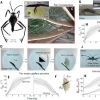
水面上有一种神奇的小虫子,它能在 50毫秒内完成9 6度 急转弯 ,速度达到每秒120个身长!这种叫 波纹蝽 (Rhagovelia)的水生昆虫,身长只有几毫米,却能在湍急的溪流中如履平地。它的秘密武器是什么? 加州大学伯克利分校 的Victor M. Ortega-Jimenez教授联合 佐治亚理工 学院 和 韩国亚洲大学 的研究团队,终于揭开了这个谜底。他 们还根据这个发现,造出了一个仅重 1毫克 的仿生机器人"Rhagobot" ,成功复刻了小虫子的超能力。 这项研究发表在 顶级期刊《Science》 上,题为"Ultrafast elastocapillary fans control agile maneuvering in ripple bugs and robots"。 ▍ 水面机动的关键:自适应扇形结构 波纹蝽最厉害的地方,在于它中间那对腿末端长着的一把特殊"羽毛扇"。 这把扇子有个逆天的功能: 完全不需要肌肉控制 ,纯靠 水的表面张力就能自动开合! 研究人员用扫描电镜仔细观察后发现,这个扇子由多片扁平丝带状的"小羽枝"(barbules)和"羽支"(barbs)组成,每根上面还有 倒钩相互连 ...
人形机器人排位赛,宇树、乐聚、智元都做对了什么?
机器人大讲堂· 2025-10-28 03:22
Core Viewpoint - The domestic humanoid robot industry is experiencing a historic development opportunity driven by policy support and technological breakthroughs, with Yushu Technology, Zhiyuan Robotics, and Leju Robotics being the core competitors in this round of ranking [1][16]. Group 1: Company Strategies - Yushu Technology adopts a technology-focused strategy, emphasizing hardware development and cost control, with a strong brand influence in dynamic balance and high explosive motion [4]. - Zhiyuan Robotics follows a scenario-focused strategy, aiming for productization of technology and leveraging an open ecosystem to maximize its leverage effect, combining technical depth with commercial acumen [6]. - Leju Robotics employs a full industry chain integration strategy, controlling upstream core components through self-research and equity investment, while ensuring midstream production capacity through joint ventures and ecosystem cooperation [8][9]. Group 2: Manufacturing and Integration - In midstream manufacturing, Yushu relies on its proven "self-built capacity + supply chain optimization" model to enhance cost efficiency [8]. - Zhiyuan focuses on rapid prototyping and seeks manufacturing partners, indicating a reliance on large OEMs for future mass production [8]. - Leju positions itself as an "organizer" of the industry chain, creating deep adaptations between products and scenarios through strategic partnerships with major manufacturers [9]. Group 3: Market Deployment and Commercialization - Yushu maintains a steady commercialization pace, leveraging its existing market foundation to gradually penetrate complex scenarios [11]. - Zhiyuan aims for high-profile demonstrations to establish its long-term goal of a "universal robot," although its initial focus is on high-value tasks [11]. - Leju prioritizes high-paying scenarios to reduce commercialization risks, successfully deploying its humanoid robot "Kua Fu" in various fields, including industrial manufacturing and educational services [13][14]. Group 4: Industry Positioning and Future Outlook - Leju is likened to "BYD" in the robot field for its vertical integration and ecosystem construction, while Yushu is compared to "DJI" for its technical excellence and cost control [16]. - The recent 1.5 billion RMB financing for Leju signifies its advancement towards an IPO, with a dual strategy of resource locking and overcoming production bottlenecks [16]. - The comprehensive layout of Leju across the industry chain enhances its resource integration capabilities and risk resilience, although it faces challenges in management complexity and maintaining core technology focus [17].

人眼级仿生眼球?国防科大开发1.8克BES,实现微型化与功能集成度兼具!
机器人大讲堂· 2025-10-28 00:00
然而,这类融合了光学、机械、电子与计算等多领域技术的高集成度智能微系统,仍面临诸多挑战。目前, 受制于传统运动部件的制造方法与驱动方式,视场调节机构的设计仍主要依赖 于 全刚性结构与微型驱动电 机。 此类结构通常体积较大(数十立方厘米)、重量较重(数百克),严重限制了机器人头部的有效负载能 力,并阻碍了其在对于尺寸、重量 更 为敏感平台(如紧凑型仿生机器人)上的应用。 因此,开发能够在光学成像系统、视场调节机构与目标识别算法之间实现协同优化与多维性能深度集成的仿生 视觉系统,具有重要的科学研究意义与工程应用价值。该系统应兼具轻量化紧凑型结构、高分辨率成像能力、 大视场多自由度动态调节特性以及强大的环境适应性。 ▍ 开发 BES 视觉系统:实现具有人眼解剖学等效特征的仿生眼球系统 针对仿生视觉系统所面临的突出问题, 国防科技大学智能科学学院吴学忠教授与肖定邦教授团队受人类眼球 生理结构启发,研制出一种基于三自由度折纸机构的新型仿生眼球系统( BES ),成功突破了传统机电式仿 生眼球在物理尺寸与功能集成度之间难以权衡的技术瓶颈。 BES 在视场调节能力方面达到人眼水平,单眼视场范围超过 151.6° × 151 ...

具身智能落地第一件事,做什么?
机器人大讲堂· 2025-10-27 09:00
Core Insights - Embodied intelligence has become a global buzzword, with countries competing in technology advancements, particularly in the U.S. which is forming a complete support system from basic research to industrial application [1][5] - China is a key player in the embodied intelligence sector, with significant growth in startups and investment, totaling over 27.1 billion yuan in the first seven months of the year [3][5] - The rise in the embodied intelligence industry is driven by supportive policies in both the U.S. and China, recognizing it as a critical future industry [5][6] Investment and Market Dynamics - In the first seven months of 2025, China saw 108 investment events in the embodied intelligence field, surpassing the total for 2024 [3] - Major companies like Alibaba, JD, and Tencent, along with automotive giants and manufacturing firms, are entering the embodied intelligence market, pushing for commercialization [3][5] Technological Developments - The industry is shifting from a focus on humanoid robots to practical designs based on specific scene requirements, leading to the emergence of two paths: remote operation and autonomy [6][10] - The combination of wheeled and bipedal robots is becoming essential, with wheeled robots gaining traction due to their efficiency and adaptability in various industrial applications [8][10] Operational Efficiency - Wheeled embodied intelligence robots are emerging as core engines of the industry due to their lower complexity and cost, with BOM costs being one-tenth of bipedal robots [10][11] - These robots are capable of performing tasks such as vehicle inspection and material sorting, demonstrating their commercial viability [11][13] Challenges and Future Outlook - Wheeled robots face challenges in transitioning from structured to semi-structured environments, while bipedal robots excel in high-risk scenarios [13][19] - The future of embodied intelligence will likely see parallel development of both wheeled and bipedal robots, addressing diverse needs across various sectors [13][19] Technological Architecture - The development of "big brain" and "small brain" capabilities is crucial for enhancing operational efficiency, with a focus on intelligent decision-making and precise execution [15][19] - The dual-mode architecture combining autonomous operation and remote control is becoming a practical choice for balancing technology maturity and commercial needs [17][19] Industry Competitions and Collaborations - The upcoming 2025 Zhongguancun Embodied Intelligence Robot Application Competition aims to evaluate and promote the capabilities of various companies in the sector [21][22] - The competition will cover multiple core scenarios and invite top experts to ensure a comprehensive assessment of the industry's leading players [22][24]

全球首款!这只中国灵巧手:能帮你洗菜洗碗,还能潜万米深海作业
机器人大讲堂· 2025-10-27 03:56
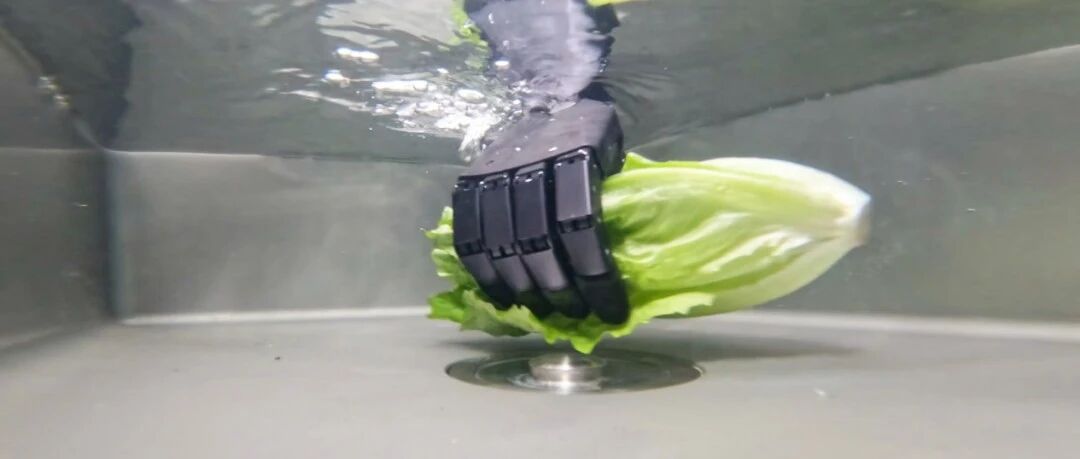
Core Insights - The article discusses the launch of the world's first waterproof dexterous hand, the WA series, by the Chinese startup Heiman Technology, which addresses a significant limitation in the dexterous hand market and expands the operational capabilities of robots in various environments [1][10]. Product Overview - The WA series includes two versions: the standard version for everyday tasks like washing dishes and vegetables, and the engineering version designed for underwater operations, capable of withstanding pressures at depths of up to 10,000 meters [3][5]. - The engineering version is tailored for applications such as marine farming, deep-sea scientific research, underwater engineering, archaeology, and rescue operations [3][12]. Technical Challenges - Key technical challenges in developing the waterproof dexterous hand include ensuring reliable sealing, adaptive grasping control, and resistance to corrosion and electromagnetic interference [3][5]. - The team utilized advanced sealing technologies and high-performance drive solutions to achieve the required functionality and reliability in extreme underwater conditions [5][6]. Team Expertise - The core team at Heiman Technology has extensive experience in robotics, with the founder and team members having backgrounds in military and industrial robotics, contributing to the development of various robotic systems [6][7]. - The team has a strong academic foundation, with members from top universities and significant industry experience, enhancing their capability to innovate in the field of dexterous hands [6][7]. Market Potential - The standard version of the WA series targets the rapidly growing humanoid robot market, which is projected to exceed $100 billion by 2030, with service robots expected to reach $40 billion by 2025 [10][12]. - The engineering version addresses specific needs in underwater operations, which are becoming increasingly important as marine exploration and resource extraction activities expand [12][14]. Business Strategy - Heiman Technology's business strategy focuses on solving specific engineering problems in vertical markets while aiming for long-term integration with the humanoid robot industry to enhance product stability and cost-effectiveness [15][10]. - The company has established partnerships with several universities and organizations to facilitate product testing and market entry, demonstrating a clear and pragmatic commercial logic [14][15].
快讯|松延动力“小布米”3小时卖掉200台;全球首例跨国远程机器人心脏介入手术完成;杭州市人形机器人中试基地暨应用推广中心启用
机器人大讲堂· 2025-10-27 03:56
Group 1: Humanoid Robots - The new humanoid robot "Xiao Bumi" by Songyan Power achieved impressive sales, with over 200 units sold within 3 hours of launch, priced at 9998 yuan, making it the first high-performance humanoid robot under 10,000 yuan [2] - The launch of "Xiao Bumi" aims to bring emotional value to users before humanoid robots fully enter the home service market, indicating strong market interest and potential for future household applications [2] Group 2: Medical Robotics - Xiamen University Affiliated Cardiovascular Hospital successfully completed the world's first cross-border remote robotic-assisted cardiac intervention surgery, demonstrating real-time collaboration between Chinese and French experts over a distance of over 10,000 kilometers [6][7] - The surgery utilized a robot system developed by Xiamen Hospital, showcasing its independent intellectual property and receiving high praise from Bordeaux University Hospital experts for its milestone significance in global medical cooperation [7] Group 3: Robotics Infrastructure - The humanoid robot pilot base and application promotion center in Hangzhou officially opened, with a total investment of nearly 200 million yuan and an area of over 15,000 square meters, aimed at addressing mass production challenges for humanoid robots [11] - The base integrates various functions, including indoor precision testing and outdoor scenario validation, and is part of the core of Hangzhou's Zhijiang Robot Industry Service Port, enhancing the city's innovation system in the robotics sector [11] Group 4: Advanced Robotics Technology - A research team from the University of North Carolina developed "DNA flower" micro-robots, which can rapidly fold and unfold in response to environmental changes, showing potential for targeted tumor treatment and environmental cleanup [13] - The technology is still in early testing stages but holds promise for future applications, including digital storage capabilities [13] Group 5: Vision Restoration Technology - The PRIMA artificial vision technology has enabled a 70-year-old woman, previously blind due to age-related macular degeneration, to regain functional central vision, with 84% of patients in clinical trials achieving similar results [16] - PRIMA consists of an implant and special glasses, representing a significant advancement in vision restoration, with ongoing regulatory processes in Europe and the FDA [16]

像飞蛾扑火一样定位悬停!仿生飞行器最新突破!
机器人大讲堂· 2025-10-27 03:56
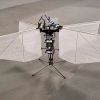
近日,辛辛那提大学的研究团队搞出了一个有意思的东西—— 仿蛾 扑翼无人 机 。 它最大 的 亮 点是用了 极值搜索 (Extremum-Seeking)反馈控制,简单说就是 不需要AI、不需要复杂模型,靠着简单的反馈机制就能实现稳定飞行。 硬件配置上,它有四个金属丝和织物做的翅膀,通过高速独立扑动来控制飞行姿态——快到肉眼只能看到一片模糊,跟蜂鸟似的。 功能方面很有意 思: 能悬停、能倒着飞,遇到风或障碍物会自动调整,还能跟着移动的光源走。 飞行时会有点小晃 悠,但这不是缺陷而是特意设计的——系统需 要这 种扰 动来不断优化飞行状态。 此外,它还能模拟飞蛾、蜻蜓、蜂鸟等各种飞行生物的姿态。而且整个系统可以做得非常小,特别适合一些特殊应用场景。 ▍ 悬停飞行:曾被认为 "不可能"的奇迹 昆虫和蜂鸟的悬停飞行一直是个谜。 它们如何在空中保持稳定?如何实时调整翅膀来对抗扰动?这些问题困扰了科学家几十年。 不久前,辛辛那提大学的研究团队还提出了一个 全新的解释框架 ——将昆虫悬停飞行描述为一种天然的极值搜索(Extremum Seeking,ES)反馈系统。 | XIV > math > arXiv:2402.049 ...
机器人业务放量,奥比中光前三季度营收增长超100%!未来5年产能将升至500万台!
机器人大讲堂· 2025-10-27 03:56
Core Viewpoint - The company, Obi Zhongguang, reported significant growth in its third-quarter earnings, with a revenue increase of 103.5% year-on-year, indicating a strong recovery and operational improvement in its core business segments [1][2]. Financial Performance - For the first three quarters of 2025, the company achieved a revenue of 714 million yuan, with a net profit of 108 million yuan and a non-recurring net profit of 68.57 million yuan, marking a turnaround from previous losses [1][4]. - In the third quarter alone, revenue reached 279 million yuan, a year-on-year increase of 102.49%, and a net profit of approximately 47.83 million yuan, reflecting a 33.32% increase from the previous quarter [1][2]. Business Growth Drivers - The company has seen rapid growth in its three-dimensional scanning, payment verification, and various robotics sectors, driven by improvements in the upstream 3D visual perception supply chain and the expansion of downstream application scenarios [2][4]. - The biological recognition and AIoT sectors have emerged as core growth engines for the company, with significant collaboration with ecosystem partners to develop smart terminal devices for various applications [5][6]. R&D and Manufacturing Strategy - The company has focused on enhancing its R&D efficiency and reducing ineffective cost inputs, with an average R&D investment of nearly 70% of annual revenue from 2022 to 2024 [4][9]. - A recent fundraising plan aims to raise up to 1.918 billion yuan to strengthen its R&D platform for robotics AI vision and spatial perception technology, as well as to establish a manufacturing base for AI visual sensors and smart hardware [9][10]. Market Position and Future Outlook - The company has achieved over 70% market share in the domestic service robot and commercial/industrial mobile robot 3D visual fields, indicating strong competitive positioning [10]. - Future plans include increasing annual production capacity for 3D visual sensors and consumer-grade application devices to 5 million and 2 million units, respectively, targeting high-demand automation scenarios [12].


K-ScaleLabs产品与工程负责人离职!创立GradientRobotics新公司聚焦美国机器人与物理AI关键难题!
机器人大讲堂· 2025-10-26 10:03
Core Insights - Jingxiang Mo has left K-Scale Labs to establish a new company, Gradient Robotics, focusing on critical issues in robotics and physical AI in the U.S. [1][6] - During his tenure at K-Scale Labs, he led the development of K-Bot and Z-Bot, achieving significant milestones in under eight months with a small team [2][10]. Group 1: K-Scale Labs Achievements - K-Scale Labs successfully created K-Bot, an open-source humanoid robot platform, which was the first of its kind in the U.S. for consumer use, featuring a reinforcement learning-based motion system [10][11]. - The K-Bot project saw rapid success, with 150 units sold out quickly, generating over $2 million in sales, and attracting clients like Google DeepMind and OpenAI [11][13]. - The Z-Bot project aims for mass production with a price point below $1,000, and has already garnered significant interest, with over 20,000 people on the waiting list [13]. Group 2: Industry Context and Future Directions - The robotics and physical AI sectors are becoming competitive focal points, with companies like Physical Intelligence (PI) and FieldAI emerging as key players, both valued over $2 billion [18][29]. - PI focuses on developing general AI models for robots, while FieldAI aims to create AI models that can operate in real-world environments, showcasing the industry's demand for technological breakthroughs [24][27]. - Gradient Robotics is positioned to leverage its experience in open-source humanoid robotics to address the challenges in general robotics technology, drawing parallels to advancements in autonomous driving [4][30].