机器人大讲堂

Search documents
快讯|宇树机器人H2亮相;明新旭腾拟与上海清宝共同投资设立具身智能公司;软体机器人柔性化材料革新等
机器人大讲堂· 2025-10-21 09:39
Group 1: Unitree H2 Robot Release - Unitree Technology has launched the upgraded humanoid robot Unitree H2, featuring a bionic face, which marks a significant step towards human-like appearance [3] - The H2 weighs 70 kg, nearly 50% heavier than its predecessor H1, which weighed 47 kg, while maintaining the same height of 180 cm [3] - The H2 incorporates a high-degree-of-freedom jointed waist module similar to the G1 series, enhancing its stability and flexibility, as demonstrated in videos showcasing its smooth dance and complex martial arts movements [3] Group 2: Soft Robotics Material Innovation - Engineers at the University of California, San Diego, have developed a thin-layer material that transforms conventional soft robots into agile explorers capable of navigating tight spaces [6] - The robots utilize liquid crystal elastomers, which are both strong and flexible, allowing them to fold without increasing volume and to stretch into required shapes when heated [6] - The robots are equipped with numerous actuators that work in coordination to tilt in various directions based on commands [6] Group 3: Micro "DNA Flower" Robots for Drug Delivery - Scientists at the University of North Carolina have created micro soft robots known as "DNA flowers," which can mimic biological adaptive behaviors [9] - These structures are made from a combination of DNA and inorganic materials, allowing them to fold and unfold rapidly while responding to environmental stimuli [9] - The technology utilizes programmable DNA assembly, enabling the creation of complex structures that can change shape reversibly, opening new possibilities in medicine and smart materials [9] Group 4: Joint Investment in Embodied Intelligence Technology - Mingxin Xuteng announced a joint investment with Shanghai Qingbao to establish a new company focused on embodied intelligence technology, with a registered capital of 12 million yuan [12] - Mingxin Xuteng will contribute 7.8 million yuan for a 65% stake, while Shanghai Qingbao will invest 4.2 million yuan in intellectual property for a 35% stake [12] - Qingbao Robotics, founded by a Tsinghua University PhD, specializes in humanoid robot development, covering areas such as cloud-based brains and flexible joint actuators [12] Group 5: Growth of the Robotic Surgery Market - The global robotic surgery market is projected to grow from 11.77 billion USD in 2024 to 46.51 billion USD by 2033, with a compound annual growth rate of 16.5% from 2025 to 2033 [15] - This growth is driven by advancements in technology, increasing surgical demand, and improvements in medical infrastructure in emerging economies [15] - Approximately 10% of global disease cases require surgical or anesthetic care, with robotic systems providing scalable and precise solutions to meet this growing demand [15]


从机器人全栈技术到具身智能!珞石十年积淀:三款具身智能新品炸场IROS
机器人大讲堂· 2025-10-21 09:39
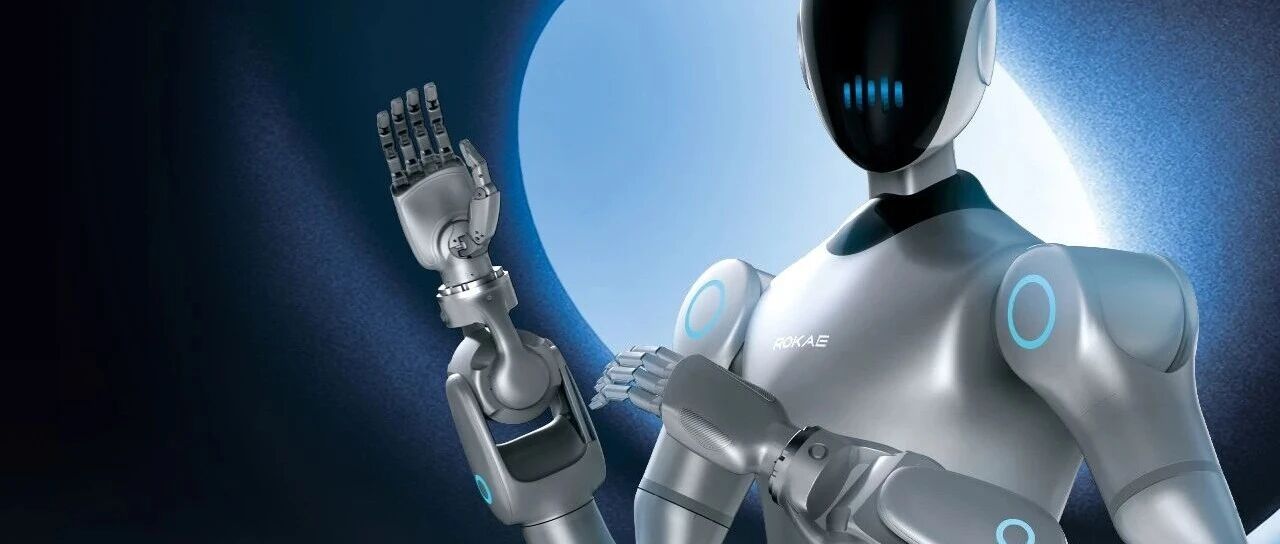
Core Insights - The article emphasizes that embodied intelligence is not a sudden technological revolution but a natural explosion resulting from long-term technological accumulation [1][3] - The company, ROKAE, showcases its advanced embodied intelligence products at the IROS conference, highlighting their practical applications in industrial manufacturing [2][5] Product Highlights - ROKAE's AR series humanoid force-controlled arm demonstrates high sensitivity and precision in assembly tasks, showcasing its "human-level" flexible operation capabilities [1][7] - The HSA series high-performance force-controlled joint module features a resolution of less than 0.05Nm and a closed-loop refresh frequency of 1KHz, indicating its strong technical foundation [1][5] - A wheeled dual-arm robot with 42 degrees of freedom and ±0.1mm operational precision can be remotely controlled via VR, illustrating its potential in remote industrial operations [2][5] Industry Context - The embodied intelligence sector has seen explosive growth in 2023, with nearly 200 financing rounds and over 23 billion yuan raised in two and a half years [3][5] - There is a misconception in the industry that only humanoid robots can be classified as embodiments of intelligence, neglecting the essential value of technology [3][5] ROKAE's Approach - ROKAE has adopted a "capability-first" mindset, focusing on practical applications of embodied intelligence rather than merely following trends [5][19] - The company has been implementing embodied intelligence since before it became a buzzword, launching its first collaborative robot in 2017 [5][12] Technical Foundation - ROKAE's core technology includes force control, which is essential for physical perception in embodied intelligence, and a dynamic model that supports autonomous decision-making in complex environments [12][14] - The company has developed a comprehensive ecosystem with over 50 partners, facilitating technology sharing and collaborative innovation [14][19] Application in Industries - ROKAE's robots are deeply integrated into the automotive manufacturing sector, addressing challenges such as high volume, precision, and reliability [15][19] - The company's technology also addresses issues in the 3C electronics industry, enabling rapid line changes without the need for extensive debugging [15][16] - ROKAE's robots have successfully implemented solutions in various industrial scenarios, including steel structure welding and metal grinding, significantly reducing production changeover times [16][17] Future Outlook - ROKAE's development trajectory illustrates a successful alignment of technological accumulation with market demand, positioning the company as a leader in the embodied intelligence space [19][20]
泳池清洁也能躺平?这个水下机器人年卖25亿美元,中国企业霸榜全球
机器人大讲堂· 2025-10-21 09:39
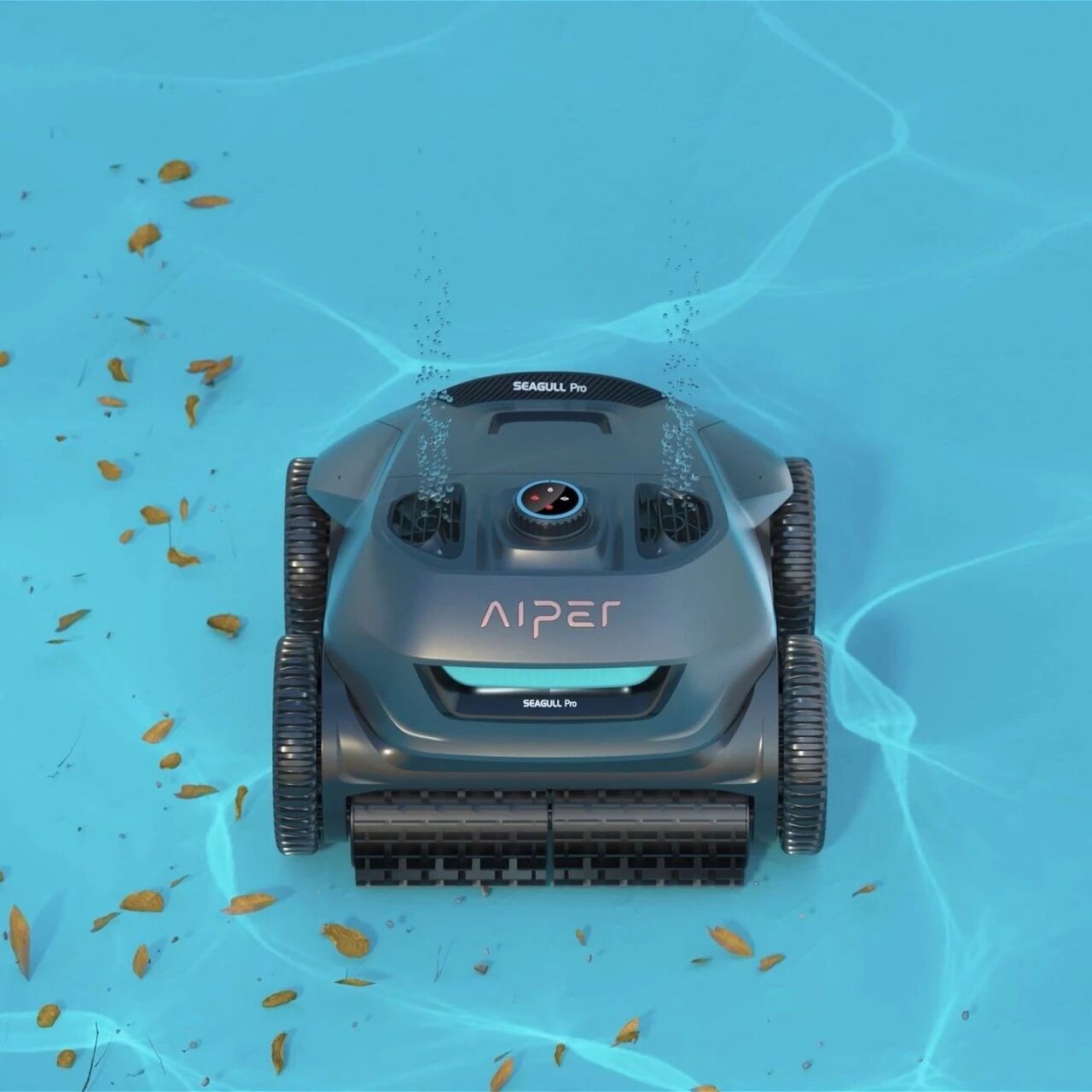
Core Insights - The global pool cleaning robot market is projected to reach $2.5 billion in retail sales by 2024, with a significant increase in demand driven by the growing number of private pools worldwide [1][4][5] - Chinese companies dominate the wireless pool robot market, with the top five manufacturers accounting for 51.5% of global shipments, led by Wangyuan Technology with a 20% market share [12][13] Market Overview - By 2024, the number of pools globally is expected to exceed 32.9 million, with the U.S. and Europe being the primary markets, accounting for 34.3% and 28.3% respectively [3][4] - The annual cleaning cost for pools in the U.S. can exceed $1,000, prompting 87% of American households to prefer DIY cleaning methods [3] Growth Potential - The pool cleaning robot segment is expected to grow at a compound annual growth rate (CAGR) of 16% from 2019 to 2024, with the penetration rate projected to increase from 26 robots per 100 pools in 2024 to 34 by 2029 [4][5] - The total spending related to pool cleaning is anticipated to reach $12.9 billion in 2024, with pool robots accounting for nearly 20% of this expenditure [4] Technological Advancements - The shift from wired to wireless pool robots has been a game-changer, with wireless models experiencing an 81-fold increase in sales over the past eight years [8][9] - Innovations such as underwater blue light laser radar technology are enhancing the functionality and efficiency of pool robots, allowing for better navigation and cleaning precision [10][12] Competitive Landscape - Wangyuan Technology has positioned itself as a leader in the market, achieving revenues of $540 million in 2024, with 89% of its sales coming from wireless products [12][13] - The company has successfully leveraged online sales channels, particularly Amazon, where it has seen a 41.6% year-on-year revenue growth in the first half of 2025 [13] Future Outlook - The pool robot market is expected to evolve with the introduction of smarter features, such as automatic water replacement and water quality monitoring, expanding into public pools and spas [16] - The competitive edge of Chinese companies is increasingly based on technological innovation and brand development, moving beyond cost advantages to establish a strong presence in the global market [16][14]
智源牵头,2025中关村具身智能模型能力挑战赛火热报名中!
机器人大讲堂· 2025-10-21 09:39
Core Viewpoint - The event focuses on "Embodied Intelligence and Future Applications," aiming to create a platform that integrates cutting-edge technology with industry applications, encouraging innovation and practical implementation of embodied intelligence [2]. Group 1: Event Overview - The competition features two tracks: the "Brain Track" (model training and leaderboard evaluation) and the "Small Brain Track" (model training and real machine evaluation) [2]. - Participants will receive comprehensive support, including high-performance computing resources, physical robots, cash prizes, expert guidance, and official recognition [2]. - The initial round requires only a technical proposal submission by October 24, with ample spots available for the finals, encouraging bold submissions [2]. Group 2: Industry Participants - The article lists various companies involved in different sectors of robotics, including industrial robots, service and special robots, medical robots, humanoid robots, embodied intelligence, core components, and educational robots [11][12][13][14][15][16]. - Notable companies in the industrial robotics sector include Estun Automation, Efort Robot, and Yujin Robot [11]. - In the medical robotics sector, companies like Yuanhua Intelligent and Tianzhihang are highlighted [12]. - Humanoid robot companies include UBTECH Robotics and Yushun [13]. - The embodied intelligence sector features companies such as Cross Dimension Intelligence and Galaxy General [15].

定档10月23日!海康机器人2025移动机器人发布会·硬件产品专场,亲眼见证智造新力
机器人大讲堂· 2025-10-20 04:06
Core Viewpoint - The article highlights the upcoming 2025 Mobile Robot Product Launch by Hikvision Robotics, focusing on advancements in hardware products designed for high-density warehousing, narrow passage operations, and flexible manufacturing, aiming to provide more efficient and reliable automation solutions [4]. Group 1: Event Details - The 2025 Mobile Robot Product Launch will take place on October 23, 2025, at 14:00 [3]. - The event will feature a systematic showcase of the next-generation mobile robot products [4]. Group 2: Product Highlights - The new mobile robots are designed to meet the demands of high-frequency applications in space-constrained environments [5][6]. - The products will demonstrate soft and hardware collaboration, capable of handling different pallets and loads [8]. - The robots are positioned as tools for dense warehousing, enhancing storage capacity and operational efficiency [9]. Group 3: Technological Advancements - The products will feature a fully self-developed architecture, leading to significant improvements in reliability and performance [10]. - The launch will include insights into the latest hardware product trends and opportunities in intelligent manufacturing [13].

快讯|美国公司推出Yogi硅胶人形机器人;TetherIA打造欠驱动开源机械手;2025中国机器人大赛暨RoboCup落幕等
机器人大讲堂· 2025-10-20 04:06
Group 1 - The 2025 China Robot Competition and RoboCup World Cup China Division successfully concluded, attracting over 1,700 teams from more than 300 universities, with a focus on practical applications in intelligent manufacturing and public services [3][4]. - A total of 58 teams won championships, showcasing strong engineering skills, innovative thinking, and teamwork, with many technical solutions demonstrating high practical potential and promotional value [3]. Group 2 - Doosan Robotics has signed a memorandum of understanding with agricultural machinery company Datong to jointly develop AI technology for agricultural robots, aiming to optimize field robots for smart farms and outdoor agricultural environments [7]. - The collaboration will focus on developing AI-equipped devices for unstructured agricultural environments and expanding the global market for field robots [7]. Group 3 - TetherIA has launched the Aero Hand Open, an open-source underactuated robotic hand designed for dexterous manipulation, capable of performing tasks like grasping screws and opening cans, with a price of $314 for a complete kit [10]. - The hand's underactuated design allows for greater compliance and adaptability, making it effective for everyday grasping tasks [10]. Group 4 - Husqvarna Group has introduced seven AI-powered robotic lawn mowers equipped with night vision cameras, enhancing lawn care capabilities with features like wireless installation and intelligent obstacle avoidance [13]. - The new models cater to various lawn sizes, with the Automower 540 EPOS designed for professional users and compatible with upcoming AI Vision accessories [13]. Group 5 - Cartwheel Robotics is developing a humanoid robot named "Yogi," made from medical-grade silicone for safe interaction, featuring modular batteries for reliable operation and high-torque actuators [15]. - The robot aims to serve as a household assistant rather than an industrial robot, with significant interest from universities for potential research applications [15].

星尘智能IROS升级绳驱平台,并获领益智造批量订单
机器人大讲堂· 2025-10-20 04:06
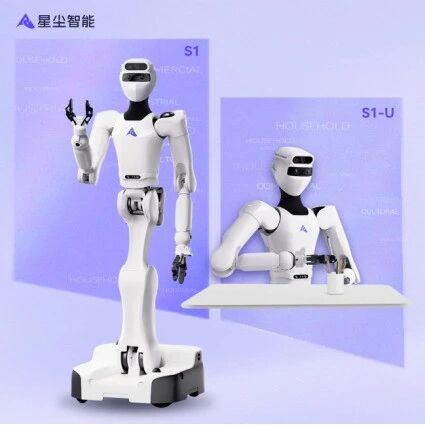
Core Viewpoint - The article highlights the strategic partnership between Stardust Intelligent and Lingyi Robot, focusing on the development and commercialization of embodied intelligent technology through a comprehensive collaboration framework that includes supply chain optimization, scene innovation, and industrial cultivation [2][4]. Group 1: Company Innovations - Stardust Intelligent showcased its upgraded "Body - Remote Operation - Model" platform at the IROS 2025 conference, featuring innovations such as an ultra-long-range remote operation system and the semi-humanoid robot Astribot S1-U, which is designed for flexible deployment and commercial customization [1][6]. - The AI system DuoCore supports fully autonomous commercial services, including popcorn production and beverage sales [1]. Group 2: Strategic Partnership Details - The partnership aims to create a three-dimensional cooperation structure covering "supply chain deepening, scene co-creation, and industrial cultivation," with clear paths for implementation [2][4]. - Both companies will establish a collaborative optimization mechanism to enhance supply chain efficiency and reduce costs through customized supply and bulk purchasing [4]. Group 3: Industrial Applications - The collaboration will focus on automating repetitive, unsafe, and complex tasks in industrial manufacturing, thereby alleviating workers' burdens and enhancing productivity and safety [5]. - Stardust Intelligent will support the establishment of an industrial technician school to address talent shortages in the field of embodied intelligent robotics [5]. Group 4: Technological Advantages - Stardust Intelligent is recognized as the first company to mass-produce cable-driven AI robots, utilizing a design that mimics human tendon movement, allowing for high expressiveness and safety in complex operations [6][7]. - The cable-driven solution significantly reduces elastic error from 3-5 mm to 0.03 mm, enhancing the robot's performance in delicate tasks [7]. Group 5: Future Directions - The companies plan to explore joint ventures and deepen their collaboration to advance the embodied intelligent robotics industry and enhance their product and brand capabilities [5]. - Stardust Intelligent aims to create an "All in One" platform that integrates technology breakthroughs, scene validation, data feedback, and model optimization, moving towards the vision of providing AI robotic assistants to billions [16].

劲爆!3.99万起!高灵巧双臂机器人竟能拉小提琴,打羽毛球?VLAI Robotics与OpenArm团队亮相IROS2025
机器人大讲堂· 2025-10-20 04:06
Core Viewpoint - VLAI Robotics has launched a cost-effective, high-load, and highly flexible humanoid robotic arm, addressing the needs of research institutions and development teams, with a starting price of 39,900 yuan [1][11]. Group 1: Product Features - The robotic arm features a "human-scale" design with 7 basic degrees of freedom plus 1 for the gripper, totaling 8 DOF per arm and 16 DOF for both arms, allowing it to replicate human upper limb movements [6][4]. - It can handle a peak load of 6 kg per arm and 12 kg for both arms, making it suitable for high-precision tasks in various applications such as research experiments and industrial assistance [6][8]. - The arm utilizes bionic kinematics modeling and high compliance control strategies to achieve natural human-like movements, enhancing interaction safety and precision in tasks like remote operation and data collection [9][8]. Group 2: Development and Manufacturing - The development process involved collaboration with the Japanese OpenArm team, which provided open-source design standards and quality control, ensuring the product meets international standards [2][11]. - The VLAI team implemented systematic performance optimizations during mass production, including harness restructuring and lightweight design, balancing strength, flexibility, and energy efficiency [13][11]. Group 3: Market Positioning and Accessibility - The pricing strategy of 39,900 yuan significantly lowers the entry barrier for research-grade performance at product-level prices, making it accessible for various users [11][15]. - The robot is designed for an open ecosystem, allowing users to expand functionalities such as remote control and dual-arm collaboration without the need for expensive proprietary software [15][16]. Group 4: Future Prospects - The team plans to adapt advanced algorithms for physical AI and intelligent agent training, enhancing the robot's capabilities in natural language understanding and task learning [16][18]. - VLAI Robotics will showcase the robotic arm at the IROS 2025 conference, demonstrating its performance in high flexibility and human-robot interaction [19].

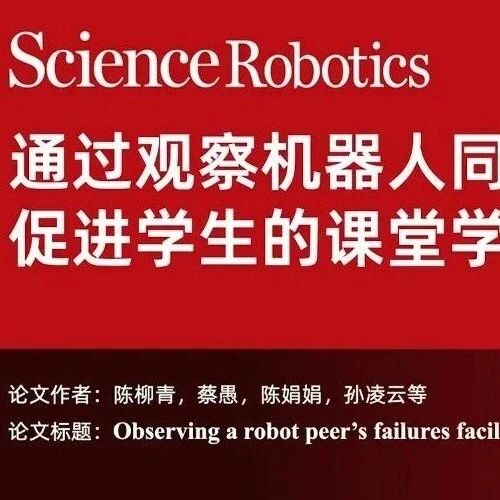
《Sci.Robot.》顶刊发表浙大陈柳青团队提出“机器人同伴有效失败教学法”让学习效率更高!
机器人大讲堂· 2025-10-19 04:03
Core Insights - The article discusses the "Productive Failure" educational theory, which suggests that students learn better by first attempting to solve challenging problems and then receiving instruction, rather than direct teaching [4] - A research team from Zhejiang University has implemented a method where students observe a robot making mistakes, which enhances learning outcomes and reduces classroom pressure [3][4] - The study's findings were published in the journal "Science Robotics" on September 10, 2025 [3] Group 1: Educational Theory and Methodology - The concept of "Productive Failure" posits that experiencing failure can activate prior knowledge and clarify knowledge gaps, leading to deeper understanding [4] - The research team proposed using a robot to demonstrate failure instead of students, thereby alleviating the psychological pressure associated with failure [4][5] - The robot's mistakes are designed based on common errors made by students, ensuring relevance and relatability [22] Group 2: Experimental Findings - Two classroom experiments were conducted with 135 and 110 eighth-grade students, focusing on the topics of "standard deviation" and "derivatives" [5][21] - In the first experiment, students who observed the robot's mistakes (RF group) outperformed those in traditional teaching (DI group) in conceptual understanding and reported lower classroom stress [15][21] - The second experiment confirmed that the benefits of observing the robot persisted even after the novelty of the robot wore off, with RF group students still showing superior understanding and knowledge transfer [21] Group 3: Robot's Role and Design - The robot is not merely a teaching tool but is positioned as a learning companion that can make mistakes, reflect, and grow [26] - The design of the robot's errors follows a structured narrative, helping students understand the reasoning behind the mistakes [22] - The robot's social behaviors, such as showing confusion or asking for input, enhance its relatability and effectiveness as a learning partner [25] Group 4: Future Implications - The research suggests potential for robots to become personalized learning companions that adapt to students' needs in real-time [27] - The approach reduces the psychological barriers associated with making mistakes in a classroom setting, fostering a more supportive learning environment [26][27] - The ultimate goal is to leverage technology to create a more effective and friendly educational atmosphere, where robots and students can collaboratively engage in learning [28]
赋予“灵魂”的教育机器人,AI数字伙伴如何破解个性化学习难题?
机器人大讲堂· 2025-10-19 04:03
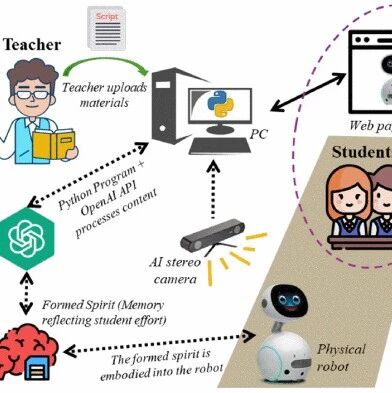
Core Insights - The article discusses the challenges faced by educational robots, including limited availability, restricted interaction time, and lack of personalization, which leads to a significant decline in student interest within 1-2 months [1]. Group 1: Challenges in Educational Robotics - Educational robots enhance classroom engagement but are often expensive and limited in number, leading to students sharing them [1]. - The interaction with these robots is confined to classroom hours, resulting in a lack of continuous learning opportunities [1]. - A study indicates that approximately 60% of students lose interest in educational robots after 1-2 months, highlighting the issue of short-term interest decay [1]. Group 2: Proposed Solutions - A research team from Taiwan has introduced an "AI Personalized Robot Framework" that pairs each robot with an AI digital partner to enhance student learning outcomes and engagement [2]. - The framework is based on digital twin technology and large language models (LLMs) to ensure continuous connection and dynamic responses [3]. Group 3: Framework Architecture - The framework consists of three layers: - Infrastructure layer with modular design connecting physical robots to cloud LLM services for scalability [4]. - Data interaction layer that records and analyzes student learning behaviors and preferences to create personalized digital profiles [4]. - Application performance layer allowing students to interact with digital partners via mobile devices, with physical robots serving as their tangible representation [4]. Group 4: Implementation of Personalized Learning Mechanism - The learning model includes two interconnected phases: - An extracurricular preparation phase where students interact with digital partners, earning virtual currency to customize their partners [5]. - A classroom presentation phase where the digital partner's "soul" is transferred to a shared physical robot, enhancing the learning experience [8]. Group 5: Empirical Research and Results - A quasi-experimental study was conducted with 90 students divided into three groups to evaluate the effectiveness of the AI personalized robot system [9]. - After ten weeks, results showed that the experimental group using the AI personalized robot system had significantly better post-test scores, with an effect size of 0.21, indicating substantial educational value [11]. - The experimental group also demonstrated higher levels of ownership and engagement, with increased participation in extracurricular activities compared to the other groups [12][14]. Group 6: Practical Implications - The research provides a feasible path for the large-scale application of educational robots, allowing schools to implement personalized education within limited budgets [14]. - The modular design of the framework allows for adaptability across various subjects, making it applicable in language learning, STEM education, and vocational training [14].