机器人大讲堂

Search documents
快讯|阿里巴巴与英伟达开启Physical AI合作;柯力传感AI及人形机器人传感器批量出货;擎朗智能发布自研VLA模型
机器人大讲堂· 2025-09-25 10:07
Group 1 - Alibaba announced a collaboration with NVIDIA on Physical AI, aiming to optimize the development process and accelerate the application of technologies like embodied intelligence and assisted driving [2] - The partnership covers various aspects of Physical AI, including data synthesis, model training, environmental simulation, and comprehensive model testing [2] Group 2 - Koli Sensor has successfully achieved mass production of six-dimensional force sensors for AI rehabilitation robots and humanoid robots, with hundreds of units shipped [5] - This development highlights Koli Sensor's strength in sensor manufacturing and supports the growth of AI rehabilitation and humanoid robot industries [5] Group 3 - Qianlang Intelligent released its self-developed VLA model KOM2.0 for the service industry, enhancing the generalization ability and iteration speed of humanoid service robots [9] - The model incorporates innovative mechanisms to extract key information and understand scene relationships, improving efficiency in tasks like making popcorn and beverages [9] Group 4 - UBTECH received authorization for a patent related to a mechanical hand and humanoid robot, showcasing its ongoing investment and innovation in humanoid robot technology [12] - The patented design includes a unique gripping mechanism that enhances stability and safety during the handling of objects [12] Group 5 - Zhengzhou University and Leju Robotics signed an agreement to establish a joint research center for humanoid robots, aiming to drive technological breakthroughs and industrial applications [15] - The collaboration will focus on addressing key technologies and filling gaps in industrial-grade applications of humanoid robots in China [15]


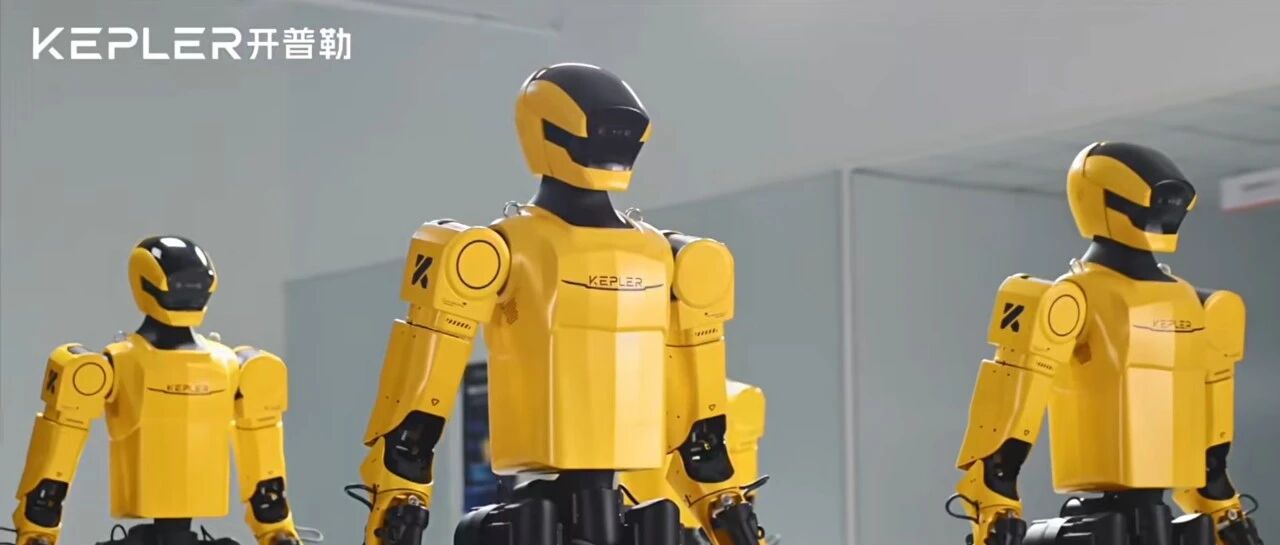
马斯克画饼的Optimus,被这家中国公司先量产了!
机器人大讲堂· 2025-09-25 06:00
Core Viewpoint - Tesla remains a focal point in the global humanoid robot sector, with its production timeline generating significant market interest. Recent developments, including a partnership with PharmAGRI for deploying 10,000 Optimus Gen3+ robots, have raised questions about Tesla's production capabilities and timelines, especially as actual production figures fall short of expectations [1][2]. Group 1: Tesla's Production Plans - Elon Musk announced plans to produce 5,000 Optimus robots by 2025, but reports indicate actual production is only in the hundreds, significantly below targets [1]. - In July, Musk revised the production goal to 50,000 units by 2026, with a projected unit price of 355,000 yuan, aiming for an annual production of 1 million units by 2030 at a reduced cost of 140,000 yuan per unit [1]. Group 2: Kepler Robotics Breakthrough - Kepler Robotics has launched the K2 Wasp, the first commercially available humanoid robot with a hybrid architecture similar to Tesla's Optimus, priced at 248,000 yuan, and has received over a thousand orders within a month [2][10]. - The K2 Wasp's self-developed components and strong supply chain support have enabled it to overcome production bottlenecks and control costs effectively [3][14]. Group 3: Technical Advantages of Kepler Robotics - Kepler's K2 Wasp features a hybrid drive architecture combining planetary roller screw actuators and rotary actuators, allowing for a more human-like walking gait and improved energy efficiency [8][10]. - The robot's self-developed roller screw actuator boasts a peak thrust of 8,200N and an energy conversion efficiency of 81.3%, while the rotary actuator achieves a peak torque of 220N.m with a positioning accuracy of 0.01 degrees [5][10]. Group 4: Performance and Reliability Testing - The K2 Wasp has demonstrated strong balance and adaptability in various environments, showcasing its potential for real-world applications in industrial settings [15][18]. - Kepler Robotics conducted practical training with SAIC General Motors, validating the K2 Wasp's capabilities in complex industrial tasks, such as body gap detection and material handling [18][20]. Group 5: Market Position and Future Outlook - The K2 Wasp can replace 1.5 workers in an 8-hour work shift, with a return on investment period estimated between 1.5 to 1.8 years, indicating significant cost savings for manufacturers [20]. - Kepler Robotics has secured thousands of framework agreement orders across various sectors, marking a significant step towards the commercialization of humanoid robots and establishing a new era of standardized equipment in smart manufacturing [20][24].
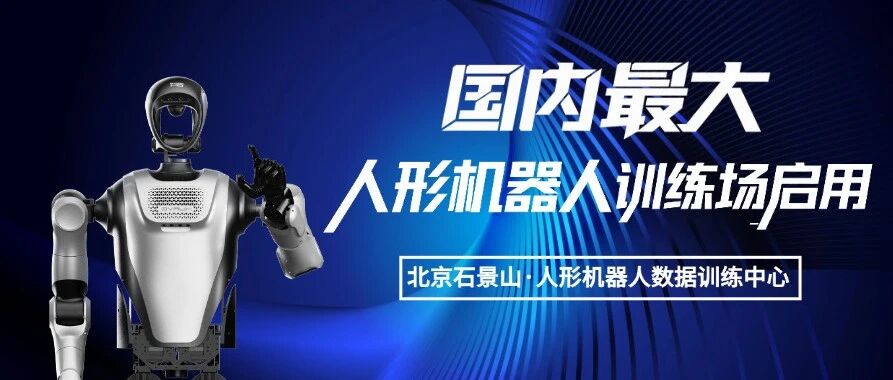
国内最大人形机器人训练场在京启用!年产能600万条数据!聚焦16个细分场景!破解具身智能落地难题!
机器人大讲堂· 2025-09-25 03:20
Core Viewpoint - The establishment of the humanoid robot training center in Beijing aims to address the critical bottleneck of high-quality training data necessary for advancing "embodied intelligence" in humanoid robots, facilitating the transition from simulation to real-world applications [1][7]. Group 1: Training Center Overview - The training center spans over 10,000 square meters and replicates 16 detailed scenarios across four categories: industrial manufacturing, smart home, health services, and 5G integration [2]. - The center is equipped with advanced technologies such as VR devices and motion capture systems, enabling humanoid robots to learn various tasks with a success rate exceeding 95% [3][2]. Group 2: Data Production and Quality - The training center is capable of producing over 6 million high-quality data entries annually, making it the largest humanoid robot training facility in China [11]. - The data generated is sourced from real machine operations, ensuring high quality and a 99% pass rate for individual data entries, addressing industry challenges related to data quality and cost [11][14]. Group 3: Collaborative Efforts - The project is a collaboration between the Shijingshan District government, local industry companies, and leading humanoid robot firms, aiming to create a robust data engine for embodied intelligence [7]. - The training center integrates resources from government, industry, academia, and finance to support the development of autonomous and controllable infrastructure for humanoid robots [7]. Group 4: Future Development and Standardization - The training center is focused on establishing a standardized data system and promoting the fusion of heterogeneous data, which will aid in the development of a public data foundation for the humanoid robot industry [14]. - The initiative aims to facilitate the standardization and large-scale development of the humanoid robot sector by providing a comprehensive training system that includes interactive training methods [14][15]. Group 5: Comprehensive Development Model - The training center adopts a four-in-one development model encompassing training, application, incubation, and education, aiming to create a national public data service platform for embodied intelligence [15]. - This model not only promotes data services and transactions but also supports innovation through industry funds and educational initiatives [15][17].
2025中关村具身智能场景应用赛:自主+遥操双模式竞技 实战见分晓!
机器人大讲堂· 2025-09-25 01:52
Core Insights - The article discusses the advancements in embodied intelligence, highlighting its integration with artificial intelligence to enhance productivity across various sectors, including industrial manufacturing and service industries [1] - The upcoming 2025 Second Zhongguancun Embodied Intelligence Robot Application Competition aims to evaluate robots' practical capabilities in real-world scenarios, focusing on their ability to perform tasks autonomously or via remote operation [3][6] Competition Overview - The competition consists of three phases: registration, preliminary rounds, and finals, with the registration period starting on July 15 [4] - The competition emphasizes practicality and scene adaptability, featuring two main categories: autonomous completion and remote operation, with a total of six sub-events and 15 individual tasks designed to simulate real work environments [6] Preliminary Rounds - Scheduled for October 23-24, the preliminary rounds will be divided into two regions: Dongsheng and Wenquan, each responsible for specific tasks [8][9] - Teams must present their robots for demonstration and evaluation by experts based on innovation, practicality, and application potential [9] Task Categories - The autonomous completion category requires robots to operate without human intervention, focusing on navigation, multi-modal perception, and precise operation across three application scenarios [10][13][14] - The remote operation category allows human intervention through remote control, assessing human-robot collaboration and adaptability in complex environments [17][20][22] Strategy Recommendations - To excel in the competition, teams should balance technical stability, scene adaptability, and attention to detail, selecting tasks that align with their robots' strengths [24] - Emphasis should be placed on optimizing human-robot interaction efficiency and ensuring safety compliance during demonstrations [25] Awards and Support - The competition offers a total prize pool of 2 million yuan, with individual task awards ranging from 20,000 to 50,000 yuan, along with additional incentives for innovative teams [26][28] - Participating teams may also benefit from support policies if they establish operations in the Haidian district [28] Recruitment of Participants - The competition invites global teams, including enterprises, universities, and research institutions, to showcase their robots' capabilities in practical scenarios [29]

逛完2025工博会,我们发现了三大趋势
机器人大讲堂· 2025-09-24 16:00
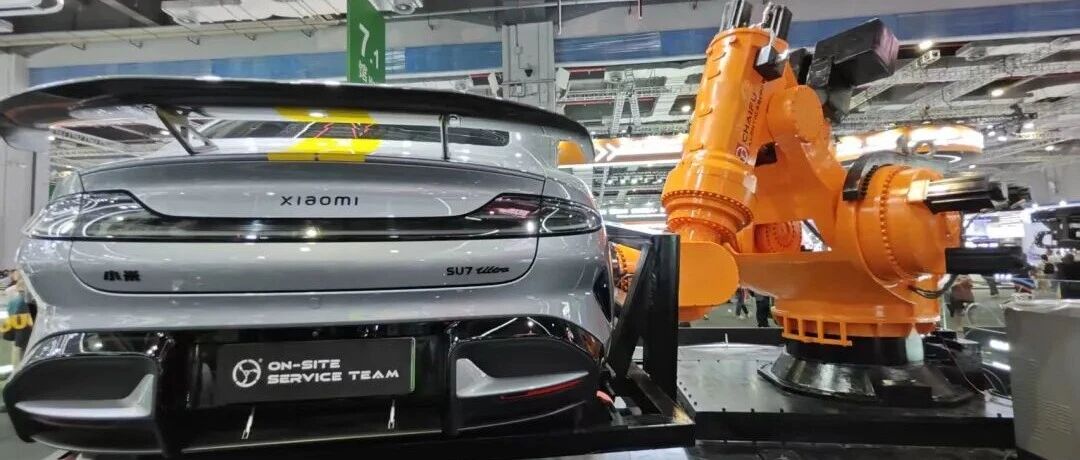
Core Viewpoint - The 25th China International Industry Fair showcased thousands of new products and technologies, marking a historic scale and level of innovation in the robotics industry, highlighting the transition from competition based on price and parameters to high-quality development driven by innovation and ecological collaboration [1][3]. Group 1: Trends in Robotics Industry - Trend 1: The era of internal competition has passed, and high-end innovation is underway, characterized by AI-driven scene innovation and green low-carbon ecological construction [4][5]. - Trend 2: The integration of embodied intelligence with robotics technology is reshaping industrial automation, enabling robots to autonomously move, perceive, and make decisions [12][15]. - Trend 3: Foreign brands are increasingly localizing their strategies in China, moving from merely selling products to co-creating solutions tailored to the Chinese market [19][21]. Group 2: High-Quality Development - High-quality development is about finding true demand points and values in products, as seen with Estun's launch of the ER1200-3300 heavy-duty industrial robot, which showcases advanced dynamic performance suitable for high-end applications [5][10]. - The focus on high-quality development also includes breakthroughs in the entire industrial chain, as demonstrated by New Times' collaboration with Haier, emphasizing AI and robotics integration [10][11]. - The global dimension of high-quality development reflects China's transition from following to leading in the robotics sector, with a growing international presence at the fair [11][24]. Group 3: Embodied Intelligence - The emergence of embodied intelligence in robotics is marked by the ability of robots to perform complex tasks autonomously, as demonstrated by various companies showcasing multi-form robots working collaboratively in a "super factory" platform [13][18]. - The core breakthrough in embodied intelligence is the shift from command execution to autonomous decision-making, enabling robots to understand their environment and adjust tasks dynamically [15][16]. - The integration of embodied intelligence is becoming a key driver in the industrial sector, with companies like JAKA launching platforms that combine AI models with robotics for comprehensive industrial applications [15][18]. Group 4: Future Outlook - The future of the robotics industry in China is expected to focus on system reconstruction, ecological symbiosis, and moving from following to setting standards in global robotics [25][24]. - The 2025 fair is seen as a new starting point, indicating that the robotics sector will continue to evolve towards high-end, intelligent, and sustainable manufacturing solutions [24][25].



人形与具身智能产业何以叩响“Scaling Law”之门?
机器人大讲堂· 2025-09-24 11:09
Core Viewpoint - The humanoid robot industry is at a critical transformation point, moving from early "theme speculation" to "pre-investment in industrial trends" as companies like Tesla and Figure begin small-scale production. The industry's non-linear growth hinges on breakthroughs in hardware cost reduction and advancements in intelligent robotics [1][3]. Group 1: Current Industry Landscape - The core contradiction in humanoid robotics is not about "whether to ship" but rather "whether to form a sustainable industrial flywheel." By the end of 2024 and early 2025, many domestic companies have completed deliveries of hundreds to thousands of units, primarily in research, education, and display sectors [1][3]. - Initial order numbers are not the key signal; the real turning point for the industry lies in the "Scaling Law moment" of the robotic brain, where intelligence improves non-linearly with data volume and model scale, breaking through the bottleneck of scenario generalization [1][3]. Group 2: Challenges to Scaling Law Moment - Two major challenges need to be addressed: high hardware costs and the lack of standardized solutions. For instance, Tesla's Optimus Gen1 has a high BOM cost, with a target to reduce it to $20,000 per unit. Key components for cost reduction include joint modules and sensors [3]. - The software side lacks a "robotic version of ChatGPT." The robotic brain must possess both "perception decision-making" and "motion control" capabilities, but current models face data challenges, including complex motion data modalities and high costs of real-world data collection [3][4]. Group 3: Technological Pathways - The "big and small brain collaboration" has become the mainstream engineering approach, with three clear paths for the evolution of large models in robotics. The dual-system layered VLA architecture is currently the optimal solution for engineering implementation [4][5]. - Figure's Helix system exemplifies this collaboration, utilizing a slow system for understanding natural language and a fast system for real-time control, enabling complex tasks in flexible manufacturing scenarios [7][9]. Group 4: Commercialization Pathways - The commercialization of humanoid robots is expected to follow a "from easy to difficult" path, starting with ToG (research and education), then ToB (industrial manufacturing), and finally ToC (household services). The ToB sector is becoming a critical battleground for breakthroughs [8][9]. - The apparel manufacturing industry is a typical case for ToB implementation, with a significant global workforce and high labor costs, yet low penetration of traditional industrial robots due to the flexibility of materials and rapid style changes [8][9]. Group 5: Investment Trends and Future Outlook - The flow of capital in the industry is shifting from a focus on hardware to software, with significant investments in embodied intelligent large models from companies like Google and NVIDIA. Domestic startups are also gaining traction in this space [11]. - The ultimate goal of the humanoid robot industry is to replicate the "non-linear growth curve" seen in sectors like electric vehicles and smartphones, with the "Scaling Law moment" of the robotic brain being the key trigger for this growth [13].
重大突破!斯坦福李飞飞推出空间智能模型Marble!单图&文本生成永久免费3D世界!
机器人大讲堂· 2025-09-24 11:09
Core Viewpoint - World Labs, founded by Stanford professor Fei-Fei Li, has launched a limited preview of its space intelligence model, Marble, which focuses on 3D world generation technology that allows users to create permanent, freely navigable 3D environments from a single image or text prompt [1][4]. Group 1: Technology and Capabilities - Marble's core capability lies in its ability to transform 2D information into 3D structures through three key aspects: scene geometry analysis and reconstruction, detail restoration and adaptation, and technical output [5]. - The model autonomously identifies spatial relationships in a scene using a single image, estimating depth maps and recognizing geometric boundaries to ensure physical logic in the generated 3D structure [6][9]. - Marble can restore details such as lighting, materials, and textures, simulating shadows and preserving the style of the input image, thus achieving a comprehensive transformation from 2D to 3D [7][9]. Group 2: Comparison with Existing Solutions - Unlike Google's Genie, which has time-limited interactive environments, Marble focuses on permanent scene generation, allowing users to explore without time constraints and save scenes for future access [10][12]. - Marble significantly reduces the 3D content creation cycle from weeks to minutes, enabling rapid prototyping in game development, VR content creation, and film scene construction [13][15][21]. Group 3: Commercial Potential and Limitations - Marble has shown commercial potential in three areas: game development, VR content creation, and film production, by lowering the barriers to 3D content creation and enhancing production efficiency [13][16][21]. - However, the model currently has limitations, such as not supporting the generation of dynamic objects like characters and being restricted to room-sized 3D spaces, which may lead to loading delays for larger scenes [22][24].

人形机器人之外的更优解:工业机器人的智能化跃迁
机器人大讲堂· 2025-09-24 11:09
Core Viewpoint - The article presents the concept of "embodied intelligent robots," which aims to revolutionize industrial automation by evolving robots into "intelligent partners" through embodied intelligence, moving from individual intelligence to collective intelligence [1][3]. Group 1: Industry Context - The industrial automation wave has been ongoing for nearly 30 years, yet traditional industrial robots face challenges such as high deployment costs, insufficient flexibility, and lack of intelligence, leading to a low penetration rate compared to manufacturing demands [3]. - According to IFR data, by 2030, the global stock of industrial robots is expected to reach only 9 million units, with a robot density of 300 units per 10,000 employees, indicating that approximately 388 million manual laborers will still be needed, accounting for 97% of the total workforce [3]. Group 2: Technological Innovation - The "embodied intelligent robot" combines the characteristics of traditional and humanoid robots, integrating AI deeply into the robot's body through a unique "end-edge-cloud" architecture and an innovative "fast-slow thinking" dual system [4]. - The "fast-slow thinking" dual system addresses the "cold start" problem of embodied intelligent technology, allowing robots to quickly enter production while building long-term intelligent capabilities [6]. - The "end-edge-cloud" three-layer architecture enables scalable applications, ensuring that integrators can avoid large-scale customization [8][9]. Group 3: Competitive Advantages - Micro Yi Intelligent has achieved large-scale applications in various industries, including 3C electronics, automotive manufacturing, fast-moving consumer goods, new energy, and semiconductors, leading the market share in AI visual industrial robots in China [12]. - The company has developed a unique human-machine interaction system that integrates data collection and model development on the production line, significantly reducing the minimum sample requirement by 90% and shortening the model development cycle by 80% [14]. - The company has accumulated the largest real industrial scene precision database in the industry, exceeding 15TB, which provides a solid foundation for AI model training and enables precise adaptation of robots in different scenarios [13]. Group 4: Future Outlook - The technology logic of Micro Yi Intelligent addresses the core pain points of industrial automation, emphasizing the need for robots that can quickly start working, become more efficient over time, and maintain controllable costs [16]. - As more Micro Yi robots enter factories, industrial intelligence may become a standard configuration for small and medium-sized enterprises, allowing them to enjoy the benefits of intelligent automation [16].
快讯|东华测试与南通振康签署战略合作协议;「星迈创新」完成超10亿新融资;智元机器人斩获业内首张人形机器人数据集CR认证
机器人大讲堂· 2025-09-24 11:09
Group 1 - Donghua Testing Technology Co., Ltd. and Nantong Zhenkang Machinery Co., Ltd. signed a strategic cooperation agreement to enhance collaboration in the field of robotic joint module technology development and industrialization [1][3] - The partnership aims to strengthen collaborative innovation in testing control platforms for rotary joint modules and expand market opportunities for high-precision actuators and intelligent modules in industrial and humanoid robots [3] Group 2 - Starry Innovation, a global high-end pool cleaning robot brand, completed a new financing round exceeding 1 billion RMB, led by Meituan Longzhu, with participation from Hillhouse Capital and other existing shareholders [4][6] - The company, established less than two years ago, has become the leading brand in its sector, capturing 85% of the market share in the over $1400 price segment in its first year and over 90% in the ultra-high-end market this year [6] - The funds from this financing will be used for research and development and market expansion, and the company announced its entry into the smart lawn mower robot sector [6] Group 3 - At the 25th China International Industry Fair (CIIF 2025), ABB Robotics launched the OmniCore™ EyeMotion vision system, which can be equipped on all ABB collaborative or industrial robots with OmniCore, enhancing their sensory perception capabilities [7][9] - The system utilizes AI-driven online automatic path planning technology to autonomously plan optimal collision-free paths in real-time, reducing cycle time by 50% [9] - ABB also introduced new products including the IRB 6750S articulated robot and the latest SCARA robot IRB 920, all produced at ABB's Shanghai super factory [9] Group 4 - Zhiyuan Robotics received the industry's first CR certification for humanoid robot datasets, marking a significant step in the field of humanoid robot data collection in China [10][12] - The certification evaluated four core elements of dataset construction, ensuring data standardization and usability throughout the lifecycle [12] - The agibot world dataset, recognized for its scale and quality, replicates five core scenarios and is equipped with eight cameras to ensure high data quality [12] Group 5 - The humanoid robot pilot platform led by Zhangjiang Science City was included in the first batch of Shanghai's pilot platform demonstration list, aiming to provide comprehensive pilot services for startups [13][15] - The platform is designed as a national-level public service platform to accelerate the transformation of achievements in the humanoid robot industry [15]


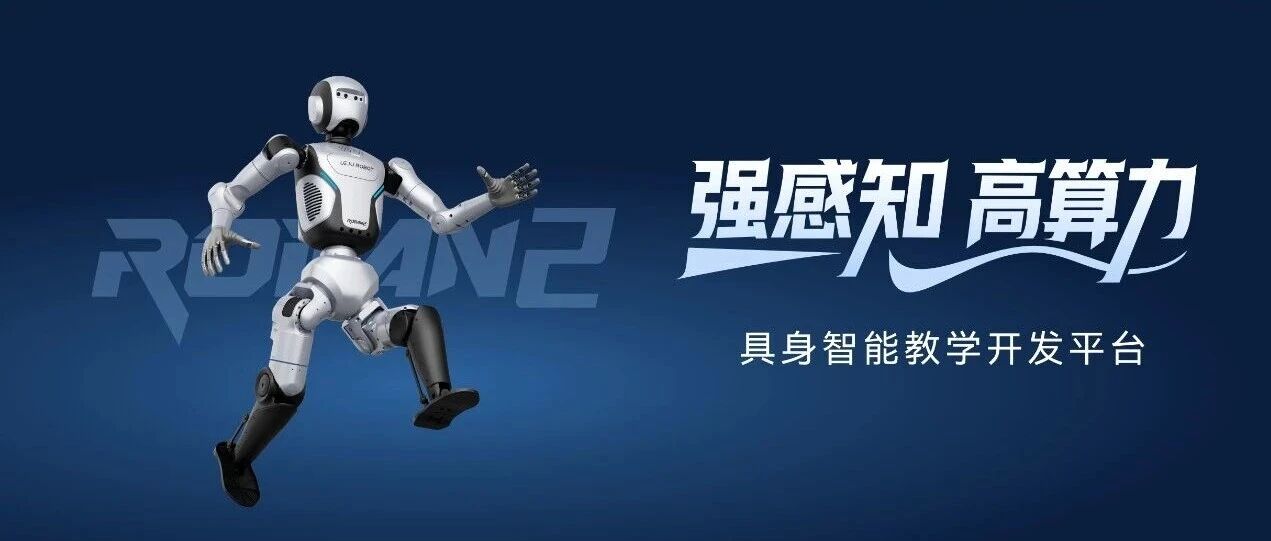
Roban2正式发布!新一代人形具身智能教学开发平台
机器人大讲堂· 2025-09-24 01:35
LEJU ROBOT FFFF 具身智能教学开发平台 HAREFRA #1. TA 38 88 LEJU ROBOT BROE 1 TOTALOG unim 全身运动控制,全新教学载体 CC x x 手柄控制开箱即用,零门槛轻松入门 E BAISE HF LY HE ROBANE (产品宣传片) 易上手 零门槛 阶梯教学 开箱即用的人形机器人 OBANE 支持图形化/Python编程 适配从展示到开发全阶段教学 20+自由度,抗摔结构设计,耐用可靠 抗抗抗推,为运控算法教学量身打造 激光雷达 + 深度摄像头 环境感知、路径规划更精准 热插拔快速换电 保障开发、展示、教学等场景连续作业 (仿真平台)(遥控手柄)(VR遥操) ··· 强大工具链 全栈开源 ROBANC VR遥操作+动作录制 1:1动作映射,轻松生成示教动作 灵巧手/夹爪末端自由扩展 满足多元教学与科研场景 仿真平台支持强化学习、模型控制、 导航避障、搬运操作等算法开发与验证 第三方开发平台 开发辅助工具 云端服务接入 模仿学习手套 边缘服务器部署 图形化控制软件及遥控器 物联网应用开发 故障检测分析工具 感知应用层 旋篇 多模态感知应用 行为数字 ...