机器人圈

Search documents
从微弱信号到系统变革:2025年十大新兴技术
机器人圈· 2025-09-30 09:36
Group 1 - The report emphasizes the importance of emerging technologies in addressing global challenges and shaping a sustainable future, highlighting the need for a comprehensive ecosystem for their maturity and application [1][3][36] - The report identifies ten emerging technologies for 2025, which are expected to drive significant transformations across various sectors [2][5][36] - The selection process for the emerging technologies involved expert recommendations, AI analysis, evaluation of technological maturity, and macro-strategic considerations [4] Group 2 - Structural battery composites (SBCs) integrate energy storage and structural functions, potentially revolutionizing applications in electric vehicles and aerospace [5][6][7] - Osmotic power systems utilize salinity differences to generate energy, offering a stable and low-impact renewable energy source [8][9][10] - Advanced nuclear technologies are evolving to meet increasing energy demands while supporting decarbonization efforts, with significant investments in small modular reactors (SMRs) [11][12][13] Group 3 - Engineered living therapeutics aim to produce therapeutic substances within the body, potentially overcoming traditional drug production challenges [14][15] - GLP-1 receptor agonists, initially developed for diabetes, are being explored for their neuroprotective properties in treating neurodegenerative diseases [16][17] - Autonomous biochemical sensors enable real-time monitoring of biochemical parameters, enhancing health management and environmental monitoring [18][19][20] Group 4 - Green nitrogen fixation technologies aim to reduce the carbon footprint of ammonia production, crucial for global food supply [22][23][24] - Nanozymes, synthetic materials with enzyme-like properties, are gaining attention for their potential applications in healthcare and environmental solutions [25][26][27] - Collaborative sensing technologies enhance decision-making in connected systems, with applications in urban traffic management and environmental monitoring [28][29][30] Group 5 - Generative watermarking technologies are being developed to verify the authenticity of AI-generated content, addressing concerns over misinformation and intellectual property [31][32][33] - The report highlights the need for robust governance and guidelines to ensure the effective implementation of emerging technologies [34][35]


关于人工智能发展的几点思考
机器人圈· 2025-09-29 08:22
Core Viewpoint - The article emphasizes the importance of artificial intelligence (AI) as a driving force for technological revolution and industrial transformation, highlighting the need for a balanced approach between innovation and safety, as well as the integration of government guidance and market dynamics in AI development [1][10]. Group 1: Self-Innovation and Open Cooperation - Self-innovation is the foundation of AI development, and without core technology autonomy, open cooperation may lead to dependency [3]. - Since 2018, China has made breakthroughs in core algorithms and chip structures, establishing a self-sustaining industrial ecosystem [3]. - The domestic market serves as a testing ground for AI technology, supported by a complete industrial chain and the largest digital economy market globally [3][4]. Group 2: Dynamic Balance of Development and Safety - AI technologies are double-edged swords, bringing productivity leaps while posing potential risks [7]. - The development of AI must adhere to technological evolution laws and maintain national security [8]. - A balance between safety and innovation is crucial to avoid missing opportunities for productivity enhancement or falling into technological chaos [8]. Group 3: Government Guidance and Market Drive - Effective collaboration between government and market is essential for the efficient operation of the modern economic system and the development of AI [10]. - Government plays a crucial role in areas where the market is unwilling or unable to act, such as early funding for disruptive technologies [10][11]. - The complexity of technological innovation and global competition highlights the necessity of this collaboration for orderly and efficient AI development [11]. Group 4: Value Integration of Industrial Application and Social Governance - The rapid advancement of AI brings significant societal challenges, making social governance a focal point [14]. - Issues like algorithm bias and data misuse arise as AI becomes more integrated into human decision-making [14]. - Ensuring that AI applications are grounded in reasonable social governance norms is vital for balancing efficiency and fairness, innovation and safety, and commercial interests with public welfare [14].
2025年度“机械工业科学技术奖”拟授奖项目公示!549项拟获奖(附全名单)
机器人圈· 2025-09-29 08:22
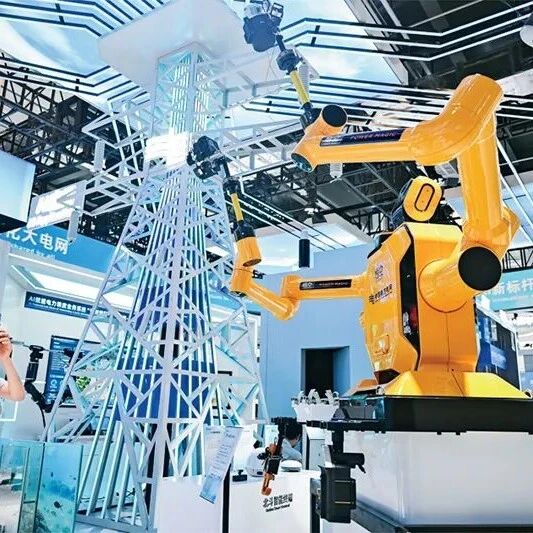
Core Viewpoint - The 2025 "Mechanical Industry Science and Technology Award" has completed its evaluation work, with a total of 549 projects proposed for awards, including 50 for technological invention and 499 for scientific and technological progress [2][4]. Summary by Categories Technological Invention Award - A total of 50 projects are proposed for the Technological Invention Award, which includes: - 1 Special Award - 14 First Prizes - 24 Second Prizes - 11 Third Prizes [2][4]. Scientific and Technological Progress Award - A total of 499 projects are proposed for the Scientific and Technological Progress Award, which includes: - 4 Special Awards - 35 First Prizes - 210 Second Prizes - 250 Third Prizes [2][4]. Public Notice and Objection Process - The proposed award projects are open for public notice from September 29 to October 18, lasting 20 days. During this period, any objections can be submitted to the Mechanical Industry Science and Technology Award Office [2][4]. Contact Information - The contact address for the Mechanical Industry Science and Technology Award Office is located in Dongcheng District, Beijing. The contact person is Niu Fang, with a phone number of 010-65123082 and an email address of chinajixiekjj@163.com [3][4].
具身智能 创造未来丨2025智能机器人与公共安全创新发展论坛在京成功举办
机器人圈· 2025-09-29 06:47
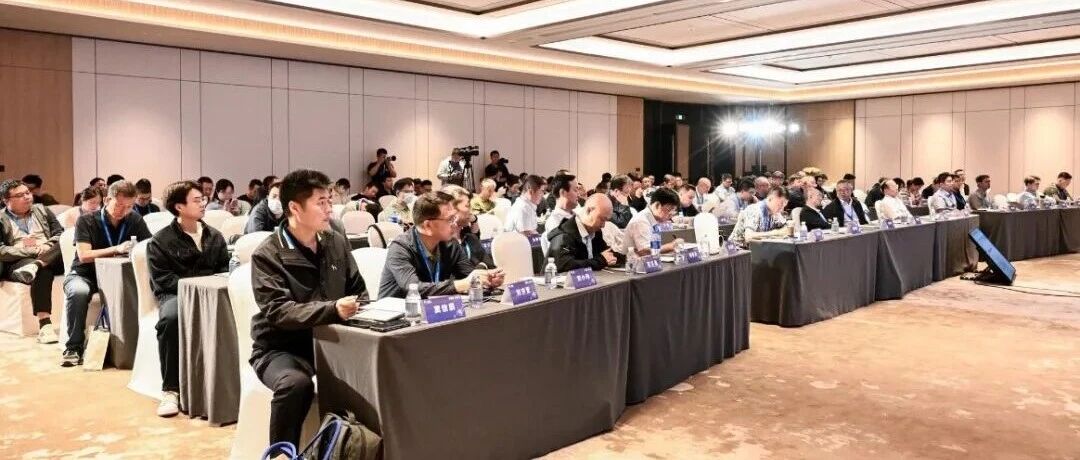
Core Viewpoint - The forum focused on the integration of intelligent robots and public safety, emphasizing the importance of technological advancements and practical applications in this field [1][10]. Group 1: Forum Overview - The 2025 Intelligent Robots and Public Safety Innovation Development Forum was held in Beijing on September 26, organized by the China Security and Prevention Products Industry Association [1]. - The forum gathered experts from government departments, industry associations, research institutions, and intelligent robot companies to discuss trends and breakthroughs in the integration of robotics and public safety [1][10]. Group 2: Key Speakers and Contributions - Keynote speeches were delivered by Liu Xiaojing, Vice Chairman of the China Security Association, and Liu Mingfang, former Deputy Director of the Ministry of Public Security's Science and Technology Information Committee, highlighting the strategic direction for integrating robotics with public safety [6][8]. - Various experts presented reports on the current state and future trends of intelligent robots, including the evolution of police robots and the impact of 5G technology on security applications [12][14][33]. Group 3: Technological Insights - The report by Dong Kai from the China Academy of Information and Communications Technology indicated that China’s robotics industry is now among the world's top tiers, with 2025 expected to be a pivotal year for intelligent robots transitioning from labs to market [12]. - Li Jian from the Ministry of Public Security emphasized the shift of police robots towards a collaborative intelligent system, integrating AI and 5G technology to enhance operational efficiency [14]. Group 4: Practical Applications - The application of intelligent robots in specific scenarios, such as the automatic inspection robots at East Jiang Port, was discussed, showcasing their role in enhancing national security and efficiency [17]. - Reports highlighted the need for advanced infrastructure and robust algorithms to support AI applications in the security industry, aiming for a seamless integration from model development to practical application [18][28]. Group 5: Future Directions - The forum concluded with a vision for a more intelligent, safe, and efficient human-machine collaborative governance model, driven by the deep integration of AI and robotics [33].
优必选再签3000万人形机器人大单!总订单金额已逼近4.3亿!
机器人圈· 2025-09-29 06:47
Core Viewpoint - The strategic partnership between UQI and Tianqi Automation aims to enhance the development of humanoid robots and smart manufacturing, with a significant contract signed for the purchase of humanoid robots worth 30 million yuan, to be delivered by the end of 2025 [1][3]. Group 1 - UQI has signed a procurement contract with Tianqi Automation for the Walker S series humanoid robots, totaling 30 million yuan, with delivery expected by December 31, 2025 [1]. - The partnership between UQI and Tianqi Automation focuses on leveraging humanoid robots in various industrial applications, including new energy vehicles and smart logistics, promoting high-quality development in the sector [3]. - As of now, UQI's Walker series humanoid robots have secured contracts worth nearly 430 million yuan, including a recent 250 million yuan contract, marking it as the largest humanoid robot contract globally [3][5]. Group 2 - UQI has established collaborations with notable companies in the new energy vehicle and smart logistics sectors, including BYD, Geely, and SF Express, enhancing the practical application of the Walker S series in various factories [5]. - The company plans to continuously improve the mass production capabilities of the Walker series humanoid robots to meet growing customer demand and accelerate their application in real-world scenarios [5].
智元机器人首次披露合伙人名单,背后的掌舵人们有多少华为系?
机器人圈· 2025-09-28 09:31
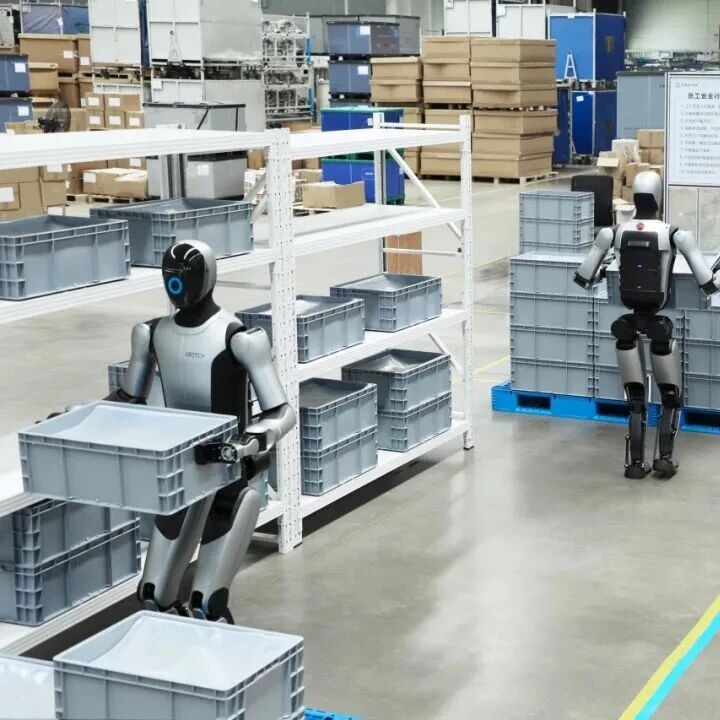
Company Overview - Zhiyuan Robotics recently disclosed its latest partner team, with key figures including founder and CEO Deng Taihua, co-founder and CTO Peng Zhihui, and several other senior executives with extensive backgrounds in technology and AI [1][2] Leadership Background - Deng Taihua has over 20 years of experience at Huawei, where he led the development of the Kunpeng and Ascend AI computing ecosystems [1] - Peng Zhihui joined Huawei in 2020, focusing on Ascend AI chips and algorithms, and officially left to establish Zhiyuan Robotics in 2023 [1] - Jiang Qingsong has over 20 years of ICT experience and is responsible for building the marketing and service system at Zhiyuan Robotics [1][2] Team Composition - The team includes notable members such as Yao Maoqing, who has experience at Waymo and NIO, and Wang Chuang, who was part of the founding team at DJI [2] - Luo Jianlan, the Chief Scientist, has a background at GoogleX and Google DeepMind, contributing to significant advancements in robotic learning systems [2] Industry Insights - The robotics industry is seeing a mix of traditional giants and new AI entrants, with a reported revenue of 582.1 billion and a profit of 30.1 billion from 75 listed robotics companies in the first half of 2025 [3] - The industry is experiencing a shake-up, with increasing competition and innovation, particularly in humanoid robotics and AI integration [4]
全球商业化进入快车道!思哲睿康多机器人®SR2000迎来多国订单交付潮!
机器人圈· 2025-09-28 09:31
Core Viewpoint - The article highlights the significant global expansion of Sizeray Intelligent Medical, particularly the successful commercialization of the Kando Robot® SR2000, marking a transformative shift in minimally invasive surgery worldwide [1][9]. Group 1: Technological Advancements - The Kando Robot® SR2000 has gained international recognition due to its innovative technology and proven clinical capabilities, which are foundational for its global market expansion [2]. - It features a multi-modal high-performance imaging navigation platform that integrates real-time 4K fluorescence navigation, ultrasound positioning, and pre-operative CT/MRI data, providing robust decision support for surgeons [3]. - The design of the open multi-screen control console has won prestigious awards, including the Red Dot Award and IDEA Award, underscoring its excellence in remote surgical applications [6]. Group 2: Clinical Applications and Approvals - The Kando Robot® SR2000 has received regulatory approvals from multiple global health authorities, enabling its use in various complex minimally invasive surgeries across different specialties, including urology, general surgery, gynecology, and thoracic surgery [8]. Group 3: Global Market Presence - Sizeray Intelligent Medical has successfully expanded its market presence to nearly 40 countries across Asia, Europe, Latin America, and Africa, demonstrating the effectiveness of its overseas exclusive agency model [9]. - The ongoing delivery of orders from various countries reflects the solid implementation of its globalization strategy and the international market's recognition of the quality and value of this "Chinese-made" high-end surgical robot [9]. Group 4: Future Outlook - The company aims to continue its mission of making safer and more precise robotic surgeries accessible to healthcare institutions worldwide, transitioning from a technological pioneer to a widespread market player [10].

2025年国家奖初评名单-信息科学、机器人及交叉学科方向
机器人圈· 2025-09-28 06:33
Core Points - The article discusses the preliminary evaluation results of the 2025 National Science and Technology Awards, highlighting the projects that have passed the initial review [2][3][5]. Group 1: National Natural Science Award - A total of 60 projects have passed the preliminary evaluation for the National Natural Science Award [2]. - These projects will be publicly announced on the National Science and Technology Management Information System platform [2]. Group 2: National Technology Invention Award - 51 general projects and 20 specialized projects have passed the preliminary evaluation for the National Technology Invention Award [2]. - The specialized projects will be internally announced within the relevant management and nomination units [2]. Group 3: National Science and Technology Progress Award - 134 general projects and 37 specialized projects have passed the preliminary evaluation for the National Science and Technology Progress Award [2]. - Similar to the Technology Invention Award, specialized projects will be internally announced [2]. Group 4: Objection Process - Individuals or organizations can raise objections to the announced projects within 15 days of the public announcement, following specific regulations [2]. - Objections must be submitted in writing and include necessary evidence, with personal submissions requiring identification details [2].




数智世界 全域安全丨2025中国安防“人工智能+”行动大会在京成功举办
机器人圈· 2025-09-26 10:50
Core Viewpoint - The conference emphasized the strategic importance of integrating artificial intelligence with the security industry, highlighting opportunities for innovation and development in the sector [2][9][49]. Group 1: Conference Overview - The "2025 China Security 'Artificial Intelligence+' Action Conference" was held on September 26 in Beijing, focusing on policy direction, industry transformation, technological innovation, and future trends [2]. - The event gathered over 400 participants, including government officials, industry leaders, and representatives from top security companies, to discuss the future of AI in security [4][49]. Group 2: Key Speeches and Insights - Liu Lihua, former Vice Minister of Industry and Information Technology, stated that AI is a core engine for high-quality economic development and emphasized the importance of the government's policy for the security industry's transformation [8][9]. - Li Dewen from the China Academy of Information and Communications Technology highlighted the need for the security industry to embrace AI to enhance public safety [11]. - Gu Jianguo, Chairman of the China Security and Prevention Products Industry Association, noted significant achievements in the security industry but also stressed the importance of addressing challenges such as data security and AI safety [13]. Group 3: Action Initiatives - The conference introduced the "2025 China Security 'Artificial Intelligence+' Action Initiative," which outlines five key action directions: promoting self-reliance, application-oriented development, accelerating digital transformation, enhancing industry collaboration, and strengthening risk management [16]. - The initiative aims to unify industry consensus and foster collaboration to accelerate the implementation of AI in security [16]. Group 4: Technological Innovations - Various speakers discussed the transformative potential of large models in the security industry, emphasizing their role in moving from a perception era to a cognition era [21]. - The application of multi-modal large models in public safety scenarios was highlighted as a significant advancement, providing strong momentum for the industry [22]. - The importance of AI-driven solutions in enhancing operational efficiency and compliance in public safety was underscored by multiple speakers [25][32]. Group 5: Industry Trends and Future Directions - The conference addressed the ongoing digital transformation and intelligent enhancement within the security industry, marking a critical period for new opportunities driven by AI [49]. - The establishment of new growth areas and the integration of AI with various sectors were discussed as essential for the future of the security industry [41][44].

2025人工智能产业十大关键词
机器人圈· 2025-09-26 09:29
Core Insights - The 2025 Artificial Intelligence Industry Conference highlighted ten key trends in AI, emphasizing the convergence of technology, applications, and ecosystems, leading to a clearer vision of a smart-native world [1]. Group 1: Foundation Super Models - In 2025, foundational models and reasoning models are advancing simultaneously, with a comprehensive capability increase of over 30% from late 2024 to August 2025 [3][4]. - Key features of leading large models include the integration of thinking and non-thinking modes, enhanced understanding and reasoning abilities, and built-in agent capabilities for real-world applications [4][6]. - The emergence of foundational super models simplifies user interaction, enhances workflow precision, and raises new data supply requirements [6]. Group 2: Autonomous Intelligent Agents - Highly encapsulated intelligent agent products are unlocking the potential of large models, showing better performance in complex tasks compared to single models [9][10]. - Current intelligent agents still have significant room for improvement, particularly in long-duration task execution and interconnectivity [12]. Group 3: Embodied Intelligence - Embodied intelligence is transitioning from laboratory settings to real-world applications, with models being deployed in practical scenarios [15][16]. - Challenges remain in data quality, model generalization, and soft-hard coordination for effective task execution [18]. Group 4: World Models - World models are emerging as a core pathway to general artificial intelligence (AGI), focusing on capabilities like data generation, action interpretation, environment interaction, and scene reconstruction [21][22]. - The development of world models faces challenges such as unclear definitions, diverse technical routes, and limited application scope [22]. Group 5: AI Reshaping Software - AI is transforming the software development lifecycle, with significant increases in token usage for programming tasks and the introduction of advanced AI tools [25][28]. - The role of software developers is evolving into more complex roles, leading to the emergence of "super individuals" [28]. Group 6: Open Intelligent Computing Ecosystem - The intelligent computing landscape is shifting towards an open-source model, fostering collaboration and innovation across various sectors [30][32]. - The synergy between software and hardware is improving, with domestic hardware achieving performance parity with leading systems [30]. Group 7: High-Quality Industry Data Sets - The focus of AI data set construction is shifting from general-purpose to high-quality industry-specific data sets, addressing critical quality issues [35][38]. - New data supply chains are needed to support advanced technologies like reinforcement learning and world models [38]. Group 8: Open Source as Standard - Open-source initiatives are reshaping the AI landscape, with significant adoption of domestic open-source models and a growing number of active developers [40][42]. - The business model is evolving towards "open-source free + high-level service charges," promoting cloud services and chip demand [42]. Group 9: Mitigating Model Hallucinations - The issue of hallucinations in large models is becoming a significant barrier to application, with ongoing research into mitigation strategies [44][46]. - Various approaches are being explored to enhance data quality, model training, and user-side testing to reduce hallucination rates [46]. Group 10: AI as an International Public Good - Global AI development is uneven, necessitating international cooperation to promote equitable access to AI technologies [49][51]. - Strategies are being implemented to address challenges in cross-border compliance and data flow, aiming to make AI a truly shared international public good [51].