机器人圈

Search documents
第一届机器人一体化关节评测比赛活动正式启动
机器人圈· 2025-05-22 10:22
2025年5月21日,在北京市昌平区人民政府的指导下,以"智驱未来 关节争锋"为主题的第一届机器人一体化关节 评测比赛活动(以下简称"活动")启动会在北京盛大召开。 此次活动由中汽检测技术有限公司、北京工业大学机 械工业精密传动与智能测试装备创新中心、机器人质量基础共性技术检测与评定工业和信息化部重点实验室、国 家机器人检测与评定中心(广州)联合主办 ,汇聚政产学研多方力量,旨在通过标准化评测体系推动国产机器人 关节质量提升。 北京市经济和信息化局智能制造与装备产业处副处长 李丹勇 致辞 北京市昌平区经济和信息化局副局长 崔展齐 致辞 国机智能总经理 王乾廷 致辞 北京市经济和信息化局智能制造与装备产业处副处长李丹勇、北京市昌平区经济和信息化局副局长崔展齐出席会 议并致辞,对活动的举办表示祝贺,并从政策导向与区域发展视角,深度阐释了机器人关节技术对产业升级的战 略意义。国机智能科技有限公司党委副书记、总经理王乾廷代表主办单位讲话,表示将以专业评测体系服务行业 需求,以资源整合推动技术迭代,以生态共建赋能产业升级,为机器人核心部件高质量发展注入新动能。 国机智能副总经理 高燕 此次活动汇集来自高校、科研院所的专 ...


“2025´中国焊接产业论坛——机器人与智能化焊接技术及应用”三号通知
机器人圈· 2025-05-22 10:22
Core Viewpoint - The article highlights the upcoming "2025 China Welding Industry Forum" focusing on robotics and intelligent welding technology, scheduled to take place in Jiaxing, Zhejiang from June 15-17, 2025, emphasizing its significance in the welding industry and the integration of advanced technologies [3][4]. Group 1: Event Overview - The "2025 China Welding Industry Forum" will be held in Jiaxing, a city known for its rich history and cultural significance, particularly in relation to the Chinese Communist Party [3]. - The forum is organized by the China Welding Association and aims to discuss advanced technologies and products in the field of robotics and intelligent welding [3][4]. - The event will feature 15 specialized reports from renowned experts in the field, covering applications in various industries such as shipbuilding, steel structures, automotive, and aerospace [3][6]. Group 2: Conference Details - The forum will coincide with the "28th Beijing Essen Welding and Cutting Fair," which is recognized as the largest welding industry event globally [4]. - Attendees will include leaders from industry regulatory bodies, manufacturing units, and academic institutions, fostering a platform for technical exchange [4]. - The conference will include a series of presentations on topics such as intelligent welding robots, innovative welding techniques, and applications in new energy vehicles [6][8]. Group 3: Registration and Logistics - Registration for the forum is required before June 6, 2025, with a participation fee of 1,500 yuan per person, while special guests and speakers are exempt from fees [11][13]. - Accommodation is available at the Jinghui Hotel in Jiaxing, with special rates for conference attendees [13]. - Transportation to the venue is not provided, and attendees are advised to arrange their own travel [13].

中科院团队解锁水下机器人“环境感知新维度”,FlowSight让水下勘探告别 “盲人摸象”
机器人圈· 2025-05-21 09:40
Core Viewpoint - The article discusses the development of the FlowSight sensor, inspired by the lateral line system of fish, which enables underwater robots to perceive water flow accurately for navigation and environmental monitoring tasks [1][3]. Group 1: FlowSight Sensor Development - The FlowSight sensor is a biomimetic lateral line sensor that utilizes flexible silicone whiskers to sense water flow [3]. - It captures deformation information of the whiskers using a built-in high-definition camera, which is processed through a deep learning model to determine water flow speed and direction [3]. - The sensor achieves a relative error of 3.05% in measuring water flow speed and 0.98% in measuring water flow direction [3]. Group 2: Integration with Underwater Robots - The FlowSight sensor has been integrated into a biomimetic underwater robot named RoboDact, enabling it to perform closed-loop motion control based on water flow perception [4]. - RoboDact can navigate upstream and adjust its posture dynamically, providing new solutions for underwater exploration and ecological monitoring [4][5]. - The integration allows RoboDact to adapt its speed and direction according to various complex underwater environments [5]. Group 3: Research and Funding - The research work on FlowSight was published in the IEEE Transactions on Robotics and received funding from several national projects, including the National Key R&D Program and the National Natural Science Foundation [1][6].

冷晓琨独家解读:人形机器人 “上岗” 成必然?工业场景正在重塑具身智能进化逻辑
机器人圈· 2025-05-21 09:40
5月19日至20日,由深圳证券交易所主办的2025全球投资者大会在深圳举行,大会主题为"新质生产力:投资中 国新机遇——开放创新的深圳市场"。 对于人形机器人未来是否还会产生更多场景的想象空间,冷晓琨表示这需要从智能性的发展程度来观察,例如轻 智能的时候开始,人形机器人进高校、进展厅,智能性再高一些的时候进工厂,"基本上目前还没有自动化设备的 领域,理论上来讲未来都可以用人形机器人,但只能是按照现有大脑的智能性发展阶段,不断地去拓展应用场 景。" 对于今年出现的人形机器人展示"功夫"、丢手绢、跑马拉松等动作展示,冷晓琨表示具身智能出现产业化的前 提,一定是大脑、小脑和本体三方的融合。"今年有很多漂亮的视频,从重点来讲,人形机器人已经把小脑和本体 突破了,大脑这部分还处于磨合的过程。如果把现在小脑的灵活性加上大脑的智能性,基本上就是我们理想的产 品,但这处于发展当中。" 近段时间人形机器人持续引发关注。如宇树科技机器人展示功夫、天工机器人马拉松夺冠……这些新事件、新进 展都昭示着人形机器人的快速发展。 本次大会上,乐聚机器人董事长冷晓琨参与了圆桌论坛。他表示,乐聚今年的交付情况,按照一季度大概在300多 台,基 ...

万亿蓝海待启!外骨骼机器人加速 “跑” 进千家万户
机器人圈· 2025-05-21 09:40
Core Viewpoint - The exoskeleton robot industry is at a critical commercialization point, requiring breakthroughs in human-machine collaboration, lightweight materials, endurance, and cost control to achieve widespread consumer application [1][4][5]. Group 1: Industry Overview - Exoskeleton robots are wearable devices that enhance mobility for both individuals with disabilities and healthy users, with applications expanding from industrial and medical fields to consumer markets [2][3]. - The exoskeleton robot market is projected to experience rapid growth, with an estimated annual compound growth rate of 47.7% from 2025 to 2028, reaching a global market size of $5.8 billion by 2028 [3]. - In China, the exoskeleton robot market is expected to reach 4.2 billion yuan by 2025, with an annual compound growth rate of approximately 50% from 2023 to 2028 [3]. Group 2: Technological Challenges - Key challenges include the need for high-performance, low-power chips to enhance the robots' capabilities, as well as the development of lightweight and flexible materials to improve market acceptance [4][5]. - Battery technology is critical, with current endurance typically lasting only a few hours; advancements are needed to achieve a desired endurance of one to several days while reducing battery weight [5]. Group 3: Market Dynamics - The commercialization of exoskeleton robots is currently supported by innovative business models, such as rental services in tourist areas, which can help drive industry growth [5]. - Policy support is significant, with various government initiatives aimed at promoting the application of exoskeleton robots in sectors like elderly care and rehabilitation [6]. Group 4: Investment and Collaboration - Investment activity in the exoskeleton robot sector is increasing, with companies like Shanghai Aoshark Intelligent Technology and Youlong Robotics securing substantial funding to enhance R&D and expand production [7]. - Collaborative efforts among companies, academic institutions, and research organizations are fostering innovation in the development of exoskeleton technologies [7]. Group 5: Future Outlook - The exoskeleton robot is anticipated to become a core technology that benefits humanity, moving beyond a futuristic concept to practical applications in daily life [8].

端侧大模型加速破圈!面壁智能获新一轮数亿元融资
机器人圈· 2025-05-21 09:40
Group 1 - The core viewpoint of the article highlights the recent funding rounds completed by the Chinese AI startup, Mianbi Intelligent, which focuses on edge large model development, indicating strong investor confidence and growth potential in the AI sector [1][2] - Mianbi Intelligent has successfully completed three rounds of financing since 2024, with significant investments from various funds, which will help establish a robust technological and product barrier for their efficient large model technology [1] - The company aims to accelerate industry empowerment and ecological expansion, promoting the large model's application across various sectors [1] Group 2 - In early 2025, the global AI competition has intensified, with Mianbi Intelligent leading the way in developing high-efficiency large models that offer better performance, lower costs, and reduced power consumption [2] - The launch of Mianbi's first edge full-modal model, MiniCPM-o 2.6, showcases its innovative capabilities, including real-time audio-visual processing and natural language generation, positioning it at the forefront of the industry [2] - The MiniCPM series has achieved over 10 million downloads across all platforms, reflecting its popularity and effectiveness in the market [2]

吉林大学钱志辉教授:《源自人体的启示:仿生拉压体机器人原理与技术》
机器人圈· 2025-05-21 09:40
Core Viewpoint - The article discusses advancements in bionic robotics and intelligent control, emphasizing the need for innovation in robot design to achieve better energy efficiency and functionality, particularly in humanoid robots [2][20]. Group 1: Bionic Robotics and Intelligent Control - The "2025 Bionic Robot and Intelligent Control Forum" held in Hangzhou attracted nearly 400 participants and over 10,000 online viewers, highlighting the growing interest in bionic robotics [2]. - The forum featured a keynote report by Professor Qian Zhihui from Jilin University, focusing on the principles and technologies behind bionic tensile and compressive robots [2]. Group 2: Current Challenges in Humanoid Robotics - Humanoid robots are currently in a "showcase-first" stage, with significant gaps in practical application, including issues with safety, arm manipulation, and high energy consumption [4]. - The Cost of Transport (COT) metric indicates that humanoid robots have much higher energy consumption compared to humans, with values such as 5 for Boston Dynamics' Atlas and 1.6 for Honda's Asimo, while humans have a COT of only 0.05 [5]. Group 3: Analysis of Robotic Limitations - Three main issues are identified in humanoid robots: 1. Material composition leads to poor safety in human-robot physical contact due to rigid components [6]. 2. Joint structures are simplified and require complex control, increasing energy consumption [6]. 3. Power systems are inefficient due to multiple energy conversions, unlike the integrated system found in human muscles [6]. Group 4: Innovations in Bionic Robotics - The concept of "Layagrity" is introduced, which combines tensile and compressive elements to create a new design for advanced humanoid robots [7]. - The first generation of bionic tensile robots has been developed, achieving walking speeds of 2.0-4.5 km/h with a COT of 0.069-0.107, significantly lower than traditional humanoid robots [11]. Group 5: Advances in Dexterous Manipulation - The development of bionic hands faces challenges due to the trade-off between rigid and soft hands, necessitating innovative solutions [14]. - A new three-dimensional dynamic X-ray imaging system has enabled the study of human hand biomechanics, leading to improved designs for bionic hands that replicate human dexterity [14]. Group 6: Future Directions in Robotics - The research team aims to create a modular bionic system that incorporates human-like movement characteristics, focusing on dynamic stability and high precision in robotic arms and hands [20]. - The ultimate goal is to overcome existing limitations in humanoid robotics by integrating biological design principles to enhance movement intelligence and adaptability [20].

“具身智能”到底是啥?
机器人圈· 2025-05-20 10:22
Core Viewpoint - "Embodied Intelligence" is a trending term in the field of artificial intelligence, emphasizing the integration of intelligence with physical entities, distinguishing it from "disembodied intelligence" which operates in virtual spaces [1][4]. Group 1: Definitions and Relationships - "Embodied Intelligence" contrasts with "Disembodied Intelligence," where the former requires a physical body to interact with the real world, while the latter, like ChatGPT, processes data without physical interaction [1][2]. - The relationship between "Embodied Intelligence," "Intelligent Robots," and "Humanoid Robots" is hierarchical, with the former encompassing the latter two, where humanoid robots are considered the highest form of intelligent robots [2][3]. Group 2: Applications and Value - The value of "Embodied Intelligence" lies in its ability to transition from theoretical capabilities to practical applications in various fields, including industrial, daily life, medical, and disaster response scenarios [2][3]. - Examples of applications include upgrading traditional robotic arms to "smart workers" capable of handling non-standard tasks and deploying robots in extreme environments for search and rescue operations [3]. Group 3: Challenges and Future Prospects - Despite its potential, the development of "Embodied Intelligence" faces challenges such as high hardware costs, battery life limitations, and the need for precise sensor technology to ensure safe human-robot interaction [3]. - The evolution from disembodied to embodied AI represents a significant step towards creating physical companions that can perform tasks in the real world, indicating a promising future for this technology [4].

海尔入主后新时达动作频频:高管减持与机构扎堆调研背后的多空博弈
机器人圈· 2025-05-20 10:22
Core Viewpoint - The article discusses the strategic investment by Haier Group in New Times, highlighting the potential for synergy in the smart manufacturing sector and the market's mixed reactions to the company's transformation efforts [3][4][14]. Group 1: Haier's Strategic Investment - Haier Kaos acquired a 10% stake in New Times at a price of 19.61 yuan per share, representing a 93% premium over the pre-suspension price, totaling 1.3 billion yuan [4]. - Following a private placement, Haier's total investment reached 2.519 billion yuan, resulting in a controlling stake of over 40% in New Times, positioning Haier as the actual controller [4]. - The acquisition is seen as a strategic move to enhance Haier's capabilities in smart manufacturing, leveraging New Times' core technologies in motion control and industrial robotics [4]. Group 2: Market Reactions and Financial Performance - New Times' stock price surged by 90% within three months following Haier's investment, indicating positive market sentiment [7]. - However, New Times faces significant financial challenges, with cumulative losses exceeding 1.5 billion yuan from 2022 to 2024, and a net loss of 8.13 million yuan in Q1 2025 despite a 14.54% year-on-year revenue increase [7]. - The company's gross margin declined by 1.1 percentage points to 16.96%, raising concerns about its ability to improve profitability post-acquisition [7]. Group 3: Institutional Interest and Management Actions - In May 2025, New Times hosted nearly 100 institutional investors, focusing on three main areas: the progress of the Haier synergy, the development of humanoid robots, and inventory management strategies [8][9]. - The company plans to launch humanoid robots by the end of 2025 and is currently negotiating technology collaborations with several firms [8]. - On May 14, two executives announced plans to sell up to 200,000 shares, causing a temporary dip in stock prices, although the management emphasized their continued confidence in the company's future [10][14]. Group 4: Long-term Outlook - Analysts suggest that the enthusiasm from institutional investors reflects a recognition of the long-term potential in smart manufacturing, while the executives' share reduction serves as a cautionary signal regarding short-term valuation risks [13]. - The future success of New Times will depend on the realization of significant collaborative projects with Haier, which could determine the company's ability to navigate its transformation [14].



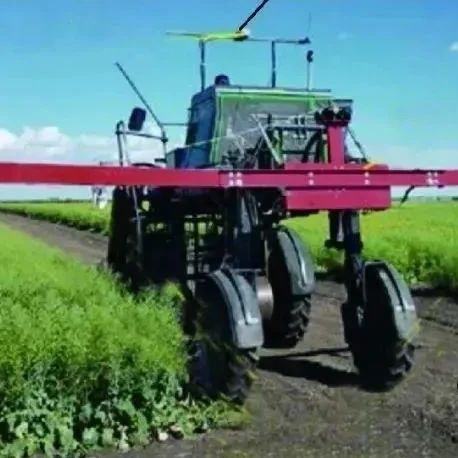
全球各国大田农业机器人发展现状
机器人圈· 2025-05-20 10:22
Core Viewpoint - The article discusses the advancements and applications of agricultural robots in various tasks such as crop phenotyping, field inspection, soil condition monitoring, weed removal, land leveling, and selective harvesting, highlighting the key technologies involved in these processes. Group 1: Information Acquisition Robots - Agricultural information acquisition robots are designed to collect data on crop development, growth status, pests, and soil properties, aiding in variety selection and field management decisions. The main technical challenges include developing cost-effective sensors and stable walking designs for field inspection platforms [2][3]. - Companies like Phenospex, LemnaTec, and RoboPec have developed automated phenotyping robots that can measure plant height, leaf area, and other parameters with high precision, achieving high-throughput analysis of 10,000 square meters daily [2]. - The TerraSentia robot from the University of Illinois uses machine vision algorithms for autonomous navigation and data collection in corn fields, monitoring plant vitality and estimating crop yields [3]. Group 2: Field Cultivation Robots - Field cultivation robots utilize autonomous navigation and precision control technologies to ensure consistent land preparation, precise sowing, and intelligent transplanting, which enhances crop yield and quality while reducing costs [7]. - The autonomous leveling robot developed by Lianzhinavigation uses high-precision satellite measurements to adjust the leveling blade height in real-time, ensuring accurate leveling [7]. - John Deere has created a laser-guided leveling machine that enhances operational efficiency through collaborative work among multiple machines [7]. Group 3: Field Management Robots - Field management robots perform tasks such as weeding, spraying, and fertilizing, focusing on precise application to improve the efficiency of pesticide and fertilizer use while reducing production costs [9]. - The AgBot II robot from Queensland University of Technology autonomously navigates fields for fertilization and weeding, achieving over 90% success in weed detection and classification [10]. - John Deere and BlueRiver have developed intelligent weeding robots that utilize advanced imaging technology for targeted herbicide application, significantly reducing pesticide usage [12]. Group 4: Harvesting Robots - Harvesting robots are designed to identify and selectively harvest crops using machine vision, addressing the challenges of automating the harvesting of crops that cannot be easily harvested on a large scale [21]. - The autonomous cabbage harvesting robot integrates navigation and vision technologies to align with crops for efficient harvesting, while CROO Robotics has developed a strawberry harvesting robot that utilizes flexible mechanisms for quick and accurate harvesting [21][23]. - Companies like Cerescon and AvL Motion have created selective harvesting robots for white asparagus, achieving high harvesting efficiency through advanced detection and execution technologies [23].