GLP1减重宝典

Search documents
速递|德睿智药AI辅助设计口服小分子减重药 MDR-001 启动 III 期临床
GLP1减重宝典· 2025-12-25 08:35
Core Viewpoint - The article discusses the launch of the Phase III clinical trial for MDR-001, an AI-assisted designed GLP-1 receptor agonist, highlighting its potential for weight loss and safety profile [5][8]. Group 1: Clinical Trial Details - The Phase III clinical trial, named MOBILE, aims to recruit approximately 750 overweight or obese participants and will evaluate the drug's efficacy and safety over a 52-week period [5]. - The Phase IIb trial results showed a significant weight reduction of 10.3% after 24 weeks of treatment among 317 participants with a baseline weight of 90 kg [6]. Group 2: Safety and Efficacy - The trial reported no serious adverse events related to the drug, with a treatment discontinuation rate due to adverse events of only 0.8% [7]. - Improvements were observed in various cardiovascular and metabolic parameters, including a significant reduction in uric acid levels by 57.7 µmol/L (P<.00001) and notable improvements in liver function indicators [7][8]. Group 3: Expert Insights - Professor Ji Linong, a key researcher, emphasized the unique mechanism of MDR-001, which not only promotes cAMP release but also selectively recruits β-arrestin2, contributing to its weight loss efficacy and additional benefits in uric acid and liver function [8]. - CEO Niu Zhangming highlighted the rapid progression of MDR-001 to Phase III trials as a significant milestone for the company and a breakthrough in AI-driven drug development [8]. Group 4: Company Achievements - Since 2021, the company has developed over 10 proprietary research pipelines and nominated 7 clinical candidates, with two receiving clinical trial approvals [8]. - The company has published numerous influential peer-reviewed papers in leading journals, showcasing its commitment to advancing the field of drug development [8].


减重国际标准来了!WHO发布首个司美格鲁肽等GLP-1药物指南
GLP1减重宝典· 2025-12-25 08:35
Core Viewpoint - The World Health Organization (WHO) has released the first authoritative guidelines on the use of GLP-1 medications for obesity management, emphasizing that obesity is a chronic disease requiring lifelong management rather than a short-term lifestyle issue [4][7]. Methodology of Guideline Development - Since 2009, WHO has upgraded its guideline development process to ensure scientific rigor and transparency, utilizing the GRADE methodology to assess not only efficacy evidence but also patient values, feasibility, cost, and equity [6]. Definition of Obesity - WHO defines obesity as a chronic disease that requires lifelong management, which includes systematic screening, early diagnosis, and continuous management of complications [7]. Core Conclusion 1: Long-term Use of GLP-1 - WHO recommends GLP-1 therapy as a long-term treatment for adult obesity, with "long-term" defined as continuous use for six months or more, opposing the notion of using GLP-1 as a short-term weight loss tool [8]. Core Conclusion 2: Integration with Behavioral Interventions - WHO emphasizes that GLP-1 therapy should not be used in isolation but should be combined with Intensive Behavioral Therapy (IBT) as a key component of treatment, which includes structured exercise, dietary goal setting, and regular consultations [10]. Research Gaps and Future Directions - The guideline identifies key research priorities for future updates, including the long-term effects of GLP-1 on kidney disease, cognitive function, and quality of life, as well as cost-effectiveness across different healthcare systems [11]. Conclusion - The significance of the WHO guidelines lies in establishing a framework for obesity management that prioritizes long-term, sustainable, and equitable care rather than short-term weight loss, marking the inclusion of GLP-1 in global public health discussions [11].

正在改变老年健康管理路径,司美格鲁肽等GLP-1药物实现从控糖到体重管理
GLP1减重宝典· 2025-12-24 11:15
Core Viewpoint - The article discusses the increasing interest and cautious use of GLP-1 medications for weight management in the elderly population, highlighting both potential benefits and necessary precautions in their application [4][8][12]. Group 1: GLP-1 Medications in Elderly Care - GLP-1 medications have gained popularity among patients aged 65 and older, with many seeking these treatments for obesity management [4]. - The CDC reports that nearly 40% of individuals aged 60 and above are classified as obese, which significantly impacts their health and quality of life [5]. - Experts emphasize the need for careful evaluation of elderly patients before prescribing GLP-1 medications, particularly for those with frailty or cognitive impairments [8][12]. Group 2: Broader Implications of GLP-1 Medications - Recent studies suggest that GLP-1 medications may have effects beyond glucose control and weight loss, potentially influencing cardiovascular health, addiction behaviors, certain cancers, and cognitive function [6][11]. - In the context of neurodegenerative diseases, GLP-1 medications may help slow cognitive decline due to their anti-inflammatory properties and ability to improve insulin signaling [11]. - Research indicates that patients using GLP-1 receptor agonists have lower all-cause mortality rates compared to those on other diabetes treatments, although the relationship with different cancer types remains unclear [11]. Group 3: Clinical Considerations and Future Research - The complexity of medication decisions for elderly patients necessitates a comprehensive assessment of their overall health, including potential side effects and interactions with other medications [12]. - Experts advocate for a gradual approach to GLP-1 treatment, focusing on maintaining strength, independence, and quality of life rather than solely on weight loss [12]. - There is a recognized need for more representative clinical trial data for older populations, as current studies show that older patients may experience higher rates of discontinuation due to gastrointestinal side effects [12].

速递|GLP-1减肥潮改变美国餐桌:迷你餐走红,份量回到“刚刚好”
GLP1减重宝典· 2025-12-24 11:15
Core Viewpoint - The increasing use of GLP-1 drugs for weight loss among Americans is leading to significant changes in the restaurant industry, with a shift towards smaller portion sizes and lower-priced meals [5][7]. Group 1: Impact on Restaurant Industry - Many consumers are now favoring smaller, more affordable meal options due to reduced appetite from GLP-1 medications, prompting restaurants to adjust their menu structures [5]. - Clinton Hall, a restaurant in New York, has introduced a mini burger meal that includes a small burger, a few fries, and a 3-ounce drink for $8, which has gained popularity among weight-conscious and budget-minded customers [5]. - The restaurant owner noted that the initiative to offer mini meals was aimed at reducing food waste and costs, and the market response has exceeded expectations [5]. Group 2: Broader Implications of GLP-1 Usage - Approximately one in eight American adults is currently using GLP-1 drugs like semaglutide for weight management, which suppress appetite and reduce food intake while controlling diabetes [7]. - The World Health Organization recognizes GLP-1 therapy as a long-term treatment option for adult obesity, emphasizing the need for a combination of healthy eating, regular exercise, and professional guidance rather than relying solely on medication [7]. - Experts suggest that the trend towards smaller meal portions may reflect a positive shift in American dining culture, moving away from the oversized portions that were popular in the late 20th century [7].

《自然·代谢》最新重磅:还能随心吃不易胖?科学家锁定关键神经元机制,让你“怎么吃都不胖”!
GLP1减重宝典· 2025-12-24 11:15
Core Viewpoint - The article discusses a recent study that reveals the role of a metabolite called Lac-Phe, produced during exercise, in suppressing appetite and aiding weight control, thereby enhancing understanding of the relationship between exercise and appetite regulation [6][10][12]. Summary by Sections Exercise and Metabolism - Exercise has been proven to effectively prevent obesity and related chronic diseases by increasing the body's energy demand and promoting calorie burning. However, many long-term benefits of exercise on physiological functions and metabolic health remain unexplored [6]. Research Findings - A study published in *Nature* by researchers from Stanford University and Baylor College of Medicine identified Lac-Phe, a small molecule synthesized from lactate and phenylalanine, which significantly reduces food intake during exercise [7][10]. - High doses of Lac-Phe can reduce food intake by nearly half within 12 hours in mice on a high-fat diet, without affecting their activity or energy expenditure. Continuous injection of Lac-Phe over ten days led to reduced food intake, weight loss (primarily fat loss), and improved glucose tolerance [12]. Mechanism of Action - The key enzyme required for Lac-Phe synthesis is CNDP2. Mice lacking this enzyme showed less pronounced weight loss effects after exercise compared to the control group. The appetite-suppressing effect of Lac-Phe appears primarily after exercise and is particularly effective in mice that gained weight from a high-fat diet [15]. Broader Implications - The study suggests that the production of Lac-Phe post-exercise is an ancient and conserved physiological mechanism present in various animals and humans, playing a role in regulating food intake [16]. - The researchers aim to further explore the specific mechanisms and downstream pathways of Lac-Phe in the body, especially in the brain, with the hope of developing new interventions for health improvement and treatment [16].
速递|“月瘦20斤?”女子服用“减肥药”手脚发麻,警方循线抓获“代购”
GLP1减重宝典· 2025-12-24 11:15
Core Viewpoint - The article highlights the dangers associated with the use of unregulated weight loss drugs, particularly those marketed as "Korean prescription weight loss pills," which can contain harmful substances like ephedrine and caffeine, posing significant health risks [5][9][10]. Group 1: Case Study of Adverse Effects - A case is presented where an individual experienced severe side effects, including numbness, insomnia, and dizziness, after taking a so-called "Korean weight loss drug" [6]. - The individual initially felt a decrease in appetite and weight loss, leading to continued purchases of the drug without verifying its legitimacy [7]. Group 2: Illegal Substances and Legal Implications - The weight loss pills were found to contain ephedrine, a substance classified as a controlled chemical in China, which can lead to serious health issues if misused [10]. - The seller of these drugs had profited illegally, highlighting the risks of unregulated sales and the potential for criminal charges related to the distribution of such substances [9]. Group 3: Health and Safety Recommendations - The article emphasizes that sustainable weight management should rely on a balanced diet and regular exercise, warning against products that promise rapid weight loss without effort [11]. - It stresses the importance of being cautious about any weight loss solutions that claim to work without diet or exercise, as they may pose serious health risks [11].

权威期刊Science披露:一类常见膳食纤维或成全新“减脂神器”,大幅改善代谢健康!
GLP1减重宝典· 2025-12-23 03:19
以下文章来源于肥胖世界ObesityWorld ,作者欢迎订阅 肥胖世界ObesityWorld . 《肥胖世界》Obesity World - 同步传真肥胖及代谢国际新学术进展,为医学减重临床、教研人员搭建一座与国际接轨的桥梁,「每医健」旗下内容平台。 众所周知,膳食纤维的摄入有助于提升代谢水平,降低代谢性疾病的发生率。几丁质作为地球上分布最广的天然多糖之一,主要存在于昆虫外 骨骼、甲壳类动物壳及蘑菇等食物中,是2型免疫反应的典型启动因子。 那么,几丁质究竟是如何引发2型免疫反应的?它在消化道里扮演着怎样的角色?又会对人体代谢带来哪些积极影响? 近日,美国布法罗大学等机构的科学家在国际顶尖期刊Science发表了题为《A type 2 immune circuit in the stomach controls mammalian adaptation to dietary chitin》的最新成果。研究显示,摄入膳食几丁质会影响免疫系统的活性,而这种积极的免疫反应能够有效减少体重增 加、降低体脂,增强抗肥胖能力。 一、研究内容与思路 1、膳食几丁质诱导胃部膨胀及2型免疫激活 研究思路:几丁质作为2型免疫反 ...

速递|央视点赞,全球首个!南京医疗团队治疗糖尿病取得重大进展
GLP1减重宝典· 2025-12-23 03:19
Core Viewpoint - The article highlights significant advancements in the efficacy and safety of the drug Masitide in treating Type 2 Diabetes (T2D), demonstrating its potential for effective blood sugar control and weight loss in patients [4][12]. Group 1: Clinical Research Findings - Two Phase III clinical studies on Masitide were published back-to-back in the journal Nature, marking a first in the field of metabolic and endocrine diseases [6][8]. - The studies, DREAMS-1 and DREAMS-2, focus on Masitide's effectiveness as a monotherapy and in combination with oral hypoglycemic agents, based on clinical data from Chinese patients [8]. Group 2: Drug Mechanism and Benefits - Masitide is the first and only approved GCG/GLP-1 dual-target drug for weight loss and blood sugar reduction, enhancing insulin secretion and promoting satiety [10][12]. - The dual mechanism of action—suppressing appetite and accelerating metabolism—addresses complex metabolic issues such as visceral fat accumulation and insulin resistance in obese patients [10]. Group 3: Clinical Outcomes - The results from the published studies indicate that Masitide outperforms both placebo and Dulaglutide (1.5mg) in blood sugar control and weight loss, while also improving various cardiovascular, liver, and kidney-related indicators [12].

速递|司美格鲁肽新适应症,在中国获批上市!
GLP1减重宝典· 2025-12-23 03:19
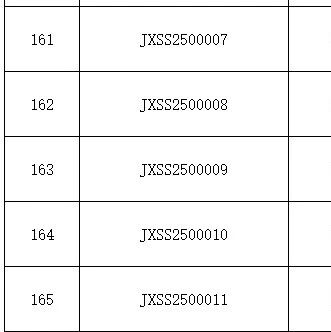
整理 | GLP1减重宝典内容团队 2025 年 12 月 22 日,司美格鲁肽注射液获中国国家药品监督管理局批准新增心血管适应症,用于降低已确诊心血管疾病且体重指数不 低于 27 的成人患者主要心血管不良事件风险,包括心血管死亡、非致死性心肌梗死和非致死性卒中。这一批准,标志着司美格鲁肽在 中国正式从单一减重治疗,拓展至心血管结局管理领域。 版权声明:所有「GLP1减重宝典」的原创文章,转载须联系授权,并在文首/文末注明来源、作者、微信ID,否则减重宝典将向其追究法律责 任。部分文章推送时未能与原作者或公众号平台取得联系。若涉及版权问题,敬请原作者联系我们。合作事宜,请添加微信:andyxu365 作为当前肥胖症规范化治疗体系中的重要手段之一,司美格鲁肽在体重管理和心血管风险控制方面展现出双重临床价值。临床研究显 示,约三分之一患者的体重降幅可超过 20%,同时主要不良心血管事件风险降低约 20%。目前,司美格鲁肽是唯一被证实同时具备明 确减重效果和降低主要心血管不良事件风险的减重药物。 | 161 | IXSS2500007 | 司美格鲁肽注射液 | 诺和诺德(中国)制药有限公 | 国药准字 | 2025 ...

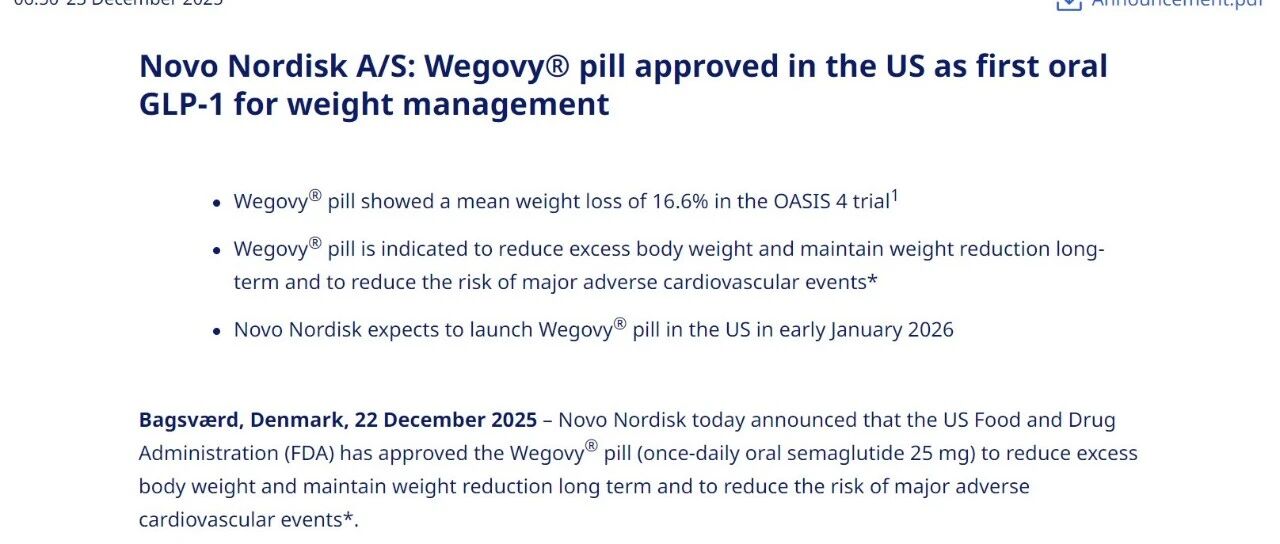
64周减重16.6%!高剂量口服司美格鲁肽获FDA批准上市,诺和诺德大涨10%
GLP1减重宝典· 2025-12-23 03:19
整理 | GLP1减重宝典内容团队 2025年12月22日,诺和诺德宣布,其口服司美格鲁肽片剂Wegovy已获得美国食品药品监督管理局批准,用于减轻超重体重、长期维持减重效 果,并降低主要不良心血管事件发生风险。这一产品为每日一次、25毫克剂量,是全球首款获批用于体重管理的口服GLP-1受体激动剂疗法。 安全性方面,OASIS 4再次验证了司美格鲁肽已知的耐受性特征,与既往用于体重管理的临床结果一致,未出现新的安全信号。 这一批准节点,标志着减重药物竞争进入全新阶段。继注射剂型迅速放量后,口服方案首次在疗效、安全性与监管层面同时成立,意味着减重 治疗正在从阶段性干预,转向更接近慢病管理的长期用药模式。 受此消息影响,诺和诺德股价盘后大涨10%。 点击关注,追踪最新GLP-1资讯 ▍16.6%的数字背后:口服首次"对齐"注射疗效 此次获批的核心依据,来自OASIS临床试验项目与SELECT心血管结局研究数据。其中,OASIS 4试验成为决定性证据。 在该Ⅲb期试验中,纳入了307名肥胖或超重、且合并至少一种并发症的成年受试者。结果显示,每日坚持服用25毫克口服司美格鲁肽,64周后 平均减重比例达到16.6%,与 ...