具身智能之心

Search documents
MuJoCo具身智能实战:从零基础到强化学习与Sim2Real
具身智能之心· 2025-06-24 14:29
Core Insights - The article discusses the unprecedented turning point in AI development, highlighting the rise of embodied intelligence, which allows machines to understand language, navigate complex environments, and make intelligent decisions [1][2]. Group 1: Embodied Intelligence - Embodied intelligence is defined as AI systems that not only possess a "brain" but also have a "body" capable of perceiving and interacting with the physical world [1]. - Major tech companies like Tesla, Boston Dynamics, OpenAI, and Google are competing in this transformative field, which is expected to revolutionize various industries including manufacturing, healthcare, and space exploration [1]. Group 2: Technical Challenges - Achieving true embodied intelligence faces significant technical challenges, requiring advanced algorithms and a deep understanding of physical simulation, robot control, and perception fusion [2][4]. - MuJoCo (Multi-Joint dynamics with Contact) is identified as a key technology in this domain, serving as a high-fidelity training environment for robot learning [4][8]. Group 3: MuJoCo's Role - MuJoCo allows researchers to create realistic virtual robots and environments, enabling millions of trials and learning experiences without the risk of damaging expensive hardware [6][4]. - The simulation speed can be hundreds of times faster than real-time, significantly accelerating the learning process [6]. - MuJoCo has become a standard tool in both academia and industry, with major companies utilizing it for robot research [8]. Group 4: Practical Training - A comprehensive MuJoCo development course has been designed, focusing on practical applications and theoretical foundations, covering topics from physical simulation to deep reinforcement learning [9][10]. - The course is structured into six modules, each with specific learning objectives and practical projects, ensuring a solid grasp of the technology stack [13][16]. Group 5: Project-Based Learning - The course includes six progressively challenging projects, such as building a robotic arm control system and implementing vision-guided grasping [19][21]. - Each project is designed to reinforce theoretical concepts through hands-on experience, ensuring participants understand both the "how" and "why" of the technology [29][33]. Group 6: Target Audience and Outcomes - The course is suitable for individuals with programming or algorithm backgrounds looking to enter the field of embodied robotics, as well as students and professionals interested in enhancing their practical skills [30][32]. - Upon completion, participants will have a complete technology stack in embodied intelligence, gaining advantages in technical, engineering, and innovation capabilities [32][33].


AI Lab最新InternSpatia:VLM空间推理数据集,显著提升模型能力
具身智能之心· 2025-06-24 14:09
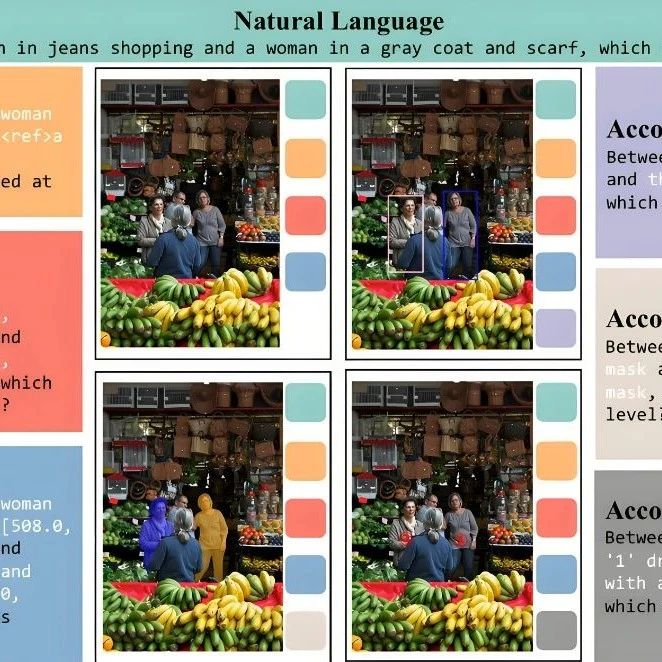
Core Insights - The article discusses the limitations of current Vision-Language Models (VLMs) in spatial reasoning tasks, highlighting the need for improved datasets and methodologies to enhance performance in various scenarios [3][12]. Dataset Limitations - The existing InternSpatial dataset has three main limitations: 1. Limited scene diversity, focusing primarily on indoor and outdoor environments, lacking diverse contexts like driving and embodied navigation [3]. 2. Restricted instruction formats, only supporting natural language or region masks, which do not encompass the variety of queries found in real-world applications [3]. 3. Lack of multi-view supervision, with over 90% of data focusing on single-image reasoning, failing to model spatiotemporal relationships across views [3]. Evaluation Benchmark - The InternSpatial-Bench evaluation benchmark includes 6,008 QA pairs across five tasks, assessing position comparison, size comparison, rotation estimation, object counting, and existence estimation [7]. - The benchmark also introduces 1,000 additional QA pairs for multi-view rotation angle prediction [7]. Data Engine Design - The data engine employs a three-stage automated pipeline: 1. Annotation generation using existing annotations or SAM2 for mask generation [9]. 2. View alignment to construct a standard 3D coordinate system [9]. 3. Template-based QA generation with predefined task templates [9]. Experimental Results - Spatial reasoning performance has improved, with InternVL-Spatial-8B showing a 1.8% increase in position comparison accuracy and a 17% increase in object counting accuracy compared to its predecessor [10]. - The model's performance across various tasks demonstrates significant enhancements, particularly in multi-view tasks [10]. Instruction Format Robustness - Current models exhibit a 23% accuracy drop when using the <box> format, while training with InternSpatial reduces the gap between different formats to within 5% [12]. - However, the automated QA generation struggles to replicate the complexity of natural language, indicating a need for further refinement [12].
具身领域的目标导航到底是什么?从目标搜索到触达有哪些路线?
具身智能之心· 2025-06-24 14:09
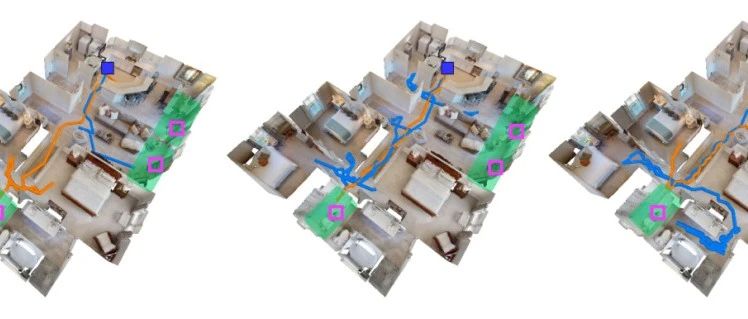
Core Insights - Goal-Oriented Navigation empowers robots to autonomously complete navigation tasks based on goal descriptions, marking a significant shift from traditional visual language navigation [2] - The technology has been successfully implemented in various verticals, enhancing service efficiency in delivery, healthcare, and hospitality sectors [3] - The evolution of Goal-Oriented Navigation can be categorized into three generations, each with distinct methodologies and advancements [5][7] Group 1: Technology Overview - Goal-Oriented Navigation is a key aspect of embodied navigation, relying on language understanding, environmental perception, and path planning [2] - The transition from explicit instructions to autonomous decision-making involves semantic parsing, environmental modeling, and dynamic decision-making [2] - The technology has been integrated into delivery robots, service robots in healthcare and hospitality, and humanoid robots for domestic and industrial applications [3] Group 2: Technical Evolution - The first generation focuses on end-to-end methods using reinforcement and imitation learning, achieving breakthroughs in Point Navigation and closed-set image navigation tasks [5] - The second generation employs modular methods that explicitly construct semantic maps, enhancing performance in zero-shot object navigation tasks [5] - The third generation integrates large language models (LLMs) and visual language models (VLMs) to improve exploration strategies and open-vocabulary target matching accuracy [7][8] Group 3: Challenges and Learning Path - The complexity of embodied navigation requires knowledge across multiple domains, making it challenging for newcomers to grasp the necessary concepts [10] - A new course has been developed to address these challenges, focusing on practical applications and theoretical foundations of Goal-Oriented Navigation [11][12][13] - The course aims to build a comprehensive understanding of the technology stack, including end-to-end reinforcement learning, modular semantic map construction, and LLM/VLM integration methods [30]
【万字长文】独家圆桌对话:具身下一站,我们究竟需要怎样的本体?
具身智能之心· 2025-06-24 14:09
Group 1 - The roundtable discussion focuses on the configurations of embodied intelligence and robotic arms, emphasizing the need for a deeper understanding of mechanical arm designs and their applications in various tasks [4][14][25] - Key topics include the practical experiences of guests with different robotic arm configurations, the requirements for robotic arms in terms of degrees of freedom, and the implications of these choices on technical routes and cost [4][14][25] - The discussion highlights the differences between six-axis and seven-axis robotic arms, addressing their respective advantages and disadvantages in specific use cases [27][29][41] Group 2 - The guests share insights on the importance of mechanical arm design in enhancing human-robot interaction, particularly in remote operation scenarios [8][36][41] - The conversation touches on the challenges posed by singularities in six-axis configurations and how seven-axis designs can mitigate these issues [40][47] - The role of human-like configurations in improving the usability and effectiveness of robotic arms is emphasized, suggesting that designs closer to human anatomy may facilitate better control and learning [30][35][38] Group 3 - The roundtable also discusses the trade-offs between simplicity and complexity in robotic arm designs, with a focus on how these choices impact data consistency and model training [34][52][58] - The guests explore the potential for using neural networks to enhance the performance of robotic arms, particularly in predicting trajectories and addressing singularities [40][57] - The conversation concludes with a reflection on the future of robotic arm development, suggesting that the industry may gravitate towards either simplified or human-like configurations based on task requirements [58][59]
一篇好的具身论文应该是怎么样的?
具身智能之心· 2025-06-24 07:27
Core Viewpoint - The article emphasizes the challenges faced by students in publishing high-quality research papers in cutting-edge fields such as autonomous driving, embodied intelligence, and robotics, and introduces a comprehensive tutoring service aimed at addressing these challenges [1][2][3]. Group 1: Tutoring Service Overview - The tutoring service has been in preparation for nearly a year and is specifically designed for the fields of autonomous driving, embodied intelligence, and robotics [2]. - The organization claims to be the largest AI technology self-media platform in China, with over 300 dedicated instructors from top global universities, achieving a high acceptance rate of 96% among students tutored in the past three years [3][4]. Group 2: Target Audience and Services Offered - The service caters to undergraduate, master's, and doctoral students, providing tailored support for various stages of research, from topic selection to publication [4][10]. - Specific areas of guidance include experimental design, model optimization, and writing strategies, with a focus on achieving impactful research outcomes [11]. Group 3: Areas of Expertise - The tutoring covers a wide range of topics including large models, end-to-end autonomous driving, 3D perception, and various advanced machine learning techniques [5][10]. - The organization emphasizes its deep understanding of the technical details, research hotspots, and evaluation standards in the fields it specializes in [5]. Group 4: Personalized Support and Strategy - The service offers personalized, one-on-one mentoring, ensuring that students receive customized research strategies and solutions based on their specific needs [9][11]. - Instructors possess extensive experience in publishing in top-tier conferences and journals, familiar with the review processes and preferences [8][10].

具身领域的目标导航到底是什么?有哪些主流方法?
具身智能之心· 2025-06-23 14:02
Core Viewpoint - Goal-Oriented Navigation empowers robots to autonomously complete navigation tasks based on goal descriptions, marking a significant shift from traditional visual language navigation systems [2][3]. Group 1: Technology Overview - Embodied navigation is a core area of embodied intelligence, relying on three technical pillars: language understanding, environmental perception, and path planning [2]. - Goal-Oriented Navigation requires robots to autonomously explore and plan paths in unfamiliar 3D environments using goal descriptions such as coordinates, images, or natural language [2]. - The technology has been industrialized across various verticals, including delivery, healthcare, hospitality, and industrial logistics, showcasing its adaptability and effectiveness [3]. Group 2: Technological Evolution - The evolution of Goal-Oriented Navigation can be categorized into three generations: 1. The first generation focuses on end-to-end methods using reinforcement and imitation learning, achieving breakthroughs in Point Navigation and closed-set image navigation tasks [5]. 2. The second generation employs modular methods that explicitly construct semantic maps, enhancing performance in zero-shot object navigation tasks [5]. 3. The third generation integrates large language models (LLMs) and visual language models (VLMs) to improve exploration strategies and open-vocabulary target matching accuracy [7][8]. Group 3: Challenges and Learning Path - The complexity of embodied navigation, particularly Goal-Oriented Navigation, necessitates knowledge from multiple fields, including natural language processing, computer vision, and reinforcement learning [10]. - The lack of systematic practical guidance and high-quality documentation in the Habitat ecosystem increases the difficulty for newcomers [10]. Group 4: Course Offering - A new course has been developed to address the challenges in learning Goal-Oriented Navigation, focusing on quick entry, building a research framework, and combining theory with practice [11][12][13]. - The course covers a comprehensive curriculum, including theoretical foundations, technical architectures, and practical applications in real-world scenarios [16][19][21][23].
从刮胡子机器人到双臂神技!这家具身独角兽引爆亿级美元融资热潮
具身智能之心· 2025-06-23 13:54
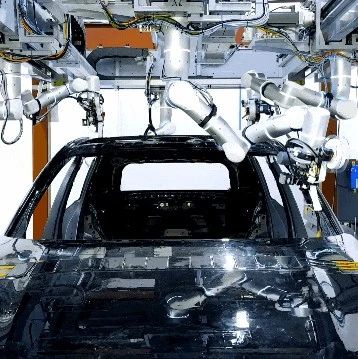
Core Viewpoint - The article highlights the rapid advancements in embodied intelligence, particularly through the demonstration of Generalist AI's adaptive robots, showcasing their capabilities in complex physical tasks and the significant investment interest in this sector [4][6][11]. Group 1: Company Overview - Non-Xi Technology, founded in 2016, specializes in general-purpose intelligent robots and has received substantial investment from top-tier institutions, achieving unicorn status in 2022 [11][13]. - The company has developed a new category of "adaptive robots," which are designed to operate in unstructured environments, demonstrating high adaptability and precision in tasks [20][23]. Group 2: Technological Innovations - Non-Xi's self-developed Rizon "Dawn" robot features a seven-degree-of-freedom design, allowing it to perform complex operations that traditional industrial robots cannot [22][23]. - The company has created a comprehensive technology stack that includes hardware innovations and a restructured operating system, enabling easier deployment and programming of robots [26][27]. Group 3: Market Applications - Non-Xi's adaptive robots have been successfully applied in various industries, including automotive, electronics, and healthcare, showcasing their versatility in tasks such as assembly, surface treatment, and laboratory automation [36]. - The company has established partnerships with industry leaders to enhance its market presence and develop tailored solutions for specific sectors [32][34]. Group 4: Investment and Growth - Non-Xi recently completed a Series C funding round, raising significant capital to expand production, research, and ecosystem development [11][17]. - The company has achieved an average annual growth rate of over 200% for three consecutive years, indicating strong market demand and operational efficiency [34].
等了十年,特斯拉Robotaxi终于上线!马斯克:仅需4.2美元一口价
具身智能之心· 2025-06-23 13:54
作者丨 机器之心 编辑丨 机器之心 点击下方 卡片 ,关注" 具身智能之心 "公众号 >> 点击进入→ 具身 智能之心 技术交流群 更多干货,欢迎加入国内首个具身智能全栈学习社区 : 具身智能之心知识星球 (戳我) , 这里包含所有你想要的。 马斯克终于不「画饼」了!4.2美元坐特斯拉Robotaxi初体验:平稳但尚不成熟。 马斯克也在 X 上发文祝贺: 同时还透露,首批乘客将以「固定价格」4.20 美元搭乘。 马斯克兑现了承诺。 早在十年前,埃隆・马斯克就曾多次表示,特斯拉有能力推出无人驾驶服务,但后来却食言了。上周日,特斯拉终于在德克萨斯州奥斯汀正式启动了自动驾驶出 租车服务。 当然也可以付小费。 评论区的网友一片欢呼: 限定试运营,尚未全面开放 目前,特斯拉的 Robotaxi 服务 仅限受邀用户使用 ,并未向公众全面开放。首批试乘者主要为支持特斯拉的知名社交媒体博主和科技内容创作者,因此外界对其初 步评价的客观性仍持保留态度。至于该服务何时正式向公众开放,特斯拉尚未给出明确时间表。 此次小规模试运营共投入约 10 至 20 辆贴有 「Robotaxi」标识的 Model Y 车辆。而去年首次亮相、备受 ...


SwitchVLA:无需额外数据采集,即可实时动态任务切换的轻量化VLA模型
具身智能之心· 2025-06-23 13:54
Core Viewpoint - The article introduces SwitchVLA, a lightweight and data-efficient dynamic task perception and decision-making method designed to address the challenges of task switching in multi-task VLA models, significantly outperforming existing state-of-the-art methods in task switching scenarios [3][18]. Group 1: Introduction - Current mainstream multi-task VLA models struggle with task switching, defined as the ability to switch from one task to another seamlessly during execution [3][5]. - The proposed Execution-Aware mechanism allows for a minimal representation of task switching, utilizing a lightweight network architecture and new training paradigms without the need for additional data collection [3][5]. Group 2: Background - Multi-task VLA models typically rely on Imitation Learning, where tasks are independently collected, leading to challenges in maintaining consistency during task transitions [5]. - The inability of existing methods to handle task switching effectively highlights a significant gap in current VLA capabilities [5]. Group 3: Methodology - SwitchVLA addresses two core issues: representing task switching without additional data collection and training an end-to-end imitation learning model that autonomously makes decisions based on current conditions [6][8]. - The model improves task switching representation by concatenating previous task, current task, and the previous task's stage, enhancing the model's ability to perceive task transitions [8][9]. Group 4: Training Process Improvements - The training process simplifies tasks into three stages: before contact, during contact, and after contact, with specific actions defined for each stage [12]. - The method allows for the training of forward, rollback, and advance actions without the need for additional data collection, demonstrating the model's efficiency [13]. Group 5: Experimental Results - Experiments show that SwitchVLA achieves comparable performance to mainstream methods in single-task scenarios while significantly outperforming them in task switching tasks [16]. - The analysis of task switching failures identified four main types, indicating that the proposed method effectively mitigates these issues [16]. Group 6: Conclusion and Future Work - SwitchVLA is positioned as a significant advancement in dynamic task management, maintaining state-of-the-art performance in single tasks while excelling in task switching [18]. - Future iterations of SwitchVLA will be deployed in TianGong humanoid robots, enhancing capabilities in flexible industrial production and personalized commercial services [19].

入门具身离不开3个要素,数据+算法+本体
具身智能之心· 2025-06-23 13:54
Core Insights - The article emphasizes the importance of three key elements in embodied intelligence: data, algorithms, and embodiment. Many individuals only understand algorithms, while data collection requires experience and effective strategies [1][2] - The community aims to create a platform for knowledge sharing and collaboration in the field of embodied intelligence, targeting a membership of 10,000 within three years [2][6] Data Collection - Remote operation data collection relies on embodiment and is costly, but preprocessing and postprocessing are simpler, yielding high-quality data suitable for robotic arms [1] - The community provides various data collection strategies and high-cost-performance robotic arm platforms to support research [1][2] Algorithm Development - Common technologies in embodied intelligence include VLN, VLA, Diffusion Policy, and reinforcement learning, which require continuous reading of academic papers to stay updated [1] - The community offers a comprehensive set of learning paths and resources for newcomers and advanced researchers alike [9][12] Hardware and Resources - Well-funded laboratories can purchase high-cost embodiment systems, while those with limited budgets may rely on 3D printing or cost-effective hardware platforms [1] - The community has compiled a list of over 40 open-source projects and nearly 60 datasets related to embodied intelligence, along with mainstream simulation platforms [9][26][28] Community Engagement - The community has established connections with various companies in the field, creating a bridge for academic collaboration, product development, and recruitment [2][6] - Members can access job postings, industry insights, and a supportive environment for learning and networking [5][12] Educational Content - The community provides a wealth of educational materials, including summaries of research papers, books, and learning routes across various topics in embodied intelligence [10][18][20] - Regular discussions and Q&A sessions are held to address common challenges in the field, such as data collection platforms and robot learning techniques [11][12]