具身智能之心

Search documents
小鹏AI Day昨日发布 | 颜值、算法、算力均拉满!“IRON:最拟人的人形机器人来了?!”
具身智能之心· 2025-11-06 03:27
Core Viewpoint - Xiaopeng has launched the next-generation humanoid robot IRON, designed for real-world scenarios with easy data acquisition and generalization capabilities [1]. Group 1: Robot Features - The robot features a mechanical design with a 3D curved screen for the face, avoiding a lifelike appearance [4]. - It is capable of various movements including standing, sitting, squatting, lying down, and climbing, utilizing soft materials for its skin to mimic human characteristics [6]. - The robot has 22 degrees of freedom in one hand, showcasing its dexterity [8]. Group 2: Strategic Layout - Xiaopeng is developing a comprehensive ecosystem that integrates autonomous driving, Robotaxi, and humanoid robots, with IRON being the latest addition [9]. Group 3: Technical Specifications - The robot is equipped with the first all-solid-state battery, reducing weight by 30% and increasing battery life by 30% [11]. - It features three Turing AI chips, providing a computing power of 2250 TFLOPs [11]. - The robot incorporates a combination of VLT, VLA, and VLM for advanced cognitive capabilities [13]. - It includes active safety protection features [19]. Group 4: Production Timeline - Xiaopeng plans to achieve mass production of the IRON robot by 2026, focusing on home and industrial applications [21].



都在研究具身,但相当一部分同学卡在了这些地方.......
具身智能之心· 2025-11-06 00:03
Core Insights - The article discusses the challenges faced by individuals in the field of embodied intelligence, particularly in areas such as computational power, data collection, model optimization, and practical project implementation [1][2][6] - It emphasizes the importance of quality data collection and suggests starting with basic teleoperation to mitigate noise in data, which can hinder model training [1] - The community has established a platform for sharing knowledge, resources, and job opportunities in the field of embodied intelligence, aiming to cultivate talent and facilitate industry connections [2][12][16] Data Collection - Recommendations for data collection include focusing on the quality of data and starting with basic teleoperation techniques [1] - The article highlights the potential of using real2sim2real methods to address insufficient data issues [1] Model Optimization - For those using robotic arms, the article suggests exploring RL+VLA approaches, while cautioning against complex models for humanoid robots due to the difficulty in achieving effective results [1] Community and Resources - The community has organized various resources, including technical routes for beginners, industry-related project solutions, and job referral mechanisms with multiple companies in the field [2][10][12] - A comprehensive list of over 40 open-source projects and 60 datasets related to embodied intelligence has been compiled to assist members in their research and development efforts [13][28][34] Learning and Development - The community offers a structured learning path for newcomers, covering various technical stacks and routes to facilitate entry into the field [8] - Members can engage in discussions and seek advice from industry experts, enhancing their understanding and networking opportunities [12][16]
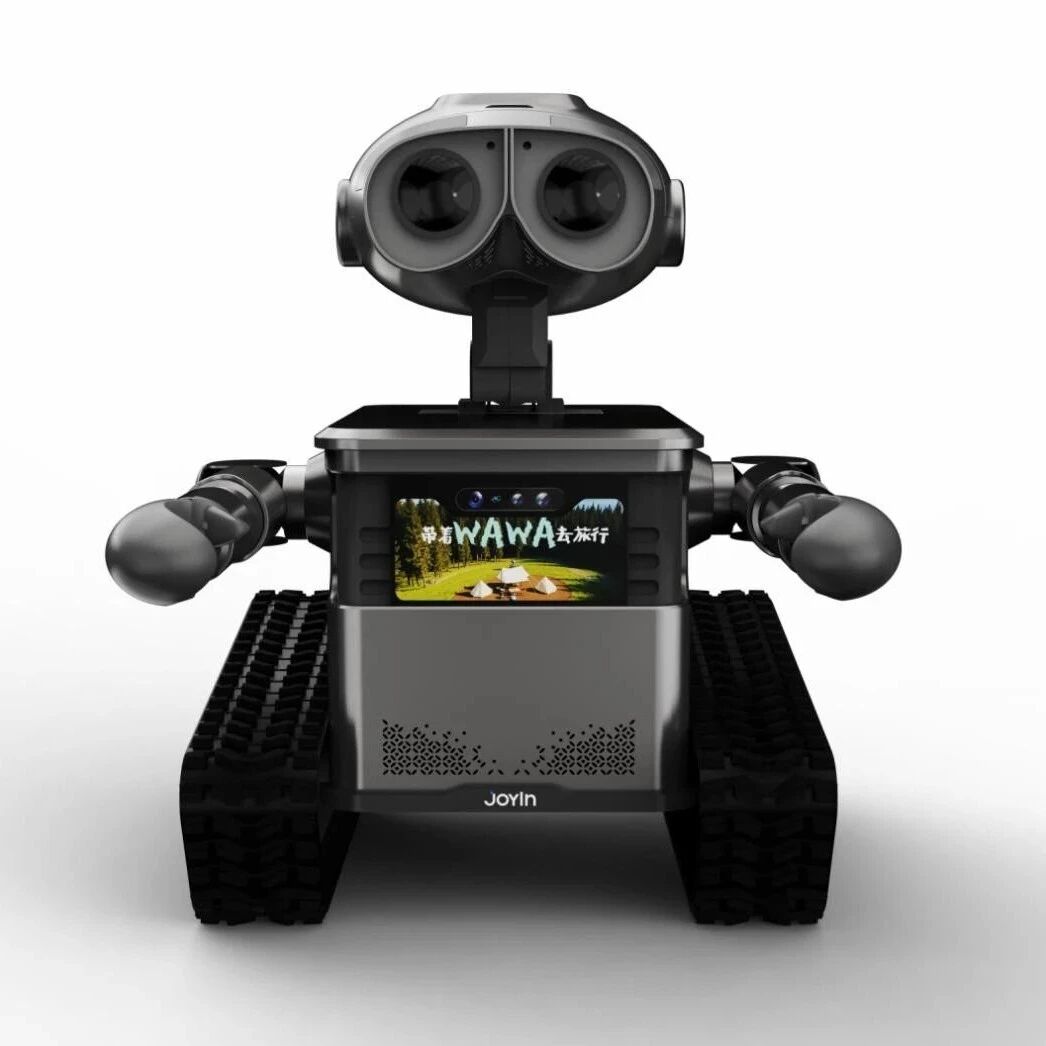
智源具身框架Thor开源:迈向类人级全身控制,在强对抗中“站稳脚跟”
具身智能之心· 2025-11-06 00:03
Core Viewpoint - The article discusses the development of the BAAI Thor framework, which aims to enhance humanoid robots' ability to perform complex physical interactions in real-world environments, achieving human-level whole-body reactions and dynamic stability [7][8][31]. Group 1: Challenges in Humanoid Robot Control - Humanoid robots face two main challenges in transitioning from performers to laborers: the lack of human-like reaction mechanisms and the complexity of high-dimensional coordination control [9]. - The absence of effective human-like reaction mechanisms limits robots' performance under high external forces, as they often rely on rigid resistance strategies that can lead to instability [9][10]. - The high-dimensional nature of the control problem complicates the optimization of control strategies, as it involves numerous degrees of freedom and strong coupling between joints, making learning and adaptation difficult [10][11]. Group 2: BAAI Thor Framework - The BAAI Thor framework integrates biomechanical principles with innovative network structures to enable humanoid robots to achieve coordinated and stable responses in high-intensity force interactions [8][12]. - The framework includes two core components: the Force Adaptive Trunk Tilt Reward (FAT2), which guides robots to adjust their posture based on external forces, and a decoupled network structure that addresses high-dimensional coordination challenges [13][17]. Group 3: Experimental Validation - The BAAI Thor framework was tested on the Yushu G1 robot, which successfully pulled a car weighing approximately 1400 kg, demonstrating its capability for whole-body coordination and dynamic balance under extreme loads [18][20]. - Thor outperformed various baseline algorithms in force interaction tasks, achieving a peak pulling force of 167.7 N, which is about 48% of the robot's weight, representing a 68.9% performance improvement over the best baseline method [26][30]. - Quantitative analysis indicated that the introduction of the FAT2 reward function significantly enhanced the robot's adaptive posture adjustment capabilities, contributing approximately 80%-90% of the performance gains [30].
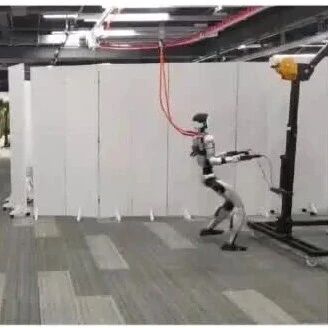
北大&智源研究院最新!RoboOS-NeXT:“记忆 + 分层架构” 实现通用多机器人协作
具身智能之心· 2025-11-06 00:03
Core Insights - The article discusses the RoboOS-NeXT framework, which addresses the challenges in multi-robot collaboration by integrating a unified memory system and a hierarchical architecture for effective task execution and fault tolerance [1][4][23]. Group 1: Challenges in Multi-Robot Collaboration - Current multi-robot collaboration faces a "triple dilemma": reliance on single-robot memory, difficulty in adapting to heterogeneous robots, and lack of fault recovery capabilities [2][3]. - Existing solutions either fail to accumulate long-term experience or struggle with dynamic task allocation and fault tolerance [2][3]. Group 2: RoboOS-NeXT Framework - RoboOS-NeXT employs a "spatio-temporal entity unified memory (STEM)" and a "brain-cerebellum architecture" to facilitate global memory sharing and dynamic task execution [3][4]. - The framework consists of two core components: STEM for information integration and the brain-cerebellum model for planning and execution [4][9]. Group 3: Core Components of RoboOS-NeXT - **STEM** integrates spatial, temporal, and entity memories, providing a unified interface for all robots and eliminating information silos [6][7][8]. - **Brain-Cerebellum Architecture** separates global planning from local execution, ensuring efficient task decomposition and precise action control [9][10]. Group 4: Execution Workflow - The execution process involves four steps: task decomposition, dynamic scheduling, distributed execution, and dynamic memory updating [10][12]. - This workflow ensures that tasks are efficiently completed, even in the face of robot failures or tool malfunctions [10][12]. Group 5: Experimental Results - RoboOS-NeXT demonstrated superior performance in various scenarios, showing strong lifelong adaptability, collaboration scalability, and fault recovery capabilities [13][14][15]. - In adaptability tests, RoboOS-NeXT maintained a success rate of over 75% in long-sequence tasks, while the baseline without memory failed completely [13][14]. - The framework also showed significant improvements in execution efficiency, with average execution steps per task reduced by 20%-70% compared to the baseline [17][18]. Group 6: Key Conclusions and Future Directions - The unified memory is essential for collaboration, enabling lifelong adaptability and robust scheduling [23][25]. - Future enhancements may include multi-modal memory integration, end-to-end task optimization, and real-time performance improvements [25][26].
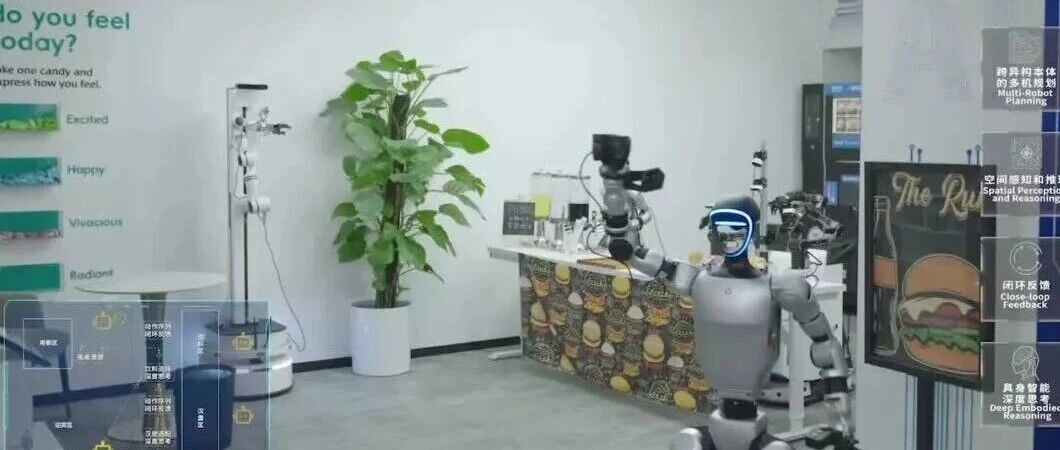
多任务、全场景、跨本体通用移动:银河通用发布环视导航基座大模型
具身智能之心· 2025-11-06 00:03
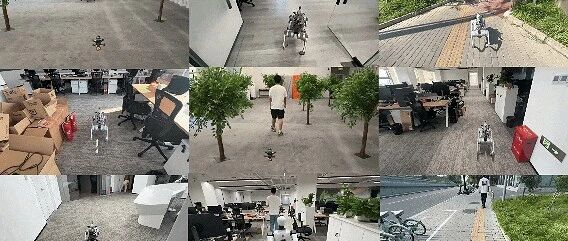
Core Viewpoint - The article discusses the advancements in navigation models for robots, particularly focusing on the launch of the NavFoM (Navigation Foundation Model) by Galaxy General Robotics, which represents a significant leap in the capabilities of robotic navigation systems, allowing for more autonomous and adaptable robots in various environments [3][9][27]. Group 1: Technological Advancements - The NavFoM is the world's first cross-entity panoramic navigation foundation model, unifying various navigation tasks such as Vision-and-Language Navigation, Object-goal Navigation, Visual Tracking, and Autonomous Driving into a single framework [3][9]. - NavFoM allows robots to autonomously perceive their environment and make navigation decisions in unknown settings, moving beyond simple following tasks [9][10]. - The model employs a unified learning paradigm that enables knowledge sharing across different tasks and robot forms, enhancing the efficiency of training and application [13][14]. Group 2: Key Features - NavFoM supports both indoor and outdoor scenarios, operates in zero-shot conditions without the need for mapping or additional training data, and can adapt to various robot types, including quadrupeds, wheeled humanoids, drones, and cars [11][12]. - The model incorporates two key innovations: TVI Tokens for understanding time and direction, and BATS strategy for efficient sampling of video data, allowing for real-time responses while conserving computational resources [17][19]. - The training dataset for NavFoM includes over 8 million cross-task navigation data points and 4 million open-ended question-answer pairs, significantly enhancing its learning capabilities [21][23]. Group 3: Application and Impact - NavFoM has demonstrated state-of-the-art performance in various international benchmarks, showcasing its ability to generalize across tasks and environments without the need for task-specific fine-tuning [25]. - The model has successfully driven various robot forms to execute complex tasks, marking a significant step towards the realization of embodied intelligence in navigation systems [25][27]. - The introduction of NavFoM is seen as a foundational element for a comprehensive navigation system that can support a wide range of applications, from indoor navigation to urban environments, effectively transforming robotic capabilities [29][30].
欢迎具身世界模型&数采相关方向的大佬加入我们!
具身智能之心· 2025-11-05 09:00
Group 1 - The article emphasizes the value of embodied world models, robotic control, and data collection as significant industry directions with certain barriers to entry [2] - The company seeks to collaborate with experts in the field to develop courses or practical projects related to these topics, aiming to provide insights for professionals currently working in these areas [2][3] - Interested individuals with at least one year of industry experience or a publication in a CCF-A level conference are encouraged to participate in the collaboration [3] Group 2 - The company offers competitive salaries and resource sharing for collaborators, with opportunities for part-time involvement [5]
清华团队提出AirScape:动作意图可控的低空世界模型,全面开源!
具身智能之心· 2025-11-05 09:00
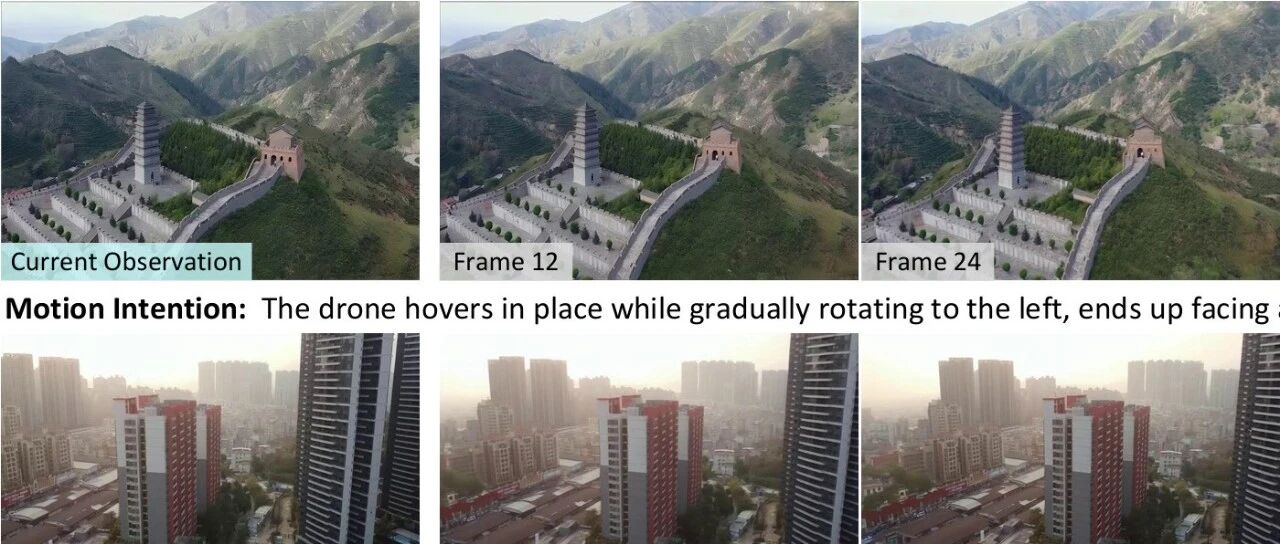
Core Viewpoint - The article discusses the development of AirScape, a generative world model designed for aerial embodied intelligence, which aims to predict future visual observations based on motion intentions [5][17]. Group 1: Background and Importance - Human spatial awareness includes anticipating visual changes resulting from movement, which is crucial for decision-making in spatial tasks [2]. - Predictive reasoning and imagination are foundational issues in embodied intelligence, focusing on how observations change with movement intentions [3]. Group 2: Challenges in Current Research - Existing world model research primarily targets humanoid robots and autonomous driving, often limited to two-dimensional operations [4]. - Key challenges include the lack of low-altitude datasets, differences in distribution between video foundation models and world models, and the complexity of generating diverse and realistic scenarios for aerial agents [8]. Group 3: AirScape Development - AirScape is designed specifically for six degrees of freedom (6DoF) aerial agents, capable of predicting future sequences of observations based on current low-altitude visual inputs and motion intentions [6][11]. - A dataset comprising 11,000 video clips paired with corresponding action intentions has been created to support the training and testing of the low-altitude world model [7]. Group 4: Training Methodology - AirScape employs a two-phase training approach: the first phase focuses on learning intention controllability using the 11k video-intention pairs, while the second phase emphasizes learning spatio-temporal constraints [11][14]. - The introduction of a self-play training mechanism allows the model to generate synthetic data, which is evaluated by a spatio-temporal discriminator to ensure adherence to physical constraints [14]. Group 5: Experimental Results - AirScape demonstrates significant improvements in intention alignment and video quality metrics, with over 50% enhancement in the Intention Alignment Rate (IAR) and 15.47% and 32.73% improvements in FID and FVD metrics, respectively [21][18]. - Qualitative results indicate that AirScape can effectively predict future observations based on different motion intentions, addressing issues such as limited action amplitude and object distortion [15]. Group 6: Future Goals - Future objectives for AirScape include enhancing real-time performance, achieving a lightweight design, and improving applicability in assisting real-world aerial agent decision-making [19].
苏州跑出的这只机器狗,在IROS拿了冠军
具身智能之心· 2025-11-05 00:02
Core Viewpoint - The article highlights the rapid development and strategic pivot of Zhishen Technology, which has shifted its focus from humanoid robots to quadruped robotic dogs, achieving significant success in competitions and positioning itself as a comprehensive technology service provider in the field of embodied intelligence [5][28]. Group 1: Company Overview - Zhishen Technology was founded in 2023 and quickly gained attention by winning the IROS 2025 quadruped robot competition with its "Steel Coin L1" model, marking a significant achievement for a newly established startup [5][8]. - The company initially aimed to develop heavy-load humanoid robots but realized the market potential and technological maturity of quadruped robots, leading to a strategic shift that has fueled its rapid growth [5][6]. Group 2: Technological Development - The quadruped robot market is becoming increasingly competitive, with a convergence of technical routes among various manufacturers, making stability a crucial factor for success [9][10]. - Zhishen Technology emphasizes the importance of creating a reliable and stable platform for its robots, which is essential for executing advanced algorithms effectively [12][13]. - The company has developed a high-power density integrated joint, CHAMP P65, which offers a peak torque output of 48N·m and a torque density of 92.3 Nm/kg, positioning it at the forefront of the industry [24]. Group 3: Market Positioning and Strategy - Zhishen Technology positions itself as a "full-chain technology service provider" in embodied intelligence, focusing on the development and manufacturing of robotic platforms while avoiding direct involvement in end-user applications [28][32]. - The company aims to bridge the gap between experimental prototypes and commercially viable products, addressing the engineering challenges that arise in the transition from lab to market [16][30]. - By maintaining a focus on core competencies and avoiding distractions from diverse application scenarios, Zhishen Technology seeks to optimize its resources and enhance product quality [33][34]. Group 4: Future Outlook - The company plans to continue enhancing its motion control capabilities and explore the integration of visual perception and intelligent task execution in its robotic dogs [41][42]. - Zhishen Technology aims to build a technology flywheel that leverages cutting-edge research from universities to iterate on its products and create value in various industry applications [42].

这款平台支持了pi0和pi0.5~
具身智能之心· 2025-11-05 00:02
Core Viewpoint - Imeta-Y1 is a lightweight, cost-effective robotic arm designed specifically for beginners and researchers in the field of embodied intelligence, enabling low-cost and efficient algorithm validation and project development [2][5]. Group 1: Product Features - The robotic arm offers a complete open-source toolchain and code examples, facilitating a seamless process from data collection to model deployment [3][16]. - It supports dual-language interfaces in Python and C++, allowing users to quickly get started regardless of their programming background [3][17]. - Compatibility with ROS1 and ROS2 is provided, along with URDF models for smooth transitions between simulation and real-world applications [3][5]. - The arm features high-precision motion control, low power consumption, and an open hardware architecture, supporting seamless integration from simulation to real machine [5][6]. Group 2: Technical Specifications - The robotic arm has a weight of 4.2 kg, a rated load of 3 kg, and 6 degrees of freedom, with a working radius of 612.5 mm and a repeatability precision of ±0.1 mm [8][18]. - It operates at a supply voltage of 24V and communicates via CAN, with external interfaces for power and CAN [8][18]. - The joint motion range includes J1: -165° to 165°, J2: -180° to 0°, J3: 0° to 180°, J4: -128° to 86°, J5: -90° to 90°, and J6: -150° to 150° [8][18]. Group 3: Development and Support - The company provides a comprehensive open-source SDK, including drivers, API interfaces, sample code, and documentation, supporting rapid application development [25][31]. - A full-process toolchain is available for data collection, model training, and inference deployment, compatible with mainstream frameworks like TensorFlow and PyTorch [31][28]. - The company ensures timely after-sales support with a 24-hour response time, and offers bulk purchase discounts and project development support [18][43].
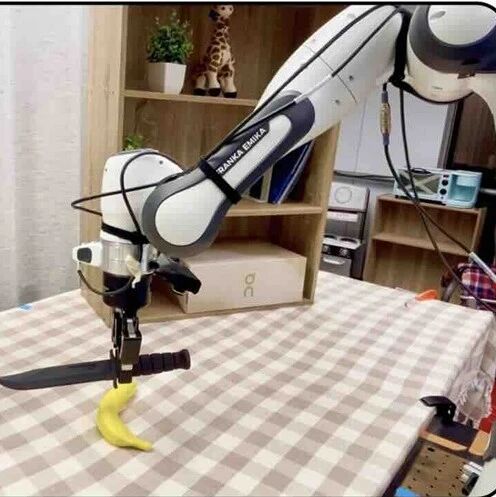
宾夕法尼亚大学!MAESTRO:基于VLM的零样本通用机器人框架
具身智能之心· 2025-11-05 00:02
Core Insights - MAESTRO is a modular robotic framework centered around Vision Language Models (VLM), achieving zero-shot operational performance without extensive training data, while offering scalability and debuggability [2][5][22] Group 1: Innovation and Design - Current mainstream robotics development relies on large-scale "observation-action" datasets, which are costly and limited, hindering progress [4] - MAESTRO adopts a differentiated approach, utilizing VLM to avoid dependency on robot-specific data and integrating mature specialized tools for enhanced low-level operations [6][5] - The framework employs a closed-loop interaction mechanism, continuously monitoring environmental feedback to adjust actions in real-time, forming an adaptive cycle of perception, action, and learning [5][6] Group 2: Core Module Toolset - The modular design adheres to six principles, addressing diverse robotic operational needs, including perception, control, and geometry [8] - Key modules include: - Perception: Enhances visual information accuracy through a hierarchical approach [10] - Control: Integrates Cartesian control and collision-free motion planning for safety [10] - Geometry & Linear Algebra: Provides tools for spatial reasoning [10] - Image Editing: Improves visual grounding capabilities [10] - Mobile Operation Extensions: Adapts to mobile robot scenarios with navigation and active perception tools [10] Group 3: Evolution Mechanism - MAESTRO records past task execution codes and outcomes to provide contextual examples for VLM, optimizing code generation and enhancing performance after minimal real-world trials [12] Group 4: Experimental Results and Performance Analysis - MAESTRO demonstrated superior performance in desktop operations, significantly outperforming existing VLA models in six out of seven tasks, particularly in semantic reasoning and long-term memory tasks [17] - In mobile operations, MAESTRO achieved high completion rates, with specific tasks scoring 96.0±8.9 and 93.3±14.9 [17] - The evolution capability was highlighted by improving task completion from 35% to 85.0±7.4 after three iterations in a door-opening task [17] Group 5: Key Module Ablation Analysis - Removing advanced perception modules drastically reduced task completion rates, indicating the importance of precise perception for complex operations [20] - The absence of geometry modules also negatively impacted performance, underscoring the necessity of spatial reasoning tools [20] Group 6: Future Directions - MAESTRO's framework is positioned as an effective alternative to large-scale robotic training paths, with future enhancements aimed at optimizing VLM inference speed, improving low-level control capabilities, and increasing reasoning stability in complex scenarios [22]