HKEX(00388)

Search documents
陈翊庭:展望2026 港交所正处理的上市申请超过300家公司
智通财经网· 2025-12-16 03:54
Core Viewpoint - The Hong Kong Stock Exchange (HKEX) is experiencing a significant transformation as China's economic growth model shifts from traditional manufacturing to high-value, innovation-driven industries, with a strong emphasis on internationalization and attracting global capital [1][4][8]. Group 1: Market Performance and Trends - Since the beginning of 2025, the Hong Kong IPO market has welcomed over 100 new companies, raising more than 270 billion HKD, including the two largest IPOs globally this year [5]. - The HKEX is currently processing over 300 listing applications for 2026, indicating a robust pipeline for future growth [5]. - The trend of mainland companies going public in Hong Kong is increasingly internationalized, with half of these companies generating significant revenue from overseas [11]. Group 2: Economic and Investment Landscape - The global trend of diversifying capital allocation is a major driver for the HKEX, as investors seek opportunities in a multi-polar world, leading to increased activity in the Hong Kong market [4]. - Asia's contribution to global GDP has nearly doubled since 1990, and it accounts for about 40% of global foreign direct investment, highlighting the region's growing economic significance [6][7]. - The shift in China's economic development model is attracting capital inflows, further solidifying Hong Kong's role as a key international financial center [4][8]. Group 3: Strategic Focus Areas - The HKEX aims to enhance its multi-asset ecosystem by developing products and tools that cater to global investors' needs, particularly in the context of changing capital allocation patterns [10]. - Continued investment in technology and operational improvements is essential for connecting Asian investors with growth opportunities in China and vice versa [12]. - The development of emerging businesses, including data, analytics, indices, and digital currencies, is a strategic priority to support core operations and enhance market liquidity [13]. Group 4: Future Outlook - Despite macroeconomic volatility, the HKEX has set multiple records in 2025 and plans to continue its strategic initiatives into 2026 and beyond [14]. - The ongoing trends reshaping the global and Asian economic landscape present a unique opportunity for Hong Kong to reinforce its status as an international financial hub [14].

智通ADR统计 | 12月16日
智通财经网· 2025-12-15 22:43
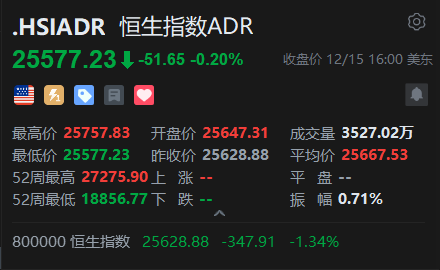
Market Overview - The Hang Seng Index (HSI) closed at 25,577.23, down by 51.65 points or 0.20% from the previous close [1] - The index reached a high of 25,757.83 and a low of 25,577.23 during the trading session, with a trading volume of 35.27 million [1] Major Blue-Chip Stocks Performance - HSBC Holdings closed at HKD 117.167, up by 0.83% compared to the Hong Kong close [2] - Tencent Holdings closed at HKD 600.386, down by 0.43% compared to the Hong Kong close [2] Stock Price Movements - Tencent Holdings (00700) latest price is HKD 603.000, down by HKD 13.000 or 2.11% [3] - Alibaba Group (09988) latest price is HKD 148.600, down by HKD 5.500 or 3.57% [3] - HSBC Holdings (00005) latest price is HKD 116.200, down by HKD 1.100 or 0.94% [3] - AIA Group (01299) latest price is HKD 80.650, up by HKD 1.650 or 2.09% [3] - BYD Company (01211) latest price is HKD 96.000, down by HKD 2.500 or 2.54% [3] - Baidu Group (09888) latest price is HKD 118.700, down by HKD 7.300 or 5.79% [3] - JD.com (09618) latest price is HKD 113.500, down by HKD 2.100 or 1.82% [3]






「迟到半世纪」的港交所指数来了
Hua Er Jie Jian Wen· 2025-12-15 14:17
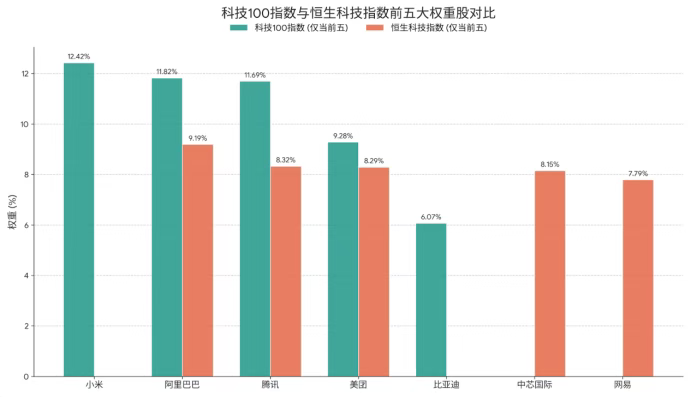
Core Viewpoint - The Hong Kong Stock Exchange (HKEX) has launched its first self-developed index, the Hong Kong Exchange Technology 100 Index, marking a significant shift in the market's evaluation system, which has long been dominated by the Hang Seng Index [1][3][13]. Group 1: Introduction of the Technology 100 Index - The Technology 100 Index aims to reflect the performance of the 100 largest Hong Kong-listed companies related to technology themes, including artificial intelligence, biotechnology, electric vehicles, information technology, the internet, and robotics [3][4]. - This index is seen as a response to the growing demand from mainland investors for a more relevant benchmark that aligns with their investment logic, especially as capital flows from mainland China into Hong Kong continue to rise [3][4]. Group 2: Future Developments and Strategy - HKEX plans to continue developing new indices in thematic investment and cross-market connectivity, indicating a strategic shift towards self-research and development in index creation [2][7]. - The exchange has recognized the need for diverse investment tools to cater to the increasing interest in technology and innovation sectors among investors [3][7]. Group 3: Comparison with Existing Indices - The Technology 100 Index differs from the Hang Seng Technology Index in terms of coverage and weight distribution, encompassing a broader range of companies and including significant players like Xiaomi, Alibaba, Tencent, Meituan, and BYD [5][6]. - This new index provides mainland investors with more options beyond the traditional reliance on the Hang Seng Technology Index, potentially reshaping their investment strategies [4][5]. Group 4: Historical Context and Market Evolution - Historically, the HKEX has not played a significant role in index creation, relying instead on the Hang Seng Index as a benchmark since its inception in 1964 [11][12]. - The launch of the Technology 100 Index is viewed as a corrective measure to align with the evolving market dynamics, particularly with the influx of A-share companies into Hong Kong [13][14].
港交所酝酿每手买卖单位改革,43个不同单位将适度压缩
Jin Rong Jie· 2025-12-15 10:43
Group 1 - The Hong Kong Stock Exchange (HKEX) is planning to reform the trading unit sizes, with a market consultation process expected to start soon [1] - Currently, there are 43 different trading unit sizes in the Hong Kong stock market, ranging from 10 shares to 100,000 shares, with 666 companies having a unit size of 2,000 shares, accounting for 24.9% [1] - The diverse trading unit sizes create operational challenges, exemplified by NIO Inc. requiring only 10 shares per unit, valued at HKD 402.4, while Golden Stone Capital Group requires 100,000 shares per unit, valued at HKD 41,000 [1] Group 2 - HKEX aims to expedite the inclusion of Real Estate Investment Trusts (REITs) into the Stock Connect program [1] - There is a growing interest from southbound investors in ETFs, with the average daily trading amount for southbound ETF transactions reaching HKD 4.2 billion in the first three quarters of 2025, marking a nine-month high [1]
港交所:预计很快启动每手买卖单位改革的市场咨询
Zhi Tong Cai Jing· 2025-12-15 06:13
Core Viewpoint - The Hong Kong Stock Exchange (HKEX) is set to initiate a market consultation regarding the reform of trading lot sizes, which currently consists of over 40 different units [1] Group 1: Reform Details - The reform of trading lot sizes is deemed very important by HKEX, as the current complexity may hinder retail investors [1] - The reform will not be a one-size-fits-all approach; instead, it aims to reduce the number of lot sizes while avoiding excessive increases in trading costs for high-priced stocks [1] - HKEX plans to engage with the market for feedback before implementing changes, indicating a careful and consultative approach to the reform [1] Group 2: Timeline - A market consultation is expected to take place before the end of the year [1] - Feedback from the market is anticipated by the first quarter of 2026, after which further steps will be taken to advance the reform [1]
再度回应24小时交易!港交所很快将开启每手买卖单位改革咨询
证券时报· 2025-12-15 05:27
Core Viewpoint - Hong Kong Stock Exchange (HKEX) is planning a reform regarding the trading unit size, aiming to simplify the current complex structure of over 40 different trading units, while ensuring that the reform does not disadvantage retail investors [1][8]. Group 1: Trading Unit Reform - The current trading unit sizes in the Hong Kong market are diverse, with 43 different units ranging from 10 shares to 100,000 shares [3][4]. - The most common trading unit is 2,000 shares, with 666 companies using this size, accounting for 24.9% of the total [4]. - HKEX plans to initiate a market consultation on the trading unit reform soon, with the goal of reducing the number of trading units without completely standardizing them [8]. Group 2: 24-Hour Trading Discussion - There is ongoing discussion about whether HKEX should implement 24-hour trading, similar to some overseas markets, but this requires thorough research and consideration of market dynamics [9][10]. - The CEO of HKEX expressed caution, noting that extending trading hours could complicate processes and increase risks, and emphasized the need for consensus among market participants before proceeding [10]. Group 3: Interconnectivity and REITs - HKEX is actively working to enhance interconnectivity, with significant increases in both northbound and southbound trading volumes, particularly in ETFs [12][13]. - The average daily trading amount for southbound ETFs reached 4.2 billion yuan in the first three quarters of 2025, marking a record high [13]. - HKEX aims to expedite the inclusion of Real Estate Investment Trusts (REITs) into the interconnectivity framework to further enhance market participation [14].
再度回应24小时交易!港交所很快将开启每手买卖单位改革咨询
Zheng Quan Shi Bao· 2025-12-15 04:44
Group 1 - The Hong Kong Stock Exchange (HKEX) is planning a reform regarding the trading unit size, with a market consultation expected to start soon [1][7] - Currently, there are 43 different trading unit sizes in the Hong Kong market, with the most common being 2,000 shares, accounting for 24.9% of companies [3][4] - The reform will not be a one-size-fits-all approach; instead, it aims to reduce the number of trading units while considering the impact on high-priced stocks and retail investors [7] Group 2 - Discussions about implementing 24-hour trading in the Hong Kong market are ongoing, but the HKEX is cautious and emphasizes the need for thorough research [9][10] - The CEO of HKEX highlighted that extending trading hours could increase market liquidity, but it also requires careful consideration of operational impacts [10] - There is potential for extending trading hours for derivatives, but further discussions with brokers are necessary for the cash market [10] Group 3 - The HKEX is focused on enhancing its role in the fixed income and currency markets, aiming to become a major hub for RMB-denominated bonds and commodities [12] - The mutual market access has seen significant growth, with northbound trading increasing by 70% compared to last year, and southbound trading also rising [12][13] - The average daily trading volume for southbound ETF transactions reached 4.2 billion yuan in the first three quarters of 2025, marking a record high [13]

专访港交所市场主管余学勤:科技已成港股市场新名片 未来会推出更多指数
证券时报· 2025-12-15 00:17
Core Viewpoint - The Hong Kong Stock Exchange (HKEX) has launched the HKEX Technology 100 Index, marking a significant milestone in its index and data business development, reflecting the transformation of the Hong Kong market towards a technology-centric identity [1][2]. Group 1: Introduction of the Technology 100 Index - The HKEX Technology 100 Index is a broad-based stock index tracking the performance of the 100 largest technology companies listed on the HKEX, covering six major innovative themes: artificial intelligence, biotechnology and pharmaceuticals, electric vehicles and smart driving, information technology, internet, and robotics [2][3]. - The index includes only stocks eligible for the Stock Connect program, catering to both international and mainland Chinese investors [2]. Group 2: Market Trends and Investor Sentiment - There has been a noticeable shift in investor perception of the Hong Kong market, increasingly recognizing it as a technology-driven market, especially since the listing rule reforms initiated in 2018 [3]. - Data indicates a significant change in the market structure, with the market capitalization of technology stocks in the Stock Connect program rising from approximately 10% in 2014 to about 40% by 2025, with four out of the top ten companies being technology giants [3]. Group 3: Differentiation from Existing Indices - The HKEX Technology 100 Index differentiates itself from the Hang Seng Technology Index by including 100 constituent stocks, ranging from large-cap companies like Tencent and Alibaba to smaller firms with market capitalizations of over 20 billion HKD [5][6]. - The index aims to meet diverse investor needs, providing a broader selection of technology stocks compared to existing indices [6]. Group 4: Future Developments and Performance - The HKEX plans to introduce more indices, including thematic indices, to further enhance its product offerings [8]. - The HKEX Technology 100 Index has shown strong performance, with a cumulative return of approximately 40% year-to-date, and returns of 45% and 55% over the past year and three years, respectively, highlighting the growth potential of the technology sector in the Hong Kong market [9].

香港交易所市场主管余学勤:力推港交所科技100指数,便利内地基金公司发行相关ETF
Zhong Guo Ji Jin Bao· 2025-12-15 00:17
Core Insights - Hong Kong Exchanges and Clearing (HKEX) is promoting the Tech 100 Index to facilitate the issuance of related ETFs by mainland fund companies, aiming to strengthen Hong Kong's position as an international financial center [1][2] Group 1: Development of Tech 100 Index - The Tech 100 Index is a broad-based index that includes large and medium-sized enterprises, as well as companies listed under Chapters 18A and 18C, which cater to biotech and specialized tech firms [2] - The index's constituent stocks are all eligible for trading under the Stock Connect program, allowing mainland funds to trade without needing QDII quotas, thus simplifying ETF issuance [2] Group 2: Market Trends and Fund Flows - Since 2024, the Hong Kong stock market has shown signs of recovery, with southbound capital actively investing in technology, healthcare, and innovative pharmaceuticals [2] - Southbound capital's net inflow has exceeded HKD 1 trillion this year, with its daily trading volume in the Hong Kong market reaching approximately 25% [5] Group 3: Future Index and Product Development - HKEX plans to continue developing various index products targeting different markets and themes, expanding cooperation beyond mainland China to other regions [3] - The exchange aims to enhance its international influence by collaborating with exchanges in the Middle East and Southeast Asia [3] Group 4: Implementation of the Roadmap - HKEX is committed to implementing the "Roadmap for the Development of Fixed Income and Currency Markets," focusing on fixed income, currency, and commodity markets [4] - The exchange will optimize currency-related futures products and attract more entities to issue RMB bonds in Hong Kong [4] Group 5: Innovations in Connectivity - HKEX is actively working to include REITs in the mutual market access framework, with plans to introduce a dual-currency settlement system for 24 Hong Kong-listed companies [6] - New mechanisms for mutual connectivity are expected to be implemented by 2026 [6] Group 6: Stock Trading Unit Reform - HKEX plans to consult on the reform of stock trading unit sizes by the end of the year, aiming to simplify the current complex system of over 40 different unit sizes [7] - The exchange is cautious about extending trading hours for cash equities, emphasizing the need to understand customer demands and the operational capacity of market participants [7]
香港交易所市场主管余学勤:力推港交所科技100指数,便利内地基金公司发行相关ETF
中国基金报· 2025-12-15 00:09
Core Viewpoint - The Hong Kong Stock Exchange (HKEX) is actively promoting the Technology 100 Index to facilitate the issuance of related ETFs by mainland fund companies, as part of a broader strategy to enhance Hong Kong's status as an international financial center [1][4]. Group 1: Development of Technology and Innovation - HKEX has introduced Listing Rules Chapter 18A and 18C in 2018 and 2023, respectively, to create listing pathways for unprofitable biotech and specialized technology companies, with plans to establish a "Tech Company Fast Track" by 2025 [4]. - The market capitalization of technology stocks currently accounts for approximately 40% of the total market capitalization of stocks eligible for the Stock Connect program, with over 300 companies, many of which are tech firms, waiting to go public [4][5]. Group 2: ETF and Index Development - The HKEX Technology 100 Index is a broad-based index that includes large and mid-sized companies, incorporating many firms listed under Chapters 18A and 18C, making it easier for mainland funds to trade without needing QDII quotas [5]. - E Fund Management has received authorization from HKEX to develop a related ETF in mainland China based on the Technology 100 Index [5]. - HKEX plans to continue developing various index products targeting different markets and themes, expanding cooperation beyond mainland China to attract a wider range of investors [5]. Group 3: Fixed Income and Commodity Markets - HKEX is committed to implementing the "Roadmap for the Development of Fixed Income and Currency Markets," focusing on the FICC (Fixed Income, Currency, and Commodity) sector as a key area for growth [7]. - The exchange aims to optimize currency-related futures products and attract more entities to issue RMB bonds in Hong Kong, alongside launching government bond futures for risk management [7]. - HKEX is also focusing on gold-related business, leveraging its 13 LME-approved warehouses to develop various risk management products, addressing the significant demand from mainland enterprises for commodity risk management tools [7]. Group 4: Connectivity and Market Integration - The northbound capital activity through the Stock Connect has increased by 70% compared to last year, with southbound capital accounting for about 25% of daily trading volume in the Hong Kong market [9]. - The ETF southbound trading mechanism has seen innovation, with two ETFs maintaining a 65% allocation to Hong Kong stocks and 35% to U.S. stocks, achieving an average daily trading volume of 20 million HKD [9]. - HKEX is actively working with mainland exchanges to include REITs in the connectivity framework, with plans for dual-currency settlement through the establishment of RMB trading counters [9]. Group 5: Trading System Optimization - HKEX plans to consult on the reform of stock trading lot sizes by the end of the year, aiming to simplify the current system which has over 40 different lot sizes [11]. - While the exchange has extended derivative trading hours to 3 AM, it remains cautious about implementing 24-hour trading for cash equities, citing the need to understand client demands and address complex operational challenges [11].