亚洲经济增长

Search documents
英国智库:亚洲经济体2026年将继续成为全球增长重要引擎
Xin Lang Cai Jing· 2026-01-15 14:09
Core Insights - Asian economies are expected to continue being a significant engine of global economic growth by 2026, demonstrating resilience in a complex geopolitical environment [1][2] - Despite geopolitical turbulence, the fundamentals of Asian economies remain solid, supported by strong domestic consumption, sustained investment growth, and accelerated transition towards technological self-sufficiency [1][2] - Matilda Thompson, a senior analyst and the main author of the report, emphasizes that Asia has repeatedly shown resilience in challenging global conditions, with robust economic fundamentals and a favorable investment environment expected to support growth through 2026 and beyond [1][2]
高盛:今年中国内地、印度、中国台湾及澳纽地区经济增长前景更为乐观
智通财经网· 2026-01-05 09:45
Core Viewpoint - Goldman Sachs reports that major Asian economies are demonstrating resilience in 2025, successfully addressing challenges posed by U.S. tariff policies [1] Economic Environment - Declines in food and energy prices have boosted real income, while financial conditions are becoming more accommodative due to interest rate cuts in many countries [1] - Fiscal policies across the region are generally leaning towards expansion [1] Export Performance - East Asia's export performance is strong, particularly in semiconductor exports from Taiwan, with contributions from South Korea and excellent performance in nearly all other product categories from mainland China [1] Future Growth Outlook - In the context of an overall positive global economic growth outlook for 2026, East Asian exports are expected to continue thriving [1] - However, many regional economies will need to rely more on domestic growth drivers, which may increase pressure for policy stimulus and/or economic reforms [1] Regional Growth Projections - Goldman Sachs holds a more optimistic view on growth prospects for mainland China, India, Taiwan, and the Australia-New Zealand region compared to general market expectations [1] - The outlook for Japan is consistent with market views, while a more cautious stance is taken towards certain Southeast Asian countries like Thailand and Indonesia [1] Inflation and Currency Trends - The firm maintains an overall optimistic view for global markets in 2026, expecting moderate inflation [1] - South Korea and Southeast Asian countries are anticipated to implement sporadic interest rate cuts towards the end of the economic cycle, with regional currencies expected to appreciate against the U.S. dollar, primarily supported by a gradual strengthening of the Chinese yuan [1]

陈翊庭:展望2026 港交所正处理的上市申请超过300家公司
智通财经网· 2025-12-16 03:54
Core Viewpoint - The Hong Kong Stock Exchange (HKEX) is experiencing a significant transformation as China's economic growth model shifts from traditional manufacturing to high-value, innovation-driven industries, with a strong emphasis on internationalization and attracting global capital [1][4][8]. Group 1: Market Performance and Trends - Since the beginning of 2025, the Hong Kong IPO market has welcomed over 100 new companies, raising more than 270 billion HKD, including the two largest IPOs globally this year [5]. - The HKEX is currently processing over 300 listing applications for 2026, indicating a robust pipeline for future growth [5]. - The trend of mainland companies going public in Hong Kong is increasingly internationalized, with half of these companies generating significant revenue from overseas [11]. Group 2: Economic and Investment Landscape - The global trend of diversifying capital allocation is a major driver for the HKEX, as investors seek opportunities in a multi-polar world, leading to increased activity in the Hong Kong market [4]. - Asia's contribution to global GDP has nearly doubled since 1990, and it accounts for about 40% of global foreign direct investment, highlighting the region's growing economic significance [6][7]. - The shift in China's economic development model is attracting capital inflows, further solidifying Hong Kong's role as a key international financial center [4][8]. Group 3: Strategic Focus Areas - The HKEX aims to enhance its multi-asset ecosystem by developing products and tools that cater to global investors' needs, particularly in the context of changing capital allocation patterns [10]. - Continued investment in technology and operational improvements is essential for connecting Asian investors with growth opportunities in China and vice versa [12]. - The development of emerging businesses, including data, analytics, indices, and digital currencies, is a strategic priority to support core operations and enhance market liquidity [13]. Group 4: Future Outlook - Despite macroeconomic volatility, the HKEX has set multiple records in 2025 and plans to continue its strategic initiatives into 2026 and beyond [14]. - The ongoing trends reshaping the global and Asian economic landscape present a unique opportunity for Hong Kong to reinforce its status as an international financial hub [14].

专访丨区域一体化有助于巩固亚洲经济可持续增长——访IMF亚太部主任斯里尼瓦桑
Xin Hua Wang· 2025-10-29 01:38
Core Viewpoint - Regional integration is essential for consolidating sustainable economic growth in Asia, especially in the context of trade tensions [1][2] Group 1: Economic Growth Projections - The IMF forecasts that Asia will grow by 4.5% in 2025 and 4.1% in 2026, with an upward revision from April's predictions due to strong export performance and supportive macroeconomic policies [1][2] - Asia is expected to contribute approximately 60% to global economic growth over the next two years, reinforcing its position as the largest growth engine globally [2] Group 2: Factors Supporting Growth - Key factors supporting the growth include lower overall tariff levels compared to previous forecasts, strong export performance, and favorable financial conditions across the region [1] - The need for targeted fiscal support for impacted industries and individuals, along with accommodative monetary policies in the context of low inflation, is emphasized to further stimulate the economy [2] Group 3: Regional Integration and Internal Demand - The report highlights that only about 30% of Asia's demand for final products comes from within the region, indicating significant potential for increased regional integration [2] - Strengthening regional integration can create larger markets for intermediate and final products, thereby enhancing sustainable growth prospects for Asia [2] Group 4: U.S.-China Cooperation - The cooperation between the U.S. and China, as the two largest economies, is crucial for global benefits, particularly in terms of demand for goods, including intermediate products [2]
IMF点出掣肘?亚洲经济增长的两大因素:利率上行与美元走强
Zhi Tong Cai Jing· 2025-10-24 04:33
Core Insights - The IMF highlights two major factors that could hinder economic growth in Asia: rising interest rates and a strengthening US dollar [1][2] Group 1: Economic Conditions - A strong dollar and rising long-term US Treasury yields may increase overall debt costs in Asian markets, posing challenges for countries that have shown resilience against US tariffs [1] - Low interest rates and a weak dollar have helped Asian markets withstand tariff impacts, allowing governments and businesses to borrow at lower costs [1][3] Group 2: Future Projections - The IMF projects that Asia's economy will grow by 4.5% in 2025, slightly down from 4.6% in the previous year, but up by 0.6 percentage points from earlier forecasts due to strong export growth [2] - The growth forecast for 2026 is expected to further decline to 4.1%, indicating a downward risk for economic growth in Asia [3] Group 3: Monetary Policy - Many Asian countries may need to pursue further monetary easing to bring inflation back to target ranges and anchor inflation expectations [3] - The relative moderation of inflation in Asia compared to other regions suggests that central banks can effectively manage inflation expectations due to public trust in their independence from government interference [3]
IMF点出掣肘 亚洲经济增长的两大因素:利率上行与美元走强
Zhi Tong Cai Jing· 2025-10-24 04:19
Group 1 - The IMF warns that a strong dollar and rising long-term interest rates could challenge the resilience of Asian countries in responding to US tariffs [1][2] - A sustained strong dollar or a significant rise in long-term US Treasury yields may increase the overall debt costs for Asian markets [1][2] - Low interest rates and a weak dollar have helped Asian markets withstand the impact of US tariffs this year [1][2] Group 2 - The IMF projects that the Asian economy will grow by 4.5% in 2025, slightly down from 4.6% last year, but up by 0.6 percentage points from its April forecast due to strong export growth [2] - The IMF warns that the risks to Asian economic growth are skewed to the downside, with a further slowdown expected to 4.1% in 2026 [3] - Many Asian countries may need to pursue further monetary easing to bring inflation back to target ranges and ensure inflation expectations remain anchored [3]
IMF点出掣肘亚洲经济增长的两大因素:利率上行与美元走强
智通财经网· 2025-10-24 04:19
Core Viewpoint - The International Monetary Fund (IMF) warns that a sudden strengthening of the US dollar, combined with a significant rise in long-term interest rates, could challenge the resilience of Asian countries in responding to US tariffs [1][2]. Group 1: Financial Conditions and Impact on Asia - A strong dollar or rising long-term US Treasury yields may increase the overall debt costs for Asian markets [1]. - Low interest rates and a weak dollar have helped Asian markets withstand the impact of US tariffs this year [1]. - If the Federal Reserve continues to lower interest rates and the dollar weakens, Asian central banks could relax monetary policies to support economic growth without fearing capital outflow risks [1][2]. Group 2: Economic Growth Projections - The IMF projects that the overall Asian economy will grow by 4.5% in 2025, slightly down from 4.6% last year, but up by 0.6 percentage points from the IMF's April forecast due to strong export growth before higher US tariffs took effect [2]. - However, the IMF warns that the risks to Asian economic growth are skewed to the downside, with a further slowdown to 4.1% expected in 2026 [3]. Group 3: Monetary Policy and Inflation - Many Asian countries may need to pursue further monetary easing to bring inflation back to target ranges and ensure inflation expectations remain anchored [3]. - Despite a rebound in demand post-pandemic and rising raw material prices due to the Russia-Ukraine conflict, inflation in Asia remains relatively mild compared to other regions [3]. - The independence of central banks is crucial for achieving price stability, and they should not be burdened with excessive missions and liabilities [3].
21对话|汇丰范力民:香港金融业正出现两大趋势
2 1 Shi Ji Jing Ji Bao Dao· 2025-09-04 06:45
Group 1: Federal Reserve and Interest Rate Expectations - The HSBC Global Investment Research Chief Asian Economist, Frederic Neumann, predicts a 25 basis point rate cut by the Federal Reserve in September, with a more conservative outlook suggesting a maximum of three rate cuts overall [1][2] - Market expectations for a September rate cut exceed 90%, influenced by upcoming labor market data which could impact the decision [1][2] - Neumann notes that if the Fed proceeds with a rate cut, Asian central banks are likely to follow suit, with countries like India, South Korea, and Indonesia already lowering rates [2] Group 2: Economic Outlook for Asia - HSBC maintains an optimistic outlook for Asia's economic growth, projecting a 4.4% growth rate for 2025, significantly higher than the global average of 2.6% [2] - Despite uncertainties in the global economy during the first half of the year, HSBC has not adjusted its growth forecasts, citing stronger-than-expected growth in the first half [3] - The firm anticipates a slowdown in economic growth for the following year, with a downward revision of the U.S. growth forecast from 1.8% to 1.3% [3] Group 3: Hong Kong's Financial Sector Trends - Hong Kong's status as an international financial center is expected to strengthen due to global capital reallocation and increasing outbound investment from China [6] - The city is becoming a hub for Chinese capital seeking international opportunities, contrasting with previous trends where foreign capital predominantly flowed into China [6] - The rise in wealth among Chinese residents is benefiting Hong Kong's financial markets, including stock, insurance, and asset management sectors [6] Group 4: Competition Between Hong Kong and Singapore - In private wealth management, Hong Kong is seen as surpassing Singapore, serving as a key conduit for Chinese capital to the world [6] - Singapore retains unique competitive advantages in foreign exchange trading and financing activities related to ASEAN [6]

汇丰:关税背景下聚焦亚洲消费者提振经济增长
news flash· 2025-07-03 04:32
Group 1 - HSBC Global Research indicates that the upcoming tariffs on products exported from Asia to the US may lead to a decline in shipment volumes in the coming months [1] - Companies are likely to suppress investments amid uncertainty due to the tariffs and geopolitical tensions in the Middle East, which could cause oil prices to surge [1] - Asian countries, except for Japan where policy normalization remains a goal, are expected to further cut interest rates with the help of a weakening US dollar [1] Group 2 - There is a focus on whether Asian consumers can support economic growth amidst external adverse factors [1] - There remains hope that household consumption can offset some of the economic weakness [1]
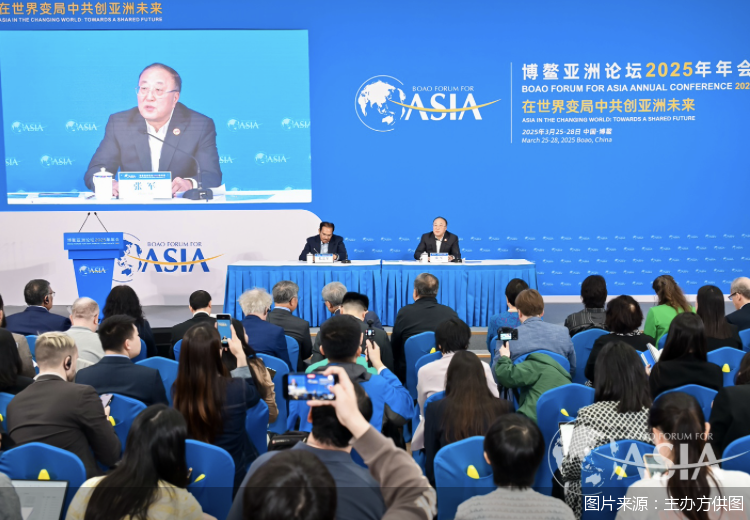
2025博鳌亚洲论坛|共话亚洲增长共振
Bei Jing Shang Bao· 2025-03-25 13:31
Core Insights - The Boao Forum for Asia 2025 Annual Conference highlighted the resilience of Asian economies, particularly China and ASEAN, in the face of challenges, projecting a GDP growth rate of 4.5% for 2025 [1][3]. Economic Growth Projections - The report anticipates a slight increase in the weighted actual GDP growth rate for Asia from 4.4% in 2024 to 4.5% in 2025 [3]. - Asia's share of global output is expected to rise from 48.1% to 48.6% by 2025, indicating a strengthening economic position [3]. Employment and Income Trends - Although the employment growth rate in Asia is projected to decline from 1.94% to 1.22% in 2025, the overall unemployment rate is expected to be 4.39%, lower than the global rate of 4.96% [3]. - The report suggests that real income levels in Asia are likely to improve as economic growth rebounds and inflation continues to decrease [3]. Trade and Digital Economy - Asia remains a core player in global value chains, with a significant share of 41.17% in global intermediate goods trade in 2023, surpassing the EU and North America [3]. - The e-commerce sector in the Asia-Pacific region is experiencing rapid growth, with a retail e-commerce growth rate of 8.4% in 2024 and a 10.8% year-on-year increase in China's cross-border e-commerce [4]. Challenges and Market Dynamics - The report identifies potential challenges for Asian economies, including low global economic growth, escalating trade tensions, and geopolitical uncertainties [5]. - Despite these challenges, the stock market indices in Asia are expected to remain on an upward trend, with stable exchange rates anticipated for major economies [5]. Future Directions and Recommendations - The report emphasizes the need for Asian countries to leverage their demographic advantages and enhance human capital development to improve labor productivity [7]. - It advocates for increased investment in digital technology and international cooperation to foster sustainable development and economic integration [6][7].