CEA(00670)

Search documents
东航举办人工智能专题系列培训AI能力班
Zhong Guo Min Hang Wang· 2025-09-02 05:15
后续,东航将持续推进AI能力班培训体系建设,每月常态化推出培训课程,同时以高素质人才梯队建 设为抓手,赋能AI技术研发与应用落地,进一步推动AI技术与东航业务场景的深度融合、创新实践。 第一期培训通过线上线下组合,吸引逾万人次参与。(编辑:陈虹莹 校对:许浩存 审核:韩磊) 《中国民航报》、中国民航网 记者钱擘 通讯员 顾懿:2025年中国东航人工智能专题系列培训班AI能力 班第一期,日前举办。 本次培训紧扣当前东航"AI+"专项工作实施的关键阶段,聚焦Deepseek等前沿大模型技术应用,培训以 人工智能发展趋势与产业应用场景解析为切入点,提升学员对AI技术的系统性认知,并引入大型央企 AI+大模型建设方案及实践,为学员深入思考挖掘公司AI场景提供参考。在实战环节,培训依托东航自 主研发的"慧燕"大模型平台,围绕知识库搭建、智能体编排等应用开发工具链,展开深入教学,指导学 员完成从场景建模到智能体的全流程搭建,为东航AI转型培育实战型技术骨干。 ...

三大航上半年业绩揭晓:东航减亏最多,国际航线助力业绩回暖
Sou Hu Cai Jing· 2025-09-01 18:33
Core Viewpoint - The three major Chinese airlines, Air China, China Eastern Airlines, and China Southern Airlines, reported a significant reduction in losses for the first half of 2025, with a total loss reduction of 2.008 billion yuan compared to the previous year [1][3]. Group 1: Performance Highlights - China Eastern Airlines showed the most notable performance, reducing losses by 1.337 billion yuan, the highest among the three airlines [1]. - Air China followed closely, with a loss reduction of 976 million yuan [1]. - China Southern Airlines experienced a year-on-year increase in net losses by 305 million yuan; however, after excluding non-recurring losses, its losses decreased by 1.431 billion yuan [1][3]. Group 2: Revenue and Cost Management - The strong performance of international routes was a key driver for the improvement in the airlines' results, with double-digit year-on-year growth in passenger revenue, capacity input, and passenger turnover for all three airlines [1]. - Effective cost control and a decline in fuel prices contributed to reduced expenditures, with cost increases for all three airlines not exceeding 5% year-on-year [1]. Group 3: Strategic Initiatives - China Eastern Airlines opened 14 new international routes, becoming the domestic airline with the most international destinations, with capacity input and passenger turnover for international routes increasing by 24.38% and 28.74%, respectively [1]. - China Southern Airlines plans to enhance performance through optimizing sales rhythm, product innovation, and capitalizing on the peak season for cargo [3]. - Air China emphasized the importance of cost control through centralized, collaborative, and refined management, achieving savings in major cost areas such as fuel, landing, catering, and maintenance [3]. Group 4: Challenges and Future Outlook - Despite the positive performance in the first half, the airlines face challenges in achieving profitability for the full year due to intensified market competition, declining ticket prices, and uncertainties in the international environment [3]. - The airlines are focusing on optimizing route networks, enhancing cost control, and innovating products to improve competitiveness and work towards the goal of turning profitable for the year [3].



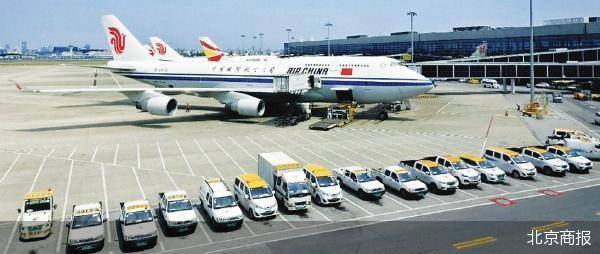
航司半年报:三大航营收稳步增长 春秋航空蝉联“最赚钱航司”
2 1 Shi Ji Jing Ji Bao Dao· 2025-09-01 11:48
Core Viewpoint - The A-share listed airlines have shown a significant reduction in losses for the first half of 2025, with state-owned airlines still in the red but improving, while private airlines have turned profitable, indicating a contrasting performance in the industry [2][5]. Financial Performance - The three major state-owned airlines (Air China, China Eastern Airlines, and China Southern Airlines) reported a combined loss of 4.77 billion yuan, a reduction of 2.008 billion yuan compared to the previous year [2]. - China Eastern Airlines had the least loss among the three, with a net loss of 1.431 billion yuan, a reduction of 1.337 billion yuan year-on-year [3]. - The revenue for the three major airlines showed growth: Air China at 80.757 billion yuan (up 1.6%), China Eastern at 66.822 billion yuan (up 4.09%), and China Southern at 86.291 billion yuan (up 1.77%) [2]. International Operations - China Eastern Airlines expanded its international operations significantly, opening 14 new international routes and restoring flight numbers to over 110% of 2019 levels [3]. - Air China and China Southern Airlines also increased their international capacity, with Air China's international passenger capacity up 16.7% and China Southern's up 22.5% [4]. Cost Control Measures - Cost control has become a critical focus for the airlines, with China Eastern Airlines implementing a "cost hard battle" plan to manage expenses effectively [6]. - The airlines reported a decrease in fuel costs, with Air China, China Eastern, and China Southern seeing reductions of 10.34%, 8.08%, and 9.15% respectively [7]. Market Conditions - The average ticket price for domestic economy class fell by 6.9% year-on-year in the first half of 2025, indicating ongoing pressure on pricing [8]. - The recovery of international routes remains incomplete, with the overall market still facing challenges in returning to pre-pandemic levels [8].

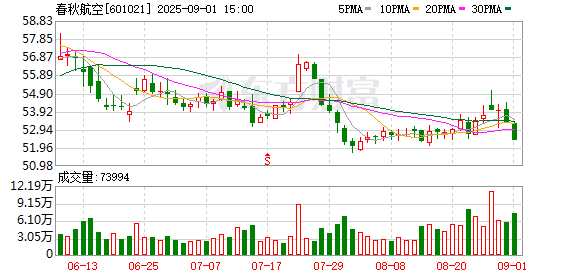
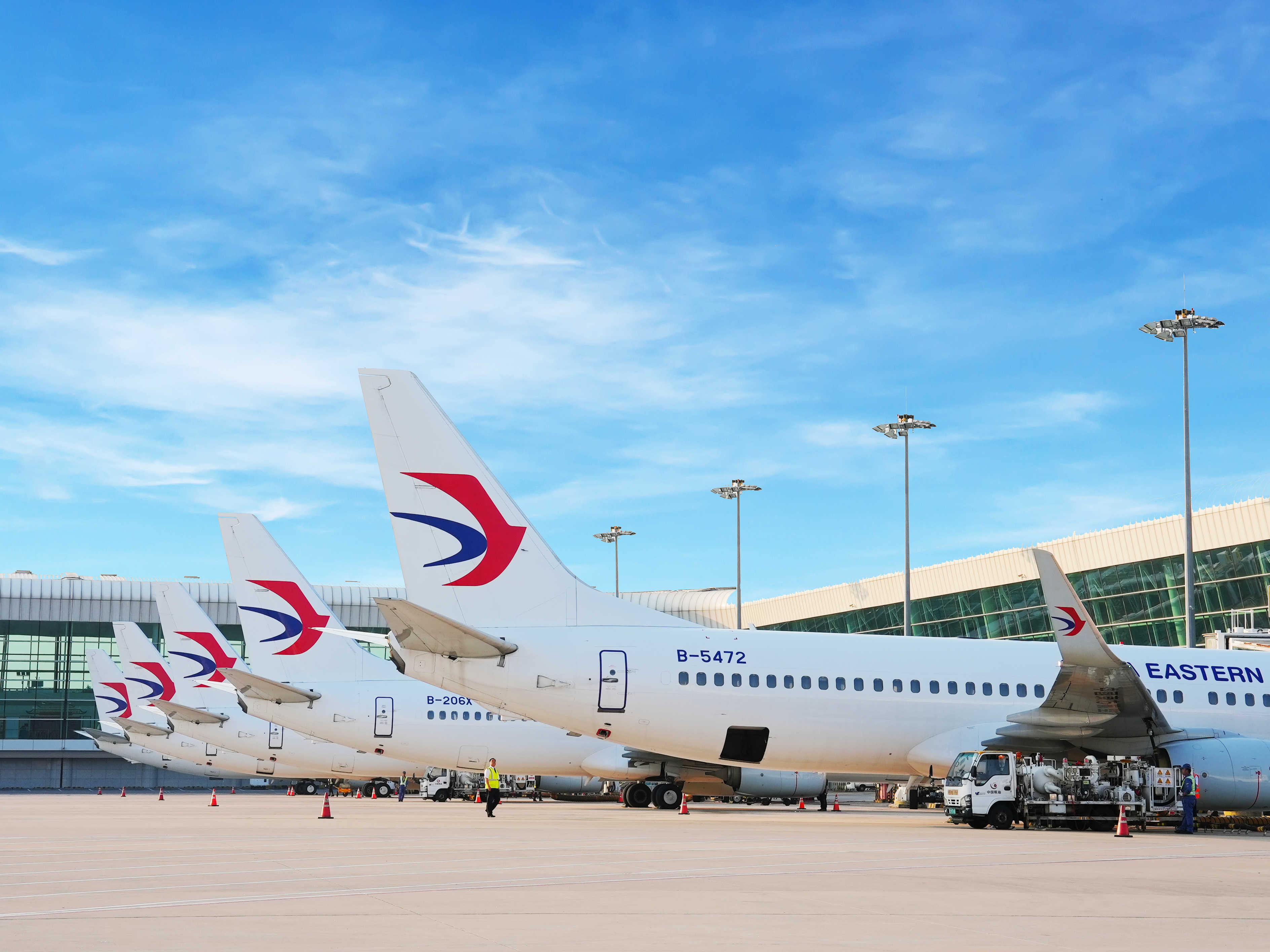
东航暑运累计执行航班19.4万班次
Bei Jing Shang Bao· 2025-09-01 10:51
Group 1 - During the summer travel season, the company executed a total of 194,000 flights, serving 28.06 million passengers, with an average daily flight time of 8,168 hours, representing a month-on-month increase of 13.3% [1] - The company achieved record-high international and regional flights during the summer, executing 27,000 flights and transporting 4.492 million passengers, with year-on-year growth of 9.8% and 13.6% respectively [3] - The company operated 813 domestic routes, averaging approximately 18,900 round-trip flights per week, and launched several new direct routes [3] Group 2 - In response to outbound tourism demand, the company opened multiple new international routes, including flights from Shanghai Pudong to Geneva, Milan, and Copenhagen, and increased flight frequency to popular destinations in Europe, America, Australia, South Korea, and North Africa [3] - As the largest base airline in Shanghai, the company executed over 62,400 flights at Shanghai Hongqiao and Pudong airports, serving over 10.23 million passengers [3] - The company deployed all 11 of its C919 aircraft during the summer travel season, operating 2,258 commercial flights and carrying nearly 312,000 passengers, achieving a load factor of 85.2% [3]
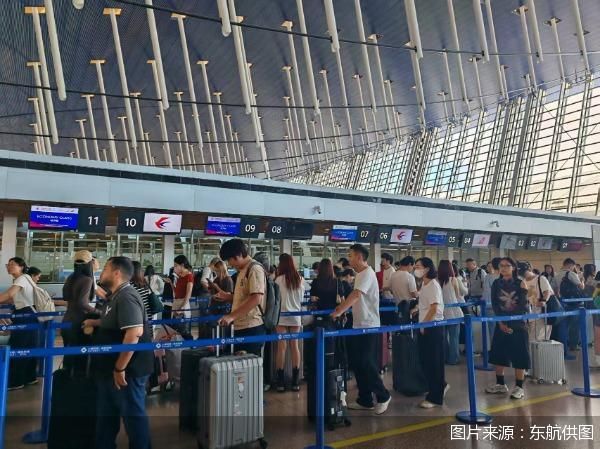
中国东航8月29日获融资买入5048.53万元,融资余额3.83亿元
Xin Lang Cai Jing· 2025-09-01 10:32
Group 1 - China Eastern Airlines experienced a decline of 1.93% in stock price on August 29, with a trading volume of 595 million yuan [1] - The financing buy-in amount for China Eastern Airlines on the same day was 50.49 million yuan, while the financing repayment was 19.52 million yuan, resulting in a net financing buy-in of 30.97 million yuan [1] - As of August 29, the total financing and securities lending balance for China Eastern Airlines was 384 million yuan, with the financing balance at 383 million yuan, accounting for 0.55% of the circulating market value, which is below the 40th percentile level over the past year [1] Group 2 - China Eastern Airlines, established on April 14, 1995, and listed on November 5, 1997, is primarily engaged in passenger, cargo, mail, and baggage transportation, along with related services [2] - For the first half of 2025, China Eastern Airlines reported operating revenue of 66.82 billion yuan, a year-on-year increase of 4.09%, while the net profit attributable to shareholders was -1.43 billion yuan, reflecting a year-on-year growth of 48.30% [2] - The company has not distributed any dividends in the past three years, with a total payout of 3.296 billion yuan since its A-share listing [3] Group 3 - As of June 30, 2025, the number of shareholders for China Eastern Airlines was 155,100, a decrease of 11.06% from the previous period [2] - The top ten circulating shareholders include China Securities Finance Corporation, holding 430 million shares, and Hong Kong Central Clearing Limited, which increased its holdings by 55.22 million shares to 300 million shares [3]
156.7万人次 东航暑期在武汉航班量与客运量均创新高
Zhong Guo Min Hang Wang· 2025-09-01 08:35
Core Insights - China Eastern Airlines (CEA) Wuhan Company achieved record-high flight and passenger numbers during the summer travel season, with over 11,000 flights and 1.567 million passengers from July 1 to August 31, marking increases of 2.75% and 3.03% compared to 2024, and significant growth of 50.4% and 67.7% compared to 2019 [1] Group 1 - CEA increased its operational capacity in Wuhan, averaging 184 flights per day and transporting over 25,000 passengers daily, with a peak of 28,000 passengers on August 15, setting a new daily record [2] - The company expanded its network to 64 departure points from Wuhan, covering 54 domestic cities and 10 international destinations, leading in the number of routes at Wuhan Tianhe Airport [2] - New domestic routes were launched, including Wuhan to Qinhuangdao, Tangshan, Yuncheng, and Huai'an, while international routes to Singapore and Kuala Lumpur were also increased [2] Group 2 - CEA implemented a "Four Precision" service philosophy to enhance passenger experience, including additional check-in counters and staff during peak times, and a 30-minute check-in cut-off for domestic flights [3] - The company provided over 4,500 special service passengers during the summer, a 24% increase year-on-year, including 3,300 unaccompanied minors [3] - Digital services such as self-service rebooking and electronic meal vouchers were promoted, alongside innovative product offerings like "Flight + Theme Park" and "Flight + Hotel" packages [3] Group 3 - To cater to the upcoming university season, CEA collaborated with local tourism and airport companies to offer enhanced services and discounts for students, including dedicated travel guidance and special offers [5]
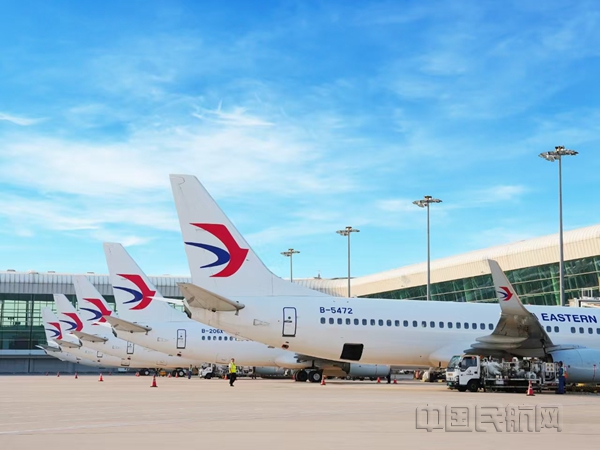
156.7万人次,东航武汉暑运航班与旅客量双创历史新高
Chang Jiang Ri Bao· 2025-09-01 08:07
Core Insights - Eastern Airlines has achieved record-high performance during the summer travel season, with over 11,000 flights and 1.567 million passengers transported from July 1 to August 31, marking increases of 2.75% and 3.03% compared to the same period in 2024, and significant growth of 50.4% and 67.7% compared to 2019 [1] Group 1: Flight Operations and Capacity - The company has increased its flight capacity in Wuhan, operating an average of 184 flights per day and transporting over 25,000 passengers daily, maintaining high operational levels [5] - On August 15, a record was set with over 28,000 passengers transported in a single day, with 194 flights executed and a passenger load factor nearing 90% [5] Group 2: Route Expansion - Eastern Airlines has established 64 departure points from Wuhan, covering 54 domestic cities and 10 international and regional cities, leading in the number of routes from Wuhan Tianhe Airport [6] - New and restored routes include Wuhan to Qinhuangdao, Tangshan, Yuncheng, and Huai'an, catering to diverse travel needs [6] - Popular routes include Wuhan to coastal cities like Qinhuangdao, Fuzhou, Qingdao, and Xiamen, as well as tourist destinations in the northwest and cultural cities [6] Group 3: Product Innovation and Marketing - The company has launched innovative products such as "Ticket + Theme Park" and "Ticket + Hotel" combinations, enhancing the value of a single ticket [8] - Collaborations with various enterprises have been initiated, including "Campus Tours" and "Corporate Tours," promoting Eastern Airlines routes alongside "Oriental Wanli Xing" membership services [8] - In preparation for the new academic season, the company has partnered with local tourism groups and universities to offer upgraded travel services and exclusive discounts for students [8]
三大航司2025年上半年运输规模同步扩大,营收均实现同比增长
Cai Jing Wang· 2025-09-01 07:21
Core Viewpoint - The three major Chinese airlines, Air China, China Eastern Airlines, and China Southern Airlines, have reported significant revenue growth and reduced losses for the first half of 2025, driven by operational scale expansion, cost optimization, fleet upgrades, and digital transformation initiatives [1][2]. Financial Performance - Air China achieved operating revenue of 80.757 billion yuan, a year-on-year increase of 1.6% - China Eastern Airlines reported operating revenue of 66.822 billion yuan, up 4.09% year-on-year - China Southern Airlines continued its growth trend with operating revenue of 86.291 billion yuan - Despite remaining in a loss position, all three airlines showed significant reductions in losses: - China Eastern Airlines' net loss attributable to shareholders was 1.431 billion yuan, a reduction of 1.337 billion yuan from the previous year - Air China's net loss attributable to shareholders was 1.806 billion yuan, down 977 million yuan year-on-year - China Southern Airlines reported a net loss of 1.533 billion yuan, maintaining a low loss scale [1]. Operational Expansion - The three airlines have expanded their transportation scale, which has been a solid support for revenue growth: - China Southern Airlines carried 83.28 million passengers, a year-on-year increase of 4.83% - China Eastern Airlines achieved a total transportation turnover of 135.06 billion ton-kilometers, up 11.89% year-on-year, with passenger volume reaching 73.1696 million, an increase of 8.03% - Air China recorded a capacity input of 177.576 billion seat-kilometers, a 3.37% increase, with passenger transport of 77.114 million, up 2.87% - International routes have become a significant driver of operational recovery, with China Eastern Airlines' international and regional route available seat kilometers (ASK) increasing by 24.38% year-on-year [2]. Fleet Optimization - The airlines are focusing on fleet construction to optimize their core revenue source, the passenger business: - China Eastern Airlines introduced 24 new aircraft and retired 12 old ones, with a current fleet size of 816 aircraft, including 11 C919 domestic aircraft - Air China added 9 aircraft, including 1 A320, 5 B737, 1 C919, and 2 C909, while retiring 5 aircraft, totaling 934 aircraft with an average age of 10.28 years - China Southern Airlines introduced 37 aircraft and retired 11, enhancing operational efficiency and laying the foundation for future energy-saving and service upgrades [3]. Digital Transformation - Digital transformation has become a strategic focus for the three airlines to enhance operational efficiency and optimize service experience: - Air China is promoting AI applications, including smart customer service and intelligent maintenance, with in-flight meal booking services covering all domestic flights - China Eastern Airlines is expanding cross-border e-commerce logistics in the cargo sector to improve operational efficiency through digital means - In addition to internal operational optimization, the airlines are actively expanding their international route networks while consolidating their domestic market positions [4]. Business Layout - The airlines are enhancing their business layout by strengthening domestic market foundations and expanding international route networks: - China Eastern Airlines has seen significant growth in international routes - Air China is increasing coverage of remote area routes to enhance the value of its regional network - China Southern Airlines is optimizing its domestic and international route structure, increasing flights from Xinjiang to Central Asia - The management of China Southern Airlines anticipates a significant increase in passenger volume and seat occupancy during the summer travel season, although ticket prices are expected to decline year-on-year [4].
中国东航2025年上半年营收同比增长4.09%至668.22亿元
Cai Jing Wang· 2025-09-01 05:08
Core Viewpoint - China Eastern Airlines reported a significant reduction in net losses for the first half of 2025, indicating a recovery in operations and financial performance [1] Financial Performance - The company achieved operating revenue of 66.822 billion yuan, a year-on-year increase of 4.09% [1] - The net loss attributable to shareholders was 1.431 billion yuan, a reduction of 1.337 billion yuan compared to the same period last year, showing a notable narrowing of losses [1] Operational Metrics - Total transportation turnover reached 135.06 billion ton-kilometers, an increase of 11.89% year-on-year [1] - Passenger volume reached 73.1696 million, up 8.03% year-on-year [1] - Cargo and mail transportation volume was 530.7 thousand tons, reflecting a year-on-year growth of 3.92% [1] Cost Management - The company established a cost management committee to enhance control, with operating costs increasing by 3.27% year-on-year [1] - Fuel costs decreased by 8.08% year-on-year, achieved through measures such as optimizing flight altitude and implementing single-engine taxiing [1] - Savings of approximately 11 million yuan were realized from major airport bridge fees, and financial expenses decreased by 26.89% year-on-year [1] Fleet Development - In the first half of the year, the company introduced 24 new aircraft and retired 12 old ones, with the current fleet of C919 domestic aircraft reaching 11 units [1] - The company plans to receive an additional 10 C919 aircraft within the year, continuing to optimize fleet structure [1] Business Expansion - The cargo and mail business maintained stability through the expansion of cross-border e-commerce logistics routes [1]
打工牛马,为什么痛恨飞机Wifi?
36氪· 2025-09-01 00:09
Core Viewpoint - The introduction of free WiFi on flights by Eastern Airlines has sparked mixed reactions, particularly among workers who feel that this technology encroaches on their last remaining escape from work-related connectivity [10][22][52]. Group 1: Eastern Airlines' WiFi Initiative - Eastern Airlines upgraded its service by offering free basic WiFi on select flights starting August 20, allowing passengers in certain classes to stay connected throughout their journey [7][10]. - This initiative is seen as a significant technological advancement for the airline, but it has not been universally welcomed by all passengers [10][22]. Group 2: Workers' Reactions - Many workers express dissatisfaction with the introduction of WiFi, feeling that it removes their opportunity to disconnect from work during flights, which they previously viewed as a rare chance for uninterrupted time [12][19][24]. - Comments from passengers highlight a desire to maintain the airplane as a space free from work obligations, with some stating that they prefer to be offline during flights [14][19][28]. Group 3: Broader Industry Context - The global aviation industry is witnessing a shift towards in-flight connectivity, with companies like SpaceX's Starlink leading the charge in providing high-speed internet services on planes [36][40]. - Traditional satellite service providers are also adapting to the competitive landscape, indicating a rapidly evolving market for in-flight WiFi services [39][41]. Group 4: Future of In-Flight Connectivity in China - Eastern Airlines is at the forefront of this trend in China, having become the first airline to allow WiFi usage below 3,000 meters in August 2023 [44]. - China's own satellite internet initiative, known as the "Qianfan Constellation," aims to deploy a significant number of satellites by 2030, positioning the country to compete in the global in-flight connectivity market [46][47].