CEA(00670)

Search documents
从普洱山野到瑞士云端,云南咖啡的蜕变之路
Zhong Guo Jing Ji Wang· 2025-06-16 10:10
中国经济网6月16日讯(记者 鞠然)近日,雀巢(中国)有限公司与中国东方航空联合推出"云南单一 产地挂耳咖啡",开启了创新跨界合作的新篇章。 此外,雀巢于2020年推出"雀巢咖啡2030计划",自2021年起在中国云南携手咖农共同向再生农业转型。 面向未来,雀巢计划在2030年前投资超10亿瑞士法郎,推进"雀巢咖啡2030计划",依托现有项目,在可 持续发展方面持续发力。 云南省普洱市的咖啡果 由雀巢公司供图 自2015年起,雀巢在云南采购的咖啡豆已实现100%通过国际公认的咖啡行业可持续性标准——4C认 证,覆盖近20万亩的种植面积。公司累计助力1000多位合作伙伴获得认证,惠及4.6万余名咖农,成功 改写云南咖啡"零散种植"的历史。 6月4日,我国发布首批传统优势食品产区和地方特色食品产业重点培育名单,云南咖啡便跻身其中。据 昆明海关统计,2024年云南出口咖啡3.25万吨,同比增长358%,主要出口至荷兰、德国、美国、越南 等29个国家和地区,云南咖啡以其"浓而不苦,香而不烈,略带果酸"的独特风味,在国际市场上崭露头 角。 6月16日,中国东方航空正式开通上海浦东往返瑞士日内瓦的直飞航线。"2025年恰 ...




中国东航:5月客运运力投入同比上升9.27%
news flash· 2025-06-16 09:01
Core Viewpoint - China Eastern Airlines reported a year-on-year increase in passenger capacity input of 9.27% for May 2025, indicating a positive trend in operational performance [1] Group 1: Passenger Metrics - Passenger turnover increased by 15.43% year-on-year, reflecting strong demand for air travel [1] - The passenger load factor reached 85.39%, up by 4.56 percentage points compared to the previous year, indicating improved efficiency in capacity utilization [1] Group 2: Cargo Metrics - Cargo and mail turnover rose by 10.58% year-on-year, suggesting growth in freight operations alongside passenger services [1]
中国东航:5月客座率为85.39%,同比上升4.56个百分点
news flash· 2025-06-16 08:58
中国东航(600115)公告,2025年5月客运运力投入同比上升9.27%,旅客周转量同比上升15.43%,客 座率为85.39%,同比上升4.56个百分点。货邮周转量同比上升10.58%。国内市场新开常州-湛江、青岛- 喀什航线;加密上海虹桥-烟台、上海浦东-济南、上海浦东-重庆、上海浦东-丽江、北京大兴-深圳、北 京大兴-广州、昆明-杭州等航线。国际市场加密上海浦东-莫斯科、上海浦东-福冈、上海浦东-大阪、上 海浦东-济州、昆明-胡志明市等航线。引进4架客机,退出4架客机。截至5月末,运营814架飞机。 ...
星展升东航目标价至3.1港元 上调盈测
news flash· 2025-06-16 04:53
星展升东航目标价至3.1港元 上调盈测 金十数据6月16日讯,星展发表研究报告指,东航(00670.HK)的国内及国际客运收益率仍受到消费意欲 疲弱及高速铁路网络扩张竞争加剧的压力,但由于油价回软及美元走弱导致公司营运成本大幅下降,预 期公司的盈利能力将有所改善。该行又提到,五一旅游趋势表明需求正在增长,令公司短期前景更为乐 观。该行将东航今明两年的盈测分别上调26%及42%,维持"持有"评级,目标价由2.4港元上调至3.1港 元。 ...
东航空勤党员开展“安全生产月”主题党建共建
Zhong Guo Min Hang Wang· 2025-06-16 04:14
Group 1 - The core theme of the event was "Building a Safe Production Month and Deepening Safety Culture Cooperation," emphasizing the integration of party building and safety work [1][4] - Participants included representatives from various departments, such as the cabin crew, flight operations, and fire rescue teams, who engaged in discussions on safety management experiences and strategies [3][4] - The event aimed to enhance the safety production culture and improve collaborative mechanisms to protect public safety and property [4] Group 2 - The activities included a visit to the fire station, where participants learned about daily training and emergency preparedness, reinforcing the principle of "Safety First, Life Above All" [3] - During the business exchange segment, representatives shared insights on cabin safety management, flight emergency handling, and risk prevention strategies [3] - The integration of party building with operational practices was highlighted as a means to deepen the understanding of safety production concepts among participants [4]

三个“管好”磨练“知其所以然”的飞行——访东航上海飞行部飞行五部机长张斌
Zhong Guo Min Hang Wang· 2025-06-16 01:20
Core Viewpoint - The article highlights the achievements and philosophy of Zhang Bin, a captain and flight instructor at Eastern Airlines, emphasizing the importance of self-discipline, understanding aircraft operations, and effective team management in aviation [1][6]. Group 1: Personal Development - Zhang Bin's passion for flying originated from childhood dreams influenced by an animated series, leading him to pursue a career in aviation [4]. - He emphasizes the importance of self-discipline and continuous learning, reflecting on a past mistake that taught him to remain humble and diligent in his profession [5][6]. - Zhang Bin has progressed from a flight student to an A330 captain and deputy manager, maintaining a record of no safety incidents due to human error [6]. Group 2: Aircraft Management - Zhang Bin believes in the principle of "knowing the reasons behind actions" to ensure safe flying, advocating for a deep understanding of the physics involved in flight operations [9]. - His preparation for the pilot skills competition involved meticulous training to refine operational details and enhance flight control capabilities [8][9]. Group 3: Team Management - Zhang Bin stresses the importance of Crew Resource Management (CRM) in aviation, recognizing that effective team dynamics are crucial for successful flight operations [11]. - He collaborated with a co-pilot he had not previously worked with, quickly establishing teamwork to navigate the challenges of the competition [11][13]. - As a deputy manager, Zhang Bin enforces high standards in training and evaluation, prioritizing professionalism and attitude in flight operations [13][15].

东航:服务区域发展 在“九省通衢”建设“航线上的湖北”
Zhong Guo Min Hang Wang· 2025-06-15 05:01
Core Insights - Wuhan Tianhe Airport has seen a significant increase in inbound and outbound passengers, reaching over 11,200 during the recent Dragon Boat Festival, marking an 18.03% year-on-year growth, establishing Wuhan as a key air hub in Central China [1] - China Eastern Airlines (CEA) Wuhan Company has become the largest airline in Central China in terms of fleet size, asset scale, and tax contributions, supported by CEA's strategic focus on expanding international and emerging market routes [1][4] Route Expansion - CEA has launched several international routes from Wuhan, including direct flights to Tokyo, Kuala Lumpur, Bangkok, Osaka, and more, with a total of 10 international and regional routes, accounting for 50% of the airport's international and regional routes [4] - The international passenger transport volume from Wuhan by CEA increased by 64.62% year-on-year from January to May 2025 [4] Connectivity Enhancement - CEA's fleet in Wuhan has grown to 36 aircraft, maintaining the largest fleet in Central China, with a significant increase in passenger throughput, reaching 3.6178 million from January to May 2025, a 2.6 percentage point increase compared to the same period in 2024 [6] - CEA has developed a comprehensive transfer system, achieving a 35.5% share of the transfer passenger volume at Wuhan Tianhe Airport, with over 2,300 pairs of transfer flights registered [7] Service Improvement - CEA has implemented a "four precision" service philosophy to enhance passenger experience, including expedited luggage transfer services and complimentary accommodations for eligible passengers [9] - The airline is actively exploring partnerships with local attractions to enhance the value of travel packages, aiming to integrate air travel with local tourism [10] Future Outlook - By 2025, CEA plans to expand its fleet in Wuhan to 55 aircraft and operate nearly 100 routes, contributing to the development of Central China's strategic importance [12]
争夺京沪线
36氪· 2025-06-14 01:15
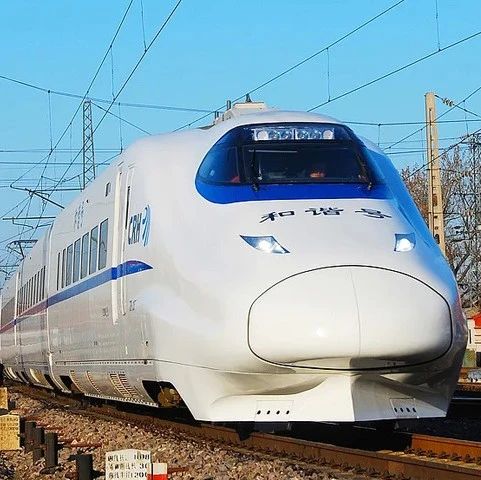
Core Viewpoint - The competition between civil aviation and high-speed rail on the Beijing-Shanghai route is intensifying, with civil aviation showing a significant growth rate that has surpassed that of high-speed rail in recent years [3][7][12]. Group 1: Overview of the Beijing-Shanghai Route - The Beijing-Shanghai route is a critical transportation corridor connecting two of China's largest cities, with high passenger demand and profitability for both civil aviation and high-speed rail [5][13]. - The high-speed rail can cover the distance in approximately 4 hours and 18 minutes, while flights take less than 2 hours, making both modes of transport competitive [5][6]. Group 2: Recent Developments in Civil Aviation - Starting from May 2025, a new cross-airline ticket transfer service will be implemented between Shanghai Hongqiao and Beijing Capital airports, enhancing travel efficiency for passengers [6][9]. - In May 2024, passenger numbers for Eastern Airlines on the Beijing-Shanghai route increased by approximately 20.6%, while Air China saw a growth of 4.6% [10][11]. Group 3: Growth Trends and Performance Metrics - Civil aviation's passenger growth on the Beijing-Shanghai route has been remarkable, with 2023 and 2024 seeing passenger numbers of 689.9 million and 861.3 million, representing year-on-year growth of 269.52% and 24.84% respectively [11][16]. - In contrast, high-speed rail reported a decrease in passenger numbers from 5325.2 million in 2023 to 5201.6 million in 2024, with a year-on-year growth of 209.1% and a decline of 2.3% [16][17]. Group 4: Competitive Strategies - Civil aviation is adopting aggressive pricing strategies to capture market share, with average ticket prices for economy class dropping significantly [17]. - High-speed rail is responding by increasing train frequency and enhancing service quality, including flexible pricing and improved passenger experience [22][23]. Group 5: Future Outlook - The competition between civil aviation and high-speed rail is expected to continue evolving, with potential for deeper integration of services, such as "air-rail intermodal" solutions [23].


争夺京沪线
36氪· 2025-06-13 16:34
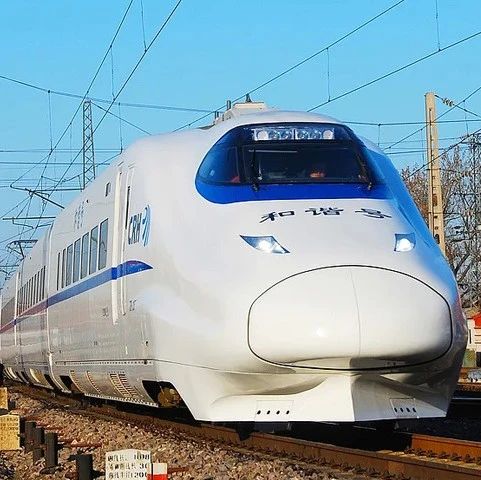
Core Viewpoint - The competition between civil aviation and high-speed rail on the Beijing-Shanghai route is intensifying, with civil aviation showing a significant growth rate that surpasses high-speed rail despite the latter having a much larger passenger volume [3][7][12]. Group 1: Overview of the Beijing-Shanghai Route - The Beijing-Shanghai route is a critical transportation corridor connecting two of China's largest cities, with a distance of approximately 1300 kilometers [5][19]. - High-speed rail offers a travel time of about 4 hours and 18 minutes, while flights take less than 2 hours [5]. - The route is characterized by high passenger demand, particularly from business travelers, making it a lucrative market for both high-speed rail and civil aviation [9][13]. Group 2: Recent Developments in Civil Aviation - Starting from May 2025, a new cross-airline ticket transfer service will be implemented between Shanghai Hongqiao and Beijing Capital airports, enhancing travel efficiency for passengers [6][9]. - In May 2024, Eastern Airlines and Air China reported a significant increase in passenger numbers on the Beijing-Shanghai route, with Eastern Airlines seeing a 20.6% year-on-year increase and Air China a 4.6% increase [10][11]. - The average seat occupancy rate for flights on this route has also improved, with Eastern Airlines reaching 92.7% and Air China 86.6% in late May 2024 [11]. Group 3: Comparison of Passenger Growth Rates - Civil aviation's passenger growth on the Beijing-Shanghai route has been remarkable, with 689.9 million and 861.3 million passengers in 2023 and 2024, respectively, reflecting year-on-year growth rates of 269.52% and 24.84% [11][16]. - In contrast, high-speed rail reported a decrease in passenger numbers, with 5325.2 million and 5201.6 million passengers in the same years, showing a growth of 209.1% and a decline of 2.3% [16][17]. - The total passenger volume for high-speed rail remains significantly higher than that of civil aviation, with high-speed rail carrying 5201.6 million passengers in 2024 compared to civil aviation's 861.3 million [11][16]. Group 4: Pricing and Market Dynamics - The average ticket price for domestic economy class flights has decreased by 15.9% year-on-year, making air travel more attractive compared to high-speed rail [17]. - On specific routes, such as Shanghai to Beijing, flight prices can be as low as 310 yuan, which is cheaper than high-speed rail tickets [17]. - The competitive pricing strategies of airlines are seen as a key factor in attracting passengers away from high-speed rail [17][21]. Group 5: Future Trends and Innovations - The civil aviation industry is encouraged to adopt practices from high-speed rail to enhance service efficiency and customer experience [22][23]. - Experts suggest that the future of competition may involve deeper integration of air and rail services, potentially through "air-rail intermodal" services [23].
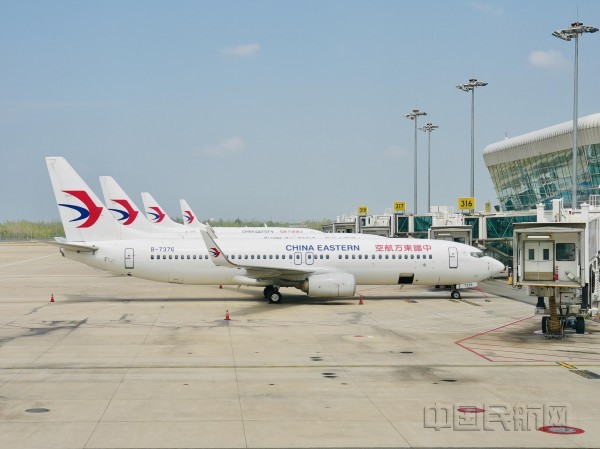
港股航空股大幅回调,中国南方航空股份(01055.HK)跌超5%,中国国航(00753.HK)跌超4.5%,中国东方航空股份(00670.HK)跌超3.5%,国泰航空(00293.HK)跌超2%。
news flash· 2025-06-13 01:40
Group 1 - The Hong Kong aviation stocks experienced a significant decline, with China Southern Airlines (01055.HK) dropping over 5% [1] - Air China (00753.HK) fell by more than 4.5% [1] - China Eastern Airlines (00670.HK) decreased by over 3.5% [1] - Cathay Pacific Airways (00293.HK) saw a decline of more than 2% [1]