
CNOOC(00883)

Search documents
恐惧被查想在阁楼烧掉现金,中海油原总经理李勇贪腐细节披露
Zhong Guo Xin Wen Wang· 2026-01-14 13:55
Core Viewpoint - The case of Li Yong, former General Manager of China National Offshore Oil Corporation (CNOOC), highlights significant issues of cross-border corruption within state-owned enterprises, with over 83% of illicit funds originating from overseas [2][4]. Group 1: Corruption Details - Li Yong was involved in a long-term corruption scheme, managing numerous overseas projects and believing that funds hidden abroad would be difficult to trace [2][4]. - The investigation revealed that a significant portion of the illicit funds was funneled through complex international banking routes, involving multiple countries and offshore accounts [8]. - Li Yong's relationship with businessman Ren Fengde facilitated corrupt practices, including the use of a "middleman" to disguise bribes as legitimate business transactions [6][8]. Group 2: Methods of Corruption - Li Yong exploited high intermediary commissions in overseas projects, colluding with unscrupulous agents to ensure excessive fees, which he then shared [9][11]. - A specific incident involved Li Yong negotiating inflated transaction costs for a drilling platform, where he received millions in bribes disguised as "thank you" payments [6][9]. Group 3: Consequences and Legal Actions - Following a tip-off about Ren Fengde's detention, Li Yong attempted to destroy evidence of his corruption by burning cash, but ultimately realized the futility of this action [12]. - Li Yong was later detained and sentenced to 14 years in prison for accepting bribes, along with a fine of 3 million RMB [12].


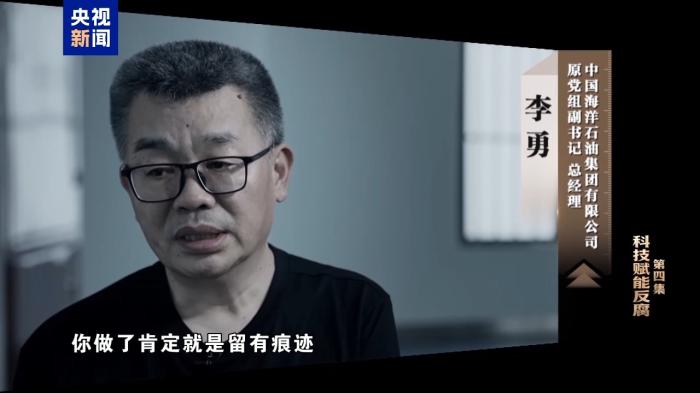
副部级李勇得知他人被留置后极度恐慌,想在阁楼里烧掉收受的现金
中国基金报· 2026-01-14 13:36
Core Viewpoint - The article discusses the case of Li Yong, former Deputy Secretary of the Party Committee and General Manager of China National Offshore Oil Corporation (CNOOC), highlighting the significant issue of cross-border corruption within state-owned enterprises, particularly in the oil sector [4][6]. Group 1: Case Overview - Li Yong was under investigation by the Central Commission for Discipline Inspection and the National Supervisory Commission starting in March 2024 due to serious corruption allegations [4]. - The case is characterized as a typical example of cross-border corruption, with over 83% of the illicit funds originating from overseas [6]. - Li Yong utilized his extensive experience in the international offshore oil sector to disguise corrupt practices within seemingly legitimate project collaborations [6]. Group 2: Investigation Techniques - The investigation employed advanced data analysis techniques to uncover evidence of corruption, including the examination of extensive business records and international cooperation for evidence gathering [9][20]. - The use of big data platforms allowed investigators to identify key business relationships and suspicious activities linked to Li Yong, leading to the discovery of significant irregularities in procurement projects [11][20]. Group 3: Corruption Mechanisms - Li Yong engaged in corrupt practices by facilitating high commissions for foreign agents, which were then funneled through offshore accounts to obscure the source of the funds [17][20]. - A notable case involved a foreign agent who offered Li Yong a "thank you fee" for securing a project, which was disguised through a trusted intermediary, Ren Fengde, to avoid direct association [15][16]. Group 4: Consequences and Sentencing - Following the investigation, Li Yong was found guilty of accepting bribes and was sentenced to 14 years in prison along with a fine of 3 million RMB [27]. - The case serves as a cautionary tale about the consequences of corruption, with Li Yong expressing regret over his actions and the loss of his reputation [29].
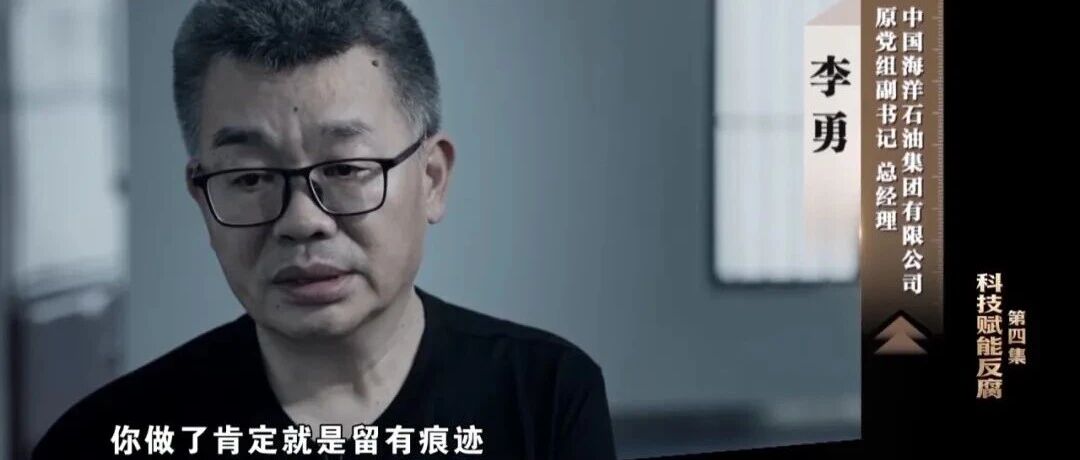
中海油原总经理李勇坦白受贿细节:外国代理商开车来,拿个箱子给钱
Xin Lang Cai Jing· 2026-01-14 13:25
Core Viewpoint - The documentary highlights the use of technology in combating corruption within Chinese state-owned enterprises, focusing on the case of Li Yong, a former executive of China National Offshore Oil Corporation (CNOOC), who engaged in corrupt practices through inflated commissions in overseas projects [1][3][4]. Group 1: Corruption Case Details - Li Yong, former deputy secretary of the Party Committee and general manager of CNOOC, was investigated by the Central Commission for Discipline Inspection (CCDI) in March 2024 for his involvement in corruption related to overseas projects [3]. - He manipulated intermediary commissions in overseas projects, colluding with unscrupulous agents to allow unreasonable high commissions, which he believed were discreet but were detected through data analysis [3]. - A specific case involved Li Yong receiving bribes in the form of cash from an agent named Sun, who paid him in a parking lot, leading to a confrontation over commission reductions [3]. Group 2: Consequences and Sentencing - After retiring in October 2023, Li Yong was soon investigated, leading him to attempt to destroy evidence of his corruption by burning cash, but he realized this would not erase his crimes [4]. - He was detained and later sentenced to 14 years in prison for bribery, along with a fine of 3 million RMB, highlighting the severe repercussions of his actions [4]. - Li Yong expressed regret over his actions, stating that he left nothing of value behind and felt a sense of despair over his downfall [5].
赃款藏海外、商人充当“白手套”,李勇跨境腐败细节曝光
21世纪经济报道· 2026-01-14 13:21
Core Viewpoint - The article discusses the increasing efforts of China's disciplinary inspection and supervision agencies in combating cross-border corruption, highlighting the case of Li Yong, a former executive of China National Offshore Oil Corporation (CNOOC), who was investigated for serious corruption issues related to overseas projects [1][5][18]. Group 1: Case of Li Yong - Li Yong, who worked in the oil sector for nearly 40 years, was suspected of serious corruption, particularly in overseas projects, where he concealed large amounts of bribe money [3][5]. - The investigation into Li Yong was initiated after receiving tips about his suspicious activities, leading to a comprehensive analysis of his business dealings and the use of data technology to uncover evidence [5][9]. - Li Yong had a close relationship with a businessman named Ren Fengde, who acted as a "white glove" to facilitate bribe payments, allowing Li to distance himself from direct involvement [7][9]. Group 2: Mechanisms of Corruption - Li Yong engaged in corrupt practices by inflating transaction costs and allowing unreasonably high commissions in overseas projects, which he believed were well-concealed [11][14]. - In one instance, he received a "thank you fee" of several million dollars from an agent after helping them win a bid, which was then funneled through offshore accounts to obscure its origin [9][10]. - The investigation revealed that Li Yong's corrupt activities not only harmed state interests but also involved threats from agents when he attempted to negotiate lower commissions [13][14]. Group 3: Legal Consequences and Recovery of Assets - Following the investigation, Li Yong was sentenced to 14 years in prison and fined 3 million RMB for accepting bribes [15][18]. - The disciplinary agencies successfully recovered all of Li Yong's overseas illicit funds, demonstrating a commitment to tackling both domestic and international corruption [18]. - The case exemplifies the ongoing efforts to enhance international cooperation in anti-corruption measures and the use of technology to track and recover illicit assets [18].
中海油原总经理,在停车场被行贿者威胁退钱!事发后一度崩溃,想在阁楼里烧现金
Xin Lang Cai Jing· 2026-01-14 13:16
Core Viewpoint - The article discusses the use of technology, particularly big data and artificial intelligence, in enhancing anti-corruption efforts within China's disciplinary inspection and supervision system, highlighting the case of Li Yong, a former executive at China National Offshore Oil Corporation (CNOOC), as a significant example of cross-border corruption [1][56]. Group 1: Technology in Anti-Corruption - The disciplinary inspection and supervision agencies are accelerating the construction of a digital system to enhance anti-corruption efforts using big data and AI [1][56]. - Recent efforts have focused on addressing cross-border corruption, which has become a challenge for authorities as corrupt individuals attempt to evade investigation by moving illicit funds abroad [1][56]. - The application of technology has significantly improved the efficiency and effectiveness of supervision and law enforcement in combating corruption [1][56]. Group 2: Li Yong's Case - Li Yong, former Deputy Secretary of the Party Committee and General Manager of CNOOC, is under investigation for serious corruption issues, particularly in overseas projects [5][60]. - Over 83% of the illicit funds in Li Yong's case originated from abroad, with investigations spanning 10 countries and regions [7][62]. - Li Yong's long tenure in the oil sector allowed him to disguise corrupt practices within seemingly legitimate project collaborations, making it difficult to trace the evidence of his wrongdoing [9][64]. Group 3: Investigation Techniques - The investigation into Li Yong was initiated based on various clues and suspicions regarding his involvement in corruption, leading to a data-driven approach for evidence gathering [11][66]. - The use of big data platforms allowed investigators to analyze Li Yong's business relationships and identify key individuals involved in corrupt activities [14][69]. - A businessman named Ren Fengde, who had close ties with Li Yong, was found to have received suspicious contracts, indicating a network of corruption [14][69]. Group 4: Corruption Mechanisms - Li Yong utilized his position to facilitate corrupt transactions, often using intermediaries to obscure the flow of illicit funds [23][78]. - He arranged for offshore accounts to hide the proceeds of corruption, complicating the tracing of these funds [31][86]. - The investigation successfully utilized international cooperation to gather evidence, demonstrating the effectiveness of cross-border legal collaboration in anti-corruption efforts [33][88]. Group 5: Consequences and Sentencing - Following the investigation, Li Yong was detained and later sentenced to 14 years in prison for bribery, along with a fine of 3 million RMB [53][108]. - The case serves as a cautionary tale about the consequences of corruption, highlighting the irreversible damage to personal and professional reputations [55][110].
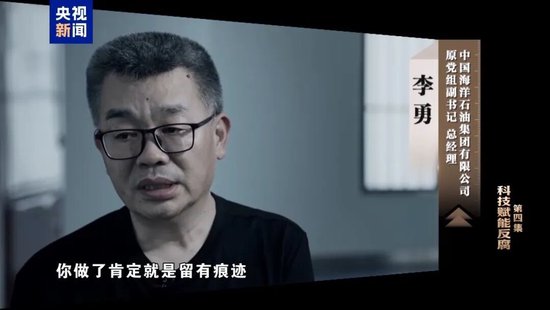
极度恐慌:大“老虎”李勇在情绪崩溃之下,想要在阁楼里烧掉收受的部分现金
Xin Lang Cai Jing· 2026-01-14 12:54
Core Viewpoint - The article discusses the corruption case of Li Yong, former Deputy Secretary of the Party Group and General Manager of China National Offshore Oil Corporation (CNOOC), highlighting his involvement in cross-border corruption and the subsequent investigation by the Central Commission for Discipline Inspection and National Supervisory Commission [1][20]. Group 1: Corruption Details - Li Yong was responsible for overseeing numerous overseas projects for CNOOC, where he engaged in corrupt practices, particularly through inflated commissions paid to foreign agents [20][22]. - In one overseas technical service project, CNOOC's subsidiary paid unreasonable high commissions to an agent named Sun, which Li initially attempted to negotiate down but ultimately accepted bribes from [22][24]. - Li's actions included receiving cash in a box from Sun, indicating a direct exchange of money for favorable treatment [24][26]. Group 2: Investigation and Consequences - Following his retirement in October 2023, Li Yong faced an investigation after being alerted to the detention of a businessman involved in corrupt dealings with him, leading to his panic and an attempt to destroy evidence [32][34]. - He was subsequently detained and found guilty of using his position to benefit others while accepting large sums of money, resulting in a 14-year prison sentence and a fine of 3 million RMB [34][36]. - Li expressed regret over his actions, stating that he has lost everything and feels a sense of despair over his legacy [37].
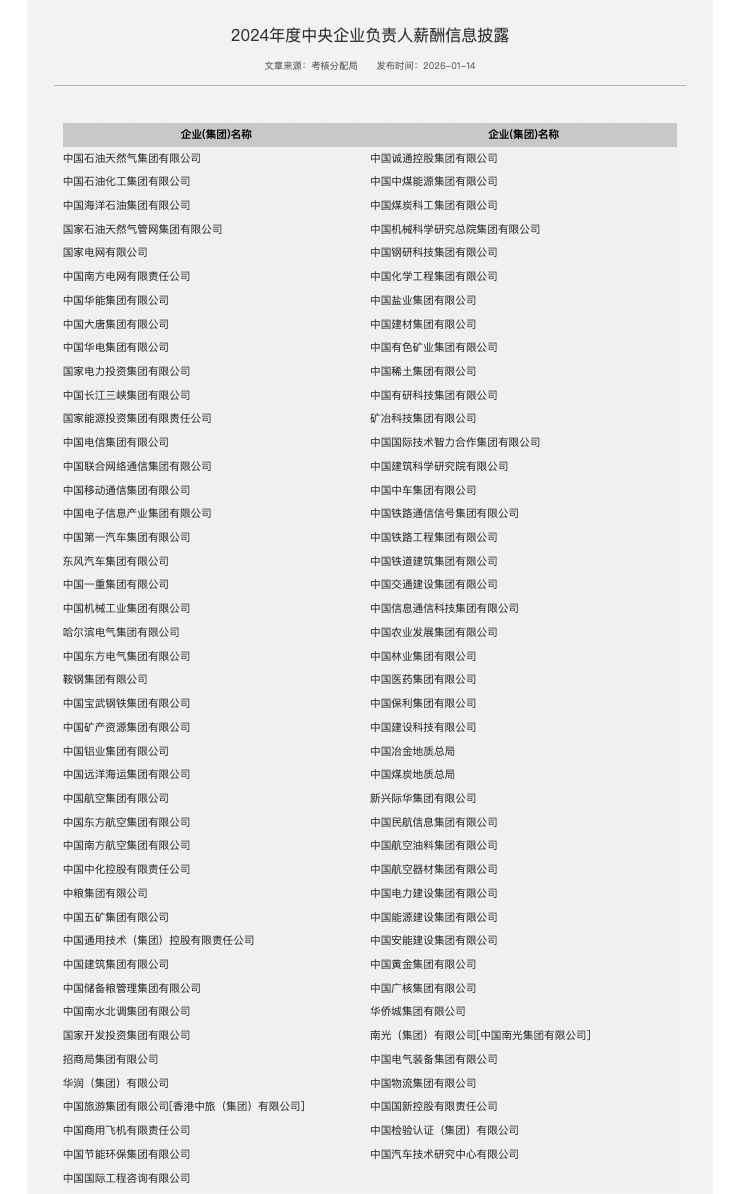
中石油、中石化等能源央企负责人年薪多少?国务院披露
Feng Huang Wang Cai Jing· 2026-01-14 12:23
Core Viewpoint - The State-owned Assets Supervision and Administration Commission (SASAC) has disclosed the salary information of over 80 central enterprise leaders for the year 2024, emphasizing the importance of transparency in key areas and responding to public concerns [1] Group 1: Salary Disclosure - The disclosure includes salary information for leaders of major state-owned enterprises, highlighting a commitment to transparency [1] - Notable energy central enterprises have leaders with annual salaries close to one million yuan [2] Group 2: Top Salaries - The highest salary is held by Dai Houliang, Chairman of China National Petroleum Corporation, with an annual salary of 978,500 yuan [3] - Wang Dongjin, Chairman of China National Offshore Oil Corporation, ranks second with a salary of 966,900 yuan [3] - Ma Yongsheng, Chairman of Sinopec, ranks third with a salary of 935,500 yuan [3] - Zhang Wei, Chairman of the National Oil and Gas Pipeline Network Group, ranks fourth with a salary of 872,900 yuan [3]


港股央企红利ETF(159333)跌0.42%,成交额2742.89万元
Xin Lang Cai Jing· 2026-01-14 10:20
Group 1 - The Wanjiacn Hong Kong Stock Connect Central State-Owned Enterprises Dividend ETF (159333) closed down 0.42% on January 14, with a trading volume of 27.4289 million yuan [1] - The fund was established on August 21, 2024, with an annual management fee of 0.50% and a custody fee of 0.10% [1] - As of January 13, 2025, the fund had 359 million shares and a total size of 517 million yuan, showing a decrease of 9.34% in shares and 7.74% in size compared to December 31, 2024 [1] Group 2 - The current fund manager is Yang Kun, who has managed the fund since its inception, achieving a return of 44.33% during the management period [2] - The top holdings of the fund include COSCO Shipping Holdings (6.02%), China Nonferrous Mining (3.22%), and China National Offshore Oil (2.51%), among others, with their respective market values detailed [2]

港股通央企红利ETF天弘(159281)跌0.30%,成交额2830.69万元
Xin Lang Cai Jing· 2026-01-14 10:20
Core Viewpoint - The Tianhong CSI Hong Kong Stock Connect Central State-Owned Enterprises Dividend ETF (159281) experienced a slight decline of 0.30% in its closing price on January 14, with a trading volume of 28.31 million yuan [1]. Group 1: Fund Overview - The Tianhong CSI Hong Kong Stock Connect Central State-Owned Enterprises Dividend ETF was established on August 20, 2025, with an annual management fee of 0.50% and a custody fee of 0.10% [1]. - The fund's performance benchmark is the CSI Hong Kong Stock Connect Central State-Owned Enterprises Dividend Index return (adjusted for valuation exchange rates) [1]. Group 2: Fund Size and Performance - As of January 13, 2025, the fund had a total of 351 million shares and a total size of 354 million yuan, showing a 0.85% decrease in shares and a 0.91% increase in size since December 31, 2025 [1]. - Over the last 20 trading days, the fund's cumulative trading amount reached 577 million yuan, with an average daily trading amount of 28.83 million yuan [1]. Group 3: Fund Management and Holdings - The current fund manager is He Yuxuan, who has managed the fund since its inception, achieving a return of 0.12% during the management period [2]. - Major holdings in the fund include China COSCO Shipping, Orient Overseas International, China Foreign Transport, China National Petroleum, CITIC Bank, China National Offshore Oil, China Shenhua Energy, China People's Insurance Group, China Unicom, and Agricultural Bank of China, with respective holding percentages [2].

石化化工行业AI+进展点评:政策指引推动AI+转型,三大路径驱动化工企业智能化落地
EBSCN· 2026-01-14 06:22
Investment Rating - The report maintains an "Overweight" rating for the basic chemical industry [1] Core Insights - The chemical and new materials industry is set to drive the comprehensive "AI + manufacturing" transformation, as outlined in the State Council's policy document released in August 2025, which aims for deep integration of AI across six key sectors by 2027 [3][4] - The focus for the petrochemical industry is on "quality improvement and efficiency enhancement" through AI, utilizing large models and digital twin technologies to optimize various processes [5] - The report identifies three main pathways for chemical companies to implement AI: self-developed large models, third-party model integration, and investment in AI startups [13][14] Summary by Sections Policy Guidance - The State Council's document emphasizes the necessity for AI integration in the chemical industry, marking it as a compulsory aspect for achieving high-quality development [3] - The Ministry of Industry and Information Technology's implementation opinions further detail goals for AI technology and its application in manufacturing by 2027 [4] AI Empowerment in Petrochemical Industry - AI's role in the petrochemical sector focuses on enhancing operational efficiency and safety through predictive maintenance and process optimization [5] - The establishment of high-quality data sets and infrastructure is crucial for supporting AI applications in the industry [5] AI Empowerment in New Materials Industry - The new materials sector aims to leverage AI for deep integration in research and development, enhancing capabilities in material design and synthesis [5] Implementation Pathways - **Self-Developed Large Models**: Companies like China National Petroleum Corporation (CNPC) and China National Offshore Oil Corporation (CNOOC) are developing proprietary AI models to enhance their operational capabilities [9][10] - **Third-Party Model Integration**: WanHua Chemical collaborates with Huawei Cloud to implement AI solutions for predictive maintenance and operational efficiency [11] - **Investment in AI Startups**: Companies like Qicai Chemical are investing in AI startups to accelerate innovation in materials science [12][13] Investment Recommendations - The report suggests focusing on leading companies that excel in data utilization and AI integration, such as CNPC, Sinopec, and WanHua Chemical [14] - Attention is also drawn to companies involved in new materials and fine chemicals, which are expected to benefit significantly from AI-driven R&D advancements [14]